If an enzyme slows down but food keeps supplying its starting material, what builds up? Follow that one change through phenylketonuria (PKU).
Jump to a section
One blocked reaction, two consequences
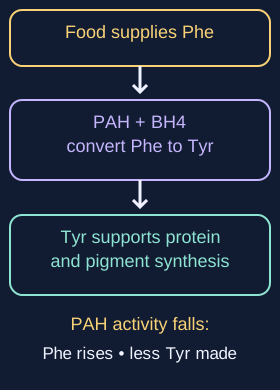
Phenylalanine (Phe) is an essential amino acid, a protein building block we must obtain from food. Phenylalanine hydroxylase (PAH) normally converts it into tyrosine (Tyr), mainly in the liver. The reaction uses oxygen, iron, and the helper molecule tetrahydrobiopterin (BH4).
Keep supply moving. Change conversion.
Predict: if PAH slows and Phe keeps entering, which pool grows?
If needed, scroll the diagram sideways. Its current state is also explained in words.
Conceptual model: two starting Phe tokens, then two enter per step. Usual, reduced, and absent PAH convert two, one, or zero. Tokens are not blood concentrations or a dosing calculator. Tyr from food is omitted.
Worked example. With reduced PAH, each model step adds two Phe and converts one. After three steps, five Phe tokens remain and three Tyr tokens have been made. Less conversion causes both accumulation and lower product output.
Why does the Phe pool grow?
More Phe enters than the reduced reaction converts.
Would Tyr have to disappear from blood?
No. Food and protein turnover also supply Tyr.
If supply stays the same but conversion improves, what changes?
Phe accumulation decreases and Tyr production through PAH increases.
Original Bone Wizardry construction; biochemical references 1, 3, and 5 in the lesson. Follow the labeled pathway.
PAH deficiency reduces this conversion. Phe can accumulate, while less Tyr is made from Phe. Tyr can still come from food and protein turnover; it does not vanish from blood. It becomes conditionally essential: dietary supply must cover what the blocked pathway cannot make.
Some excess Phe enters side pathways that form phenylpyruvate, phenyllactate, and phenylacetate. Phenylacetate contributes to the historical musty odor of untreated PKU. Reduced Tyr availability and inhibition of pigment synthesis can cause lighter pigmentation. Neither odor nor appearance establishes a diagnosis. Newborn screening aims to find the disorder before these signs develop. [1][3]
Case 12
Show answer and explanations for case 12
A. Additional Phe above the prescribed allowance (Why this does not fit)
Could extra substrate raise a product if its enzyme were functional?
Yes, when usable enzyme activity is sufficient.
Which supplied condition limits that strategy?
Negligible PAH activity prevents dependable conversion of added Phe into Tyr.
Tyr must be supplied adequately when impaired PAH-dependent synthesis cannot meet the requirement.
Read the complete explanation
Could extra substrate raise a product if its enzyme were functional? Yes, when usable enzyme activity is sufficient. Which supplied condition limits that strategy? Negligible PAH activity prevents dependable conversion of added Phe into Tyr.
B. Tyr within a nutritionally complete prescribed preparation (Best answer)
Which product normally comes from Phe hydroxylation?
Tyr.
Why does a list of universally essential amino acids miss this child's need?
Impaired synthesis makes Tyr conditionally essential in PAH deficiency.
What does conditionally essential mean for this dietary review?
Tyr must be supplied adequately when impaired PAH-dependent synthesis cannot meet the requirement.
Tyr must be supplied adequately when impaired PAH-dependent synthesis cannot meet the requirement.
Read the complete explanation
Which product normally comes from Phe hydroxylation? Tyr. Why does a list of universally essential amino acids miss this child's need? Impaired synthesis makes Tyr conditionally essential in PAH deficiency. What does conditionally essential mean for this dietary review? Tyr must be supplied adequately when impaired PAH-dependent synthesis cannot meet the requirement.
C. Additional tryptophan beyond the supplied essential-amino-acid mix (Why this does not fit)
What useful product pathway begins with tryptophan?
Serotonin synthesis.
Why does more tryptophan not address the missing PAH product?
Tryptophan does not replace Tyr production from Phe.
Tyr must be supplied adequately when impaired PAH-dependent synthesis cannot meet the requirement.
Read the complete explanation
What useful product pathway begins with tryptophan? Serotonin synthesis. Why does more tryptophan not address the missing PAH product? Tryptophan does not replace Tyr production from Phe.
D. Additional branched-chain amino acids beyond the supplied mix (Why this does not fit)
Why are these amino acids nutritionally important?
Leucine, isoleucine and valine are essential building blocks.
Which stated detail distinguishes the unmet need?
Essential amino acids are supplied; the problem is a normally synthesized product of the blocked reaction.
Tyr must be supplied adequately when impaired PAH-dependent synthesis cannot meet the requirement.
Read the complete explanation
Why are these amino acids nutritionally important? Leucine, isoleucine and valine are essential building blocks. Which stated detail distinguishes the unmet need? Essential amino acids are supplied; the problem is a normally synthesized product of the blocked reaction.
Takeaway: Tyr must be supplied adequately when impaired PAH-dependent synthesis cannot meet the requirement.
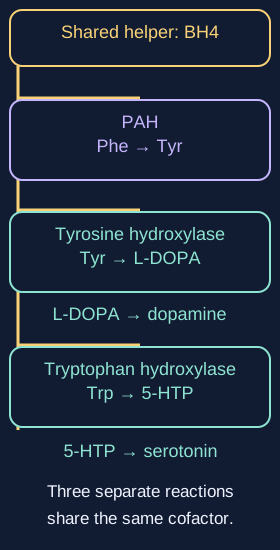
A cofactor is a small molecule an enzyme needs to work. BH4 supports PAH, but also the enzymes that start dopamine and serotonin synthesis. Tyrosine hydroxylase makes L-DOPA from Tyr; tryptophan hydroxylase makes 5-hydroxytryptophan (5-HTP) from tryptophan. These products become dopamine and serotonin. BH4 also supports nitric oxide synthases.
Change the enzyme or its shared helper
Predict: does removing BH4 affect only the Phe-to-Tyr branch?
If needed, scroll the diagram sideways. Its current state is also explained in words.
TH = tyrosine hydroxylase; TPH = tryptophan hydroxylase. The map shows direct cofactor dependence. PAH deficiency can also affect brain neurotransmitters indirectly through high Phe.
Worked example. A direct PAH defect affects the PAH branch. Loss of BH4 affects all three hydroxylases shown, so controlling Phe alone may leave dopamine and serotonin synthesis impaired.
Why can diet lower Phe without solving the whole problem?
It reduces Phe supply but does not replace the shared BH4 cofactor.
Which normal blood result would fail to prove brain recovery?
A controlled Phe level alone cannot establish normal neurotransmitter synthesis.
What extra issue matters in DHPR deficiency?
Cerebral folate depletion requires folinic acid under specialist care.
Original Bone Wizardry construction; biochemical references 1, 3, and 5 in the lesson. Follow the labeled pathway.
Thus, lowering dietary Phe can address one consequence of a BH4 disorder while leaving neurotransmitter production impaired. Treatment depends on the specific disorder and may include Phe control, BH4, L-DOPA with a peripheral decarboxylase inhibitor, and 5-HTP.
Separate making BH4 from recycling it
GTP cyclohydrolase I starts BH4 synthesis; PTPS acts later. Autosomal recessive GTP cyclohydrolase I deficiency typically lowers neopterin and biopterin. PTPS deficiency typically raises neopterin while lowering biopterin. DHPR recycles BH4; low red-cell DHPR activity identifies this recycling problem. Patterns need specialist laboratory interpretation.
DHPR deficiency also risks cerebral folate depletion and requires folinic acid. This is not interchangeable with folic acid. Diet is generally preferred for Phe control in DHPR deficiency; sapropterin is an individualized specialist decision. BH4 disorders differ: some do not cause elevated Phe. [5]
Dopamine normally restrains prolactin release. Less dopamine can therefore raise prolactin, but prolactin alone is neither a sensitive nor a specific test for a BH4 disorder.
Case 14
Show answer and explanations for case 14
A. Tyrosine hydroxylation and tryptophan hydroxylation (Best answer)
Which intermediates does the experiment supply?
L-DOPA and 5-HTP, the products of the first hydroxylation steps.
Why can BH4 deficiency impair both steps?
Tyrosine and tryptophan hydroxylases both require BH4.
Why is dietary Phe control insufficient for this pathway problem?
Dietary Phe control lowers Phe exposure but does not replace deficient neurotransmitter precursors.
Dietary Phe control lowers Phe exposure but does not replace deficient neurotransmitter precursors.
Read the complete explanation
Which intermediates does the experiment supply? L-DOPA and 5-HTP, the products of the first hydroxylation steps. Why can BH4 deficiency impair both steps? Tyrosine and tryptophan hydroxylases both require BH4. Why is dietary Phe control insufficient for this pathway problem? Dietary Phe control lowers Phe exposure but does not replace deficient neurotransmitter precursors.
B. Aromatic amino-acid decarboxylation in both pathways (Why this does not fit)
What reaction follows L-DOPA or 5-HTP formation?
Decarboxylation produces dopamine or serotonin.
Which experimental response suggests that downstream step can still function?
Both transmitters form when their immediate precursors are supplied.
Dietary Phe control lowers Phe exposure but does not replace deficient neurotransmitter precursors.
Read the complete explanation
What reaction follows L-DOPA or 5-HTP formation? Decarboxylation produces dopamine or serotonin. Which experimental response suggests that downstream step can still function? Both transmitters form when their immediate precursors are supplied.
C. Monoamine degradation by monoamine oxidase (Why this does not fit)
What would altered degradation change?
The rate at which existing monoamines are broken down.
Why does the precursor response favor a synthesis block instead?
Supplying products downstream of the BH4-dependent step restores transmitter formation.
Dietary Phe control lowers Phe exposure but does not replace deficient neurotransmitter precursors.
Read the complete explanation
What would altered degradation change? The rate at which existing monoamines are broken down. Why does the precursor response favor a synthesis block instead? Supplying products downstream of the BH4-dependent step restores transmitter formation.
D. Vesicular storage of dopamine and serotonin (Why this does not fit)
Why does vesicular storage matter?
Neurons package transmitters for release.
What does the study directly demonstrate instead?
A limitation overcome by supplying hydroxylation products, consistent with impaired precursor synthesis.
Dietary Phe control lowers Phe exposure but does not replace deficient neurotransmitter precursors.
Read the complete explanation
Why does vesicular storage matter? Neurons package transmitters for release. What does the study directly demonstrate instead? A limitation overcome by supplying hydroxylation products, consistent with impaired precursor synthesis.
Takeaway: Dietary Phe control lowers Phe exposure but does not replace deficient neurotransmitter precursors.
LAT1 is a shared transporter at the blood-brain barrier. Phe, Tyr, tryptophan, and other large neutral amino acids compete to use it. Excess blood Phe can increase brain Phe and reduce entry of competing amino acids. Transport competition is one mechanism of injury, alongside altered neurotransmitter synthesis, protein synthesis, and white-matter function. [9]
Share a limited route into the brain
Predict: when Phe has more of the transport opportunity, what happens to its competitors?
If needed, scroll the diagram sideways. Its current state is also explained in words.
Six squares illustrate competition, not measured proportions, actual transporter counts, or a prediction for a patient. Gold P = Phe; teal O = other large neutral amino acids.
Worked example. The illustration changes from three Phe and three other-amino-acid squares to five Phe and one other square. This shows the direction of competition, not a measured allocation.
Why can high blood Phe reduce brain Tyr availability?
They compete for the shared LAT1 transporter.
Would that make every brain effect immediately reversible?
No. Mechanisms and accumulated injury differ, so recovery varies.
Can an MRI pattern alone identify the missing enzyme?
No. Clinical and biochemical testing are still needed.
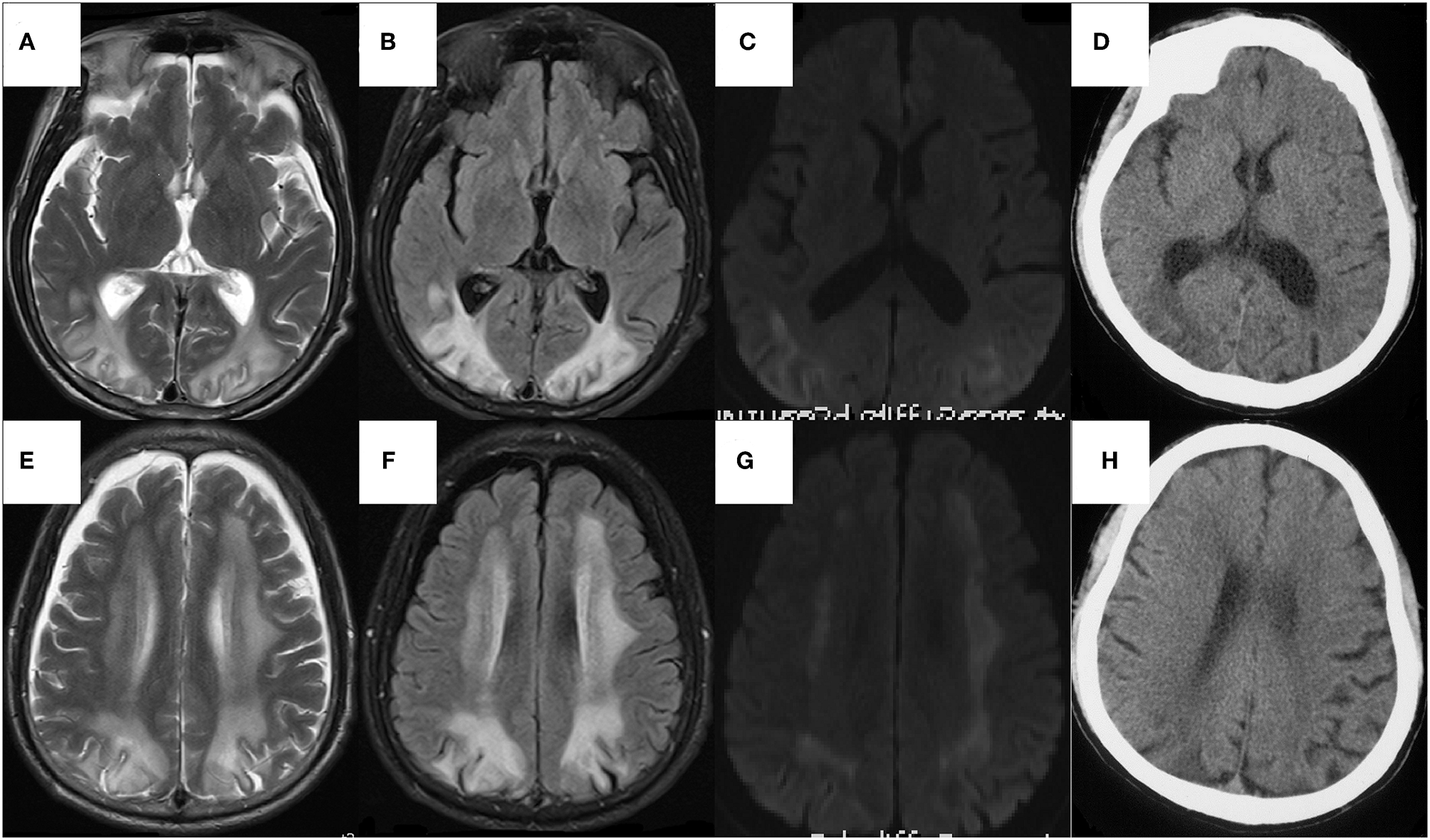
White matter contains nerve fibers and their insulating myelin. Some people with poorly controlled PKU have symmetric bright white-matter changes on T2/FLAIR MRI. This pattern is not specific to PKU and does not replace biochemical testing. [12]
Early treatment prevents much severe developmental injury. Later restoration of Phe control may improve attention, mood, tremor, or some MRI abnormalities; the degree of recovery varies. It does not guarantee reversal of established developmental disability. [3][13]
Large neutral amino acid supplements use this competition and may be an adjunct for selected adolescents or adults. They are not a replacement for standard care and are avoided in pregnancy because fetal safety and adequate maternal Phe control are not established.
Exposure and inheritance are different questions
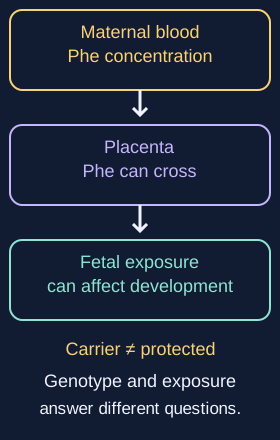
Elevated maternal Phe crosses the placenta and can harm fetal development. A fetus need not have PAH deficiency to be exposed. Maternal PKU syndrome can include microcephaly (a small head), congenital heart defects, impaired growth, and developmental disability. These are risks, not inevitable findings in every exposed infant. [8]
Change exposure, then change genotype
Predict: will changing the fetus from affected to carrier stop maternal Phe transfer?
If needed, scroll the diagram sideways. Its current state is also explained in words.
This exposure map does not calculate an individual fetal risk. A thicker arrow means greater exposure conceptually, not a measured placental gradient.
Worked example. Switching fetal genotype leaves the exposure arrow unchanged. Raising maternal Phe increases the illustrated exposure for either genotype. The fetus does not need PAH deficiency to be harmed.
Which person supplies the circulating exposure?
The maternal blood concentration determines the exposure being modeled.
Why begin control before a planned pregnancy?
Early organ formation can occur before pregnancy is recognized.
Why not reduce dietary Phe to zero?
Phe remains necessary for protein synthesis and fetal growth.
Original Bone Wizardry construction; biochemical references 1, 3, and 5 in the lesson. Follow the labeled pathway.
For a planned pregnancy, metabolic care aims for Phe below 360 micromol/L for three months before conception, then 120–360 micromol/L during pregnancy. A micromole per liter measures concentration, not a food allowance. The lower bound matters because Phe remains essential for growth. These clinical targets guide individualized care; they are not a diagnostic boundary between safe and harmful exposure. [3]
PAH deficiency is autosomal recessive: disease usually requires a pathogenic variant in both gene copies. An affected parent and a partner with two unaffected PAH copies have carrier children. A partner's normal Phe level does not exclude carrier status. A carrier fetus still needs protection from high maternal Phe.
Case 7
Show answer and explanations for case 7
A. Inherited PAH deficiency; two pathogenic PAH alleles (Why this does not fit)
How many pathogenic copies does recessive PAH deficiency usually require?
Two, one inherited from each parent.
Which parental result prevents that combination under the stated assumption?
The other parent has two unaffected copies.
A carrier genotype does not remove the need to assess complications of prenatal maternal Phe exposure.
Read the complete explanation
How many pathogenic copies does recessive PAH deficiency usually require? Two, one inherited from each parent. Which parental result prevents that combination under the stated assumption? The other parent has two unaffected copies.
B. Prenatal maternal Phe exposure; one pathogenic PAH allele (Best answer)
What does the affected mother transmit?
One pathogenic PAH allele to each child.
Can a carrier fetus still experience harmful maternal exposure?
Yes. Phe crosses the placenta, so exposure risk is separate from the child's enzyme genotype.
Does a carrier result remove the need to assess exposure-related complications?
A carrier genotype does not remove the need to assess complications of prenatal maternal Phe exposure.
A carrier genotype does not remove the need to assess complications of prenatal maternal Phe exposure.
Read the complete explanation
What does the affected mother transmit? One pathogenic PAH allele to each child. Can a carrier fetus still experience harmful maternal exposure? Yes. Phe crosses the placenta, so exposure risk is separate from the child's enzyme genotype. Does a carrier result remove the need to assess exposure-related complications? A carrier genotype does not remove the need to assess complications of prenatal maternal Phe exposure.
C. Postnatal Phe accumulation; one pathogenic PAH allele (Why this does not fit)
Would a carrier usually develop marked postnatal Phe accumulation?
No. One unaffected copy generally preserves sufficient PAH function.
Which supplied measurement directly opposes this explanation?
Normal postnatal Phe, despite structural findings already present at birth.
A carrier genotype does not remove the need to assess complications of prenatal maternal Phe exposure.
Read the complete explanation
Would a carrier usually develop marked postnatal Phe accumulation? No. One unaffected copy generally preserves sufficient PAH function. Which supplied measurement directly opposes this explanation? Normal postnatal Phe, despite structural findings already present at birth.
D. Prenatal maternal Phe exposure; no pathogenic PAH allele (Why this does not fit)
Is prenatal exposure compatible with the birth findings?
Yes, maternal hyperphenylalaninemia can affect brain, heart and growth.
What is wrong with the proposed inheritance?
An affected mother transmits a pathogenic allele even when the other parent contributes an unaffected copy.
A carrier genotype does not remove the need to assess complications of prenatal maternal Phe exposure.
Read the complete explanation
Is prenatal exposure compatible with the birth findings? Yes, maternal hyperphenylalaninemia can affect brain, heart and growth. What is wrong with the proposed inheritance? An affected mother transmits a pathogenic allele even when the other parent contributes an unaffected copy.
Takeaway: A carrier genotype does not remove the need to assess complications of prenatal maternal Phe exposure.
Newborn screening measures Phe in a dried blood spot, often alongside Tyr. Timing and cutoffs vary by program. An increased Phe:Tyr ratio supports follow-up, but does not prove PAH deficiency or exclude BH4 disease. For example, Phe 600 divided by Tyr 50 gives a ratio of 12. The units cancel; the ratio is not another Phe concentration.
Calculate what the ratio actually says
Predict the result before changing either number. Start with 600 divided by 50.
If needed, scroll the diagram sideways. Its current state is also explained in words.
The bar illustrates the ratio up to 30; it is not a risk scale. No ratio alone identifies PAH versus BH4 deficiency.
Worked example. 600 micromol/L divided by 50 micromol/L equals 12. Doubling Tyr to 100 lowers the ratio to 6 without changing Phe. That is why the ratio and absolute Phe are interpreted together.
Did Phe fall when only Tyr doubled?
No. Phe stayed at 600; only the ratio changed.
Could a BH4 disorder also increase the ratio?
Yes. PAH needs BH4, so a cofactor defect can impair the same conversion.
Does a well newborn need follow-up after a positive screen?
Yes. Screening aims to act before symptoms develop.
An abnormal screen needs prompt metabolic evaluation and confirmatory plasma amino acids. Persistent high Phe also requires assessment for BH4 disorders, using pterins, DHPR activity, and/or appropriate molecular testing. PAH genetic testing helps establish the cause; treatment should not wait for genetic results. [2][3]
Many PAH variants change one amino acid in the enzyme (missense variants). They can alter folding, stability, or catalytic function. Residual activity varies, so a genotype alone does not perfectly predict treatment response.
For persistently untreated Phe above 360 micromol/L, ACMG recommends lifelong treatment. People at 120–360 need monitoring because concentrations can rise. The 2026 correction retains the recommendation to maintain Phe at or below 360 for better intellectual outcomes, but removes a fixed lifetime claim from that target recommendation and rates its evidence as moderate. It does not recommend stopping adult treatment. [10]
Use the abnormal metabolite to separate look-alikes
Alkaptonuria blocks homogentisate breakdown and can cause dark urine and ochronosis (dark connective-tissue pigmentation). CBS deficiency causes high homocysteine, often high methionine, lens displacement, and thrombosis risk. Maple syrup urine disease raises branched-chain amino acids and alloisoleucine, and may cause acute neonatal encephalopathy. These are different biochemical patterns from isolated high Phe. [14][15][16]
Match the treatment to the point of action
Phe restriction is not Phe elimination. A metabolic dietitian combines measured natural protein with suitable medical food to supply protein equivalents, Tyr, and other nutrients. Aspartame releases Phe, so its contribution must be avoided or explicitly accounted for in the prescribed intake. [1][4]
Move the treatment to its reaction
Predict: which strategy creates an alternate route rather than supporting PAH?
If needed, scroll the diagram sideways. Its current state is also explained in words.
This is a mechanism comparison, not a treatment-selection algorithm. Cofactor response, eligibility, nutrition, and safety must be assessed individually.
Worked example. Measured diet reduces incoming Phe. A cofactor or precursor can support responsive residual PAH. Pegvaliase creates a different Phe-metabolizing route and does not make Tyr.
Can a cofactor replace an entirely unusable enzyme?
No. Responsive enzyme function must remain.
Why can Tyr nutrition still matter with a bypass?
Lowering Phe through pegvaliase does not generate Tyr.
Which emergency risk comes with pegvaliase?
Anaphylaxis requires prescribed epinephrine and the specified monitoring program.
Sapropterin supplies BH4 and can improve residual PAH function in responsive patients. It does not replace an absent enzyme. Sepiapterin, a precursor converted to BH4, was FDA-approved in 2025 for responsive adults and children at least one month old, together with a Phe-restricted diet. Response must be assessed; neither medicine works in everyone. [7][11]
Pegvaliase supplies a different enzyme, phenylalanine ammonia lyase. It converts Phe into trans-cinnamic acid and ammonia, bypassing PAH without making Tyr. The February 2026 US label includes adults and children aged 12 years or older with Phe above 600 micromol/L despite existing management. It carries a boxed warning for anaphylaxis and requires prescribed epinephrine and the specified monitoring and risk-management program. [6][17]
The common aim is sustained metabolic and nutritional care. The exact diet, medicine, monitoring, and pregnancy plan depend on the person and their metabolic team.
Try the reasoning in a new case
Choose any case. Predict first, then open the explanation. Every option has a short reasoning path and a complete explanation. You can retry without a score or penalty.
Change cases freely. Earlier answers stay available during this visit.
Case 1
Show answer and explanations for case 1
A. Serial plasma Phe and Tyr measurements (Why this does not fit)
What can serial Phe measurements establish?
They follow the concentration and response to treatment.
Would persistent high Phe identify the missing enzyme by itself?
No. Both PAH deficiency and several BH4 disorders can produce this pattern.
Collect the needed diagnostic samples promptly and begin specialist metabolic care without waiting weeks for the gene result.
Read the complete explanation
What can serial Phe measurements establish? They follow the concentration and response to treatment. Would persistent high Phe identify the missing enzyme by itself? No. Both PAH deficiency and several BH4 disorders can produce this pattern.
B. PAH deletion/duplication testing as the next isolated assay (Why this does not fit)
Why is PAH sequencing useful here?
Biallelic pathogenic PAH variants can establish PAH deficiency.
What would a PAH-only strategy leave unassessed while results are pending?
BH4 synthesis or recycling defects, which can also impair neurotransmitter production.
Collect the needed diagnostic samples promptly and begin specialist metabolic care without waiting weeks for the gene result.
Read the complete explanation
Why is PAH sequencing useful here? Biallelic pathogenic PAH variants can establish PAH deficiency. What would a PAH-only strategy leave unassessed while results are pending? BH4 synthesis or recycling defects, which can also impair neurotransmitter production.
C. Pterin and red-cell DHPR assessment with a broader molecular evaluation (Best answer)
Which helper is shared by Phe and neurotransmitter pathways?
BH4 supports PAH and the hydroxylases that begin dopamine and serotonin synthesis.
Which supplied comparison makes a shared helper defect important to assess?
Persistent neurological findings after Phe improves raise concern for a cofactor pathway affecting neurotransmitters as well.
Should treatment wait for sequencing?
Collect the needed diagnostic samples promptly and begin specialist metabolic care without waiting weeks for the gene result.
Collect the needed diagnostic samples promptly and begin specialist metabolic care without waiting weeks for the gene result.
Read the complete explanation
Which helper is shared by Phe and neurotransmitter pathways? BH4 supports PAH and the hydroxylases that begin dopamine and serotonin synthesis. Which supplied comparison makes a shared helper defect important to assess? Persistent neurological findings after Phe improves raise concern for a cofactor pathway affecting neurotransmitters as well. Should treatment wait for sequencing? Collect the needed diagnostic samples promptly and begin specialist metabolic care without waiting weeks for the gene result.
D. Brain MRI and EEG as the next etiologic studies (Why this does not fit)
Why might brain or neurotransmitter studies seem relevant?
Some cofactor disorders injure the brain and lower monoamine metabolites.
Would MRI or EEG directly establish a cofactor synthesis or recycling defect?
They assess brain structure or electrical function; pterin, DHPR and molecular tests address the metabolic cause.
Collect the needed diagnostic samples promptly and begin specialist metabolic care without waiting weeks for the gene result.
Read the complete explanation
Why might brain or neurotransmitter studies seem relevant? Some cofactor disorders injure the brain and lower monoamine metabolites. Would MRI or EEG directly establish a cofactor synthesis or recycling defect? They assess brain structure or electrical function; pterin, DHPR and molecular tests address the metabolic cause.
Takeaway: Collect the needed diagnostic samples promptly and begin specialist metabolic care without waiting weeks for the gene result.
A. PTPS deficiency; replace dopamine and serotonin precursors (Best answer)
Which synthesis defect fits high neopterin with low biopterin and normal DHPR?
PTPS deficiency blocks BH4 synthesis after the first step.
What does low CSF neurotransmitter output despite improved Phe identify as a remaining target?
Dopamine and serotonin synthesis may require specialist-directed L-DOPA with carbidopa and 5-HTP.
What must be addressed beyond blood Phe in this pattern?
Phe control does not guarantee central dopamine and serotonin sufficiency; treatment and monitoring must address the measured cofactor-related deficits.
Phe control does not guarantee central dopamine and serotonin sufficiency; treatment and monitoring must address the measured cofactor-related deficits.
Read the complete explanation
Which synthesis defect fits high neopterin with low biopterin and normal DHPR? PTPS deficiency blocks BH4 synthesis after the first step. What does low CSF neurotransmitter output despite improved Phe identify as a remaining target? Dopamine and serotonin synthesis may require specialist-directed L-DOPA with carbidopa and 5-HTP. What must be addressed beyond blood Phe in this pattern? Phe control does not guarantee central dopamine and serotonin sufficiency; treatment and monitoring must address the measured cofactor-related deficits.
B. PTPS deficiency; correct cerebral folate depletion (Why this does not fit)
Which part of this proposal matches the pterin pattern?
PTPS is consistent with high neopterin and low biopterin.
Which measured deficit instead explains the additional treatment target?
CSF folate is within range, while dopamine and serotonin metabolites are low.
Phe control does not guarantee central dopamine and serotonin sufficiency; treatment and monitoring must address the measured cofactor-related deficits.
Read the complete explanation
Which part of this proposal matches the pterin pattern? PTPS is consistent with high neopterin and low biopterin. Which measured deficit instead explains the additional treatment target? CSF folate is within range, while dopamine and serotonin metabolites are low.
C. DHPR deficiency; replace dopamine and serotonin precursors (Why this does not fit)
Why is precursor replacement plausible in a BH4 disorder?
Impaired BH4 availability can limit dopamine and serotonin production.
Which result argues against the proposed enzyme localization?
Red-cell DHPR activity is normal, and the pterin pattern instead supports PTPS deficiency.
Phe control does not guarantee central dopamine and serotonin sufficiency; treatment and monitoring must address the measured cofactor-related deficits.
Read the complete explanation
Why is precursor replacement plausible in a BH4 disorder? Impaired BH4 availability can limit dopamine and serotonin production. Which result argues against the proposed enzyme localization? Red-cell DHPR activity is normal, and the pterin pattern instead supports PTPS deficiency.
D. DHPR deficiency; correct cerebral folate depletion (Why this does not fit)
Why is this a plausible enzyme and treatment pairing in other patients?
DHPR deficiency can cause cerebral folate deficiency that warrants folinic acid.
Which two findings make it a weaker fit here?
DHPR activity and CSF folate are both within range; the measured deficit is neurotransmitter output.
Phe control does not guarantee central dopamine and serotonin sufficiency; treatment and monitoring must address the measured cofactor-related deficits.
Read the complete explanation
Why is this a plausible enzyme and treatment pairing in other patients? DHPR deficiency can cause cerebral folate deficiency that warrants folinic acid. Which two findings make it a weaker fit here? DHPR activity and CSF folate are both within range; the measured deficit is neurotransmitter output.
Takeaway: Phe control does not guarantee central dopamine and serotonin sufficiency; treatment and monitoring must address the measured cofactor-related deficits.
A. Impaired melanosome delivery despite adequate synthesis (Why this does not fit)
Why could a transport defect reduce visible pigment?
Pigment must reach keratinocytes after it is made.
What does the cell experiment instead implicate?
Pigment synthesis changes when Phe and Tyr availability change, favoring a metabolic limitation.
Pigmentation is contextual evidence; biochemical and etiologic testing establish the cause.
Read the complete explanation
Why could a transport defect reduce visible pigment? Pigment must reach keratinocytes after it is made. What does the cell experiment instead implicate? Pigment synthesis changes when Phe and Tyr availability change, favoring a metabolic limitation.
B. Reduced melanocyte number from immune destruction (Why this does not fit)
How can melanocyte loss cause depigmentation?
Fewer pigment-producing cells can lower skin pigment.
Which supplied observation argues against loss as the principal mechanism?
Comparable melanocyte numbers and reversible metabolic responses favor a synthesis limitation rather than cell loss.
Pigmentation is contextual evidence; biochemical and etiologic testing establish the cause.
Read the complete explanation
How can melanocyte loss cause depigmentation? Fewer pigment-producing cells can lower skin pigment. Which supplied observation argues against loss as the principal mechanism? Comparable melanocyte numbers and reversible metabolic responses favor a synthesis limitation rather than cell loss.
C. Absent tyrosinase protein from defective synthesis (Why this does not fit)
Why would absent tyrosinase reduce pigment?
Tyrosinase is needed for melanin synthesis.
What conflicts with absence of the protein in this sample?
Tyrosinase is detectable and pigment increases after changing substrate conditions.
Pigmentation is contextual evidence; biochemical and etiologic testing establish the cause.
Read the complete explanation
Why would absent tyrosinase reduce pigment? Tyrosinase is needed for melanin synthesis. What conflicts with absence of the protein in this sample? Tyrosinase is detectable and pigment increases after changing substrate conditions.
D. Limited Tyr substrate and Phe-related tyrosinase inhibition (Best answer)
Which melanin precursor is supplied less effectively when PAH activity is low?
Tyr production from Phe falls.
How does excess Phe add a second limitation?
It can inhibit tyrosinase, so restoring substrate balance can improve pigment synthesis.
Does light pigmentation prove PAH deficiency?
Pigmentation is contextual evidence; biochemical and etiologic testing establish the cause.
Pigmentation is contextual evidence; biochemical and etiologic testing establish the cause.
Read the complete explanation
Which melanin precursor is supplied less effectively when PAH activity is low? Tyr production from Phe falls. How does excess Phe add a second limitation? It can inhibit tyrosinase, so restoring substrate balance can improve pigment synthesis. Does light pigmentation prove PAH deficiency? Pigmentation is contextual evidence; biochemical and etiologic testing establish the cause.
Takeaway: Pigmentation is contextual evidence; biochemical and etiologic testing establish the cause.
A. Lower blood Phe and higher urinary phenylacetate (Why this does not fit)
Where does endogenous phenylacetate come from?
Side-pathway metabolism of accumulated Phe.
Why would a rise in that product be a poor default prediction?
The new route reduces the precursor available to that side pathway.
Reduced side products can follow bypass disposal even when the native PAH defect persists.
Read the complete explanation
Where does endogenous phenylacetate come from? Side-pathway metabolism of accumulated Phe. Why would a rise in that product be a poor default prediction? The new route reduces the precursor available to that side pathway.
B. Lower blood Phe and lower urinary phenylacetate (Best answer)
What does the new enzyme route do to circulating Phe?
It increases Phe disposal without using native PAH.
How does reduced precursor availability affect the endogenous odor pathway?
Less Phe is available to form phenylpyruvate and downstream phenylacetate.
Does reduced odor demonstrate that PAH activity has recovered?
Reduced side products can follow bypass disposal even when the native PAH defect persists.
Reduced side products can follow bypass disposal even when the native PAH defect persists.
Read the complete explanation
What does the new enzyme route do to circulating Phe? It increases Phe disposal without using native PAH. How does reduced precursor availability affect the endogenous odor pathway? Less Phe is available to form phenylpyruvate and downstream phenylacetate. Does reduced odor demonstrate that PAH activity has recovered? Reduced side products can follow bypass disposal even when the native PAH defect persists.
C. Higher blood Phe and lower urinary phenylacetate (Why this does not fit)
What might lower phenylacetate suggest about its side pathway?
Less precursor flow could reduce the product.
Which direction of blood Phe conflicts with the stated added disposal route?
A rise is not the expected consequence of effective additional Phe removal.
Reduced side products can follow bypass disposal even when the native PAH defect persists.
Read the complete explanation
What might lower phenylacetate suggest about its side pathway? Less precursor flow could reduce the product. Which direction of blood Phe conflicts with the stated added disposal route? A rise is not the expected consequence of effective additional Phe removal.
D. Higher blood Phe and higher urinary phenylacetate (Why this does not fit)
When might both substrate and side products rise?
When Phe supply exceeds its disposal more strongly.
How does the new effective disposal route change that balance?
It removes additional Phe rather than adding to the substrate burden.
Reduced side products can follow bypass disposal even when the native PAH defect persists.
Read the complete explanation
When might both substrate and side products rise? When Phe supply exceeds its disposal more strongly. How does the new effective disposal route change that balance? It removes additional Phe rather than adding to the substrate burden.
E. Unchanged blood Phe and lower urinary phenylacetate (Why this does not fit)
Could selective inhibition of a side pathway lower its product alone?
Yes, if that were the intervention.
What is different about the intervention actually described?
It directly increases disposal of circulating Phe through another product.
Reduced side products can follow bypass disposal even when the native PAH defect persists.
Read the complete explanation
Could selective inhibition of a side pathway lower its product alone? Yes, if that were the intervention. What is different about the intervention actually described? It directly increases disposal of circulating Phe through another product.
Takeaway: Reduced side products can follow bypass disposal even when the native PAH defect persists.
Would normal plasma Tyr guarantee normal brain Tyr delivery?
A competing amino acid can limit brain Tyr transport despite adequate circulating Tyr.
A competing amino acid can limit brain Tyr transport despite adequate circulating Tyr.
Read the complete explanation
What does unchanged transporter abundance help distinguish? A change in competition can alter flux without changing the number of transporters. Which observed response supports competition? Lowering Phe restores Tyr entry despite an unchanged plasma Tyr supply. Would normal plasma Tyr guarantee normal brain Tyr delivery? A competing amino acid can limit brain Tyr transport despite adequate circulating Tyr.
B. Reduced circulating availability of Tyr and tryptophan (Why this does not fit)
Why might low plasma supply reduce brain entry?
Less available substrate can reduce transport into the brain.
Which observation argues against inadequate circulating supply here?
Both plasma amino acids are adequate, and changing Phe alters Tyr entry.
A competing amino acid can limit brain Tyr transport despite adequate circulating Tyr.
Read the complete explanation
Why might low plasma supply reduce brain entry? Less available substrate can reduce transport into the brain. Which observation argues against inadequate circulating supply here? Both plasma amino acids are adequate, and changing Phe alters Tyr entry.
C. Reduced abundance of the shared amino-acid transporter (Why this does not fit)
Could fewer carriers reduce amino-acid entry?
Yes, carrier abundance can limit transport capacity.
Which controlled condition separates that mechanism?
Transporter abundance remains unchanged while lowering Phe increases Tyr flux.
A competing amino acid can limit brain Tyr transport despite adequate circulating Tyr.
Read the complete explanation
Could fewer carriers reduce amino-acid entry? Yes, carrier abundance can limit transport capacity. Which controlled condition separates that mechanism? Transporter abundance remains unchanged while lowering Phe increases Tyr flux.
D. Reduced glucose delivery limiting cerebral energy availability (Why this does not fit)
Why could reduced glucose supply impair brain function?
Glucose is a major cerebral fuel.
Which supplied measurement directs attention elsewhere?
Glucose delivery is preserved while amino-acid transport changes selectively.
A competing amino acid can limit brain Tyr transport despite adequate circulating Tyr.
Read the complete explanation
Why could reduced glucose supply impair brain function? Glucose is a major cerebral fuel. Which supplied measurement directs attention elsewhere? Glucose delivery is preserved while amino-acid transport changes selectively.
Takeaway: A competing amino acid can limit brain Tyr transport despite adequate circulating Tyr.
A. Try conception after 1 week below 360; target 120 to 360 during pregnancy (Why this does not fit)
Why might the current value seem reassuring?
290 micromol/L is within the usual pregnancy target range.
What aspect of the plan remains incomplete?
Stable preconception control has been documented for only one week, rather than the recommended preparation period.
Preconception care requires sustained control while preserving essential Phe and adequate nutrition.
Read the complete explanation
Why might the current value seem reassuring? 290 micromol/L is within the usual pregnancy target range. What aspect of the plan remains incomplete? Stable preconception control has been documented for only one week, rather than the recommended preparation period.
B. Try conception after 3 months below 360; target below 120 during pregnancy (Why this does not fit)
Why can a lower value appear attractive?
Excess Phe is harmful, so further lowering can seem protective.
Why is a below-range pregnancy target inappropriate?
Preconception care requires sustained control while preserving essential Phe and adequate nutrition.
Read the complete explanation
Why can a lower value appear attractive? Excess Phe is harmful, so further lowering can seem protective. Why is a below-range pregnancy target inappropriate? Phe remains essential; excessive restriction risks inadequate fetal and maternal nutrition.
C. Try conception after 3 months below 360; target 120 to 360 during pregnancy (Best answer)
Why does preconception timing matter?
Early organ formation begins before pregnancy may be recognized.
Which supplied history indicates more preparation is needed?
Only one week of control has been achieved despite the encouraging current value.
Is the lowest attainable Phe the goal?
Preconception care requires sustained control while preserving essential Phe and adequate nutrition.
Preconception care requires sustained control while preserving essential Phe and adequate nutrition.
Read the complete explanation
Why does preconception timing matter? Early organ formation begins before pregnancy may be recognized. Which supplied history indicates more preparation is needed? Only one week of control has been achieved despite the encouraging current value. Is the lowest attainable Phe the goal? Preconception care requires sustained control while preserving essential Phe and adequate nutrition.
D. Try conception after 3 months below 360; target 120 to 360 only through the first trimester (Why this does not fit)
Why focus on the first trimester?
Major organ formation makes early exposure particularly important.
Why continue metabolic control afterward?
Growth and neurological development continue throughout pregnancy.
Preconception care requires sustained control while preserving essential Phe and adequate nutrition.
Read the complete explanation
Why focus on the first trimester? Major organ formation makes early exposure particularly important. Why continue metabolic control afterward? Growth and neurological development continue throughout pregnancy.
Takeaway: Preconception care requires sustained control while preserving essential Phe and adequate nutrition.
A. Different systemic exposure to the administered cofactor (Why this does not fit)
Could different absorption alter a drug response?
Yes. Systemic exposure can differ despite equal prescribed doses.
Which supplied control weakens that explanation here?
The measured drug exposures are comparable.
A supervised biochemical response is more informative than assuming all PAH variants respond alike.
Read the complete explanation
Could different absorption alter a drug response? Yes. Systemic exposure can differ despite equal prescribed doses. Which supplied control weakens that explanation here? The measured drug exposures are comparable.
B. Different degrees of untreated BH4 synthesis deficiency (Why this does not fit)
Why can BH4 deficiency cause high Phe?
PAH needs BH4 to function.
What establishes a different cause in these patients?
Biallelic PAH variants with normal pterin studies support PAH deficiency rather than a synthesis defect.
A supervised biochemical response is more informative than assuming all PAH variants respond alike.
Read the complete explanation
Why can BH4 deficiency cause high Phe? PAH needs BH4 to function. What establishes a different cause in these patients? Biallelic PAH variants with normal pterin studies support PAH deficiency rather than a synthesis defect.
C. Different reductions in dietary Phe intake during the trial (Why this does not fit)
Could reduced Phe intake lower blood Phe?
Yes, substrate reduction is a major treatment mechanism.
Which controlled condition removes that explanation here?
The diets were unchanged during the supervised trials.
A supervised biochemical response is more informative than assuming all PAH variants respond alike.
Read the complete explanation
Could reduced Phe intake lower blood Phe? Yes, substrate reduction is a major treatment mechanism. Which controlled condition removes that explanation here? The diets were unchanged during the supervised trials.
D. Different amounts of residual PAH function that can respond to added cofactor (Best answer)
Can BH4 support an enzyme that retains some usable function?
Yes. Sapropterin can improve cofactor availability and stability in responsive PAH variants.
Why might another PAH genotype show little response?
Its residual enzyme function may not improve meaningfully with added BH4.
Can the severity label alone establish responsiveness?
A supervised biochemical response is more informative than assuming all PAH variants respond alike.
A supervised biochemical response is more informative than assuming all PAH variants respond alike.
Read the complete explanation
Can BH4 support an enzyme that retains some usable function? Yes. Sapropterin can improve cofactor availability and stability in responsive PAH variants. Why might another PAH genotype show little response? Its residual enzyme function may not improve meaningfully with added BH4. Can the severity label alone establish responsiveness? A supervised biochemical response is more informative than assuming all PAH variants respond alike.
Takeaway: A supervised biochemical response is more informative than assuming all PAH variants respond alike.
A. Ammonia-lyase disposal; adequate dietary Tyr remains necessary (Best answer)
What does trans-cinnamic acid production identify?
An ammonia-lyase route for disposing of Phe, as used by pegvaliase.
Does that route restore the blocked Tyr-producing reaction?
No. The labeled-substrate result shows that improved Phe disposal need not increase Tyr synthesis.
Does a lower Phe value prove the original reaction now works?
A bypass can remove excess Phe without restoring its usual Tyr product.
A bypass can remove excess Phe without restoring its usual Tyr product.
Read the complete explanation
What does trans-cinnamic acid production identify? An ammonia-lyase route for disposing of Phe, as used by pegvaliase. Does that route restore the blocked Tyr-producing reaction? No. The labeled-substrate result shows that improved Phe disposal need not increase Tyr synthesis. Does a lower Phe value prove the original reaction now works? A bypass can remove excess Phe without restoring its usual Tyr product.
B. Restored hydroxylation; adequate dietary Tyr remains necessary (Why this does not fit)
What would restored PAH activity produce from labeled Phe?
Labeled Tyr.
Which experimental result contradicts that mechanism?
Tyr conversion does not increase, while trans-cinnamic acid production does.
A bypass can remove excess Phe without restoring its usual Tyr product.
Read the complete explanation
What would restored PAH activity produce from labeled Phe? Labeled Tyr. Which experimental result contradicts that mechanism? Tyr conversion does not increase, while trans-cinnamic acid production does.
C. Ammonia-lyase disposal; endogenous Tyr synthesis now meets requirements (Why this does not fit)
Which measured product supports ammonia-lyase disposal?
Increased trans-cinnamic acid.
Which measurement prevents assuming that endogenous Tyr now meets the requirement?
Conversion of labeled Phe into Tyr does not increase.
A bypass can remove excess Phe without restoring its usual Tyr product.
Read the complete explanation
Which measured product supports ammonia-lyase disposal? Increased trans-cinnamic acid. Which measurement prevents assuming that endogenous Tyr now meets the requirement? Conversion of labeled Phe into Tyr does not increase.
D. Restored hydroxylation; endogenous Tyr synthesis now meets requirements (Why this does not fit)
What product should rise if native hydroxylation has been restored?
Labeled Tyr should increase from labeled Phe.
Why does the nutritional conclusion also lack support?
Phe falls through the cinnamate-producing bypass while measured Tyr formation remains low.
A bypass can remove excess Phe without restoring its usual Tyr product.
Read the complete explanation
What product should rise if native hydroxylation has been restored? Labeled Tyr should increase from labeled Phe. Why does the nutritional conclusion also lack support? Phe falls through the cinnamate-producing bypass while measured Tyr formation remains low.
Takeaway: A bypass can remove excess Phe without restoring its usual Tyr product.
A. Local injection reaction; cool compress and observation (Why this does not fit)
Why might the earlier episode favor a local reaction?
It was limited to a small itchy area.
What makes the current episode different?
Respiratory symptoms and hypotension show systemic involvement.
A previous mild reaction does not exclude later pegvaliase-related anaphylaxis; emergency preparedness remains necessary.
Read the complete explanation
Why might the earlier episode favor a local reaction? It was limited to a small itchy area. What makes the current episode different? Respiratory symptoms and hypotension show systemic involvement.
B. Vasovagal reaction; lie supine and reassess without medication (Why this does not fit)
Why can faintness after an injection suggest a vasovagal event?
Needle-related events can produce transient hypotension.
Which combined findings favor a different mechanism?
Generalized hives plus wheezing and shock favor systemic hypersensitivity.
A previous mild reaction does not exclude later pegvaliase-related anaphylaxis; emergency preparedness remains necessary.
Read the complete explanation
Why can faintness after an injection suggest a vasovagal event? Needle-related events can produce transient hypotension. Which combined findings favor a different mechanism? Generalized hives plus wheezing and shock favor systemic hypersensitivity.
C. Anaphylaxis; immediate intramuscular epinephrine and emergency care (Best answer)
Which systems are involved together?
Skin, respiratory and circulatory systems.
Why does their rapid involvement after a biologic injection require urgent treatment?
The combination is consistent with anaphylaxis, which can rapidly threaten airway and circulation.
Does a previous mild reaction guarantee later reactions stay mild?
A previous mild reaction does not exclude later pegvaliase-related anaphylaxis; emergency preparedness remains necessary.
A previous mild reaction does not exclude later pegvaliase-related anaphylaxis; emergency preparedness remains necessary.
Read the complete explanation
Which systems are involved together? Skin, respiratory and circulatory systems. Why does their rapid involvement after a biologic injection require urgent treatment? The combination is consistent with anaphylaxis, which can rapidly threaten airway and circulation. Does a previous mild reaction guarantee later reactions stay mild? A previous mild reaction does not exclude later pegvaliase-related anaphylaxis; emergency preparedness remains necessary.
D. Isolated urticaria; oral antihistamine and reassessment (Why this does not fit)
What can an antihistamine help treat?
Itching and hives.
Which findings make skin-only treatment inadequate?
Wheezing and marked hypotension require treatment of systemic anaphylaxis.
A previous mild reaction does not exclude later pegvaliase-related anaphylaxis; emergency preparedness remains necessary.
Read the complete explanation
What can an antihistamine help treat? Itching and hives. Which findings make skin-only treatment inadequate? Wheezing and marked hypotension require treatment of systemic anaphylaxis.
Takeaway: A previous mild reaction does not exclude later pegvaliase-related anaphylaxis; emergency preparedness remains necessary.
A. Retain 170 mg food Phe; count no drink Phe (Why this does not fit)
Why might a sugar-free drink seem irrelevant to an amino-acid allowance?
Sweeteners are often considered separately from protein-containing foods.
Which verified ingredient changes that assumption?
Aspartame releases Phe, explicitly listed as 90 mg per serving here.
Use the stated individualized allowance for the calculation; a dietitian must preserve overall nutritional adequacy.
Read the complete explanation
Why might a sugar-free drink seem irrelevant to an amino-acid allowance? Sweeteners are often considered separately from protein-containing foods. Which verified ingredient changes that assumption? Aspartame releases Phe, explicitly listed as 90 mg per serving here.
B. Reduce food Phe to 160 mg; count 90 mg drink Phe (Why this does not fit)
How much Phe does one serving supply in this example?
90 mg.
Which arithmetic step is missing?
Two servings supply 180 mg, not 90 mg.
Use the stated individualized allowance for the calculation; a dietitian must preserve overall nutritional adequacy.
Read the complete explanation
How much Phe does one serving supply in this example? 90 mg. Which arithmetic step is missing? Two servings supply 180 mg, not 90 mg.
C. Retain 170 mg food Phe; count 180 mg drink Phe (Why this does not fit)
What is the combined intake without an adjustment?
170 plus 180 equals 350 mg.
How does that compare with the prescribed allowance?
It exceeds 250 mg by 100 mg.
Use the stated individualized allowance for the calculation; a dietitian must preserve overall nutritional adequacy.
Read the complete explanation
What is the combined intake without an adjustment? 170 plus 180 equals 350 mg. How does that compare with the prescribed allowance? It exceeds 250 mg by 100 mg.
D. Reduce food Phe to 70 mg; count 180 mg drink Phe (Best answer)
How much Phe is supplied by two servings?
2 times 90 equals 180 mg.
What does adding the planned food produce?
170 plus 180 equals 350 mg, 100 mg above the stated allowance.
Should a learner copy this numerical allowance for another patient?
Use the stated individualized allowance for the calculation; a dietitian must preserve overall nutritional adequacy.
Use the stated individualized allowance for the calculation; a dietitian must preserve overall nutritional adequacy.
Read the complete explanation
How much Phe is supplied by two servings? 2 times 90 equals 180 mg. What does adding the planned food produce? 170 plus 180 equals 350 mg, 100 mg above the stated allowance. Should a learner copy this numerical allowance for another patient? Use the stated individualized allowance for the calculation; a dietitian must preserve overall nutritional adequacy.
E. Remove food Phe; count 250 mg drink Phe (Why this does not fit)
What does the number 250 represent?
The total prescribed daily allowance, not the drink contribution.
Which supplied measurement determines the drink contribution?
90 mg per serving, giving 180 mg for two servings.
Use the stated individualized allowance for the calculation; a dietitian must preserve overall nutritional adequacy.
Read the complete explanation
What does the number 250 represent? The total prescribed daily allowance, not the drink contribution. Which supplied measurement determines the drink contribution? 90 mg per serving, giving 180 mg for two servings.
Takeaway: Use the stated individualized allowance for the calculation; a dietitian must preserve overall nutritional adequacy.
Why can pyridoxine be relevant to neurotransmitter disorders?
Vitamin B6 supports several amino-acid enzyme reactions.
What measured deficit needs direct attention here?
Low cerebral folate in a DHPR recycling disorder.
DHPR care requires separate assessment of Phe, neurotransmitter and cerebral folate needs.
Read the complete explanation
Why can pyridoxine be relevant to neurotransmitter disorders? Vitamin B6 supports several amino-acid enzyme reactions. What measured deficit needs direct attention here? Low cerebral folate in a DHPR recycling disorder.
B. Additional L-DOPA with carbidopa (Why this does not fit)
What does this combination chiefly support?
Dopamine replacement while reducing peripheral L-DOPA conversion.
Why is increasing it not the specific answer to the new result?
It does not directly replace the deficient cerebral folate pool.
DHPR care requires separate assessment of Phe, neurotransmitter and cerebral folate needs.
Read the complete explanation
What does this combination chiefly support? Dopamine replacement while reducing peripheral L-DOPA conversion. Why is increasing it not the specific answer to the new result? It does not directly replace the deficient cerebral folate pool.
C. Folinic acid (Best answer)
What additional pathway can DHPR deficiency disturb?
Cerebral folate availability, reflected by low CSF 5-methyltetrahydrofolate.
Which folate preparation is recommended for this risk?
Folinic acid, a reduced folate used under specialist management.
Does correcting Phe cover all consequences of DHPR deficiency?
DHPR care requires separate assessment of Phe, neurotransmitter and cerebral folate needs.
DHPR care requires separate assessment of Phe, neurotransmitter and cerebral folate needs.
Read the complete explanation
What additional pathway can DHPR deficiency disturb? Cerebral folate availability, reflected by low CSF 5-methyltetrahydrofolate. Which folate preparation is recommended for this risk? Folinic acid, a reduced folate used under specialist management. Does correcting Phe cover all consequences of DHPR deficiency? DHPR care requires separate assessment of Phe, neurotransmitter and cerebral folate needs.
D. Folic acid (Why this does not fit)
Why are these names easy to confuse?
Both refer to folate-related preparations.
Why should they not be substituted casually in this disorder?
DHPR guidance specifically uses folinic acid; folic acid is not an interchangeable treatment for cerebral folate depletion.
DHPR care requires separate assessment of Phe, neurotransmitter and cerebral folate needs.
Read the complete explanation
Why are these names easy to confuse? Both refer to folate-related preparations. Why should they not be substituted casually in this disorder? DHPR guidance specifically uses folinic acid; folic acid is not an interchangeable treatment for cerebral folate depletion.
Takeaway: DHPR care requires separate assessment of Phe, neurotransmitter and cerebral folate needs.
A. Increased hypothalamic TRH drive from primary hypothyroidism (Why this does not fit)
Why can hypothyroidism raise prolactin?
Increased TRH can stimulate prolactin release.
Which supplied result weakens that explanation here?
Normal thyroid testing, together with evidence of reduced dopamine production.
Prolactin is a contextual finding with several causes; it cannot diagnose a BH4 disorder alone.
Read the complete explanation
Why can hypothyroidism raise prolactin? Increased TRH can stimulate prolactin release. Which supplied result weakens that explanation here? Normal thyroid testing, together with evidence of reduced dopamine production.
B. Reduced hypothalamic dopamine production releasing lactotroph inhibition (Best answer)
What does low homovanillic acid suggest in this context?
Reduced dopamine production or turnover, consistent with the known BH4 defect.
What happens when dopamine's pituitary restraint falls?
Lactotroph prolactin secretion can increase.
Can prolactin alone diagnose a BH4 disorder?
Prolactin is a contextual finding with several causes; it cannot diagnose a BH4 disorder alone.
Prolactin is a contextual finding with several causes; it cannot diagnose a BH4 disorder alone.
Read the complete explanation
What does low homovanillic acid suggest in this context? Reduced dopamine production or turnover, consistent with the known BH4 defect. What happens when dopamine's pituitary restraint falls? Lactotroph prolactin secretion can increase. Can prolactin alone diagnose a BH4 disorder? Prolactin is a contextual finding with several causes; it cannot diagnose a BH4 disorder alone.
C. Reduced renal clearance of circulating prolactin (Why this does not fit)
Why is renal function relevant to prolactin?
Renal impairment can contribute to elevated concentrations.
Which finding argues against that explanation here?
Renal testing is normal while a dopamine-pathway abnormality is documented.
Prolactin is a contextual finding with several causes; it cannot diagnose a BH4 disorder alone.
Read the complete explanation
Why is renal function relevant to prolactin? Renal impairment can contribute to elevated concentrations. Which finding argues against that explanation here? Renal testing is normal while a dopamine-pathway abnormality is documented.
D. Dopamine-receptor blockade despite preserved dopamine synthesis (Why this does not fit)
How can receptor antagonism raise prolactin?
It prevents dopamine from inhibiting lactotrophs.
What distinguishes the supplied case?
There is no antagonist exposure and CSF data support reduced synthesis.
Prolactin is a contextual finding with several causes; it cannot diagnose a BH4 disorder alone.
Read the complete explanation
How can receptor antagonism raise prolactin? It prevents dopamine from inhibiting lactotrophs. What distinguishes the supplied case? There is no antagonist exposure and CSF data support reduced synthesis.
Takeaway: Prolactin is a contextual finding with several causes; it cannot diagnose a BH4 disorder alone.
A. Ischemic injury in a focal arterial distribution (Why this does not fit)
Why consider vascular disease with neurological symptoms?
Ischemia can cause focal deficits and abnormal MRI signal.
Which combined features oppose a single arterial occlusion?
The gradual course and symmetric nonterritorial distribution.
MRI alone cannot establish cause or guarantee recovery; combine biochemical, clinical and follow-up assessment.
Read the complete explanation
Why consider vascular disease with neurological symptoms? Ischemia can cause focal deficits and abnormal MRI signal. Which combined features oppose a single arterial occlusion? The gradual course and symmetric nonterritorial distribution.
B. A primarily cortical atrophy process (Why this does not fit)
Why might cognitive slowing raise concern for degeneration?
Several disorders can impair cognition progressively.
What prevents this image from establishing a cortical diagnosis?
The described abnormalities are chiefly symmetric white matter, not a specific cortical atrophy pattern.
MRI alone cannot establish cause or guarantee recovery; combine biochemical, clinical and follow-up assessment.
Read the complete explanation
Why might cognitive slowing raise concern for degeneration? Several disorders can impair cognition progressively. What prevents this image from establishing a cortical diagnosis? The described abnormalities are chiefly symmetric white matter, not a specific cortical atrophy pattern.
C. White-matter injury associated with B12 deficiency (Why this does not fit)
Why can B12 deficiency enter this differential?
It can cause neurological and white-matter abnormalities.
Which supplied evidence favors another metabolic context?
Normal B12 and methylmalonic acid with marked Phe elevation favor the known Phe-related metabolic context.
MRI alone cannot establish cause or guarantee recovery; combine biochemical, clinical and follow-up assessment.
Read the complete explanation
Why can B12 deficiency enter this differential? It can cause neurological and white-matter abnormalities. Which supplied evidence favors another metabolic context? Normal B12 and methylmalonic acid with marked Phe elevation favor the known Phe-related metabolic context.
D. White-matter dysfunction associated with poor Phe control (Best answer)
Which tissue produces the described MRI pattern?
Periventricular and subcortical white matter.
How does the measured Phe help interpret it?
Marked elevation during poor control supports a metabolic association, although the MRI pattern is not specific.
Can this MRI alone identify the cause or predict complete recovery?
MRI alone cannot establish cause or guarantee recovery; combine biochemical, clinical and follow-up assessment.
MRI alone cannot establish cause or guarantee recovery; combine biochemical, clinical and follow-up assessment.
Read the complete explanation
Which tissue produces the described MRI pattern? Periventricular and subcortical white matter. How does the measured Phe help interpret it? Marked elevation during poor control supports a metabolic association, although the MRI pattern is not specific. Can this MRI alone identify the cause or predict complete recovery? MRI alone cannot establish cause or guarantee recovery; combine biochemical, clinical and follow-up assessment.
Takeaway: MRI alone cannot establish cause or guarantee recovery; combine biochemical, clinical and follow-up assessment.
A. Continue unrestricted feeding with regular Phe monitoring and reassess if concentrations rise (Best answer)
How do these values compare with the usual untreated treatment threshold?
They remain below 360 micromol/L.
Why is discharge from monitoring still inappropriate?
Phe has risen with increasing protein intake and may cross the threshold later.
Does a value below the treatment threshold end follow-up?
Values below the treatment threshold still require reassessment as intake and concentrations change.
Values below the treatment threshold still require reassessment as intake and concentrations change.
Read the complete explanation
How do these values compare with the usual untreated treatment threshold? They remain below 360 micromol/L. Why is discharge from monitoring still inappropriate? Phe has risen with increasing protein intake and may cross the threshold later. Does a value below the treatment threshold end follow-up? Values below the treatment threshold still require reassessment as intake and concentrations change.
B. Start dietary Phe restriction now because all values exceed the reference interval (Why this does not fit)
What does exceeding the laboratory reference establish?
It identifies hyperphenylalaninemia requiring evaluation.
Why is it not identical to the treatment threshold?
Persistent values in the 120 to 360 range generally call for surveillance rather than automatic restriction.
Values below the treatment threshold still require reassessment as intake and concentrations change.
Read the complete explanation
What does exceeding the laboratory reference establish? It identifies hyperphenylalaninemia requiring evaluation. Why is it not identical to the treatment threshold? Persistent values in the 120 to 360 range generally call for surveillance rather than automatic restriction.
C. Stop biochemical follow-up because the infant is growing normally (Why this does not fit)
Why is normal growth reassuring?
It shows no current failure to thrive.
Why does it not settle the metabolic question?
Phe can rise before obvious clinical symptoms, and the measured trend is upward.
Values below the treatment threshold still require reassessment as intake and concentrations change.
Read the complete explanation
Why is normal growth reassuring? It shows no current failure to thrive. Why does it not settle the metabolic question? Phe can rise before obvious clinical symptoms, and the measured trend is upward.
D. Start neurotransmitter-precursor replacement because Phe has risen on feeding (Why this does not fit)
When might neurotransmitter replacement be needed?
Certain BH4 disorders impair dopamine and serotonin synthesis.
Which findings make that conclusion unsupported here?
Normal pterin and DHPR studies do not establish such a cofactor disorder.
Values below the treatment threshold still require reassessment as intake and concentrations change.
Read the complete explanation
When might neurotransmitter replacement be needed? Certain BH4 disorders impair dopamine and serotonin synthesis. Which findings make that conclusion unsupported here? Normal pterin and DHPR studies do not establish such a cofactor disorder.
Takeaway: Values below the treatment threshold still require reassessment as intake and concentrations change.
A. Resume Phe-directed care and reassess B12 only if numbness persists (Why this does not fit)
Why is renewed Phe care appropriate?
Marked Phe elevation is a plausible contributor to current dysfunction.
Why should the B12 issue not wait for a symptom trial?
Low B12 with high methylmalonic acid and macrocytosis already supports an additional treatable deficit.
Treat demonstrated contributors and reassess function; established injury may persist and recovery varies.
Read the complete explanation
Why is renewed Phe care appropriate? Marked Phe elevation is a plausible contributor to current dysfunction. Why should the B12 issue not wait for a symptom trial? Low B12 with high methylmalonic acid and macrocytosis already supports an additional treatable deficit.
B. Resume Phe-directed care and treat the demonstrated B12 deficiency (Best answer)
What does the Phe concentration establish about control?
Metabolic control is poor and merits renewed specialist care.
Which independent findings support a second contributor?
Macrocytosis, low B12 and elevated methylmalonic acid support B12 deficiency.
Does finding two treatable contributors guarantee complete neurological recovery?
Treat demonstrated contributors and reassess function; established injury may persist and recovery varies.
Treat demonstrated contributors and reassess function; established injury may persist and recovery varies.
Read the complete explanation
What does the Phe concentration establish about control? Metabolic control is poor and merits renewed specialist care. Which independent findings support a second contributor? Macrocytosis, low B12 and elevated methylmalonic acid support B12 deficiency. Does finding two treatable contributors guarantee complete neurological recovery? Treat demonstrated contributors and reassess function; established injury may persist and recovery varies.
C. Replace B12 and defer Phe-directed care until neurological recovery is assessed (Why this does not fit)
Why is B12 replacement indicated?
The biochemical and hematologic pattern supports deficiency.
What important exposure would this plan leave unaddressed?
Phe remains markedly elevated during the proposed delay.
Treat demonstrated contributors and reassess function; established injury may persist and recovery varies.
Read the complete explanation
Why is B12 replacement indicated? The biochemical and hematologic pattern supports deficiency. What important exposure would this plan leave unaddressed? Phe remains markedly elevated during the proposed delay.
D. Resume Phe-directed care and use folic acid for the macrocytosis (Why this does not fit)
Why can folate enter a macrocytosis differential?
Folate deficiency can cause megaloblastic changes.
Which supplied tests instead identify the deficient nutrient?
Normal folate with low B12 and high methylmalonic acid favors B12 deficiency.
Treat demonstrated contributors and reassess function; established injury may persist and recovery varies.
Read the complete explanation
Why can folate enter a macrocytosis differential? Folate deficiency can cause megaloblastic changes. Which supplied tests instead identify the deficient nutrient? Normal folate with low B12 and high methylmalonic acid favors B12 deficiency.
Takeaway: Treat demonstrated contributors and reassess function; established injury may persist and recovery varies.
A. Increased renal Phe excretion (Why this does not fit)
How could greater renal clearance reduce Phe exposure?
It could remove more Phe from circulating blood.
Which measured results weaken this explanation?
Urinary excretion and blood Phe change little despite reduced brain entry.
LNAA supplementation is individualized adjunctive care, with pregnancy safety and control considered separately.
Read the complete explanation
How could greater renal clearance reduce Phe exposure? It could remove more Phe from circulating blood. Which measured results weaken this explanation? Urinary excretion and blood Phe change little despite reduced brain entry.
B. Restoration of hepatic PAH hydroxylation (Why this does not fit)
What would improved hepatic Phe disposal tend to change?
The circulating Phe concentration or its conversion to Tyr.
Why does the observed pattern favor a transport mechanism?
The major change is brain entry at approximately unchanged blood Phe.
LNAA supplementation is individualized adjunctive care, with pregnancy safety and control considered separately.
Read the complete explanation
What would improved hepatic Phe disposal tend to change? The circulating Phe concentration or its conversion to Tyr. Why does the observed pattern favor a transport mechanism? The major change is brain entry at approximately unchanged blood Phe.
C. Competition with Phe at a shared blood-brain barrier carrier (Best answer)
Which added molecules share LAT1 with Phe?
Other large neutral amino acids.
How can they change brain exposure without a large blood-Phe change?
They compete for entry through the shared carrier.
Does this mechanistic result make supplements a universal substitute for treatment?
LNAA supplementation is individualized adjunctive care, with pregnancy safety and control considered separately.
LNAA supplementation is individualized adjunctive care, with pregnancy safety and control considered separately.
Read the complete explanation
Which added molecules share LAT1 with Phe? Other large neutral amino acids. How can they change brain exposure without a large blood-Phe change? They compete for entry through the shared carrier. Does this mechanistic result make supplements a universal substitute for treatment? LNAA supplementation is individualized adjunctive care, with pregnancy safety and control considered separately.
D. Reduced intestinal Phe absorption as the principal demonstrated effect (Why this does not fit)
Could intestinal competition affect systemic exposure?
It may influence amino-acid absorption.
Which finding most directly supports a barrier-level effect in this study?
Brain entry falls while the circulating Phe concentration remains approximately unchanged.
LNAA supplementation is individualized adjunctive care, with pregnancy safety and control considered separately.
Read the complete explanation
Could intestinal competition affect systemic exposure? It may influence amino-acid absorption. Which finding most directly supports a barrier-level effect in this study? Brain entry falls while the circulating Phe concentration remains approximately unchanged.
Takeaway: LNAA supplementation is individualized adjunctive care, with pregnancy safety and control considered separately.
A. 25% affected and 50% carriers (Why this does not fit)
Which parental pairing gives this familiar recessive pattern?
Two heterozygous carriers.
Why does that pattern not apply here?
One parent is affected and the other has two unaffected copies.
Normal Phe alone does not establish noncarrier status; the stated molecular result determines this risk calculation.
Read the complete explanation
Which parental pairing gives this familiar recessive pattern? Two heterozygous carriers. Why does that pattern not apply here? One parent is affected and the other has two unaffected copies.
B. 50% affected and 50% carriers (Why this does not fit)
Which pairing could produce this pattern?
An affected parent with a heterozygous carrier.
Which test result changes the risk in this case?
The partner is stated to have two unaffected copies, rather than one pathogenic copy.
Normal Phe alone does not establish noncarrier status; the stated molecular result determines this risk calculation.
Read the complete explanation
Which pairing could produce this pattern? An affected parent with a heterozygous carrier. Which test result changes the risk in this case? The partner is stated to have two unaffected copies, rather than one pathogenic copy.
C. 0% affected and 50% carriers (Why this does not fit)
Why is the affected risk zero under the stated assumption?
Each child receives an unaffected copy from the partner.
Why is the proposed carrier percentage too low?
The affected parent transmits a pathogenic copy to every child.
Normal Phe alone does not establish noncarrier status; the stated molecular result determines this risk calculation.
Read the complete explanation
Why is the affected risk zero under the stated assumption? Each child receives an unaffected copy from the partner. Why is the proposed carrier percentage too low? The affected parent transmits a pathogenic copy to every child.
D. 0% affected and 100% carriers (Best answer)
Which allele comes from the affected parent?
One pathogenic PAH allele.
Which allele comes from the tested partner?
An unaffected allele, making each child a carrier under the stated assumption.
Would normal Phe alone establish the same partner genotype?
Normal Phe alone does not establish noncarrier status; the stated molecular result determines this risk calculation.
Normal Phe alone does not establish noncarrier status; the stated molecular result determines this risk calculation.
Read the complete explanation
Which allele comes from the affected parent? One pathogenic PAH allele. Which allele comes from the tested partner? An unaffected allele, making each child a carrier under the stated assumption. Would normal Phe alone establish the same partner genotype? Normal Phe alone does not establish noncarrier status; the stated molecular result determines this risk calculation.
Takeaway: Normal Phe alone does not establish noncarrier status; the stated molecular result determines this risk calculation.
A. Higher Phe with lower urinary phenylacetate (Why this does not fit)
Which disorder would high Phe and phenylacetate suggest?
A Phe-handling disorder rather than the ochronotic phenotype.
Which supplied combination localizes this patient differently?
Normal Phe with darkening urine and blue-black cartilage supports impaired homogentisate clearance.
Reducing one accumulating metabolite can increase a different upstream substrate.
Read the complete explanation
Which disorder would high Phe and phenylacetate suggest? A Phe-handling disorder rather than the ochronotic phenotype. Which supplied combination localizes this patient differently? Normal Phe with darkening urine and blue-black cartilage supports impaired homogentisate clearance.
B. Higher Tyr with lower urinary homogentisate (Best answer)
Which clinical pattern points to impaired homogentisate clearance?
Darkening urine with ochronotic cartilage and spine disease.
What does blocking its upstream formation do to the pathway?
It can reduce homogentisate formation while increasing upstream Tyr.
Why monitor an upstream amino acid during a downstream-blocking treatment?
Reducing one accumulating metabolite can increase a different upstream substrate.
Reducing one accumulating metabolite can increase a different upstream substrate.
Read the complete explanation
Which clinical pattern points to impaired homogentisate clearance? Darkening urine with ochronotic cartilage and spine disease. What does blocking its upstream formation do to the pathway? It can reduce homogentisate formation while increasing upstream Tyr. Why monitor an upstream amino acid during a downstream-blocking treatment? Reducing one accumulating metabolite can increase a different upstream substrate.
C. Higher Tyr with higher urinary homogentisate (Why this does not fit)
Why could Tyr rise after an upstream block?
Material can accumulate before the inhibited reaction.
Why would homogentisate not be expected to rise for the same reason?
It lies after the newly inhibited step, so its production falls.
Reducing one accumulating metabolite can increase a different upstream substrate.
Read the complete explanation
Why could Tyr rise after an upstream block? Material can accumulate before the inhibited reaction. Why would homogentisate not be expected to rise for the same reason? It lies after the newly inhibited step, so its production falls.
D. Lower Tyr with lower urinary homogentisate (Why this does not fit)
Which half of this proposal follows from reduced homogentisate synthesis?
Lower homogentisate production.
Why is reduced upstream Tyr not the usual prediction?
Blocking downstream Tyr catabolism can instead increase Tyr.
Reducing one accumulating metabolite can increase a different upstream substrate.
Read the complete explanation
Which half of this proposal follows from reduced homogentisate synthesis? Lower homogentisate production. Why is reduced upstream Tyr not the usual prediction? Blocking downstream Tyr catabolism can instead increase Tyr.
Takeaway: Reducing one accumulating metabolite can increase a different upstream substrate.
A. Homocysteine to cystathionine; reduced production of cysteine through transsulfuration (Best answer)
Which pathway removes homocysteine while beginning cysteine synthesis?
CBS-dependent transsulfuration through cystathionine.
How does the high methionine help localization?
It favors CBS deficiency over a remethylation defect that commonly lowers methionine.
Which paired measurement helps separate major homocysteine mechanisms?
Interpret methionine together with homocysteine rather than using either value alone.
Interpret methionine together with homocysteine rather than using either value alone.
Read the complete explanation
Which pathway removes homocysteine while beginning cysteine synthesis? CBS-dependent transsulfuration through cystathionine. How does the high methionine help localization? It favors CBS deficiency over a remethylation defect that commonly lowers methionine. Which paired measurement helps separate major homocysteine mechanisms? Interpret methionine together with homocysteine rather than using either value alone.
B. Homocysteine to methionine; reduced remethylation with low methionine production (Why this does not fit)
Why is a remethylation defect a plausible competitor?
It can markedly raise homocysteine.
Which supplied concentration points away from that pattern?
Methionine is high rather than low.
Interpret methionine together with homocysteine rather than using either value alone.
Read the complete explanation
Why is a remethylation defect a plausible competitor? It can markedly raise homocysteine. Which supplied concentration points away from that pattern? Methionine is high rather than low.
C. Phe to Tyr; reduced Tyr production with Phe accumulation (Why this does not fit)
Why consider PAH in an amino-acid disorder?
PAH deficiency is an important cause of neurodevelopmental disease.
Which biochemical findings instead identify a sulfur-amino-acid pathway?
Normal Phe with high homocysteine and methionine.
Interpret methionine together with homocysteine rather than using either value alone.
Read the complete explanation
Why consider PAH in an amino-acid disorder? PAH deficiency is an important cause of neurodevelopmental disease. Which biochemical findings instead identify a sulfur-amino-acid pathway? Normal Phe with high homocysteine and methionine.
D. Methylmalonyl-CoA to succinyl-CoA; impaired propionate metabolism (Why this does not fit)
Why can cobalamin-related disease enter the differential?
Some cobalamin disorders affect homocysteine and other metabolites.
Why is an isolated methylmalonyl-CoA block insufficient here?
It does not directly explain the high-homocysteine, high-methionine pattern.
Interpret methionine together with homocysteine rather than using either value alone.
Read the complete explanation
Why can cobalamin-related disease enter the differential? Some cobalamin disorders affect homocysteine and other metabolites. Why is an isolated methylmalonyl-CoA block insufficient here? It does not directly explain the high-homocysteine, high-methionine pattern.
Takeaway: Interpret methionine together with homocysteine rather than using either value alone.
A. High Phe with a disproportionately high Phe:Tyr ratio (Why this does not fit)
Which reaction would this pattern suggest investigating?
Phe hydroxylation and its BH4 cofactor pathways.
Which supplied measurement points away from that pattern?
Plasma Phe is not elevated.
Odor alone cannot confirm a neonatal metabolic disease; urgent biochemical evaluation establishes the pattern.
Read the complete explanation
Which reaction would this pattern suggest investigating? Phe hydroxylation and its BH4 cofactor pathways. Which supplied measurement points away from that pattern? Plasma Phe is not elevated.
B. High homocysteine with high methionine (Why this does not fit)
Which pathway does this combination implicate?
Transsulfuration, especially CBS deficiency.
Why is it a weaker match to this neonatal pattern?
It is a weaker match to the early ketotic neurological decline with a sweet cerumen odor.
Odor alone cannot confirm a neonatal metabolic disease; urgent biochemical evaluation establishes the pattern.
Read the complete explanation
Which pathway does this combination implicate? Transsulfuration, especially CBS deficiency. Why is it a weaker match to this neonatal pattern? It is a weaker match to the early ketotic neurological decline with a sweet cerumen odor.
C. High citrulline with marked hyperammonemia (Why this does not fit)
What metabolic pathway would that combination prompt evaluation of?
The urea cycle.
Which feature gives a competing amino-acid-catabolism disorder priority here?
Ketotic neonatal neurological decline with sweet odor supports the branched-chain pathway.
Odor alone cannot confirm a neonatal metabolic disease; urgent biochemical evaluation establishes the pattern.
Read the complete explanation
What metabolic pathway would that combination prompt evaluation of? The urea cycle. Which feature gives a competing amino-acid-catabolism disorder priority here? Ketotic neonatal neurological decline with sweet odor supports the branched-chain pathway.
D. High leucine, isoleucine and valine with alloisoleucine above the laboratory range (Best answer)
Which substrates feed the blocked oxidative-decarboxylation step?
The ketoacids derived from leucine, isoleucine and valine.
Which additional amino acid strengthens the MSUD biochemical pattern?
Elevated alloisoleucine strengthens the MSUD pattern; mere detectability is not the same as an abnormal concentration.
Is the smell sufficient to confirm the disease?
Odor alone cannot confirm a neonatal metabolic disease; urgent biochemical evaluation establishes the pattern.
Odor alone cannot confirm a neonatal metabolic disease; urgent biochemical evaluation establishes the pattern.
Read the complete explanation
Which substrates feed the blocked oxidative-decarboxylation step? The ketoacids derived from leucine, isoleucine and valine. Which additional amino acid strengthens the MSUD biochemical pattern? Elevated alloisoleucine strengthens the MSUD pattern; mere detectability is not the same as an abnormal concentration. Is the smell sufficient to confirm the disease? Odor alone cannot confirm a neonatal metabolic disease; urgent biochemical evaluation establishes the pattern.
Takeaway: Odor alone cannot confirm a neonatal metabolic disease; urgent biochemical evaluation establishes the pattern.
220 divided by 55 equals 4, meeting the paired-value rule.
Why does B still need follow-up despite its ratio of 2?
Its Phe of 260 independently meets the absolute-concentration rule.
Screening programs set their own rules; a flag triggers confirmation and does not identify the enzyme defect.
Read the complete explanation
What is A's ratio? 220 divided by 55 equals 4, meeting the paired-value rule. Why does B still need follow-up despite its ratio of 2? Its Phe of 260 independently meets the absolute-concentration rule.
B. Follow up B only (Why this does not fit)
Which rule flags B?
Phe is at least 240, even though its ratio is 2.
Which calculation also flags A?
A's ratio is 4 and Phe is at least 120.
Screening programs set their own rules; a flag triggers confirmation and does not identify the enzyme defect.
Read the complete explanation
Which rule flags B? Phe is at least 240, even though its ratio is 2. Which calculation also flags A? A's ratio is 4 and Phe is at least 120.
C. Follow up both A and B (Best answer)
Which rule does A meet?
Phe 220 is at least 120 and the ratio is 4, so the paired rule applies.
Which different rule does B meet?
Phe 260 is at least 240, so the absolute-concentration rule applies.
Are these exercise thresholds universal diagnostic criteria?
Screening programs set their own rules; a flag triggers confirmation and does not identify the enzyme defect.
Screening programs set their own rules; a flag triggers confirmation and does not identify the enzyme defect.
Read the complete explanation
Which rule does A meet? Phe 220 is at least 120 and the ratio is 4, so the paired rule applies. Which different rule does B meet? Phe 260 is at least 240, so the absolute-concentration rule applies. Are these exercise thresholds universal diagnostic criteria? Screening programs set their own rules; a flag triggers confirmation and does not identify the enzyme defect.
D. Follow up neither A nor B (Why this does not fit)
Why might requiring both thresholds miss these samples?
Neither meets every threshold simultaneously.
How are the supplied rules connected?
By either/or: meeting one complete flagging rule is sufficient.
Screening programs set their own rules; a flag triggers confirmation and does not identify the enzyme defect.
Read the complete explanation
Why might requiring both thresholds miss these samples? Neither meets every threshold simultaneously. How are the supplied rules connected? By either/or: meeting one complete flagging rule is sufficient.
Takeaway: Screening programs set their own rules; a flag triggers confirmation and does not identify the enzyme defect.
A. Reduced stability or folding of the altered PAH protein (Best answer)
What do equal messenger RNA and initial full-length protein suggest?
Transcription and initial translation are not the principal measured deficits.
Which later observations identify the problem?
Faster loss of activity and protein support reduced stability or folding with greater turnover.
Does a missense label predict one uniform clinical response?
PAH substitutions affect folding, stability or catalysis differently; functional and clinical response data matter.
PAH substitutions affect folding, stability or catalysis differently; functional and clinical response data matter.
Read the complete explanation
What do equal messenger RNA and initial full-length protein suggest? Transcription and initial translation are not the principal measured deficits. Which later observations identify the problem? Faster loss of activity and protein support reduced stability or folding with greater turnover. Does a missense label predict one uniform clinical response? PAH substitutions affect folding, stability or catalysis differently; functional and clinical response data matter.
B. Reduced transcription of the PAH gene (Why this does not fit)
How could lower transcription reduce enzyme function?
It could reduce the amount of messenger RNA available for translation.
Which controlled measurement opposes that explanation?
Both preparations have equal PAH messenger RNA.
PAH substitutions affect folding, stability or catalysis differently; functional and clinical response data matter.
Read the complete explanation
How could lower transcription reduce enzyme function? It could reduce the amount of messenger RNA available for translation. Which controlled measurement opposes that explanation? Both preparations have equal PAH messenger RNA.
C. Premature translation termination before a full-length protein is made (Why this does not fit)
What would early termination typically change?
The length or yield of the translated protein.
Which initial result argues against that mechanism here?
Both preparations initially make full-length PAH.
PAH substitutions affect folding, stability or catalysis differently; functional and clinical response data matter.
Read the complete explanation
What would early termination typically change? The length or yield of the translated protein. Which initial result argues against that mechanism here? Both preparations initially make full-length PAH.
D. Reduced availability of Phe in the incubation medium (Why this does not fit)
Could inadequate substrate reduce a measured reaction rate?
Yes, substrate availability can affect activity.
Why does it not explain the complete observed pattern?
It does not account for the altered protein disappearing more rapidly during the comparison.
PAH substitutions affect folding, stability or catalysis differently; functional and clinical response data matter.
Read the complete explanation
Could inadequate substrate reduce a measured reaction rate? Yes, substrate availability can affect activity. Why does it not explain the complete observed pattern? It does not account for the altered protein disappearing more rapidly during the comparison.
Takeaway: PAH substitutions affect folding, stability or catalysis differently; functional and clinical response data matter.