Choose malaria prevention by destination, pregnancy and maternal history; plan the full dosing course and respond urgently to fever despite prophylaxis.
A drug can be acceptable in pregnancy yet fail against the parasites at the destination. Another can prevent malaria effectively but be unsuitable for this particular patient. The central question is not simply which antimalarial is safest: it is whether travel, parasite susceptibility, maternal history and the entire dosing calendar fit together.
By the end, you should be able to select a prevention plan, explain why fetal risks differ among drugs, calculate the post-travel course, and recognize when fever requires treatment rather than more prophylaxis. This lesson addresses travelers using current United States guidance, not intermittent preventive treatment programs for residents of endemic areas.
Why does preventing maternal infection protect the fetus?
Malaria follows infection with Plasmodium parasites, usually transmitted by a female Anopheles mosquito. Pregnancy increases the risk of severe disease. Maternal anemia, hypoglycemia, cerebral malaria and respiratory failure can threaten both patients. Infection also increases miscarriage, preterm birth, low birth weight and stillbirth risks. An uncomplicated previous pregnancy does not protect a traveler from these outcomes. [1][2]
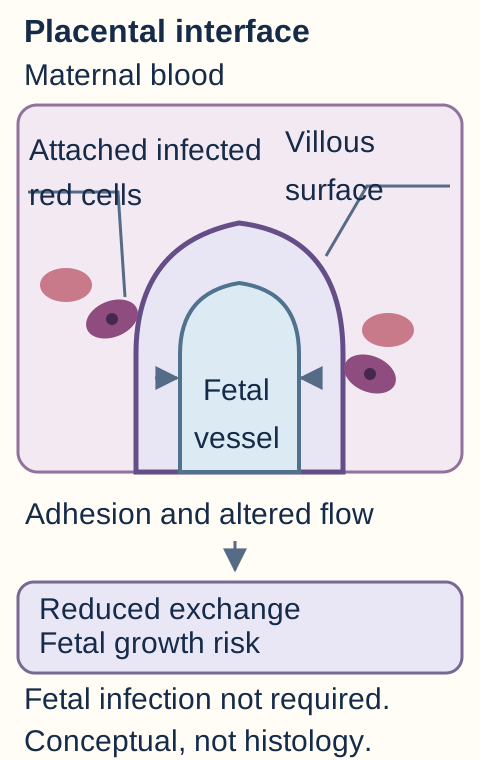
In falciparum malaria, infected maternal erythrocytes can adhere at the placental interface. VAR2CSA, a parasite surface protein, binds placental chondroitin sulfate A. Sequestration and inflammation can impair blood flow and nutrient exchange. The maternal blood around placental villi and the fetal blood inside villous vessels are separate compartments: poor fetal growth does not require direct fetal infection. Congenital malaria can occur, but it is a different consequence. [9][11]
Trace the interface: in the placental schematic, follow an infected maternal red cell to the outside of a villus. Predict whether impaired exchange can harm the fetus while fetal blood remains parasite-free.
Trace the maternal and fetal compartments, then predict why growth can be impaired without congenital malaria. [2][9][11]Check the compartment prediction
Yes. Maternal-side infection can impair placental exchange without parasites entering fetal blood.
The same reasoning applies to a mother with few symptoms: reassuring appearance alone does not establish placental safety. Travelers who grew up in endemic areas also need protection. Previously acquired partial immunity wanes without repeated exposure and is not a substitute for prophylaxis. [1]
Defer nonessential malaria exposure when possible. If travel is unavoidable, combine effective chemoprophylaxis with screened or air-conditioned accommodation, an insecticide-treated bed net, covering clothing and an EPA-registered repellent such as DEET or picaridin used as directed. Malaria vectors commonly feed from dusk through dawn, but other vectors make daytime protection important too. Permethrin belongs on clothing and nets, not skin; follow drying and retreatment instructions. Registered repellents are acceptable in pregnancy when used according to their labels. A 20% to 30% DEET product is an option, not a pregnancy-specific maximum concentration. [6]
For transfer, consider a traveler sleeping under a net but eating outdoors every evening. The net protects one interval, not the entire itinerary. Add skin repellent and covering clothing during exposure, rather than ranking one measure as sufficient. Arrange access to malaria testing, obstetric care and medical evacuation before departure. Indoor residual spraying is a community vector-control measure, not permission to omit personal precautions. [1][2]
Which medicines remain suitable after each constraint?
Start with the exact itinerary, including region, season, accommodation and rural exposure. Check current destination recommendations rather than applying a continent-wide rule. Chloroquine-resistant falciparum malaria is widespread; susceptible falciparum persists in the Caribbean and Central America west of the Panama Canal. Mefloquine resistance occurs in specific parts of Southeast Asia. Neither statement means every location in that region has the same transmission risk. [1]
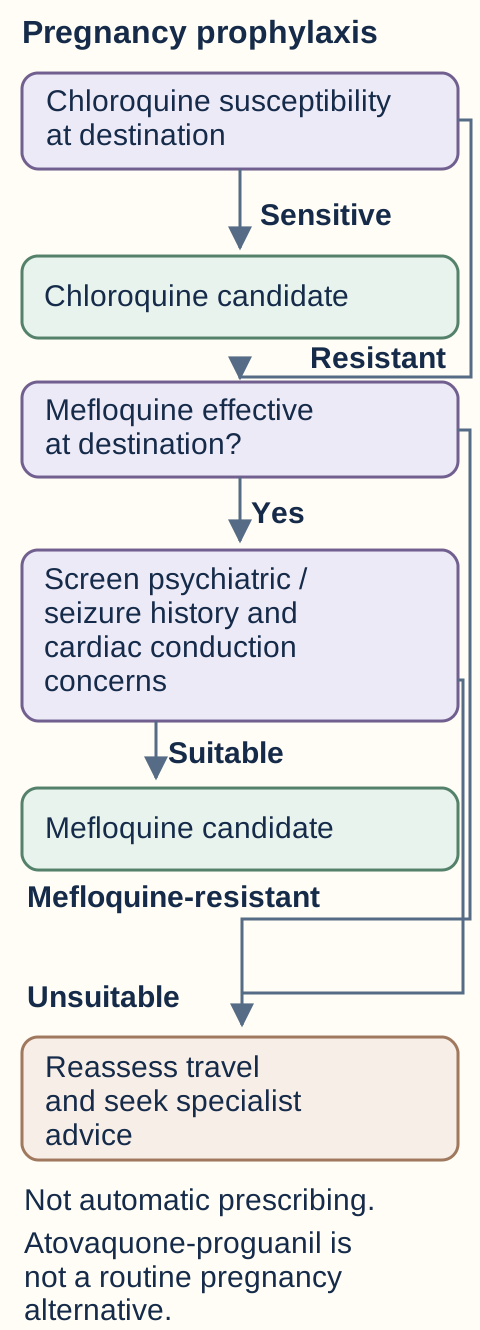
When all relevant parasites are chloroquine-sensitive, chloroquine is a pregnancy option; hydroxychloroquine is an alternative. When chloroquine resistance is present and parasites remain mefloquine-sensitive, mefloquine is the routinely recommended pregnancy prophylactic drug, provided the maternal history permits it. These options can be used in all trimesters. A later trimester does not restore the efficacy of a drug defeated by resistance. [1][11]
The eligibility diagram applies two independent questions: will the drug work here, and can this patient take it? Use the comparison below as a paper-and-pencil elimination exercise. All three example destinations require chemoprophylaxis.
Follow each branch for the three comparison-table travelers. Susceptibility and maternal eligibility are separate decisions; a candidate still needs full prescribing assessment. [1][10]
Change one constraint while keeping pregnancy constant
For each row, name the remaining standard drug or say that no standard option remains. Then compare B with C: which single change alters the plan?
Compare A with B
A supports chloroquine; B supports mefloquine. Parasite susceptibility changes the effective pregnancy option.
Compare B with C
The anxiety disorder excludes mefloquine prophylaxis in C. Chloroquine still fails against the destination parasites, so changing travel plans becomes central.
The complete result is A: chloroquine, B: mefloquine after full screening, C: reassess travel with a specialist. If mefloquine itself is ineffective or contraindicated, there is no automatic substitute among the standard pregnancy choices. Deferring or changing a discretionary itinerary is safer than selecting an ineffective drug. Atovaquone-proguanil is not routinely recommended in pregnancy because safety data are limited. If travel truly cannot be deferred and recommended options are infeasible, a specialist and patient can weigh its risks and benefits; uncertainty is not proof of fetal toxicity or proof of safety. [1]
Now transfer the rule to a traveler taking hydroxychloroquine for an autoimmune disease: existing treatment does not establish malaria protection at a chloroquine-resistant destination. Review the actual regimen and itinerary rather than simply adding a second related drug.
Why do the exclusions differ?
A normal maternal blood test does not make every fetal exposure acceptable. Distinguish evidence limitations, tissue effects and enzyme-dependent hemolysis before counseling about a medicine.
Different reasons for not selecting a drug
Drug
Pregnancy concern
Practical consequence
DrugDoxycycline
Pregnancy concernTetracycline-class effects on developing teeth and bone
Practical consequenceContraindicated for malaria prophylaxis throughout pregnancy under CDC guidance
DrugPrimaquine and tafenoquine
Pregnancy concernOxidative hemolysis in a potentially G6PD-deficient fetus
Practical consequenceDo not use during pregnancy, even with normal maternal G6PD activity
DrugAtovaquone-proguanil
Pregnancy concernLimited human pregnancy safety evidence
Practical consequenceNot a routine pregnancy choice; individualized expert discussion only when necessary
Tetracycline-class calcium binding can affect mineralizing teeth and bone, with greater concern during later fetal development. The prophylaxis restriction is nevertheless not limited to the second and third trimesters. Do not tell a patient that a short inadvertent early doxycycline exposure guarantees malformations or tooth injury: doxycycline-specific human evidence is more reassuring than that claim, while still insufficient to justify routine pregnancy prophylaxis. Arrange individualized medication review. [1][11]
G6PD helps red cells resist oxidative stress. Primaquine and tafenoquine can cross the placenta, exposing fetal cells whose enzyme activity is not established by a maternal result. Tafenoquine's long persistence makes an unsuitable exposure especially difficult to reverse. Neither is an acceptable way to prevent vivax relapse during pregnancy. [1]
Test the reassurance: a pregnant traveler has normal quantitative G6PD activity and requests primaquine for a vivax-predominant destination. Identify whose red cells remain at uncertain risk.
Check whose result is missing
The fetal red cells remain at risk. Normal maternal activity does not establish fetal activity and does not permit primaquine in pregnancy.
Apply the distinction to doxycycline: ordering G6PD testing would not address its pregnancy restriction, because that restriction concerns a different biological process.
Mefloquine still requires a maternal safety screen
Human pregnancy data have not shown increased adverse fetal outcomes with mefloquine, but this does not make it appropriate for every mother. Prophylaxis is contraindicated with active or recent depression, generalized anxiety disorder, psychosis, schizophrenia, other major psychiatric disorders or seizures. Avoid it with a previous history of depression; it is not recommended with cardiac conduction abnormalities. Review medications and allergies as well. These are more precise categories than calling all cardiac disease an absolute contraindication. [1][10]
Abnormal dreams, insomnia, dizziness and gastrointestinal symptoms can occur. The boxed warning emphasizes potentially persistent psychiatric and neurologic adverse effects. New anxiety, depression, confusion, vertigo or loss of balance during prophylaxis calls for stopping mefloquine and promptly arranging an alternative prevention or travel plan. Taking it at bedtime does not prevent these serious reactions. Taking it with food can improve gastrointestinal tolerability; it does not override a contraindication. [10]
Chloroquine can cause pruritus or gastrointestinal symptoms and worsen psoriasis. Retinopathy is associated with greater cumulative exposure, but is extremely unlikely with routine weekly malaria prophylaxis. Do not let an out-of-context toxicity warning displace an effective indicated regimen. [1]
Why continue after the last mosquito bite?
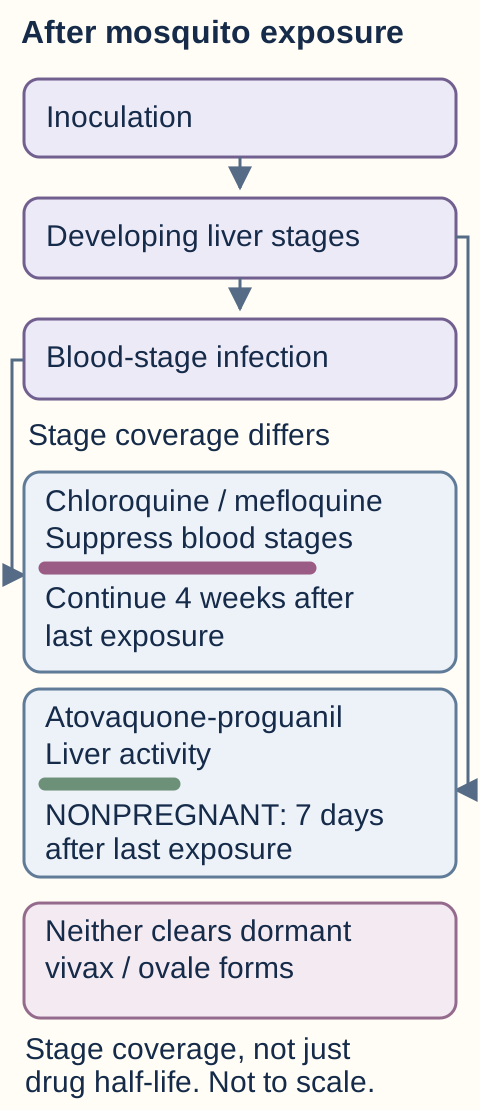
A mosquito inoculates parasites that first develop in the liver before reaching circulating red cells. Mefloquine and chloroquine suppress blood-stage infection; they do not eliminate the initial hepatic stages. Continuing after exposure covers parasites subsequently entering blood. The four-week course is not simply a consequence of a long drug half-life. Neither drug eradicates dormant P. vivax or P. ovale hypnozoites. [1][10]
Trace the parasite stage to the regimen and explain the different stop dates. The atovaquone-proguanil comparison is the routine nonpregnant regimen begun before exposure, not permission for pregnancy use or an after-exposure switch. [1]
Adult prophylaxis calendar, anchored to entry and exit from the malaria area
Drug
Dose and start
After last exposure
DrugMefloquine
Dose and start250 mg salt, equivalent to 228 mg base, weekly; begin at least 2 weeks before entry
After last exposureWeekly for 4 weeks
DrugChloroquine
Dose and start300 mg base, equivalent to 500 mg salt, weekly; begin 1 to 2 weeks before entry
After last exposureWeekly for 4 weeks
DrugHydroxychloroquine
Dose and start310 mg base, equivalent to 400 mg salt, weekly; begin 1 to 2 weeks before entry
After last exposureWeekly for 4 weeks
Maintain the same weekly day during exposure. Mefloquine can be started 3 to 4 weeks early when time is needed to assess tolerability and arrange another plan. The recommended minimum is not a claim that full steady state occurs in two weeks; the label reports a longer time to steady state. Last-minute departure therefore requires urgent travel-medicine review, not an improvised loading regimen. [1][10]
Trace the calendar: a traveler leaves the malaria area on her usual weekly dosing day, then spends several days in a malaria-free city. Place the last exposure marker on the timeline and count the remaining weekly doses.
Check the final date
The remaining doses fall 7, 14, 21 and 28 days after leaving the malaria area. Arrival home is not the reference date.
The visible consequence is four further weekly doses, not four weeks after reaching home. If she instead re-enters a malaria area, calculate the post-exposure interval from the new final exit.
For comparison outside pregnancy, atovaquone-proguanil is one adult tablet containing 250 mg/100 mg daily, starting 1 to 2 days before exposure and continuing for 7 days after exit, with food or a milky drink. Its activity against developing liver stages supports the shorter course; it does not eradicate hypnozoites. Doxycycline is 100 mg daily, starting 1 to 2 days before exposure and continuing for 4 weeks afterward. Primaquine primary prophylaxis in selected vivax-predominant areas is 30 mg base daily from 1 to 2 days before exposure through 7 days afterward, only after appropriate G6PD testing. Primary primaquine prophylaxis is distinct from a 14-day terminal presumptive anti-relapse course for selected nonpregnant travelers after prolonged vivax or ovale exposure. These comparison schedules do not authorize pregnancy use. Switching drugs after exposure requires a specific plan and may change the usual stop date. [1]
For a weekly drug taken 1 to 2 days late, CDC advises taking it promptly and returning to the original weekly day. If more than 2 days late, take it promptly and use the new day for subsequent weekly doses. Do not double the next dose. Daily drugs have less timing tolerance; vomiting or repeated missed doses warrants clinical advice about absorption and protection. A single late weekly dose does not prove that concentrations instantly became inadequate. [1]
Fever changes the task from prevention to diagnosis
Fever during or after malaria exposure is urgent even after apparently perfect prophylaxis. Obtain immediate thick and thin smears; add a rapid diagnostic test if it returns sooner. A positive rapid test permits treatment while microscopy determines species and parasite density. A negative rapid test does not exclude malaria. If an initial smear is negative but suspicion remains, repeat smears every 12 to 24 hours until three sets have been examined. Do not rely on a send-out test that takes days. [5]
Assess consciousness, perfusion, breathing, urine output, hemoglobin, glucose, renal function, acid-base status and parasitemia. Current CDC severe-malaria criteria include organ complications or parasite density at least 5%. Pregnancy warrants close monitoring and generally hospital admission, but it does not itself classify every infection as severe. [3][5]
Consider two patients with a positive falciparum test. One is alert, drinking, has normal organ assessment and 0.6% parasitemia. The other has 6% parasitemia despite normal blood pressure. Predict which needs the severe-malaria pathway.
Check the severity comparison
The second patient meets the parasite-density criterion for severe malaria. Normal blood pressure does not cancel that criterion.
Severe malaria requires IV artesunate at any gestational age. Do not delay for first-trimester concerns. If severe malaria is strongly suspected and reliable testing is unavailable immediately, start emergency treatment while arranging diagnosis and referral. A patient unable to tolerate oral treatment also needs parenteral therapy. IV artesunate is followed by a complete oral treatment course once appropriate clinical and parasite-density criteria are met. Monitor weekly for delayed hemolysis for up to four weeks after treatment initiation. [4][8]
For uncomplicated falciparum malaria, current CDC guidance prefers artemether-lumefantrine in all trimesters. Quinine plus clindamycin remains an alternative, not the automatic first-trimester preference. In United States treatment guidance updated in August 2026, falciparum infection receives an extended five-day, ten-dose artemether-lumefantrine course; consult the current weight-based treatment table. Give with fatty food or a milky drink. This treatment schedule is not a prophylaxis regimen and should not be generalized to every species or jurisdiction. [7][8]
Use a treatment regimen different from the prophylactic drug when possible. Recent mefloquine exposure also requires interaction review: immediate artemether-lumefantrine use can affect lumefantrine exposure and QT risk, so breakthrough disease needs supervised selection rather than an unsupervised standby course. Chloroquine remains a treatment option for susceptible infection, not resistant falciparum disease. Quinine can stimulate insulin release and cause hypoglycemia, especially in pregnancy; monitor glucose rather than attributing sweating or confusion solely to fever. [1][12]
After acute vivax or ovale treatment, dormant liver forms still require a plan. Primaquine and tafenoquine are deferred during pregnancy. Weekly chloroquine suppression is recommended through pregnancy after acute treatment, with specialist advice for chloroquine-resistant vivax infection, followed by postpartum anti-relapse assessment. Fever can recur months later; report exposure during the previous year and do not treat three months as a diagnostic cutoff. Rare presentations occur later still. [3][5]
After delivery, reassess both travelers
Does a breastfed infant receive the mother's protection? No. Breast-milk antimalarial concentrations are too low to prevent infant malaria. Direct atovaquone-proguanil prophylaxis is also not recommended for infants below 5 kg. A mother and her infant traveling together need separate age-, weight- and destination-appropriate plans. Maternal mefloquine or chloroquine is compatible with breastfeeding, but geographic resistance still matters. [1]
For a concrete comparison, a mother taking chloroquine for a susceptible destination travels with her breastfed infant. Predict what changes if only the mother is prescribed prophylaxis.
Check the infant's protection
The infant lacks an adequate prophylactic dose. Breastfeeding does not replace a directly prescribed pediatric regimen.
Transfer the same reasoning to a mother considering atovaquone-proguanil: it is not recommended for prophylaxis while breastfeeding an infant below 5 kg. Meeting that weight boundary does not itself select the regimen; maternal contraindications and the itinerary still apply. Atovaquone-proguanil prophylaxis is contraindicated when creatinine clearance is below 30 mL/min. Before maternal primaquine or tafenoquine, establish appropriate maternal and infant G6PD status. For postpartum anti-relapse treatment, also check the drug-specific indication and preceding blood-stage treatment. [1][3][7]
Doxycycline during lactation should not be presented as an automatic replacement for pregnancy prophylaxis. CDC's prescribing table advises against it in breastfeeding, while its narrative describes infant risk as theoretical and remote; reviews distinguish short treatment courses from longer exposure. A travel course plus four post-travel weeks is not a brief antibiotic course. Prefer an established suitable option and seek individualized advice if choices are limited. [1][11]
Before departure, ask the traveler to state the destination-specific drug, weekly or daily schedule, final dose date, bite precautions, and where she will seek urgent care for fever. This final explanation checks whether a workable plan exists; it cannot guarantee prevention.
Clinical application practice
Case 1
Show answer and explanations for case 1
A. Mefloquine weekly through four weeks after exposure (Best answer)
Mefloquine satisfies the destination susceptibility and pregnancy requirements, and no maternal contraindication is identified.
Reasoning steps for option A
What standard pregnancy option remains when chloroquine resistance is present?
Mefloquine remains an option if parasites are susceptible and the maternal history permits it.
Why does mefloquine fit both the Ghana susceptibility report and this maternal history?
Mefloquine satisfies the destination susceptibility and pregnancy requirements, and no maternal contraindication is identified.
B. Doxycycline daily through four weeks after exposure (Why this does not fit)
Doxycycline is contraindicated for pregnancy prophylaxis despite activity against chloroquine-resistant malaria.
Reasoning steps for option B
Does later entry into the second trimester broaden doxycycline eligibility?
No. CDC prophylaxis guidance excludes doxycycline throughout pregnancy.
Why does activity against resistant parasites not justify doxycycline at 14 weeks?
Doxycycline is contraindicated for pregnancy prophylaxis despite activity against chloroquine-resistant malaria.
C. Chloroquine weekly through four weeks after exposure (Why this does not fit)
Chloroquine is acceptable in pregnancy but does not provide reliable protection against the resistant parasites described.
Reasoning steps for option C
Does pregnancy safety establish destination efficacy?
No. Fetal safety and local parasite susceptibility are separate requirements.
Why is chloroquine unsuitable despite its pregnancy compatibility in this Ghana itinerary?
Chloroquine is acceptable in pregnancy but does not provide reliable protection against the resistant parasites described.
D. Atovaquone-proguanil daily through seven days after exposure (Why this does not fit)
The short schedule is useful outside pregnancy, but limited pregnancy safety data make it inappropriate as the routine choice when mefloquine is suitable.
Reasoning steps for option D
Why is the short post-travel course possible?
Atovaquone-proguanil acts against developing liver stages, but that activity does not establish pregnancy safety.
Why does a seven-day post-exposure course not make atovaquone-proguanil preferable to mefloquine here?
The short schedule is useful outside pregnancy, but limited pregnancy safety data make it inappropriate as the routine choice when mefloquine is suitable.
Takeaway: An effective pregnancy regimen must satisfy both destination susceptibility and maternal eligibility.
A. Prescribe mefloquine with a longer pre-travel dosing interval (Why this does not fit)
Earlier initiation does not restore activity against resistant parasites.
Reasoning steps for option A
What does additional lead time accomplish when a drug is active?
It can permit tolerability assessment; it does not reverse parasite resistance.
Can starting mefloquine earlier overcome the resistance reported for this hiking destination?
Starting mefloquine earlier can help assess tolerability, but it cannot restore activity against the resistant parasites reported for this destination.
B. Defer the itinerary until a safer travel plan is feasible (Best answer)
The trip is discretionary and neither standard pregnancy prophylactic option is effective at this destination. Deferral avoids exposure without selecting a nonroutine regimen.
Reasoning steps for option B
What happens when both standard pregnancy drugs lack local efficacy?
Neither can provide reliable chemoprophylaxis for that itinerary.
Why does resistance to both standard pregnancy drugs favor deferring this discretionary trip?
The trip is discretionary and neither standard pregnancy prophylactic option is effective at this destination. Deferral avoids exposure without selecting a nonroutine regimen.
C. Prescribe atovaquone-proguanil without changing the route (Why this does not fit)
Exceptional consideration when travel is unavoidable does not make it the preferred response to a discretionary itinerary.
Reasoning steps for option C
Which aspect of travel changes the risk-benefit decision?
This exposure can be avoided rather than accepted with a nonroutine pregnancy drug.
Why does avoidable hiking exposure not favor exceptional atovaquone-proguanil use?
Exceptional consideration when travel is unavoidable does not make it the preferred response to a discretionary itinerary.
D. Use chloroquine with nightly insecticide-treated nets (Why this does not fit)
Nets reduce exposure but do not make chloroquine effective against resistant parasites.
Reasoning steps for option D
Do vector precautions alter parasite susceptibility?
No. They reduce bites without changing the efficacy of an antimalarial against infection.
Why do treated nets not rescue chloroquine prophylaxis in this resistant border district?
Nets reduce exposure but do not make chloroquine effective against resistant parasites.
Takeaway: When neither standard pregnancy option fits, reconsider the exposure before prescribing an exceptional regimen.
A. Recommend routine use because reassuring pregnancy reports establish equivalence with mefloquine (Why this does not fit)
Reassuring reports do not establish an equivalent evidence base or support routine pregnancy recommendation.
Reasoning steps for option A
What does a limited reassuring dataset fail to establish?
It cannot exclude less common adverse outcomes with the confidence of a more substantial evidence base.
Why do reassuring atovaquone-proguanil pregnancy reports not establish equivalence with mefloquine?
Reassuring reports do not establish an equivalent evidence base or support routine pregnancy recommendation.
B. Exclude any use because limited human pregnancy evidence constitutes an absolute contraindication (Why this does not fit)
Limited evidence leads to a nonroutine recommendation, not a blanket prohibition when no feasible recommended option exists.
Reasoning steps for option B
Is an evidence limitation identical to an absolute contraindication?
No. Guidance allows individualized risk-benefit consideration in exceptional circumstances.
Why is limited atovaquone-proguanil pregnancy evidence not an absolute ban in this unavoidable-travel case?
Limited evidence leads to a nonroutine recommendation, not a blanket prohibition when no feasible recommended option exists.
C. Offer use because enhanced fetal surveillance can resolve the remaining drug-safety uncertainty (Why this does not fit)
Surveillance cannot prove that future or unmeasured drug effects are absent and does not replace informed discussion of uncertainty.
Reasoning steps for option C
Can repeated ultrasound studies establish complete medication safety?
No. They assess selected findings rather than every potential drug effect.
Why can enhanced fetal surveillance not resolve all atovaquone-proguanil safety uncertainty?
Surveillance cannot prove that future or unmeasured drug effects are absent and does not replace informed discussion of uncertainty.
D. Discuss individualized use because standard options are unsuitable and human evidence is limited (Best answer)
Unavoidable exposure with no feasible recommended option permits individualized discussion without describing atovaquone-proguanil as proven safe.
Reasoning steps for option D
Which risks must be considered together?
The known danger of malaria and the incompletely characterized pregnancy risk of the proposed regimen.
How do chloroquine resistance and a seizure disorder support individualized discussion of atovaquone-proguanil?
Chloroquine resistance excludes chloroquine, and the seizure disorder contraindicates mefloquine prophylaxis. With unavoidable exposure and no feasible recommended option, individualized discussion is appropriate without describing atovaquone-proguanil as proven safe.
Takeaway: Exceptional consideration of atovaquone-proguanil is a risk-benefit decision, not a declaration of routine pregnancy safety.
A. Continue doxycycline after documenting normal maternal G6PD activity (Why this does not fit)
G6PD testing addresses oxidative hemolysis with other drugs and does not address doxycycline pregnancy eligibility.
Reasoning steps for option A
Which risk can G6PD testing help assess?
Susceptibility to oxidant hemolysis, not tetracycline-class developmental effects.
Why would normal maternal G6PD testing not justify continuing doxycycline at 6 weeks?
G6PD testing addresses oxidative hemolysis with other drugs and does not address doxycycline pregnancy eligibility.
B. Change prophylaxis and counsel that the exposure does not establish injury (Best answer)
Doxycycline is not the appropriate ongoing prophylaxis, but this brief early exposure does not establish fetal harm. An effective pregnancy alternative is available.
Reasoning steps for option B
What can be concluded from five days of early exposure?
It warrants individualized review, not a definitive prediction of malformation or tooth injury.
Why should she change prophylaxis without concluding that five days of doxycycline caused fetal injury?
Stop doxycycline prophylaxis and use the destination-effective, pregnancy-compatible chloroquine alternative. Five days of early exposure warrants individualized review but does not establish fetal injury.
C. Continue doxycycline until the second trimester, then reassess (Why this does not fit)
The CDC restriction for malaria prophylaxis applies throughout pregnancy, not only after fetal tooth mineralization advances.
Reasoning steps for option C
Does a later peak in tissue susceptibility permit routine early prophylaxis?
No. Timing of theoretical risk and the prescribing recommendation are not identical.
Why is waiting until the second trimester to stop doxycycline inconsistent with prophylaxis guidance?
The CDC restriction for malaria prophylaxis applies throughout pregnancy, not only after fetal tooth mineralization advances.
D. Stop all chemoprophylaxis and rely on nets for the planned trip (Why this does not fit)
Stopping an unsuitable drug does not eliminate malaria risk. The destination has an established suitable alternative.
Reasoning steps for option D
Does medication uncertainty justify abandoning effective prevention?
Not when a pregnancy-compatible, destination-effective regimen is available.
Why should stopping doxycycline lead to replacement prophylaxis rather than nets alone here?
Stopping an unsuitable drug does not eliminate malaria risk. The destination has an established suitable alternative.
Takeaway: Distinguish a prophylaxis restriction from a claim that an inadvertent early exposure necessarily caused harm.
The four subsequent weekly doses are September 11, 18, 25 and October 2, the date 28 days after the final exposure.
Reasoning steps for option A
What calendar interval does mefloquine require after exposure ends?
Four weeks, calculated from the last day in the malaria area.
Which four Friday doses after September 4 make October 2 the correct mefloquine endpoint?
The four subsequent weekly doses are September 11, 18, 25 and October 2, the date 28 days after the final exposure.
B. September 25 (Why this does not fit)
That is three weeks after the last exposure and omits the fourth post-exposure weekly dose.
Reasoning steps for option B
How many seven-day intervals separate September 4 and September 25?
Three intervals, totaling 21 days.
Why does a September 25 endpoint omit part of the required mefloquine course?
That is three weeks after the last exposure and omits the fourth post-exposure weekly dose.
C. October 16 (Why this does not fit)
This counts four Friday doses after arrival home rather than after final malaria exposure, unnecessarily extending the course.
Reasoning steps for option C
Which mistaken endpoint produces four Friday doses after September 14?
Arrival home, although the last exposure was September 4.
Why does counting to October 16 extend prophylaxis beyond the exposure-based course?
October 16 counts four Friday doses after arrival home rather than after September 4, the final malaria exposure. The malaria-free city stay does not extend the required course.
D. September 11 (Why this does not fit)
That is only one week after exposure, not the four weeks required for mefloquine.
Reasoning steps for option D
Which final exposure date controls the calculation?
September 4, when she left the malaria area.
Why is September 11 too early to stop mefloquine after the September 4 final exposure?
September 11 is only one week after the September 4 final exposure. Mefloquine requires four post-exposure weeks, ending October 2 on this schedule.
Takeaway: Count four weeks from the final malaria exposure, not from arrival home.
A. Atovaquone-proguanil eradicates dormant vivax and ovale hypnozoites (Why this does not fit)
Atovaquone-proguanil does not eradicate hypnozoites; its shorter routine course concerns developing liver stages.
Reasoning steps for option A
Are developing liver stages identical to dormant hypnozoites?
No. Activity against one does not establish radical cure of the other.
Why does atovaquone-proguanil's shorter course not imply eradication of vivax or ovale hypnozoites?
Atovaquone-proguanil does not eradicate hypnozoites; its shorter routine course concerns developing liver stages.
B. Atovaquone-proguanil acts on developing liver stages as well as blood stages (Best answer)
Its hepatic-stage activity supports the routine seven-day course, whereas mefloquine requires four weeks of blood-stage suppression after exposure.
Reasoning steps for option B
Which parasite compartment is not eliminated by mefloquine prophylaxis?
The developing liver stages that can later release parasites into blood.
How does developing-liver-stage activity explain seven days of atovaquone-proguanil versus four weeks of mefloquine?
Atovaquone-proguanil acts on developing liver stages as well as blood stages, supporting its routine seven-day post-exposure course. Mefloquine requires four weeks of blood-stage suppression after exposure.
C. Pregnancy extends the incubation period enough to require four weeks (Why this does not fit)
Mefloquine requires the same routine post-exposure duration outside pregnancy; gestation is not the reason for this contrast.
Reasoning steps for option C
Would a nonpregnant mefloquine user also continue for four weeks?
Yes. The interval follows the drug regimen rather than pregnancy alone.
Why is pregnancy not the explanation for this traveler's four-week mefloquine course?
Mefloquine requires the same routine post-exposure duration outside pregnancy; gestation is not the reason for this contrast.
D. Mefloquine clears from blood more rapidly than atovaquone-proguanil (Why this does not fit)
Mefloquine has prolonged persistence. The longer post-exposure schedule reflects stage activity, not more rapid clearance.
Reasoning steps for option D
Does a long plasma half-life establish liver-stage eradication?
No. Pharmacokinetic persistence and parasite-stage activity are different properties.
Why does faster mefloquine clearance not explain its longer post-exposure schedule?
Mefloquine has prolonged persistence. The longer post-exposure schedule reflects stage activity, not more rapid clearance.
Takeaway: Post-exposure duration follows parasite-stage activity, not pregnancy status or half-life alone.
A. Both the infant weight and maternal renal function prevent routine use (Best answer)
Breastfeeding an infant below 5 kg is a reason not to recommend this prophylaxis, and creatinine clearance below 30 mL/min is independently contraindicating.
Reasoning steps for option A
Which thresholds are crossed?
The infant is below 5 kg and maternal creatinine clearance is below 30 mL/min.
How do a 4.2 kg breastfed infant and creatinine clearance of 26 mL/min each restrict atovaquone-proguanil?
The 4.2 kg infant is below the 5 kg breastfeeding threshold for recommending this prophylaxis. Maternal creatinine clearance of 26 mL/min is independently below the 30 mL/min contraindication threshold.
B. Neither finding prevents use if the daily dose is taken with food (Why this does not fit)
Food improves absorption but does not resolve severe renal impairment or the breastfeeding restriction.
Reasoning steps for option B
Which problem does taking atovaquone-proguanil with food address?
It supports absorption rather than changing patient eligibility.
Why would taking atovaquone-proguanil with food not overcome either eligibility problem here?
Food improves absorption but does not resolve severe renal impairment or the breastfeeding restriction.
C. Only the infant weight prevents use; renal impairment affects treatment doses alone (Why this does not fit)
Creatinine clearance below 30 mL/min is a contraindication to atovaquone-proguanil prophylaxis as well.
Reasoning steps for option C
Does the renal restriction apply to prophylaxis?
Yes. Severe renal impairment prevents routine prophylactic use.
Why is the maternal creatinine clearance of 26 mL/min relevant to prophylaxis, not just treatment?
Creatinine clearance below 30 mL/min is a contraindication to atovaquone-proguanil prophylaxis as well.
D. Only renal impairment prevents use; breast-milk exposure is not relevant (Why this does not fit)
Although breast milk does not protect the infant adequately, drug exposure still matters for safety. The infant weight restriction also applies.
Reasoning steps for option D
Can low breast-milk levels be inadequate for prevention yet relevant to safety?
Yes. Insufficient protection does not mean no exposure.
Why does low breast-milk drug transfer not eliminate the restriction for her 4.2 kg infant?
Although breast milk does not protect the infant adequately, drug exposure still matters for safety. The infant weight restriction also applies.
Takeaway: Infant weight and maternal renal function are independent eligibility checks for atovaquone-proguanil prophylaxis.
A. Increase the maternal dose so that milk provides an infant prophylactic dose (Why this does not fit)
Maternal dose escalation is not an established way to deliver a safe or reliable infant prophylactic regimen.
Reasoning steps for option A
Are breast-milk drug levels a substitute for pediatric dosing?
No. They are too low for protection and cannot be used to titrate an infant regimen.
Why should maternal mefloquine dosing not be increased to supply the 4 kg infant through milk?
Maternal dose escalation is not an established way to deliver a safe or reliable infant prophylactic regimen.
B. Continue maternal prophylaxis and infant bite precautions without a separate infant drug (Why this does not fit)
Milk does not provide adequate prophylaxis, and bite precautions do not replace indicated infant chemoprophylaxis.
Reasoning steps for option B
What part of an exposed infant prevention plan is still absent?
A directly prescribed antimalarial appropriate for the infant and destination.
Why do maternal mefloquine and infant bite precautions leave an infant prophylaxis gap?
Milk does not provide adequate prophylaxis, and bite precautions do not replace indicated infant chemoprophylaxis.
C. Prescribe atovaquone-proguanil directly to the infant using a weight-adjusted dose (Why this does not fit)
The infant is below 5 kg. Weight adjustment alone does not establish eligibility for this prophylactic drug.
Reasoning steps for option C
What is the lower weight boundary for atovaquone-proguanil prophylaxis?
It is not recommended below 5 kg.
Why does a weight-adjusted atovaquone-proguanil prescription remain inappropriate for this 4 kg infant?
The infant is below 5 kg. Weight adjustment alone does not establish eligibility for this prophylactic drug.
D. Prescribe separate weight-based infant prophylaxis after destination review (Best answer)
The infant needs a directly prescribed pediatric regimen appropriate for weight and local susceptibility; maternal mefloquine does not supply it through milk.
Reasoning steps for option D
Which person remains without an effective prophylactic dose?
The infant, despite exclusive breastfeeding and adequate maternal dosing.
Why does the exclusively breastfed infant need separate weight-based prophylaxis and destination review?
The infant needs a directly prescribed pediatric regimen appropriate for weight and local susceptibility; maternal mefloquine does not supply it through milk.
Takeaway: Breastfeeding compatibility and infant prophylactic protection are separate questions.
A. Stop antimalarials because negative smears establish complete cure (Why this does not fit)
Blood-stage treatment does not eradicate vivax hypnozoites, which can cause relapse.
Reasoning steps for option A
Which compartment can persist after the blood clears?
Dormant liver forms can remain after successful acute treatment.
Why do cleared blood smears not justify stopping all relapse prevention after vivax treatment?
Blood-stage treatment does not eradicate vivax hypnozoites, which can cause relapse.
B. Start primaquine now because the blood smears are negative (Why this does not fit)
Negative smears establish blood-stage clearance, not fetal G6PD safety. Primaquine remains contraindicated during pregnancy.
Reasoning steps for option B
Does absence of circulating parasites establish absence of liver forms?
No. Dormant hypnozoites are not assessed by peripheral smears.
Why do negative smears and normal maternal G6PD activity not permit primaquine at 28 weeks?
Negative smears establish blood-stage clearance, not elimination of liver forms or fetal G6PD safety. Normal maternal G6PD activity does not resolve fetal susceptibility, so primaquine remains contraindicated during pregnancy.
C. Use weekly chloroquine suppression and reassess radical cure after delivery (Best answer)
For susceptible vivax infection, weekly chloroquine suppresses relapse during pregnancy. Postpartum anti-relapse therapy requires maternal and, if breastfeeding, infant safety assessment.
Reasoning steps for option C
What can be done while hypnozoite-eradicating drugs are deferred?
Suppress recurrent blood-stage infection during pregnancy and plan definitive anti-relapse treatment afterward.
Why is weekly chloroquine suppression appropriate while radical cure is deferred until after delivery?
For susceptible vivax infection, weekly chloroquine suppresses relapse during pregnancy. Postpartum anti-relapse therapy requires maternal and, if breastfeeding, infant safety assessment.
D. Start tafenoquine now because fewer doses reduce fetal exposure (Why this does not fit)
Tafenoquine is also contraindicated in pregnancy; prolonged persistence does not make an exposure safe for a fetus of unknown G6PD status.
Reasoning steps for option D
Does normal maternal G6PD activity authorize tafenoquine during pregnancy?
No. Fetal enzyme activity remains unresolved.
Why do fewer tafenoquine doses not overcome its pregnancy contraindication?
Tafenoquine is also contraindicated in pregnancy; prolonged persistence does not make an exposure safe for a fetus of unknown G6PD status.
Takeaway: Blood-stage clearance and eradication of vivax hypnozoites are separate treatment goals.
A. Wait one week for a send-out molecular test before further evaluation (Why this does not fit)
Potential malaria in pregnancy needs timely assessment; a delayed send-out result cannot replace urgent repeat microscopy.
Reasoning steps for option A
What time scale is appropriate for the next evaluation?
Hours, with repeat smears at 12- to 24-hour intervals, rather than a week.
Why is waiting a week for molecular testing inappropriate for this persistently febrile pregnant traveler?
Potential malaria in pregnancy needs timely assessment; a delayed send-out result cannot replace urgent repeat microscopy.
B. Repeat thick and thin smears at 12- to 24-hour intervals, for three sets total (Best answer)
Low-density early infection can be missed initially. With persistent suspicion, repeat microscopy while continuing clinical observation and assessment for other causes.
Reasoning steps for option B
Does a negative first test exclude infection in a nonimmune traveler?
No. Parasitemia may initially be below the detection threshold.
Why are repeat thick and thin smears needed despite the initial negative tests and reported adherence?
Early low-density infection can escape the initial tests, and complete prophylaxis does not exclude malaria. Repeat thick and thin smears at 12- to 24-hour intervals for three sets total while continuing clinical observation and assessment for other causes.
C. Repeat testing only if she identifies a missed prophylactic dose (Why this does not fit)
Correct prophylaxis reduces risk but does not exclude malaria, so adherence is not a prerequisite for repeat testing.
Reasoning steps for option C
Can apparently complete prophylaxis fail?
Yes. No prophylactic regimen is completely protective.
Why should repeat malaria testing not depend on discovering a missed prophylaxis dose?
Correct prophylaxis reduces risk but does not exclude malaria, so adherence is not a prerequisite for repeat testing.
D. Exclude malaria because both the rapid test and first smear are negative (Why this does not fit)
Neither an initial negative rapid test nor a single negative smear series reliably excludes malaria when clinical suspicion remains high.
Reasoning steps for option D
Are the two initial negative methods equivalent to serial assessment?
No. Both can miss infection when parasite density is low at that time.
Why do a negative rapid test and first smear not exclude malaria in this exposure setting?
Neither an initial negative rapid test nor a single negative smear series reliably excludes malaria when clinical suspicion remains high.
Takeaway: Persistent suspicion after negative initial testing requires serial microscopy, not reassurance from adherence alone.
A. Parasitemia is 5.6%; use IV artesunate under inpatient monitoring (Why this does not fit)
Counting the additional parasites inside 12 already-infected cells incorrectly raises the result to 5.6% and changes the severity classification.
Reasoning steps for option A
What error produces 5.6%?
Counting 56 individual parasites instead of 44 infected red cells.
Why does counting 56 parasites rather than 44 infected erythrocytes falsely suggest 5.6% parasitemia?
Counting the additional parasites inside 12 already-infected cells incorrectly raises the result to 5.6% and changes the severity classification.
B. Parasitemia is 4.4%; use IV artesunate because pregnancy establishes severe disease (Why this does not fit)
The calculation is correct, but pregnancy alone does not establish severe malaria. No severe feature or inability to take oral therapy is supplied.
Reasoning steps for option B
Does pregnancy itself satisfy the severe-malaria definition?
No. It warrants close monitoring and usually admission, not automatic severe classification.
Why does a correct 4.4% calculation not justify IV artesunate solely on the basis of pregnancy?
The calculation is correct, but pregnancy alone does not establish severe malaria. No severe feature or inability to take oral therapy is supplied.
C. Parasitemia is 4.4%; use oral artemether-lumefantrine under inpatient monitoring (Best answer)
44 infected cells among 1000 yields 4.4%. With oral tolerance and no other severe criterion, this supports the uncomplicated oral-treatment pathway.
Reasoning steps for option C
What is counted in the numerator?
Each infected erythrocyte is counted once, even when it contains more than one parasite.
How do 44 infected cells per 1000, oral tolerance and normal organ findings support oral treatment?
Count each infected erythrocyte once: 44 divided by 1000 times 100 yields 4.4%. With oral tolerance and no severe criterion, oral artemether-lumefantrine under inpatient monitoring fits the uncomplicated-treatment pathway.
D. Parasitemia is 1.2%; use oral artemether-lumefantrine under inpatient monitoring (Why this does not fit)
The 12 multiply infected cells are only a subset of the 44 infected cells. The treatment route does not make the incorrect calculation acceptable.
Reasoning steps for option D
Which infected cells must be included?
All erythrocytes containing asexual parasites, not only multiply infected cells.
Why does counting only the 12 doubly infected cells underestimate parasitemia despite selecting an oral regimen?
The 12 multiply infected cells are only a subset of the 44 infected cells. The treatment route does not make the incorrect calculation acceptable.
Takeaway: Count infected erythrocytes once before combining parasite density with the clinical severity assessment.
A. Oral quinine plus clindamycin because this is the first trimester (Why this does not fit)
Altered consciousness establishes severe disease requiring parenteral therapy; a first-trimester oral alternative is not the correct initial pathway.
Reasoning steps for option A
What finding takes precedence over the uncomplicated-treatment table?
New impaired consciousness in a patient with malaria.
Why is first-trimester oral quinine plus clindamycin inappropriate as initial therapy for this disoriented patient?
Altered consciousness establishes severe disease requiring parenteral therapy; a first-trimester oral alternative is not the correct initial pathway.
B. Observation until a second smear documents increasing parasitemia (Why this does not fit)
A positive smear plus neurologic dysfunction already supports urgent treatment; waiting for a rising count risks further deterioration.
Reasoning steps for option B
What additional parasite trend is needed before treating severe disease?
None. The current clinical findings already establish the indication.
Why should treatment not wait for a second smear to show rising parasitemia in this patient?
A positive smear plus neurologic dysfunction already supports urgent treatment; waiting for a rising count risks further deterioration.
C. IV artesunate with concurrent emergency supportive management (Best answer)
Impaired consciousness meets a severe-malaria criterion. IV artesunate is indicated in every trimester and should not be delayed.
Reasoning steps for option C
Does first-trimester gestation exclude emergency artesunate?
No. The danger of severe malaria requires prompt recommended therapy.
Why is IV artesunate indicated at 11 weeks despite parasitemia of only 0.8%?
Disorientation and inability to follow commands establish a severe neurologic feature even at 0.8% parasitemia. IV artesunate and emergency supportive management are indicated in every trimester without delay.
D. Oral artemether-lumefantrine because parasitemia is below 5% (Why this does not fit)
A density below 5% does not exclude severe malaria when another severe feature is present.
Reasoning steps for option D
Is the parasite-density threshold the only route to severe classification?
No. Organ complications can independently establish severe disease.
Why does parasitemia below 5% not justify oral artemether-lumefantrine when consciousness is impaired?
A density below 5% does not exclude severe malaria when another severe feature is present.
Takeaway: Low peripheral parasitemia does not overrule a severe clinical feature.
A. Quinine plus clindamycin (Why this does not fit)
This remains an alternative, but current CDC guidance no longer makes it the preferred first-trimester regimen when artemether-lumefantrine is suitable.
Reasoning steps for option A
What has changed from older first-trimester teaching?
Artemether-lumefantrine is now preferred in all trimesters for this uncomplicated infection.
Why is quinine plus clindamycin an alternative rather than the preferred regimen at 8 weeks here?
This remains an alternative, but current CDC guidance no longer makes it the preferred first-trimester regimen when artemether-lumefantrine is suitable.
B. Mefloquine monotherapy (Why this does not fit)
Mefloquine treatment is reserved for situations in which other options are unavailable because of adverse effects; its prophylaxis role does not make it preferred treatment.
Reasoning steps for option B
Are prophylaxis preference and treatment preference interchangeable?
No. Treatment efficacy, dose-related tolerability and current treatment recommendations must be considered separately.
Why does mefloquine's pregnancy prophylaxis role not make it preferred treatment for this infection?
Mefloquine treatment is reserved for situations in which other options are unavailable because of adverse effects; its prophylaxis role does not make it preferred treatment.
C. Chloroquine (Why this does not fit)
The acquisition region has chloroquine resistance. Pregnancy compatibility does not make the drug effective against this infection.
Reasoning steps for option C
Which source of information determines chloroquine efficacy?
Parasite susceptibility associated with the acquisition region.
Why is chloroquine unsuitable for this uncomplicated infection despite its pregnancy compatibility?
The acquisition region has chloroquine resistance. Pregnancy compatibility does not make the drug effective against this infection.
D. Artemether-lumefantrine (Best answer)
This is the preferred oral regimen for uncomplicated chloroquine-resistant falciparum malaria in all trimesters under current CDC guidance.
Reasoning steps for option D
Which treatment pathway do the organ assessment and oral tolerance support?
Uncomplicated disease suitable for supervised oral treatment, rather than initial IV therapy.
Why is artemether-lumefantrine preferred for this orally tolerant first-trimester patient without severe features?
This is the preferred oral regimen for uncomplicated chloroquine-resistant falciparum malaria in all trimesters under current CDC guidance.
Takeaway: Current CDC guidance prefers artemether-lumefantrine for uncomplicated falciparum malaria in all trimesters.
A. Supply 40 tablets for ten doses spaced exactly twelve hours apart (Why this does not fit)
The total quantity is correct, but the first two doses are eight hours apart; the first-day interval should not be replaced.
Reasoning steps for option A
Which interval differs from the later twice-daily schedule?
The interval between the first and second doses is eight hours.
Why is a 40-tablet supply insufficient as an instruction if every dose is spaced twelve hours apart?
The total quantity is correct, but the first two doses are eight hours apart; the first-day interval should not be replaced.
B. Supply 24 tablets for six doses, retaining the older three-day template (Why this does not fit)
The older quantity supplies only six doses. Current United States falciparum guidance in the stem requires ten doses.
Reasoning steps for option B
How many doses remain unsupplied by 24 tablets at four tablets per dose?
Four doses remain unsupplied.
Why does the old 24-tablet template fail to supply the stated five-day falciparum regimen?
The older quantity supplies only six doses. Current United States falciparum guidance in the stem requires ten doses.
C. Supply 32 tablets for eight doses, stopping after day 4 (Why this does not fit)
Eight doses stop one day before completion of the stated five-day schedule.
Reasoning steps for option C
How many doses occur on the fifth treatment day?
Two additional four-tablet doses are required.
Why does a 32-tablet supply stop treatment before the stated schedule is complete?
Eight doses stop one day before completion of the stated five-day schedule.
D. Supply 40 tablets for ten doses while preserving the first-day interval (Best answer)
Ten doses at four tablets per dose require 40 tablets. The older six-dose template does not supply the current United States five-day falciparum course.
Reasoning steps for option D
How many doses are specified by the stated current schedule?
Two on day 1 plus two daily on days 2 through 5 totals ten doses.
How do the ten-dose count and initial eight-hour interval determine the corrected 40-tablet prescription?
Two doses on day 1 plus two daily on days 2 through 5 give ten doses, requiring 40 tablets at four per dose. Preserve the eight-hour interval between the first two doses; the older six-dose template is insufficient.
Takeaway: Reconcile the current treatment schedule and tablet quantity; an old six-dose falciparum template is insufficient for current United States guidance.
A. Give a complete oral follow-on course and arrange weekly hemolysis monitoring (Best answer)
A full oral regimen is required after the appropriate post-IV interval. Weekly surveillance for delayed hemolysis continues for up to four weeks from treatment initiation.
Reasoning steps for option A
Which tasks remain after initial parasite reduction?
Complete antimalarial treatment and monitor for delayed post-artesunate hemolysis.
Why are both a complete oral regimen and weekly hemolysis surveillance needed after initial IV artesunate?
A full oral regimen is required after the appropriate post-IV interval. Weekly surveillance for delayed hemolysis continues for up to four weeks from treatment initiation.
B. Give a complete oral follow-on course and check for hemolysis only if symptoms develop (Why this does not fit)
The treatment course is appropriate, but symptom-triggered testing alone omits the recommended scheduled surveillance.
Reasoning steps for option B
Can delayed hemolysis occur after early clinical recovery?
Yes. Scheduled follow-up is required even if the patient initially feels well.
Why is symptom-triggered hemolysis testing inadequate even when a full oral course is prescribed?
The treatment course is appropriate, but symptom-triggered testing alone omits the recommended scheduled surveillance.
C. Give no oral follow-on course and arrange weekly hemolysis monitoring (Why this does not fit)
Monitoring does not replace the complete oral regimen required after IV artesunate.
Reasoning steps for option C
Does the three-dose initial IV sequence complete malaria treatment?
No. Oral follow-on therapy is required once transition conditions are met.
Why does arranging weekly hemolysis monitoring not justify omitting oral therapy after the three IV doses?
Monitoring does not replace the complete oral regimen required after IV artesunate.
D. Count IV doses toward a shortened oral course and arrange weekly hemolysis monitoring (Why this does not fit)
The oral follow-on regimen must be complete; the preceding IV doses do not subtract from its normal duration.
Reasoning steps for option D
Is the oral course merely the unused remainder of an IV course?
No. It is a complete follow-on regimen.
Why should the three artesunate doses not be subtracted from the complete oral follow-on regimen?
The oral follow-on regimen must be complete; the preceding IV doses do not subtract from its normal duration.
Takeaway: IV artesunate is followed by complete oral therapy and surveillance for delayed hemolysis.
A. Use registered skin repellent and covering clothing, reserving permethrin for fabrics; continue prophylaxis (Best answer)
This corrects the skin application and covers outdoor evening exposure without abandoning the established drug and sleeping protection.
Reasoning steps for option A
Which gaps coexist in the current plan?
Improper skin use of a fabric product and avoidance of a suitable skin repellent during outdoor exposure.
How do skin repellent, covering clothing and fabric-only permethrin address her outdoor-dinner risks while preserving prophylaxis?
Registered skin repellent and covering clothing address exposed skin during outdoor dinners. Reserving clothing-treatment permethrin for fabrics corrects its misuse while retaining antimalarial prophylaxis and existing sleeping protection.
B. Continue skin application of clothing-treatment permethrin and add a registered skin repellent (Why this does not fit)
Adding a suitable repellent does not correct the inappropriate skin application of the fabric-treatment product.
Reasoning steps for option B
Which original product-use problem persists?
Clothing-treatment permethrin is still being applied to skin.
Why does adding skin repellent not correct continued application of clothing-treatment permethrin to her forearms?
Adding a suitable repellent does not correct the inappropriate skin application of the fabric-treatment product.
C. Apply permethrin to clothing but continue avoiding skin repellent throughout pregnancy (Why this does not fit)
This corrects permethrin placement but preserves an unnecessary repellent restriction and leaves exposed skin inadequately protected.
Reasoning steps for option C
Does label-directed registered repellent use require avoiding pregnancy?
No. EPA-registered repellents such as DEET or picaridin are acceptable as directed.
Why does correcting permethrin placement while avoiding skin repellent leave an evening-exposure gap?
This corrects permethrin placement but preserves an unnecessary repellent restriction and leaves exposed skin inadequately protected.
D. Replace skin permethrin with registered repellent and discontinue the antimalarial prescription (Why this does not fit)
Correct repellent use complements, rather than replaces, indicated chemoprophylaxis for this itinerary.
Reasoning steps for option D
Does a skin repellent eliminate all malaria exposure?
No. No single personal precaution replaces an indicated prophylactic regimen.
Why should replacing skin permethrin with a registered repellent not lead to stopping her antimalarial?
Correct repellent use complements, rather than replaces, indicated chemoprophylaxis for this itinerary.
Takeaway: Protect each exposure interval with the appropriate product; a sleeping net does not cover outdoor evenings.
A. Treat the acute blood-stage infection and start primaquine during the same pregnancy (Why this does not fit)
Radical cure would address hypnozoites, but primaquine remains contraindicated in pregnancy even after normal maternal G6PD testing.
Reasoning steps for option A
Which patient-specific constraint prevents immediate radical cure?
The fetal G6PD phenotype is unknown and oxidative hemolysis is a concern.
Why can acute blood-stage treatment not be followed by primaquine during this pregnancy despite normal maternal G6PD?
Radical cure would address hypnozoites, but primaquine remains contraindicated in pregnancy even after normal maternal G6PD testing.
B. Use weekly chloroquine alone because the prior full acute-treatment course remains sufficient (Why this does not fit)
A current smear-positive episode requires acute blood-stage treatment; a suppressive weekly dose does not replace that course.
Reasoning steps for option B
Does prior blood-stage cure treat the present infection?
No. Parasites are circulating again and require a new acute regimen.
Why does new smear-positive vivax malaria require acute treatment rather than weekly chloroquine alone?
A current smear-positive episode requires acute blood-stage treatment; a suppressive weekly dose does not replace that course.
C. Treat the acute blood-stage infection, with no recurrence plan because no new travel occurred (Why this does not fit)
Absence of new travel does not eliminate the dormant liver reservoir or the risk of another episode after blood-stage treatment alone.
Reasoning steps for option C
What can cause recurrence without another mosquito exposure?
Persistent vivax hypnozoites can generate a later blood-stage infection.
Why is a recurrence plan still needed after acute treatment when no new travel has occurred?
Absence of new travel does not eliminate the dormant liver reservoir or the risk of another episode after blood-stage treatment alone.
D. Treat the acute blood-stage infection, then use weekly chloroquine suppression through pregnancy (Best answer)
After appropriate acute treatment of susceptible vivax malaria, weekly suppression addresses recurrent blood-stage disease while radical cure is deferred. No new exposure is required for hypnozoite-associated recurrence.
Reasoning steps for option D
Why can illness recur after the earlier negative smears?
Blood-stage clearance did not eradicate dormant liver forms because anti-relapse therapy was not given.
Why should acute treatment be followed by weekly chloroquine suppression through the remainder of pregnancy?
After appropriate acute treatment of susceptible vivax malaria, weekly suppression addresses recurrent blood-stage disease while radical cure is deferred. No new exposure is required for hypnozoite-associated recurrence.
Takeaway: Recurrent vivax malaria requires acute blood-stage treatment plus a pregnancy-compatible recurrence plan; prior smear clearance is not radical cure.
A. Quinine suppresses pancreatic insulin release (Why this does not fit)
Reduced insulin release would not explain this drug-associated hypoglycemia; the labeled effect is stimulation of release.
Reasoning steps for option A
What direction of glucose change generally follows reduced insulin action?
Glucose tends to rise rather than fall because insulin-mediated uptake is reduced.
Why would suppressed pancreatic insulin release not explain a glucose level of 38 mg/dL during quinine treatment?
Reduced insulin release would not explain this drug-associated hypoglycemia; the labeled effect is stimulation of release.
B. Quinine stimulates pancreatic insulin release (Best answer)
Quinine-associated insulin release can contribute to hypoglycemia, especially during pregnancy. This is a recognized potential contributor; the vignette does not establish it as the sole cause.
Reasoning steps for option B
What does glucose of 38 mg/dL explain about the new symptoms?
It identifies a reversible metabolic cause of sweating and confusion requiring treatment and repeat monitoring.
How can quinine-stimulated insulin release explain hypoglycemia and the need for continued monitoring?
Quinine-associated insulin release can contribute to hypoglycemia, especially during pregnancy. This is a recognized potential contributor; the vignette does not establish it as the sole cause.
C. Quinine increases urinary glucose loss by blocking renal glucose reabsorption (Why this does not fit)
This describes a different pharmacologic strategy, not the established quinine-associated mechanism.
Reasoning steps for option C
Where does quinine act to produce its recognized hypoglycemic effect?
It stimulates insulin release from the pancreas.
Why is renal glucose-reabsorption blockade not the recognized mechanism of quinine-associated hypoglycemia?
Quinine stimulates pancreatic insulin release; blocking renal glucose reabsorption describes a different glucose-lowering mechanism, not its recognized hypoglycemic effect.
D. Quinine reduces glucose availability by inhibiting intestinal carbohydrate digestion (Why this does not fit)
Inhibition of carbohydrate digestion is not the established explanation for quinine-associated hypoglycemia.
Reasoning steps for option D
Why should monitoring continue despite falling parasitemia?
The medication can still contribute to recurrent low glucose during treatment.
Why is inhibition of intestinal carbohydrate digestion not the explanation for low glucose during quinine treatment?
Inhibition of carbohydrate digestion is not the established explanation for quinine-associated hypoglycemia.
Takeaway: During quinine treatment, recurrent hypoglycemia remains possible even when parasitemia improves.