Interpret lipid patterns, identify inherited and secondary disorders, set 2026 risk-based goals, and choose safe LDL or triglyceride therapy.
An LDL-C of 210 mg/dL in a healthy-looking young adult and triglycerides of 1,600 mg/dL in someone with uncontrolled diabetes demand different immediate decisions. Both patients need prevention, but the second also needs a plan to reduce pancreatitis risk.
First identify the particles and the clinical setting. Then choose the treatment goal.
Cholesterol mass is not the same as particle number
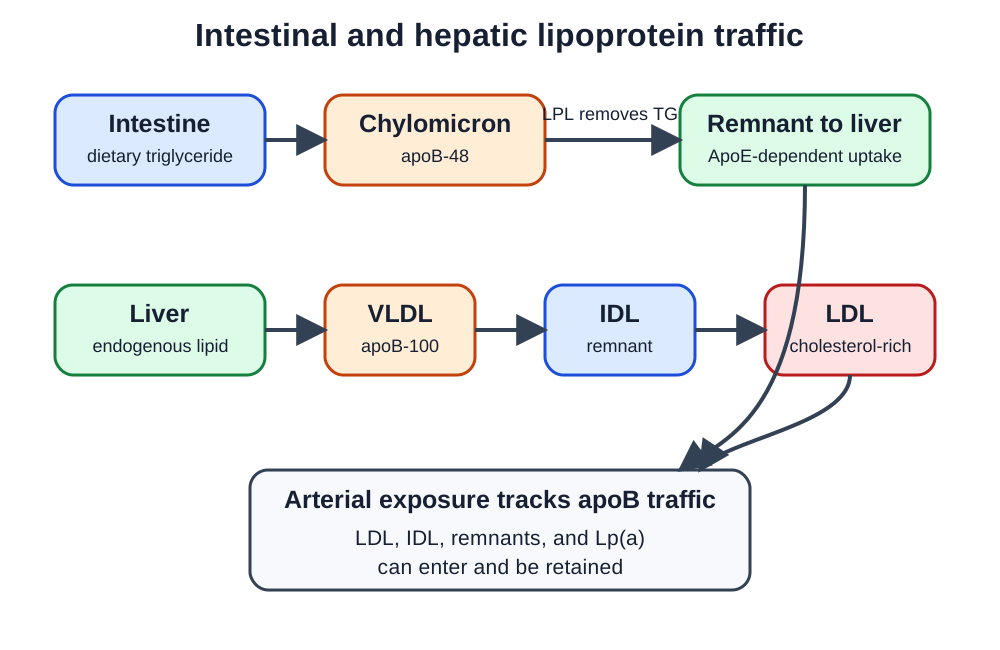
ApoB-containing particles can enter the arterial intima and become retained by extracellular matrix. Modification of retained lipoproteins and macrophage uptake generate foam cells. Inflammation, smooth-muscle responses and extracellular lipid help build a plaque with a fibrous cap. Cap disruption or erosion can provoke thrombosis. Smoking, hypertension and diabetes influence risk, but a visibly torn endothelial surface is not a prerequisite for LDL entry. [4]
Name the route and particle before interpreting the panel or selecting a therapy. [3][4]
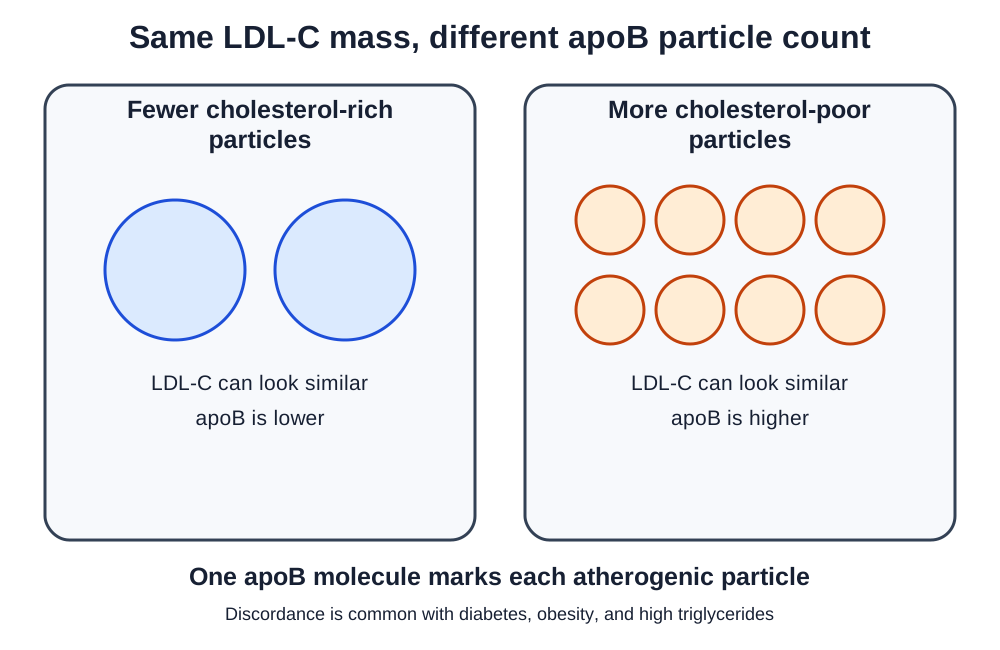
LDL-C measures cholesterol carried in LDL. Non-HDL-C, calculated as total cholesterol minus HDL-C, captures cholesterol in all non-HDL particles. ApoB is useful as an estimate of atherogenic particle number when cholesterol mass and particle burden disagree, especially with diabetes or high triglycerides. An LDL-C at goal can coexist with residual apoB-related risk. [1]
Count particles with apoB when cholesterol mass may understate residual atherogenic traffic. [1][3][4]
Lipoprotein(a), or Lp(a), is an LDL-like particle with an attached apo(a) protein. Measure it at least once in adulthood under the 2026 guideline. A value of at least 125 nmol/L or 50 mg/dL is a risk-enhancing finding. These are alternative reporting thresholds, not a precise individual conversion formula. A high result supports more intensive management of modifiable risk, particularly LDL-C. [1]
Do not prescribe a drug merely to raise HDL-C. In AIM-HIGH, adding niacin to statin therapy raised HDL-C without additional cardiovascular benefit in patients with established vascular disease, low HDL-C and high triglycerides. Improving a laboratory marker and improving outcomes are separate claims. [13]
Checkpoint: resolve LDL-C and apoB discordance
When LDL-C is already low but triglycerides remain high, apoB can reveal residual particle number. The practical lesson is that cholesterol mass and particle count can disagree, especially in diabetes and triglyceride-rich states.
Try it here · Checkpoint 1 of 3
Make your prediction before reading the choices. A first attempt is just a starting point.
Case 9
Show answer and explanations for case 9
A. Apolipoprotein B (Best answer)
ApoB can identify discordance between atherogenic particle number and cholesterol mass, particularly in diabetes and high triglycerides.
Reasoning steps for option A
What does each LDL, VLDL, IDL and Lp(a) particle carry that makes it countable?
Each atherogenic particle carries one apoB molecule, so apoB concentration estimates particle number.
Why might LDL-C of 62 mg/dL understate his burden?
Diabetes and triglycerides of 286 mg/dL favor many small, cholesterol-poor particles, so cholesterol mass can look low while particle count stays high.
Which measure answers the clinician's concern directly?
ApoB, because it reflects the number of atherogenic particles rather than the cholesterol they carry.
B. HDL-C alone (Why this does not fit)
HDL-C does not measure the number of circulating atherogenic apoB particles.
Reasoning steps for option B
Why might HDL-C seem relevant in a diabetic patient with high triglycerides?
Low HDL-C often accompanies high triglycerides and is a recognized risk marker.
What does HDL-C fail to measure?
HDL particles are not apoB-containing, so HDL-C says nothing about how many atherogenic particles circulate.
C. Non-HDL cholesterol (Why this does not fit)
Non-HDL-C measures cholesterol mass across atherogenic particles; apoB more directly addresses their number.
Reasoning steps for option C
What makes non-HDL-C a strong alternative?
It captures cholesterol in all atherogenic particles, including triglyceride-rich remnants, and is useful when triglycerides are high.
Why is it not the most direct estimate of particle number?
Non-HDL-C is still a cholesterol mass; apoB counts particles, which is the specific question asked.
D. Lipoprotein(a) concentration (Why this does not fit)
Lp(a) assesses a particular inherited particle-related risk rather than total atherogenic particle burden.
Reasoning steps for option D
Why could Lp(a) seem related to residual particle risk?
Lp(a) is an apoB-containing atherogenic particle that adds risk beyond LDL-C.
Why does it not answer this clinician's question?
Lp(a) measures one inherited particle type and is recommended at least once in adulthood, not as an estimate of total atherogenic particle number.
Takeaway: A low LDL-C does not always mean a low apoB burden.
Firm Achilles or hand-extensor tendon xanthomas, premature ASCVD in relatives and markedly high LDL-C suggest familial hypercholesterolemia. Premature family ASCVD generally means an event before age 55 in a male first-degree relative or before 65 in a female first-degree relative. Corneal arcus before age 45 supports evaluation but is not diagnostic; arcus in an older adult is less specific. Many people with FH have no obvious xanthomas. An adult LDL-C ≥190 mg/dL prompts severe-hypercholesterolemia treatment and evaluation for FH, not an automatic genetic diagnosis. [5]
Corneal arcus at a young age can support inherited lipid exposure, but it must be interpreted with the lipid panel and family history. Image: Anita A Kumar, Ghanshyam Palamaner Subash Shantha, Yadav Srinivasan, N Senthil, K Rajkumar, Neeta Paunikar, and MK Sudhakar; original source; Creative Commons Attribution 2.0 Generic. [5].
Palms plus cholesterol and triglycerides
Palmar-crease and tuberoeruptive xanthomas suggest dysbetalipoproteinemia when both cholesterol and triglycerides are high. ApoE-mediated remnant clearance is impaired. ApoE2 homozygosity is common in the recessive form, but most people with that genotype do not develop overt disease without additional metabolic factors. Rare dominant variants exist. A broad beta electrophoretic pattern supports remnant accumulation, but its absence does not exclude the disorder. [6]
Eruptive papules plus extreme triglycerides
Clusters of yellow papules on extensor surfaces or buttocks, lipemic plasma and recurrent abdominal pain suggest severe triglyceride-rich lipoprotein accumulation. Diabetes, alcohol, medications and genetic susceptibility often combine. Childhood onset and persistent extreme levels despite correction of secondary drivers raise concern for a monogenic chylomicronemia disorder, including defects in lipoprotein lipase function. [11]
Look for a reversible contributor
Review TSH, glycemia, renal function, urine protein, liver or biliary disease, alcohol and medications as the pattern indicates. Hypothyroidism can raise LDL-C and increase susceptibility to muscle symptoms. Treat overt hypothyroidism and reassess lipids after thyroid normalization; do not promise a fixed percentage correction or assume coexisting inherited disease will disappear. Nephrotic protein loss and cholestasis can cause striking lipid abnormalities. Oral estrogen, retinoids and some antipsychotics can aggravate triglycerides. [7]
Know what the laboratory calculated
A nonfasting panel is acceptable for many initial assessments. Obtain fasting measurements when triglycerides are high or a genetic disorder is suspected. The traditional Friedewald equation in mg/dL is total cholesterol minus HDL-C minus triglycerides divided by 5. It should not be used at triglycerides ≥400 mg/dL and can be inaccurate even below that threshold, especially when LDL-C is low. The 2026 guideline prefers Martin/Hopkins or Sampson/NIH estimation over Friedewald. Use the laboratory's validated method and consider non-HDL-C or apoB rather than assuming every direct LDL assay solves the problem. [3][7]
FH commonly reflects autosomal dominant LDLR loss of function, APOB variants impairing receptor binding, or PCSK9 gain of function that increases receptor degradation. Recessive LDLRAP1 disease and severe biallelic forms also occur. Offer family lipid evaluation and appropriate genetic cascade testing when a pathogenic familial variant is known. Treatment should not wait for a genetic report when the clinical indication is already clear. [5]
Name the risk category before choosing a target
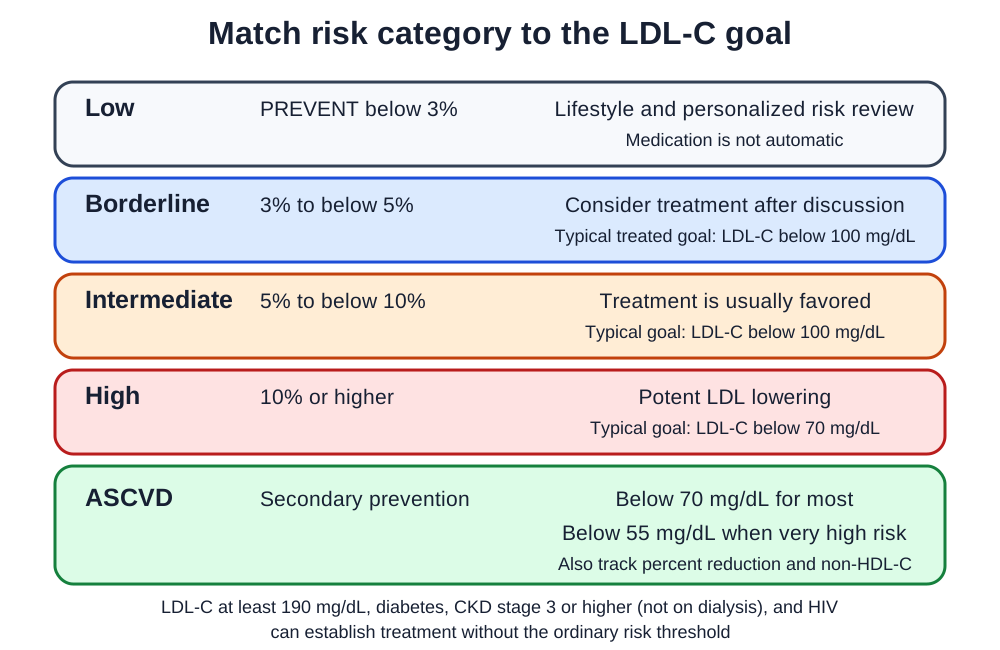
The 2026 ACC/AHA guideline replaces the old pooled-cohort framework with PREVENT-ASCVD for eligible primary-prevention adults aged 30-79 with LDL-C 70-189 mg/dL and no known ASCVD or subclinical atherosclerosis. Interpret the estimate alongside family history, other risk-enhancing findings and the patient's preferences. A low short-term estimate in a young person does not erase prolonged exposure to markedly high LDL. [1][2]
Primary prevention using PREVENT
Low risk is <3%, borderline 3% to <5%, intermediate 5% to <10%, and high risk ≥10% over ten years. At borderline risk, a moderate-intensity statin is reasonable when treatment is chosen after discussion. At intermediate risk, at least a moderate-intensity statin is recommended. When treated, borderline or intermediate risk generally uses LDL-C <100 mg/dL; high risk uses <70 mg/dL. [2][3]
Clinical ASCVD
Established coronary, cerebrovascular or peripheral atherosclerotic disease requires secondary prevention. Very-high-risk ASCVD uses LDL-C <55 mg/dL and non-HDL-C <85 mg/dL. Other clinical ASCVD generally uses LDL-C <70 mg/dL. Very high risk means at least two major ASCVD events, or one major event plus at least two high-risk conditions. Major events include acute coronary syndrome within the past 12 months, a separate prior MI, ischemic stroke and symptomatic PAD.
The guideline definition lists age ≥65, diabetes, hypertension, current smoking, prior coronary bypass or percutaneous coronary intervention, heart failure, and LDL-C ≥100 mg/dL despite maximally tolerated statin plus ezetimibe as high-risk conditions. [1][3][19]
Some indications do not need a calculator to begin the discussion. Severe primary LDL-C elevation ≥190 mg/dL warrants potent LDL lowering. For primary prevention at ages 40-75, diabetes warrants statin treatment. Adults aged 40-75 with CKD stage 3 or higher who are not on dialysis and LDL-C 70-189 mg/dL have a recommendation for a moderate-intensity statin or moderate-intensity statin plus ezetimibe. People with HIV aged 40-75 on stable combination antiretroviral therapy also have a statin recommendation.
These indications do not require an ordinary PREVENT threshold first. Starting a statin after dialysis begins has not shown the same benefit; continuing an existing regimen may be reasonable after individualized assessment. Intensity and goals still depend on their full clinical risk. Do not label every person with diabetes or LDL-C ≥190 as though they already have clinical ASCVD. [1][3]
Calculate risk when appropriate, personalize it, then select the goal before choosing drug intensity. [1][2][3][19]
Severe primary LDL-C elevation
Without ASCVD, confirmed FH, additional risk factors or subclinical atherosclerosis, the LDL-C goal is <100 mg/dL. With confirmed HeFH, additional ASCVD risk factors or coronary calcification, aim for <70 mg/dL. Severe hypercholesterolemia with clinical ASCVD uses <55 mg/dL. These distinctions prevent treating all LDL-C values ≥190 as the same risk state. [3]
Diabetes without clinical ASCVD
At ages 40-75, moderate-intensity statin treatment with an LDL-C goal <100 mg/dL is the baseline recommendation. Multiple ASCVD risk factors support high-intensity treatment, at least 50% LDL-C reduction and a goal <70 mg/dL. [3]
When the primary-prevention decision remains uncertain, selected coronary artery calcium testing can reclassify risk. A score of zero means no detected calcified plaque, not no lifetime risk and not necessarily no noncalcified plaque. It does not cancel a strong indication such as severe hypercholesterolemia. CAC is a decision aid; it is not a required hurdle before treating an established indication. [1][3]
Targets complement percentage reduction. High-intensity statins are expected to reduce LDL-C by at least 50%; moderate-intensity therapy generally achieves 30-49%. An LDL-C falling from 240 to 120 mg/dL is a substantial response but may still leave a patient above the appropriate absolute goal. [3]
Choose a mechanism that closes the treatment gap
Begin with food choices emphasizing vegetables, whole grains, legumes, nuts and unsaturated fats in place of saturated fats, plus activity, tobacco cessation and management of blood pressure and diabetes. Lifestyle accompanies medication when the indication is strong; it is not a reason to delay treatment of FH or secondary prevention. [3]
Statin at the liver
HMG-CoA reductase inhibition decreases hepatic cholesterol synthesis and increases LDL-receptor expression. Atorvastatin 40-80 mg or rosuvastatin 20-40 mg daily is high intensity. Use the maximally tolerated regimen, accounting for interactions, renal function and adverse effects. [3]
Ezetimibe at the intestinal brush border
NPC1L1 inhibition reduces absorption of dietary and biliary cholesterol. Ezetimibe 10 mg daily can add LDL reduction without increasing the statin dose. It does not work by binding bile acids. [16]
PCSK9 antibody preserving receptors
Alirocumab and evolocumab inhibit circulating PCSK9, limiting LDL-receptor degradation so more receptors remain available for clearance. Consider the amount of additional LDL lowering required, clinical risk and access. [17][19]
Other selected options
Bempedoic acid inhibits ATP citrate lyase upstream of cholesterol synthesis and has cardiovascular outcome evidence in statin-intolerant patients. Hyperuricemia and gout matter when choosing it. Inclisiran lowers PCSK9 production through small interfering RNA; its LDL-lowering effect should not be described as proof of identical outcome evidence for every PCSK9-directed treatment. [15][20]
A useful starting sequence is tolerated statin, reassessment, then additional LDL lowering. Ezetimibe is often the accessible oral addition; a PCSK9 antibody may be appropriate when a larger reduction is needed. This is not a rigid rule requiring an intolerable statin dose or forbidding early combination therapy. Very-high-risk patients far above goal may need more than one agent, selected to reach the goal promptly and safely. [19]
Bile acid sequestrants interrupt bile acid reabsorption and increase hepatic cholesterol use. Colesevelam is not systemically absorbed, but it can raise triglycerides, cause gastrointestinal effects and reduce absorption of selected drugs and fat-soluble vitamins. It is contraindicated at triglycerides >500 mg/dL, with a history of hypertriglyceridemia-induced pancreatitis, or with a history of bowel obstruction. Check product-specific dose separation, often four hours before colesevelam for interacting medicines and vitamins. [10]
In July 2026, the FDA approved daily oral enlicitide as the first oral PCSK9 inhibitor for adults with hypercholesterolemia, including heterozygous familial hypercholesterolemia. It expands route choices for patients who need further LDL-C reduction, but selection still depends on the treatment goal, background therapy, access, and outcome evidence. [21]
Checkpoint: close a large residual LDL-C gap
A patient far above a high-risk goal despite an adherent potent statin needs gap-sized add-on therapy. Match the expected LDL-C reduction, route, evidence, interactions, and access rather than choosing a drug only because it is newer.
Try it here · Checkpoint 2 of 3
Make your prediction before reading the choices. A first attempt is just a starting point.
Case 18
Show answer and explanations for case 18
A. Replace rosuvastatin with simvastatin 20 mg daily (Why this does not fit)
This reduces statin intensity and is unlikely to close the substantial LDL gap.
Reasoning steps for option A
What could make a simvastatin switch seem reasonable?
Simvastatin is inexpensive and familiar.
What would the switch do to her LDL gap?
Simvastatin 20 mg is far less potent than rosuvastatin 40 mg, so LDL-C would rise further above goal.
B. A PCSK9 monoclonal antibody (Best answer)
She has high residual LDL-C despite a potent tolerated oral regimen, making receptor-preserving PCSK9 inhibition appropriate.
Reasoning steps for option B
How far is she from her goal?
FH with prior MI puts her in secondary prevention, and LDL-C 112 mg/dL is well above a goal of below 70 or 55 mg/dL.
Has the oral regimen been given a fair trial?
Yes. Eight weeks of adherent, tolerated rosuvastatin 40 mg plus ezetimibe is enough to judge the response.
Which addition can close a gap of this size?
A PCSK9 monoclonal antibody, which preserves LDL receptors and typically lowers LDL-C by about 50-60% more; she can use injections.
C. Add gemfibrozil (Why this does not fit)
No severe triglyceride indication is supplied; gemfibrozil does not provide the needed additional LDL lowering and adds interaction risk.
Reasoning steps for option C
Why might gemfibrozil be considered in a patient on multiple lipid drugs?
It is another lipid agent and can modestly affect lipoproteins.
Why does it not fit her need?
She has no severe triglyceride problem, gemfibrozil adds little LDL lowering, and it increases statin muscle toxicity risk.
D. Wait another year before reconsidering the unchanged regimen (Why this does not fit)
Eight weeks is sufficient for assessing the current response; prolonged delay leaves the gap unaddressed.
Reasoning steps for option D
Why could waiting feel acceptable after recent drug changes?
Some clinicians allow more time for a full effect.
Why is a year of waiting inappropriate?
The response is fully measurable by eight weeks, and delay leaves a high-risk patient with prior MI above goal.
Takeaway: Assess actual response and add enough LDL lowering for the risk category.
Separate pancreatitis prevention from ASCVD treatment
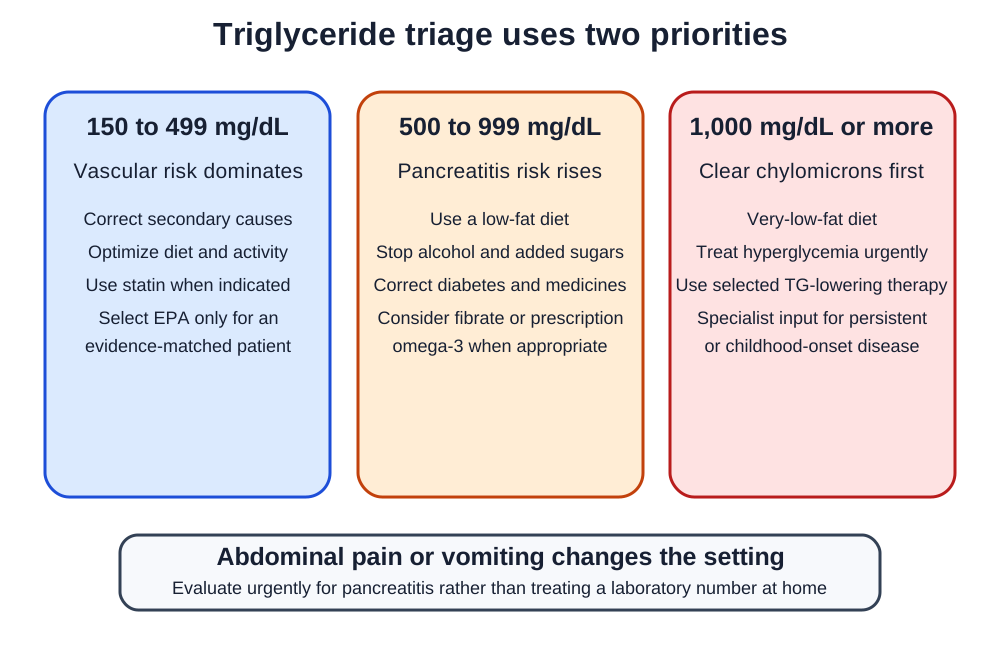
Moderately high triglycerides often reflect excess VLDL and remnants. They contribute to risk assessment, but the first medication decision for ASCVD remains appropriate LDL-based treatment. A low-risk adult with triglycerides of 220 mg/dL does not automatically need a fibrate. Confirm persistence, address glycemia, alcohol, diet and medications, and reassess overall risk. [11]
Persistent 500-999 mg/dL
Use a low-fat diet, correct secondary drivers and consider fenofibrate or prescription omega-3 therapy to lower triglycerides and reduce pancreatitis risk. Maintain indicated statin therapy. This is not an instruction to replace every statin with a fibrate. [3][11]
At least 1,000 mg/dL
Chylomicron accumulation becomes a major concern. A very-low-fat diet, often 10-15% of calories or no more than 20-30 g daily under clinical guidance, and treatment of hyperglycemia are central. Add appropriate prescription triglyceride-lowering therapy. Abdominal pain and vomiting require assessment for pancreatitis rather than routine outpatient follow-up alone. [11]
The concentration and symptoms determine whether the next action centers on vascular risk, chylomicron clearance, or urgent evaluation. [1][3][11][23]
Fibrates activate PPAR-α and promote triglyceride-rich particle clearance. If a fibrate is needed with a statin, fenofibrate generally has a more favorable interaction profile than gemfibrozil; renal function and muscle risk still need review. Simvastatin plus gemfibrozil is contraindicated. Gemfibrozil inhibits transport and metabolic pathways, including OATP1B1; describing the interaction simply as shared CYP metabolism misses the mechanism. [9][11]
Icosapent ethyl is prescription EPA, not interchangeable with an over-the-counter fish-oil supplement. REDUCE-IT tested 2 g twice daily in statin-treated patients aged ≥45 with established cardiovascular disease, or aged ≥50 with diabetes plus at least one additional risk factor, fasting triglycerides 135-499 mg/dL and LDL-C 41-100 mg/dL. It reduced cardiovascular events but increased hospitalization for atrial fibrillation or flutter, with a bleeding signal. That is an ASCVD outcomes indication in a selected population, distinct from treating extreme triglycerides. [12]
For familial chylomicronemia syndrome, a very-low-fat diet remains foundational. Monthly subcutaneous olezarsen targets APOC3 and is approved with diet for adults with this disorder; its 2026 label also includes severe hypertriglyceridemia with reduction of acute pancreatitis risk. Plozasiran, an APOC3-directed small interfering RNA given every 3 months, is also approved with diet for adults with FCS. Both are specialist therapies, not substitutes for urgent evaluation when abdominal pain or vomiting suggests pancreatitis. [22][23][24][25]
Checkpoint: separate pancreatitis and vascular priorities
At triglycerides of 1,000 mg/dL or more, clear chylomicrons and reduce pancreatitis risk first. Once that immediate risk falls, continue the separate work of atherosclerotic risk reduction.
Try it here · Checkpoint 3 of 3
Make your prediction before reading the choices. A first attempt is just a starting point.
Case 26
Show answer and explanations for case 26
A. An unrestricted high-fat ketogenic diet (Why this does not fit)
A high fat load can aggravate chylomicronemia at this triglyceride level.
Reasoning steps for option A
Why might a ketogenic diet appeal to someone with poorly controlled diabetes?
Low-carbohydrate eating can lower glucose.
Why is an unrestricted high-fat load dangerous at triglycerides of 1,850 mg/dL?
Dietary fat enters as chylomicrons, and a high fat load worsens chylomicronemia and pancreatitis risk.
B. Very-low-fat dietary treatment, correction of hyperglycemia and appropriate prescription triglyceride-lowering therapy (Best answer)
Extreme triglycerides require a combined approach to chylomicron accumulation and secondary drivers.
Reasoning steps for option B
What do triglycerides of 1,850 mg/dL and eruptive papules indicate?
Severe chylomicronemia with a real risk of acute pancreatitis.
Which driver needs urgent correction?
Poorly controlled diabetes reduces lipoprotein lipase activity and increases VLDL output, so glycemic control is central.
What combined outpatient plan fits in the absence of pain, vomiting or acidosis?
A very-low-fat diet, correction of hyperglycemia and appropriate prescription triglyceride-lowering therapy.
C. Escalate LDL-lowering therapy alone and retain his current diet (Why this does not fit)
LDL prevention remains relevant, but extreme triglycerides also require immediate dietary and glycemic intervention.
Reasoning steps for option C
Why might LDL lowering seem like the main lipid priority?
He is a diabetic adult who likely needs statin therapy for ASCVD prevention.
Why is LDL therapy alone insufficient now?
At triglycerides near 1,850 mg/dL, the immediate threat is pancreatitis, which needs dietary fat restriction and glycemic control.
D. Wait for a calculated LDL-C before treating the triglycerides (Why this does not fit)
An LDL estimate is not needed to recognize the severe triglyceride problem.
Reasoning steps for option D
Why might a clinician want an LDL-C value first?
LDL-C usually guides lipid therapy.
Why is waiting for it unhelpful?
LDL-C cannot be reliably calculated at this triglyceride level, and the severe triglyceride problem is already clear.
Takeaway: At extreme triglycerides, dietary fat and hyperglycemia both matter.
Obtain baseline clinical and laboratory safety information, including liver assessment and potential interactions. New muscle symptoms warrant evaluation of severity, CK when indicated, thyroid status, exercise and interacting drugs. Mild aches after one statin do not establish complete intolerance. A supervised withdrawal and rechallenge, lower dose, different statin or adjusted schedule may preserve useful LDL lowering. The NLA definition generally requires attempts with at least two statins, including one at its lowest approved daily dose. Severe weakness, dark urine or substantial CK rise needs prompt assessment for myopathy or rhabdomyolysis. [14][9]
Most pregnant patients should stop statins, but the FDA removed the blanket pregnancy contraindication in 2021. Exceptionally high-risk situations, such as severe FH or prior major ASCVD, require individualized specialist decisions. Unintended early exposure is unlikely to harm the fetus and is not by itself evidence of a birth defect. Patients who require statins should not breastfeed. Nonabsorbed bile acid sequestrants may be considered when treatment is needed, with attention to triglycerides and vitamin absorption. [8][10]
Check the lipid response about 4-12 weeks after starting or intensifying treatment. Compare the achieved LDL-C with both the expected percentage reduction and the clinical target. Before escalating, ask about dose use, affordability, adverse effects and secondary causes. Continue lipid monitoring every 6-12 months thereafter, individualized to response, risk and treatment stability. A patient with residual high LDL-C after a tolerated regimen needs an adjustment, not a year of unexamined waiting. [3]
High LDL-C → identify secondary causes and inherited disease, then treat according to risk and lifetime exposure.
High triglycerides → establish persistence, correct drivers and assess pancreatitis risk without forgetting indicated LDL therapy.
Above goal → assess actual medication use and tolerance, then select sufficient additional LDL lowering.
Muscle symptoms or pregnancy → reassess the regimen with the relevant safety evidence rather than applying an absolute shortcut.
Choose the next clinical decision
Use the full pattern before selecting an answer. Identify the dominant particle problem, name the prevention or pancreatitis priority, then compare each option with the treatment goal and safety constraints.
Case 1
Show answer and explanations for case 1
A. Familial hypercholesterolemia (Best answer)
LDL-predominant elevation, tendon xanthomas and premature coronary disease in a first-degree relative strongly support FH.
Reasoning steps for option A
Which lipid fraction dominates this 22-year-old's panel?
LDL-C is 286 mg/dL on two measurements while triglycerides are only 126 mg/dL, so the problem is LDL predominant.
How do the Achilles nodules and his father's MI at 44 refine that pattern?
Tendon xanthomas plus a premature coronary event in a male first-degree relative are classic supports for an inherited LDL-clearance disorder.
Have common secondary causes of high LDL-C been addressed?
Normal TSH and no proteinuria make hypothyroidism and nephrotic syndrome unlikely, leaving familial hypercholesterolemia as the best fit.
B. Dysbetalipoproteinemia (Why this does not fit)
Remnant disease more often raises cholesterol and triglycerides together with palmar or tuberoeruptive xanthomas.
Reasoning steps for option B
Why might a remnant disorder come to mind with xanthomas and very high cholesterol?
Dysbetalipoproteinemia also produces striking cholesterol elevation and skin or tendon deposits, so xanthomas alone do not separate the two.
What in this panel argues against remnant accumulation?
Remnant disease raises cholesterol and triglycerides together and favors palmar or tuberoeruptive lesions; his triglycerides are 126 mg/dL and the nodules are on the Achilles tendons.
C. Familial chylomicronemia (Why this does not fit)
Marked triglyceride elevation rather than this LDL-predominant pattern would be expected.
Reasoning steps for option C
What makes an inherited chylomicron disorder tempting in a young man with a strong family history?
It is a monogenic lipid disease that presents early, so age and heredity alone could point toward it.
Which laboratory value rules it out here?
Familial chylomicronemia produces extreme triglycerides, often above 1,000 mg/dL, not a normal triglyceride level with isolated LDL-C elevation.
D. Hypothyroidism as the established cause (Why this does not fit)
Thyroid testing is normal, and the family and tendon findings point toward an inherited LDL disorder.
Reasoning steps for option D
Why is hypothyroidism worth considering with LDL-C this high?
Hypothyroidism reduces LDL-receptor activity and is a classic reversible cause of raised LDL-C.
Does anything in the stem establish it as the cause?
No. TSH is normal, and tendon xanthomas with a father's MI at 44 point to an inherited disorder rather than an endocrine one.
Takeaway: Tendon findings and the family pattern strengthen the significance of high LDL-C.
Triglycerides of 192 mg/dL do not make a fibrate a substitute for LDL lowering in this high-risk patient.
Reasoning steps for option A
What might draw attention to a fibrate in this patient?
Her triglycerides are 192 mg/dL and she has diabetes, a setting often associated with triglyceride-rich particles.
Why is gemfibrozil alone the wrong first move?
Triglycerides of 192 mg/dL do not create a pancreatitis priority, and a fibrate does not substitute for statin-based LDL lowering in a high-risk diabetic adult.
B. High-intensity statin therapy with lifestyle treatment (Best answer)
Diabetes at this age establishes a treatment indication, and multiple additional risk factors favor high intensity.
Reasoning steps for option B
Which condition already creates a statin indication at age 54?
Type 2 diabetes between ages 40 and 75 establishes statin treatment without waiting for a calculator result.
What pushes her beyond the baseline moderate intensity?
Treated hypertension and ongoing tobacco use are additional ASCVD risk factors layered on diabetes.
Which regimen therefore fits best?
Multiple risk factors in diabetes support high-intensity statin therapy aiming for at least 50% LDL-C reduction and a goal below 70 mg/dL, with lifestyle treatment alongside.
C. Ezetimibe monotherapy with lifestyle treatment (Why this does not fit)
She has no statin intolerance; a statin is the initial evidence-based LDL treatment, with additional agents selected if needed.
Reasoning steps for option C
Why could ezetimibe seem reasonable for LDL-C of 148 mg/dL?
It lowers LDL-C and is well tolerated, so it may look like a gentle first step.
What stem detail removes any reason to skip a statin?
She has no statin intolerance, and statins carry the primary outcome evidence; ezetimibe is an add-on when the goal is not reached.
D. Moderate-intensity statin therapy as the preferred initial intensity (Why this does not fit)
This is the baseline diabetes recommendation, but her hypertension and smoking favor the high-intensity option among these choices.
Reasoning steps for option D
Why is moderate intensity a real contender in diabetes?
Moderate-intensity statin therapy with a goal below 100 mg/dL is the baseline recommendation for adults 40-75 with diabetes.
What makes it less appropriate for this particular woman?
She also has hypertension and continues to smoke; these extra risk factors favor high intensity and a goal below 70 mg/dL.
Takeaway: Diabetes plus additional risk factors can justify high-intensity treatment before an event.
A. Continue unchanged and wait a year to assess response (Why this does not fit)
The event and above-goal LDL-C warrant treatment adjustment and earlier reassessment.
Reasoning steps for option A
Why might continuing the current regimen appeal before discharge?
He tolerated atorvastatin 20 mg well, and avoiding changes during a busy discharge can feel safe.
What makes a year of unchanged therapy inappropriate?
He now has clinical ASCVD with LDL-C 116 mg/dL, far above the secondary-prevention goal, and lipids should be rechecked about 4-12 weeks after intensifying.
B. Switch to pravastatin 10 mg daily (Why this does not fit)
That lowers rather than increases treatment intensity despite recent MI and an LDL-C above goal.
Reasoning steps for option B
What could make a pravastatin switch look attractive?
Pravastatin has fewer drug interactions and may seem gentler for an older patient.
What does this switch do to his LDL-lowering intensity?
Pravastatin 10 mg is low intensity, a step down from his tolerated moderate dose despite a new MI and LDL-C above goal.
C. Increase to a high-intensity atorvastatin regimen (Best answer)
Atorvastatin 20 mg is moderate intensity; clinical ASCVD warrants maximally tolerated potent LDL lowering, with nonstatins as needed.
Reasoning steps for option C
What intensity is atorvastatin 20 mg daily?
It is a moderate-intensity dose, expected to lower LDL-C by roughly 30-49%.
How does the new MI change his treatment category?
He now has clinical ASCVD, which calls for the maximally tolerated high-intensity statin and an LDL-C goal below 70 mg/dL, or below 55 mg/dL if very-high-risk criteria are met.
Is there any barrier to intensifying atorvastatin?
No. He tolerated the drug, liver tests are acceptable and there are no interactions, so atorvastatin 40-80 mg is the discharge change, with nonstatins added if the goal is still missed.
D. Replace the statin with fenofibrate alone (Why this does not fit)
A triglyceride-focused drug does not replace the foundation of secondary LDL prevention.
Reasoning steps for option D
Why might a fibrate be considered after an acute coronary event?
Fibrates are lipid drugs and some patients with coronary disease have high triglycerides.
What does replacing the statin with fenofibrate lose?
No triglyceride problem is described, and removing the statin discards the proven LDL-lowering foundation of secondary prevention.
Takeaway: After an MI, a tolerated moderate-intensity statin should be intensified to high intensity, with nonstatins added as needed to reach the goal.
A. Defer medication until he starts dialysis (Why this does not fit)
Nondialysis stage 3b CKD at his age is a treatment indication; dialysis is not a prerequisite.
Reasoning steps for option A
Why might dialysis seem like the point to start treatment?
Kidney disease severity increases toward dialysis, so later treatment may look proportionate.
What does the evidence show about the timing?
Starting a statin after dialysis begins has not shown the same benefit, while nondialysis stage 3b CKD at 57 is already an indication.
B. Treat only if coronary calcium is present (Why this does not fit)
CAC is not required to establish the CKD-specific treatment recommendation.
Reasoning steps for option B
Why could coronary calcium testing seem attractive in someone without ASCVD?
CAC is used to refine uncertain primary-prevention decisions.
Is CAC needed to justify treatment in his situation?
No. CKD stage 3 or higher without dialysis at ages 40-75 carries its own statin recommendation, so CAC is not a required gate.
C. His age and CKD stage support LDL-lowering therapy without relying on the ordinary risk threshold (Best answer)
At age 57, with nondialysis stage 3b CKD and LDL-C 121 mg/dL, he fits the specific recommendation for a moderate-intensity statin or moderate-intensity statin plus ezetimibe.
Reasoning steps for option C
Which group does a 57-year-old with eGFR 38 and no dialysis belong to?
He has nondialysis CKD stage 3b and falls within the 40-75 age range of the CKD recommendation.
Does his LDL-C fall in the range that recommendation covers?
Yes. LDL-C 121 mg/dL lies within 70-189 mg/dL.
What treatment follows without a PREVENT threshold?
A moderate-intensity statin or moderate-intensity statin plus ezetimibe is recommended directly because of the CKD indication.
D. Treatment is unnecessary unless LDL-C exceeds 190 mg/dL, because CKD stage and age should not alter the ordinary prevention threshold (Why this does not fit)
Severe LDL elevation is only one treatment indication; CKD supplies another here.
Reasoning steps for option D
Why does the 190 mg/dL threshold come to mind?
LDL-C of at least 190 mg/dL is a well-known calculator-independent statin indication.
What does this option overlook in his profile?
CKD stage 3 or higher without dialysis at ages 40-75 is a separate indication, so treatment does not depend on LDL-C reaching 190 mg/dL.
Takeaway: Recognize conditions with a treatment indication beyond the calculator.
Subtracting triglycerides divided by 5 as well gives a traditional estimated LDL-C, not non-HDL-C.
Reasoning steps for option A
Which calculation produces 134 mg/dL from these numbers?
238 minus 42 minus 310 divided by 5 (62) gives 134, the traditional Friedewald LDL-C estimate.
Why is that not non-HDL-C?
Non-HDL-C deliberately keeps VLDL and remnant cholesterol, so the triglyceride term is not subtracted.
B. 196 mg/dL (Best answer)
Non-HDL-C is total cholesterol minus HDL-C, so 238 minus 42 is 196.
Reasoning steps for option B
How is non-HDL-C defined?
It is total cholesterol minus HDL-C.
What is the arithmetic for this patient?
238 minus 42 equals 196 mg/dL.
Why is this value useful with triglycerides of 310 mg/dL?
It includes cholesterol in LDL plus triglyceride-rich particles and remnants, so it reflects atherogenic burden without relying on the Friedewald assumption.
C. 280 mg/dL (Why this does not fit)
Adding HDL-C to total cholesterol does not calculate atherogenic cholesterol.
Reasoning steps for option C
How would someone arrive at 280 mg/dL?
By adding HDL-C to total cholesterol: 238 plus 42.
Why is addition wrong?
HDL-C is already part of total cholesterol and is not atherogenic, so it must be subtracted, not added.
D. 62 mg/dL (Why this does not fit)
Triglycerides divided by 5 is the old estimated VLDL-C term, not non-HDL-C.
Reasoning steps for option D
What does 62 mg/dL represent in this panel?
Triglycerides of 310 divided by 5 equals 62, the Friedewald estimate of VLDL cholesterol.
Why is it not non-HDL-C?
It captures only an estimated VLDL fraction and omits LDL cholesterol entirely.
Takeaway: Non-HDL-C retains cholesterol in LDL and other non-HDL particles.
A. Impaired ApoE-mediated clearance of remnant lipoproteins (Best answer)
The combined lipid elevation, palmar deposits and broad beta pattern point to dysbetalipoproteinemia.
Reasoning steps for option A
Which lipid pattern does total cholesterol 388 with triglycerides 456 mg/dL show?
A mixed elevation, with cholesterol and triglycerides raised to a similar degree.
What do palmar-crease deposits and elbow nodules add?
Palmar and tuberoeruptive xanthomas are characteristic of remnant accumulation in dysbetalipoproteinemia.
What mechanism fits these findings plus a broad beta band?
Impaired apoE-mediated hepatic uptake of chylomicron and VLDL remnants, often with apoE2 homozygosity and a metabolic trigger.
B. Isolated loss of LDL receptor function as the only explanation (Why this does not fit)
Classic FH is LDL predominant and more characteristically produces tendon xanthomas.
Reasoning steps for option B
Why might an LDL-receptor defect be suspected with cholesterol near 390 mg/dL?
Loss of LDL-receptor function causes FH, which produces very high cholesterol and xanthomas.
Which findings point away from isolated LDLR loss?
FH is LDL predominant with tendon xanthomas, whereas here triglycerides are also markedly high, xanthomas are palmar and electrophoresis shows a broad beta pattern.
C. Defective lipoprotein lipase-mediated triglyceride hydrolysis (Why this does not fit)
This more typically produces severe chylomicronemia with triglycerides far higher than the mixed remnant pattern described.
Reasoning steps for option C
Why could a lipoprotein lipase defect seem plausible?
Triglycerides of 456 mg/dL are raised and lipase defects cause hypertriglyceridemia.
What would a lipase defect usually produce instead?
Severe chylomicronemia with triglycerides often above 1,000 mg/dL and eruptive xanthomas, not a balanced cholesterol-triglyceride rise with palmar deposits.
D. Isolated HDL deficiency (Why this does not fit)
Low HDL alone does not produce the supplied broad beta remnant pattern.
Reasoning steps for option D
Why might HDL deficiency be considered in a man with xanthomas?
Some rare HDL disorders cause lipid deposits and abnormal lipoproteins.
Why does it not explain this panel?
Isolated low HDL does not raise total cholesterol to 388 mg/dL or create a broad beta remnant band.
Takeaway: Palmar deposits and a mixed cholesterol-triglyceride pattern suggest remnants.
A. It inhibits hepatic cholesterol synthesis at HMG-CoA reductase, reducing mevalonate production and intracellular cholesterol (Why this does not fit)
That is the statin mechanism; evolocumab targets circulating PCSK9.
Reasoning steps for option A
Why might HMG-CoA reductase inhibition come to mind for any LDL-lowering drug?
It is the statin mechanism and the best known way to lower LDL-C.
How does evolocumab differ?
It is a monoclonal antibody against circulating PCSK9 and does not inhibit cholesterol synthesis.
B. It directs breakdown of hepatic PCSK9 mRNA (Why this does not fit)
That describes inclisiran. Evolocumab binds PCSK9 protein rather than its mRNA.
Reasoning steps for option B
Why might PCSK9 mRNA breakdown sound correct for a PCSK9 drug?
Inclisiran also targets PCSK9 and lowers LDL-C.
What distinguishes evolocumab from inclisiran?
Evolocumab binds PCSK9 protein in plasma, whereas inclisiran silences PCSK9 mRNA in hepatocytes.
C. It reduces LDL-receptor degradation and increases receptors available for hepatic clearance (Best answer)
CLEAR Outcomes showed fewer cardiovascular events in statin-intolerant patients, but gout was more frequent, so his recurrent gout must be part of the decision.
B. A likely reduction in uric acid that will also treat his recurrent gout while lowering LDL-C (Why this does not fit)
Bempedoic acid can increase uric acid and gout risk, so it should not be chosen as a gout treatment.
Reasoning steps for option B
Why might a patient hope the drug helps his gout?
He wants one medicine to address more than one problem.
What does bempedoic acid actually do to uric acid?
It raises uric acid and increases gout risk, so it could worsen his gout.
C. A triglyceride increase from intestinal bile acid binding (Why this does not fit)
That describes a concern with bile acid sequestrants; bempedoic acid inhibits ATP citrate lyase.
Reasoning steps for option C
Why could a triglyceride rise sound like a nonstatin side effect?
Some LDL-lowering drugs, notably bile acid sequestrants, can raise triglycerides.
What is bempedoic acid's actual mechanism?
It is absorbed and inhibits ATP citrate lyase upstream of HMG-CoA reductase; it does not bind bile acids.
D. Bempedoic acid has no cardiovascular outcome evidence (Why this does not fit)
The randomized CLEAR Outcomes trial demonstrated reduced major cardiovascular events in the studied population.
Reasoning steps for option D
Why might a newer nonstatin be assumed to lack outcome data?
Some LDL-lowering drugs were approved on LDL-C lowering alone.
What evidence exists for bempedoic acid?
The randomized CLEAR Outcomes trial showed reduced major cardiovascular events in statin-intolerant patients.
Takeaway: Match nonstatin choice to both the LDL gap and adverse-effect profile.
A. LDL-C above the treatment goal (Why this does not fit)
This can support adding LDL therapy, but the triglyceride contraindication makes colesevelam unsuitable.
Reasoning steps for option A
Why might an above-goal LDL-C look like a reason to avoid colesevelam?
It is the most prominent abnormal value in her lipid panel.
What role does above-goal LDL-C actually play?
It is the indication for adding LDL therapy, not a contraindication; the barrier to colesevelam lies elsewhere in her panel.
B. Stable eGFR 42 mL/min/1.73 m² (Why this does not fit)
This degree of renal impairment matters for several lipid medicines, but it is not a listed contraindication to nonabsorbed colesevelam.
Reasoning steps for option B
Why might stable eGFR 42 raise concern about a new drug?
Reduced kidney function limits dosing of several lipid medicines, such as some statins and fibrates.
Is eGFR 42 a colesevelam contraindication?
No. Colesevelam is not systemically absorbed, and renal impairment is not among its listed contraindications.
C. Triglycerides exceed 500 mg/dL (Best answer)
Colesevelam can increase triglycerides and is contraindicated above this threshold.
Reasoning steps for option C
How does colesevelam affect triglycerides?
Bile acid sequestrants can raise triglycerides by stimulating hepatic VLDL production.
What are its listed contraindications?
Triglycerides above 500 mg/dL, hypertriglyceridemia-induced pancreatitis, or a history of bowel obstruction.
Which of her findings meets one?
Triglycerides of 720 mg/dL exceed the 500 mg/dL threshold, so colesevelam should not be added.
D. ALT 68 U/L with an upper limit of 40 U/L (Why this does not fit)
This mild enzyme elevation warrants clinical assessment, but it is not a listed colesevelam contraindication. Her triglycerides exceed the explicit contraindication threshold.
Reasoning steps for option D
Why might ALT 68 U/L seem like a drug barrier?
Liver enzyme elevation is a familiar caution for several lipid drugs.
Why is it not a colesevelam contraindication?
Colesevelam acts in the gut without systemic absorption; mild ALT elevation warrants clinical assessment but is not a listed contraindication.
Takeaway: A nonabsorbed drug can still worsen the wrong lipid pattern.
A. Continue LDL therapy and consider fenofibrate or prescription omega-3 therapy with a low-fat diet (Best answer)
Persistent severe triglyceride elevation warrants a pancreatitis-risk reduction plan alongside ASCVD treatment.
Reasoning steps for option A
Which triglyceride band do fasting values of 690 and 740 mg/dL fall in?
Persistent 500-999 mg/dL, where pancreatitis risk reduction becomes a treatment goal.
Have secondary drivers been handled?
Yes. Diabetes is controlled, alcohol has stopped and she has had dietary counseling, yet triglycerides remain high.
What additional plan fits while keeping her statin?
Continue the indicated LDL therapy and consider fenofibrate or prescription omega-3 therapy together with a low-fat diet.
B. Stop the statin because triglycerides now take priority over every other cardiovascular risk and LDL-directed treatment goal (Why this does not fit)
Triglyceride management does not erase her existing statin indication.
Reasoning steps for option B
Why might severe triglycerides seem to override the statin?
Pancreatitis risk becomes a new, pressing concern at these levels.
What happens to her statin indication?
It persists; triglyceride treatment is added alongside LDL prevention rather than replacing it.
C. Add gemfibrozil without reviewing her statin or interactions (Why this does not fit)
The combination requires attention to major muscle toxicity risk; fenofibrate is generally preferred if combining.
Reasoning steps for option C
Why might gemfibrozil seem a natural addition?
It is a potent triglyceride-lowering fibrate.
What does adding it without review risk?
Gemfibrozil sharply raises statin exposure and muscle toxicity risk; fenofibrate is generally preferred when combining with a statin.
D. Defer all reassessment until abdominal pain develops (Why this does not fit)
The purpose of treatment is to reduce risk before a pancreatitis presentation.
Reasoning steps for option D
Why could waiting for symptoms seem reasonable in a well patient?
She currently has no abdominal pain.
Why is waiting inappropriate?
The aim of treating persistent triglycerides of 500-999 mg/dL is to lower pancreatitis risk before an attack occurs.
Takeaway: Treat severe triglycerides while preserving indicated LDL prevention.
A. It is used only when triglycerides exceed 1,000 mg/dL because cardiovascular benefit has not been shown at lower triglyceride levels (Why this does not fit)
The cardiovascular outcomes trial enrolled moderate triglyceride elevations, not only severe chylomicronemia.
Reasoning steps for option A
Why might icosapent ethyl be linked only to extreme triglycerides?
Omega-3 products are often thought of as treatments for severe hypertriglyceridemia.
What triglyceride range did the outcomes trial enroll?
REDUCE-IT enrolled fasting triglycerides of 135-499 mg/dL, not only values above 1,000 mg/dL.
B. It eliminates the need for statin therapy (Why this does not fit)
The evidence comes from patients receiving background statin treatment.
Reasoning steps for option B
Why might a patient hope the drug could replace her statin?
It reduced cardiovascular events, so it might seem a stand-alone prevention drug.
What background therapy did trial participants receive?
All were on statins, so the benefit applies on top of statin therapy, not instead of it.
C. Prescription EPA reduced cardiovascular events in a selected statin-treated high-risk population (Best answer)
Her profile resembles the REDUCE-IT population; treatment discussion should also address atrial fibrillation and bleeding.
Reasoning steps for option C
How does she compare with the trial population?
She is 65 with established coronary disease on a statin, LDL-C 61 mg/dL and triglycerides 214 mg/dL, all within the REDUCE-IT criteria.
What did the trial show?
Icosapent ethyl 2 g twice daily reduced cardiovascular events in this selected statin-treated population.
What else must the discussion include?
Increased hospitalization for atrial fibrillation or flutter and a bleeding signal.
D. Any fish-oil supplement has equivalent outcomes evidence (Why this does not fit)
The trial tested a specific prescription EPA product and dose, not interchangeable supplements.
Reasoning steps for option D
Why might any fish oil seem equivalent?
Over-the-counter products also contain omega-3 fatty acids.
Why can the trial results not be generalized?
REDUCE-IT tested a specific prescription EPA product and dose; supplements differ in content and lack the same outcome evidence.
Takeaway: Do not generalize prescription EPA trial results to every omega-3 product.
A. Change to ezetimibe routinely for the remainder of pregnancy (Why this does not fit)
Routine substitution with another systemic lipid medicine is not established as necessary or safe in this uncomplicated pregnancy context.
Reasoning steps for option A
Why might ezetimibe seem a safe substitute in pregnancy?
It is an alternative LDL-lowering drug that avoids statin exposure.
Why is routine substitution not advised here?
She has HeFH without ASCVD, so pausing therapy for the pregnancy is usually acceptable, and substituting another systemic drug is not established as necessary or safe.
B. Arrange urgent fetal intervention because exposure establishes injury (Why this does not fit)
Early unintended exposure alone does not establish fetal harm; FDA supports reassuring counseling with obstetric follow-up.
Reasoning steps for option B
Why might she fear that early exposure caused harm?
Statins were long labeled as contraindicated in pregnancy.
What does the FDA say about unintended early exposure?
It is unlikely to harm the fetus, so reassurance and routine obstetric follow-up are appropriate, not urgent fetal intervention.
C. Continue atorvastatin routinely throughout pregnancy because the 2021 FDA labeling change eliminated all fetal concerns and all need for individualized risk assessment (Why this does not fit)
Removal of a blanket contraindication did not make routine statin continuation the recommendation for most pregnancies.
Reasoning steps for option C
Why might continuing atorvastatin sound supported by the 2021 labeling change?
The FDA removed the blanket pregnancy contraindication.
What does the FDA still advise for most pregnant patients?
Most should stop statins; continuation is reserved for individualized very-high-risk situations, which she does not have.
D. Usually stop the statin for pregnancy and explain that unintended early exposure is unlikely to harm the fetus (Best answer)
This follows FDA advice for most pregnant patients while avoiding a claim that harm is inevitable.
Reasoning steps for option D
What is her risk context?
She has heterozygous FH with no ASCVD, so a pause during pregnancy is usually safe.
What does the FDA recommend for most pregnant patients on statins?
Stop the statin once pregnancy is recognized.
How should early exposure be framed?
Explain that unintended early exposure is unlikely to harm the fetus, while arranging obstetric care and a plan to resume lipid therapy after pregnancy and breastfeeding.
Takeaway: Most patients stop statins during pregnancy, with calm evidence-based exposure counseling.
A. Add a nonstatin immediately before assessing whether he can reliably obtain and take the prescribed statin because the measured LDL-C alone proves treatment failure (Why this does not fit)
An additional drug may eventually be appropriate, but addressing the known cost barrier is central to interpreting this response.
Reasoning steps for option A
Why might adding a nonstatin seem the fastest way to reach goal?
LDL-C of 96 mg/dL is above his secondary-prevention goal.
What must be resolved before calling this treatment failure?
He reports missed doses because of cost, so the measured response does not reflect full statin exposure.
B. Address access and actual dose use, then reassess the regimen against the treatment goal (Best answer)
The measured response and missed doses require a practical adherence assessment before assuming biological resistance.
Reasoning steps for option B
How much has LDL-C fallen and what does that suggest?
From 180 to 96 mg/dL is about 47%, below the at least 50% expected from high-intensity therapy.
What explains an incomplete response here?
Cost-related missed doses are a known barrier that reduces actual statin exposure.
What is the best next step?
Address cost and access, confirm actual dose use, then reassess LDL-C against the goal before escalating.
C. Reduce the statin dose because LDL-C has fallen below 100 mg/dL (Why this does not fit)
The LDL-C remains above the applicable secondary-prevention goal, and reduced exposure would worsen the treatment gap.
Reasoning steps for option C
Why might a dose reduction seem justified?
LDL-C is now below 100 mg/dL, a threshold sometimes seen as adequate.
What goal applies to him?
With ASCVD the goal is below 70 mg/dL, so 96 mg/dL is still above goal and lower exposure would widen the gap.
D. Wait twelve months without discussing cost (Why this does not fit)
That leaves a known modifiable treatment barrier unaddressed.
Reasoning steps for option D
Why might waiting look like the low-effort option?
His LDL-C has already fallen substantially.
Why is a year of unchanged care inappropriate?
The cost barrier is known and modifiable, and he remains above goal after an ASCVD diagnosis.
Takeaway: Interpret response in the context of actual treatment exposure.
A. Separate the doses by four hours and continue treatment (Why this does not fit)
Spacing does not resolve this systemic interaction or treat established muscle injury.
Reasoning steps for option A
Why might dose separation look like a quick fix?
Timing changes help with some absorption interactions.
Why does it not fit this situation?
The interaction is systemic, and he already has established muscle injury with kidney involvement that needs treatment.
B. Continue both drugs and repeat CK in three months (Why this does not fit)
This delays care for an active potentially dangerous adverse reaction.
Reasoning steps for option B
Why might continuing both drugs and rechecking seem conservative?
Muscle symptoms on statins are common.
What makes a three-month delay dangerous?
CK of 18,000 U/L, dark urine and rising creatinine indicate active rhabdomyolysis needing immediate care.
C. Diagnose simple benign statin-associated myalgia and continue both drugs because muscle aches are common despite the marked CK elevation (Why this does not fit)
The CK magnitude, dark urine and renal injury distinguish rhabdomyolysis from uncomplicated aches.
Reasoning steps for option C
Why might benign myalgia be considered?
Muscle aches are the most common statin-associated complaint.
Which findings exclude benign myalgia?
Weakness, dark urine, CK of 18,000 U/L and creatinine rising from 0.9 to 2.1 mg/dL indicate rhabdomyolysis with kidney injury.
D. Stop the implicated drugs and arrange urgent evaluation and treatment for rhabdomyolysis (Best answer)
Severe muscle symptoms, marked CK elevation and acute kidney injury support a serious drug-associated muscle injury.
Reasoning steps for option D
What does the clinical picture indicate?
Severe pain, weakness, dark urine and markedly raised CK after adding gemfibrozil to a statin indicate rhabdomyolysis.
What does the creatinine change add?
A rise from 0.9 to 2.1 mg/dL shows acute kidney injury, raising urgency.
What is the correct response?
Stop the statin and gemfibrozil and arrange urgent evaluation and treatment, including fluids and renal monitoring.
Takeaway: Dark urine, weakness and marked CK elevation require urgent assessment.
A. Twice-yearly clinician-administered inclisiran, described as an oral PCSK9 blocker (Why this does not fit)
Inclisiran reduces hepatic PCSK9 synthesis through small interfering RNA, but it is administered subcutaneously by a health professional rather than taken orally.
Reasoning steps for option A
Why might inclisiran seem to fit a patient who cannot self-inject?
It lowers PCSK9 and is given only twice yearly after initial doses by a clinician.
Why does it not answer his question?
Inclisiran is a subcutaneous small interfering RNA that reduces PCSK9 synthesis; it is not an oral drug.
B. Self-injected evolocumab, described as a daily oral monoclonal antibody (Why this does not fit)
Evolocumab is a PCSK9 monoclonal antibody given by subcutaneous injection, not a daily oral medicine.
Reasoning steps for option B
Why might evolocumab be mentioned for his LDL gap?
It is a potent PCSK9 inhibitor used after statin plus ezetimibe.
Why is the description wrong?
Evolocumab is a large protein that digestion would destroy, so it is injected under the skin every 2 weeks or monthly, which he cannot reliably do.
C. Daily oral enlicitide, which directly inhibits PCSK9 (Best answer)
Enlicitide became the first approved oral PCSK9 inhibitor in 2026 and is indicated with diet and exercise for adults with hypercholesterolemia, including HeFH.
Reasoning steps for option C
What does he need from a new drug?
Additional LDL lowering for HeFH above goal on maximally tolerated rosuvastatin plus ezetimibe, taken by mouth.
Which approved drug inhibits PCSK9 orally?
Enlicitide, approved by the FDA in July 2026 as the first oral PCSK9 inhibitor.
Does his profile fit its indication?
Yes. It is indicated with diet and exercise for adults with hypercholesterolemia, including HeFH.
D. Oral bempedoic acid, described as a PCSK9-directed antibody (Why this does not fit)
Bempedoic acid is oral, but it inhibits ATP citrate lyase and is not a PCSK9-directed antibody.
Reasoning steps for option D
Why might bempedoic acid seem to meet the oral requirement?
It is an oral nonstatin LDL-lowering drug.
Why does it not match the mechanism he asked about?
Bempedoic acid inhibits ATP citrate lyase and has no action on PCSK9.
Takeaway: Route and mechanism both matter: enlicitide is the current oral PCSK9 inhibitor, while other PCSK9-directed therapies use injections.
Which listed adjunct is approved for her disorder?
Olezarsen, a monthly subcutaneous APOC3-directed antisense drug approved with diet for adults with familial chylomicronemia syndrome.
Takeaway: Confirmed familial chylomicronemia requires strict dietary treatment and may qualify for targeted APOC3-directed therapy under specialist care.