The 7 drugs you give in the MI bay. Three of them save lives. Four of them just help symptoms. Know which is which before the clinical medicine ask.
clinical medicine High Yield
PROVE IT FIRST
Challenge Opener
Read before you learn. No peeking.
Board Vignette
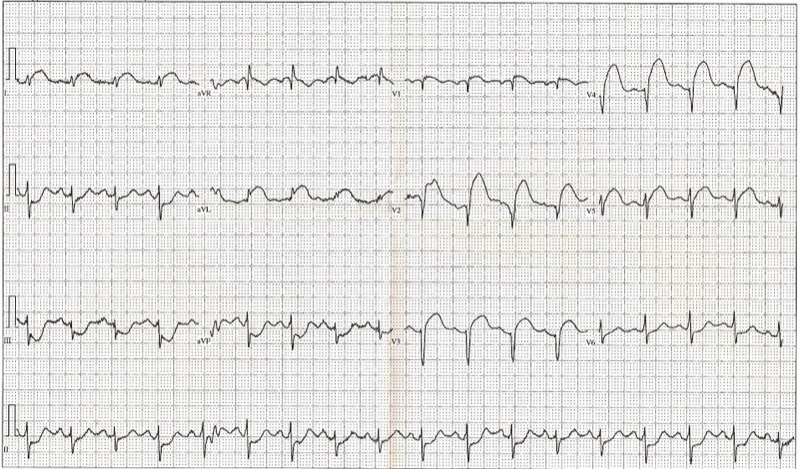
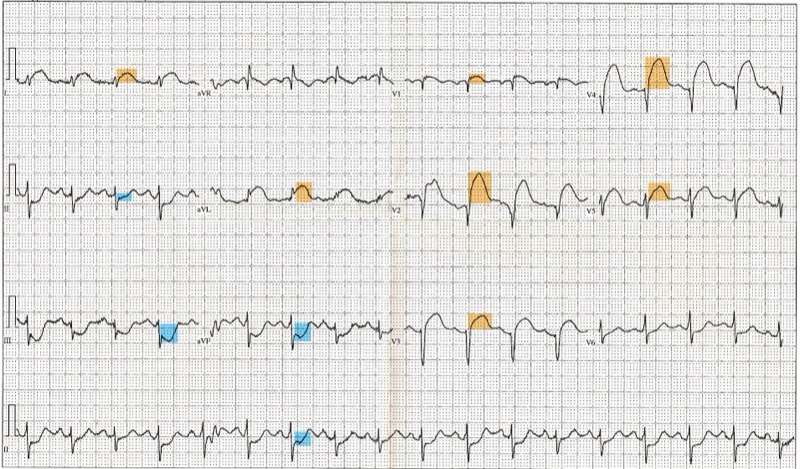
A 58-year-old man arrives in the ED with crushing substernal chest pressure that radiates to his left arm, onset 45 minutes ago. He is diaphoretic and pale. BP 138/86, HR 94, SpO2 97% on room air. EKG shows 2mm ST elevation in II, III, and aVF. You recognize this immediately as an inferior STEMI and your fingers are already reaching for the drug drawer.
Which of the following medications is CONTRAINDICATED in this patient right now?
⚠
Nitroglycerin is contraindicated. Inferior MI = suspect RV involvement. Get right-sided leads (V4R). If RV is infarcting, it needs preload to pump. Nitro drops preload and can cause fatal hypotension. This is one of the most commonly tested traps in clinical practice.
Bonus: his SpO2 is 97%. No supplemental oxygen either. Hyperoxia constricts coronary vessels and worsens the infarct.
EKG GALLERY
What STEMI Looks Like
Real EKG tracings from Wikimedia Commons. Tap to enlarge.
Loading images...
INTERACTIVE
Mortality Sorter
Drag each drug into the right bucket. This is THE high-yield distinction.
Drag the 7 drugs into their correct category. Some answers might surprise you.
Morphine
Oxygen
Nitroglycerin
Aspirin
Beta-Blocker
ACE Inhibitor
Heparin
Saves Lives
Proven to reduce mortality in MI
Helps Symptoms
Relief only. Does not reduce mortality.
THE DRUGS
MONA-BAH Breakdown💡Memory hook: "Only the A-B-A saves you" -- Aspirin, Beta-blocker, ACEi are the mortality reducers. M-O-N and H are supportive only.
clinical medicine Board Alert: The HEAT-PCI trial showed morphine delays absorption of clopidogrel and ticagrelor (P2Y12 inhibitors). Platelet inhibition is blunted for hours. This is now a known harm.
Current guidance: Only use if chest pain is refractory to nitrates. Never first-line anymore. Do NOT give in RV infarct (drops preload).
Does NOT reduce mortality.
O
Oxygen
Only if SpO2 < 90%
2 to 4 L/min via nasal cannula (if indicated)
Tap to expand
Why not always? Hyperoxia (SpO2 > 96%) causes
coronary vasoconstrictionToo much oxygen constricts the blood vessels feeding your heart. When SpO2 is already normal, extra O2 actively shrinks the vessels you need open. and increases oxidative stress in ischemic tissue.
clinical medicine Rule: Give oxygen ONLY if SpO2 < 90%. If SpO2 is normal, O2 is not indicated and may worsen the infarct.
Does NOT reduce mortality. May cause harm if overused.
Hypotension -- SBP < 90 mmHg is an absolute contraindication.
Does NOT reduce mortality. Symptom relief only.
A
Aspirin
Reduces Mortality
324 to 325 mg CHEWED (not swallowed)
Tap to expand
Mechanism: Irreversible
COX-1 inhibitorCOX-1 makes thromboxane A2 (TXA2), which causes platelets to clump together and vessels to constrict. Block COX-1 permanently, and those platelets can't clump for their entire lifespan (7-10 days).. Blocks TXA2. Prevents platelet aggregation at the clot site.
Chew it: Chewing gets it into the bloodstream 5 minutes faster than swallowing. That matters in an active MI.
Evidence: ISIS-2 trial -- 23% reduction in vascular mortality.
Reduces mortality. Give immediately.
B
Beta-Blocker💡RV infarct triple no: No Nitro, No Morphine, No Beta-blocker. All three drop preload or CO. These patients live on fluids.
Mechanism: Blocks angiotensin II production. Reduces
afterloadAfterload is the resistance the heart pumps against. Lower it, and the damaged heart does less work to squeeze the same amount of blood forward. and prevents ventricular remodeling (the heart trying to compensate by getting bigger and weaker).
Best benefit in: Anterior MI, EF < 40%, signs of heart failure. These patients have the most LV damage and the most to gain.
When to use ARB instead: If patient is ACEi-intolerant (dry cough), switch to an ARB (valsartan, losartan). Same mortality benefit.
Reduces mortality. Mandatory within 24h.
H
Heparin
Anticoagulation
Enoxaparin (LMWH) preferred; UFH 60 U/kg bolus
Tap to expand
Mechanism: Activates antithrombin III, blocks factor Xa and thrombin. Prevents the clot from growing while the patient gets to the cath lab.
STEMI: Give before PCI. Enoxaparin 0.5 mg/kg IV bolus or UFH 60 U/kg (max 4000 U).
NSTEMI/UA: Enoxaparin 1 mg/kg SQ BID. Bridge to either early invasive strategy or conservative management.
LMWH vs UFH: LMWH (enoxaparin) preferred -- more predictable anticoagulation, no monitoring needed. Use UFH if renal failure or patient going emergently to cath lab.
Important anticoagulant. Does not directly reduce mortality like ASA/BB/ACEi does.
DRUG PROFILES
Flip Card Breakdown
Tap any card to flip it and see the full clinical story.
M
Morphine
Controversial
Dose2-4 mg IV
Mortality benefitNone
Trace ItMu-opioid agonist
⚠ Delays P2Y12 absorption
tap to flip →
Morphine: Why It Fell From Grace
The Problem
HEAT-PCI trial: morphine slows gastric emptying, delaying clopidogrel and ticagrelor absorption by hours. You give the P2Y12 inhibitor before PCI, morphine blunts it, stent goes in with inadequate platelet coverage.
When to Use
Only for chest pain refractory to nitrates. Never first line. Never in RV infarct (drops preload).
Board Punchline
Not standard first-line anymore. If the stem offers morphine vs nitrates for initial pain control in STEMI, pick nitrates.
O
Oxygen
Only if SpO2 < 90%
Route2-4 L/min NC
Mortality benefitNone
RiskHyperoxia
⚠ Harms if SpO2 normal
tap to flip →
Oxygen: The Counterintuitive Rule
Why Not Always
Hyperoxia (SpO2 > 96%) causes coronary vasoconstriction and oxidative stress in ischemic tissue. AVOID trial and DETO2X-AMI trial: routine O2 in normoxic MI patients did not reduce mortality and may have increased myocardial injury.
The Rule
Give O2 ONLY if SpO2 < 90%. If SpO2 is 90-96%, clinical judgment. If SpO2 > 96%, you are causing harm.
clinical medicine Trap
Stem says SpO2 94%. Correct answer: no supplemental oxygen. If you reflexively give O2, that is wrong.
N
Nitroglycerin
Symptom Relief
Dose0.4 mg SL q5m x3
Mortality benefitNone
3 hard stopsSee back
⚠ 3 absolute contraindications
tap to flip →
Nitroglycerin: The Triple Kill
Contraindication 1
RV Infarct. Inferior MI: always get V4R first. Nitro drops preload. RV needs preload to pump forward. Fatal hypotension.
Contraindication 2
PDE5 inhibitors: Sildenafil within 24h, Tadalafil within 48h. Both amplify the cGMP/NO pathway. Combined = blood pressure craters.
Contraindication 3
SBP < 90 mmHg. You cannot vasodilate a patient who is already in shock.
Trace It
NO release → venodilation → decreased preload. Some arterial dilation decreases afterload. Relieves ischemic chest pain.
A
Aspirin
Reduces Mortality
Dose325 mg CHEWED
Mortality benefitYES (ISIS-2)
Time to effect5 min faster chewed
★ Irreversible COX-1 block
tap to flip →
Aspirin: The First Drug You Give
Trace It
Irreversible COX-1 inhibition → blocks thromboxane A2 synthesis → platelets cannot aggregate for their entire 7-10 day lifespan. One dose, permanent effect on that cohort of platelets.
Why Chew
Chewing breaks aspirin into fine particles with massively increased surface area. Gastric dissolution happens 5+ minutes faster. In an active MI, 5 minutes = measurable myocardium.
Evidence
ISIS-2 trial: 23% reduction in vascular mortality. Still the landmark study every cardiologist cites.
Acute HF (crackles/edema) · Bradycardia (<60) or AV block · Cardiogenic shock (SBP <100) · Cocaine MI (unopposed alpha) · Severe bronchospasm (relative)
RV Infarct Rule
No Beta-blockers in RV infarct. Reduces CO when RV is already failing. Same as Nitro and Morphine: all three kill the preload-dependent RV.
A
ACE Inhibitor
Reduces Mortality
DrugLisinopril / Captopril
Mortality benefitYES (SAVE, AIRE)
TimingWithin 24h
★ Best in anterior MI + low EF
tap to flip →
ACE Inhibitor: The Remodeling Block
Trace It
Blocks angiotensin II production → reduces afterload → prevents pathological ventricular remodeling where the damaged heart stretches and thins trying to compensate.
Best Benefit In
Anterior MI, EF < 40%, signs of HF. These patients have the most LV damage and the most to gain from blocking the remodeling cascade.
Dry Cough Rule
ACEi cause bradykinin accumulation → dry cough. Switch to ARB (valsartan, losartan): same mortality benefit, no cough, no bradykinin.
H
Heparin
Anticoagulation
PreferredEnoxaparin LMWH
UFH dose60 U/kg bolus
Mortality benefitBridge to PCI
→ Stop clot growth before cath lab
tap to flip →
Heparin: The Bridge Drug
Trace It
Activates antithrombin III → blocks factor Xa and thrombin. Prevents clot propagation while the patient gets to the cath lab. It does not dissolve the clot.
LMWH vs UFH
Enoxaparin preferred: predictable PK, no monitoring needed. Use UFH for: renal failure, emergent cath (UFH is reversible with protamine, LMWH is not).
Contraindications
Active major bleeding · HIT history (use argatroban or bivalirudin instead)
NITRO DECISION
Should I Give Nitroglycerin?
Walk the algorithm. Every branch is a board question.
Patient has chest pain consistent with ACS. Consider nitroglycerin?
↓
SBP ≥ 90 mmHg
SBP < 90 mmHg
✖ STOP. Nitroglycerin is contraindicated.
SBP < 90 is an absolute contraindication. Nitro further drops venous return and will crash this patient into irreversible cardiogenic shock. Give fluids, pressors, and get interventional cardiology immediately.
BP is OK. Next check: EKG territory
What does the EKG show?
Inferior STEMI (II, III, aVF)
Anterior STEMI or NSTEMI
⚠ Get right-sided leads BEFORE giving nitro.
Inferior MI → possible RV infarct. Order V4R. If V4R shows ST elevation: Nitroglycerin is absolutely contraindicated. The RV is preload-dependent. Nitro kills it. Treat with IV fluids instead.
If V4R is negative (no RV involvement):
No PDE5 inhibitors in last 48h
Took sildenafil or tadalafil
RV risk is low. Check PDE5 inhibitors.
Has the patient taken sildenafil (24h) or tadalafil (48h)?
No PDE5 inhibitors
Yes, took a PDE5 inhibitor
✖ STOP. PDE5 inhibitor on board.
Both sildenafil and tadalafil amplify the cGMP/nitric oxide pathway. Adding nitroglycerin causes catastrophic hypotension. Wait: 24h after sildenafil, 48h after tadalafil. Use other analgesia. Call cardiology.
✓ All three stops cleared. Give nitroglycerin.
SBP ≥ 90 · No RV infarct · No PDE5 inhibitors within appropriate window. Start 0.4 mg SL every 5 minutes up to 3 doses. If pain continues, consider IV nitroglycerin infusion. Monitor BP after each dose.
Always ask about sildenafil (Viagra) or tadalafil (Cialis) before giving nitroglycerin. Both drugs use the NO/cGMP pathway. Combine them and blood pressure craters. Rule: 24 hours for sildenafil, 48 hours for tadalafil before nitrates are safe.
⚙
Trap 3: Cocaine MI = No Beta-Blockers
In cocaine-induced MI, the cocaine causes alpha-1-mediated vasoconstriction. If you block beta receptors (vasodilation), the alpha receptors go unopposed, causing severe coronary vasospasm and worsening the MI. Use benzodiazepines + nitroglycerin instead.
🐇
Trap 4: Oxygen is NOT Automatic
The board vignette will have a patient with a normal SpO2 (94-98%). Supplemental oxygen is NOT indicated and is potentially harmful. Give O2 only if SpO2 is below 90%. Quick rule: if the number starts with 9, check before assuming they need it.
DRUG DECISION
STEMI: Drug Selection
Pick a clinical scenario to see the correct drug strategy.
Patient with acute STEMI is in the ED. What do you do?
PCI available within 90 minutes: Primary PCI (PPCI) is the standard of care. Door-to-balloon under 90 minutes.
PCI not available within 120 minutes: Fibrinolysis with tPA or TNK. Give within 30 minutes of arrival (door-to-needle). Transfer after for angiography.
Antiplatelet: ASA 325mg load immediately (chewed, not swallowed whole for faster absorption) plus a P2Y12 inhibitor. Ticagrelor or prasugrel are preferred over clopidogrel for STEMI (stronger, faster platelet inhibition).
Anticoagulation: UFH (unfractionated heparin) is standard pre-PCI. Bivalirudin is an alternative with lower bleeding risk.
Morphine: pain and anxiety control. Use selectively -- may mask symptoms and has some evidence of harm in ACS; use only for refractory pain.
Oxygen: only if SpO2 is below 90%. Supplemental O2 in normoxic patients increases infarct size.
Nitrates: sublingual or IV for ongoing ischemia if SBP is above 90 and no RV infarct.
Beta-blocker: within 24 hours if no acute HF, no bradycardia, no hypotension. Reduces reinfarction and arrhythmia risk.
Calcium channel blockers: negative inotropes. Contraindicated in acute STEMI with reduced EF or acute HF.
Nitrates contraindicated in two scenarios:
1. RV infarct (inferior MI involving the RV): RV depends on preload; nitrates drop preload and can cause severe hypotension.
2. Recent PDE5 inhibitor use (sildenafil, tadalafil): profound hypotension from additive vasodilation. Always ask.
Board key: inferior STEMI + hypotension + clear lungs = think RV infarct. IV fluids, not nitrates.
PROVE IT
Clinical Vignettes
Five questions every time you load. You get all of them right? The board just got easier.
The Board Quiz
MONA-BAH on the clinical medicine
Two vignettes. The traps are real. The mortality question is always on Step 3 and clinical medicine.
Medically reviewed by Kaitlyn Cocuzzo, MD and Fatima Ali, DO
Bone Wizardry is an independent educational resource for visual learning in the medical sciences. It is not affiliated with, endorsed by, or sponsored by any licensing or examination board, contains no real or recalled examination questions, and does not guarantee any educational or examination outcome.
 Bone WizardryMEDICAL EDUCATION