
Choose an answer, then open any option to work its reasoning.
Ethics and Communication
Medical Law and Jurisprudence
When the stem feels legal, sort it clinically. Who decides, what duty applies, and did harm occur?
What this page makes you able to do
- Distinguish decision-specific clinical capacity from legal competence using CURA.
- Apply reassessment, directives, agents, surrogate standards, consent, and assent.
- Recognize EMTALA screening and stabilization duties.
- Analyze malpractice, near misses, harm, and honest error disclosure.
- Dr. Fatima Ali, DOPsychiatry residentPhysician reviewed
Reviewed
From the Attending.
Direct route. Nonemergency plus reversible delirium means treat, then reassess decision-specific capacity.
Prove it
Opening question
A hospitalized adult with pneumonia becomes acutely inattentive and disoriented overnight. She refuses a nonemergency bronchoscopy but cannot explain its purpose, risks, alternatives, or the likely result of refusal. Yesterday she discussed the procedure coherently. Urinalysis and medication review suggest reversible contributors to delirium.What is the best next step?
- Why this is rightCapacity is decision-specific and can fluctuate. Because the procedure is not emergent, correct reversible delirium contributors and reassess her ability to decide.
- Why this failsCompetence is a legal determination. A fluctuating clinical state should first prompt clinical capacity assessment, treatment of reversible causes, and reassessment.
- Why this failsPrior discussion does not automatically authorize a procedure after a refusal. The team must address current decision-making capacity and the applicable surrogate pathway if incapacity persists.
- Why this failsA refusal triggers assessment when the patient cannot demonstrate the abilities required for informed decision making. Treatable delirium makes reassessment especially important.
Work the reasoning
The procedure can wait while reversible delirium contributors are treated before any irreversible choice.
She cannot understand or reason about this specific choice, and the impairment fluctuates.
Restore cognition when possible, then return the decision to the patient through reassessment.
Prove it
Five rapid jurisprudence cases
Use authority, urgency, duty, and harm to reach the answer before the distractors pull you sideways.
Capacity is clinical; competence is legal
The rule is to start every refusal by asking who decides, for which choice, and at what time.
Clinical capacity is assessed by clinicians for a particular decision at a particular time. Legal competence is a status determined through the legal system, so the terms are not interchangeable.
Use CURA as the bedside screen. Communicate a stable choice, Understand relevant facts, Reason about options and consequences, and Appreciate how the facts apply personally. A diagnosis alone does not establish incapacity.
Board trap. An unusual, risky, or physician-disfavored choice can still be capacitated. Evaluate the decision process, not whether the patient agrees with the clinician.
Separate the two decision labels.
Pearl. CURA asks whether the patient can carry this decision, right now.
Reverse, reassess, then escalate
The rule is to restore reversible cognition before escalating to surrogate authority.
Look for reversible causes of impaired decision making, including delirium, medication effects, hypoxia, metabolic disturbance, pain, intoxication, withdrawal, language barriers, and sensory barriers. Stabilize what can be corrected and reassess.
Urgency changes the route. A nonemergency decision usually allows time for treatment and reassessment. An emergency may require immediate care when delay threatens life or serious health and valid consent cannot be obtained.
Document the decision under review, the CURA abilities, efforts to support understanding, reversible contributors, urgency, and the reassessment plan.
Order the capacity route.
Name the exact intervention and urgency.
Test communication, understanding, reasoning, and appreciation for this choice.
Treat reversible causes and provide communication support.
Repeat the decision-specific assessment after correction when time allows.
If incapacity persists, identify the authorized surrogate and governing standard.
Pearl. Pattern recognition. Fluctuating cognition plus a deferrable intervention points to restoration and reassessment.
Naomi Chen and the surrogate ladder
The rule is to follow valid instructions, chosen agents, known wishes, then best interest.
An advance directive may record treatment preferences, designate a health care agent, or do both. A valid chosen agent generally takes priority over an informal family vote, subject to applicable law and the directive.
When the patient lacks capacity, first follow known applicable instructions. The surrogate should use substituted judgment based on the patient's known values and preferences. Best interest is the fallback when those preferences are not known.
Default surrogate hierarchy varies by jurisdiction. Verify state law and institutional policy rather than assuming that the loudest or closest relative automatically has authority.
Reveal Naomi's decision path from patient voice to fallback.
Capacity check leads to directive, agent, known wishes, and best-interest fallback.1 / 5
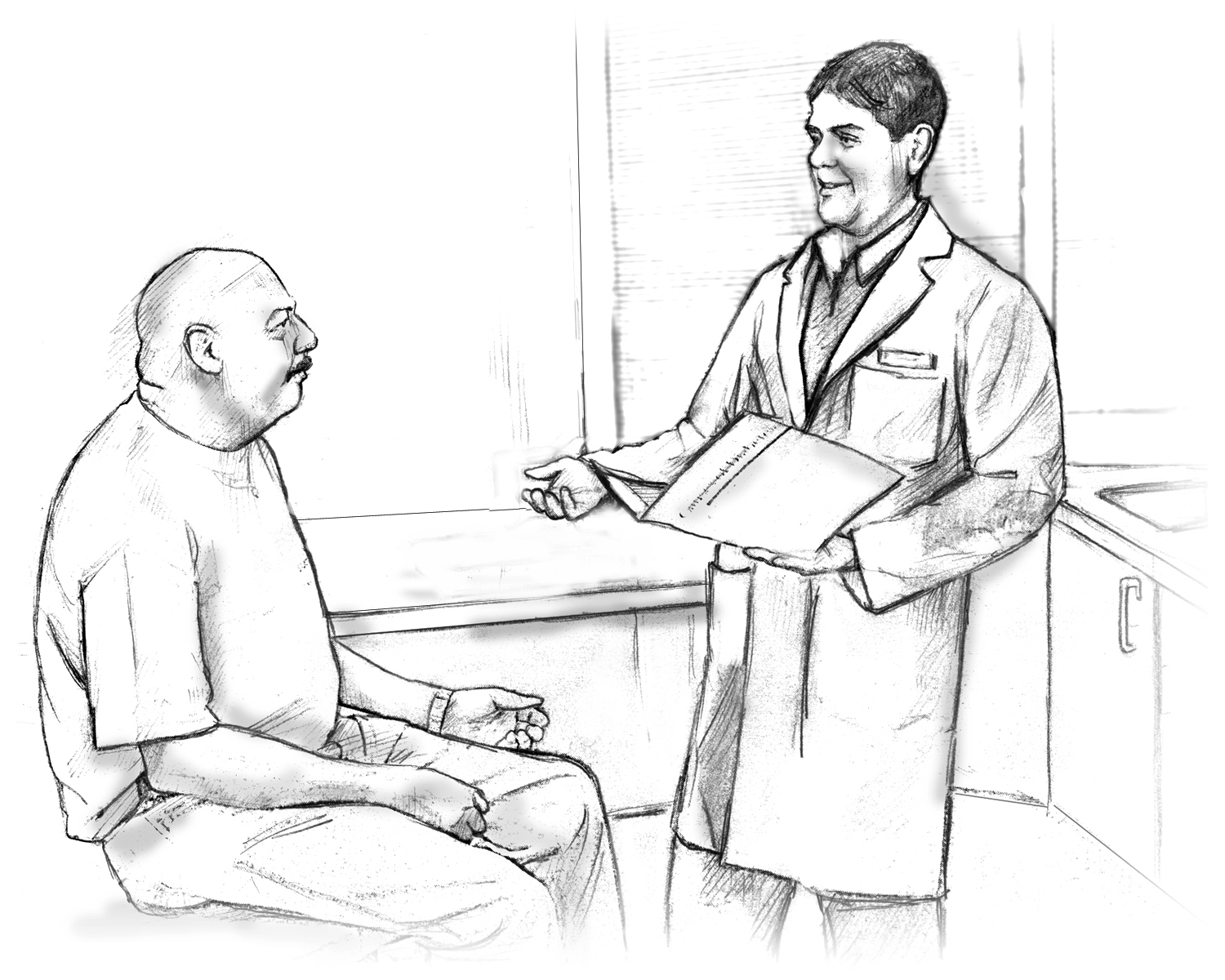 Capacity is assessed at the bedside for the specific decision at the specific time. Public-domain image. NIDDK, NIH.
Naomi Chen · Hospitalized adult with fluctuating delirium
Can Naomi decide now?
Naomi cannot currently understand and appreciate the ventilation decision during delirium.
Capacity is tied to this decision and this time.
Board pattern. Patient voice first
What did Naomi write?
Her directive contains an applicable preference about prolonged ventilation.
Apply valid instructions to the present circumstances.
Board pattern. Written voice
Who carries her voice?
Naomi designated her sister as health care agent.
Chosen authority comes before an informal family poll.
Board pattern. Named surrogate
What would Naomi choose?
The agent explains Naomi's consistently stated values and prior choices.
Use substituted judgment before personal preference.
Board pattern. Substituted judgment
What if wishes are unknown?
If Naomi's preferences cannot be determined, weigh benefits, burdens, pain, function, and quality of life from her perspective.
This is the fallback, not the opening move.
Board pattern. Best-interest fallback
Pattern card. Current capacity, directive, chosen agent, known wishes, best-interest fallback.
Pearl. Locked rule. Directive, chosen agent, substituted judgment, then best interest.
Consent, assent, and minors
The rule is that permission and participation are related but are not the same act.
Informed consent requires disclosure of relevant information, voluntary choice, and adequate decision-making capacity. The clinician should discuss the nature and purpose of the intervention, material risks and benefits, alternatives, and the option of no treatment.
For a minor who lacks legal authority to consent, a parent or other authorized adult usually provides permission while the clinician seeks the minor's developmentally appropriate assent. Assent invites understanding and participation. It does not convert the child into the legal consenter.
Rules for minor consent, emancipation, emergency treatment, and sensitive services vary by state. On boards, a state-law cue defeats a universal age shortcut.
Open each layer of a sound permission conversation.
Explain purpose, expected benefit, material risks, alternatives, and no treatment.
Check for coercion and allow a choice consistent with the patient's values.
Confirm the person can make this specific decision.
Seek developmentally appropriate assent while obtaining legally valid permission unless an exception applies.
Verify jurisdiction-specific rules for minor self-consent and exceptions.
Pearl. Board trap. Assent respects the child's developing autonomy, but assent is not automatically legal consent.
EMTALA starts at the emergency department door
The rule is that insurance questions do not come before the emergency obligation.
A hospital emergency department must provide an appropriate medical screening examination to determine whether an emergency medical condition exists, regardless of insurance status or ability to pay.
If an emergency medical condition is identified, the hospital must provide stabilizing treatment within its capability or arrange an appropriate transfer when the legal conditions for transfer are met.
Direct route. Presentation to a covered emergency department plus a possible emergency condition means screen first, then stabilize or appropriately transfer.
Select the first required action for an uninsured patient with possible emergency illness.
Medical screening examination. Correct. Determine whether an emergency medical condition exists before financial clearance. Collect payment deposit. Incorrect. Ability to pay cannot delay the required screening. Send to an outpatient clinic. Incorrect. Possible emergency illness requires screening at the emergency department. Transfer before evaluation. Incorrect. Transfer duties follow screening and, when needed, stabilization requirements.
Pearl. EMTALA means Examine, then Manage or Transfer Appropriately.
Malpractice requires all four Ds
The rule is that a bad outcome is not automatically negligence.
The four Ds organize a malpractice claim. Duty, dereliction or breach, direct causation, and damages. The claimant must establish each required element. Injury without breach or breach without causally linked harm is insufficient.
Duty arises from the professional relationship, breach asks whether conduct fell below the applicable standard, causation links the breach to injury, and damages identify compensable harm.
Board trap. A near miss may reveal a safety failure but lacks patient harm. Without damages caused by the breach, the classic malpractice pattern is incomplete.
Contrast a complete claim with common decoys.
Pearl. Duty, Dereliction, Direct cause, Damages. One missing D breaks the malpractice pattern.
Near miss, harm, and honest disclosure
The rule is that safety response and malpractice analysis answer different questions.
A near miss is a safety event that could have harmed a patient but did not. An adverse event reaches the patient and causes harm. Either type can justify reporting, analysis, and system improvement.
When an error affects the patient, communicate honestly and promptly about known facts, health consequences, corrective steps, and ongoing care. Avoid speculation or blame while the investigation is incomplete.
Disclosure is not limited to events that satisfy all four malpractice elements. Ethical transparency, patient support, and safety learning remain important even when legal liability is uncertain.
Order the response after a medication error reaches the patient.
Address immediate clinical consequences and prevent further injury.
Tell the patient what happened and what is known without speculation.
Describe monitoring, treatment, investigation, and support.
Use safety channels to identify system contributors and prevent recurrence.
Update the patient as facts develop and maintain continuity of care.
Pearl. Disclose the event because the patient deserves truth, not because a lawyer has already proven every D.
One missing element changes the legal answer
The rule is to require every malpractice element rather than use a severity score.
For board-style pattern recognition, count the established malpractice elements. Duty, breach, causation, and damages produce four required links. Fewer than four means the classic four-D pattern is incomplete.
This count is a learning device, not a prediction of litigation outcome. Actual claims depend on jurisdiction, evidence, expert standards, defenses, and procedure.
Near miss versus harm often flips the damages link. A near miss can warrant disclosure and safety action even when the four-D liability threshold is not met.
Count how many malpractice elements are established.
Score 0 elements
Pearl. Threshold. Four of four for the classic malpractice pattern.
Final decision map. Who decides, what duty, what harm?
The rule is to identify the decision-maker, duty, and harm in that order.
First identify the decision maker. A capacitated patient, an authorized agent, or a surrogate applying substituted judgment and then best interest. For minors, separate assent from legal permission and check state-law variation.
Next identify the legal duty. Informed consent for elective care, screening and stabilization for emergency presentations, or the four-D framework for malpractice.
Finally identify whether harm occurred and whether the response demands urgent care, disclosure, safety reporting, reassessment, or a surrogate pathway.
Choose the universal first sorting question.
Who has authority for this decision now?. Correct. Capacity, urgency, directives, agents, surrogates, and minor-law rules determine the proper decision pathway. Did the clinician obtain a signature?. Incorrect. A signature alone does not establish informed consent or capacity. Did a poor outcome occur?. Incorrect. Outcome alone does not identify authority or establish malpractice. Which relative speaks the loudest?. Incorrect. Authority comes from the patient, a valid designation, or applicable law, not family volume.
Pearl. Pattern card. Authority first, duty second, harm third.
Clinical walkthrough