H2 receptor antagonists: target, time and the patient
Connect H2 blockade to acid control, tolerance, renal accumulation, agent-specific interactions, and the choice between episodic relief and sustained healing.
The same famotidine dose can help one person with occasional heartburn, lose part of its effect during nightly use, and accumulate in another person whose kidney function has fallen. Which problem are you treating: excessive acid signaling, a need for sustained healing, or unsafe drug exposure? Follow the receptor first, then connect the time course and the patient to the prescription.
By the end, you should be able to predict what H2 blockade changes, distinguish tolerance from accumulation, identify important drug-specific interactions, and choose when an H2 antagonist is sufficient versus when evaluation or a different treatment is needed.
Block one acid signal, not the entire secretory system
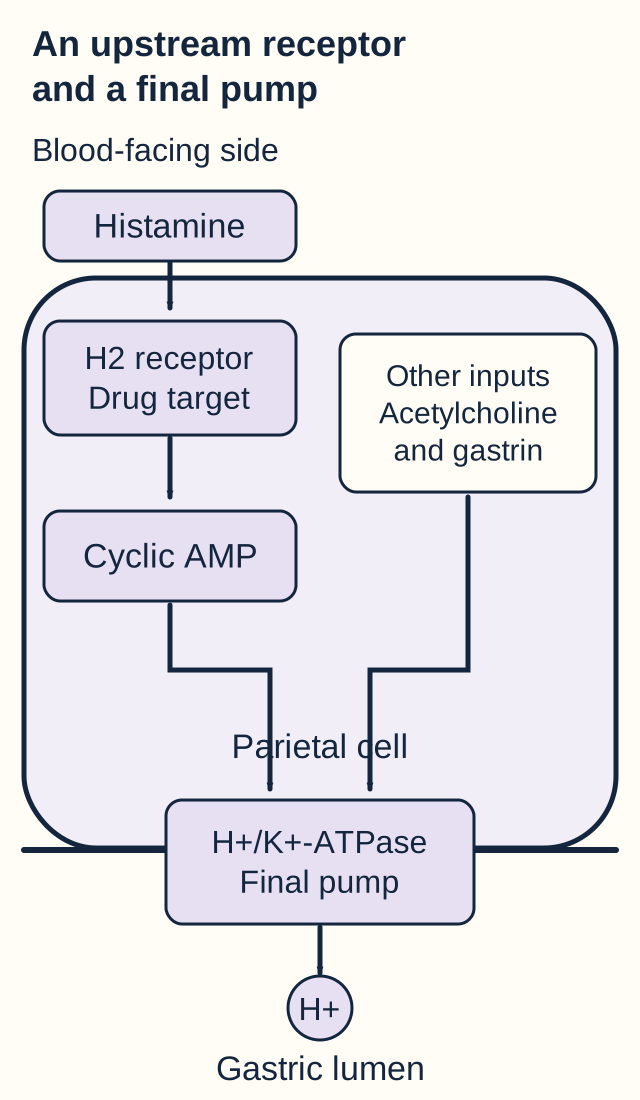
Why can histamine blockade reduce acid without switching secretion off completely? A gastric parietal cell receives several activating signals. Histamine acts at the H2 receptor on the blood-facing membrane and increases cyclic AMP, an intracellular messenger. That signal supports the acid-secreting H+/K+-ATPase at the luminal membrane. Acetylcholine and gastrin also stimulate secretion through interacting pathways. Blocking histamine removes an important contribution, not every input. [1][2][3]
H2 receptor antagonists bind reversibly and competitively at the receptor. They reduce basal secretion, especially nocturnal secretion, and also reduce stimulated secretion after meals. The pump is still present. These drugs neither neutralize acid already in the lumen like an antacid nor irreversibly inhibit active proton pumps like a conventional proton pump inhibitor. A prostaglandin analogue such as misoprostol instead acts through prostaglandin receptors and supports mucosal defenses; it is not an H2 antagonist. [1][2][8]
Less H2 signaling means less acid secretion and therefore a higher gastric pH. A higher pH means less acidity, not more acid.
Use the receptor diagram to trace the histamine route toward the lumen. Then put an imaginary barrier at H2. Predict what would happen if an experimental stimulus entered the pathway downstream, at cyclic AMP. Receptor blockade would no longer interrupt that supplied stimulus, whereas direct inhibition of the final pump would still limit secretion. This is an isolated-cell thought experiment, not a claim that a patient can bypass treatment with a particular meal.
H2 blockade interrupts an upstream input; a PPI acts at the final pump. [1][2][3][4]
Compare the entry point with the inhibited target
Trace the receptor diagram, then predict each result before reading the explanation. This isolated-cell model assumes effective receptor or final-pump inhibition. The comparisons are qualitative, not drug doses, measured trial data or whole-patient pH predictions. Histamine enters upstream of cyclic AMP; the supplied cyclic AMP analogue enters downstream of H2. [1][2][4]
Six conditions: which supplied signal can still reach an active pump?
Entry and inhibitor
Predicted consequence
Entry and inhibitorHistamine; no inhibitor
Predicted consequenceHistamine activates H2, increasing cyclic AMP and stimulating the intact final pump.
Predicted consequenceThe upstream signal remains available, but inhibition of the final pump limits acid secretion.
Entry and inhibitorCyclic AMP analogue; no inhibitor
Predicted consequenceThe supplied downstream signal stimulates the intact pump without requiring H2 activation.
Entry and inhibitorCyclic AMP analogue; H2 antagonist
Predicted consequenceThe supplied signal bypasses the blocked receptor and restores pump stimulation in this isolated-cell comparison.
Entry and inhibitorCyclic AMP analogue; activated PPI
Predicted consequenceThe messenger bypasses H2 but cannot bypass the inhibited final pump, so acid secretion remains limited.
Worked comparison 1: keep histamine as the stimulus and add an H2 antagonist. The first interruption is at the receptor, before cyclic AMP. Less stimulation reaches an otherwise intact pump.
Worked comparison 2: keep the H2 antagonist but supply cyclic AMP downstream. The receptor is still blocked, yet the pump can respond. Recovery after a downstream input localizes the interruption upstream of that input.
Worked comparison 3: keep the cyclic AMP input and replace receptor blockade with an activated PPI. The final pump is now inhibited. A downstream messenger does not restore secretion through that inhibited target.
Transfer: an unknown agent blocks the histamine response, but the cyclic AMP analogue restores secretion. Which site remains functional? The final pump. Which site is implicated? An upstream signaling step. Combine this result with receptor-specific testing before assigning a precise molecular target; the living stomach has interacting inputs beyond this simplified comparison.
Now transfer the distinction to reflux. Reducing the acidity of refluxed material can reduce burning, but H2 blockade does not repair the antireflux barrier. Regurgitation can persist even when the material is less acidic. Acid output, esophageal exposure, symptom intensity and tissue healing are related outcomes, not interchangeable measurements. A symptom response alone does not prove that every remaining symptom is acid-mediated. [2][4]
Separate the first dose from repeated exposure
A medicine helps during the first week but helps less during the third. Has the disease necessarily worsened? Not if the treatment itself has changed in effectiveness. Oral famotidine begins reducing secretion within about an hour; this useful early response should not be confused with the more sustained acid control needed for some diseases. Conventional PPIs generally require repeated appropriately timed doses for their full effect. [1][4]
With scheduled H2-antagonist use, tachyphylaxis means a relatively rapid reduction in response to repeated exposure. It can appear over days to the first few weeks. The precise timing differs among studies and patients. In a prospective study of adding a bedtime H2 antagonist to twice-daily PPI therapy, the early gastric acid-control advantage was not sustained at the later assessments. That was an acid-monitoring result, not proof that every patient's symptoms must recur on a particular day. [5]
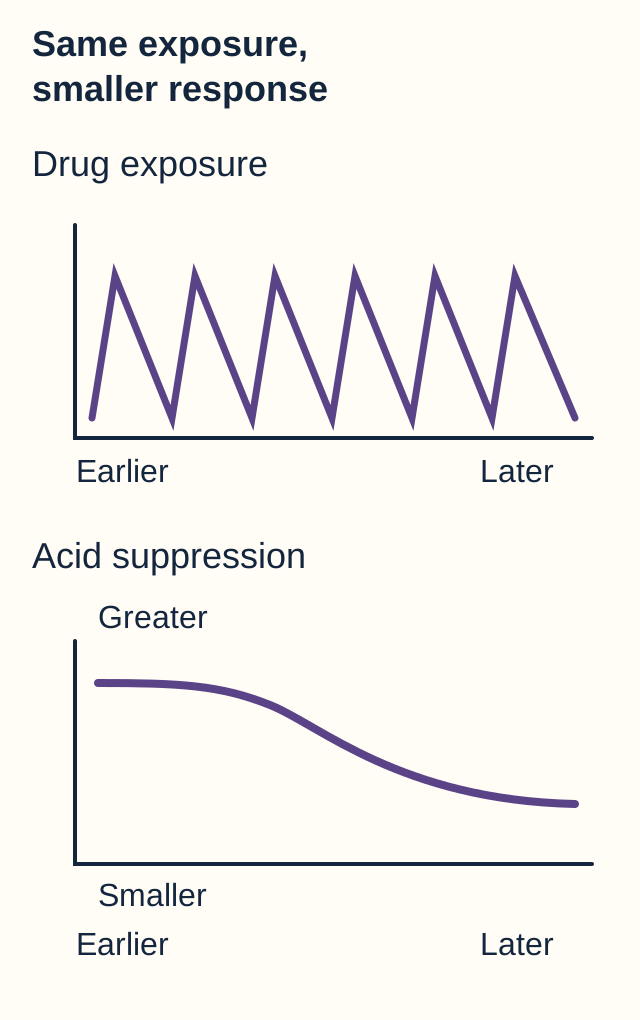
Compare the two plots in the time-course diagram: similar repeated drug exposure above and a smaller acid-suppressing response later below. The lower response trace declines despite the similar exposure pattern. Predict which observation would argue instead for missed medication: declining drug exposure, a missed-dose history, or both. Tolerance is a pharmacodynamic explanation; reduced absorption and faster clearance are different explanations for a weaker response.
Predict the lower plot while holding the upper one unchanged. This qualitative teaching model represents tolerance, not measured trial data, a fixed number of doses or a universal timeline. [1][5]
Do not teach one unverified molecular adaptation as the established explanation in every patient. The useful clinical point is the changing response. Review adherence, timing, new exposures, the original indication and alarm symptoms before deciding why relief was lost. Increasing the dose indefinitely or cycling through H2 antagonists is not a dependable strategy for sustained control. A weaker acid response also does not mean that circulating drug has disappeared. [4][5]
For a person with infrequent nocturnal symptoms, an occasional bedtime H2 antagonist can be considered after an individualized review. For persistent symptoms on a PPI, first ensure an appropriate diagnosis and PPI regimen; selective as-needed bedtime H2 use is different from automatically adding lifelong dual therapy. The guideline discusses this option for nocturnal symptoms or documented nocturnal acid reflux despite PPI treatment. [4]
Follow a dose from the blood to the kidney
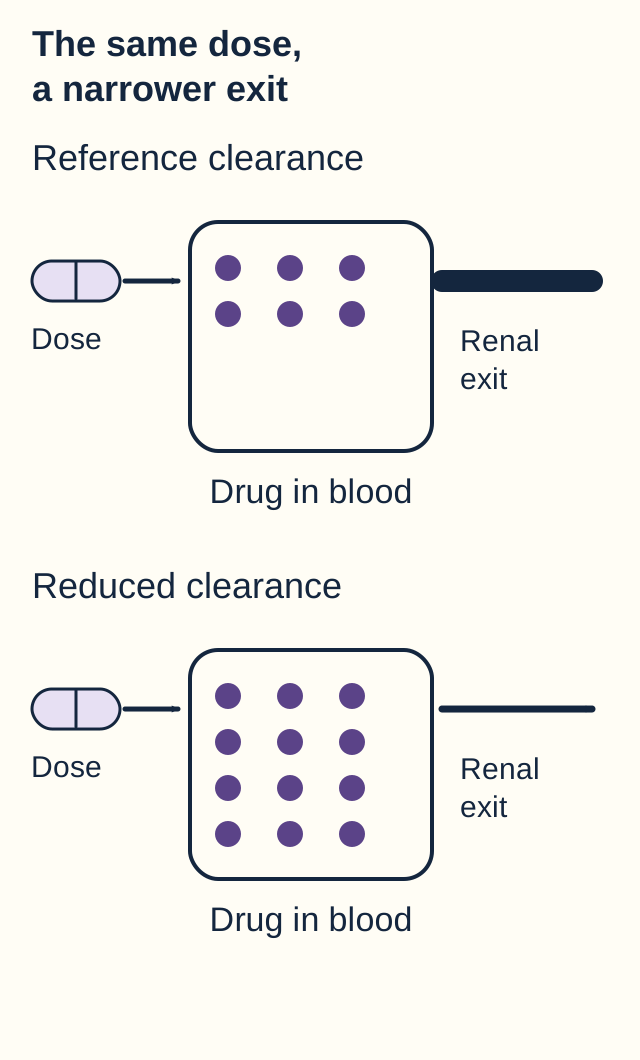
Why can the correct dose last month become excessive today? Famotidine and nizatidine depend substantially on renal elimination. If clearance falls while the dose and interval stay unchanged, more drug remains when the next dose arrives. Exposure increases, and an older or medically ill patient becomes more vulnerable to adverse effects. This is accumulation, not the opposite of tolerance. A person can have reduced antisecretory benefit while still being exposed to too much drug. [1][3]
Trace the clearance diagram from a repeated dose into blood, then toward renal elimination. Imagine narrowing the exit while continuing to add the same amount. The important change is a higher residual amount before the next dose, not just a higher peak after a tablet. Renal adjustment can reduce each dose, lengthen the interval, or use another formulation to deliver a smaller dose. The appropriate choice depends on the exact drug, indication and product label.
With repeated unchanged dosing, impaired elimination can leave more drug before the next dose. Symbols show the direction of accumulation, not a measured concentration or an exact twofold change. [1][3]
Worked comparison: an adult receiving famotidine for symptomatic nonerosive GERD has a stable creatinine clearance of 42 mL/min. The cited label lists 20 mg once daily as the maximum schedule for that indication in this renal category, rather than the normal-renal-function schedule of 20 mg twice daily. Below 30 mL/min, that indication's table lists 20 mg every other day, with 10 mg daily using another suitable formulation as an alternative. These are adult label examples, not interchangeable instructions for every indication or tablet product. The cited famotidine label advises avoiding its use for pathological hypersecretory conditions in renal impairment because the high doses required have not been evaluated in that setting. [1]
Nizatidine illustrates why the indication matters twice: at a creatinine clearance of 20 to 50 mL/min, the cited label lists 150 mg daily for active ulcer treatment or GERD, but 150 mg every other day for maintenance of a healed ulcer. Below 20 mL/min, the corresponding schedules are every other day and every three days. Use the label's creatinine-clearance categories; an indexed laboratory eGFR is not automatically the identical dosing measure. Unstable acute kidney injury requires current clinical and pharmacy assessment rather than mechanically applying a steady-state estimate. [3]
New confusion, hallucinations, lethargy or a seizure after starting or continuing famotidine in renal impairment requires prompt assessment. Review and hold a suspected contributing medicine as appropriate while also evaluating infection, metabolic disturbance and other causes of delirium. Do not assume a drug effect excludes a concurrent emergency. QT prolongation has also been reported with famotidine in moderate or severe renal impairment. [1]
Transfer the model: after dehydration reduces clearance, increasing the dose because heartburn returned can worsen exposure. Check the kidney and the medicine list before interpreting the symptom as a request for more drug.
Compare the agent, not just the class name
Can two H2 antagonists have the same gastric target but different risks? Yes. The receptor effect does not determine every metabolic or endocrine action. Famotidine usually has fewer clinically important metabolic interactions than cimetidine, but it is not interaction-free and still requires renal review. Cimetidine also requires renal dose review; switching to it does not avoid this assessment. Nizatidine also requires renal adjustment and does not share cimetidine's broad microsomal-enzyme inhibition or demonstrated antiandrogenic effect. [1][2][3]
Cimetidine can inhibit hepatic metabolism of medicines including warfarin, phenytoin and theophylline. Consider the metabolic interaction: inhibition of another drug's clearance can raise that drug's exposure. An increased INR after cimetidine is added to a stable warfarin regimen is therefore different from a problem caused by gastric pH. When cimetidine is stopped, the interaction can reverse. INR or other appropriate monitoring is needed during both transitions, with clinician-directed dose adjustment rather than a fixed preemptive change for every patient. [2]
Cimetidine also has weak antiandrogenic activity. Gynecomastia can appear after sustained exposure. Sexual adverse effects have been reported, especially with prolonged high-dose treatment for hypersecretory disorders; they should not be presented as inevitable at routine doses. New breast enlargement or sexual symptoms still deserve assessment for other causes. These effects help distinguish cimetidine from the class's shared acid-suppressing action. [2]
A separate laboratory trap is a modest creatinine increase after cimetidine. Competition with tubular creatinine secretion can raise serum creatinine without a true fall in filtration. Stable urine output and an unchanged independent filtration assessment support that explanation. A substantial or progressive rise, abnormal urine findings, systemic illness or reduced urine output should not be dismissed: real kidney injury, including rare interstitial nephritis, remains possible. [2]
Try the comparison before continuing: which cimetidine effect changes another medicine's concentration, which changes androgen signaling, and which changes a laboratory marker? These are three different routes, so the corrective action must match the route.
Availability update: this lesson emphasizes famotidine, cimetidine and nizatidine, not an exhaustive current three-drug list. FDA approved reformulated ranitidine tablets on November 24, 2025. Use the current approved product and its instructions, not previously withdrawn stock. FDA specifies moisture protection in the original tightly closed bottle, retention of the desiccant, and disposal at 90 days after first opening or the labeled expiry, whichever occurs first. A familiar brand name does not replace checking the actual ingredient and formulation. [6]
Match treatment strength to the clinical goal
Is occasional relief enough when endoscopy shows substantial injury? The treatment goal changes the answer. Infrequent uncomplicated heartburn can be compatible with an intermittent H2 antagonist after checking suitability. Selected patients with nonerosive reflux disease can also use H2 treatment or step down to it. These choices are not the same as treating persistent frequent GERD symptoms, for which a conventional initial strategy is an appropriately timed PPI trial. [4][7]
For erosive esophagitis, the ACG guideline favors PPIs over H2 antagonists both to heal injury and to maintain healing. In LA grade C or D disease, ongoing maintenance PPI therapy or an appropriate antireflux intervention is generally needed; symptom improvement alone does not justify returning to occasional H2 doses. Discuss individual benefits and adverse effects rather than replacing necessary treatment solely because of nonspecific fear about long-term PPI use. [4]
For orientation, LA grade C includes mucosal breaks extending between the tops of at least two folds while involving less than 75% of the circumference; grade D involves at least 75%. The original endoscopic severity remains relevant after healing. [9]
Compare two people: one has brief meal-associated burning twice a month, stable weight and no swallowing difficulty. Another has recurrent symptoms, endoscopically documented LA grade C esophagitis and partial relief from as-needed famotidine. Predict which outcome each plan must secure. The first mainly needs safe episodic symptom control; the second needs dependable healing and maintenance. Increasing the frequency of an intermittently effective drug does not erase this difference.
H2 antagonists have labeled roles in selected peptic-ulcer and hypersecretory settings. Do not misstate this as an absence of all indications. Nevertheless, marked ongoing acid demand usually calls for more potent sustained suppression and specialist-directed care. In Zollinger-Ellison syndrome, PPI-based acid control can promote healing and often requires long-term treatment; dose and duration depend on ongoing disease control. [10] An ulcer plan must also address its cause, including Helicobacter pylori or an ulcerogenic medicine when present; reducing acid is not itself bacterial eradication or withdrawal of the offending drug. [1][2][3]
Before calling a conventional delayed-release PPI ineffective, check how it is taken. In usual regimens it is taken 30 to 60 minutes before a meal, not simply added at bedtime after the final meal. Product-specific exceptions exist. Persistent symptoms after an adequate regimen need reassessment rather than automatic accumulation of acid suppressants. When reflux has never been objectively established and endoscopy is unrevealing, off-therapy reflux monitoring can help establish the diagnosis. This differs from on-therapy impedance-pH assessment in a patient with established GERD who remains symptomatic despite an optimized twice-daily PPI. [4]
Transfer question: if the gastric acid measurement improves but regurgitation does not, should the unchanged symptom automatically trigger a higher H2 dose? No. Reconsider what the symptom measures and whether the remaining problem is acid-mediated.
Screen the person before choosing the schedule
What could make an apparently routine heartburn request unsafe? Start with the presentation, not the familiar package. Dysphagia, gastrointestinal bleeding, unintentional weight loss, anemia or persistent vomiting requires evaluation even when an acid suppressant relieves discomfort. Acute chest pressure with concerning associated symptoms should not be assigned to reflux before urgent causes are assessed. Significant bleeding or severe acute illness needs urgent care, not an outpatient experiment with a larger H2 dose. [1][4][7]
Next, identify the actual ingredient, dose, frequency and formulation, including nonprescription combination products. Ask about prior serious reactions to H2 antagonists. Famotidine labeling contraindicates use after a serious hypersensitivity reaction to famotidine or another H2 antagonist. A convenient switch within the class is not an appropriate default after anaphylaxis. Review age, kidney function, recent dehydration and baseline mental status. Then reconcile the complete medication list. [1][7]
There are at least two distinct interaction questions. First, will the agent interfere with another medicine's metabolism? Cimetidine raises that concern prominently. Current famotidine labeling also advises avoiding concomitant tizanidine: a predicted weak CYP1A2 inhibitory effect may increase tizanidine exposure, producing hypotension, bradycardia or excessive drowsiness. That combination has not been clinically studied in the cited label; do not portray a predicted interaction as a quantified clinical trial result. [1][2]
Second, does another medicine need an acidic stomach for adequate absorption? All effective acid suppression can affect this environment. The famotidine label advises against concomitant dasatinib and directs clinicians to individual labels for several other pH-dependent drugs. A blanket instruction to separate every medicine by two hours is unsafe because product-specific restrictions differ. Fewer CYP interactions does not mean freedom from absorption interactions. [1]
Use a final mental comparison: a stable adult requesting occasional relief, an older adult with new lethargy after declining kidney function, and a patient taking a narrow-therapeutic-index medicine should not receive the same automatic recommendation. State the indication, choose the lowest effective appropriate schedule, explain what to monitor, and set a reassessment point. Nonprescription instructions are not permission for indefinite self-treatment; OTC famotidine should not be continued beyond two weeks without medical advice. Persistent need deserves reassessment. [7]
Ask what needs to change, what could accumulate, and what must not be missed. The name of the drug is the start of the decision, not its conclusion.
Apply the lesson
Case 1
Show answer and explanations for case 1
A. Irreversible inhibition of the luminal proton pump (Why this does not fit)
Inhibiting the final pump limits acid secretion despite upstream stimulation. Added cyclic AMP cannot bypass inhibition of the final pump; restored secretion therefore places the tested interruption upstream of that target.
Reasoning steps for option A
What happens when the final pump is inhibited?
Inhibiting the final pump limits acid secretion despite upstream stimulation.
Would added cyclic AMP bypass that site?
Added cyclic AMP cannot bypass inhibition of the final pump; restored secretion therefore places the tested interruption upstream of that target.
B. Reversible blockade of the parietal H2 receptor (Best answer)
Histamine stimulates the parietal H2 receptor upstream of cyclic AMP. The cyclic AMP bypass localizes the interruption upstream, and recovery after washout supports reversible receptor blockade.
Reasoning steps for option B
Where does histamine act before cyclic AMP rises?
Histamine stimulates the parietal H2 receptor upstream of cyclic AMP.
How do the bypass and washout results combine?
The cyclic AMP bypass localizes the interruption upstream, and recovery after washout supports reversible receptor blockade.
C. Neutralization of hydrogen ions in the gastric lumen (Why this does not fit)
An antacid reacts with acid already in the lumen. The histamine response and downstream bypass identify a cellular signaling site, not luminal neutralization.
Reasoning steps for option C
Where does an antacid act?
An antacid reacts with acid already in the lumen.
Does that explain selective interruption of histamine signaling?
No. The histamine response and downstream bypass identify a cellular signaling site, not luminal neutralization.
D. Competitive blockade of the gastrin CCK2 receptor (Why this does not fit)
Gastrin contributes through a distinct receptor and interacting secretory pathways. The blocked response was to supplied histamine, not to gastrin.
Reasoning steps for option D
Can gastrin contribute to acid secretion?
Gastrin contributes through a distinct receptor and interacting secretory pathways.
Which agonist was selectively blocked in this experiment?
The blocked response was to supplied histamine, not to gastrin.
Takeaway: Localize an inhibitor by comparing an upstream agonist with a downstream bypass.
A. Faster gastric emptying with persistent acid production (Why this does not fit)
Faster emptying could reduce the volume available to reflux. The observed change is lower acidity without fewer reflux episodes, not evidence of faster emptying.
Reasoning steps for option A
What could faster emptying change?
Faster emptying could reduce the volume available to reflux.
Which observed change needs explanation here?
The observed change is lower acidity without fewer reflux episodes, not evidence of faster emptying.
B. Higher sphincter pressure with fewer acid-producing cells (Why this does not fit)
Higher effective barrier pressure could reduce reflux events. The unchanged event count and rapid treatment response do not support fewer reflux events or loss of parietal cells.
Reasoning steps for option B
What could a stronger antireflux barrier change?
Higher effective barrier pressure could reduce reflux events.
Does the event count support that as the main effect?
The unchanged event count and rapid treatment response do not support fewer reflux events or loss of parietal cells.
C. Reduced acid secretion with a persisting reflux barrier problem (Best answer)
H2 blockade can reduce the acidity of material that refluxes. The barrier problem can persist, allowing the same number of less acidic episodes.
Reasoning steps for option C
Which part of reflux can acid suppression change?
H2 blockade can reduce the acidity of material that refluxes.
What explains persistent regurgitation despite less burning?
The barrier problem can persist, allowing the same number of less acidic episodes.
D. Reduced esophageal sensation with unchanged gastric secretion (Why this does not fit)
A sensory change could reduce symptoms without changing the refluxate. The measured fall in refluxate acidity demonstrates a change beyond symptom perception.
Reasoning steps for option D
Could altered sensation reduce reported burning?
A sensory change could reduce symptoms without changing the refluxate.
What additional result argues for a secretory effect?
The measured fall in refluxate acidity demonstrates a change beyond symptom perception.
Takeaway: Relief of acid-related burning does not prove correction of the antireflux barrier.
A. Hold famotidine while assessing delirium and current renal function (Best answer)
Continuing an unchanged renal-cleared drug can increase exposure. Famotidine should be considered a contributor and held during prompt assessment without excluding other causes of delirium.
Reasoning steps for option A
What does a falling renal clearance do to exposure?
Continuing an unchanged renal-cleared drug can increase exposure.
What follows from the timing and new neurologic findings?
Famotidine should be considered a contributor and held during prompt assessment without excluding other causes of delirium.
B. Continue famotidine while adding a nightly sedating antihistamine (Why this does not fit)
A sedative might suppress visible agitation. Continuing famotidine leaves possible accumulation untreated, while adding a sedating antihistamine introduces another potential cause of confusion.
Reasoning steps for option B
Why might a sedative appear attractive?
A sedative might suppress visible agitation.
Does that address this patient-specific risk?
Continuing famotidine leaves possible accumulation untreated, while adding a sedating antihistamine introduces another potential cause of confusion.
C. Increase famotidine while monitoring the response of the heartburn (Why this does not fit)
Persistent acid symptoms can prompt reassessment of treatment strength. Acute renal deterioration and new CNS symptoms point toward excessive exposure, not a demonstrated need for more famotidine.
Reasoning steps for option C
When might dose escalation seem reasonable?
Persistent acid symptoms can prompt reassessment of treatment strength.
What makes escalation unsafe at this assessment?
Acute renal deterioration and new CNS symptoms point toward excessive exposure, not a demonstrated need for more famotidine.
D. Replace famotidine with standard-dose nizatidine during the assessment (Why this does not fit)
An alternative agent can have a different interaction profile. Nizatidine also requires renal adjustment, so an automatic full-dose substitution repeats the exposure risk.
Reasoning steps for option D
Why consider another H2 antagonist?
An alternative agent can have a different interaction profile.
Does standard-dose nizatidine avoid the renal problem?
No. Nizatidine also requires renal adjustment, so an automatic full-dose substitution repeats the exposure risk.
Takeaway: Consider H2-antagonist accumulation in acute delirium with renal deterioration, while investigating concurrent causes.
A. Reduced responsiveness; famotidine 20 mg twice daily (Why this does not fit)
Tolerance explains a smaller acid-suppressing response at a given exposure. Resolution of confusion after withholding during renal deterioration supports an exposure problem; 20 mg twice daily also exceeds this indication-specific renal maximum.
Reasoning steps for option A
What does reduced responsiveness explain?
Tolerance explains a smaller acid-suppressing response at a given exposure.
Does that interpretation address this course and renal category?
Resolution of confusion after withholding during renal deterioration supports an exposure problem; 20 mg twice daily also exceeds this indication-specific renal maximum.
B. Reduced responsiveness; famotidine 20 mg once daily (Why this does not fit)
For nonerosive GERD at a stable clearance of 42 mL/min, the cited maximum is 20 mg once daily. Tolerance concerns reduced efficacy, whereas the renal decline and improvement after withholding support accumulation as a contributor to confusion.
Reasoning steps for option B
Which part of this schedule fits the renal table?
For nonerosive GERD at a stable clearance of 42 mL/min, the cited maximum is 20 mg once daily.
Does tolerance explain the adverse course?
Tolerance concerns reduced efficacy, whereas the renal decline and improvement after withholding support accumulation as a contributor to confusion.
C. Reduced elimination; famotidine 20 mg once daily (Best answer)
Reduced famotidine elimination can increase exposure; improvement after withholding supports a drug contribution without proving causality. A stable clearance of 42 mL/min places nonerosive GERD in the renal category with a maximum of 20 mg once daily.
Reasoning steps for option C
What links declining clearance to the new confusion?
Reduced famotidine elimination can increase exposure; improvement after withholding supports a drug contribution without proving causality.
What maximum schedule follows after the stated reassessment?
A stable clearance of 42 mL/min places nonerosive GERD in the renal category with a maximum of 20 mg once daily.
D. Reduced elimination; famotidine 20 mg twice daily (Why this does not fit)
Reduced elimination can increase famotidine exposure and contribute to confusion. Resuming 20 mg twice daily exceeds the cited nonerosive GERD maximum at 42 mL/min and recreates the unadjusted exposure risk.
Reasoning steps for option D
Which process best fits the adverse course?
Reduced elimination can increase famotidine exposure and contribute to confusion.
Why is the proposed schedule unsuitable?
Resuming 20 mg twice daily exceeds the cited nonerosive GERD maximum at 42 mL/min and recreates the unadjusted exposure risk.
Takeaway: Match the drug, indication and renal category before selecting the labeled schedule.
A. Maintenance treatment; nizatidine 150 mg every other day (Why this does not fit)
Nizatidine 150 mg every other day is the cited maintenance schedule at a clearance of 20 to 50 mL/min after an ulcer has healed. Pain relief has not eliminated the endoscopic ulcer, so a healed-ulcer maintenance schedule is premature.
Reasoning steps for option A
When does this renal maintenance schedule apply?
Nizatidine 150 mg every other day is the cited maintenance schedule at a clearance of 20 to 50 mL/min after an ulcer has healed.
Has this patient reached that treatment phase?
Pain relief has not eliminated the endoscopic ulcer, so a healed-ulcer maintenance schedule is premature.
B. Active-ulcer treatment; nizatidine 150 mg every other day (Why this does not fit)
The endoscopy still shows active ulceration despite symptom relief. The cited active-treatment schedule becomes every other day below 20 mL/min, not at the supplied clearance of 24 mL/min.
Reasoning steps for option B
What does the persistent crater establish?
The endoscopy still shows active ulceration despite symptom relief.
Which renal category uses this active-treatment interval?
The cited active-treatment schedule becomes every other day below 20 mL/min, not at the supplied clearance of 24 mL/min.
C. Maintenance treatment; nizatidine 150 mg once daily (Why this does not fit)
A daily 150 mg schedule appears in normal-clearance maintenance and in renal-adjusted active treatment. The persistent ulcer requires active treatment; symptom disappearance alone does not establish healing or justify a maintenance designation.
Reasoning steps for option C
Why could the daily schedule look familiar?
A daily 150 mg schedule appears in normal-clearance maintenance and in renal-adjusted active treatment.
Why is the stated treatment phase wrong?
The persistent ulcer requires active treatment; symptom disappearance alone does not establish healing or justify a maintenance designation.
D. Active-ulcer treatment; nizatidine 150 mg once daily (Best answer)
A residual ulcer crater means the lesion remains active even though the pain has resolved. At 24 mL/min, the cited active-ulcer row specifies 150 mg daily; the longer maintenance interval applies after healing.
Reasoning steps for option D
How does the endoscopy change the interpretation of pain relief?
A residual ulcer crater means the lesion remains active even though the pain has resolved.
Which schedule follows for the current renal category?
At 24 mL/min, the cited active-ulcer row specifies 150 mg daily; the longer maintenance interval applies after healing.
Takeaway: Determine the treatment phase from healing, not pain relief, before applying an indication-specific renal schedule.
A. Increased hepatic metabolism producing lower parent-drug exposure (Why this does not fit)
Faster metabolism would generally lower exposure to the unchanged parent drug. The excessive schedule in renal impairment points toward reduced elimination and higher exposure.
Reasoning steps for option A
What would faster parent-drug metabolism usually do?
Faster metabolism would generally lower exposure to the unchanged parent drug.
Does that direction explain this renal-associated adverse course?
No. The excessive schedule in renal impairment points toward reduced elimination and higher exposure.
B. Reduced renal elimination producing higher parent-drug exposure (Best answer)
Nizatidine depends heavily on renal elimination. An unadjusted active-treatment schedule at this clearance can accumulate; improvement after withholding supports a medication contribution.
Reasoning steps for option B
How is nizatidine substantially eliminated?
Nizatidine depends heavily on renal elimination.
How do the schedule and response to withholding fit?
An unadjusted active-treatment schedule at this clearance can accumulate; improvement after withholding supports a medication contribution.
C. Reduced oral absorption producing lower parent-drug exposure (Why this does not fit)
Less absorption would tend to lower drug exposure. The renal impairment, unadjusted schedule and improvement after withholding support accumulation rather than underexposure.
Reasoning steps for option C
How would reduced absorption affect circulating drug?
Less absorption would tend to lower drug exposure.
What evidence instead supports excessive exposure here?
The renal impairment, unadjusted schedule and improvement after withholding support accumulation rather than underexposure.
D. Increased distribution volume producing lower peak exposure (Why this does not fit)
An increased distribution volume can lower the peak concentration after a given dose. No distribution change is supplied; the demonstrated risk is impaired renal elimination on an excessive schedule.
Reasoning steps for option D
What can an increased distribution volume do initially?
An increased distribution volume can lower the peak concentration after a given dose.
What does the supplied course establish about distribution?
No distribution change is supplied; the demonstrated risk is impaired renal elimination on an excessive schedule.
Takeaway: Use renal function, schedule and dechallenge together; they support but do not prove a medication cause of new CNS symptoms.
A. Avoid concurrent famotidine; choose another heartburn plan (Best answer)
Current famotidine labeling predicts weak CYP1A2 inhibition that may increase tizanidine exposure. Tizanidine-related hypotension is particularly relevant to this history; the label advises avoiding the combination, although the combination has not been clinically studied.
Reasoning steps for option A
Which specific interaction matters despite a low overall interaction burden?
Current famotidine labeling predicts weak CYP1A2 inhibition that may increase tizanidine exposure.
How does the prior lightheadedness affect the decision?
Tizanidine-related hypotension is particularly relevant to this history; the label advises avoiding the combination, although the combination has not been clinically studied.
B. Continue both medicines; use renal testing to guide the plan (Why this does not fit)
Renal function helps assess famotidine accumulation and dosing. Normal renal function does not remove the predicted effect on tizanidine metabolism; creatinine testing does not directly assess excess tizanidine effect.
Reasoning steps for option B
Why is kidney assessment useful for famotidine?
Renal function helps assess famotidine accumulation and dosing.
Why does that not resolve the interaction identified here?
Normal renal function does not remove the predicted effect on tizanidine metabolism; creatinine testing does not directly assess excess tizanidine effect.
C. Substitute daily cimetidine; retain the tizanidine schedule (Why this does not fit)
H2 antagonists have different metabolic interaction profiles despite their shared gastric target. Cimetidine has important hepatic metabolic interactions and does not offer a reliable way to avoid this combination-specific concern.
Reasoning steps for option C
Why might changing H2 agents seem reasonable?
H2 antagonists have different metabolic interaction profiles despite their shared gastric target.
Why is cimetidine not the proposed safer alternative?
Cimetidine has important hepatic metabolic interactions and does not offer a reliable way to avoid this combination-specific concern.
D. Separate the medicines by two hours; retain both doses (Why this does not fit)
Some product-specific absorption interactions can be managed with an appropriate separation interval. The famotidine warning concerns predicted inhibition of tizanidine metabolism, not an absorption interaction reliably prevented by a generic two-hour interval.
Reasoning steps for option D
When can dose separation be useful?
Some product-specific absorption interactions can be managed with an appropriate separation interval.
Why does that not address this particular warning?
The famotidine warning concerns predicted inhibition of tizanidine metabolism, not an absorption interaction reliably prevented by a generic two-hour interval.
Takeaway: A lower overall interaction burden does not override a specific product-label warning.
A. Reduced vitamin K intake after a change in diet (Why this does not fit)
A substantial reduction in vitamin K intake can increase the effect of warfarin. Dietary intake is unchanged, while cimetidine was newly introduced.
Reasoning steps for option A
How can diet alter INR?
A substantial reduction in vitamin K intake can increase the effect of warfarin.
Is that change supplied here?
No. Dietary intake is unchanged, while cimetidine was newly introduced.
B. Reduced intestinal absorption of warfarin at higher gastric pH (Why this does not fit)
Acid suppression can reduce absorption of medicines that need an acidic gastric environment. Lower anticoagulant exposure would not explain the increased INR; cimetidine has a known metabolic interaction.
Reasoning steps for option B
What can acid suppression do to some medicines?
Acid suppression can reduce absorption of medicines that need an acidic gastric environment.
Would lower warfarin absorption explain this INR direction?
Lower anticoagulant exposure would not explain the increased INR; cimetidine has a known metabolic interaction.
C. Increased renal secretion of warfarin after H2 blockade (Why this does not fit)
Faster elimination tends to lower exposure and effect. The direction is opposite, and the relevant cimetidine interaction is hepatic metabolism inhibition.
Reasoning steps for option C
What would faster drug elimination tend to do?
Faster elimination tends to lower exposure and effect.
Is that compatible with a rise from 2.5 to 5.4?
No. The direction is opposite, and the relevant cimetidine interaction is hepatic metabolism inhibition.
D. Reduced hepatic metabolism of warfarin after cimetidine exposure (Best answer)
Cimetidine can reduce warfarin metabolism and delay elimination. The new inhibitor can raise anticoagulant exposure despite an unchanged warfarin dose, matching the increased INR.
Reasoning steps for option D
Which cimetidine effect matters for warfarin?
Cimetidine can reduce warfarin metabolism and delay elimination.
How does that fit the controlled comparison?
The new inhibitor can raise anticoagulant exposure despite an unchanged warfarin dose, matching the increased INR.
Takeaway: When an interacting drug starts or stops, reassess narrow-therapeutic-index therapy rather than assuming the old dose remains stable.
A. A higher INR as inhibited warfarin metabolism becomes stronger (Why this does not fit)
Metabolic inhibition by cimetidine can increase warfarin effect. Stopping the inhibitor can reduce rather than strengthen it.
Reasoning steps for option A
What raises INR in the original combination?
Metabolic inhibition by cimetidine can increase warfarin effect.
Does withdrawal strengthen that inhibition?
No. Stopping the inhibitor can reduce rather than strengthen it.
B. An unchanged INR because the prescribed warfarin dose is unchanged (Why this does not fit)
An unchanged dose often maintains a stable effect when clearance is also stable. Removing cimetidine can change clearance even though the warfarin dose has not changed.
Reasoning steps for option B
Why might the fixed dose seem reassuring?
An unchanged dose often maintains a stable effect when clearance is also stable.
Which determinant of effect has changed here?
Removing cimetidine can change clearance even though the warfarin dose has not changed.
C. A lower INR as warfarin metabolism recovers from inhibition (Best answer)
Warfarin metabolism can increase relative to the inhibited state. Anticoagulant effect may fall, so closer INR monitoring and individualized adjustment are needed.
Reasoning steps for option C
What happens as the cimetidine interaction subsides?
Warfarin metabolism can increase relative to the inhibited state.
What does the still-reduced warfarin dose then risk?
Anticoagulant effect may fall, so closer INR monitoring and individualized adjustment are needed.
D. A higher INR as gastric acid restores vitamin K absorption (Why this does not fit)
Greater vitamin K availability tends to oppose warfarin. The relevant transition is removal of metabolic inhibition, and the stated dietary exposure is unchanged.
Reasoning steps for option D
What effect does additional vitamin K tend to have?
Greater vitamin K availability tends to oppose warfarin.
Does that proposed route explain the predicted higher INR?
No. The relevant transition is removal of metabolic inhibition, and the stated dietary exposure is unchanged.
Takeaway: Stopping an inhibitor can be as important as starting one; predict the direction before interpreting follow-up levels.
A. Pharmacodynamic tolerance to the acid-suppressing effect (Why this does not fit)
H2-antagonist tolerance reduces the antisecretory response during repeated exposure. A change in acid response does not account for the increase in another drug concentration.
Reasoning steps for option A
What does H2-antagonist tolerance change?
H2-antagonist tolerance reduces the antisecretory response during repeated exposure.
Does that explain the measured theophylline rise?
No. A change in acid response does not account for the increase in another drug concentration.
B. Inhibition of theophylline metabolism by the new medicine (Best answer)
Cimetidine can inhibit theophylline metabolism and raise its concentration. The concentration increase and compatible adverse symptoms follow the newly introduced inhibitor.
Reasoning steps for option B
Which interaction is documented for cimetidine?
Cimetidine can inhibit theophylline metabolism and raise its concentration.
How do the symptoms and serial levels fit?
The concentration increase and compatible adverse symptoms follow the newly introduced inhibitor.
C. Accelerated theophylline clearance caused by higher gastric pH (Why this does not fit)
Accelerated theophylline clearance would lower rather than raise its concentration at an unchanged dose. The documented rise fits reduced metabolism, not accelerated clearance.
Reasoning steps for option C
What would accelerated clearance do to concentration?
Accelerated theophylline clearance would lower rather than raise its concentration at an unchanged dose.
Does gastric pH explain the observed direction through that route?
No. The documented rise fits reduced metabolism, not accelerated clearance.
D. Reduced theophylline exposure caused by a change in smoking (Why this does not fit)
Changes in smoking can alter metabolic handling of theophylline. Smoking status is unchanged, and the concentration rose rather than fell.
Reasoning steps for option D
Why is smoking history relevant to theophylline?
Changes in smoking can alter metabolic handling of theophylline.
What rules out that supplied explanation here?
Smoking status is unchanged, and the concentration rose rather than fell.
Takeaway: New toxicity with a measured drug-level increase after cimetidine should prompt an interaction review and clinical assessment.
A. Reduced androgen action at responsive tissues (Best answer)
Normal circulating testosterone does not exclude reduced androgen action at responsive tissues. Cimetidine has weak antiandrogenic activity and reported gynecomastia during sustained use, making its tissue-level effect a better fit than a demonstrated production deficit.
Reasoning steps for option A
What distinguishes hormone concentration from hormone effect?
Normal circulating testosterone does not exclude reduced androgen action at responsive tissues.
Which property of the new exposure fits that distinction?
Cimetidine has weak antiandrogenic activity and reported gynecomastia during sustained use, making its tissue-level effect a better fit than a demonstrated production deficit.
B. Increased prolactin release from pituitary cells (Why this does not fit)
Excess prolactin can suppress gonadal function and produce sexual symptoms. Prolactin is within its reference range, whereas sustained cimetidine exposure has a recognized antiandrogenic liability.
Reasoning steps for option B
How could prolactin excess affect sexual function?
Excess prolactin can suppress gonadal function and produce sexual symptoms.
Which supplied result argues against that route?
Prolactin is within its reference range, whereas sustained cimetidine exposure has a recognized antiandrogenic liability.
C. Excess estrogen secretion from gonadal tissue (Why this does not fit)
Excess estrogen secretion can promote breast growth and would favor an elevated estradiol measurement. Estradiol is within its reference range and no testicular mass is identified; the sustained cimetidine exposure instead supports reduced androgen action despite preserved hormone measurements.
Reasoning steps for option C
What would excessive gonadal estrogen secretion predict?
Excess estrogen secretion can promote breast growth and would favor an elevated estradiol measurement.
Why is that less supported by this assessment?
Estradiol is within its reference range and no testicular mass is identified; the sustained cimetidine exposure instead supports reduced androgen action despite preserved hormone measurements.
D. Reduced testosterone synthesis by testicular cells (Why this does not fit)
Reduced testosterone synthesis would usually produce a lower circulating testosterone concentration. Morning testosterone and LH are within reference ranges, favoring impaired androgen action over an established production deficit in this medication-associated presentation.
Reasoning steps for option D
What would impaired testosterone production predict?
Reduced testosterone synthesis would usually produce a lower circulating testosterone concentration.
Which finding directs attention toward hormone action instead?
Morning testosterone and LH are within reference ranges, favoring impaired androgen action over an established production deficit in this medication-associated presentation.
Takeaway: Distinguish a drug-specific endocrine effect from the class-wide gastric target, and still assess alternative causes.
A. Reduced glomerular filtration from new volume depletion (Why this does not fit)
Volume depletion can reduce filtration and change several clinical and laboratory measures. The independent filtration estimate and clinical volume assessment are stable, while only creatinine has changed modestly.
Reasoning steps for option A
What would volume depletion often change?
Volume depletion can reduce filtration and change several clinical and laboratory measures.
What makes that less consistent with the supplied assessment?
The independent filtration estimate and clinical volume assessment are stable, while only creatinine has changed modestly.
B. Increased creatinine production from new muscle injury (Why this does not fit)
Muscle injury can increase creatinine-related substrate production and other muscle markers. No injury is supplied; the change follows a drug known to interfere with creatinine secretion.
Reasoning steps for option B
What can muscle injury add to blood?
Muscle injury can increase creatinine-related substrate production and other muscle markers.
What temporal finding supports a different route here?
No injury is supplied; the change follows a drug known to interfere with creatinine secretion.
C. Obstruction of urinary outflow with retained nitrogenous waste (Why this does not fit)
Urinary obstruction can impair excretion and cause a true fall in filtration. Stable urine output and unchanged independent filtration markers favor an isolated handling effect on creatinine.
Reasoning steps for option C
What might obstruction do?
Urinary obstruction can impair excretion and cause a true fall in filtration.
What argues against that being the best explanation?
Stable urine output and unchanged independent filtration markers favor an isolated handling effect on creatinine.
D. Reduced tubular creatinine secretion without lower filtration (Best answer)
Cimetidine can inhibit tubular creatinine secretion and increase serum creatinine. The unchanged independent filtration estimate supports preserved filtration despite a modest creatinine rise; the isolated creatinine change does not itself prove acute kidney injury.
Reasoning steps for option D
What does cimetidine do to creatinine handling?
Cimetidine can inhibit tubular creatinine secretion and increase serum creatinine.
Why is unchanged cystatin-C-based filtration important?
The unchanged independent filtration estimate supports preserved filtration despite a modest creatinine rise; the isolated creatinine change does not itself prove acute kidney injury.
Takeaway: A creatinine change can reflect altered tubular handling; corroborate filtration before attributing it to kidney injury.
A. Famotidine for healing; famotidine for maintenance (Why this does not fit)
Famotidine has fewer metabolic interactions than cimetidine and suppresses gastric acid. The prior immediate multisystem reaction is serious H2-antagonist hypersensitivity, which is a famotidine contraindication despite normal renal function.
Reasoning steps for option A
Why might famotidine appear attractive?
Famotidine has fewer metabolic interactions than cimetidine and suppresses gastric acid.
Which patient-specific restriction prevents this choice?
The prior immediate multisystem reaction is serious H2-antagonist hypersensitivity, which is a famotidine contraindication despite normal renal function.
B. PPI therapy for healing; PPI therapy for maintenance (Best answer)
Prior serious H2-antagonist hypersensitivity makes routine famotidine substitution inappropriate; a PPI uses a different drug class. LA grade C disease favors PPI-based healing followed by ongoing effective PPI maintenance, rather than stopping when symptoms improve.
Reasoning steps for option B
What does the reaction history exclude?
Prior serious H2-antagonist hypersensitivity makes routine famotidine substitution inappropriate; a PPI uses a different drug class.
What does the severe esophagitis require beyond initial relief?
LA grade C disease favors PPI-based healing followed by ongoing effective PPI maintenance, rather than stopping when symptoms improve.
C. PPI therapy for healing; famotidine for maintenance (Why this does not fit)
A PPI is preferred for healing LA grade C esophagitis. Famotidine remains contraindicated after the serious H2 reaction, and severe prior erosive disease also requires a dependable maintenance plan.
Reasoning steps for option C
Which initial treatment matches the erosive injury?
A PPI is preferred for healing LA grade C esophagitis.
Why is the proposed maintenance substitution inappropriate?
Famotidine remains contraindicated after the serious H2 reaction, and severe prior erosive disease also requires a dependable maintenance plan.
D. PPI therapy for healing; no scheduled maintenance (Why this does not fit)
PPI-based healing avoids routine re-exposure to an H2 antagonist. LA grade C disease retains a maintenance requirement after healing; avoiding the H2 class does not remove that requirement.
Reasoning steps for option D
Which part of the plan avoids the H2 allergy issue?
PPI-based healing avoids routine re-exposure to an H2 antagonist.
What does stopping scheduled treatment overlook?
LA grade C disease retains a maintenance requirement after healing; avoiding the H2 class does not remove that requirement.
Takeaway: A serious H2 reaction limits drug choice, but does not remove the need to heal and maintain severe erosive disease.
A. Increased hepatic clearance; change to another H2 antagonist (Why this does not fit)
A metabolic interaction can change systemic drug exposure even when adherence is unchanged. The famotidine label identifies reduced acidity and impaired absorption for dasatinib, so another acid-suppressing H2 product does not resolve that concern.
Reasoning steps for option A
Why does hepatic clearance deserve consideration?
A metabolic interaction can change systemic drug exposure even when adherence is unchanged.
Does changing H2 products address the identified mechanism?
The famotidine label identifies reduced acidity and impaired absorption for dasatinib, so another acid-suppressing H2 product does not resolve that concern.
B. Reduced intestinal availability; separate the doses by two hours (Why this does not fit)
Raising gastric pH can reduce the amount of dasatinib absorbed after an oral dose. The cited famotidine label advises against concomitant dasatinib; a generic two-hour interval does not replace the product-specific restriction.
Reasoning steps for option B
Which mechanism fits the famotidine warning?
Raising gastric pH can reduce the amount of dasatinib absorbed after an oral dose.
What is wrong with the proposed timing solution?
The cited famotidine label advises against concomitant dasatinib; a generic two-hour interval does not replace the product-specific restriction.
C. Reduced intestinal availability; replace the heartburn regimen (Best answer)
Famotidine raises gastric pH, which can impair absorption of a pH-dependent medicine such as dasatinib. The oncology team should replace the incompatible heartburn regimen rather than rely on a generic separation interval or independently alter the cancer treatment.
Reasoning steps for option C
How can exposure fall despite observed adherence?
Famotidine raises gastric pH, which can impair absorption of a pH-dependent medicine such as dasatinib.
Which medication response follows from this specific warning?
The oncology team should replace the incompatible heartburn regimen rather than rely on a generic separation interval or independently alter the cancer treatment.
D. Increased hepatic clearance; replace the heartburn regimen (Why this does not fit)
Replacing an incompatible heartburn regimen can address a newly introduced drug interaction. For famotidine with dasatinib, the labeled concern is reduced absorption from altered gastric acidity, not induction of hepatic metabolism.
Reasoning steps for option D
What can the proposed medication review accomplish?
Replacing an incompatible heartburn regimen can address a newly introduced drug interaction.
Why is the proposed mechanism inaccurate?
For famotidine with dasatinib, the labeled concern is reduced absorption from altered gastric acidity, not induction of hepatic metabolism.
Takeaway: For a pH-dependent drug, follow its specific restrictions rather than assuming a generic separation interval solves the interaction.
A. Reduced antisecretory responsiveness despite similar exposure (Best answer)
Dose administration and measured exposure are similar. The acid-suppressing response is smaller, supporting pharmacodynamic tolerance.
Reasoning steps for option A
What is preserved across the two assessments?
Dose administration and measured exposure are similar.
What has changed despite that exposure?
The acid-suppressing response is smaller, supporting pharmacodynamic tolerance.
B. Reduced oral bioavailability causing inadequate exposure (Why this does not fit)
Reduced bioavailability would lower exposure after the same oral dose. Measured drug exposure remains similar despite the smaller response.
Reasoning steps for option B
What would a fall in bioavailability tend to change?
Reduced bioavailability would lower exposure after the same oral dose.
What observation opposes that explanation?
Measured drug exposure remains similar despite the smaller response.
C. Increased renal clearance causing shorter drug persistence (Why this does not fit)
Faster renal clearance would reduce persistence and exposure at an unchanged schedule. Renal function and measured exposure are similar, directing attention to response rather than elimination.
Reasoning steps for option C
What would faster clearance tend to do?
Faster renal clearance would reduce persistence and exposure at an unchanged schedule.
Do the supplied comparisons support that mechanism?
Renal function and measured exposure are similar, directing attention to response rather than elimination.
D. Progressive drug accumulation causing a stronger acid effect (Why this does not fit)
Accumulation means that drug exposure rises during repeated dosing. Exposure is stable and the acid-suppressing effect is weaker, not stronger.
Reasoning steps for option D
What does accumulation refer to?
Accumulation means that drug exposure rises during repeated dosing.
What two observations disagree with this interpretation?
Exposure is stable and the acid-suppressing effect is weaker, not stronger.
Takeaway: Stable exposure with a smaller response supports tolerance; symptom recurrence alone is less specific.
A. Continue the PPI; increase the dose of nightly famotidine (Why this does not fit)
A smaller symptom response can prompt consideration of stronger suppression. Loss of an initial benefit during continuous exposure despite adherence supports tolerance, so a higher nightly dose is not a dependable way to restore sustained benefit.
Reasoning steps for option A
Why might a higher H2 dose seem useful?
A smaller symptom response can prompt consideration of stronger suppression.
Which feature makes that response unreliable here?
Loss of an initial benefit during continuous exposure despite adherence supports tolerance, so a higher nightly dose is not a dependable way to restore sustained benefit.
B. Continue the PPI; substitute a nightly nizatidine regimen (Why this does not fit)
Nizatidine differs from famotidine in some pharmacokinetic and adverse-effect properties. Nizatidine still blocks H2 receptors and is vulnerable to class tolerance; switching the nightly agent does not establish sustained recovery of efficacy.
Reasoning steps for option B
Why consider switching H2 agents?
Nizatidine differs from famotidine in some pharmacokinetic and adverse-effect properties.
Does the substitution address the repeated-exposure limitation?
Nizatidine still blocks H2 receptors and is vulnerable to class tolerance; switching the nightly agent does not establish sustained recovery of efficacy.
C. Continue the PPI; use bedtime famotidine on selected nights (Best answer)
Continuous H2-antagonist exposure can lose part of its antisecretory effect despite an unchanged schedule. After reassessment, as-needed bedtime famotidine on selected symptomatic nights is a guideline-discussed option while the appropriate baseline PPI regimen continues; durable benefit is not guaranteed.
Reasoning steps for option C
What explains the changing add-on response?
Continuous H2-antagonist exposure can lose part of its antisecretory effect despite an unchanged schedule.
How does the documented nocturnal pattern guide the plan?
After reassessment, as-needed bedtime famotidine on selected symptomatic nights is a guideline-discussed option while the appropriate baseline PPI regimen continues; durable benefit is not guaranteed.
D. Continue the PPI; alternate H2 agents on successive nights (Why this does not fit)
Changing products changes some drug-specific properties while preserving the gastric H2 target. H2 blockade still occurs continuously, and nightly product rotation is not an established way to prevent tolerance.
Reasoning steps for option D
Why might alternating agents appear helpful?
Changing products changes some drug-specific properties while preserving the gastric H2 target.
What limitation remains on successive nights?
H2 blockade still occurs continuously, and nightly product rotation is not an established way to prevent tolerance.
Takeaway: Match add-on therapy to a demonstrated need and recognize the limits of continuous H2 exposure.
A. Keep omeprazole at bedtime; increase famotidine on a fixed schedule (Why this does not fit)
Greater acid suppression may be considered when symptoms remain uncontrolled. The conventional PPI is still mistimed relative to a meal, and automatic H2 escalation does not reliably solve repeated-exposure tolerance.
Reasoning steps for option A
Why might increasing the H2 dose seem useful?
Greater acid suppression may be considered when symptoms remain uncontrolled.
Which two limitations would remain unaddressed?
The conventional PPI is still mistimed relative to a meal, and automatic H2 escalation does not reliably solve repeated-exposure tolerance.
B. Take omeprazole before breakfast; substitute nightly nizatidine (Why this does not fit)
Pre-meal administration better aligns a conventional PPI with meal-activated pumps. Nizatidine also has the shared class vulnerability to tolerance during continuous exposure.
Reasoning steps for option B
Which part of this plan improves the PPI regimen?
Pre-meal administration better aligns a conventional PPI with meal-activated pumps.
Does substitution with another nightly H2 antagonist solve the other limitation?
No. Nizatidine also has the shared class vulnerability to tolerance during continuous exposure.
C. Take omeprazole after breakfast; reserve famotidine for selected nights (Why this does not fit)
Selective bedtime use avoids assuming the full response will persist during indefinite nightly dosing. Usual conventional delayed-release PPI administration is 30 to 60 minutes before, not after, the meal.
Reasoning steps for option C
Which change addresses continuous H2 exposure?
Selective bedtime use avoids assuming the full response will persist during indefinite nightly dosing.
What part of the PPI plan remains suboptimal?
Usual conventional delayed-release PPI administration is 30 to 60 minutes before, not after, the meal.
D. Take omeprazole before breakfast; reassess continuous bedtime famotidine (Best answer)
A dose 30 to 60 minutes before breakfast aligns treatment with meal-activated pumps. The initial benefit followed by decline despite adherence is compatible with H2-antagonist tolerance.
Reasoning steps for option D
What timing change improves the conventional PPI regimen?
A dose 30 to 60 minutes before breakfast aligns treatment with meal-activated pumps.
What separate explanation supports reassessing the nightly add-on?
The initial benefit followed by decline despite adherence is compatible with H2-antagonist tolerance.
Takeaway: PPI timing and H2-antagonist tolerance are different limitations and need different responses.
A. Use a PPI to heal the injury, then stop treatment once symptoms resolve (Why this does not fit)
A PPI is preferred for healing erosive esophagitis. Symptom resolution alone is not a reason to stop maintenance after LA grade C disease.
Reasoning steps for option A
What is appropriate about the initial treatment?
A PPI is preferred for healing erosive esophagitis.
What does the severe grade change after healing?
Symptom resolution alone is not a reason to stop maintenance after LA grade C disease.
B. Use a PPI to heal the injury, then maintain an effective PPI regimen (Best answer)
Guidelines favor PPIs over H2 antagonists for erosive healing. Ongoing effective PPI maintenance or an appropriate antireflux intervention is generally needed even after symptoms improve.
Reasoning steps for option B
Which class best meets the healing goal?
Guidelines favor PPIs over H2 antagonists for erosive healing.
Which later goal follows from LA grade C?
Ongoing effective PPI maintenance or an appropriate antireflux intervention is generally needed even after symptoms improve.
C. Use a PPI to heal the injury, then rely on as-needed famotidine (Why this does not fit)
Stepping down to an H2 antagonist can reduce treatment intensity in selected patients without severe erosive disease. LA grade C identifies a severe-disease maintenance need that occasional H2 dosing does not reliably meet.
Reasoning steps for option C
Why might step-down treatment be attractive?
Stepping down to an H2 antagonist can reduce treatment intensity in selected patients without severe erosive disease.
What prevents routine symptom-only step-down here?
LA grade C identifies a severe-disease maintenance need that occasional H2 dosing does not reliably meet.
D. Use scheduled nizatidine to heal the injury, then use an H2 maintenance regimen (Why this does not fit)
H2 antagonists can reduce symptoms and have labeled uses in selected acid-related disease. For severe documented erosive disease, the guideline preference is PPI-based healing and maintenance.
Reasoning steps for option D
Why is an H2-based plan plausible?
H2 antagonists can reduce symptoms and have labeled uses in selected acid-related disease.
What makes it less appropriate than the alternative here?
For severe documented erosive disease, the guideline preference is PPI-based healing and maintenance.
Takeaway: Match both the initial healing treatment and the maintenance plan to objective mucosal injury.
A. Continue the lowest effective scheduled PPI maintenance regimen (Best answer)
Breaks bridging folds while involving about half the circumference fit LA grade C rather than a mild isolated-break pattern. Prior severe erosive disease supports continued effective PPI maintenance or an appropriate antireflux intervention even when the current mucosa is healed.
Reasoning steps for option A
What severity does the original endoscopic description establish?
Breaks bridging folds while involving about half the circumference fit LA grade C rather than a mild isolated-break pattern.
How does that history affect treatment after healing?
Prior severe erosive disease supports continued effective PPI maintenance or an appropriate antireflux intervention even when the current mucosa is healed.
B. Change to intermittent famotidine when reflux symptoms recur (Why this does not fit)
Intermittent H2 treatment can fit selected patients without severe erosive disease. The historical LA grade C pattern retains a maintenance implication that symptom-triggered famotidine does not reliably meet.
Reasoning steps for option B
When can symptom-directed H2 treatment be appropriate?
Intermittent H2 treatment can fit selected patients without severe erosive disease.
Why does the original examination change that choice?
The historical LA grade C pattern retains a maintenance implication that symptom-triggered famotidine does not reliably meet.
C. Change to a scheduled antacid after the largest daily meal (Why this does not fit)
An antacid neutralizes acid already present and can provide temporary symptom relief. Short-lived neutralization is not the preferred strategy to maintain healing after severe erosive esophagitis.
Reasoning steps for option C
What can an antacid accomplish?
An antacid neutralizes acid already present and can provide temporary symptom relief.
Which outcome is not adequately addressed by that plan?
Short-lived neutralization is not the preferred strategy to maintain healing after severe erosive esophagitis.
D. Change to intermittent PPI treatment when symptoms recur (Why this does not fit)
On-demand PPI treatment can reduce medication use in selected nonerosive reflux presentations. The original grade C injury establishes severe erosive disease; an asymptomatic interval does not justify converting maintenance to symptom-triggered dosing.
Reasoning steps for option D
Why might intermittent PPI use be attractive after healing?
On-demand PPI treatment can reduce medication use in selected nonerosive reflux presentations.
What makes this patient different?
The original grade C injury establishes severe erosive disease; an asymptomatic interval does not justify converting maintenance to symptom-triggered dosing.
Takeaway: A healed examination does not erase the treatment implications of prior severe erosive esophagitis.
A. Scheduled symptom prevention; famotidine every evening between episodes (Why this does not fit)
Scheduled treatment can be used for selected acid-related conditions that require regular suppression. Twice-monthly predictable symptoms do not establish a need for between-episode dosing, and continuous exposure can lose antisecretory effectiveness.
Reasoning steps for option A
When can scheduled H2 treatment be useful?
Scheduled treatment can be used for selected acid-related conditions that require regular suppression.
What is mismatched to this presentation?
Twice-monthly predictable symptoms do not establish a need for between-episode dosing, and continuous exposure can lose antisecretory effectiveness.
B. Meal-related symptom prevention; famotidine after the meal has ended (Why this does not fit)
Infrequent predictable symptoms can be addressed without an automatic daily suppression regimen after suitability review. Famotidine suppresses subsequent secretion rather than instantly neutralizing existing acid; taking it after the triggering meal is less suited to prevention.
Reasoning steps for option B
Why does episodic treatment fit the frequency?
Infrequent predictable symptoms can be addressed without an automatic daily suppression regimen after suitability review.
Which timing fails the preventive goal?
Famotidine suppresses subsequent secretion rather than instantly neutralizing existing acid; taking it after the triggering meal is less suited to prevention.
C. Scheduled symptom prevention; omeprazole before breakfast every day (Why this does not fit)
Conventional delayed-release omeprazole is usually taken before a meal when scheduled PPI treatment is indicated. The infrequent uncomplicated pattern does not establish a need for continuous daily PPI treatment to solve an expectation of immediate relief.
Reasoning steps for option C
What is appropriate about pre-breakfast PPI timing?
Conventional delayed-release omeprazole is usually taken before a meal when scheduled PPI treatment is indicated.
What treatment need has not been established?
The infrequent uncomplicated pattern does not establish a need for continuous daily PPI treatment to solve an expectation of immediate relief.
D. Meal-related symptom prevention; famotidine before the anticipated meal (Best answer)
Predictable twice-monthly symptoms without alarm findings support an episodic rather than automatically continuous prevention plan. Taking famotidine before the triggering meal allows its antisecretory effect to begin; follow the exact product instructions and reassess persistent need or new alarm symptoms.
Reasoning steps for option D
Which goal follows from the symptom pattern?
Predictable twice-monthly symptoms without alarm findings support an episodic rather than automatically continuous prevention plan.
How does the mechanism guide timing?
Taking famotidine before the triggering meal allows its antisecretory effect to begin; follow the exact product instructions and reassess persistent need or new alarm symptoms.
Takeaway: Use the least intensive appropriate plan, with a clear boundary for reassessment.
A. Prompt upper endoscopy with directed tissue sampling (Best answer)
These are alarm findings suggesting structural disease, including a possible obstructing lesion, rather than uncomplicated heartburn alone. Upper endoscopy evaluates the lumen and mucosa and permits directed sampling; improvement in burning does not exclude an important cause of dysphagia.
Reasoning steps for option A
How do progressive solid-food dysphagia and weight loss change the assessment?
These are alarm findings suggesting structural disease, including a possible obstructing lesion, rather than uncomplicated heartburn alone.
Why does endoscopy take priority despite symptom relief?
Upper endoscopy evaluates the lumen and mucosa and permits directed sampling; improvement in burning does not exclude an important cause of dysphagia.
B. Ambulatory esophageal reflux monitoring off treatment (Why this does not fit)
Off-therapy monitoring can establish reflux when GERD remains unproven after an appropriate evaluation. Progressive dysphagia and weight loss first require assessment for structural and mucosal disease rather than measurement of reflux burden.
Reasoning steps for option B
When is off-therapy reflux monitoring useful?
Off-therapy monitoring can establish reflux when GERD remains unproven after an appropriate evaluation.
Why is that not the first investigation here?
Progressive dysphagia and weight loss first require assessment for structural and mucosal disease rather than measurement of reflux burden.
C. High-resolution manometry to characterize esophageal motion (Why this does not fit)
Manometry evaluates esophageal motor disorders that can cause dysphagia. Progressive solid-food obstruction with weight loss requires exclusion of structural disease; manometry does not replace initial endoscopic evaluation.
Reasoning steps for option C
What can manometry identify?
Manometry evaluates esophageal motor disorders that can cause dysphagia.
Which assessment must take priority in this presentation?
Progressive solid-food obstruction with weight loss requires exclusion of structural disease; manometry does not replace initial endoscopic evaluation.
D. Gastric emptying scintigraphy after a standardized meal (Why this does not fit)
Scintigraphy evaluates delayed gastric emptying in a compatible clinical presentation. Increasing solid-food sticking behind the sternum and weight loss point to an esophageal alarm presentation rather than a primary gastric emptying question.
Reasoning steps for option D
What does gastric emptying scintigraphy assess?
Scintigraphy evaluates delayed gastric emptying in a compatible clinical presentation.
Which supplied features direct testing elsewhere?
Increasing solid-food sticking behind the sternum and weight loss point to an esophageal alarm presentation rather than a primary gastric emptying question.
Takeaway: Alarm findings retain their importance even when an acid suppressant helps one symptom.
A. Try a larger oral famotidine dose before deciding on testing (Why this does not fit)
Another acid-suppressant dose could affect an acid-mediated symptom over time. Ongoing exertional pressure with autonomic and respiratory symptoms requires urgent assessment for acute causes rather than a delayed medication trial.
Reasoning steps for option A
What question could another acid-suppressant dose address?
Another acid-suppressant dose could affect an acid-mediated symptom over time.
What risk makes that trial inappropriate as the first step?
Ongoing exertional pressure with autonomic and respiratory symptoms requires urgent assessment for acute causes rather than a delayed medication trial.
B. Schedule a routine endoscopy after a two-week H2 course (Why this does not fit)
Upper endoscopy can evaluate mucosal and structural upper gastrointestinal disease. Potential acute cardiac and other dangerous causes of ongoing chest symptoms take priority.
Reasoning steps for option B
What can endoscopy evaluate?
Upper endoscopy can evaluate mucosal and structural upper gastrointestinal disease.
What must be assessed first in this presentation?
Potential acute cardiac and other dangerous causes of ongoing chest symptoms take priority.
C. Arrange urgent evaluation for an acute cardiac cause (Best answer)
New exertional chest pressure with sweating and breathlessness is concerning for myocardial ischemia. Neither the previous heartburn history nor partial relief after famotidine excludes an acute cardiac cause or justifies delaying urgent assessment.
Reasoning steps for option C
Why is the symptom pattern concerning?
New exertional chest pressure with sweating and breathlessness is concerning for myocardial ischemia.
What role does the prior heartburn history play?
Neither the previous heartburn history nor partial relief after famotidine excludes an acute cardiac cause or justifies delaying urgent assessment.
D. Start a conventional PPI and reassess after its full effect develops (Why this does not fit)
A PPI trial is a standard strategy for selected typical GERD symptoms without alarm concerns. The ongoing acute exertional syndrome requires urgent evaluation before a reflux-treatment trial.
Reasoning steps for option D
When can a PPI trial be appropriate?
A PPI trial is a standard strategy for selected typical GERD symptoms without alarm concerns.
Why does that outpatient approach not fit here?
The ongoing acute exertional syndrome requires urgent evaluation before a reflux-treatment trial.
Takeaway: A history of heartburn is not a diagnosis for a new potentially ischemic chest-pain episode.
A. Esophageal impedance-pH monitoring on PPI therapy (Why this does not fit)
On-therapy impedance-pH monitoring assesses persistent symptoms during an optimized regimen when GERD has already been objectively established. This patient has no prior objective GERD evidence, so monitoring off acid suppression is preferred to establish the untreated reflux burden.
Reasoning steps for option A
Which testing question is on-therapy impedance-pH monitoring suited to?
On-therapy impedance-pH monitoring assesses persistent symptoms during an optimized regimen when GERD has already been objectively established.
Why does the current history favor a different condition?
This patient has no prior objective GERD evidence, so monitoring off acid suppression is preferred to establish the untreated reflux burden.
B. Esophageal reflux monitoring off acid suppression (Best answer)
Normal off-treatment endoscopy and biopsies with no prior positive reflux study leave the reflux diagnosis unproven. Off-therapy esophageal reflux monitoring can determine whether an abnormal underlying reflux burden explains the persistent symptoms.
Reasoning steps for option B
What has the completed evaluation established about GERD?
Normal off-treatment endoscopy and biopsies with no prior positive reflux study leave the reflux diagnosis unproven.
Which monitoring condition addresses that uncertainty?
Off-therapy esophageal reflux monitoring can determine whether an abnormal underlying reflux burden explains the persistent symptoms.
C. High-resolution esophageal manometry during symptoms (Why this does not fit)
Manometry characterizes motor function and may identify a relevant motility disorder. Manometry does not by itself establish the reflux burden or the association between reflux episodes and burning.
Reasoning steps for option C
What can manometry contribute to an esophageal evaluation?
Manometry characterizes motor function and may identify a relevant motility disorder.
Why does it not answer the question posed here?
Manometry does not by itself establish the reflux burden or the association between reflux episodes and burning.
D. Barium esophagography during a supervised swallow (Why this does not fit)
Barium imaging can reveal structural abnormalities and suggest disordered transit in selected patients. A barium swallow is not a stand-alone GERD test and does not substitute for ambulatory reflux measurement after unrevealing endoscopy.
Reasoning steps for option D
What can a barium examination show?
Barium imaging can reveal structural abnormalities and suggest disordered transit in selected patients.
Why is it not the preferred reflux diagnostic study?
A barium swallow is not a stand-alone GERD test and does not substitute for ambulatory reflux measurement after unrevealing endoscopy.
Takeaway: Distinguish unproven reflux from persistent symptoms in already established reflux before selecting on- or off-therapy testing.
A. Intermittent famotidine; continue doses for recurrent pain (Why this does not fit)
A response to acid suppression suggests that acid contributes to part of the symptom burden. Persistent objective ulceration and continuing hypersecretion require sustained disease control, not only treatment when pain returns.
Reasoning steps for option A
What does the brief famotidine response establish?
A response to acid suppression suggests that acid contributes to part of the symptom burden.
Why is symptom-triggered dosing inadequate here?
Persistent objective ulceration and continuing hypersecretion require sustained disease control, not only treatment when pain returns.
B. Scheduled famotidine; stop treatment when diarrhea resolves (Why this does not fit)
Scheduled H2 therapy may provide more suppression than intermittent doses and has labeled hypersecretory uses. Symptom resolution does not establish control of an ongoing gastrinoma; sustained individualized treatment and objective follow-up remain necessary.
Reasoning steps for option B
What could a scheduled H2 regimen improve?
Scheduled H2 therapy may provide more suppression than intermittent doses and has labeled hypersecretory uses.
What does the proposed stopping point overlook?
Symptom resolution does not establish control of an ongoing gastrinoma; sustained individualized treatment and objective follow-up remain necessary.
C. Scheduled PPI therapy; stop treatment after ulcer healing (Why this does not fit)
PPI therapy provides potent acid suppression and can promote healing in Zollinger-Ellison syndrome. An un-eradicated hypersecretory cause remains after the ulcer heals, so stopping solely at healing risks recurrence.
Reasoning steps for option C
Which part of the regimen addresses active injury?
PPI therapy provides potent acid suppression and can promote healing in Zollinger-Ellison syndrome.
Why does healing alone not establish an appropriate stop date?
An un-eradicated hypersecretory cause remains after the ulcer heals, so stopping solely at healing risks recurrence.
D. Sustained PPI therapy; adjust treatment to disease control (Best answer)
The current regimen has not met the healing and continuous acid-control requirements. Specialist-directed sustained PPI therapy should be adjusted to ongoing disease control with follow-up; many patients require long-term treatment rather than stopping after symptom relief or initial healing.
Reasoning steps for option D
What does the residual ulcer show about intermittent relief?
The current regimen has not met the healing and continuous acid-control requirements.
How should treatment account for the persistent cause?
Specialist-directed sustained PPI therapy should be adjusted to ongoing disease control with follow-up; many patients require long-term treatment rather than stopping after symptom relief or initial healing.
Takeaway: A labeled role for an H2 antagonist does not mean an intermittent regimen meets every disease-specific acid requirement.
A. Discard the opened supply; keep the replacement in its original bottle (Best answer)
The 90-day after-opening limit has passed, even though the printed expiration date is later. Keep the replacement in its original container with its desiccant, open it only when needed, and apply the earlier of its own opening deadline and printed expiry.
Reasoning steps for option A
Which deadline applies to the opened bottle?
The 90-day after-opening limit has passed, even though the printed expiration date is later.
How should the replacement supply be handled?
Keep the replacement in its original container with its desiccant, open it only when needed, and apply the earlier of its own opening deadline and printed expiry.
B. Retain the opened supply; keep the replacement in its original bottle (Why this does not fit)
The replacement must remain in its original moisture-protective container with its desiccant. One hundred days have elapsed since first opening, so the opened supply has exceeded the 90-day limit despite its later printed expiry.
Reasoning steps for option B
Which part of this storage plan is correct?
The replacement must remain in its original moisture-protective container with its desiccant.
Which time limit makes retaining the old supply incorrect?
One hundred days have elapsed since first opening, so the opened supply has exceeded the 90-day limit despite its later printed expiry.
C. Discard the opened supply; transfer the replacement to a weekly organizer (Why this does not fit)
The opened bottle has exceeded the 90-day after-opening limit and its remaining tablets should be discarded. FDA instructions require the original container, moisture protection and retained desiccant; a weekly organizer is not the specified storage method.
Reasoning steps for option C
Which part of the disposal plan is correct?
The opened bottle has exceeded the 90-day after-opening limit and its remaining tablets should be discarded.
Why is decanting the replacement unsuitable?
FDA instructions require the original container, moisture protection and retained desiccant; a weekly organizer is not the specified storage method.
D. Retain the opened supply; transfer the replacement to a weekly organizer (Why this does not fit)
The printed expiry appears later, and an organizer can simplify some medication routines. The opened supply has already exceeded its earlier deadline, and the replacement must stay in the original moisture-protective container rather than be decanted.
Reasoning steps for option D
Why might the printed date and organizer seem convenient?
The printed expiry appears later, and an organizer can simplify some medication routines.
Which two product-specific requirements take priority?
The opened supply has already exceeded its earlier deadline, and the replacement must stay in the original moisture-protective container rather than be decanted.
Takeaway: For reformulated ranitidine, apply the earlier disposal deadline and preserve the original-container moisture protection.
A. One-half the AUC; twice the half-life (Why this does not fit)
Lower clearance lengthens elimination half-life when distribution volume remains fixed. For the same absorbed dose, AUC increases as clearance decreases.
Reasoning steps for option A
How does lower clearance affect half-life at fixed distribution volume?
Lower clearance lengthens elimination half-life when distribution volume remains fixed.
Is AUC also reduced when clearance falls?
No. For the same absorbed dose, AUC increases as clearance decreases.
B. Twice the AUC; twice the half-life (Best answer)
AUC equals the absorbed dose divided by clearance under these linear assumptions. Halving clearance doubles both AUC and elimination half-life when absorbed dose and distribution volume remain fixed.
Reasoning steps for option B
How does AUC relate to dose and clearance?
AUC equals the absorbed dose divided by clearance under these linear assumptions.
What does halving clearance do when distribution volume is fixed?
Halving clearance doubles both AUC and elimination half-life when absorbed dose and distribution volume remain fixed.
C. Twice the AUC; one-half the half-life (Why this does not fit)
Halving clearance doubles exposure after the same absorbed dose. With unchanged distribution volume, elimination half-life becomes longer rather than shorter.
Reasoning steps for option C
Why does the proposed AUC change fit?
Halving clearance doubles exposure after the same absorbed dose.
Does elimination become faster under those conditions?
No. With unchanged distribution volume, elimination half-life becomes longer rather than shorter.
D. Unchanged AUC; unchanged half-life (Why this does not fit)
AUC and half-life can remain stable when their relevant absorption, distribution and clearance determinants remain unchanged. Clearance is halved, so an unchanged oral dose does not preserve either exposure or half-life.
Reasoning steps for option D
When could both measurements stay unchanged?
AUC and half-life can remain stable when their relevant absorption, distribution and clearance determinants remain unchanged.
Which specified determinant changed in this comparison?
Clearance is halved, so an unchanged oral dose does not preserve either exposure or half-life.
Takeaway: Separate dose from exposure: a fixed dose does not produce a fixed concentration profile when clearance changes.
A. Greater antisecretory responsiveness; faster drug elimination (Why this does not fit)
Greater responsiveness would produce more rather than less acid suppression. Faster elimination would lower rather than increase exposure at the unchanged dose, so both proposed directions conflict with the measurements.
Reasoning steps for option A
What would greater responsiveness predict at a given exposure?
Greater responsiveness would produce more rather than less acid suppression.
What does faster elimination predict for exposure?
Faster elimination would lower rather than increase exposure at the unchanged dose, so both proposed directions conflict with the measurements.
B. Reduced antisecretory responsiveness; faster drug elimination (Why this does not fit)
Reduced responsiveness fits weaker suppression despite greater measured exposure. Faster elimination predicts less drug exposure, whereas the measured increase and renal decline support impaired elimination.
Which proposed process contradicts the exposure result?
Faster elimination predicts less drug exposure, whereas the measured increase and renal decline support impaired elimination.
C. Greater antisecretory responsiveness; slower drug elimination (Why this does not fit)
Slower elimination can increase exposure during unchanged dosing when renal function declines. Greater responsiveness does not explain less suppression despite more drug; the secretion result supports a smaller pharmacodynamic response.
Reasoning steps for option C
Which proposed process fits the exposure result?
Slower elimination can increase exposure during unchanged dosing when renal function declines.
Why does the proposed response change not fit?
Greater responsiveness does not explain less suppression despite more drug; the secretion result supports a smaller pharmacodynamic response.
D. Reduced antisecretory responsiveness; slower drug elimination (Best answer)
Less acid suppression despite greater exposure supports reduced pharmacodynamic responsiveness during repeated H2 treatment. Slower renal elimination can increase exposure and contribute to lethargy; this medication hypothesis still requires assessment for other causes of the new symptom.
Reasoning steps for option D
How do the drug and secretion measurements relate?
Less acid suppression despite greater exposure supports reduced pharmacodynamic responsiveness during repeated H2 treatment.
What separate process explains the exposure increase?
Slower renal elimination can increase exposure and contribute to lethargy; this medication hypothesis still requires assessment for other causes of the new symptom.
Takeaway: Reduced efficacy does not prove low exposure; assess response and clearance independently.
A. True renal injury; withhold cimetidine during prompt evaluation (Best answer)
A substantial creatinine rise accompanied by oliguria and pyuria is concerning for true renal injury rather than a modest isolated marker change. Cimetidine should be reviewed and withheld as a possible contributor during prompt assessment for renal injury, including other causes; rare cimetidine-associated interstitial nephritis is reported.
Reasoning steps for option A
How does this course differ from an isolated creatinine-handling effect?
A substantial creatinine rise accompanied by oliguria and pyuria is concerning for true renal injury rather than a modest isolated marker change.
What medication response fits that uncertainty?
Cimetidine should be reviewed and withheld as a possible contributor during prompt assessment for renal injury, including other causes; rare cimetidine-associated interstitial nephritis is reported.
B. Isolated marker change; continue cimetidine with routine follow-up (Why this does not fit)
Cimetidine can modestly raise creatinine by reducing tubular secretion without reducing filtration. The large rise, reduced urine output and abnormal urinalysis extend beyond the reassuring isolated-marker pattern and require prompt assessment.
Reasoning steps for option B
When is an isolated handling explanation plausible?
Cimetidine can modestly raise creatinine by reducing tubular secretion without reducing filtration.
Why is routine follow-up insufficient for this presentation?
The large rise, reduced urine output and abnormal urinalysis extend beyond the reassuring isolated-marker pattern and require prompt assessment.
C. True renal injury; substitute nizatidine at its usual full dose (Why this does not fit)
The combined creatinine, urine-output and urinalysis changes warrant evaluation for actual renal injury. Nizatidine also depends on renal elimination, so an automatic full-dose substitution during current renal dysfunction can introduce another accumulation risk.
Reasoning steps for option C
Which part of the interpretation recognizes the current problem?
The combined creatinine, urine-output and urinalysis changes warrant evaluation for actual renal injury.
Why is the proposed medication substitution unsuitable?
Nizatidine also depends on renal elimination, so an automatic full-dose substitution during current renal dysfunction can introduce another accumulation risk.
D. Isolated marker change; reduce cimetidine at the next routine visit (Why this does not fit)
Reduced renal clearance can require an adjusted H2-antagonist schedule. Oliguria and pyuria with a marked creatinine rise should not be labeled a benign secretion effect or deferred to a routine dosing visit.
Reasoning steps for option D
Why could dose reduction be considered when renal status changes?
Reduced renal clearance can require an adjusted H2-antagonist schedule.
What makes the stated interpretation and timing inadequate?
Oliguria and pyuria with a marked creatinine rise should not be labeled a benign secretion effect or deferred to a routine dosing visit.
Takeaway: A known benign laboratory effect must not be used to dismiss evidence of actual organ injury.
A. Clearance about 80 mL/min; famotidine 20 mg twice daily (Why this does not fit)
A creatinine of 1.0 mg/dL can lie within a laboratory reference interval. The calculation is 60 x 48 / 72 = 40 mL/min, so normal-clearance dosing is not supported.
Reasoning steps for option A
Why might the serum creatinine appear reassuring?
A creatinine of 1.0 mg/dL can lie within a laboratory reference interval.
What does the supplied calculation actually give?
The calculation is 60 x 48 / 72 = 40 mL/min, so normal-clearance dosing is not supported.
B. Clearance about 20 mL/min; famotidine 20 mg every other day (Why this does not fit)
The cited table uses that schedule below 30 mL/min. The supplied calculation yields 40 mL/min, not 20 mL/min.
Reasoning steps for option B
Which category uses every-other-day dosing for this indication?
The cited table uses that schedule below 30 mL/min.
Does the provided calculation place this patient there?
The supplied calculation yields 40 mL/min, not 20 mL/min.
C. Clearance about 40 mL/min; famotidine 20 mg once daily (Best answer)
Using the supplied equation gives a creatinine clearance of about 40 mL/min. The 30 to less than 60 mL/min category lists 20 mg once daily as the maximum schedule.
Reasoning steps for option C
What does the age-weight-creatinine calculation yield?
Using the supplied equation gives a creatinine clearance of about 40 mL/min.
Which nonerosive GERD renal row then applies?
The 30 to less than 60 mL/min category lists 20 mg once daily as the maximum schedule.
D. Clearance about 60 mL/min; famotidine 20 mg twice daily (Why this does not fit)
No renal adjustment is needed at a creatinine clearance of at least 60 mL/min. The age and low body weight produce an estimate of 40 mL/min despite a serum creatinine of 1.0 mg/dL.
Reasoning steps for option D
What renal boundary permits normal dosing in the label?
No renal adjustment is needed at a creatinine clearance of at least 60 mL/min.
Has this patient reached that boundary by the supplied equation?
No. The age and low body weight produce an estimate of 40 mL/min despite a serum creatinine of 1.0 mg/dL.
Takeaway: An apparently normal serum creatinine does not by itself establish normal drug clearance in an older low-weight patient.
A. Esophageal reflux monitoring off acid suppression (Why this does not fit)
Off-therapy testing helps establish baseline reflux when the diagnosis of GERD remains unproven. Prior LA grade C injury already establishes GERD; the present question is ongoing reflux during an optimized treatment regimen.
Reasoning steps for option A
When is off-therapy reflux monitoring most useful?
Off-therapy testing helps establish baseline reflux when the diagnosis of GERD remains unproven.
Why is that not the question posed by this history?
Prior LA grade C injury already establishes GERD; the present question is ongoing reflux during an optimized treatment regimen.
B. Esophageal impedance-pH monitoring on PPI therapy (Best answer)
The documented LA grade C esophagitis provides objective evidence of GERD despite subsequent healing. It evaluates acid and nonacid reflux and symptom association during the optimized PPI regimen, addressing persistent regurgitation rather than re-establishing the original diagnosis.
Reasoning steps for option B
Which prior finding establishes GERD?
The documented LA grade C esophagitis provides objective evidence of GERD despite subsequent healing.
What does on-therapy impedance-pH monitoring add now?
It evaluates acid and nonacid reflux and symptom association during the optimized PPI regimen, addressing persistent regurgitation rather than re-establishing the original diagnosis.
C. Gastric pH monitoring on acid-suppressive therapy (Why this does not fit)
Gastric pH monitoring measures the degree of acidity within the stomach during treatment. Gastric acidity alone does not measure esophageal reflux episodes or establish their association with regurgitation.
Reasoning steps for option C
What outcome does gastric pH monitoring measure?
Gastric pH monitoring measures the degree of acidity within the stomach during treatment.
Which part of the current question remains unanswered?
Gastric acidity alone does not measure esophageal reflux episodes or establish their association with regurgitation.
D. High-resolution esophageal manometry on therapy (Why this does not fit)
Manometry evaluates esophageal motor function and can identify relevant motility disorders. The question concerns ongoing reflux during treatment; manometry alone does not quantify acid or nonacid reflux events and their symptom association.
Reasoning steps for option D
What does manometry assess?
Manometry evaluates esophageal motor function and can identify relevant motility disorders.
Why does it not replace the selected test here?
The question concerns ongoing reflux during treatment; manometry alone does not quantify acid or nonacid reflux events and their symptom association.
Takeaway: Once GERD is objectively established, persistent symptoms on optimized therapy pose a different testing question from an unproven diagnosis.