Connect pancreatic anatomy to symptoms, choose imaging and tissue tests, interpret CA 19-9, and match treatment to resectability, fitness and goals.
Two patients have weight loss. One notices dark urine and pale stools; the other has persistent upper abdominal pain extending into the back but normal bilirubin. Before naming a test, locate what could be obstructed or invaded. This lesson connects that location to the next investigation, the possibility of surgery, and the treatment the person can tolerate.
Why does one tumor cause jaundice while another causes back pain?
Pancreatic ductal adenocarcinoma, abbreviated PDAC, is the predominant exocrine pancreatic malignancy. It forms malignant glands, often within dense fibrous stroma. This is not a hormone-secreting pancreatic neuroendocrine tumor. Most PDACs arise in the head, but a body or tail lesion can be clinically important without jaundice. [1][2]
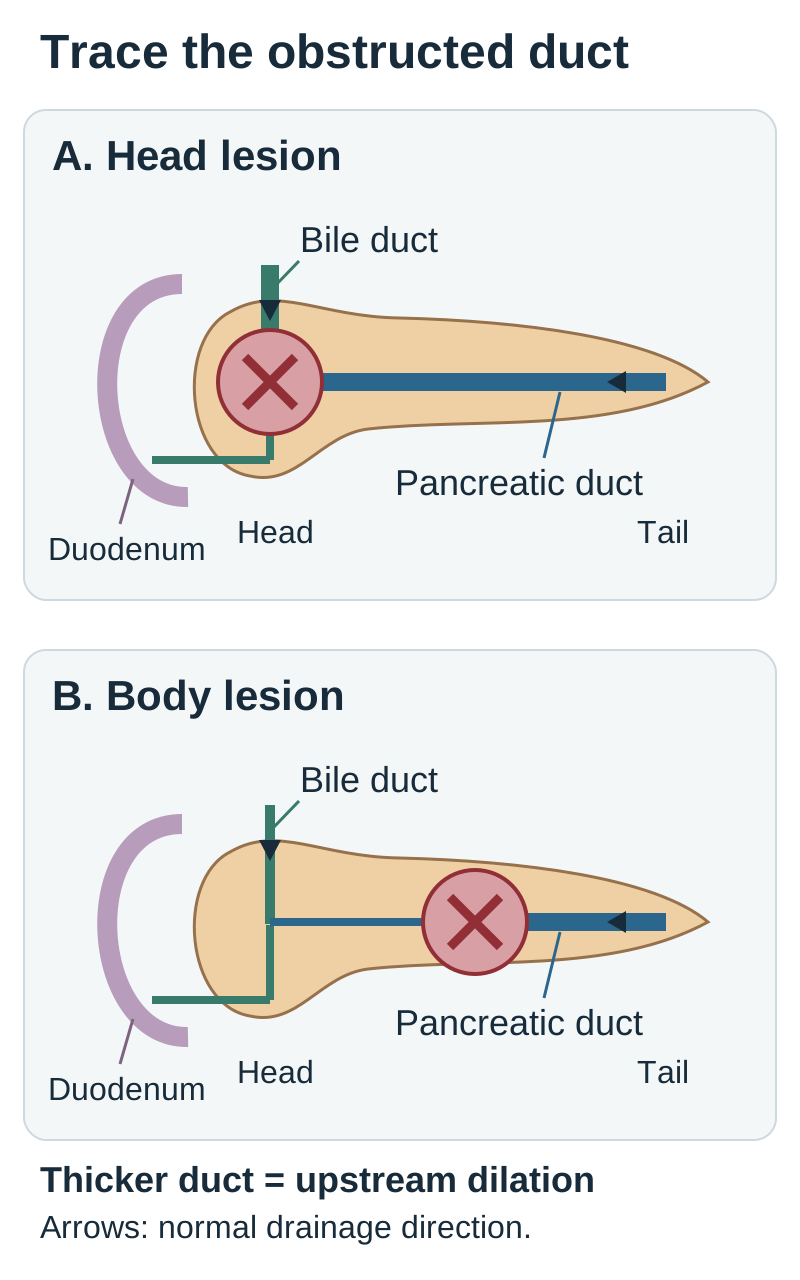
Trace the two ducts in the duct-location diagram. Bile travels from the liver through the common bile duct, whose distal portion passes through or beside the pancreatic head. Pancreatic secretions travel from the tail and body toward the head and duodenum. Predict which upstream channels enlarge when a head lesion obstructs their outlets, then compare with the body lesion below it.
Trace each channel toward the duodenum, predict which upstream duct dilates, then compare head and body obstruction. Simplified orientation and dimensions; not operative anatomy. [1][2]
A head lesion can obstruct the distal common bile duct and pancreatic duct together. Reduced bile delivery makes stools pale; water-soluble conjugated bilirubin in blood can appear in urine, making it dark. Retained biliary substances accompany itching, and alkaline phosphatase often rises disproportionately to aminotransferases. A painless, enlarged gallbladder with jaundice is the Courvoisier finding: it suggests persistent distal obstruction, often malignant, but is neither required nor diagnostic of PDAC. A dilated bile duct plus pancreatic duct is the double-duct pattern; ampullary disease and benign obstruction can also produce it. [1][2]
A body or tail lesion may obstruct the pancreatic duct without obstructing bile flow. Its deeper position and extension into retroperitoneal tissues or around nerves can produce back pain. Normal bilirubin therefore does not exclude a pancreatic mass. Liver and peritoneal spread can occur from either location. Anorexia, loss of muscle, fatigue and weight loss reflect multiple processes, including cancer-associated metabolic effects and impaired digestion. [1][2]
Keep three pancreatic problems separate. In pancreatitis, premature digestive enzyme activation injures pancreatic tissue. In exocrine insufficiency, too few digestive enzymes reach food. In pancreatic cancer, duct obstruction, tissue loss and systemic metabolic effects can coexist. New diabetes is not proof that a mass has simply destroyed all insulin-producing cells; cancer-associated insulin resistance can contribute. Residual pancreatic function varies with the patient and disease. [1][7]
Apply the anatomy: the bile duct stays open
A lesion in the body obstructs the pancreatic duct while leaving the common bile duct open. Pancreatic duct enlargement upstream toward the tail is plausible; jaundice is not obligatory. Persistent pain and weight loss still require evaluation.
Which question must the next test answer?
Consider a stable patient with progressive painless jaundice, a dilated bile duct on ultrasound and no visible stone. The unanswered questions are the cause, local anatomy and distant spread. A pancreas-protocol multiphase contrast CT evaluates the pancreatic lesion and vessels; staging also includes appropriate chest, abdominal and pelvic assessment. Ultrasound can establish obstruction without adequately excluding a pancreatic lesion. [1][2]
Now change one finding: the patient develops fever, confusion and hypotension. Predict whether elective staging still comes first. The combination raises concern for acute cholangitis with sepsis. Resuscitation, antibiotics and urgent biliary drainage take priority; complete staging once the immediate threat is addressed. Imaging may still guide urgent care, but a routine staging schedule must not postpone source control. [2][3]
Different procedures answer different questions. CT maps disease and surgical relationships. MRI, including MRCP when appropriate, helps resolve an unclear pancreatic or biliary finding; dedicated liver MRI can characterize an indeterminate lesion that would change a surgical plan. Endoscopic ultrasound, or EUS, closely examines small or poorly defined masses and permits tissue sampling. ERCP is mainly a treatment route for biliary obstruction rather than a substitute for comprehensive cancer staging. [1][2][3]
Before chemotherapy, radiation-based oncologic treatment or a neoadjuvant regimen, obtain pathologic confirmation. For a solid pancreatic mass sampled by EUS, core fine-needle biopsy is generally preferred to fine-needle aspiration. An inadequate or negative sample does not cancel a strongly suspicious duct cutoff or mass; reconcile imaging and pathology, then repeat or redirect sampling. A safely accessible metastatic site may also provide diagnostic tissue. [2][3]
A different rule applies to a characteristic, clearly resectable lesion when an experienced multidisciplinary team recommends immediate surgery: preoperative biopsy is not invariably required. The resection provides the diagnosis. Do not turn either situation into an absolute: neither every patient needs a biopsy before surgery nor every suspicious mass can receive systemic therapy without tissue. [2]
Biliary drainage is also conditional. It is important for cholangitis, clinically important symptomatic obstruction, organ dysfunction from obstruction or an anticipated treatment delay, including many neoadjuvant pathways. It is not automatically beneficial before prompt surgery in every otherwise stable jaundiced patient. For endoscopic drainage of malignant distal obstruction, self-expanding metal stents often provide more durable patency than plastic stents. Avoid an uncovered metal stent when the cause of obstruction is not yet established; the team selects the device for the diagnosis and treatment timeline. [2][3]
Ask separately: Is the patient unstable? Where is the disease? Do we need tissue before the planned treatment? Does obstruction require drainage now? One test rarely answers all four.
Apply the sequence: a small liver lesion
A patient otherwise suitable for pancreatic surgery has an indeterminate liver lesion on staging CT. Characterize it, often with liver MRI and selective tissue confirmation. Proven liver metastasis would change the treatment objective even if the pancreatic primary looks technically removable.
What does a changing CA 19-9 actually mean?
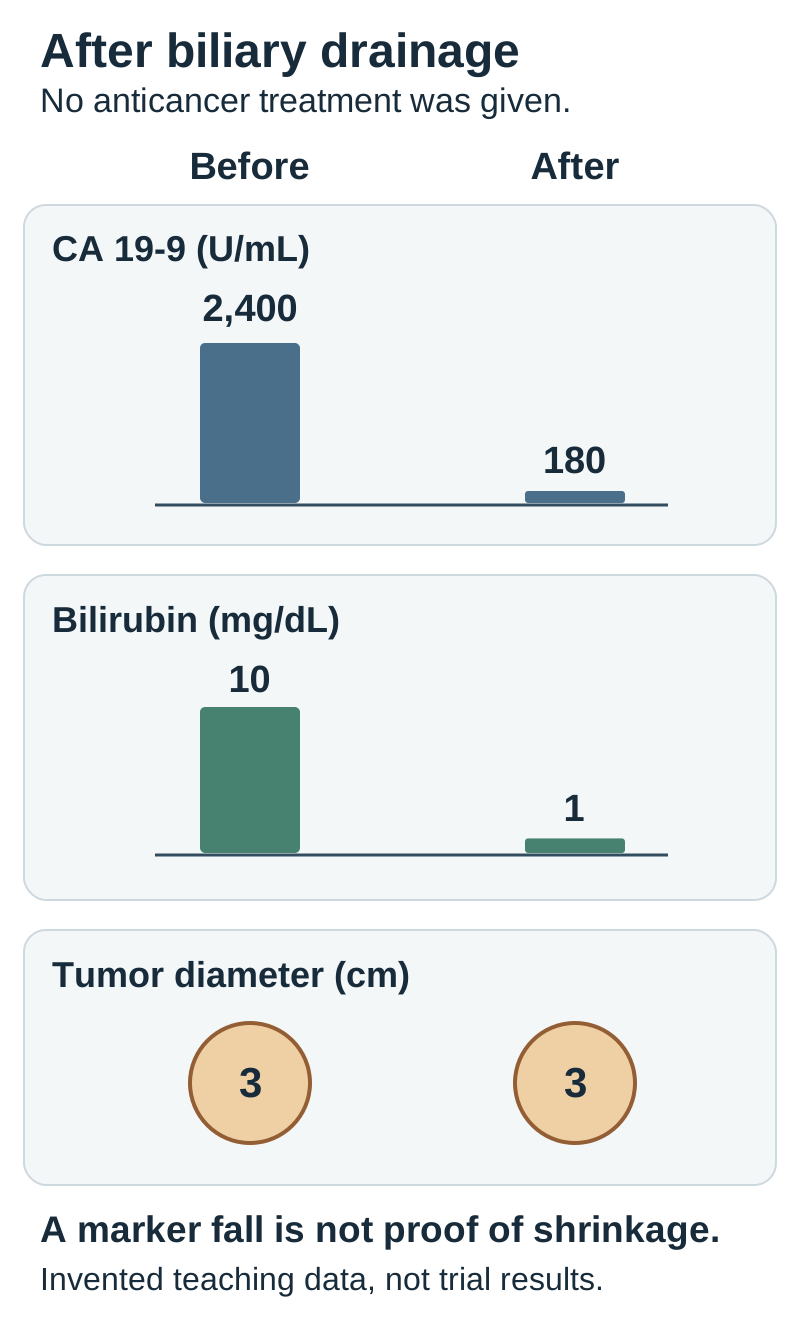
Imagine that CA 19-9 falls from 2,400 to 180 U/mL after biliary drainage. Bilirubin falls from 10 to 1 mg/dL, the pancreatic lesion remains 3 cm, and no anticancer treatment has been given. Predict whether the marker change demonstrates tumor shrinkage. The paired measurement diagram separates the intervention from the disease measurement. These are values, not trial results.
Predict which measurements can change when obstruction is relieved without an antitumor intervention. The unchanged tumor diameter prevents mistaking a serum fall for demonstrated tumor shrinkage. values, not patient or trial data. [1][2]
The falling marker is compatible with relief of cholestasis and inflammation. CA 19-9 can increase with benign obstruction and cholangitis as well as cancer. Its concentration does not independently establish the diagnosis, stage, operability or treatment response. Obtain an interpretable baseline after obstruction has been addressed when feasible, and use trends alongside symptoms and imaging. An abrupt rise with fever and recurrent jaundice in a stented patient requires assessment for infected obstruction, not an automatic declaration of cancer progression. [1][2]
The reverse error is equally important. Some people produce little or no CA 19-9 because of their Lewis antigen biology. A normal result cannot exclude PDAC; it may also make this marker unhelpful for following an already proven cancer. Do not discard adequate pathology or convincing imaging because a serum marker is normal. Lewis phenotype and marker production are not perfect all-or-none substitutes for clinical assessment. [1][2]
For a useful follow-up comparison, note the treatment interval, bilirubin, infectious symptoms, laboratory method when relevant, and the imaging trajectory. A persistent rise can prompt reassessment. It does not by itself specify which drug should replace the current treatment. Similarly, a low marker does not negate a new biopsy-proven metastasis. [1][2]
Apply the comparison: no useful baseline signal
A patient has biopsy-proven metastatic PDAC and a normal CA 19-9 before therapy. Follow the disease using clinical assessment and appropriate imaging. A persistently normal marker cannot establish that treatment is working.
Can an operation clear the disease?
A 2 cm primary encasing a critical artery can be less amenable to immediate surgery than a larger mass separated from major vessels. Size helps describe disease, but it does not independently determine resectability. First look for distant spread. Then describe the local artery and vein relationships, the possibility of reconstruction, and the person's ability to undergo the proposed treatment. [1][2]
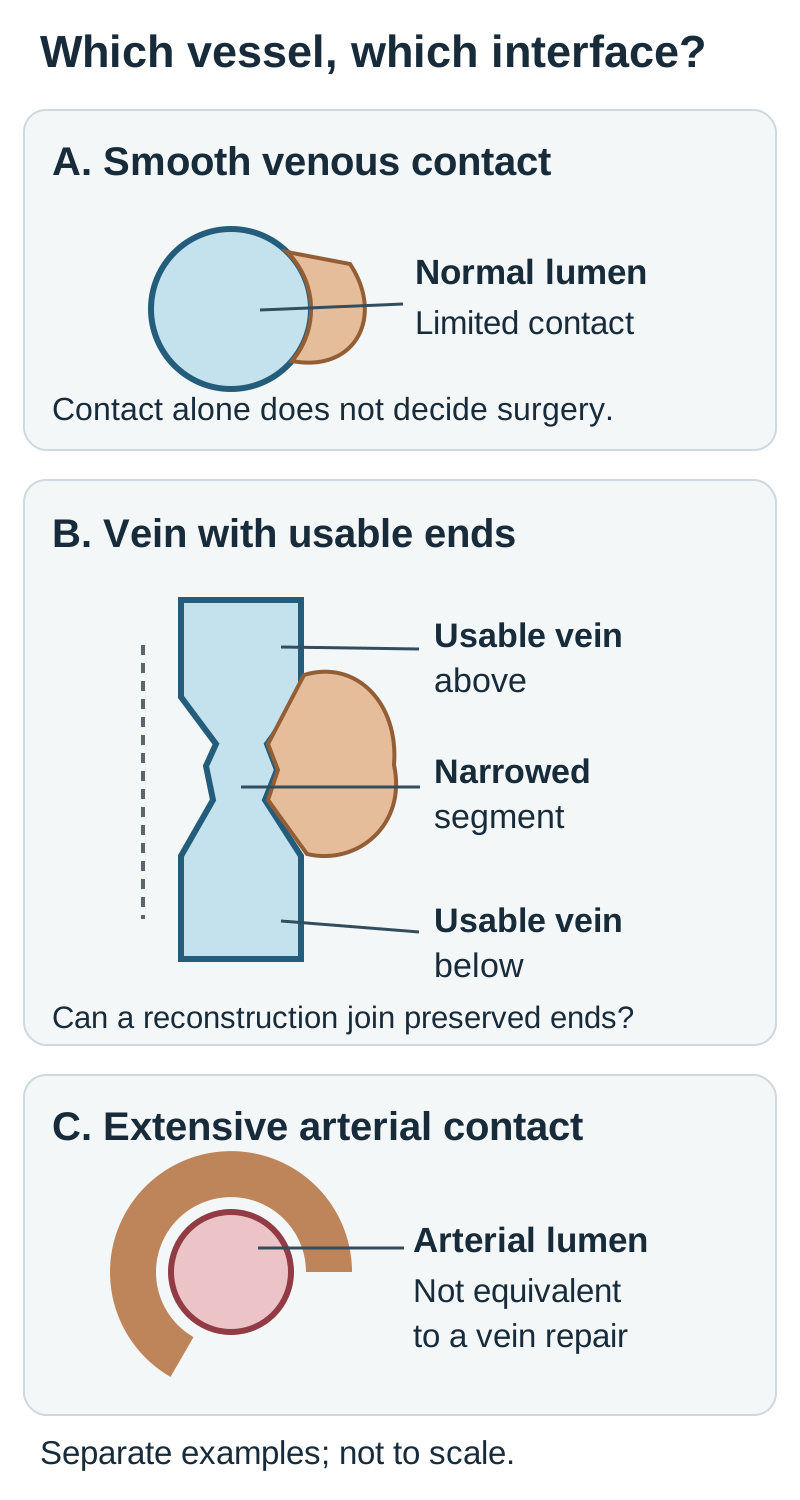
Compare the three vessel drawings. One vein is smoothly contacted, another is narrowed with usable segments above and below it, and the third drawing shows extensive contact around an artery. Trace a possible venous reconstruction between the preserved ends. Then ask why the arterial drawing cannot be treated as the same problem. These are simplified spatial examples, not an automatic scoring tool.
Compare contact, lumen shape and possible venous reconstruction before assigning a surgical pathway. These separate examples do not form an automatic resectability calculator. [2][9]
A staging report should identify the superior mesenteric artery, celiac axis and common hepatic artery, and the superior mesenteric vein and portal vein. It should describe the extent of tumor contact, venous contour or narrowing, occlusion and usable vessel segments. Splenic vessel involvement has a different surgical context in a distal pancreatic lesion. Venous contour irregularity supplies information beyond contact angle alone; primary imaging research supports evaluating both. [2][9]
Treatment categories are decisions about anatomy and disease extent, not synonyms for tumor diameter
Category
Reasoning
Usual direction
CategoryResectable
ReasoningNo distant disease and local anatomy permits complete resection. Limited smooth venous contact does not automatically make a tumor borderline.
Usual directionSurgical and oncology planning, often surgery followed by adjuvant treatment.
CategoryBorderline resectable
ReasoningLocal contact threatens a clear margin, but selected vessel reconstruction or limited arterial relationships remain potentially manageable.
Usual directionObtain tissue, give preoperative systemic treatment, then reassess.
CategoryLocally advanced
ReasoningNo distant metastasis, but local arterial involvement or unreconstructible venous disease prevents a reasonable initial complete resection.
Usual directionSystemic treatment, selective local treatment and reassessment.
CategoryMetastatic
ReasoningConfirmed distant disease, such as liver or peritoneal deposits.
Usual directionSystemic treatment and symptom-directed care rather than routine curative pancreatic resection.
Exact anatomic definitions vary among guidelines and expert centers. A reconstructible narrowed portal-mesenteric segment can support a borderline pathway; merely saying that a tumor touches a vein is insufficient. Extensive superior mesenteric artery encasement is not equivalent to a short reconstructible vein segment. Review complete imaging with specialist surgeons rather than assigning operability from one isolated slice. [2][9]
After neoadjuvant treatment, reassess distant disease, local anatomy, fitness and the treatment trajectory. Persistent tissue around vessels may include fibrosis, so diameter or contact alone cannot settle every postoperative-treatment decision. Conversely, a smaller primary does not justify surgery when new metastases are confirmed. Selected patients with initially locally advanced disease can later undergo expert evaluation for resection; this is not a promise of conversion. [2]
Apply the distinction: local response, new distant disease
If the primary shrinks but a liver biopsy confirms metastatic PDAC, the patient has systemic disease. The new distant finding changes the purpose of treatment despite the favorable local size measurement.
Who needs evaluation, surveillance or genetic testing?
Compare an asymptomatic adult with stable long-standing type 2 diabetes against an older adult with newly worsening glucose control, unexplained weight loss and persistent back pain. The first raises a screening question; the second has symptoms requiring diagnostic assessment. Neither diabetes nor back pain alone proves PDAC. The combination and trajectory determine why further evaluation is warranted. [1][8]
Risk increases with age. Smoking, obesity, chronic pancreatitis, long-standing diabetes and inherited susceptibility are relevant. New diabetes accompanied by weight loss can also be a manifestation of an existing cancer. Unexplained pancreatitis in an older adult, especially with a persistent pancreatic duct cutoff after the inflammation settles, should prompt consideration of an obstructing lesion. Do not attribute a changing clinical pattern to a familiar risk factor without reassessment. [1][2]
Inherited susceptibility includes pathogenic variants in BRCA1, BRCA2, PALB2, ATM and CDKN2A, as well as syndromes involving STK11 or mismatch-repair genes. Offer genetic counseling and discuss germline testing with patients who have PDAC even when their family history is unremarkable. A small family, incomplete history or previously unrecognized inheritance can conceal risk. Germline testing asks about inherited variants and relatives; tumor profiling asks about actionable alterations in the cancer. They are complementary, particularly when planning treatment for advanced disease. [2][10]
Do not screen the average-risk asymptomatic population with CA 19-9, CT or EUS. Selected hereditary or strongly familial high-risk groups may be offered MRI/MRCP and EUS surveillance through experienced programs after counseling. Eligibility, starting age and interval depend on the particular inherited risk and family history. This is not the same pathway as investigating jaundice, progressive pain or weight loss. [2][8][10]
Cancer-associated coagulation activation can cause venous thromboembolism or migrating superficial thrombophlebitis, historically called Trousseau syndrome. Tender superficial venous cords appearing at different sites suggest a systemic process rather than compression of one local vessel. PDAC is an important association, not the only cause. Treat confirmed thrombosis and assess bleeding risk while evaluating the underlying disease; unexplained thrombosis does not justify assuming that every patient has pancreatic cancer. [1][2]
Keep migrating venous cords distinct from a palpable gallbladder, flank ecchymosis or an umbilical nodule. The last three are not themselves superficial venous thromboses. Inspect the actual anatomic finding before attaching an eponym; none of these bedside findings alone establishes PDAC.
Apply the distinction: cancer in a family with no known history
A new PDAC diagnosis still warrants inherited-risk assessment and a germline testing discussion. Do not use an unremarkable family history to replace testing with CA 19-9 or to assume that tumor sequencing answers every inherited-risk question.
Match treatment to the disease and to the person
Two people with the same scan may need different treatment because bilirubin, functional status, nutrition, comorbidities, prior treatment and goals differ. Anatomic resectability and medical fitness are separate assessments. Palliative care can accompany active cancer treatment from diagnosis; it is not a statement that all treatment has stopped. [1][2][4]
For a resectable head lesion, pancreaticoduodenectomy, often called the Whipple operation, addresses the head and adjacent duodenal-biliary anatomy. A body or tail lesion generally requires distal pancreatectomy with appropriate lymph-node assessment, usually including splenectomy for PDAC. Location therefore changes the operation, while vascular and metastatic findings determine whether a curative-intent operation is appropriate. [1][2]
After resection, microscopic systemic disease can remain despite negative surgical margins. Fit patients are commonly offered adjuvant modified FOLFIRINOX; gemcitabine-capecitabine or less intensive options may be appropriate when that regimen is unsuitable. FOLFIRINOX combines fluorouracil, leucovorin, irinotecan and oxaliplatin. Clearly resectable disease is not automatically a neoadjuvant indication: preoperative treatment in selected high-risk resectable cases depends on the multidisciplinary plan, guideline context or a trial. Borderline disease more commonly enters a neoadjuvant systemic-treatment pathway, followed by restaging and possible surgery. Radiation is selective, not a compulsory step for every patient. [2]
For metastatic disease in a sufficiently fit patient, established multiagent options include FOLFIRINOX, NALIRIFOX, and gemcitabine plus nab-paclitaxel. NALIRIFOX uses liposomal irinotecan with fluorouracil, leucovorin and oxaliplatin. Substantial cholestasis or a reversible infection can temporarily prevent an otherwise appropriate regimen; reassess after treating the reversible problem. Persistent severe impairment or a preference against further anticancer therapy can instead favor symptom-focused care. Age alone does not choose the regimen. [1][4]
A treatment update dated August 26, 2026: in the United States, daraxonrasib, a RAS-family inhibitor, is approved for adults with metastatic pancreatic adenocarcinoma after at least one prior systemic therapy, or when they are not candidates for multiagent systemic therapy. This is not a KRAS G12C-only indication. Assess the current prescribing information, individual suitability and goals; oral administration does not eliminate risks such as rash, stomatitis, diarrhea, pneumonitis or gastrointestinal perforation. [5]
Molecular results create other specific opportunities. BRCA1/2 or PALB2-associated homologous-recombination defects can support a platinum-based strategy. For metastatic disease with a germline BRCA1/2 variant and no progression after at least 16 weeks of first-line platinum therapy, maintenance olaparib is an option. POLO demonstrated a progression-free survival benefit; do not convert that into a claim of proven overall-survival improvement or use its maintenance result as rescue evidence for progressing disease. Rare MSI-high or mismatch-repair-deficient tumors and actionable fusions can support appropriately matched therapies. These decisions require the exact biomarker, disease setting and treatment history. [2][6]
Supportive treatment should address the reason the patient cannot eat or function. Greasy stools and weight loss suggest maldigestion; fecal elastase below 100 micrograms/g on a formed or semisolid sample supports exocrine insufficiency. Give pancreatic enzymes during meals and snacks, with nutrition and fat-soluble vitamin assessment. Severe fat restriction or taking all enzymes while fasting misses the goal of delivering enzymes alongside food. [7]
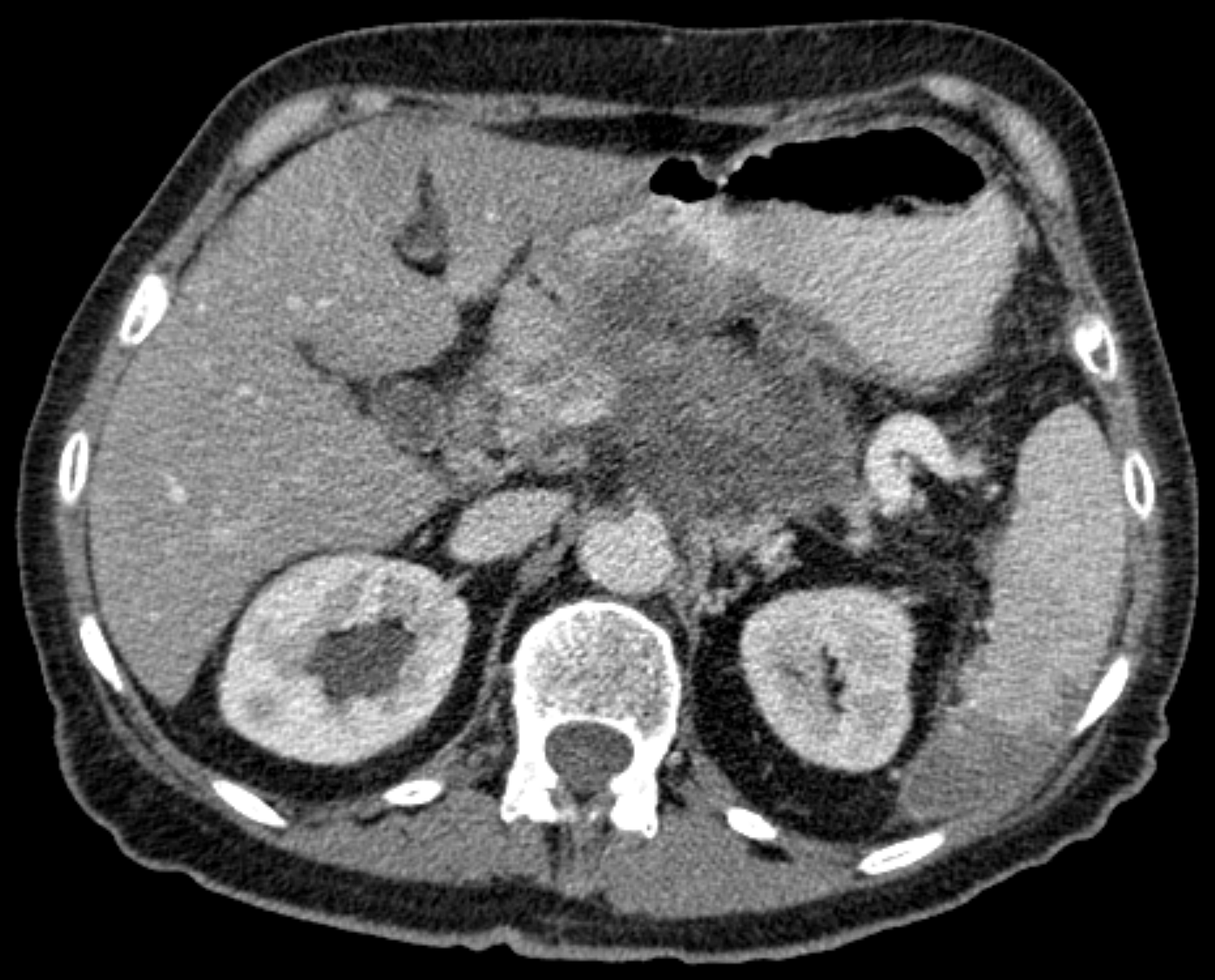
The clinical CT image shows a retroperitoneal pancreatic cancer case associated with back pain. Orient to the spine and the tissues in front of it; one supplied slice cannot determine resectability. Persistent cancer pain may need opioid and nonopioid management plus consideration of celiac plexus neurolysis. This procedure can supplement analgesia; it does not treat the malignancy or guarantee complete pain relief. Address constipation, obstruction, thrombosis, distress and caregiver needs in parallel. [1][3]
Orient to the spine and the retroperitoneal pancreatic region. The source describes a patient with back pain treated using celiac plexus blockade; the image is used for anatomic orientation, not to demonstrate a visible needle or establish arterial encasement. Image: Hellerhoff, Wikimedia Commons, CC BY-SA 3.0. Hellerhoff; original source; CC BY-SA 3.0.Apply the nutrition plan: enzymes have not helped
Before concluding that enzyme replacement failed, ask when it is taken, whether the dose covers meals and snacks, whether food intake is adequate, and whether another cause of symptoms is present. Medication timing and nutritional support are part of the treatment, not an optional afterthought.
Practice
Case 1
Show answer and explanations for case 1
A. Serum CA 19-9 measurement (Why this does not fit)
It may support longitudinal assessment once its clinical context and baseline are understood. Biliary obstruction can increase the marker without establishing a cancer, and a normal value would not exclude one. The anatomic cause and extent of the obstruction require appropriate imaging.
Reasoning steps for option A
What information can CA 19-9 provide?
It may support longitudinal assessment once its clinical context and baseline are understood.
Why is it inadequate for this immediate question?
Biliary obstruction can increase the marker without establishing a cancer, and a normal value would not exclude one.
What information is still required?
The anatomic cause and extent of the obstruction require appropriate imaging.
B. Pancreas-protocol contrast CT (Best answer)
Conjugated jaundice with duct dilation indicates impaired bile drainage rather than isolated bilirubin overproduction. The pancreas was not adequately visualized, and progressive weight loss raises concern for a distal obstructing lesion. A dedicated multiphase CT evaluates the pancreas and adjacent vessels, while the full staging plan also assesses distant disease.
Reasoning steps for option B
What pattern must be localized?
Conjugated jaundice with duct dilation indicates impaired bile drainage rather than isolated bilirubin overproduction.
Why does the negative stone ultrasound not finish the investigation?
The pancreas was not adequately visualized, and progressive weight loss raises concern for a distal obstructing lesion.
What will the proposed CT contribute?
A dedicated multiphase CT evaluates the pancreas and adjacent vessels, while the full staging plan also assesses distant disease.
C. Hepatobiliary scintigraphy (Why this does not fit)
Hepatobiliary scintigraphy can evaluate selected gallbladder and bile-flow disorders. Dilation of the common bile duct already supports obstruction, while the pancreas and vessel relationships remain unresolved. Detailed pancreatic cross-sectional imaging answers the suspected mass and staging questions more directly.
Reasoning steps for option C
What question does this study usually answer?
Hepatobiliary scintigraphy can evaluate selected gallbladder and bile-flow disorders.
What has ultrasound already established?
Dilation of the common bile duct already supports obstruction, while the pancreas and vessel relationships remain unresolved.
Why is another modality more useful?
Detailed pancreatic cross-sectional imaging answers the suspected mass and staging questions more directly.
D. ERCP with biliary brush cytology (Why this does not fit)
ERCP can decompress the biliary tree and obtain ductal samples. There is no cholangitis or supplied severe organ dysfunction; the cause and vascular extent still need mapping. Choose cross-sectional imaging for a stable patient needing pancreatic diagnosis and local staging, rather than using a drainage procedure as the entire staging study.
Reasoning steps for option D
What does ERCP mainly provide?
ERCP can decompress the biliary tree and obtain ductal samples.
Is urgent decompression the unresolved priority here?
There is no cholangitis or supplied severe organ dysfunction; the cause and vascular extent still need mapping.
Which question should determine the first investigation?
Choose cross-sectional imaging for a stable patient needing pancreatic diagnosis and local staging, rather than using a drainage procedure as the entire staging study.
E. Repeat fasting abdominal ultrasound (Why this does not fit)
A repeat examination can clarify selected technically limited or evolving biliary findings. The first examination already demonstrated a dilated duct but did not visualize the pancreatic cause in a patient with progressive systemic symptoms. Obtain a definitive pancreatic imaging strategy rather than repeat a limited study as the sole next evaluation.
Reasoning steps for option E
When can repeat ultrasound help?
A repeat examination can clarify selected technically limited or evolving biliary findings.
What makes repetition insufficient here?
The first examination already demonstrated a dilated duct but did not visualize the pancreatic cause in a patient with progressive systemic symptoms.
What should not be postponed?
Obtain a definitive pancreatic imaging strategy rather than repeat a limited study as the sole next evaluation.
Takeaway: Separate establishing obstruction from identifying its cause and staging a suspected pancreatic mass. [1] [2]
A. Obtain EUS core tissue before biliary drainage (Why this does not fit)
Pathology is needed before planned systemic cancer treatment. It does not: the acute shock and suspected infected obstruction require immediate management. Treat sepsis and relieve obstruction promptly; coordinate definitive oncologic sampling without making it a barrier to source control.
Reasoning steps for option A
Why is core tissue useful?
Pathology is needed before planned systemic cancer treatment.
Does that requirement come before treating this deterioration?
It does not: the acute shock and suspected infected obstruction require immediate management.
How should the two needs be sequenced?
Treat sepsis and relieve obstruction promptly; coordinate definitive oncologic sampling without making it a barrier to source control.
B. Begin chemotherapy while treating fever (Why this does not fit)
Systemic chemotherapy addresses the malignancy rather than immediately restoring biliary drainage. The patient has shock with suspected cholangitis, not a stable setting for starting a cytotoxic regimen. Control the infection and obstruction and reassess organ function before selecting cancer therapy.
Reasoning steps for option B
What is chemotherapy intended to treat?
Systemic chemotherapy addresses the malignancy rather than immediately restoring biliary drainage.
Why is it unsafe as the immediate response?
The patient has shock with suspected cholangitis, not a stable setting for starting a cytotoxic regimen.
What must be stabilized first?
Control the infection and obstruction and reassess organ function before selecting cancer therapy.
C. Resuscitate, give antibiotics and arrange urgent drainage (Best answer)
Fever, hypotension, confusion and high lactate suggest cholangitis with sepsis. An obstructed infected biliary system can require drainage for source control. Start resuscitation and antibiotics while urgently arranging appropriate biliary decompression; complete elective staging after stabilization.
Reasoning steps for option C
Which findings indicate more than uncomplicated jaundice?
Fever, hypotension, confusion and high lactate suggest cholangitis with sepsis.
Why are antibiotics alone not the full plan?
An obstructed infected biliary system can require drainage for source control.
What is the immediate sequence?
Start resuscitation and antibiotics while urgently arranging appropriate biliary decompression; complete elective staging after stabilization.
D. Stage with CT before starting antibiotics (Why this does not fit)
Staging would help choose later cancer treatment. Hypotension, confusion, fever and obstructed bile flow indicate a time-critical infectious emergency. Resuscitation, antibiotics and urgent biliary source control must not wait for an elective cancer workup.
Reasoning steps for option D
What benefit would complete staging provide?
Staging would help choose later cancer treatment.
What makes its priority wrong now?
Hypotension, confusion, fever and obstructed bile flow indicate a time-critical infectious emergency.
What must staging not delay?
Resuscitation, antibiotics and urgent biliary source control must not wait for an elective cancer workup.
Takeaway: Suspected cholangitis with shock takes priority over elective staging or cancer tissue acquisition. [2] [3]
A. End the mass evaluation after benign cytology (Why this does not fit)
An adequate representative sample consistent with the overall clinical picture can reduce concern. The report is nondiagnostic and the persistent duct cutoff and mass remain unexplained. Reconcile sample adequacy and imaging rather than convert a nondiagnostic result into a definitive exclusion.
Reasoning steps for option A
When can reassuring pathology reduce concern?
An adequate representative sample consistent with the overall clinical picture can reduce concern.
Was that condition met here?
The report is nondiagnostic and the persistent duct cutoff and mass remain unexplained.
What should happen with discordant tests?
Reconcile sample adequacy and imaging rather than convert a nondiagnostic result into a definitive exclusion.
B. Begin the proposed regimen from the CT findings (Why this does not fit)
It can justify further diagnostic assessment and multidisciplinary treatment planning. The initial specimen did not provide the required pathologic confirmation. Systemic preoperative therapy needs tissue confirmation even when imaging is strongly suspicious.
Reasoning steps for option B
What can a highly suspicious CT establish?
It can justify further diagnostic assessment and multidisciplinary treatment planning.
What remains missing before neoadjuvant treatment?
The initial specimen did not provide the required pathologic confirmation.
What distinguishes this from selected immediate surgery?
Systemic preoperative therapy needs tissue confirmation even when imaging is strongly suspicious.
C. Use serial CA 19-9 instead of further sampling (Why this does not fit)
It can complement clinical and imaging follow-up in an appropriate producer. No marker concentration proves the histology of this persistent suspicious lesion. Adequate diagnostic tissue is needed before the proposed neoadjuvant regimen.
Reasoning steps for option C
What can serial CA 19-9 help monitor?
It can complement clinical and imaging follow-up in an appropriate producer.
Can it resolve the tissue requirement here?
No marker concentration proves the histology of this persistent suspicious lesion.
What kind of evidence is missing?
Adequate diagnostic tissue is needed before the proposed neoadjuvant regimen.
D. Repeat EUS-guided core sampling of the lesion (Best answer)
It establishes insufficient evidence from that specimen, not the absence of malignancy. The persistent lesion and abrupt duct cutoff maintain a substantial concern despite scant benign cells. Obtain adequate pathologic confirmation, with EUS-guided core biopsy a suitable repeat approach for a solid mass.
Reasoning steps for option D
What does nondiagnostic sampling establish?
It establishes insufficient evidence from that specimen, not the absence of malignancy.
Why does the imaging still matter?
The persistent lesion and abrupt duct cutoff maintain a substantial concern despite scant benign cells.
What is required before the proposed treatment?
Obtain adequate pathologic confirmation, with EUS-guided core biopsy a suitable repeat approach for a solid mass.
Takeaway: A nondiagnostic biopsy is not a negative cancer diagnosis; reconcile persistent imaging abnormalities and obtain adequate tissue before systemic treatment. [2] [3]
A. Biliary stenting before scheduling surgery (Why this does not fit)
A biliary stent can relieve clinically important bile duct obstruction. Bilirubin is normal, and no cholangitis or obstructive symptoms requiring drainage are described. Use it for an actual obstruction-related indication, not as a universal preparation for pancreatic surgery.
Reasoning steps for option A
What problem would a stent address?
A biliary stent can relieve clinically important bile duct obstruction.
Is such a problem supplied?
Bilirubin is normal, and no cholangitis or obstructive symptoms requiring drainage are described.
How should drainage be selected?
Use it for an actual obstruction-related indication, not as a universal preparation for pancreatic surgery.
B. Core biopsy before scheduling the operation (Why this does not fit)
It is required before neoadjuvant or other systemic oncologic treatment. This patient is going directly to an agreed operation after specialist assessment of a characteristic resectable mass. Mandatory preoperative biopsy would incorrectly apply the systemic-treatment rule to every immediate-surgery patient.
Reasoning steps for option B
When is core confirmation essential?
It is required before neoadjuvant or other systemic oncologic treatment.
Is that the chosen pathway?
This patient is going directly to an agreed operation after specialist assessment of a characteristic resectable mass.
Why is the word required too strong here?
Mandatory preoperative biopsy would incorrectly apply the systemic-treatment rule to every immediate-surgery patient.
C. A diagnostic CA 19-9 rise before scheduling surgery (Why this does not fit)
CA 19-9 can contribute to assessment when interpreted with the clinical setting. No serum CA 19-9 threshold is required to establish eligibility for the agreed operation. The complete anatomic, clinical and multidisciplinary assessment guides surgery, with the resection providing pathology.
Reasoning steps for option C
What role can the marker have preoperatively?
CA 19-9 can contribute to assessment when interpreted with the clinical setting.
Does a resectable characteristic mass need a diagnostic threshold?
No serum CA 19-9 threshold is required to establish eligibility for the agreed operation.
What should guide the plan instead?
The complete anatomic, clinical and multidisciplinary assessment guides surgery, with the resection providing pathology.
D. No mandatory biopsy before the agreed operation (Best answer)
The team recommends immediate surgery for a characteristic, clearly resectable lesion rather than preoperative systemic treatment. The resection specimen can provide the diagnosis. Preoperative biopsy is not invariably required in this selected setting; uncertainty or a change to systemic treatment would alter the need for tissue.
Reasoning steps for option D
Which treatment pathway has been selected?
The team recommends immediate surgery for a characteristic, clearly resectable lesion rather than preoperative systemic treatment.
Where can definitive tissue be obtained?
The resection specimen can provide the diagnosis.
What is the limited conclusion?
Preoperative biopsy is not invariably required in this selected setting; uncertainty or a change to systemic treatment would alter the need for tissue.
Takeaway: The tissue requirement depends on the planned treatment: selected immediate surgery differs from neoadjuvant or systemic therapy. [2]
A. Drain the obstruction before systemic treatment (Best answer)
The patient will need durable bile drainage during months of preoperative treatment rather than prompt resection of the obstruction. Marked pruritus and cholestasis strengthen the indication for biliary decompression, followed by reassessment for safe systemic treatment.
Reasoning steps for option A
What is the significance of the planned delay to surgery?
The patient will need durable bile drainage during months of preoperative treatment rather than prompt resection of the obstruction.
How do the symptoms and bilirubin affect the plan?
Marked pruritus and cholestasis strengthen the indication for biliary decompression, followed by reassessment for safe systemic treatment.
B. Proceed directly to surgery to relieve obstruction (Why this does not fit)
Resection can relieve the obstructing lesion when immediate surgery is appropriate. The team has identified borderline anatomy and chosen preoperative treatment; endoscopic drainage can support that strategy without replacing it with an unplanned upfront operation.
Reasoning steps for option B
What could an operation accomplish?
Resection can relieve the obstructing lesion when immediate surgery is appropriate.
Why is that not the best response to this timeline?
The team has identified borderline anatomy and chosen preoperative treatment; endoscopic drainage can support that strategy without replacing it with an unplanned upfront operation.
C. Begin the full regimen before treating the jaundice (Why this does not fit)
The borderline local anatomy requires systemic treatment before reassessment for surgery. Marked cholestasis and symptomatic obstruction can impair treatment tolerance; address biliary drainage and reassess bilirubin before selecting and dosing the regimen.
Reasoning steps for option C
Why does starting systemic therapy seem attractive?
The borderline local anatomy requires systemic treatment before reassessment for surgery.
What current findings change the immediate sequence?
Marked cholestasis and symptomatic obstruction can impair treatment tolerance; address biliary drainage and reassess bilirubin before selecting and dosing the regimen.
D. Defer drainage until fever develops (Why this does not fit)
Fever can indicate cholangitis, which makes drainage urgent. No. Severe symptoms and a prolonged neoadjuvant pathway already justify addressing the obstruction before infection develops.
Reasoning steps for option D
Why is fever relevant to obstructive jaundice?
Fever can indicate cholangitis, which makes drainage urgent.
Is infection the only drainage indication present?
No. Severe symptoms and a prolonged neoadjuvant pathway already justify addressing the obstruction before infection develops.
Takeaway: Drain clinically significant obstruction when neoadjuvant treatment will delay surgery; cholangitis is not the only indication. [2] [3]
A. Schedule pancreaticoduodenectomy from the local CT findings (Why this does not fit)
The local tumor-vessel relationships appear compatible with resection. The indeterminate liver lesion could represent distant disease; local resectability does not settle that uncertainty before curative-intent surgery.
Reasoning steps for option A
What favors surgery in the pancreatic images?
The local tumor-vessel relationships appear compatible with resection.
What essential eligibility question remains?
The indeterminate liver lesion could represent distant disease; local resectability does not settle that uncertainty before curative-intent surgery.
B. Repeat CA 19-9 to classify the liver lesion (Why this does not fit)
Yes, but CA 19-9 is influenced by factors other than metastatic tumor burden. No. Characterization requires appropriate imaging and, when unresolved and decision-changing, selective tissue assessment.
Reasoning steps for option B
Could a marker trend complement disease assessment?
Yes, but CA 19-9 is influenced by factors other than metastatic tumor burden.
Can it determine what this liver focus is?
No. Characterization requires appropriate imaging and, when unresolved and decision-changing, selective tissue assessment.
C. Assign metastatic disease from the liver lesion size (Why this does not fit)
Proven distant disease generally changes the plan from curative pancreatic resection to systemic treatment. No. A small indeterminate lesion is neither confirmed metastasis nor definitively benign; characterize it rather than assigning a stage from size alone.
Reasoning steps for option C
Why would liver metastasis matter?
Proven distant disease generally changes the plan from curative pancreatic resection to systemic treatment.
Does this scan establish that diagnosis?
No. A small indeterminate lesion is neither confirmed metastasis nor definitively benign; characterize it rather than assigning a stage from size alone.
D. Obtain dedicated liver MRI before final surgical planning (Best answer)
Whether the liver lesion is benign or metastatic changes the value of curative-intent pancreatic surgery. MRI can characterize a CT-indeterminate focus; unresolved findings may still need selective sampling before the multidisciplinary decision.
Reasoning steps for option D
Which uncertainty affects the treatment objective?
Whether the liver lesion is benign or metastatic changes the value of curative-intent pancreatic surgery.
Why is dedicated liver imaging suitable?
MRI can characterize a CT-indeterminate focus; unresolved findings may still need selective sampling before the multidisciplinary decision.
Takeaway: Resolve decision-changing distant findings rather than treating local resectability as proof of nonmetastatic disease. [1] [2]
A. Permanent exclusion from any surgical reassessment (Why this does not fit)
Extensive venous occlusion without usable reconstruction targets can prevent a reasonable complete resection. No. Patent usable segments and an explicit specialist reconstruction plan preserve the possibility of later surgery.
Reasoning steps for option A
What venous problem can make resection impractical?
Extensive venous occlusion without usable reconstruction targets can prevent a reasonable complete resection.
Does this patient have that constraint?
No. Patent usable segments and an explicit specialist reconstruction plan preserve the possibility of later surgery.
B. Metastatic treatment because a major vessel is involved (Why this does not fit)
It requires distant spread, rather than merely contact with a regional vessel. The disease is locally challenging but nonmetastatic; potential reconstruction supports a borderline rather than a distant-disease classification.
Reasoning steps for option B
How is metastatic disease established?
It requires distant spread, rather than merely contact with a regional vessel.
What does the supplied imaging actually show?
The disease is locally challenging but nonmetastatic; potential reconstruction supports a borderline rather than a distant-disease classification.
C. Neoadjuvant systemic therapy followed by restaging (Best answer)
Broad contact with contour irregularity and narrowing raises concern for an involved venous interface and a threatened margin. Usable venous segments and the specialist reconstruction assessment support a borderline pathway: systemic treatment first, then reassessment for resection.
Reasoning steps for option C
What makes this more than simple smooth venous contact?
Broad contact with contour irregularity and narrowing raises concern for an involved venous interface and a threatened margin.
Why is potential surgery still part of the plan?
Usable venous segments and the specialist reconstruction assessment support a borderline pathway: systemic treatment first, then reassessment for resection.
D. Immediate surgery as an uncomplicated resectable lesion (Why this does not fit)
It can be appropriate when anatomy permits a clear resection without the supplied borderline concerns. Substantial irregular venous involvement and the expert assessment favor preoperative treatment rather than treating this as uncomplicated resectability.
Reasoning steps for option D
When can upfront surgery be appropriate?
It can be appropriate when anatomy permits a clear resection without the supplied borderline concerns.
Which local features oppose that assumption here?
Substantial irregular venous involvement and the expert assessment favor preoperative treatment rather than treating this as uncomplicated resectability.
Takeaway: Venous contour, extent and reconstructibility jointly inform the plan; a reconstructible involved vein is not the same as distant spread or unreconstructible disease. [2] [9]
A. Both are locally advanced because a major vessel is contacted (Why this does not fit)
Yes, depending on the vessel, contact pattern and possibility of reconstruction. No. Short smooth venous contact without narrowing is not interchangeable with extensive arterial encasement.
Reasoning steps for option A
Can vascular involvement prevent a complete resection?
Yes, depending on the vessel, contact pattern and possibility of reconstruction.
Are these two forms of contact equivalent?
No. Short smooth venous contact without narrowing is not interchangeable with extensive arterial encasement.
B. Both require the same operation before any systemic therapy (Why this does not fit)
It helps identify the general type of pancreatic operation if resection is appropriate. The different vascular anatomy changes initial resectability and treatment sequencing despite the same pancreatic location.
Reasoning steps for option B
What can a shared head location determine?
It helps identify the general type of pancreatic operation if resection is appropriate.
Why does it not establish an identical sequence?
The different vascular anatomy changes initial resectability and treatment sequencing despite the same pancreatic location.
C. Patient B is more suitable for upfront surgery because it is smaller (Why this does not fit)
It describes local tumor size, not the feasibility of preserving essential vessels with a clear margin. Patient B has extensive superior mesenteric artery encasement, a stronger obstacle to initial resection than the larger diameter in Patient A.
Reasoning steps for option C
What does a smaller diameter describe?
It describes local tumor size, not the feasibility of preserving essential vessels with a clear margin.
Which supplied relationship changes the comparison?
Patient B has extensive superior mesenteric artery encasement, a stronger obstacle to initial resection than the larger diameter in Patient A.
D. Patient A is more suitable for upfront surgical assessment (Best answer)
Patient A lacks arterial contact and has only limited smooth venous contact with a preserved lumen. The extensive arterial encasement in Patient B is a major local barrier; complete imaging and expert assessment matter more than a size-only comparison.
Reasoning steps for option D
Which tumor has the more favorable vessel relationship?
Patient A lacks arterial contact and has only limited smooth venous contact with a preserved lumen.
Why can it be favored despite greater diameter?
The extensive arterial encasement in Patient B is a major local barrier; complete imaging and expert assessment matter more than a size-only comparison.
Takeaway: Tumor diameter and vessel contact are not interchangeable measures of surgical feasibility. [2] [9]
A. Systemic therapy with subsequent multidisciplinary reassessment (Best answer)
This is locally advanced nonmetastatic disease rather than clearly resectable or metastatic disease. A fit patient can receive systemic treatment, then undergo reassessment for selected local treatment or possible later surgery without a guarantee of conversion.
Reasoning steps for option A
What category fits no metastases but infeasible local clearance?
This is locally advanced nonmetastatic disease rather than clearly resectable or metastatic disease.
How does fitness change the next step?
A fit patient can receive systemic treatment, then undergo reassessment for selected local treatment or possible later surgery without a guarantee of conversion.
B. Symptom-only care because surgery is not possible now (Why this does not fit)
No. A patient can be unsuitable for immediate surgery yet fit enough for systemic therapy. ECOG 1, normal bilirubin and absence of distant disease support systemic treatment and later multidisciplinary reassessment alongside symptom care.
Reasoning steps for option B
Does unresectable anatomy eliminate anticancer options?
No. A patient can be unsuitable for immediate surgery yet fit enough for systemic therapy.
What supplied factors preserve treatment options?
ECOG 1, normal bilirubin and absence of distant disease support systemic treatment and later multidisciplinary reassessment alongside symptom care.
C. Upfront pancreaticoduodenectomy based on small diameter (Why this does not fit)
Small diameter can be associated with a lower local size category. Extensive superior mesenteric artery encasement and the expert margin assessment make initial resection unsuitable despite the small diameter.
Reasoning steps for option C
Why can a small primary seem favorable?
Small diameter can be associated with a lower local size category.
What prevents that from deciding this operation?
Extensive superior mesenteric artery encasement and the expert margin assessment make initial resection unsuitable despite the small diameter.
D. Curative radiation alone because staging shows no metastases (Why this does not fit)
The visible disease is confined to the pancreatic region. PDAC carries systemic risk, and a fit patient with locally advanced disease generally receives systemic treatment with reassessment; local radiation is selectively integrated rather than assumed curative.
Reasoning steps for option D
What makes a local treatment seem relevant?
The visible disease is confined to the pancreatic region.
Why is radiation alone insufficient as the general initial plan?
PDAC carries systemic risk, and a fit patient with locally advanced disease generally receives systemic treatment with reassessment; local radiation is selectively integrated rather than assumed curative.
Takeaway: Nonmetastatic does not mean immediately resectable, and unresectable does not mean that systemic treatment has no role. [1] [2]
A. The smaller primary establishes a curative surgical opportunity (Why this does not fit)
It suggests a local radiographic response to treatment. A new biopsy-proven distant deposit establishes metastatic disease despite local shrinkage, so routine curative pancreatic resection is no longer the appropriate default.
Reasoning steps for option A
What does the smaller primary demonstrate?
It suggests a local radiographic response to treatment.
Why does that not settle the treatment objective?
A new biopsy-proven distant deposit establishes metastatic disease despite local shrinkage, so routine curative pancreatic resection is no longer the appropriate default.
B. The preserved performance status establishes surgical eligibility (Why this does not fit)
It helps determine tolerance of surgery or systemic therapy. No. Treatment tolerance and the disease objective are separate questions; the confirmed distant lesion changes the latter.
Reasoning steps for option B
Why does functional status matter?
It helps determine tolerance of surgery or systemic therapy.
Does adequate fitness erase a metastatic contraindication to routine curative resection?
No. Treatment tolerance and the disease objective are separate questions; the confirmed distant lesion changes the latter.
C. The CA 19-9 decrease establishes eradication of distant disease (Why this does not fit)
It can accompany response when interpreted in an appropriate context. Pathology directly demonstrates residual distant malignancy, which cannot be excluded by a lower serum marker.
Reasoning steps for option C
What does a falling marker support?
It can accompany response when interpreted in an appropriate context.
Which evidence overrides this proposed conclusion?
Pathology directly demonstrates residual distant malignancy, which cannot be excluded by a lower serum marker.
D. The liver pathology establishes a systemic disease pathway (Best answer)
It is not indeterminate: tissue confirms distant spread of PDAC. The primary can respond while disease progresses elsewhere; the confirmed metastasis changes the objective to systemic and symptom-directed treatment.
Reasoning steps for option D
What makes the liver finding decisive?
It is not indeterminate: tissue confirms distant spread of PDAC.
How does this interact with the favorable local response?
The primary can respond while disease progresses elsewhere; the confirmed metastasis changes the objective to systemic and symptom-directed treatment.
Takeaway: A favorable primary-tumor or marker response does not cancel biopsy-proven distant progression. [1] [2]
A. Pancreaticoduodenectomy with regional lymph-node assessment (Why this does not fit)
Pancreaticoduodenectomy is designed for lesions of the head and adjacent duodenal-biliary region. It is in the tail, away from that operative target; a distal pancreatic resection better matches the supplied anatomy.
Reasoning steps for option A
Which anatomy does this operation primarily address?
Pancreaticoduodenectomy is designed for lesions of the head and adjacent duodenal-biliary region.
Where is the target lesion here?
It is in the tail, away from that operative target; a distal pancreatic resection better matches the supplied anatomy.
B. Spleen-preserving distal pancreatectomy with node assessment (Why this does not fit)
It can be suitable for selected distal benign or low-grade lesions, depending on anatomy and the operation. Invasive tail PDAC with local splenic vessel involvement favors standard oncologic distal resection with splenectomy and regional node assessment rather than assuming the spleen and its vessels can be preserved.
Reasoning steps for option B
When can spleen preservation be considered?
It can be suitable for selected distal benign or low-grade lesions, depending on anatomy and the operation.
Why does this particular cancer favor a different distal plan?
Invasive tail PDAC with local splenic vessel involvement favors standard oncologic distal resection with splenectomy and regional node assessment rather than assuming the spleen and its vessels can be preserved.
C. Tumor enucleation with preservation of the pancreatic tail (Why this does not fit)
Selected small benign or low-grade pancreatic lesions may be candidates for parenchyma-sparing surgery. Confirmed invasive PDAC needs oncologic margins and regional lymph-node management rather than simple local shelling out.
Reasoning steps for option C
For what kind of lesion can enucleation be considered?
Selected small benign or low-grade pancreatic lesions may be candidates for parenchyma-sparing surgery.
Why does that approach not fit this lesion?
Confirmed invasive PDAC needs oncologic margins and regional lymph-node management rather than simple local shelling out.
D. Distal pancreatectomy with splenectomy and node assessment (Best answer)
A tail lesion can produce pain and weight loss without obstructing the distal common bile duct, so normal bilirubin is compatible. Distal pancreatectomy, usually with splenectomy and appropriate regional lymph-node assessment for PDAC, matches this resectable tail lesion.
Reasoning steps for option D
How does the symptom pattern fit the site?
A tail lesion can produce pain and weight loss without obstructing the distal common bile duct, so normal bilirubin is compatible.
Which operation addresses the confirmed location and oncologic needs?
Distal pancreatectomy, usually with splenectomy and appropriate regional lymph-node assessment for PDAC, matches this resectable tail lesion.
Takeaway: A distal PDAC can be nonjaundiced; when resectable, the location determines a distal rather than head-directed operation. [1] [2]
A. The residual value proves that liver metastases are present (Why this does not fit)
It may warrant reassessment when the clinical context is understood. No. A residual CA 19-9 concentration cannot assign a metastatic site or replace staging imaging and selective tissue confirmation.
Reasoning steps for option A
Why can a persistent marker increase raise concern?
It may warrant reassessment when the clinical context is understood.
Can the concentration locate or prove distant disease?
No. A residual CA 19-9 concentration cannot assign a metastatic site or replace staging imaging and selective tissue confirmation.
B. Relief of obstruction contributed to the marker decline (Best answer)
Bile drainage improved and bilirubin fell, while no anticancer therapy was given. Resolution of cholestasis can lower CA 19-9; the change does not independently demonstrate tumor shrinkage when the mass is unchanged.
Reasoning steps for option B
Which clinical variable changed during the interval?
Bile drainage improved and bilirubin fell, while no anticancer therapy was given.
What can and cannot be inferred from the marker fall?
Resolution of cholestasis can lower CA 19-9; the change does not independently demonstrate tumor shrinkage when the mass is unchanged.
C. The cancer underwent a major treatment response (Why this does not fit)
Clinical, radiographic and sometimes marker changes are assessed after an antitumor intervention. There was no antitumor intervention and the mass is unchanged; drainage offers a direct alternative explanation for the serum change.
Reasoning steps for option C
What evidence ordinarily supports a treatment response?
Clinical, radiographic and sometimes marker changes are assessed after an antitumor intervention.
What contradicts that interpretation here?
There was no antitumor intervention and the mass is unchanged; drainage offers a direct alternative explanation for the serum change.
D. The initial obstructing lesion was therefore benign (Why this does not fit)
Yes, which is one reason the marker cannot establish cancer by itself. No. Both benign and malignant obstruction can show a fall, and the known pancreatic lesion still requires its independent diagnostic assessment.
Reasoning steps for option D
Can benign obstruction increase CA 19-9?
Yes, which is one reason the marker cannot establish cancer by itself.
Does a decrease after drainage exclude malignancy?
No. Both benign and malignant obstruction can show a fall, and the known pancreatic lesion still requires its independent diagnostic assessment.
Takeaway: Interpret CA 19-9 beside bilirubin, treatment exposure and imaging rather than treating a fall as automatic tumor response. [1] [2]
A. Reassess symptoms and obtain appropriate restaging imaging (Best answer)
It was normal despite proven metastatic disease before treatment, so it lacks a useful baseline signal. Evaluate the worsening pain and use suitable restaging imaging to assess progression or complications rather than interpreting normal CA 19-9 as response.
Reasoning steps for option A
What makes CA 19-9 a poor guide in this patient?
It was normal despite proven metastatic disease before treatment, so it lacks a useful baseline signal.
What evidence should therefore guide this new concern?
Evaluate the worsening pain and use suitable restaging imaging to assess progression or complications rather than interpreting normal CA 19-9 as response.
B. Continue unchanged because CA 19-9 remains normal (Why this does not fit)
A marker that was meaningfully increased before therapy could contribute to a subsequent trend. This cancer produced no useful baseline CA 19-9 signal, so persistent normality does not establish control, particularly with worsening symptoms.
Reasoning steps for option B
What would a useful baseline marker signal provide?
A marker that was meaningfully increased before therapy could contribute to a subsequent trend.
Why is the normal result insufficient here?
This cancer produced no useful baseline CA 19-9 signal, so persistent normality does not establish control, particularly with worsening symptoms.
C. Reclassify the tumor as nonpancreatic from the marker result (Why this does not fit)
Yes. Some patients have little or no marker production, including because of Lewis antigen biology. The adequately reviewed tissue and imaging establish the diagnosis; a normal marker does not overturn them.
Reasoning steps for option C
Can CA 19-9 be normal in established PDAC?
Yes. Some patients have little or no marker production, including because of Lewis antigen biology.
What supports the primary-site diagnosis more directly?
The adequately reviewed tissue and imaging establish the diagnosis; a normal marker does not overturn them.
D. Switch therapy immediately because pain has increased (Why this does not fit)
It can signal progression but can also reflect obstruction, treatment effects or another complication. The current disease and complication status should be evaluated with clinical assessment and imaging before attributing pain to treatment failure.
Reasoning steps for option D
Why must worsening pain be investigated?
It can signal progression but can also reflect obstruction, treatment effects or another complication.
Why is an immediate unassessed regimen switch too narrow?
The current disease and complication status should be evaluated with clinical assessment and imaging before attributing pain to treatment failure.
Takeaway: A marker without a useful pretreatment signal cannot reliably certify response; assess clinical change and imaging. [1] [2]
A. The marker should be repeated before assessing the biliary tree (Why this does not fit)
It can clarify an isolated unexpected result in a stable patient without an urgent clinical syndrome. The patient already has symptomatic recurrent obstruction with possible infection; the immediate clinical problem is not an isolated questionable assay.
Reasoning steps for option A
When can a repeat laboratory test be useful?
It can clarify an isolated unexpected result in a stable patient without an urgent clinical syndrome.
Why is waiting for repetition inappropriate here?
The patient already has symptomatic recurrent obstruction with possible infection; the immediate clinical problem is not an isolated questionable assay.
B. Recurrent infected obstruction requires prompt biliary assessment (Best answer)
They indicate recurrent impaired bile drainage rather than an isolated serum tumor-marker change. Possible cholangitis warrants prompt antibiotics, clinical stabilization and assessment for biliary decompression; do not label marker-defined progression before addressing this complication.
Reasoning steps for option B
What do bilirubin and duct dilation indicate?
They indicate recurrent impaired bile drainage rather than an isolated serum tumor-marker change.
Why does fever change the urgency?
Possible cholangitis warrants prompt antibiotics, clinical stabilization and assessment for biliary decompression; do not label marker-defined progression before addressing this complication.
C. The serum rise establishes resistance and requires a new regimen (Why this does not fit)
Yes, but it is not specific for progression. Fever, rigors, recurrent cholestasis and duct dilation suggest infected obstruction that can both increase the marker and require urgent treatment.
Reasoning steps for option C
Can increasing CA 19-9 accompany cancer progression?
Yes, but it is not specific for progression.
Which simultaneous changes require attention first?
Fever, rigors, recurrent cholestasis and duct dilation suggest infected obstruction that can both increase the marker and require urgent treatment.
D. The unchanged primary diameter makes the fever nonbiliary (Why this does not fit)
It indicates no measured enlargement of that lesion on this scan. No. Biliary obstruction and infection can recur without measurable tumor growth, as the duct dilation and bilirubin increase demonstrate.
Reasoning steps for option D
What does a stable primary measurement establish?
It indicates no measured enlargement of that lesion on this scan.
Does it exclude a blocked or infected stent?
No. Biliary obstruction and infection can recur without measurable tumor growth, as the duct dilation and bilirubin increase demonstrate.
Takeaway: A rising CA 19-9 with recurrent jaundice and fever demands evaluation for infected obstruction, not a reflex chemotherapy switch. [2] [3]
A. Gallbladder distention from a distal biliary blockage (Why this does not fit)
Impaired distal bile drainage can distend the connected upstream biliary system. The distal common bile duct is specifically patent, so body-level pancreatic duct obstruction alone does not predict that gallbladder finding.
Reasoning steps for option A
What creates a gallbladder-distention pattern in distal obstruction?
Impaired distal bile drainage can distend the connected upstream biliary system.
Why does this not follow from the supplied imaging?
The distal common bile duct is specifically patent, so body-level pancreatic duct obstruction alone does not predict that gallbladder finding.
B. Conjugated bilirubin in urine from bile retention (Why this does not fit)
Retained conjugated bilirubin is water soluble and can be excreted in urine. The biliary outlet is patent and bilirubin is normal; the affected channel is the pancreatic rather than the bile duct.
Reasoning steps for option B
Why can obstructive jaundice darken urine?
Retained conjugated bilirubin is water soluble and can be excreted in urine.
Why is that not the direct prediction for this lesion?
The biliary outlet is patent and bilirubin is normal; the affected channel is the pancreatic rather than the bile duct.
C. Pancreatic duct dilation toward the tail (Best answer)
They pass from distal pancreatic tissue toward the head and duodenum. Secretions back up upstream toward the tail, producing duct dilation without requiring obstruction of bile flow.
Reasoning steps for option C
In which direction do pancreatic secretions normally drain?
They pass from distal pancreatic tissue toward the head and duodenum.
What happens when that channel is blocked in the body?
Secretions back up upstream toward the tail, producing duct dilation without requiring obstruction of bile flow.
D. Bile duct dilation upstream from the pancreatic head (Why this does not fit)
Bile flow through the distal common bile duct or a more proximal biliary segment must be impaired. No. The common bile duct is patent, so the isolated body-level pancreatic duct obstruction does not directly predict biliary dilation.
Reasoning steps for option D
What must be obstructed to produce this pattern?
Bile flow through the distal common bile duct or a more proximal biliary segment must be impaired.
Is that supplied here?
No. The common bile duct is patent, so the isolated body-level pancreatic duct obstruction does not directly predict biliary dilation.
Takeaway: Trace the affected channel and its drainage direction: isolated pancreatic duct obstruction can coexist with normal bile drainage. [1] [2]
A. Perform EUS to evaluate the persistent focal abnormality (Best answer)
It separates a transient inflammatory appearance from a persistent structural duct abnormality. Persistent focal cutoff with weight loss after otherwise unexplained pancreatitis raises concern for an occult obstructing lesion; EUS can detect small lesions and guide sampling.
Reasoning steps for option A
What does resolution of swelling help distinguish?
It separates a transient inflammatory appearance from a persistent structural duct abnormality.
Why does this patient still need focused investigation?
Persistent focal cutoff with weight loss after otherwise unexplained pancreatitis raises concern for an occult obstructing lesion; EUS can detect small lesions and guide sampling.
B. Diagnose chronic pancreatitis from the single episode (Why this does not fit)
Chronic structural and functional pancreatic changes, interpreted with the clinical course, can support that diagnosis. One acute episode does not explain away a persistent focal duct cutoff with ongoing weight loss; an obstructing cause still needs evaluation.
Reasoning steps for option B
What course can support chronic pancreatitis?
Chronic structural and functional pancreatic changes, interpreted with the clinical course, can support that diagnosis.
What is missing from this inference?
One acute episode does not explain away a persistent focal duct cutoff with ongoing weight loss; an obstructing cause still needs evaluation.
C. Close the evaluation because CT shows no mass (Why this does not fit)
It means a definite mass was not resolved on that examination. The persistent duct cutoff and weight loss remain unexplained, and a small obstructing lesion can be occult on CT.
Reasoning steps for option C
What does the CT negative mass finding contribute?
It means a definite mass was not resolved on that examination.
Why does it not settle the case?
The persistent duct cutoff and weight loss remain unexplained, and a small obstructing lesion can be occult on CT.
D. Use a normal CA 19-9 result to end surveillance (Why this does not fit)
CA 19-9 can be normal in pancreatic cancer and is not a rule-out test. The unresolved focal duct abnormality and ongoing symptoms justify structural evaluation rather than marker-based reassurance.
Reasoning steps for option D
What limitation would a normal marker have?
CA 19-9 can be normal in pancreatic cancer and is not a rule-out test.
Which evidence should drive the next step instead?
The unresolved focal duct abnormality and ongoing symptoms justify structural evaluation rather than marker-based reassurance.
Takeaway: After unexplained pancreatitis, a persistent focal duct abnormality and weight loss warrant evaluation for an occult obstructing lesion. [1] [2] [3]
A. Compression of the splenic vein by the pancreatic mass (Why this does not fit)
It primarily affects venous drainage in the splenic and adjacent abdominal circulation. No. Clots in separate peripheral territories require a systemic explanation rather than one locally compressed abdominal vein.
Reasoning steps for option A
What territory would local splenic vein obstruction affect?
It primarily affects venous drainage in the splenic and adjacent abdominal circulation.
Can it explain migrating forearm and calf thromboses?
No. Clots in separate peripheral territories require a systemic explanation rather than one locally compressed abdominal vein.
B. Immune destruction of arterial walls in several limbs (Why this does not fit)
Arterial inflammation can produce arterial ischemia and other arterial findings. Ultrasound demonstrates superficial venous thromboses, so arterial-wall destruction does not directly explain the observed lesions.
Reasoning steps for option B
What vascular structure is affected in that proposal?
Arterial inflammation can produce arterial ischemia and other arterial findings.
Which compartment is actually documented?
Ultrasound demonstrates superficial venous thromboses, so arterial-wall destruction does not directly explain the observed lesions.
C. Malignancy-associated systemic coagulation activation (Best answer)
Migrating thromboses in anatomically separate superficial veins are not explained by a single local obstruction. Together with weight loss, it supports cancer-associated hypercoagulability, classically called Trousseau syndrome; this association is not specific enough to identify the tumor without diagnostic assessment.
Reasoning steps for option C
Why does the geographic pattern matter?
Migrating thromboses in anatomically separate superficial veins are not explained by a single local obstruction.
How does the pancreatic mass change the interpretation?
Together with weight loss, it supports cancer-associated hypercoagulability, classically called Trousseau syndrome; this association is not specific enough to identify the tumor without diagnostic assessment.
D. Mechanical injury from repeated peripheral cannulation (Why this does not fit)
Local endothelial injury can produce thrombophlebitis at or near a cannulated vein. There were no recent intravenous catheters, and recurrent separate sites with weight loss and a pancreatic mass instead suggest systemic coagulation activation.
Reasoning steps for option D
How can venous cannulation cause thrombosis?
Local endothelial injury can produce thrombophlebitis at or near a cannulated vein.
Does the history support that distribution?
There were no recent intravenous catheters, and recurrent separate sites with weight loss and a pancreatic mass instead suggest systemic coagulation activation.
Takeaway: Migrating thromboses across vascular territories suggest a systemic prothrombotic process rather than local compression. [1] [2]
A. Annual EUS surveillance for long-standing diabetes (Why this does not fit)
Selected hereditary or strongly familial high-risk patients may be offered surveillance at expert centers. Long-standing stable diabetes without a hereditary or familial high-risk pattern does not by itself establish eligibility for that specialized pathway.
Reasoning steps for option A
Who may enter an EUS-based surveillance program?
Selected hereditary or strongly familial high-risk patients may be offered surveillance at expert centers.
What required risk context is absent here?
Long-standing stable diabetes without a hereditary or familial high-risk pattern does not by itself establish eligibility for that specialized pathway.
B. Annual serum CA 19-9 screening (Why this does not fit)
It would need adequate accuracy and a demonstrated benefit in the intended asymptomatic population. No. It can be increased in benign conditions and normal in cancer, so it is not recommended as routine pancreatic screening.
Reasoning steps for option B
What would make a serum screening test useful?
It would need adequate accuracy and a demonstrated benefit in the intended asymptomatic population.
Does CA 19-9 meet that need here?
No. It can be increased in benign conditions and normal in cancer, so it is not recommended as routine pancreatic screening.
C. Annual pancreas-protocol CT screening (Why this does not fit)
It seeks clinically occult disease in people without symptoms. For asymptomatic average-risk adults, routine pancreatic screening has no demonstrated favorable benefit-harm balance; stable diabetes alone does not place this patient in a defined inherited high-risk program.
Reasoning steps for option C
What is a CT screening program trying to do?
It seeks clinically occult disease in people without symptoms.
Why is it not recommended in this setting?
For asymptomatic average-risk adults, routine pancreatic screening has no demonstrated favorable benefit-harm balance; stable diabetes alone does not place this patient in a defined inherited high-risk program.
D. No routine pancreatic screening in this setting (Best answer)
This patient has no evolving symptoms or unexplained weight change and is asking for screening, not evaluation of a current concerning syndrome. Do not order routine pancreatic screening; continue usual diabetes care, risk reduction and diagnostic reassessment if concerning symptoms develop.
Reasoning steps for option D
How does this differ from new diabetes with weight loss?
This patient has no evolving symptoms or unexplained weight change and is asking for screening, not evaluation of a current concerning syndrome.
What plan follows from the risk assessment?
Do not order routine pancreatic screening; continue usual diabetes care, risk reduction and diagnostic reassessment if concerning symptoms develop.
Takeaway: Distinguish diagnostic testing for new symptoms from screening an asymptomatic average-risk adult. [8] [10]
A. Germline counseling and testing discussion plus tumor profiling (Best answer)
The small family and early noncancer deaths limit the opportunity for an inherited pattern to have become apparent. Discuss germline testing with appropriate counseling and perform suitable tumor profiling for advanced disease; inherited and tumor-specific results answer related but distinct questions.
Reasoning steps for option A
How reliable is the reassuring family-history statement?
The small family and early noncancer deaths limit the opportunity for an inherited pattern to have become apparent.
Which complementary assessments address the two goals?
Discuss germline testing with appropriate counseling and perform suitable tumor profiling for advanced disease; inherited and tumor-specific results answer related but distinct questions.
B. Tumor profiling without an inherited-risk discussion (Why this does not fit)
It can identify somatic alterations that may direct treatment. A tumor result does not replace a germline assessment, and the sparse family structure makes a negative reported family history particularly uninformative.
Reasoning steps for option B
What can tumor profiling contribute?
It can identify somatic alterations that may direct treatment.
Why does it not answer the full question?
A tumor result does not replace a germline assessment, and the sparse family structure makes a negative reported family history particularly uninformative.
C. CA 19-9 testing to determine inherited cancer risk (Why this does not fit)
It is a serum marker sometimes useful for longitudinal disease assessment. No. Those questions require genetic evaluation, not a serum tumor-marker concentration.
Reasoning steps for option C
What does CA 19-9 measure in this context?
It is a serum marker sometimes useful for longitudinal disease assessment.
Can it identify a germline predisposition or actionable tumor genotype?
No. Those questions require genetic evaluation, not a serum tumor-marker concentration.
D. Defer both tests until another relative develops cancer (Why this does not fit)
A documented family pattern can strengthen evidence of a hereditary predisposition. PDAC itself warrants a germline discussion, and advanced-disease treatment decisions may benefit from molecular results now despite the limited family history.
Reasoning steps for option D
Why can an affected relative support inherited-risk assessment?
A documented family pattern can strengthen evidence of a hereditary predisposition.
Why should testing not wait for that event here?
PDAC itself warrants a germline discussion, and advanced-disease treatment decisions may benefit from molecular results now despite the limited family history.
Takeaway: An unremarkable but sparse family history does not replace germline assessment; tumor and germline testing have complementary purposes. [2] [10]
A. Olaparib maintenance instead of postoperative chemotherapy (Why this does not fit)
It applies to metastatic germline BRCA1/2 disease without progression after sufficient first-line platinum therapy. No germline BRCA status or qualifying metastatic platinum course is supplied; a postoperative recurrence-prevention plan is a different treatment setting.
Reasoning steps for option A
What setting supports the POLO maintenance strategy?
It applies to metastatic germline BRCA1/2 disease without progression after sufficient first-line platinum therapy.
Are those conditions established here?
No germline BRCA status or qualifying metastatic platinum course is supplied; a postoperative recurrence-prevention plan is a different treatment setting.
B. Observation because the resection margins are negative (Why this does not fit)
It indicates no tumor at the assessed surgical margins. Nodal disease and the systemic recurrence risk of PDAC persist despite local clearance; this fit patient should be assessed for adjuvant therapy rather than observed solely because margins are negative.
Reasoning steps for option B
What does an R0 resection accomplish?
It indicates no tumor at the assessed surgical margins.
Why does that not settle postoperative treatment?
Nodal disease and the systemic recurrence risk of PDAC persist despite local clearance; this fit patient should be assessed for adjuvant therapy rather than observed solely because margins are negative.
C. Pancreatic-bed radiation as the sole adjuvant treatment (Why this does not fit)
Selected patients may need local-control treatment based on specific risk and multidisciplinary assessment. It does not replace the established systemic adjuvant approach for this recovered, fit patient with a substantial risk of microscopic systemic disease.
Reasoning steps for option C
Why might local radiation be considered in some plans?
Selected patients may need local-control treatment based on specific risk and multidisciplinary assessment.
What does radiation alone fail to address as the default here?
It does not replace the established systemic adjuvant approach for this recovered, fit patient with a substantial risk of microscopic systemic disease.
D. Adjuvant modified FOLFIRINOX after recovery assessment (Best answer)
Negative margins describe local clearance but do not exclude occult systemic disease, particularly with regional nodal involvement. Adequate recovery, functional status and organ function support a fit-patient adjuvant modified FOLFIRINOX strategy to reduce recurrence risk.
Reasoning steps for option D
Why can negative margins coexist with recurrence risk?
Negative margins describe local clearance but do not exclude occult systemic disease, particularly with regional nodal involvement.
Why does this regimen fit the supplied patient?
Adequate recovery, functional status and organ function support a fit-patient adjuvant modified FOLFIRINOX strategy to reduce recurrence risk.
Takeaway: Negative margins do not erase systemic recurrence risk; postoperative treatment depends on recovery, disease findings and regimen tolerance. [2] [6]
A. Offer local chemoradiation as a curative strategy (Why this does not fit)
Selected nonmetastatic local-control problems may benefit from an integrated radiation approach. Distant disease makes a systemic strategy central; local chemoradiation is not a routine curative substitute for metastatic treatment.
Reasoning steps for option A
What clinical setting can make local therapy useful?
Selected nonmetastatic local-control problems may benefit from an integrated radiation approach.
What changes the objective in this case?
Distant disease makes a systemic strategy central; local chemoradiation is not a routine curative substitute for metastatic treatment.
B. Assess for multiagent first-line systemic therapy (Best answer)
Performance status, organ function, comorbidities, nutrition and preferences together inform treatment selection. They support discussing a fit-patient multiagent option, such as FOLFIRINOX, NALIRIFOX or gemcitabine plus nab-paclitaxel, with individualized toxicity assessment.
Reasoning steps for option B
What determines likely tolerance beyond age?
Performance status, organ function, comorbidities, nutrition and preferences together inform treatment selection.
How do these findings guide the plan?
They support discussing a fit-patient multiagent option, such as FOLFIRINOX, NALIRIFOX or gemcitabine plus nab-paclitaxel, with individualized toxicity assessment.
C. Defer treatment until daily function deteriorates (Why this does not fit)
A patient may choose deferral after an informed discussion of burdens and goals. This patient seeks treatment while function is preserved; waiting for deterioration would not be justified by the stated age alone.
Reasoning steps for option C
Why might a patient defer anticancer treatment?
A patient may choose deferral after an informed discussion of burdens and goals.
What do the supplied preferences and trajectory favor?
This patient seeks treatment while function is preserved; waiting for deterioration would not be justified by the stated age alone.
D. Choose single-agent therapy from age alone (Why this does not fit)
Frailty, organ dysfunction, comorbidity or patient preferences can favor a less intensive regimen. The supplied function, organ tests and preferences are favorable; chronological age alone does not establish multiagent-treatment ineligibility.
Reasoning steps for option D
Why can less intensive treatment be appropriate?
Frailty, organ dysfunction, comorbidity or patient preferences can favor a less intensive regimen.
What is wrong with using age as the deciding fact here?
The supplied function, organ tests and preferences are favorable; chronological age alone does not establish multiagent-treatment ineligibility.
E. Choose daraxonrasib because of chronological age (Why this does not fit)
The approval includes adults with metastatic PDAC who are not candidates for multiagent systemic therapy. No. This untreated patient has favorable functional and organ assessments; the approval should not be interpreted as making age by itself a reason to bypass multiagent candidacy assessment.
Reasoning steps for option E
What untreated population is included in its US approval?
The approval includes adults with metastatic PDAC who are not candidates for multiagent systemic therapy.
Does age alone establish that condition here?
No. This untreated patient has favorable functional and organ assessments; the approval should not be interpreted as making age by itself a reason to bypass multiagent candidacy assessment.
Takeaway: Determine treatment fitness from function, organ reserve and preferences rather than using age as a substitute. [4] [5]
A. Change to adjuvant gemcitabine-capecitabine (Why this does not fit)
Adjuvant therapy follows resection to address recurrence risk. No. This patient has metastatic disease controlled after first-line platinum, so the question concerns a specifically studied maintenance strategy.
Reasoning steps for option A
What treatment setting supports that adjuvant description?
Adjuvant therapy follows resection to address recurrence risk.
Is the current situation postoperative adjuvant treatment?
No. This patient has metastatic disease controlled after first-line platinum, so the question concerns a specifically studied maintenance strategy.
B. Start pancreatic-bed radiation instead of systemic maintenance (Why this does not fit)
It can treat selected local-control or symptom problems. No. It does not reproduce the systemic maintenance strategy studied in platinum-controlled metastatic germline BRCA disease.
Reasoning steps for option B
What can radiation address?
It can treat selected local-control or symptom problems.
Does local irradiation match the biomarker-defined evidence asked for?
No. It does not reproduce the systemic maintenance strategy studied in platinum-controlled metastatic germline BRCA disease.
C. Switch to olaparib maintenance (Best answer)
The disease is metastatic, the BRCA2 variant is germline, and there has been no progression after more than 16 weeks of first-line platinum therapy. Disease control has been achieved while cumulative platinum toxicity is increasing; olaparib is an evidence-based maintenance option in this defined population, not proof of an overall-survival benefit.
Reasoning steps for option C
Which three eligibility features need to align?
The disease is metastatic, the BRCA2 variant is germline, and there has been no progression after more than 16 weeks of first-line platinum therapy.
Why is maintenance relevant to the present treatment problem?
Disease control has been achieved while cumulative platinum toxicity is increasing; olaparib is an evidence-based maintenance option in this defined population, not proof of an overall-survival benefit.
D. Begin pembrolizumab maintenance (Why this does not fit)
Mismatch-repair deficiency or MSI-high status can support matched immunotherapy in an appropriate setting. No. BRCA2-related homologous-recombination dysfunction does not by itself prove the mismatch-repair phenotype required for this rationale.
Reasoning steps for option D
Which biomarker can support an immune checkpoint approach?
Mismatch-repair deficiency or MSI-high status can support matched immunotherapy in an appropriate setting.
Does a germline BRCA2 variant establish that biomarker?
No. BRCA2-related homologous-recombination dysfunction does not by itself prove the mismatch-repair phenotype required for this rationale.
Takeaway: Olaparib maintenance requires the specific metastatic germline BRCA1/2 and platinum-control setting, not a BRCA result in isolation. [2] [6]
A. Begin dose-reduced combination therapy to preserve options (Why this does not fit)
It can be considered when a patient wants treatment and an individualized assessment supports tolerability. The informed patient declines further therapy, so dose reduction does not solve the mismatch between the treatment and the expressed goal.
Reasoning steps for option A
When can a reduced-intensity regimen be useful?
It can be considered when a patient wants treatment and an individualized assessment supports tolerability.
What essential condition is absent in this case?
The informed patient declines further therapy, so dose reduction does not solve the mismatch between the treatment and the expressed goal.
B. Start oral anticancer treatment because it avoids infusions (Why this does not fit)
It can avoid infusion visits, but it does not eliminate toxicity, monitoring or treatment burden. The informed patient has declined further anticancer therapy; choosing an oral drug does not override that decision or establish clinical suitability.
Reasoning steps for option B
What burden does oral delivery reduce?
It can avoid infusion visits, but it does not eliminate toxicity, monitoring or treatment burden.
Why does route of administration not justify this plan?
The informed patient has declined further anticancer therapy; choosing an oral drug does not override that decision or establish clinical suitability.
C. Provide goal-concordant symptom care and hospice assessment (Best answer)
Severe functional impairment persists despite addressing the supplied reversible contributors. Respect the decision to forgo further anticancer therapy, intensify symptom and caregiver support, and assess hospice services consistent with eligibility and the wish to remain at home.
Reasoning steps for option C
What do the clinical findings say about reversibility?
Severe functional impairment persists despite addressing the supplied reversible contributors.
How does the informed preference determine the plan?
Respect the decision to forgo further anticancer therapy, intensify symptom and caregiver support, and assess hospice services consistent with eligibility and the wish to remain at home.
D. Continue investigating targets before treating symptoms (Why this does not fit)
It can reveal an appropriate treatment opportunity for a patient who may benefit and wishes to pursue it. The patient has made an informed decision against further anticancer therapy, and symptom support should not wait for additional target testing.
Reasoning steps for option D
Why can molecular information be valuable?
It can reveal an appropriate treatment opportunity for a patient who may benefit and wishes to pursue it.
Why is it not a prerequisite for comfort care here?
The patient has made an informed decision against further anticancer therapy, and symptom support should not wait for additional target testing.
Takeaway: An available drug is not an obligation: reassess reversibility, burdens and informed preferences, and provide active symptom care. [1] [4] [5]
A. Eliminate dietary fat while continuing the same schedule (Why this does not fit)
It reduces the amount of fat needing digestion. Marked fat restriction can worsen nutritional intake, while the enzyme timing still fails to deliver enzymes with food; correct replacement and nutrition rather than simply removing the substrate.
Reasoning steps for option A
Why can lower fat intake reduce visible steatorrhea?
It reduces the amount of fat needing digestion.
Why is that not the best correction here?
Marked fat restriction can worsen nutritional intake, while the enzyme timing still fails to deliver enzymes with food; correct replacement and nutrition rather than simply removing the substrate.
B. Drain the bile duct before changing replacement timing (Why this does not fit)
Insufficient bile delivery can impair fat absorption. Bilirubin is normal, pancreatic insufficiency is supported, and enzymes are being taken separately from food; an unestablished bile obstruction does not explain away the timing error.
Reasoning steps for option B
How can biliary obstruction affect fat digestion?
Insufficient bile delivery can impair fat absorption.
What points to a different immediate problem?
Bilirubin is normal, pancreatic insufficiency is supported, and enzymes are being taken separately from food; an unestablished bile obstruction does not explain away the timing error.
C. Take replacement enzymes during meals and snacks (Best answer)
Greasy stools, weight loss and fecal elastase below 100 micrograms/g in an appropriate formed sample support insufficient digestive enzyme delivery. Enzymes must accompany food in the intestine; distribute an adequate prescribed dose during meals and snacks and reassess nutrition and symptoms.
Reasoning steps for option C
What supports pancreatic exocrine insufficiency?
Greasy stools, weight loss and fecal elastase below 100 micrograms/g in an appropriate formed sample support insufficient digestive enzyme delivery.
Why is the current schedule ineffective in principle?
Enzymes must accompany food in the intestine; distribute an adequate prescribed dose during meals and snacks and reassess nutrition and symptoms.
D. Conclude that the low fecal elastase reflects watery dilution (Why this does not fit)
A watery sample can produce a misleadingly low concentration. The stool was formed, and symptoms are compatible with exocrine insufficiency; address replacement delivery rather than dismiss the result on a nonexistent sampling problem.
Reasoning steps for option D
When is dilution a concern for fecal elastase?
A watery sample can produce a misleadingly low concentration.
Does that sample limitation apply here?
The stool was formed, and symptoms are compatible with exocrine insufficiency; address replacement delivery rather than dismiss the result on a nonexistent sampling problem.
Takeaway: Confirm the sample context and deliver enzymes with food; timing and nutrition are part of treating exocrine insufficiency. [7]
A. Celiac plexus neurolysis with continued pain care (Best answer)
Pancreatic visceral afferents travel through the celiac plexus region. Persistent cancer pain with opioid-limiting adverse effects supports consideration of neurolysis alongside ongoing analgesic and supportive care; it does not treat the malignancy or guarantee complete relief.
Reasoning steps for option A
Which pathway carries much of the relevant visceral pain?
Pancreatic visceral afferents travel through the celiac plexus region.
Why is neurolysis a reasonable adjunct here?
Persistent cancer pain with opioid-limiting adverse effects supports consideration of neurolysis alongside ongoing analgesic and supportive care; it does not treat the malignancy or guarantee complete relief.
B. Endoscopic biliary stenting (Why this does not fit)
It can relieve clinically important bile duct obstruction. No new biliary obstruction is supplied, and the persistent visceral pain with opioid-limiting adverse effects calls for a pain-pathway adjunct rather than an unindicated drainage procedure.
Reasoning steps for option B
What symptom-producing process can a biliary stent treat?
It can relieve clinically important bile duct obstruction.
Why is it not the direct pain target here?
No new biliary obstruction is supplied, and the persistent visceral pain with opioid-limiting adverse effects calls for a pain-pathway adjunct rather than an unindicated drainage procedure.
C. Curative pancreatic resection before further analgesia (Why this does not fit)
A feasible complete resection and appropriate disease extent and patient fitness are needed. The disease is unresectable, and symptom control should proceed without making a curative operation a prerequisite.
Reasoning steps for option C
What is required for a curative-intent pancreatic operation?
A feasible complete resection and appropriate disease extent and patient fitness are needed.
Why does pain not create that indication here?
The disease is unresectable, and symptom control should proceed without making a curative operation a prerequisite.
D. Pancreatic enzyme escalation as the sole analgesic (Why this does not fit)
It treats maldigestion from exocrine insufficiency when delivered appropriately with food. The described deep cancer pain is not established to result from inadequate digestion; replacement does not substitute for an appropriate cancer-pain intervention.
Reasoning steps for option D
What is enzyme replacement primarily intended to correct?
It treats maldigestion from exocrine insufficiency when delivered appropriately with food.
Why does it not directly solve this pain problem?
The described deep cancer pain is not established to result from inadequate digestion; replacement does not substitute for an appropriate cancer-pain intervention.
Takeaway: A pain-pathway intervention can supplement systemic analgesia when adverse effects limit opioid escalation. [1] [3]
The established setting is metastatic germline BRCA1/2 disease without progression after at least 16 weeks of first-line platinum therapy. Germline BRCA1/2 testing is negative, the prior regimen was not the qualifying platinum course, and the disease is progressing rather than in the described maintenance state.
Reasoning steps for option A
What pancreatic setting supports this maintenance drug?
The established setting is metastatic germline BRCA1/2 disease without progression after at least 16 weeks of first-line platinum therapy.
Which required features are missing here?
Germline BRCA1/2 testing is negative, the prior regimen was not the qualifying platinum course, and the disease is progressing rather than in the described maintenance state.
B. Entrectinib (Why this does not fit)
An NTRK gene fusion can support matched treatment in an appropriate advanced-tumor setting. No NTRK fusion is present, so this treatment rationale is not supported by the supplied molecular results.
Reasoning steps for option B
Which alteration can support its tumor-agnostic use?
An NTRK gene fusion can support matched treatment in an appropriate advanced-tumor setting.
Is that alteration demonstrated here?
No NTRK fusion is present, so this treatment rationale is not supported by the supplied molecular results.
C. Pembrolizumab (Why this does not fit)
An appropriate MSI-high or mismatch-repair-deficient phenotype can support matched immunotherapy in the relevant setting. The tumor is microsatellite stable and no qualifying immune biomarker is supplied; KRAS G12D is not a substitute for it.
Reasoning steps for option C
What tumor result can support this immune-directed option?
An appropriate MSI-high or mismatch-repair-deficient phenotype can support matched immunotherapy in the relevant setting.
Does the supplied biomarker establish that rationale?
The tumor is microsatellite stable and no qualifying immune biomarker is supplied; KRAS G12D is not a substitute for it.
D. Adagrasib (Why this does not fit)
Adagrasib is directed at KRAS G12C rather than every KRAS mutation. The tumor has KRAS G12D, so a G12C-directed assumption does not fit; a mutation name cannot be reduced to the gene name alone.
Reasoning steps for option D
Which KRAS substitution does this inhibitor target?
Adagrasib is directed at KRAS G12C rather than every KRAS mutation.
What specific mismatch appears here?
The tumor has KRAS G12D, so a G12C-directed assumption does not fit; a mutation name cannot be reduced to the gene name alone.
E. Daraxonrasib (Best answer)
Adults with metastatic pancreatic adenocarcinoma after at least one prior systemic therapy, or those not candidates for multiagent systemic therapy. The patient has metastatic disease after a prior systemic regimen; the stated approval is not restricted to KRAS G12C. Individual suitability, toxicity and current prescribing information still need review.
Reasoning steps for option E
What population did the August 2026 US approval include?
Adults with metastatic pancreatic adenocarcinoma after at least one prior systemic therapy, or those not candidates for multiagent systemic therapy.
Why does this patient fit without a G12C mutation?
The patient has metastatic disease after a prior systemic regimen; the stated approval is not restricted to KRAS G12C. Individual suitability, toxicity and current prescribing information still need review.
Takeaway: Match the exact biomarker and treatment setting; the August 2026 US daraxonrasib indication is not restricted to KRAS G12C. [2] [5] [6]