Trace how impaired upper esophageal opening creates a posterior pouch, interpret swallowing studies, and choose safe evaluation and symptom-directed treatment.
A patient brings back yesterday's food without nausea. Before calling this reflux, ask where that food waited. A pouch near the throat can store a meal, empty back toward the airway, and misdirect a feeding tube. Localizing its opening explains both the symptoms and the treatment.
Find the opening, not the bottom of the pouch
Could a pouch hanging low in the neck still begin above the upper esophageal sphincter? Yes. Zenker diverticulum begins posteriorly in the hypopharynx, above the cricopharyngeus. Its sac can extend downward as it enlarges. Classify the lesion by the site of its neck, meaning the opening into the swallowing passage, rather than by the lowest part of the sac. [1][4]
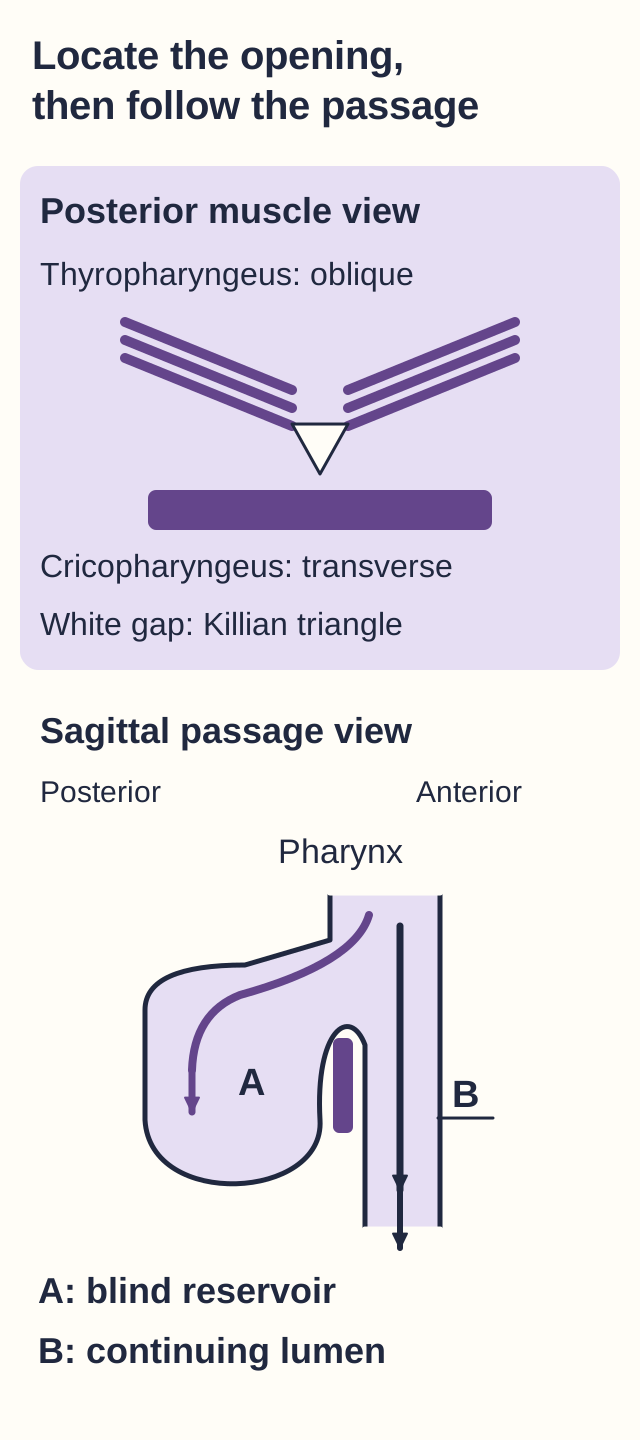
Killian triangle, also called Killian dehiscence, is the posterior weak zone between the oblique fibers of the thyropharyngeus above and the transverse fibers of the cricopharyngeus below. Both belong to the inferior pharyngeal constrictor region. The cricopharyngeus is a major muscular component of the upper esophageal sphincter, not the lower sphincter at the stomach. [1][5]
The pouch contains herniated mucosa and submucosa without the full muscular wall. That makes it a false diverticulum. Increased pressure inside the pharynx pushes the lining through a weak area, so this is a pulsion lesion rather than a traction pouch pulled outward by neighboring scar. The partition between the sac and the true esophageal lumen contains cricopharyngeal muscle. This partition is the septum relevant to treatment. [1][10]
Trace the anatomy figure. Start at the pharynx. Follow route A into the blind pouch and route B into the continuing esophagus. Locate the posterior opening between the two muscle fiber directions. Decide which route a swallowed tablet must follow to continue toward the stomach.
Locate the weak zone between the oblique and transverse muscle fibers, then follow the two routes. A swallowed tablet entering A can remain in the sac; route B continues downward. The sac can extend below its opening. [1][4][5][10]Check the route prediction
Route B continues into the esophagus. Route A ends in a reservoir, so a tablet entering A can remain there even when other swallowed material passes normally.
The important distinction is visible without the answer: the pouch ends blindly, while the true lumen continues downward. A large sac may displace or compress that true lumen, making the larger visible opening the wrong destination for an instrument. Transfer: if a sac extends below the sphincter but its neck arises posteriorly above it, retain the Zenker localization. [1][7]
Connect resistance, retention and delayed aspiration
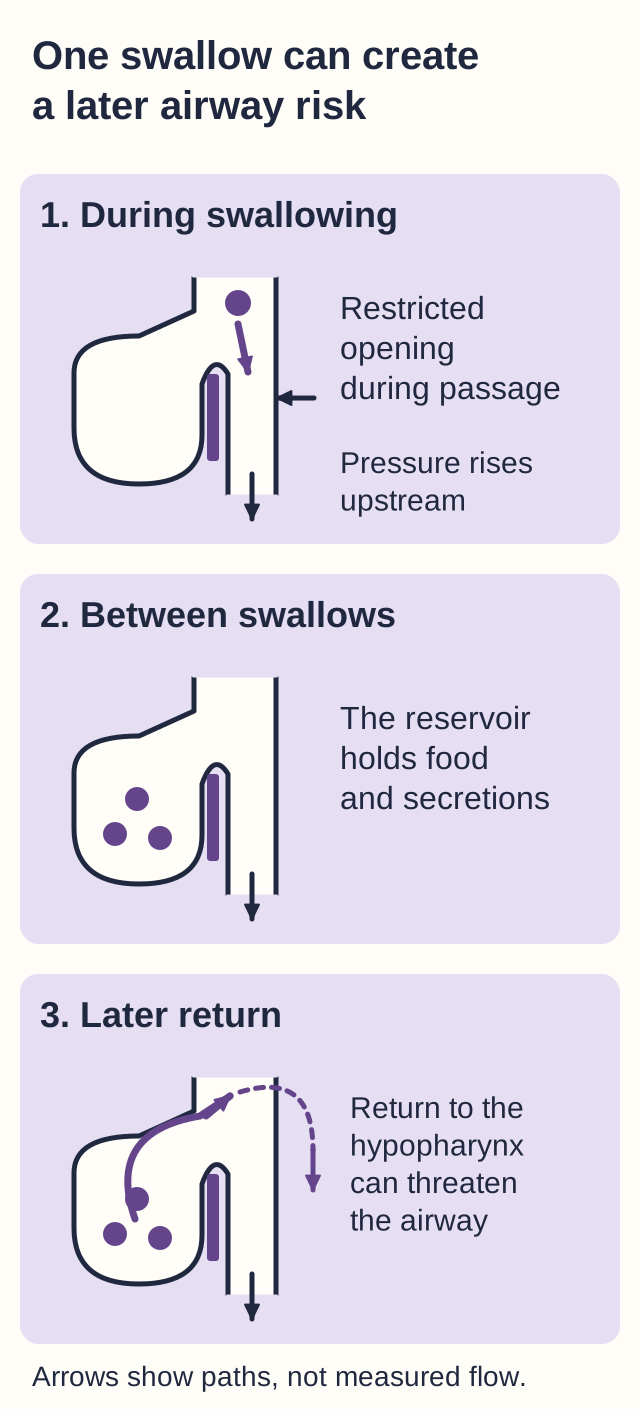
Why can someone cough long after a swallow that initially protected the airway? The swallow and the later emptying of a reservoir are separate events. In Zenker diverticulum, impaired upper-sphincter opening increases resistance to bolus passage. Pressure within the swallowed material rises upstream and promotes posterior herniation through Killian dehiscence. [1][2]
Do not reduce this to a muscle that never relaxes. Opening depends on relaxation, traction from surrounding swallowing structures and tissue compliance, meaning how readily the region expands. Physiologic and muscle studies support reduced opening and poor compliance; muscle degeneration and fibroadipose replacement can contribute. The useful concept is restricted opening during bolus passage, not proof of absent relaxation in every patient. [2][3]
The pressure-and-reservoir figure separates three events: a restricted exit during swallowing, storage of material in the pouch, and later return of that material into the hypopharynx. Retained food and secretions explain cervical gurgling, halitosis and regurgitation. Food or pills may return hours later. Material spilling toward the larynx can cause cough, aspiration and recurrent pneumonia; difficult meals and reduced intake can cause weight loss. [4][7]
Predict the next meal after the sac is emptied but the restricted outlet remains. Contents can accumulate again because clearance does not correct the resistance. A later return from the reservoir can expose an airway that was protected during the initial swallow. Arrows indicate possible paths, not measured pressure, flow or inevitable aspiration. [2][3][4][7]
Change one condition. Imagine the pouch is emptied but the restricted sphincter opening remains. Predict what happens at the next meal. Then compare that with reducing outlet resistance while keeping the pharyngeal contraction otherwise similar.
Check the next-meal prediction
Emptying the sac does not correct the restricted exit, so retention can recur. Relieving that resistance can permit wider opening and lower the pressure needed for passage; this is the physiologic reason to address the cricopharyngeus.
In the worked comparison, clearing the stored material changes the reservoir's contents; myotomy changes the resistance producing the problem. These are not interchangeable actions. Delayed undigested regurgitation supports retention but is not specific for Zenker: an obstructed esophagus can also store food. Transfer: combine timing with cervical anatomy and observed bolus behavior before assigning the source. [2][6]
Test whether the pouch explains the whole presentation
Does every cervical pouch need the same procedure? First establish its origin. A Killian-Jamieson diverticulum arises anterolaterally from the cervical esophagus below the cricopharyngeus. The recurrent laryngeal nerve lies close to its base. Confusing this with a posterior Zenker pouch can therefore change procedural risk, not just the name on the report. Use complementary projections to identify the opening. [4][5]
Posterior opening above the cricopharyngeus
A Zenker pouch provides a reservoir that can return material into the hypopharynx. Its lower tip may descend well below its origin.
Anterolateral opening below the cricopharyngeus
A Killian-Jamieson pouch has a different muscular gap and important nerve proximity. It is not classified by size alone.
Dilated esophageal body with distal outflow difficulty
Achalasia affects esophageal peristalsis and opening of the lower sphincter. Dysphagia to liquids as well as solids and retained food do not, by themselves, localize disease to the neck.
A narrowed or inflamed esophageal segment
Cancer, peptic stricture, rings and eosinophilic esophagitis can obstruct transit. Progressive symptoms, bleeding, painful swallowing or disproportionate weight loss require investigation rather than attribution to an incidental pouch.
The anatomic comparisons are more reliable than a single symptom label. Patients may perceive esophageal obstruction in the neck. Persistent esophageal dysphagia needs appropriate structural and mucosal assessment, including biopsies when indicated; manometry evaluates suspected motility disease after that assessment. A normal-looking mucosa does not exclude eosinophilic esophagitis. [6]
Neurologic oropharyngeal dysphagia can impair initiation, pharyngeal clearance or airway protection. A stroke history and observed poor pharyngeal clearance therefore matter even when a small pouch is present. Globus is a lump sensation without impaired food passage; it should not be used to dismiss genuine progressive dysphagia. Assess the entire swallow, not merely the most memorable imaging finding. [6][8]
Choose the relevant finding. A small pouch empties promptly, but contrast stops at an irregular distal narrowing. Which finding better explains progressive solid-food obstruction?
Check the localization
The distal narrowing better matches the observed hold-up. Its mucosa requires appropriately planned evaluation; treating the promptly emptying pouch would not address that obstruction.
Transfer: an image can prove that a diverticulum exists without proving that it causes every symptom. Match the site of impaired passage to the patient's functional problem.
Map the passage before choosing an instrument
Which test shows both the pouch and what happens to a swallowed bolus? For a stable patient with suspected Zenker diverticulum and no acute injury signs, request a dynamic barium pharyngoesophagogram with views of the pharyngoesophageal junction. It can demonstrate the neck of the pouch, its extent, its relationship to the true lumen and retention or return of contrast. This is more informative than knowing that a sac is present. [1]
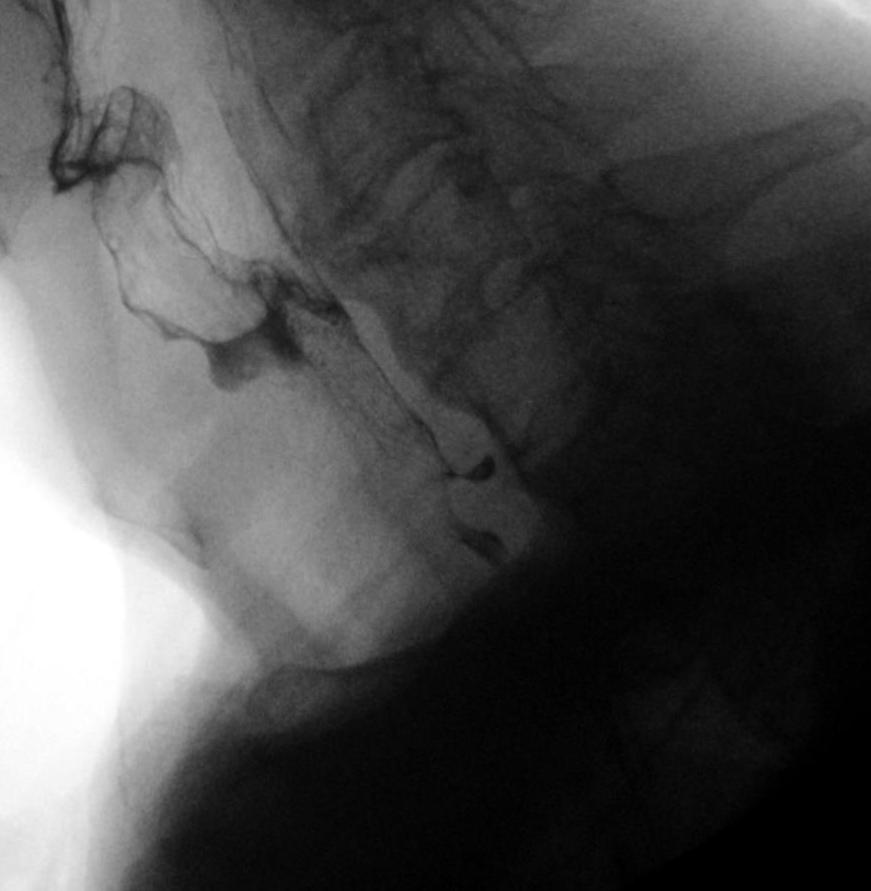
The real fluoroscopic image accompanying this section shows a small posterior contrast-filled projection near the lower end of the narrow cervical contrast column. Use the spine to orient posteriorly. The image is a single frame: it cannot establish emptying, aspiration or the cause of all dysphagia. Dynamic sequences supply those missing observations. The larger teaching schematic is not a tracing of this clinical image. [1][4]
Use the spine to orient posteriorly and inspect the small posterior projection near the lower end of the cervical contrast column. Image: a Zenker pouch. A single frame does not establish emptying, aspiration or the cause of every symptom. Image: Hellerhoff, CC BY-SA 4.0; original image shown Hellerhoff; original source; CC BY-SA 4.0. [1][4].
A cricopharyngeal bar may appear as a posterior indentation. A bar is not a diverticular sac, and a conspicuous bar is not required to identify a pouch. Do not infer a false diverticulum solely from the indentation. A modified barium swallow or videofluoroscopic swallowing study emphasizes oropharyngeal function and airway protection; an esophagram also assesses the continuing esophagus. Communicate the question so the relevant phases and anatomy are examined rather than relying on the test's local name. [1][7]
Endoscopy can evaluate mucosa, investigate another lesion and guide treatment. It is not forbidden, but entry into the true lumen must be deliberate and performed by an appropriately experienced team. A pouch can capture a scope or feeding tube; force against its wall can produce perforation. Avoid blind nasogastric placement when a substantial pouch is known or strongly suspected. Necessary access may still be arranged with specialist image or endoscopic guidance. Known diverticular anatomy also matters before transesophageal procedures and anesthesia planning. [1][6][9]
Follow a proposed tube path. On the anatomy figure, imagine an instrument traveling down route A rather than B. Identify what stops its tip, then predict why pushing harder is unsafe.
Check the instrumentation consequence
Route A terminates at the pouch wall. Force does not open an onward passage to the stomach; it can breach the wall. Stop and obtain a guided access plan instead of using resistance as a test of patency.
Transfer: routine manometry is not needed to confirm a clearly demonstrated Zenker pouch. It can become relevant when a competing motility disorder remains unexplained. Imaging and endoscopy answer complementary questions; neither justifies ignoring an alarm symptom. [1][6]
Separate observation, treatment and emergency care
Does a centimeter measurement decide whether to intervene? No. An incidental asymptomatic pouch can be observed after clinical assessment. Mild symptoms require an individualized discussion of burden, nutritional status, aspiration risk, goals and procedural fitness. By contrast, significant dysphagia, recurrent regurgitation, medication retention, weight loss or aspiration pneumonia supports specialist treatment planning after acute illness is stabilized. A small pouch can still cause important symptoms. [1][7][8]
Consider two patients: one has a larger pouch but eats normally and has no retention-related respiratory symptoms; the other has a smaller pouch with observed overflow and repeated pneumonias. The second patient's consequences, not the smaller dimension, provide the stronger reason to discuss intervention. Size remains useful when selecting a technique, but it is not a substitute for demonstrating clinical impact. [1][4]
Reassess that comparison. Now the previously comfortable patient develops inability to manage saliva and breathing difficulty. Does the original observation plan still apply?
Check the change in urgency
No. Difficulty managing secretions with respiratory compromise requires urgent airway and clinical assessment. It is no longer an elective comparison of pouch dimensions.
A separate emergency: new severe neck or chest pain, fever, swelling or crepitus after instrumentation raises concern for perforation. Withhold oral intake, assess and support airway and circulation, and obtain urgent specialist involvement. In a stable patient, contrast-enhanced CT with the appropriate leak protocol can assess injury and contamination. Do not delay this evaluation for a routine outpatient barium swallow. Antibiotics and a source-control plan are required when perforation is suspected or confirmed; closure, drainage or surgery depends on the defect, contamination and clinical condition. [9]
For patients awaiting treatment or unable to undergo it, swallowing specialists and dietitians can individualize textures, strategies and nutrition support. A liquid or pureed diet does not eliminate aspiration of retained secretions. Oral care and medication review are supportive measures, not correction of the pouch. Do not automatically crush a retained tablet or repeat a dose; formulation and dosing need clinician or pharmacist review. Transfer: stabilize the immediate threat, then decide how to address the swallowing mechanism. [7][8]
Treat the restricted outlet, then reassess function
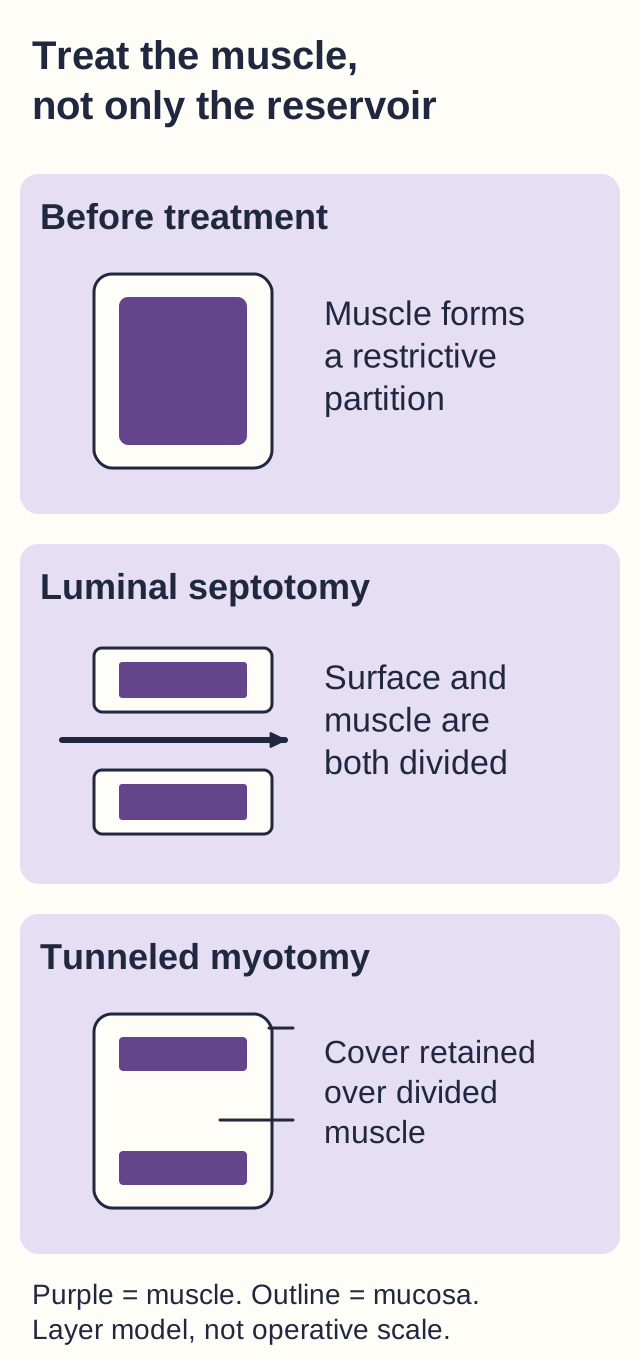
Why does repeated emptying fail while myotomy can help? Durable Zenker treatment addresses the cricopharyngeal restriction. In the treatment figure, compare an intact muscular partition with the lower-resistance route after treatment. The physiologic target is easier passage, not merely an empty-looking sac at the end of a procedure. [1][2]
Purple represents muscle and the outline represents mucosa. Compare what is divided in luminal septotomy with the retained surface over a tunneled muscle division. An intact covering after a tunneled procedure does not prove an intact muscle. This is a layer comparison, not an operative instruction or a scale drawing. [1][2][10]
Flexible endoscopic septotomy
The partition is divided from the lumen, including the cricopharyngeal muscle within it. This joins the pouch and true lumen into a better-draining common passage.
Rigid endoscopic stapling or laser division
These also divide the septum, but require suitable exposure. Limited neck extension, difficult mouth opening or dentition can make a rigid approach unsuitable.
Zenker peroral endoscopic myotomy, or Z-POEM
A submucosal tunnel exposes the muscle for division beneath a mucosal covering; the entry is closed. This is not identical to leaving an open mucosal septotomy.
Open transcervical treatment
Diverticulectomy resects the sac; diverticulopexy suspends it. These are combined with cricopharyngeal myotomy rather than being described as the same common-channel operation.
Flexible treatment may avoid rigid exposure limitations and often permits a shorter recovery than open surgery. Open treatment remains an option when anatomy, prior procedures or exposure make endoscopic therapy unfavorable. Select the approach with an experienced team using pouch anatomy, comorbidity, airway planning and patient preference. Bleeding, leak, perforation, mediastinitis and recurrence are relevant risks; dental injury and nerve injury depend on the approach. [1][8][10]
The ESGE 2020 preference for flexible treatment over open surgery was a weak recommendation based on low-quality evidence. Its research-only position on Z-POEM reflected the evidence then available. A subsequent 2023 multicenter cohort reported durable improvement after Z-POEM, but a retrospective cohort does not prove superiority for every patient or remove procedural risk. [1][10]
Predict the follow-up finding. Delayed regurgitation returns after a year of improvement. Compare a residual restrictive septum with a patent outlet and weak pharyngeal clearance. Would the same response fit both?
Check the two follow-up paths
A residual restrictive septum with renewed retention supports specialist consideration of retreatment. A freely draining pouch with diffuse pharyngeal residue instead requires assessment of the wider swallowing deficit. More septal division is not automatically the answer.
Recurrent symptoms merit repeat functional imaging and specialist assessment for residual or recurrent obstruction, scarring or another disorder. Persistent weakness can limit recovery despite an adequate repair. A residual sac alone does not prove clinical failure; new bleeding, pain or progressive weight loss should prompt evaluation for an additional lesion. Transfer: judge treatment by safer, more effective swallowing, then explain any mismatch between anatomy and function. [1][6][8][10]
Apply the anatomy and decisions
Case 1
Show answer and explanations for case 1
A. Below the cricopharyngeus; mucosa and submucosa (Why this does not fit)
Killian-Jamieson diverticula arise below the cricopharyngeus and can also be false diverticula. No. Its posterior opening is above the muscle; downward extension does not relocate the neck.
Reasoning steps for option A
Which pouch originates below this muscle?
Killian-Jamieson diverticula arise below the cricopharyngeus and can also be false diverticula.
Does the lowest part of this sac identify its origin?
No. Its posterior opening is above the muscle; downward extension does not relocate the neck.
B. Above the cricopharyngeus; all wall layers (Why this does not fit)
A true diverticulum includes the full muscular wall along with the inner layers. Mucosa and submucosa protrude through the gap rather than carrying a complete muscle coat.
Reasoning steps for option B
What would a true diverticulum contain?
A true diverticulum includes the full muscular wall along with the inner layers.
What does herniation through this posterior gap imply?
Mucosa and submucosa protrude through the gap rather than carrying a complete muscle coat.
C. Above the cricopharyngeus; mucosa and submucosa (Best answer)
A posterior opening above the cricopharyngeus localizes it to Killian dehiscence. Mucosa and submucosa herniate without a full muscular wall, producing a false diverticulum. An enlarging sac can descend; classify its origin at the neck rather than at its lowest extent.
Reasoning steps for option C
Where does the observed opening localize the defect?
A posterior opening above the cricopharyngeus localizes it to Killian dehiscence.
Which layers pass through that weak zone?
Mucosa and submucosa herniate without a full muscular wall, producing a false diverticulum.
Why is the lower tip less useful?
An enlarging sac can descend; classify its origin at the neck rather than at its lowest extent.
D. Below the cricopharyngeus; all wall layers (Why this does not fit)
A sac seen beside the cervical esophagus can appear to begin below the upper sphincter on an isolated view. The actual opening is posterior and above the cricopharyngeus, and its pulsion anatomy predicts a false rather than full-thickness pouch.
Reasoning steps for option D
What finding could suggest a lower cervical origin?
A sac seen beside the cervical esophagus can appear to begin below the upper sphincter on an isolated view.
Which supplied observations correct that impression?
The actual opening is posterior and above the cricopharyngeus, and its pulsion anatomy predicts a false rather than full-thickness pouch.
Takeaway: Classify a cervical pouch by its opening and wall anatomy, not by how far its sac descends.
A. Reduced distensibility of the upper sphincter (Best answer)
No. Relaxation and adequate mechanical expansion are related but distinct. Poor upper-sphincter compliance can maintain resistance despite a pressure fall. A wider opening with lower intrabolus pressure is expected; stronger pharyngeal contraction is not the primary goal.
Reasoning steps for option A
Does a fall in sphincter pressure prove that the lumen opens widely?
No. Relaxation and adequate mechanical expansion are related but distinct.
What explains a narrow aperture with high upstream bolus pressure?
Poor upper-sphincter compliance can maintain resistance despite a pressure fall.
What variable should improve when that resistance is treated?
A wider opening with lower intrabolus pressure is expected; stronger pharyngeal contraction is not the primary goal.
B. Reduced force of the pharyngeal contraction (Why this does not fit)
An insufficient contraction can leave pharyngeal residue because propulsion is poor. Contraction is preserved and upstream bolus pressure is high while the aperture stays narrow, favoring outlet resistance.
Reasoning steps for option B
How can pharyngeal weakness cause dysphagia?
An insufficient contraction can leave pharyngeal residue because propulsion is poor.
Which measurements point elsewhere here?
Contraction is preserved and upstream bolus pressure is high while the aperture stays narrow, favoring outlet resistance.
C. Reduced relaxation of the lower sphincter (Why this does not fit)
Poor lower-sphincter relaxation can cause esophageal outflow obstruction, as in achalasia. The narrow aperture and upstream pressure are at the upper sphincter, not the esophagogastric junction.
Reasoning steps for option C
What disorder can impede distal esophageal emptying?
Poor lower-sphincter relaxation can cause esophageal outflow obstruction, as in achalasia.
Where is the measured restriction in this patient?
The narrow aperture and upstream pressure are at the upper sphincter, not the esophagogastric junction.
D. Reduced protection of the laryngeal inlet (Why this does not fit)
It can permit swallowed material to enter the airway. No. The supplied measurements identify resistance at the upper sphincter rather than a primary airway closure defect.
Reasoning steps for option D
What does impaired laryngeal closure explain?
It can permit swallowed material to enter the airway.
Does it explain the measured high-pressure narrow outlet?
No. The supplied measurements identify resistance at the upper sphincter rather than a primary airway closure defect.
Takeaway: A relaxed muscle can still form an inadequately distensible outlet.
A. External superior laryngeal nerve beside the superior thyroid artery (Why this does not fit)
Superior thyroid pole surgery can threaten the external superior laryngeal nerve. An anterolateral cervical esophageal pouch below the cricopharyngeus places the recurrent laryngeal nerve near its base.
Reasoning steps for option A
What operation makes this nerve-artery relationship important?
Superior thyroid pole surgery can threaten the external superior laryngeal nerve.
What relation is more specific to this pouch?
An anterolateral cervical esophageal pouch below the cricopharyngeus places the recurrent laryngeal nerve near its base.
B. Hypoglossal nerve beside the submandibular region (Why this does not fit)
Tongue weakness can impair oral bolus control. No. The hypoglossal course is superior to the relevant esophageal origin; recurrent laryngeal nerve proximity is the concern.
Reasoning steps for option B
Which functional deficit can hypoglossal injury produce?
Tongue weakness can impair oral bolus control.
Does that identify the structure adjacent to this low cervical pouch base?
No. The hypoglossal course is superior to the relevant esophageal origin; recurrent laryngeal nerve proximity is the concern.
C. Internal superior laryngeal nerve at the thyrohyoid membrane (Why this does not fit)
Loss of supraglottic sensation can impair airway protection during swallowing. The below-cricopharyngeal anterolateral base lies near the recurrent laryngeal nerve, not the thyrohyoid entry site.
Reasoning steps for option C
Why might a laryngeal sensory nerve seem relevant?
Loss of supraglottic sensation can impair airway protection during swallowing.
Which nerve course instead matches the pouch origin?
The below-cricopharyngeal anterolateral base lies near the recurrent laryngeal nerve, not the thyrohyoid entry site.
D. Recurrent laryngeal nerve beside the diverticular base (Best answer)
An anterolateral pouch below the cricopharyngeus has Killian-Jamieson anatomy. The recurrent laryngeal nerve can lie immediately adjacent to that base. A procedure designed for a posterior Zenker septum cannot be transferred without reassessing the different nerve relationship.
Reasoning steps for option D
What does the origin identify?
An anterolateral pouch below the cricopharyngeus has Killian-Jamieson anatomy.
Which structure has been observed close to its base?
The recurrent laryngeal nerve can lie immediately adjacent to that base.
Why does this alter planning?
A procedure designed for a posterior Zenker septum cannot be transferred without reassessing the different nerve relationship.
Takeaway: Anatomic localization changes the risk of treatment, not merely the diagnostic label.
A. Premature leakage from impaired oral bolus control (Why this does not fit)
Material can spill toward the pharynx before the intended swallow. The initial swallow protects the airway; aspiration follows documented return from the filled pouch.
Reasoning steps for option A
When would oral containment failure threaten the airway?
Material can spill toward the pharynx before the intended swallow.
How does the observed timing differ?
The initial swallow protects the airway; aspiration follows documented return from the filled pouch.
B. Delayed overflow from a retained pharyngeal reservoir (Best answer)
It remains in the posterior cervical pouch. Stored contrast returns into the hypopharynx and then passes below the vocal folds. It does not exclude later aspiration of material retained in a pouch.
Reasoning steps for option B
Where does the contrast wait after the initial swallow?
It remains in the posterior cervical pouch.
What event immediately precedes aspiration?
Stored contrast returns into the hypopharynx and then passes below the vocal folds.
What does a safe initial swallow fail to exclude?
It does not exclude later aspiration of material retained in a pouch.
C. Retrograde reflux from delayed gastric emptying (Why this does not fit)
Retained gastric contents can return upward after eating. The returning material is directly traced to the cervical pouch, not to the stomach.
Reasoning steps for option C
How can gastric retention cause later regurgitation?
Retained gastric contents can return upward after eating.
Where is the demonstrated source in this sequence?
The returning material is directly traced to the cervical pouch, not to the stomach.
D. Continuous passage through a tracheoesophageal fistula (Why this does not fit)
An abnormal communication can carry esophageal contents into the trachea. Contrast returns to the hypopharynx and enters through the larynx, rather than crossing a fistulous tract.
Reasoning steps for option D
How could a fistula contaminate the airway?
An abnormal communication can carry esophageal contents into the trachea.
Which route is actually shown?
Contrast returns to the hypopharynx and enters through the larynx, rather than crossing a fistulous tract.
Takeaway: Watch what happens after the swallow: an initially protected airway can be exposed by pouch overflow.
A. Renewed retention during subsequent meals (Best answer)
The sac contents changed; the restrictive outlet did not. Restricted upper-sphincter opening continues to favor pressure and diversion into the pouch. Food can accumulate again even though the pouch was briefly empty.
Reasoning steps for option A
What changed during clearance?
The sac contents changed; the restrictive outlet did not.
What persists on the next swallow?
Restricted upper-sphincter opening continues to favor pressure and diversion into the pouch.
What should that predict later?
Food can accumulate again even though the pouch was briefly empty.
B. Improved clearance from a permanently wider outlet (Why this does not fit)
A treatment that adequately reduces cricopharyngeal restriction can improve passage. No. The next swallow still shows restricted opening, so clearing contents has not produced the proposed durable effect.
Reasoning steps for option B
What intervention could provide a wider outlet?
A treatment that adequately reduces cricopharyngeal restriction can improve passage.
Was that change demonstrated here?
No. The next swallow still shows restricted opening, so clearing contents has not produced the proposed durable effect.
C. New gastric retention from impaired pyloric opening (Why this does not fit)
Restricted pyloric opening or gastric dysmotility could delay stomach emptying. No. The persisting problem is measured at the upper sphincter; the scenario provides no new gastric disorder.
Reasoning steps for option C
What abnormality could cause gastric retention?
Restricted pyloric opening or gastric dysmotility could delay stomach emptying.
Does clearing a cervical pouch establish that abnormality?
No. The persisting problem is measured at the upper sphincter; the scenario provides no new gastric disorder.
D. New esophageal retention from lower-sphincter failure (Why this does not fit)
Lower-sphincter outflow obstruction can impair esophageal clearance. The demonstrated restriction remains at the upper sphincter, not the distal esophagus.
Reasoning steps for option D
What physiology can retain food in the esophageal body?
Lower-sphincter outflow obstruction can impair esophageal clearance.
Which level remains abnormal in this patient?
The demonstrated restriction remains at the upper sphincter, not the distal esophagus.
Takeaway: An empty reservoir is not evidence that its filling mechanism has been corrected.
A. Repeat laryngoscopy during phonation (Why this does not fit)
It can evaluate vocal fold function and laryngeal abnormalities that affect airway protection. Persistent distal esophageal retention after negative endoscopy requires esophageal motor assessment rather than a voice-focused examination.
Reasoning steps for option A
When could laryngoscopy help a swallowing patient?
It can evaluate vocal fold function and laryngeal abnormalities that affect airway protection.
What dominant abnormality would remain unexplained here?
Persistent distal esophageal retention after negative endoscopy requires esophageal motor assessment rather than a voice-focused examination.
B. Gastric emptying scintigraphy (Why this does not fit)
It evaluates how quickly a meal leaves the stomach. The reported hold-up is in the esophageal body above the gastroesophageal junction, favoring manometry first.
Reasoning steps for option B
Which site does this test assess?
It evaluates how quickly a meal leaves the stomach.
Has the retained contrast primarily reached that site?
The reported hold-up is in the esophageal body above the gastroesophageal junction, favoring manometry first.
C. High-resolution esophageal manometry (Best answer)
The small cervical pouch empties, while the esophageal body retains contrast above a distal taper. A motility disorder such as achalasia needs physiologic characterization. High-resolution manometry assesses esophageal contractions and lower-sphincter relaxation.
Reasoning steps for option C
Where is clearance impaired?
The small cervical pouch empties, while the esophageal body retains contrast above a distal taper.
What remains after structural and mucosal disease are excluded?
A motility disorder such as achalasia needs physiologic characterization.
Which measurement addresses that question?
High-resolution manometry assesses esophageal contractions and lower-sphincter relaxation.
D. Ambulatory esophageal pH monitoring (Why this does not fit)
Nocturnal regurgitation may suggest reflux. Dilated esophageal retention and distal taper after a negative structural evaluation point to impaired transit, not simply acid exposure.
Reasoning steps for option D
Why could pH monitoring seem relevant?
Nocturnal regurgitation may suggest reflux.
What finding makes motor assessment the better next test?
Dilated esophageal retention and distal taper after a negative structural evaluation point to impaired transit, not simply acid exposure.
Takeaway: Undigested regurgitation is a retention symptom; identify the level before selecting the test.
A. Repeat fluoroscopy after a trial of acid suppression (Why this does not fit)
Selected patients with reflux symptoms and no alarm features may undergo a limited trial. Bleeding, weight loss and an irregular narrowing require timely evaluation rather than a reflux-only trial.
Reasoning steps for option A
When may a brief empiric reflux strategy be reasonable?
Selected patients with reflux symptoms and no alarm features may undergo a limited trial.
Which features make delay inappropriate here?
Bleeding, weight loss and an irregular narrowing require timely evaluation rather than a reflux-only trial.
B. Manometry to define a primary motility disorder (Why this does not fit)
It characterizes esophageal contractions and sphincter relaxation. The demonstrated irregular structural narrowing needs mucosal assessment and biopsy.
Reasoning steps for option B
What question does manometry answer?
It characterizes esophageal contractions and sphincter relaxation.
What must be addressed before assigning a primary motor disorder?
The demonstrated irregular structural narrowing needs mucosal assessment and biopsy.
C. Septotomy of the cervical pouch (Why this does not fit)
It can improve passage when a symptomatic Zenker pouch and restrictive septum explain the problem. The pouch drains while the irregular mid-esophageal segment retains contrast and accompanies alarm symptoms.
Reasoning steps for option C
When does septotomy treat dysphagia?
It can improve passage when a symptomatic Zenker pouch and restrictive septum explain the problem.
Which finding is a better match for this patient?
The pouch drains while the irregular mid-esophageal segment retains contrast and accompanies alarm symptoms.
D. Planned endoscopy with biopsy of the narrowing (Best answer)
The irregular mid-esophageal narrowing, not the draining cervical pouch. Bleeding, progression and weight loss warrant timely investigation for malignancy or another structural lesion. The endoscopist should use the mapped cervical anatomy for cautious entry while evaluating and biopsying the narrowing.
Reasoning steps for option D
Which lesion actually holds contrast?
The irregular mid-esophageal narrowing, not the draining cervical pouch.
What do the associated alarm features require?
Bleeding, progression and weight loss warrant timely investigation for malignancy or another structural lesion.
How should the known pouch affect the examination?
The endoscopist should use the mapped cervical anatomy for cautious entry while evaluating and biopsying the narrowing.
Takeaway: A known pouch does not cancel alarm features or exclude a second lesion.
A. High-resolution manometry without further mucosal assessment (Why this does not fit)
It evaluates motility after structural and inflammatory disease have been assessed. The atopic patient with recurrent impaction has not had biopsies to investigate eosinophilic esophagitis.
Reasoning steps for option A
When is manometry appropriate for persistent dysphagia?
It evaluates motility after structural and inflammatory disease have been assessed.
What assessment is incomplete in this patient?
The atopic patient with recurrent impaction has not had biopsies to investigate eosinophilic esophagitis.
B. Repeat endoscopic assessment with esophageal biopsies (Best answer)
Atopy with recurrent solid-food impaction is compatible with an inflammatory esophageal disorder. No. Eosinophilic esophagitis can have normal gross mucosal appearance. Appropriate esophageal biopsies are needed rather than relying solely on visual inspection.
Reasoning steps for option B
What pattern raises concern for eosinophilic esophagitis?
Atopy with recurrent solid-food impaction is compatible with an inflammatory esophageal disorder.
Does a normal-looking lumen exclude it?
No. Eosinophilic esophagitis can have normal gross mucosal appearance.
What is the unresolved diagnostic requirement?
Appropriate esophageal biopsies are needed rather than relying solely on visual inspection.
C. Reflux monitoring without further mucosal assessment (Why this does not fit)
Reflux-related inflammation can accompany dysphagia. It does not establish or exclude eosinophilic esophagitis in an atopic patient whose mucosa was never sampled.
Reasoning steps for option C
Why can reflux testing seem reasonable?
Reflux-related inflammation can accompany dysphagia.
What does that strategy miss in this case?
It does not establish or exclude eosinophilic esophagitis in an atopic patient whose mucosa was never sampled.
D. Reassurance after a negative structural examination (Why this does not fit)
A lump sensation without impaired passage can be consistent with globus. Repeated true food impaction is not merely globus, and a relevant mucosal diagnosis remains untested.
Reasoning steps for option D
Which presentation may permit reassurance after appropriate assessment?
A lump sensation without impaired passage can be consistent with globus.
Why does that not fit these symptoms?
Repeated true food impaction is not merely globus, and a relevant mucosal diagnosis remains untested.
Takeaway: A normal endoscopic appearance is not equivalent to a negative mucosal evaluation.
A. Contrast-enhanced CT of the neck and chest (Why this does not fit)
It can show anatomic extent and is particularly valuable when perforation or surrounding complications are suspected. The stable patient needs observation of swallowing, pouch filling and delayed return, not primarily a static complication survey.
Reasoning steps for option A
What useful information can CT provide?
It can show anatomic extent and is particularly valuable when perforation or surrounding complications are suspected.
Which requested information is better supplied by fluoroscopy here?
The stable patient needs observation of swallowing, pouch filling and delayed return, not primarily a static complication survey.
B. High-resolution esophageal pressure recording (Why this does not fit)
It measures motor activity and sphincter relaxation. Pressure recordings do not directly map the pouch opening and show retained contrast returning toward the airway.
Reasoning steps for option B
What does a pressure study characterize?
It measures motor activity and sphincter relaxation.
Why is it not the routine initial test for this question?
Pressure recordings do not directly map the pouch opening and show retained contrast returning toward the airway.
C. Dynamic barium pharyngoesophagography (Best answer)
Delayed regurgitation with cervical gurgling suggests retained material near the pharyngoesophageal junction. The study must show the pouch opening and the behavior of swallowed material over time. Dynamic barium imaging supplies both without beginning with passage of an instrument into an unmapped pouch.
Reasoning steps for option C
What feature of the symptoms suggests a reservoir?
Delayed regurgitation with cervical gurgling suggests retained material near the pharyngoesophageal junction.
What two observations does the clinician need?
The study must show the pouch opening and the behavior of swallowed material over time.
Why does this test fit the stable setting?
Dynamic barium imaging supplies both without beginning with passage of an instrument into an unmapped pouch.
D. Diagnostic upper endoscopy with mucosal sampling (Why this does not fit)
It can examine mucosa, sample suspicious lesions and help plan treatment. Dynamic barium imaging first maps the suspected reservoir and observes post-swallow return; endoscopy requires cautious entry and does not substitute for that functional sequence.
Reasoning steps for option D
When can endoscopy add important information?
It can examine mucosa, sample suspicious lesions and help plan treatment.
Why is another study preferable for the question posed?
Dynamic barium imaging first maps the suspected reservoir and observes post-swallow return; endoscopy requires cautious entry and does not substitute for that functional sequence.
Takeaway: For a stable suspected cervical pouch, ask for both the anatomic opening and the time course of bolus passage.
A. The indentation establishes a pouch requiring septotomy (Why this does not fit)
A cricopharyngeal bar may accompany upper-sphincter dysfunction and can be seen near a Zenker pouch. No sac or retained cervical reservoir is demonstrated; an indentation alone does not establish a diverticulum to divide.
Reasoning steps for option A
Why might the indentation attract attention?
A cricopharyngeal bar may accompany upper-sphincter dysfunction and can be seen near a Zenker pouch.
What required anatomy is absent?
No sac or retained cervical reservoir is demonstrated; an indentation alone does not establish a diverticulum to divide.
B. The indentation does not explain the distal retention (Best answer)
A posterior bar-like indentation is present without an outpouching. Contrast remains in the esophageal body despite a negative structural and mucosal evaluation. Esophageal manometry can investigate a motor explanation rather than assigning all dysphagia to the bar.
Reasoning steps for option B
What is actually present at the upper sphincter?
A posterior bar-like indentation is present without an outpouching.
Where does the functional abnormality persist?
Contrast remains in the esophageal body despite a negative structural and mucosal evaluation.
What assessment is therefore appropriate?
Esophageal manometry can investigate a motor explanation rather than assigning all dysphagia to the bar.
C. The negative biopsy study excludes a motility disorder (Why this does not fit)
It excluded identified structural and inflammatory causes in the examined esophagus. Normal mucosa does not establish normal peristalsis or sphincter relaxation; motor testing remains relevant.
Reasoning steps for option C
What did the endoscopic evaluation exclude?
It excluded identified structural and inflammatory causes in the examined esophagus.
What function does that examination not establish?
Normal mucosa does not establish normal peristalsis or sphincter relaxation; motor testing remains relevant.
D. The absent reservoir favors isolated gastric retention (Why this does not fit)
It can cause return of material that remains in the stomach. The persistent measured hold-up is in the esophageal body, not the stomach.
Reasoning steps for option D
When could gastric retention explain regurgitation?
It can cause return of material that remains in the stomach.
What observation contradicts that localization here?
The persistent measured hold-up is in the esophageal body, not the stomach.
Takeaway: A bar is an indentation, not a pouch; follow the demonstrated site of impaired transit.
A. Arrange specialist-guided tube placement (Best answer)
It can enter the pouch and transmit force to its blind wall instead of following the true lumen. No. Specialist image or endoscopic guidance can establish the intended route when access is needed. The access team should review the anatomy and arrange a guided plan.
Reasoning steps for option A
Why can a soft tube still be hazardous?
It can enter the pouch and transmit force to its blind wall instead of following the true lumen.
Does the pouch make enteral access impossible?
No. Specialist image or endoscopic guidance can establish the intended route when access is needed.
What should occur before blind bedside advancement?
The access team should review the anatomy and arrange a guided plan.
B. Advance a smaller tube at the bedside (Why this does not fit)
A narrow soft tube may seem less traumatic than a large rigid instrument. Tube diameter does not ensure true-lumen entry; a small tube can still enter the displaced pouch route.
Reasoning steps for option B
Why might a smaller tube appear safer?
A narrow soft tube may seem less traumatic than a large rigid instrument.
What anatomic problem remains unchanged?
Tube diameter does not ensure true-lumen entry; a small tube can still enter the displaced pouch route.
C. Use repeated swallows to guide bedside advancement (Why this does not fit)
Swallowing can facilitate tube passage in normal anatomy. Repeated swallows do not prove that the tube has bypassed the large pouch or entered the displaced true lumen.
Reasoning steps for option C
Why might swallowing help in uncomplicated placement?
Swallowing can facilitate tube passage in normal anatomy.
Why does that not resolve this patient's risk?
Repeated swallows do not prove that the tube has bypassed the large pouch or entered the displaced true lumen.
D. Choose long-term parenteral nutrition before access review (Why this does not fit)
It can support nutrition when appropriate enteral access is unavailable or unsuitable. The temporary need and known pouch warrant a specialist-guided enteral assessment rather than assuming that all enteral routes are unusable.
Reasoning steps for option D
When can parenteral nutrition be necessary?
It can support nutrition when appropriate enteral access is unavailable or unsuitable.
What makes that premature as the first strategy here?
The temporary need and known pouch warrant a specialist-guided enteral assessment rather than assuming that all enteral routes are unusable.
Takeaway: Do not confuse a difficult enteral route with an impossible one; map and guide it.
A. Routine outpatient barium swallow (Why this does not fit)
It maps a stable suspected pouch and observes swallowing function. New fever, severe pain and crepitus after instrumentation suggest perforation, requiring urgent complication-directed assessment rather than routine scheduling.
Reasoning steps for option A
When is a routine barium study appropriate?
It maps a stable suspected pouch and observes swallowing function.
Why does the current presentation require a different pathway?
New fever, severe pain and crepitus after instrumentation suggest perforation, requiring urgent complication-directed assessment rather than routine scheduling.
B. High-resolution esophageal manometry (Why this does not fit)
It assesses pressure and motor disorders after appropriate structural evaluation. It does not define an acute wall injury or contamination and would distract from an urgent perforation assessment.
Reasoning steps for option B
What problem can manometry help diagnose?
It assesses pressure and motor disorders after appropriate structural evaluation.
Why is it unsuitable for the immediate question?
It does not define an acute wall injury or contamination and would distract from an urgent perforation assessment.
C. Elective repeat endoscopy without prior imaging (Why this does not fit)
An experienced team may use it selectively for diagnosis or treatment. An elective examination does not address urgency; CT in this stable patient can define the injury and surrounding contamination before the specialist treatment plan.
Reasoning steps for option C
When can endoscopy assist with a perforation?
An experienced team may use it selectively for diagnosis or treatment.
Why is this not the best initial investigation as phrased?
An elective examination does not address urgency; CT in this stable patient can define the injury and surrounding contamination before the specialist treatment plan.
D. Urgent contrast-enhanced CT with a leak protocol (Best answer)
Severe pain, fever and soft-tissue air after instrumentation are concerning for perforation. It assesses the site and extent of injury and air or fluid outside the esophagus. Specialist-directed treatment, including antibiotics and source-control decisions, must proceed urgently.
Reasoning steps for option D
What links the examination findings to a likely injury?
Severe pain, fever and soft-tissue air after instrumentation are concerning for perforation.
What does CT add beyond showing the pouch?
It assesses the site and extent of injury and air or fluid outside the esophagus.
What should not wait for a routine swallow appointment?
Specialist-directed treatment, including antibiotics and source-control decisions, must proceed urgently.
Takeaway: A new post-instrumentation complication requires a perforation pathway, not the stable-pouch diagnostic sequence.
A. The cervical location of the original pouch (Why this does not fit)
Location helps determine the access route and repair strategy. No. Shock and uncontrolled leakage make observation alone inappropriate regardless of the original pouch location.
Reasoning steps for option A
Why does the injury location matter?
Location helps determine the access route and repair strategy.
Does location outweigh the supplied instability and free contamination?
No. Shock and uncontrolled leakage make observation alone inappropriate regardless of the original pouch location.
B. The history of prior endoscopic treatment (Why this does not fit)
It helps explain the injury and may affect the anatomy available for repair. Ongoing hypotension with uncontained contamination demands source control rather than a decision based only on the procedure history.
Reasoning steps for option B
Why is procedural history relevant?
It helps explain the injury and may affect the anatomy available for repair.
What more directly determines the present urgency?
Ongoing hypotension with uncontained contamination demands source control rather than a decision based only on the procedure history.
C. Persistent instability with uncontained contamination (Best answer)
Patient B has ongoing hypotension and free leakage into a contaminated mediastinal space. They do not close or drain the source of ongoing contamination. Urgent specialist source control, often operative in this setting, is required; the exact approach depends on the injury and available expertise.
Reasoning steps for option C
Which findings distinguish patient B from the monitored patient?
Patient B has ongoing hypotension and free leakage into a contaminated mediastinal space.
Why are antibiotics alone insufficient?
They do not close or drain the source of ongoing contamination.
What follows for management?
Urgent specialist source control, often operative in this setting, is required; the exact approach depends on the injury and available expertise.
D. The need to withhold oral nutrition temporarily (Why this does not fit)
It limits additional material entering the injured passage while treatment is organized. No. Both may need nutritional support, but only patient B has the stated instability and uncontrolled contamination requiring escalation.
Reasoning steps for option D
Why is oral intake withheld after a leak?
It limits additional material entering the injured passage while treatment is organized.
Does that separate the two patients?
No. Both may need nutritional support, but only patient B has the stated instability and uncontrolled contamination requiring escalation.
Takeaway: Containment and physiologic stability matter more than pouch size when assessing a leak.
A. Retained secretions can still return toward the airway (Best answer)
It can make eating easier and support calorie intake. The untreated pouch can retain saliva and other secretions that later return to the hypopharynx. Texture modification does not abolish aspiration risk; continued swallowing assessment, oral care and reassessment of goals remain important.
Reasoning steps for option A
What has the dietary change improved?
It can make eating easier and support calorie intake.
What source of material remains between meals?
The untreated pouch can retain saliva and other secretions that later return to the hypopharynx.
What implication follows for counseling?
Texture modification does not abolish aspiration risk; continued swallowing assessment, oral care and reassessment of goals remain important.
B. Liquid calories necessarily prevent pouch filling (Why this does not fit)
Some patients find a tailored liquid or pureed diet easier than solid food. Easier meals do not prevent retained secretions or all liquid retention in the persisting pouch.
Reasoning steps for option B
Why might liquids appear less likely to be retained?
Some patients find a tailored liquid or pureed diet easier than solid food.
Why does that not establish a protected airway?
Easier meals do not prevent retained secretions or all liquid retention in the persisting pouch.
C. Improved calorie intake restores sphincter compliance (Why this does not fit)
It helps maintain weight and overall health. No. Improved intake does not demonstrate that the cricopharyngeal restriction has been corrected.
Reasoning steps for option C
What benefit does adequate nutrition provide?
It helps maintain weight and overall health.
Does that prove correction of the restrictive outlet?
No. Improved intake does not demonstrate that the cricopharyngeal restriction has been corrected.
D. Absence of meal-time cough excludes later aspiration (Why this does not fit)
No cough was observed while the person was eating. A pouch can empty after the meal, so an initially quiet swallow does not exclude subsequent airway exposure.
Reasoning steps for option D
What does a cough-free meal suggest about that interval?
No cough was observed while the person was eating.
Which later process remains possible?
A pouch can empty after the meal, so an initially quiet swallow does not exclude subsequent airway exposure.
Takeaway: Supportive nutrition and airway-risk reduction are related goals, but improved intake does not eliminate a retained reservoir.
A. Schedule flexible septotomy based on its diameter (Why this does not fit)
It is a treatment option for symptoms attributable to a Zenker pouch. The patient has no attributable symptoms or complications; diameter alone does not require intervention.
Reasoning steps for option A
When is flexible septotomy useful?
It is a treatment option for symptoms attributable to a Zenker pouch.
What indication is absent here?
The patient has no attributable symptoms or complications; diameter alone does not require intervention.
B. Observe with symptom-focused follow-up counseling (Best answer)
No. Swallowing, respiratory history, weight and nutrition are satisfactory. Observation after assessment is reasonable rather than exposing an asymptomatic patient to procedural risk. New dysphagia, regurgitation, respiratory symptoms, bleeding or weight loss should be reported.
Reasoning steps for option B
Has the pouch produced a demonstrated clinical burden?
No. Swallowing, respiratory history, weight and nutrition are satisfactory.
What is the appropriate immediate plan?
Observation after assessment is reasonable rather than exposing an asymptomatic patient to procedural risk.
What changes should prompt reassessment?
New dysphagia, regurgitation, respiratory symptoms, bleeding or weight loss should be reported.
C. Arrange open excision before regurgitation develops (Why this does not fit)
It can be appropriate when anatomy or other factors favor a transcervical approach. An asymptomatic sac alone does not establish a benefit that justifies open procedural risk.
Reasoning steps for option C
Why might open treatment be considered in a symptomatic patient?
It can be appropriate when anatomy or other factors favor a transcervical approach.
What makes preventive excision unsupported here?
An asymptomatic sac alone does not establish a benefit that justifies open procedural risk.
D. Schedule serial dilation of the upper sphincter (Why this does not fit)
It may aim to improve passage when symptomatic upper-sphincter dysfunction is demonstrated. This patient has no swallowing impairment requiring treatment, so an intervention schedule is unwarranted.
Reasoning steps for option D
What problem can outlet-directed therapy seek to address?
It may aim to improve passage when symptomatic upper-sphincter dysfunction is demonstrated.
What necessary clinical problem is missing?
This patient has no swallowing impairment requiring treatment, so an intervention schedule is unwarranted.
Takeaway: An incidental asymptomatic pouch is not an automatic procedure indication.
A. Patient B has the stronger indication because the sac is larger (Why this does not fit)
Pouch dimensions help with procedural planning and exposure. Patient A has documented aspiration-related harm and nutritional decline, while patient B lacks attributable symptoms.
Reasoning steps for option A
Why is size recorded during evaluation?
Pouch dimensions help with procedural planning and exposure.
Why does size not determine priority here?
Patient A has documented aspiration-related harm and nutritional decline, while patient B lacks attributable symptoms.
B. Both require treatment because each pouch is visible (Why this does not fit)
It establishes that an anatomic pouch is present. No. Symptoms and functional consequences must be considered; patient B is asymptomatic.
Reasoning steps for option B
What does imaging establish in both patients?
It establishes that an anatomic pouch is present.
Does that alone establish a treatment indication?
No. Symptoms and functional consequences must be considered; patient B is asymptomatic.
C. Neither requires treatment until its diameter exceeds 4 cm (Why this does not fit)
A simple cutoff offers an easy way to classify a pouch. A small pouch can produce serious overflow and weight loss; no such universal threshold should delay assessment of patient A.
Reasoning steps for option C
Why might a size threshold seem attractive?
A simple cutoff offers an easy way to classify a pouch.
What does that rule overlook?
A small pouch can produce serious overflow and weight loss; no such universal threshold should delay assessment of patient A.
D. Patient A has the stronger indication because harm is demonstrated (Best answer)
Observed overflow accompanies recurrent aspiration pneumonias and weight loss. Patient B has no attributable swallowing or respiratory burden. Patient A has the stronger reason for specialist treatment planning; size then helps choose an approach rather than deciding whether harm matters.
Reasoning steps for option D
What links patient A's pouch to clinical consequences?
Observed overflow accompanies recurrent aspiration pneumonias and weight loss.
How does patient B differ despite the larger measurement?
Patient B has no attributable swallowing or respiratory burden.
What is the practical consequence?
Patient A has the stronger reason for specialist treatment planning; size then helps choose an approach rather than deciding whether harm matters.
Takeaway: A small pouch with demonstrated aspiration can matter more than a larger incidental one.
A. Rigid stapling with the same exposure (Why this does not fit)
It needs adequate exposure of the septum through a rigid instrument. The team has already established that the fixed neck prevents safe rigid exposure.
Reasoning steps for option A
What does rigid stapling require?
It needs adequate exposure of the septum through a rigid instrument.
Why is repeating that plan not the best answer?
The team has already established that the fixed neck prevents safe rigid exposure.
B. Flexible endoscopic septotomy (Best answer)
The patient needs treatment; the demonstrated limitation is rigid exposure. The pouch is accessible to a flexible endoscope. Flexible septotomy can divide the restrictive septum without relying on the failed rigid exposure.
Reasoning steps for option B
Is the barrier to treatment the diagnosis or the rigid access route?
The patient needs treatment; the demonstrated limitation is rigid exposure.
Which supplied finding supports a flexible route?
The pouch is accessible to a flexible endoscope.
What therapeutic target can that route address?
Flexible septotomy can divide the restrictive septum without relying on the failed rigid exposure.
C. Observation without treatment planning (Why this does not fit)
It may be appropriate for an asymptomatic pouch or when individualized risks outweigh benefit. This suitable patient has daily attributable symptoms and an available flexible therapeutic route.
Reasoning steps for option C
When can observation be appropriate?
It may be appropriate for an asymptomatic pouch or when individualized risks outweigh benefit.
What makes it an inferior answer to the access question?
This suitable patient has daily attributable symptoms and an available flexible therapeutic route.
D. Lower esophageal sphincter dilation (Why this does not fit)
Distal outflow obstruction such as achalasia may require lower-sphincter-directed therapy. The confirmed retention-related pouch and restrictive septum are cervical, not at the lower sphincter.
Reasoning steps for option D
Which disorder is treated at the lower sphincter?
Distal outflow obstruction such as achalasia may require lower-sphincter-directed therapy.
Where is the treated problem in this patient?
The confirmed retention-related pouch and restrictive septum are cervical, not at the lower sphincter.
Takeaway: Failure of rigid exposure does not establish failure of flexible access.
A. Lower hypopharyngeal intrabolus pressure (Best answer)
The swallowed volume, bolus flow rate and pharyngeal contraction are similar. The upper-sphincter opening is wider after myotomy. Less upstream intrabolus pressure is needed to achieve similar flow through the wider outlet.
Reasoning steps for option A
Which comparison is held approximately constant?
The swallowed volume, bolus flow rate and pharyngeal contraction are similar.
What has changed mechanically?
The upper-sphincter opening is wider after myotomy.
What pressure change supports reduced resistance?
Less upstream intrabolus pressure is needed to achieve similar flow through the wider outlet.
B. Higher hypopharyngeal intrabolus pressure (Why this does not fit)
It could indicate greater resistance to bolus passage. The question asks for evidence of reduced resistance after a wider opening, which predicts a lower pressure cost at comparable flow.
Reasoning steps for option B
When would higher upstream pressure fit the same flow?
It could indicate greater resistance to bolus passage.
Why does that not support the proposed effect?
The question asks for evidence of reduced resistance after a wider opening, which predicts a lower pressure cost at comparable flow.
C. Higher lower-sphincter resting pressure (Why this does not fit)
It concerns the distal barrier at the esophagogastric junction. The intervention and aperture measurement are at the upper sphincter; a distal pressure increase does not demonstrate improved cervical passage.
Reasoning steps for option C
What does lower-sphincter resting pressure describe?
It concerns the distal barrier at the esophagogastric junction.
Why is it not the relevant evidence here?
The intervention and aperture measurement are at the upper sphincter; a distal pressure increase does not demonstrate improved cervical passage.
D. Lower gastric intraluminal pressure (Why this does not fit)
Gastric pressure can contribute to the pressure gradient for retrograde flow. Pressure within the hypopharyngeal bolus at matched flow is the relevant measure of upper-sphincter resistance.
Reasoning steps for option D
When might gastric pressure influence reflux?
Gastric pressure can contribute to the pressure gradient for retrograde flow.
What measurement directly tests this intervention?
Pressure within the hypopharyngeal bolus at matched flow is the relevant measure of upper-sphincter resistance.
Takeaway: Compare the pressure required for similar flow, not merely whether a sac remains visible.
A. The preserved covering proves the muscle remained intact (Why this does not fit)
Conventional luminal septotomy divides the partition through its mucosal surface. A submucosal tunnel allowed muscle division beneath the covering, so the intact surface does not prove an intact muscle.
Reasoning steps for option A
Why might an intact surface seem inconsistent with septotomy?
Conventional luminal septotomy divides the partition through its mucosal surface.
What does the operative description establish instead?
A submucosal tunnel allowed muscle division beneath the covering, so the intact surface does not prove an intact muscle.
B. The improvement proves that outlet division was unnecessary (Why this does not fit)
They suggest that swallowing function has benefited. The report documents targeted muscle division; improvement cannot be used to conclude that the performed outlet treatment was unnecessary.
Reasoning steps for option B
Why can improved symptoms be reassuring?
They suggest that swallowing function has benefited.
What intervention accompanied that improvement?
The report documents targeted muscle division; improvement cannot be used to conclude that the performed outlet treatment was unnecessary.
C. The muscle target can be divided beneath an intact covering (Best answer)
A tunneled myotomy exposes and divides the septal muscle beneath a mucosal covering. No. Closure of the mucosal entry is compatible with an adequate Z-POEM. Assess swallowing function and evidence of persistent restriction or complications.
Reasoning steps for option C
What procedure architecture is described?
A tunneled myotomy exposes and divides the septal muscle beneath a mucosal covering.
Must it leave the same surface appearance as conventional septotomy?
No. Closure of the mucosal entry is compatible with an adequate Z-POEM.
What should guide follow-up rather than surface appearance alone?
Assess swallowing function and evidence of persistent restriction or complications.
D. The improvement demonstrates complete elimination of the sac (Why this does not fit)
An open diverticulectomy can excise the sac. No. Z-POEM targets the muscle and does not require excision of the entire pouch to improve function.
Reasoning steps for option D
Which procedure can physically resect a pouch?
An open diverticulectomy can excise the sac.
Does a tunneled muscle division imply that result?
No. Z-POEM targets the muscle and does not require excision of the entire pouch to improve function.
Takeaway: The mucosal surface and the underlying muscle are different treatment layers.
A. Repeat septotomy based on symptoms alone (Why this does not fit)
Residual or recurrent septal restriction can cause symptoms after initial treatment. Current anatomy and functional retention should be reassessed because symptoms can also arise from another swallowing disorder.
Reasoning steps for option A
Why might repeat septotomy be considered?
Residual or recurrent septal restriction can cause symptoms after initial treatment.
What must be established before committing to it?
Current anatomy and functional retention should be reassessed because symptoms can also arise from another swallowing disorder.
B. Escalate acid suppression without further assessment (Why this does not fit)
Regurgitation can occur in reflux disease. The recurrent delayed cervical retention pattern after pouch treatment needs renewed functional evaluation rather than an unsupported change in acid therapy.
Reasoning steps for option B
Why can reflux treatment appear relevant?
Regurgitation can occur in reflux disease.
What makes a reflux-only response inadequate here?
The recurrent delayed cervical retention pattern after pouch treatment needs renewed functional evaluation rather than an unsupported change in acid therapy.
C. Proceed directly to open pouch excision (Why this does not fit)
It can be selected for anatomy or circumstances unfavorable to endoscopic treatment. There is no current mapping to establish the cause of recurrence or the preferred route.
Reasoning steps for option C
When can open treatment be appropriate after prior therapy?
It can be selected for anatomy or circumstances unfavorable to endoscopic treatment.
What information is not yet available?
There is no current mapping to establish the cause of recurrence or the preferred route.
D. Repeat dynamic swallowing imaging with specialist review (Best answer)
Residual or recurrent restriction may again promote pouch retention. Other esophageal or pharyngeal disorders can also impair swallowing. Repeat dynamic imaging and specialist assessment should identify the functional problem and available anatomy before retreatment.
Reasoning steps for option D
What cause is plausible after the interval of benefit?
Residual or recurrent restriction may again promote pouch retention.
Why is that not the only possible cause?
Other esophageal or pharyngeal disorders can also impair swallowing.
What should guide the next treatment choice?
Repeat dynamic imaging and specialist assessment should identify the functional problem and available anatomy before retreatment.
Takeaway: Recurrent symptoms justify reassessment; they do not identify the repeat procedure by themselves.
A. Extend the septotomy because coughing persists (Why this does not fit)
It would seek to relieve persistent outlet restriction or a residual retaining partition. The junction drains freely and delayed regurgitation has resolved; diffuse weakness better explains the remaining residue.
Reasoning steps for option A
What would further septal treatment seek to correct?
It would seek to relieve persistent outlet restriction or a residual retaining partition.
Which observations argue against that target?
The junction drains freely and delayed regurgitation has resolved; diffuse weakness better explains the remaining residue.
B. Arrange swallowing rehabilitation and airway-safety assessment (Best answer)
Delayed return from the pouch has stopped and the treated junction permits free passage. Reduced pharyngeal propulsion leaves diffuse residue that can threaten the airway. A swallowing team should assess rehabilitation, individualized strategies and airway safety rather than assuming another septal procedure is needed.
Reasoning steps for option B
Which original problem has improved?
Delayed return from the pouch has stopped and the treated junction permits free passage.
What abnormality remains on the study?
Reduced pharyngeal propulsion leaves diffuse residue that can threaten the airway.
What intervention should address that pattern?
A swallowing team should assess rehabilitation, individualized strategies and airway safety rather than assuming another septal procedure is needed.
C. Perform lower-sphincter myotomy for the remaining symptoms (Why this does not fit)
Distal esophageal retention with an appropriate motor diagnosis could support distal therapy. It is in pharyngeal propulsion and clearance, not at the lower sphincter.
Reasoning steps for option C
What pattern would support a lower-sphincter target?
Distal esophageal retention with an appropriate motor diagnosis could support distal therapy.
Where is the residual functional deficit demonstrated?
It is in pharyngeal propulsion and clearance, not at the lower sphincter.
D. Treat reflux as the established cause of the residue (Why this does not fit)
Reflux can coexist with other disorders and contribute to symptoms. Diffuse pharyngeal weakness and residue are observed, so reflux should not replace the documented swallowing deficit as the treatment target.
Reasoning steps for option D
Why can reflux be considered in a coughing patient?
Reflux can coexist with other disorders and contribute to symptoms.
What explanation is directly demonstrated here?
Diffuse pharyngeal weakness and residue are observed, so reflux should not replace the documented swallowing deficit as the treatment target.
Takeaway: Successful repair of a pouch does not guarantee normal function of the rest of the pharynx.
A. Functional improvement despite a residual sac (Best answer)
A small sac outline persists on imaging. It empties with the continuing lumen without documented return to the hypopharynx. Improved eating, weight and regurgitation support a favorable functional result rather than failure based solely on the outline.
Reasoning steps for option A
What remains visible?
A small sac outline persists on imaging.
What evidence describes its current behavior?
It empties with the continuing lumen without documented return to the hypopharynx.
How does that fit the clinical course?
Improved eating, weight and regurgitation support a favorable functional result rather than failure based solely on the outline.
B. Persistent obstruction requiring repeat septotomy (Why this does not fit)
Persistent restrictive anatomy with attributable retention or symptoms could warrant reassessment for retreatment. The sac drains, overflow is absent and the patient has improved, so obstruction is not established.
Reasoning steps for option B
What finding could justify repeat septal treatment?
Persistent restrictive anatomy with attributable retention or symptoms could warrant reassessment for retreatment.
Which elements are missing here?
The sac drains, overflow is absent and the patient has improved, so obstruction is not established.
C. Recurrent pouch disease requiring open excision (Why this does not fit)
Some recurrent symptomatic anatomy is unfavorable for another endoscopic procedure. No. A residual outline with effective drainage is not equivalent to recurrent clinical disease.
Reasoning steps for option C
Why might recurrence lead to consideration of open treatment?
Some recurrent symptomatic anatomy is unfavorable for another endoscopic procedure.
Is symptomatic recurrence demonstrated now?
No. A residual outline with effective drainage is not equivalent to recurrent clinical disease.
D. Persistent aspiration requiring cessation of oral intake (Why this does not fit)
A swallowing assessment demonstrating unsafe intake or an acute clinical threat could justify such a plan. It reports drainage without hypopharyngeal return and a favorable clinical course, not proven persistent aspiration.
Reasoning steps for option D
What would support restricting oral intake for safety?
A swallowing assessment demonstrating unsafe intake or an acute clinical threat could justify such a plan.
What does this study actually report?
It reports drainage without hypopharyngeal return and a favorable clinical course, not proven persistent aspiration.
Takeaway: A residual pouch outline is not synonymous with treatment failure.
A. Distal retention above an obstructed lower sphincter (Why this does not fit)
Material retained in the esophageal body can return upward. Distal esophageal emptying was effective, while a cervical reservoir demonstrably retained material.
Reasoning steps for option A
How could distal obstruction increase airway exposure?
Material retained in the esophageal body can return upward.
Which observation makes that explanation less fitting here?
Distal esophageal emptying was effective, while a cervical reservoir demonstrably retained material.
B. Pharyngeal residue caused by ineffective propulsion (Why this does not fit)
Diffuse pharyngeal residue can enter the airway after swallowing. Pharyngeal propulsion was effective; the persisting reservoir was the cervical pouch.
Reasoning steps for option B
How can weak propulsion threaten airway protection?
Diffuse pharyngeal residue can enter the airway after swallowing.
What did the functional study show instead?
Pharyngeal propulsion was effective; the persisting reservoir was the cervical pouch.
C. Cervical retention independent of gastric emptying (Best answer)
No. The stomach and the pouch are separate sites where material may be retained. The study documented retention in the cervical pouch despite effective passage elsewhere. Retained food or secretions can return toward an airway with reduced protective responses, so ordinary fasting alone does not settle the risk.
Reasoning steps for option C
Does a reassuring gastric assessment prove cervical pouch clearance?
No. The stomach and the pouch are separate sites where material may be retained.
What source of material is directly demonstrated?
The study documented retention in the cervical pouch despite effective passage elsewhere.
Why does that remain relevant during sedation?
Retained food or secretions can return toward an airway with reduced protective responses, so ordinary fasting alone does not settle the risk.
D. Gastric retention caused by ineffective antral emptying (Why this does not fit)
A meal retained in the stomach can be a source of material returning upward. The gastric assessment is reassuring and cervical retention is documented; proven gastric dysmotility is not the source of the specific concern.
Reasoning steps for option D
How could gastric retention contribute to regurgitation?
A meal retained in the stomach can be a source of material returning upward.
Which source has evidence in this patient?
The gastric assessment is reassuring and cervical retention is documented; proven gastric dysmotility is not the source of the specific concern.
Takeaway: Gastric emptying does not establish clearance of a separate cervical reservoir.
A. The cohort establishes less recurrence than open repair (Why this does not fit)
Comparable groups treated with each approach and appropriate follow-up would be needed. There is no concurrent open-surgery comparison, so the recurrence result does not establish superiority over open repair.
Reasoning steps for option A
What data would inform a comparative recurrence claim?
Comparable groups treated with each approach and appropriate follow-up would be needed.
What is missing from this study?
There is no concurrent open-surgery comparison, so the recurrence result does not establish superiority over open repair.
B. The cohort documents benefit with residual recurrence risk (Best answer)
They document improvement among patients in this selected treated cohort. Initial success does not guarantee permanent symptom elimination. It supports Z-POEM as an option while leaving comparative technique judgments unresolved by this study alone.
Reasoning steps for option B
What do the clinical outcomes document?
They document improvement among patients in this selected treated cohort.
What do the six recurrences prevent the team from promising?
Initial success does not guarantee permanent symptom elimination.
How should this inform treatment choice?
It supports Z-POEM as an option while leaving comparative technique judgments unresolved by this study alone.
C. Technical success establishes durable benefit for 87 patients (Why this does not fit)
It describes completion of the intended procedure. Clinical success was recorded separately and later recurrence occurred; the endpoints cannot substitute for one another.
Reasoning steps for option C
What does technical success describe?
It describes completion of the intended procedure.
Why is that not equivalent to durable clinical benefit?
Clinical success was recorded separately and later recurrence occurred; the endpoints cannot substitute for one another.
D. The cohort establishes equal safety across treatment routes (Why this does not fit)
Adverse events would need comparison across the relevant treatments in sufficiently comparable patients. No. It describes outcomes after Z-POEM, not equivalent safety among all available approaches.
Reasoning steps for option D
What would equal safety across routes require assessing?
Adverse events would need comparison across the relevant treatments in sufficiently comparable patients.
Does this cohort supply that comparison?
No. It describes outcomes after Z-POEM, not equivalent safety among all available approaches.
Takeaway: Procedural success, clinical response, durability and comparative superiority are different claims.
A. Repeat septotomy to improve reservoir drainage (Why this does not fit)
Renewed delayed regurgitation with demonstrated retention could support that target. Delayed regurgitation has resolved; the new voice change and liquid-associated cough raise a laryngeal concern instead.
Reasoning steps for option A
What pattern would support reassessing a retaining septum?
Renewed delayed regurgitation with demonstrated retention could support that target.
How does the present pattern differ?
Delayed regurgitation has resolved; the new voice change and liquid-associated cough raise a laryngeal concern instead.
B. Manometry to characterize lower-sphincter relaxation (Why this does not fit)
It may identify a coexisting motor disorder when esophageal transit remains unexplained. A new voice change with liquid-related airway symptoms after neck surgery points toward vocal fold function.
Reasoning steps for option B
When could manometry help after pouch treatment?
It may identify a coexisting motor disorder when esophageal transit remains unexplained.
What features favor another first assessment here?
A new voice change with liquid-related airway symptoms after neck surgery points toward vocal fold function.
C. Gastric emptying testing to evaluate regurgitation (Why this does not fit)
Persistent meal-related fullness, nausea or return of gastric contents could prompt that evaluation. The patient has a new breathy voice and coughing with liquids, not demonstrated gastric retention.
Reasoning steps for option C
What presentation might suggest gastric retention?
Persistent meal-related fullness, nausea or return of gastric contents could prompt that evaluation.
What problem is actually described?
The patient has a new breathy voice and coughing with liquids, not demonstrated gastric retention.
D. Laryngeal examination with swallowing-safety assessment (Best answer)
A breathy voice after neck surgery suggests altered laryngeal function. Vocal fold dysfunction can impair airway closure, and nerve injury is a recognized risk of open treatment. Examine vocal fold function and swallowing safety rather than assuming recurrent pouch obstruction; reassess urgently if respiratory or leak signs develop.
Reasoning steps for option D
Which new feature is not explained well by a residual reservoir?
A breathy voice after neck surgery suggests altered laryngeal function.
Why can that coexist with coughing on liquids?
Vocal fold dysfunction can impair airway closure, and nerve injury is a recognized risk of open treatment.
Which assessment addresses both concerns?
Examine vocal fold function and swallowing safety rather than assuming recurrent pouch obstruction; reassess urgently if respiratory or leak signs develop.
Takeaway: New voice and airway symptoms after treatment deserve a laryngeal assessment even when retention-related symptoms improve.