Gait Recognition
Stop memorizing labels. Watch the walk, name the pattern, then localize the broken circuit.
Diagnose the walk before you read the name.
Use the motion, stance width, arm swing, foot clearance, and pain behavior. Labels come after the choice.
See it, name it, separate it.
Every gait gets a motion cue, a localization, a board-facing clue, and a contrast trap.
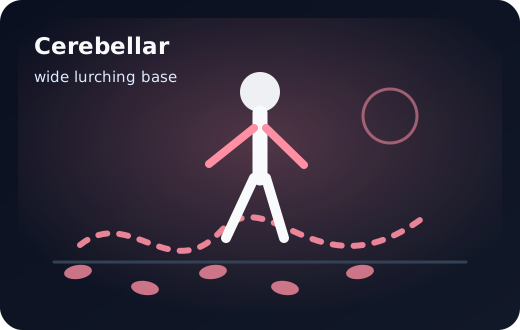
Make the gait point to the broken system.
The fastest localizer is not the disease name. It is the body problem the walk is solving.
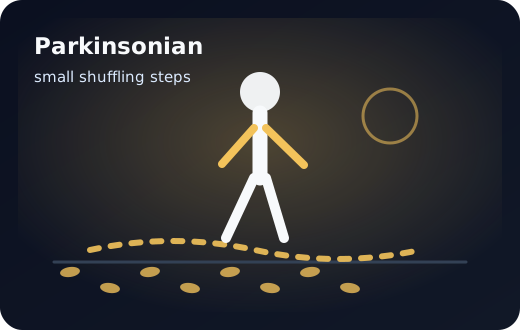
Basal ganglia
Small steps, bradykinesia, reduced arm swing, freezing, flexed posture.
Cerebellum or proprioception
Wide base and imbalance. Eyes closed worsening points sensory. Nystagmus and dysarthria point cerebellar or vestibular.
UMN tract
Circumduction, scissoring, spasticity, hyperreflexia, Babinski.
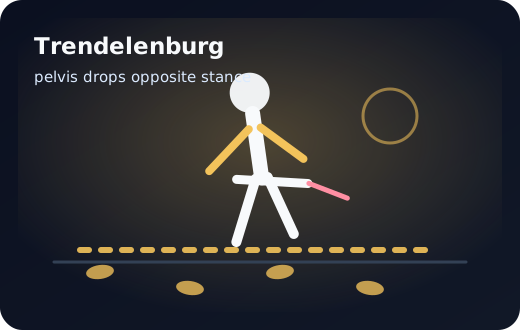
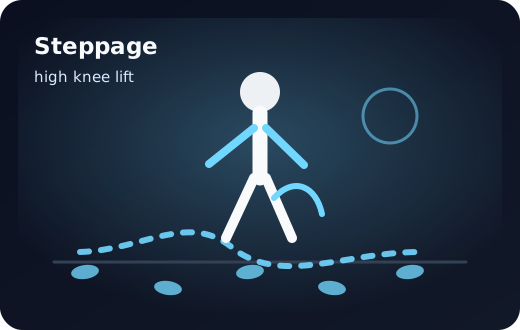
Peripheral nerve or muscle
Foot drop means dorsiflexor failure. Pelvic drop means hip abductor failure. Waddling means proximal pelvic-girdle weakness.
Pain
Short stance time on the painful side. The patient is protecting the limb, not localizing to a single neurologic circuit.
The similar pairs are where the points live.
Do not ask what they share. Ask the single thing that splits them.
Find the gait when the stem hides it.
Right-click or long-press to cross out. Double-click to mark. Choice order and case order shuffle.