Grief is the body's normal response to loss. MDD is a disease. Tell them apart on sight, or you'll either pathologize the bereaved or miss a suicidal patient.
Board Stem
A 58-year-old widow whose husband died 4 weeks ago reports daily crying, poor sleep, and waves of intense sadness. She still goes to work, sees her grandkids, and laughed at a memory of him last weekend. She denies suicidal thoughts. She rates her appetite as "ok, not great."
First instinct. Grief or MDD?
Normal grief
Major depressive disorder
Normal grief. She has function (still working, still bonding with grandkids), moments of joy (laughed at a memory), and no suicidal ideation. Sadness over recent loss + intact function + no SI = bereavement, not MDD. Watch her, support her, do not start an SSRI today. We'll come back to this exact patient at the end.
1 / 4
Section 1 of 4
The Grief Journey
Kubler-Ross mapped five stops on the way to acceptance. They aren't linear, they aren't required, and patients ricochet between them. First choose the stage, then use the map to anchor the pattern.
A patient says, "There must be a mistake. Run the test again." Which grief stage is this?
1
Denial
›
The wall goes up. The patient cannot face the truth yet. "There must be a mistake. Run the test again."
"My son is fine. The doctor is wrong. Get another opinion."
2
Anger
›
The wall cracks. Rage spills out, at the doctor, at God, at themselves, at strangers. The anger isn't really about you; it's the only outlet that doesn't feel like drowning.
"How could you let this happen? You should have caught it sooner."
3
Bargaining
›
The negotiation phase. Wishful thinkingMagical-deal-making with God or the universe. "If I do X, please make Y not real." Hallmark of stage 3. and offerings to God. "If I just pray harder, if I just donate more, if I just promise to be a better person."
"God, if you save him, I'll never miss church again. I'll do anything."
4
Depression & Guilt
›
The deal didn't work. The truth lands. Intense sadness, decreased sleep, hollow days. This is the stage that LOOKS like MDD but isn't, as long as function and reality-testing hold.🔑Stage 4 grief = sad + sleeps poorly. MDD = sad + can't function + can't feel joy + lasts >2 weeks. Sad alone is not a diagnosis.
"I can't get out of bed. Everything reminds me of him. I just want to sleep."
5
Acceptance
›
Not "I'm happy about this." More like "this is my new shape now." The loss becomes part of the patient's story instead of a wound that defines every minute. They can talk about the person without falling apart, then fall apart again next week. That's still acceptance.
"I'll always miss him. But I'm starting to live again."
Section 2 of 4
SIGECAPS Detective
MDD needs 5+ symptoms for 2+ weeks, and at least one must be depressed mood or anhedonia. Select each symptom your patient has. Watch the threshold.
Imagine a real patient. Select every symptom they actually have. You're trying to reach the diagnostic threshold (or stay safely under it).
1
2
3
4
5
6
7
8
9
★Depressed mood
IAnhedonia (lost interest)
SSleep disturbance
GGuilt / worthlessness
EEnergy decreased
CConcentration off
AAppetite change
PPsychomotor change
SSuicidal ideation
Select symptoms above. Less than 5 = not MDD. 5+ for 2 weeks WITH depressed mood or anhedonia = MDD.
Section 3 of 4
Grief vs. The Disorder
Two patients look identical from across the room. Compare the surface findings with the diagnostic hinge underneath.
🌤
Normal Grief
Sadness with a reason. Healing on its own clock.
CauseA real loss
DurationWeeks to months
FunctionMostly intact
Suicidal ideasRare; if yes, treat as MDD
JoyComes in waves; possible
TreatmentSupport, time, grief counseling
Why Grief Looks "Fine" In Clinic
She still laughs at a memory of him. Reactivity is preserved; she can still feel pleasure between waves of sadness.
She still gets up, sees her grandkids, shows up to work. Function is preserved.
Time-locked to the loss. The trigger is real and recent. Sadness without a cause is suspicious; sadness with a casket is not.
Bereavement is the only place where intense sadness is the right answer. Treat it like a sprain. Support, rest, time.
Break it down. Grief comes in waves and lets joy through. MDD is a flat sheet of fog.
🧐
MDD
A disease state that doesn't always need a reason.
CauseOften none. Or way out of proportion
Duration5+ Sx for ≥2 weeks
FunctionBreaks down (work, hygiene, eating)
Suicidal ideasCommon; ask every visit
JoyAnhedonia; even hobbies feel dead
TreatmentSSRI + therapy; ECT if severe
The 3 Things That Flip Grief Into MDD
1. Dysfunction. She can't get to work, can't shower, can't feed herself. Grief slows you. MDD floors you.
2. Suicidal ideation. Wanting to die so she can "be with him" is grief. A real plan to act on it is MDD. Ask every time.
3. Psychotic features. Hearing his voice in passing is normal in bereavement. Sustained delusions or hallucinations are not.
DSM tweak. Even in a bereaved patient, if dysfunction + SI + psychosis show up, you can diagnose MDD and treat it. Don't wait out the timeline if she's drowning.
Break it down. If function, joy, or safety is gone, it's not just grief anymore. Treat.
The Bedside Algorithm
You're standing in the room with our widow. Walk the decision tree. Choose before the feedback opens.
Step 1. Is the sadness tethered to a recent loss (death, divorce, diagnosis, breakup)?
Good. You're now in the grief lane until proven otherwise. Go to Step 2. Check her ability to function and feel joy.
Then it's MDD until proven otherwise. Sadness with no trigger that meets 5+ SIGECAPS for 2 weeks = depression. Skip ahead and screen for SI now.
Step 2. Can she still feel pleasure in waves and function in daily life (work, hygiene, family)?
That's grief. Support her. Grief counseling if she wants it. Time is the medicine. No SSRI yet. Go to Step 3 for the safety check.
That's MDD on top of grief. Persistent anhedonia + dysfunction means the loss broke something that needs treating. Start SSRI plus therapy, don't wait for the 2-week timeline if she's collapsing.
Step 3 (ask EVERY visit). Any thoughts of hurting herself or wanting to die?
Safe to monitor. Document negative SI. Schedule follow-up in 1-2 weeks. Tell her to call if anything shifts. Break it down. Grief + no SI + functioning = watchful waiting.
This is no longer "just grief." SI with intent or plan flips this to MDD with bereavement on top. Safety plan, lethal-means restriction, urgent psych referral, possible hospitalization. Treat now.
Clinical Reference Images
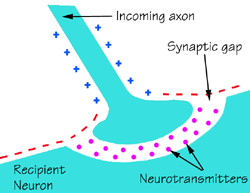
Serotonergic synapse. SSRI mechanism of action targets the reuptake transporter
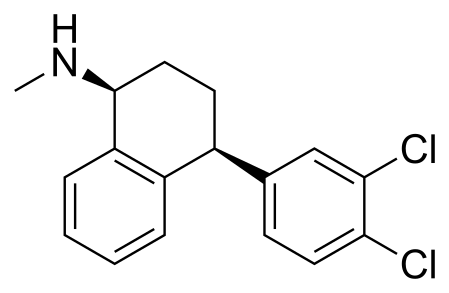
Sertraline (Zoloft), first-line SSRI for MDD, pregnancy category C
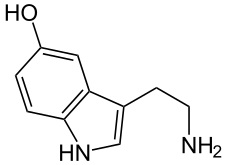
Serotonin (5-HT), the monoamine implicated in the monoamine hypothesis of depression
A mourning and grief monument (sculpture), grief is recognized as distinct from clinical depression
Section 4 of 4
Board Walkthrough
30 original clinical vignettes. One at a time, shuffled, never repeats. Right-click or long-press to cross out. Double-tap to highlight.
1 OF 30
Medically reviewed by Fatima Ali, DO and Kaitlyn Cocuzzo, MD
Bone Wizardry is an independent educational resource for visual learning in the medical sciences. It is not affiliated with, endorsed by, or sponsored by any licensing or examination board, contains no real or recalled examination questions, and does not guarantee any educational or examination outcome.
 Bone WizardryMEDICAL EDUCATION