Smoking Cessation: Treat Dependence and Plan the Next Decision
Learn nicotine dependence and cessation pharmacology, choose safe treatment and follow-up, then apply current dosing, screening and monitoring beyond the boards.
One causal spine connects every exam view. Nicotine receptor adaptation and withdrawal explain the pharmacology tested at Step and Level 1. Safe medication selection, counseling, screening and follow-up drive Step 2 CK and Level 2, while relapse prevention, comorbidity and longitudinal monitoring drive Step and Level 3. Beyond the boards, current labeling, interaction review and patient-specific escalation determine how the same principles are used in clinic.
From nicotine receptors to treatment, follow-up and Beyond
Dependence has both receptor and learned components. Nicotine stimulates nicotinic acetylcholine receptors and reinforces repeated use through reward pathways. Repeated exposure also produces dependence. A cigarette can therefore serve two functions: provide a learned reward and relieve withdrawal. Stopping cigarettes interrupts nicotine delivery, while familiar activities can continue to provoke urges. Medication and behavioral support address different parts of this problem. For nonpregnant adults, combine behavioral interventions with an appropriate approved medicine rather than treating them as competing approaches. [1][5]
Imagine a hospitalized daily smoker who has been without cigarettes for three days. Irritability, hunger, poor concentration and disturbed sleep fit nicotine withdrawal. Symptoms are often strongest during the first week, especially the first three days, and generally lessen over the first month. Some urges last longer or return with particular situations. New severe symptoms still need their own assessment. Confusion, a seizure or persistent vomiting should not be dismissed as ordinary withdrawal. [16][18]
Predict the slope, not a cure
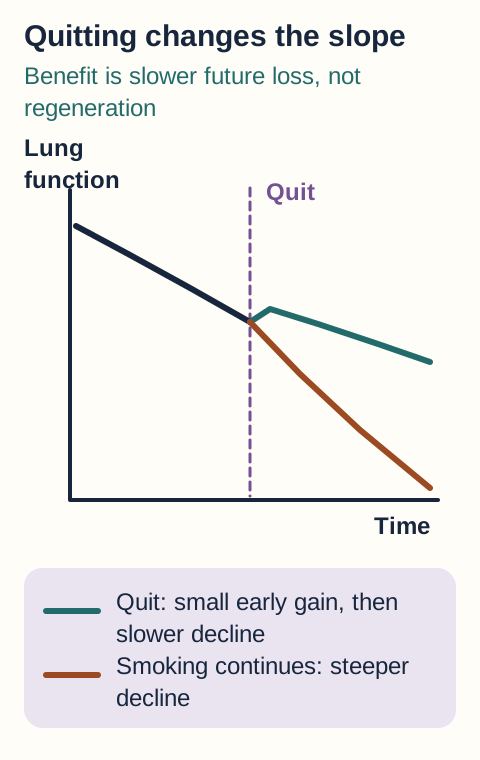
Quitting changes the future slope, not the past injury. A person with chronic obstructive pulmonary disease (COPD) asks, "Has quitting come too late?" Follow the two paths in the diagram from the same starting point. Predict whether quitting should restore previously destroyed alveoli or reduce the pace of subsequent loss.
Quitting can produce a small early gain and a shallower later decline, while continued smoking follows a steeper path. This is a conceptual comparison, not an individual forecast. [14][15]Open full-size diagram
The benefit is a better future trajectory, not a promise of regeneration. In the Lung Health Study, people who quit had a small average first-year forced expiratory volume in one second (FEV1) increase of 47 mL. Subsequent average decline was 31 mL/year in sustained quitters versus 62 mL/year in continuing smokers. These are observed group means in mild-to-moderate COPD, not a personal forecast or universal cutoff. Aging, exacerbations and established disease can still produce loss after cessation. [14]
Benefits extend beyond lung function. Smoking cessation also reduces cardiovascular and cancer risk, including after established cardiovascular disease. Less ongoing smoke exposure reduces continuing vascular and pulmonary injury; it does not replace indicated heart failure treatment, inhaled therapy, exercise or other care. Do not turn a valuable priority into a claim that one intervention outranks every other treatment in every patient. [15]
Slower decline is not reversal. FEV1 rises slightly after quitting, then falls more slowly. The early gain and slower later slope support benefit. Neither proves that emphysema has reversed or that future decline has stopped.
Build a plan that continues after the prescription
What is missing when a patient leaves with medication but no plan for the first difficult week? The five A's organize a brief intervention: Ask, Advise, Assess, Assist, Arrange. They describe the work of care, not five conditions the patient must pass. [2]
Turn each step into something observable
Step
What to establish
StepAsk
What to establishWhich tobacco or nicotine products, how much, when the first cigarette occurs, and what previous attempts were like.
StepAdvise
What to establishA clear, respectful recommendation tied to this person's health and goals.
StepAssess
What to establishWillingness to discuss change, begin treatment and attempt abstinence. These are not identical decisions.
StepAssist
What to establishA suitable medication plan, practical coping strategies, support and a quit-date or reduction-to-quit plan when appropriate.
StepArrange
What to establishEarly contact to review symptoms, medication use, obstacles and the next adjustment.
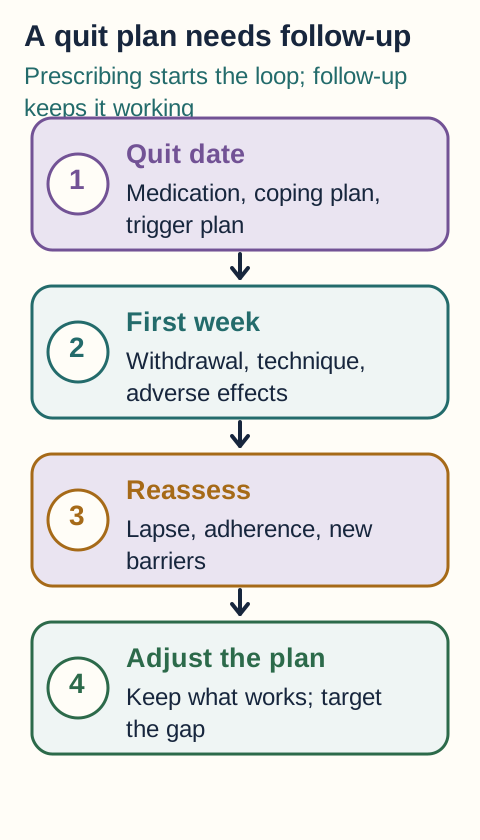
A quit plan continues through the first week and later reassessment: check withdrawal, medication use, adverse effects and triggers, then adjust the plan. [2][20]Open full-size diagram
Follow-up is part of treatment. A patient chooses a quit date in ten days, starts the appropriate pretreatment and identifies the after-dinner cigarette as a trigger. Before reading on, name the missing action if the next appointment is in three months.
The missing action is Arrange: plan contact preferably within the first week after the quit date, then further contact such as within the first month. The first conversation can identify a dose problem, an adverse effect or a social trigger while there is an opportunity to respond. Telephone support and quitlines can extend care beyond an office visit. [2][20]
Use the same causal rule in the next setting. If the patient is not ready for an immediate quit date, there is still useful work: explore goals, offer support and assess willingness for treatment. Lack of a quit-date promise is not the same as refusing all help. [4]
Match the medicine to the problem and the person
Does the patient need background withdrawal control, help with brief urges, or a different receptor-level effect? Then ask a separate question: what makes a treatment unsuitable for this person? Mechanism explains a benefit; a safety check determines whether that benefit is appropriate here.
Varenicline: some stimulation, less nicotine reward
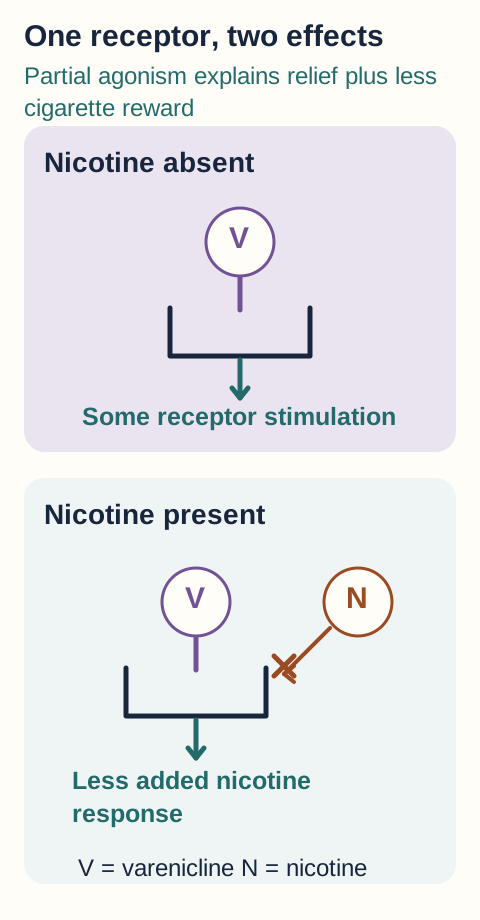
Partial agonism explains two clinical effects. Varenicline is a partial agonist at alpha4beta2 nicotinic acetylcholine receptors. Trace the two conditions below. Without nicotine, it supplies limited stimulation. With nicotine present, its occupancy limits the extra stimulation nicotine can produce. Predict the consequence for both withdrawal and the satisfaction from a cigarette. [5]
Varenicline supplies partial receptor stimulation when nicotine is absent and limits added nicotine stimulation when it is present. The diagram is a mechanism model, not a measured response curve. [5]Open full-size diagram
Receptor occupancy links withdrawal relief with less cigarette reward. The paired consequence is reduced withdrawal and reduced reward from smoking. The American Thoracic Society (ATS) favors varenicline over a single nicotine patch or bupropion, including in adults with stable psychiatric conditions. This does not establish that every patient should receive it or that it outperforms every possible combination regimen. [4][11]
Varenicline is titrated over the first week. The usual titration is 0.5 mg daily on days 1 to 3, 0.5 mg twice daily on days 4 to 7, then 1 mg twice daily. A planned quit date is commonly one week after starting; the label also permits choosing a date between days 8 and 35.
An initial course is 12 weeks, with an additional 12 weeks considered after successful cessation. Take doses after food with a full glass of water; nausea, vivid dreams and sleep disturbance can occur. With creatinine clearance below 30 mL/min, start at 0.5 mg daily and do not exceed 0.5 mg twice daily; the hemodialysis maximum is 0.5 mg daily if tolerated. [5]
Varenicline does not eliminate seizure risk. Varenicline carries a seizure precaution, including for controlled epilepsy. Assess benefits and risks. A seizure during treatment warrants stopping it and contacting the clinician. Serious hypersensitivity or skin reactions and concerning new mood or behavior changes also require prompt assessment. Stable psychiatric illness alone is not a ban, but trial reassurance is not a guarantee for every acute presentation. [5][11][21]
Bupropion: check the history before choosing it
Bupropion acts differently from nicotine replacement. Bupropion inhibits norepinephrine and dopamine reuptake; its exact cessation mechanism is not fully established. It can also treat depression, but a depression history does not automatically make it the best cessation medicine. For cessation sustained-release (SR) dosing, start 150 mg daily for three days, then 150 mg twice daily at least eight hours apart, usually beginning about a week before quitting. Dry mouth, insomnia and headache can occur; monitor blood pressure and clinically important mood changes. [6]
Do not prescribe bupropion for a seizure disorder or current or previous anorexia nervosa or bulimia nervosa. Recovery and normal current electrolytes do not erase the eating-disorder contraindication. Other important exclusions include monoamine oxidase inhibitor (MAOI) use within 14 days and abrupt discontinuation of alcohol, benzodiazepines, barbiturates or antiseizure medicines. Reconcile other bupropion-containing products; two brand names can duplicate the same drug and increase dose-related seizure risk. The cessation SR maximum is 300 mg/day. [6]
Nicotine replacement: compare coverage over the day
Nicotine formulations differ mainly by delivery pattern. A patch provides sustained nicotine without cigarette combustion. Gum, lozenges, inhalers and nasal sprays provide shorter-acting options. Combining a patch with an appropriate short-acting formulation can address background withdrawal and breakthrough urges better than one formulation alone. Use product-specific instructions rather than assuming all routes behave identically. [1][7][19]
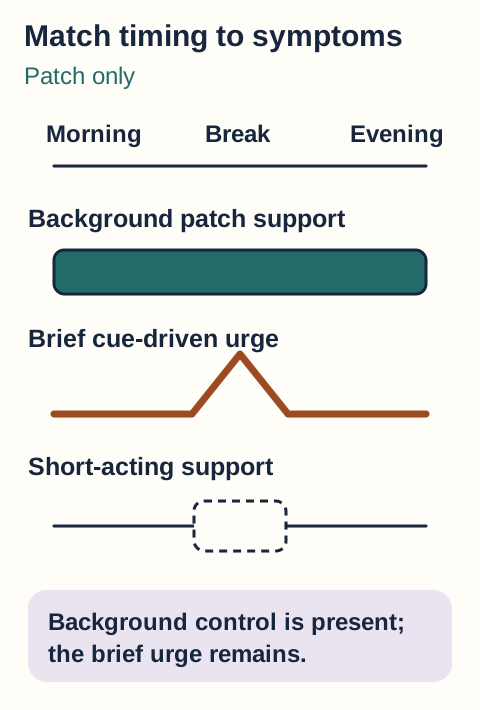
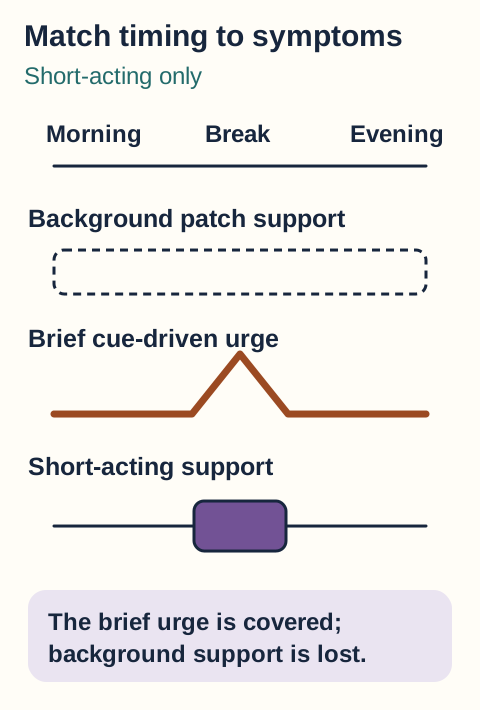
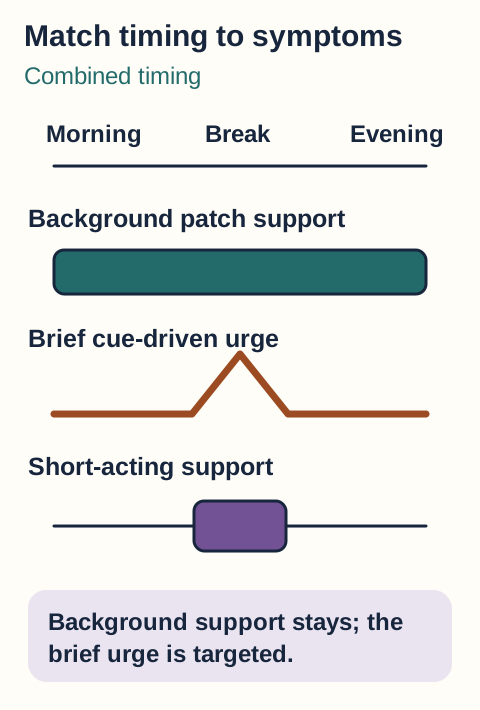
Background and breakthrough symptoms need different timing. A patch controls most of the day, but an afternoon smoking break produces a sharp urge. Predict what happens if you replace the patch with treatment only at the break. Then compare keeping the patch and adding timely short-acting treatment. The drawings compare timing, not measured drug concentrations, dose equivalence or guaranteed craving scores.
Starting state: background patch support is present, but no short-acting support is shown around the predictable brief urge. Bars represent timing, not concentration or dose. [7][8][9]Open full-size diagramCompare short-acting treatment alone What happens to background support?
Comparison state: short-acting support appears near the break, while the patch support bar is absent. This shows the background support lost by replacing an effective patch. [7][8][9]Open full-size diagram
The brief period gains coverage, but the background support supplied by the patch is lost. Short-acting treatment alone can be useful for some people; it does not preserve this patient's successful all-day regimen.
Compare combined treatment Which support remains across the day?
Comparison state: the patch remains and short-acting support is added near the predictable urge. The timing does not guarantee elimination of craving. [7][8][9]Open full-size diagram
Background support remains, and additional treatment is timed to the predictable urge. A plan to change the smoking-associated break addresses the learned trigger as well.
Keep what works and target the remaining urge. When baseline control is good and a predictable urge remains, retaining the patch and adding an appropriate short-acting formulation matches both needs. Close either comparison to return to the starting view; both may stay open for comparison. The core explanation remains visible whether or not you open them. [7][8][9]
Patch strength begins with baseline cigarette exposure. For someone smoking more than 10 cigarettes daily, 21 mg is a usual starting patch strength. Rotate sites; irritation can occur. Taking the patch off at bedtime may help vivid dreams, with a new patch each morning and reassessment of early urges. Typical courses taper over about 8 to 12 weeks, individualized to response. [7]
Time to the first cigarette guides gum strength. For gum used alone, smoking within 30 minutes of waking supports considering 4 mg rather than 2 mg. Chew until tingling, then park between cheek and gum. Avoid food or drinks for 15 minutes before and during use. Rapid chewing can cause hiccups or discomfort; jaw or dental problems may favor a lozenge or another route. Let lozenges dissolve rather than chewing them. Nasal or inhaler products can irritate their contact surfaces. [8][9][19]
Use the same causal rule in the next setting. All-day hunger and craving on a low-dose patch suggest a different problem from brief urges on an effective patch. Vomiting, sweating, dizziness and palpitations after a dosing error suggest excess exposure instead. Stop further nicotine and seek urgent assessment for suspected toxicity; do not automatically add more nicotine. [16][18]
Try it here · Checkpoint 1 of 3
Make your prediction before reading the choices. A first attempt is just a starting point.
Case 8
Show answer and explanations for case 8
A. Varenicline 1 mg twice daily (Why this does not fit)
This is the usual full adult regimen without the severe-impairment adjustment. His clearance is below 30 mL/min, so the copied instructions exceed the relevant maximum.
Reasoning steps for option A
smoking-cessation-08 option A: Which supplied finding should be used first?
smoking-cessation-08 option A: Start with Creatinine clearance 22 mL/min, below the 30 mL/min dose-adjustment threshold
smoking-cessation-08 option A: What inference separates this option from its closest competitor?
smoking-cessation-08 option A: Classify the renal impairment using the drug-specific clearance threshold.
B. Varenicline 0.5 mg twice daily (Best answer)
For severe renal impairment, start at 0.5 mg once daily and titrate if needed to a maximum of 0.5 mg twice daily. The ordinary 1 mg twice-daily regimen should not be copied into this plan.
Reasoning steps for option B
smoking-cessation-08 option B: Which supplied finding should be used first?
smoking-cessation-08 option B: Start with No dialysis and current tolerance of 0.5 mg daily
smoking-cessation-08 option B: What inference separates this option from its closest competitor?
smoking-cessation-08 option B: Apply the nondialysis severe-impairment maximum instead of the usual full dose.
C. No maintenance dose; discontinue varenicline. (Why this does not fit)
Severe renal impairment requires a reduced regimen rather than automatic avoidance. The label supplies an adjusted starting dose and maximum for this nondialysis patient.
Reasoning steps for option C
smoking-cessation-08 option C: Which supplied finding should be used first?
smoking-cessation-08 option C: Start with Creatinine clearance 22 mL/min, below the 30 mL/min dose-adjustment threshold
smoking-cessation-08 option C: What inference separates this option from its closest competitor?
smoking-cessation-08 option C: Classify the renal impairment using the drug-specific clearance threshold.
D. Varenicline 0.5 mg once daily (Why this does not fit)
This is the recommended starting dose for severe renal impairment and the maximum for a tolerated hemodialysis regimen. It is not the labeled maximum for this nondialysis patient.
Reasoning steps for option D
smoking-cessation-08 option D: Which supplied finding should be used first?
smoking-cessation-08 option D: Start with No dialysis and current tolerance of 0.5 mg daily
smoking-cessation-08 option D: What inference separates this option from its closest competitor?
smoking-cessation-08 option D: Apply the nondialysis severe-impairment maximum instead of the usual full dose.
Takeaway: Use creatinine clearance and dialysis status before copying a standard varenicline schedule.
Calculate exposure, then decide which question the scan would answer
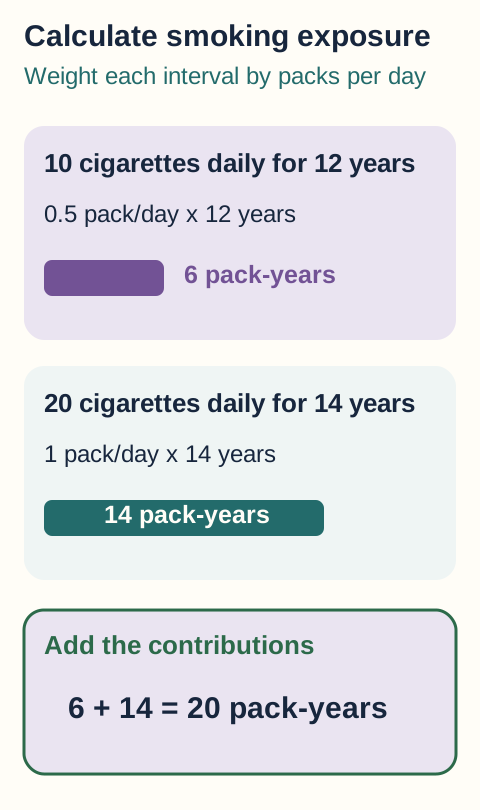
Is a person eligible for screening just because the pack-year total is high? First calculate exposure, then examine age, quit interval, symptoms, health and preferences. Pack-years = packs per day multiplied by years smoked. One pack is 20 cigarettes. If intensity changed, calculate each period separately and add the results. Years without cigarette smoking add no cigarette pack-years; nicotine replacement and vaping do not have a validated direct conversion into cigarette pack-years. [12]
Calculate each exposure interval before adding them. Use the exposure bars to predict the total before reading the result. Twelve years at half a pack per day contribute 6 pack-years; fourteen years at one pack per day contribute 14. The combined exposure is 20 pack-years, not 26.
The weighted periods contribute 6 and 14 pack-years. Add the two contributions to obtain 20 pack-years before applying the other screening criteria. [12]Open full-size diagram
The USPSTF rule combines age, exposure and quit interval. Offer annual low-dose computed tomography (CT) screening to appropriate asymptomatic adults aged 50 through 80 with at least 20 pack-years who currently smoke or quit within the prior 15 years. Stop once the person has not smoked for 15 years, or when health substantially limits life expectancy or the ability or willingness to undergo curative lung surgery. At the exact 15-year boundary, use the stopping recommendation rather than extending eligibility past it. [12][22]
Eligibility is not the end of the screening decision. Shared decision-making includes possible benefit, false-positive results, follow-up procedures, overdiagnosis and radiation exposure. Chest radiography is not a replacement for low-dose computed tomography screening. A patient with new hemoptysis or concerning weight loss needs a diagnostic assessment, not a routine annual screening substitute. Screening thresholds do not prohibit evaluating symptoms. [12][22]
Screening rules differ by organization and version. The American Cancer Society (ACS) 2023 recommendation also uses ages 50 through 80 and at least 20 pack-years, but does not retain a years-since-quitting cutoff. Do not silently combine that rule with USPSTF criteria or assume that a recommendation guarantees insurance coverage. [13]
Use the same causal rule in the next setting. A 47-year-old can exceed 20 pack-years without meeting the USPSTF age criterion. An older qualifying smoker can be unsuitable for screening because curative treatment is not feasible or desired. Neither conclusion means cessation support should stop.
Try it here · Checkpoint 2 of 3
Make your prediction before reading the choices. A first attempt is just a starting point.
Case 24
Show answer and explanations for case 24
A. 25 pack-years; offer annual low-dose chest computed tomography after a shared decision. (Best answer)
Her exposure is 10 plus 15, or 25 pack-years. At age 62 and seven years after quitting, she meets the USPSTF age, exposure and quit-interval criteria, with appropriate health and willingness for treatment.
Reasoning steps for option A
smoking-cessation-24 option A: Which supplied finding should be used first?
smoking-cessation-24 option A: Start with Half a pack daily for 20 years and one pack daily for 15 years
smoking-cessation-24 option A: What inference separates this option from its closest competitor?
smoking-cessation-24 option A: Add 0.5 times 20 to 1 times 15 for 25 pack-years.
B. 25 pack-years; defer screening because she stopped smoking. (Why this does not fit)
The exposure is correct, but former smokers may remain eligible. Her seven-year quit interval is shorter than the USPSTF stopping threshold.
Reasoning steps for option B
smoking-cessation-24 option B: Which supplied finding should be used first?
smoking-cessation-24 option B: Start with Age 62, seven years since quitting, asymptomatic and suitable for treatment
smoking-cessation-24 option B: What inference separates this option from its closest competitor?
smoking-cessation-24 option B: Combine qualifying exposure with age, quit interval and treatment fitness to select annual LDCT.
C. 35 pack-years; begin annual low-dose chest computed tomography. (Why this does not fit)
She smoked for 35 years, but the first 20 years were at half a pack daily. Counting every year as one pack-year overstates exposure, even though the correct total still qualifies.
Reasoning steps for option C
smoking-cessation-24 option C: Which supplied finding should be used first?
smoking-cessation-24 option C: Start with Half a pack daily for 20 years and one pack daily for 15 years
smoking-cessation-24 option C: What inference separates this option from its closest competitor?
smoking-cessation-24 option C: Add 0.5 times 20 to 1 times 15 for 25 pack-years.
D. 25 pack-years; begin annual chest radiography. (Why this does not fit)
The exposure calculation is correct, but chest radiography is not the recommended screening test. The USPSTF screening strategy uses annual low-dose CT.
Reasoning steps for option D
smoking-cessation-24 option D: Which supplied finding should be used first?
smoking-cessation-24 option D: Start with Age 62, seven years since quitting, asymptomatic and suitable for treatment
smoking-cessation-24 option D: What inference separates this option from its closest competitor?
smoking-cessation-24 option D: Combine qualifying exposure with age, quit interval and treatment fitness to select annual LDCT.
Takeaway: Add exposure periods before applying age, quit interval and treatment fitness.
Readiness describes the conversation, not a treatment barrier
Readiness is not one yes-or-no variable. What does "not ready" actually mean? It may mean no interest in discussing smoking, no willingness to take medication, or simply no promise of immediate abstinence. Ask rather than treating those statements as interchangeable. ATS supports offering varenicline before readiness to discontinue tobacco use when the patient is willing to begin treatment. Respect an explicit refusal. [4]
Common stage descriptions and useful responses
Description
Useful focus
DescriptionPrecontemplation
Useful focusNo intention to quit in the next six months. Seek permission and explore personal concerns without arguing.
DescriptionContemplation
Useful focusConsidering quitting within six months. Explore competing reasons for smoking and changing.
DescriptionPreparation
Useful focusIntending to quit within about 30 days and taking practical steps. Develop medication, trigger and follow-up plans.
DescriptionAction
Useful focusAbstinent within the past six months. Support the attempt and address symptoms and difficult situations.
DescriptionMaintenance
Useful focusAbstinent for more than six months. Reinforce progress and revisit changing risks and support needs.
These are simplified descriptions, not a formal staging instrument. Research algorithms differ, including whether preparation requires a recent quit attempt. They are not a reason to withhold consensual treatment. [23] Motivational counseling uses open questions, reflective listening, empathy, autonomy and confidence in the patient's ability to change. The five R's can guide discussion: personal relevance, risks, rewards, roadblocks and repetition. Revisit the offer without turning repetition into pressure. [3][20]
Reflection reveals ambivalence without overriding autonomy. A patient values smoking breaks but worries about missing hikes with her daughter. "Choose a quit date now" supplies a plan she has not requested. "How do those two priorities fit together for you?" invites her to explain the conflict. Predict which response is more likely to produce the patient's own reasons for change.
The second response preserves agency and makes room for ambivalence. Reflect resistance instead of arguing, and acknowledge practical successes rather than promising an easy attempt. Use the same causal rule in the next setting. If she next asks to begin medication while still unsure of a quit date, reassess that new willingness. Do not keep answering an earlier refusal after her preferences change. [3][4]
After a lapse, ask what needs to change
A lapse and a dangerous adverse event require different responses. Does one cigarette mean the treatment failed? A brief lapse, sustained return to smoking, medication intolerance and a serious adverse event are different situations. Ask what happened, how medication was used, whether adverse effects occurred, and what the patient wants next. People may need repeated attempts; do not present one fixed number as everyone's expected course. [3][20]
A lapse is information, not automatic treatment failure. A patient has been abstinent for six weeks on a tolerated medication, smokes during an argument, and resumes abstinence the next day. Identify what is still working and what the argument exposed. The medication may still be useful; the immediate gap is a plan for that situation. Re-engage without shame, continue an appropriate tolerated regimen, and arrange follow-up. Do not automatically increase the dose, switch drugs or discontinue treatment because a lapse occurred. [5][7][20]
Recheck the person, not just the cigarette count
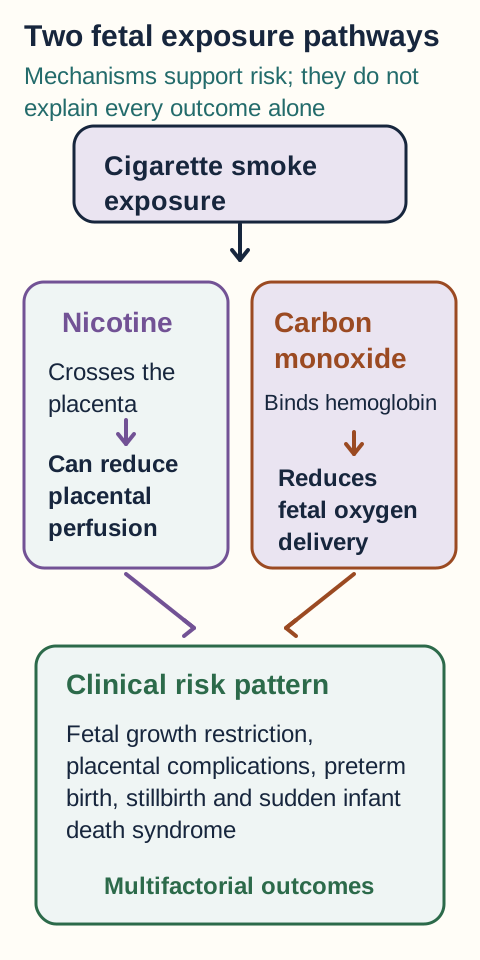
Cigarette smoke exposes the fetus to nicotine and carbon monoxide. Nicotine can reduce placental perfusion; carbon monoxide reduces oxygen carriage. Placental and birth outcomes are multifactorial. [26][27][28]Open full-size diagram
Pregnancy begins with behavioral treatment and individualized risk discussion. Cigarette smoke exposes the fetus to both nicotine and carbon monoxide. Nicotine crosses the placenta and can narrow blood vessels, reducing placental perfusion; carbon monoxide binds hemoglobin and reduces oxygen carriage. These pathways help explain fetal growth risk, but placental abruption, placenta previa, preterm birth, membrane rupture, stillbirth and sudden infant death syndrome are multifactorial outcomes rather than consequences of one diagrammed mechanism. [26][27][28]
Behavioral treatment has the clearest pregnancy-specific evidence. The U.S. Preventive Services Task Force (USPSTF) finds insufficient evidence to establish the balance of benefits and harms of cessation pharmacotherapy during pregnancy; this does not prove ineffectiveness or safety. If smoking persists, an obstetric clinician can discuss medication individually, including carefully supervised nicotine replacement therapy when appropriate and the patient is committed to cessation. Nicotine is not harmless, and neither "nicotine replacement is risk-free" nor "every other medicine is categorically prohibited" accurately expresses the evidence. Varenicline and bupropion data are limited. Continue support after delivery. [1][10]
Stable psychiatric illness is not an automatic exclusion. Stable psychiatric disease does not justify withholding effective cessation treatment. EAGLES did not find a statistically significant treatment-attributable increase in its prespecified moderate-to-severe neuropsychiatric events for varenicline or bupropion compared with the comparators. That is not proof of zero risk or evidence covering every acutely unstable patient. Varenicline's cessation-related boxed warning was withdrawn in 2016. [24] Those changes did not erase current monitoring instructions or bupropion's antidepressant boxed warning. New concerning mood or behavior changes need prompt assessment. [5][6][10][11][21]
Recent cardiac events require coordinated medication selection. Stable disease is not an automatic NRT exclusion. Recent infarction within two weeks, serious rhythm problems or worsening angina warrant clinician review before an OTC nicotine product is started. Cessation remains important; the precaution calls for a coordinated treatment plan, not continued smoking as the preferred option. [9][15]
Diabetes raises the cost of continued smoking. Smoking can make glucose management harder and increases the risk of cardiovascular disease, kidney disease, retinopathy, peripheral neuropathy and lower-extremity complications. Cessation support belongs inside diabetes care rather than being postponed until every glucose value is perfect. Continue ordinary glucose and medication reassessment as eating patterns and tobacco exposure change. [25]
Stopping smoke can change drug clearance. Cigarette smoke, not nicotine itself, induces cytochrome P450 1A2 (CYP1A2). Stopping smoke exposure can raise concentrations of drugs such as clozapine, olanzapine or theophylline, even when a nicotine patch continues. Review relevant medicines and symptoms with the prescribing team; caffeine effects can also change. Do not invent a universal dose reduction. [17]
Use the same causal rule in the next setting. A clozapine-treated patient becomes markedly sleepy after switching fully from cigarettes to patches. Continued nicotine does not preserve smoke-related enzyme induction; prompt medication review is needed. Similarly, a patient who asks about vaping needs discussion of uncertain cessation evidence and product risks, not reassurance that another nicotine product is harmless or an approved cessation medicine. [17][1][19]
Try it here · Checkpoint 3 of 3
Make your prediction before reading the choices. A first attempt is just a starting point.
Case 22
Show answer and explanations for case 22
A. Continue treatment, review the argument-related trigger, and arrange follow-up. (Best answer)
A lapse is a reason to reassess and strengthen support, not automatically abandon a useful medication. Review what happened, reinforce resumed abstinence and plan a response to similar stress.
Reasoning steps for option A
smoking-cessation-22 option A: Which supplied finding should be used first?
smoking-cessation-22 option A: Start with One stress-associated lapse followed by resumed abstinence
smoking-cessation-22 option A: What inference separates this option from its closest competitor?
smoking-cessation-22 option A: Distinguish a brief lapse from proof that the medication has failed.
B. Replace treatment immediately because any resumed cigarette use establishes failure. (Why this does not fit)
A different regimen can be considered after assessing response, adherence and preferences. One brief lapse followed by renewed abstinence does not by itself establish that immediate switching is necessary.
Reasoning steps for option B
smoking-cessation-22 option B: Which supplied finding should be used first?
smoking-cessation-22 option B: Start with An otherwise useful and tolerated medication regimen
smoking-cessation-22 option B: What inference separates this option from its closest competitor?
smoking-cessation-22 option B: Continue appropriate treatment while addressing the identified trigger and arranging reassessment.
C. Increase treatment above the usual dose and reassess after the course ends. (Why this does not fit)
The history points to a specific stress trigger rather than proof of inadequate dosing. Exceeding the usual dose and postponing reassessment is not a response supported by these findings.
Reasoning steps for option C
smoking-cessation-22 option C: Which supplied finding should be used first?
smoking-cessation-22 option C: Start with One stress-associated lapse followed by resumed abstinence
smoking-cessation-22 option C: What inference separates this option from its closest competitor?
smoking-cessation-22 option C: Distinguish a brief lapse from proof that the medication has failed.
D. Stop treatment, allow a medication-free interval, and retry after another lapse. (Why this does not fit)
There is no adverse effect or contraindication requiring a pause. Stopping a helpful regimen because of one lapse can withdraw support when the patient most needs it.
Reasoning steps for option D
smoking-cessation-22 option D: Which supplied finding should be used first?
smoking-cessation-22 option D: Start with An otherwise useful and tolerated medication regimen
smoking-cessation-22 option D: What inference separates this option from its closest competitor?
smoking-cessation-22 option D: Continue appropriate treatment while addressing the identified trigger and arranging reassessment.
Takeaway: Use a lapse to refine support; continue a helpful medication when it remains appropriate and tolerated.
Board clinic: solve the decision in the order the stem gives it
First name the active problem. Irritability, hunger, poor concentration and insomnia after abrupt nicotine interruption support withdrawal; vomiting, diaphoresis, dizziness and tachycardia after duplicate nicotine exposure support toxicity. A seizure, severe rash, chest pain, marked behavior change or persistent vomiting is not routine withdrawal. The board-level decision is to classify the syndrome before changing the dose. [5][16][18]
Then separate background from breakthrough symptoms. All-day craving on a very low-dose patch suggests inadequate baseline support. Good control for most of the day with a short, predictable urge suggests keeping the effective background treatment and targeting the episode with a short-acting option plus a trigger plan. Vivid dreams from overnight patch use call for a timing adjustment, not reflexive abandonment of nicotine replacement. [7][8][9]
Next apply the patient-specific safety gate. A seizure disorder or current or previous anorexia nervosa or bulimia nervosa rules out bupropion. Severe renal impairment lowers the varenicline ceiling. Pregnancy changes the evidence hierarchy. A recent myocardial infarction changes whether an over-the-counter nicotine product should be self-started. Stable psychiatric illness alone does not erase effective options, but acute symptoms still require assessment. [4][5][6][10]
Finally distinguish screening from diagnosis. Pack-years are intensity multiplied by time, summed across periods. A named screening recommendation also requires the correct age, quit interval, health status and treatment willingness. New hemoptysis, weight loss or another concerning symptom creates a diagnostic question now; it is not handled by placing the patient into an annual screening pathway. [12][13][22]
Beyond: label-based dosing, monitoring and real-world escalation
This section is learning past the boards, not a local protocol. Typical adult schedules below summarize current United States labeling and public guidance; verify against current labeling, the specific product, renal function, pregnancy status, interacting medicines and the patient's care plan before use. [5][6][7][8][9]
Typical adult starting patterns to verify against current labeling
Treatment
Typical pattern
What changes the plan
TreatmentVarenicline
Typical pattern0.5 mg once daily on days 1 to 3, 0.5 mg twice daily on days 4 to 7, then 1 mg twice daily; an initial 12-week course is common.
What changes the planRenal function, dialysis, nausea, sleep effects, seizure history, serious skin or hypersensitivity reactions, and concerning mood or behavior changes.
TreatmentBupropion sustained-release
Typical pattern150 mg once daily for 3 days, then 150 mg twice daily at least 8 hours apart; begin about 1 week before the quit date.
What changes the planSeizure disorder, current or previous eating disorder, abrupt alcohol or sedative withdrawal, monoamine oxidase inhibitor timing, duplicate bupropion products and blood pressure.
TreatmentNicotine patch
Typical patternFor more than 10 cigarettes daily, 21 mg is a usual starting strength; many public schedules taper over about 8 to 12 weeks.
What changes the planBaseline cigarette exposure, withdrawal control, skin effects, vivid dreams, recent infarction, serious arrhythmia, worsening angina and pregnancy.
TreatmentNicotine gum or lozenge
Typical patternSmoking within 30 minutes of waking commonly points to 4 mg; use every 1 to 2 hours early in treatment according to product limits.
What changes the planTechnique, food and drink timing, jaw or dental issues, nausea or hiccups, maximum daily use and whether background patch support is also needed.
Follow-up should answer four questions. Is the patient using the treatment as intended? Are withdrawal and cue-driven urges improving? Are adverse effects or interaction symptoms emerging? What specific situation threatens the next week? Early contact after the quit date catches administration errors, duplicate products, insufficient coverage and a lapse while the plan can still be adjusted. [2][20]
Escalate when the problem is no longer routine cessation care. A seizure, severe skin reaction, angioedema, marked mood or behavior change, suspected nicotine poisoning, unstable cardiac symptoms or pregnancy medication decision warrants prompt clinician coordination. New hemoptysis or unexplained weight loss warrants diagnostic evaluation. Clozapine, olanzapine or theophylline symptoms after cigarettes stop warrant prescribing-team review because smoke-related enzyme induction can fade even when nicotine replacement continues. [5][17][18][22]
Referral is useful when complexity exceeds a brief visit. A tobacco-treatment specialist, quitline, behavioral health clinician, obstetric clinician, cardiology team or the prescriber of an interaction-sensitive medicine can extend the plan without fragmenting it. The practical goal is one coordinated strategy with a clear medication list, a trigger plan and a scheduled reassessment rather than several disconnected prescriptions. [2][4][10]
Clinical practice
Case 1
Show answer and explanations for case 1
A. Begin nicotine replacement and offer coping support. (Best answer)
This symptom pattern and timing fit nicotine withdrawal. Nicotine replacement addresses withdrawal while coping support addresses habits and triggers.
Reasoning steps for option A
smoking-cessation-01 option A: Which supplied finding should be used first?
smoking-cessation-01 option A: Start with Abrupt interruption of daily cigarette exposure 72 hours earlier
smoking-cessation-01 option A: What inference separates this option from its closest competitor?
smoking-cessation-01 option A: Identify a withdrawal pattern after nicotine interruption.
B. Begin a benzodiazepine regimen for withdrawal symptoms. (Why this does not fit)
A sedative withdrawal regimen is appropriate when the exposure history and syndrome support it. This patient has no alcohol or sedative exposure, and the timing follows cigarette interruption.
Reasoning steps for option B
smoking-cessation-01 option B: Which supplied finding should be used first?
smoking-cessation-01 option B: Start with Irritability, hunger and insomnia without impaired attention or physiological instability
smoking-cessation-01 option B: What inference separates this option from its closest competitor?
smoking-cessation-01 option B: Choose nicotine replacement with behavioral support rather than treatment for delirium or sedative withdrawal.
C. Begin antipsychotic treatment for a hospital-associated delirium. (Why this does not fit)
Hospitalization raises the possibility of delirium, but impaired attention and fluctuating awareness are not present. The clustered symptoms follow nicotine interruption instead.
Reasoning steps for option C
smoking-cessation-01 option C: Which supplied finding should be used first?
smoking-cessation-01 option C: Start with Abrupt interruption of daily cigarette exposure 72 hours earlier
smoking-cessation-01 option C: What inference separates this option from its closest competitor?
smoking-cessation-01 option C: Identify a withdrawal pattern after nicotine interruption.
D. Begin an antidepressant for a new mood disorder. (Why this does not fit)
An antidepressant is not an immediate treatment for this three-day, exposure-linked syndrome. A persistent mood disorder would require a separate assessment rather than inference from brief withdrawal symptoms.
Reasoning steps for option D
smoking-cessation-01 option D: Which supplied finding should be used first?
smoking-cessation-01 option D: Start with Irritability, hunger and insomnia without impaired attention or physiological instability
smoking-cessation-01 option D: What inference separates this option from its closest competitor?
smoking-cessation-01 option D: Choose nicotine replacement with behavioral support rather than treatment for delirium or sedative withdrawal.
Takeaway: Match a withdrawal pattern to the exposure that stopped, then treat that dependence.
A. Inhibition of dopamine and norepinephrine transporter proteins (Why this does not fit)
Bupropion affects catecholamine reuptake, but transporter inhibition does not explain this direct receptor-response experiment. The nonzero but lower receptor maximum supports partial agonism.
Reasoning steps for option A
smoking-cessation-02 option A: Which supplied finding should be used first?
smoking-cessation-02 option A: Start with A nonzero receptor response with a lower maximum than nicotine
smoking-cessation-02 option A: What inference separates this option from its closest competitor?
smoking-cessation-02 option A: Use the nonzero response to distinguish agonist activity from pure antagonism.
B. Competitive blockade of alpha4beta2 nicotinic acetylcholine receptors (Why this does not fit)
A pure antagonist could reduce nicotine-induced activation but would not itself produce the observed nonzero receptor response. Both observations must be explained together.
Reasoning steps for option B
smoking-cessation-02 option B: Which supplied finding should be used first?
smoking-cessation-02 option B: Start with Reduced nicotine-induced response when the medicine is added
smoking-cessation-02 option B: What inference separates this option from its closest competitor?
smoking-cessation-02 option B: Use the lower maximum and attenuation of nicotine response to identify partial rather than full agonism.
C. Partial activation of alpha4beta2 nicotinic acetylcholine receptors (Best answer)
Varenicline partially stimulates these receptors while competing with nicotine for occupancy. These linked actions explain reduced withdrawal and reduced reward from smoking.
Reasoning steps for option C
smoking-cessation-02 option C: Which supplied finding should be used first?
smoking-cessation-02 option C: Start with Clinical withdrawal relief during treatment
smoking-cessation-02 option C: What inference separates this option from its closest competitor?
smoking-cessation-02 option C: Use the nonzero response to distinguish agonist activity from pure antagonism.
D. Full activation of alpha4beta2 nicotinic acetylcholine receptors (Why this does not fit)
A full agonist can activate receptors, but it would not fit the lower maximum response described in this experiment. The reduced maximum despite increased concentration identifies lower intrinsic efficacy.
Reasoning steps for option D
smoking-cessation-02 option D: Which supplied finding should be used first?
smoking-cessation-02 option D: Start with A nonzero receptor response with a lower maximum than nicotine
smoking-cessation-02 option D: What inference separates this option from its closest competitor?
smoking-cessation-02 option D: Use the lower maximum and attenuation of nicotine response to identify partial rather than full agonism.
Takeaway: A partial agonist supplies limited receptor activity and limits the response to a full agonist.
A. Nicotine transdermal patch monotherapy (Why this does not fit)
A patch is a reasonable cessation treatment, but she has already completed an adherent trial. Repeating patch monotherapy does not best meet her preference when a more effective single-agent option is suitable.
Reasoning steps for option A
smoking-cessation-03 option A: Which supplied finding should be used first?
smoking-cessation-03 option A: Start with Stable treated depression
smoking-cessation-03 option A: What inference separates this option from its closest competitor?
smoking-cessation-03 option A: Do not treat stable depression as a contraindication to varenicline.
B. Nicotine lozenge monotherapy (Why this does not fit)
Lozenges provide useful short-acting nicotine and can be a cessation treatment. They are not the best supported answer to her specific request for the strongest comparative single-agent efficacy.
Reasoning steps for option B
smoking-cessation-03 option B: Which supplied finding should be used first?
smoking-cessation-03 option B: Start with An adherent patch-only attempt was unsuccessful
smoking-cessation-03 option B: What inference separates this option from its closest competitor?
smoking-cessation-03 option B: Use the stated preference for comparative single-agent efficacy to select varenicline.
C. Varenicline with planned clinical follow-up (Best answer)
Varenicline is favored over a single nicotine patch or bupropion in the ATS guideline. Her stable depression does not exclude it, although follow-up for changes in mood or behavior remains important.
Reasoning steps for option C
smoking-cessation-03 option C: Which supplied finding should be used first?
smoking-cessation-03 option C: Start with Preference for a single medication and normal renal function
smoking-cessation-03 option C: What inference separates this option from its closest competitor?
smoking-cessation-03 option C: Do not treat stable depression as a contraindication to varenicline.
D. Bupropion sustained-release monotherapy (Why this does not fit)
Bupropion is a cessation option and can also treat depression. Her depression is already controlled, however, and the stated priority is comparative cessation efficacy, which favors varenicline.
Reasoning steps for option D
smoking-cessation-03 option D: Which supplied finding should be used first?
smoking-cessation-03 option D: Start with Stable treated depression
smoking-cessation-03 option D: What inference separates this option from its closest competitor?
smoking-cessation-03 option D: Use the stated preference for comparative single-agent efficacy to select varenicline.
Takeaway: Stable psychiatric illness calls for appropriate follow-up, not automatic exclusion from varenicline.
A. Nicotine transdermal patches (Why this does not fit)
Nicotine patches can cause skin irritation and have patient-specific precautions. A recovered eating disorder alone does not create the bupropion contraindication for a patch.
Reasoning steps for option A
smoking-cessation-04 option A: Which supplied finding should be used first?
smoking-cessation-04 option A: Start with A previous diagnosis of bulimia nervosa
smoking-cessation-04 option A: What inference separates this option from its closest competitor?
smoking-cessation-04 option A: Recognize that a previous diagnosis of bulimia nervosa still contraindicates bupropion.
B. Bupropion sustained-release tablets (Why this does not fit)
A current or prior diagnosis of bulimia nervosa contraindicates bupropion because of seizure risk. Remission, normal weight and a normal potassium level do not remove that restriction.
Reasoning steps for option B
smoking-cessation-04 option B: Which supplied finding should be used first?
smoking-cessation-04 option B: Start with Current remission with normal BMI and potassium
smoking-cessation-04 option B: What inference separates this option from its closest competitor?
smoking-cessation-04 option B: Select a non-bupropion option without inventing a contraindication.
C. Varenicline with planned follow-up (Best answer)
Varenicline is a suitable prescription option when no varenicline-specific contraindication is supplied. The eating-disorder restriction in this case belongs to bupropion.
Reasoning steps for option C
smoking-cessation-04 option C: Which supplied finding should be used first?
smoking-cessation-04 option C: Start with A previous diagnosis of bulimia nervosa
smoking-cessation-04 option C: What inference separates this option from its closest competitor?
smoking-cessation-04 option C: Recognize that a previous diagnosis of bulimia nervosa still contraindicates bupropion.
D. Nicotine oral lozenges (Why this does not fit)
Lozenges may be selected according to dependence, tolerability and patient preference. The history given specifically rules out bupropion rather than all cessation treatments.
Reasoning steps for option D
smoking-cessation-04 option D: Which supplied finding should be used first?
smoking-cessation-04 option D: Start with Current remission with normal BMI and potassium
smoking-cessation-04 option D: What inference separates this option from its closest competitor?
smoking-cessation-04 option D: Select a non-bupropion option without inventing a contraindication.
Takeaway: A past diagnosis of bulimia nervosa rules out bupropion but does not eliminate every cessation medication.
A. Bupropion requires dose reduction; varenicline requires no seizure precautions. (Why this does not fit)
Lowering the dose does not override the bupropion contraindication in a seizure disorder. Varenicline also carries a seizure precaution, so both parts of this advice are inaccurate.
Reasoning steps for option A
smoking-cessation-05 option A: Which supplied finding should be used first?
smoking-cessation-05 option A: Start with Established epilepsy remains present despite good control
smoking-cessation-05 option A: What inference separates this option from its closest competitor?
smoking-cessation-05 option A: Recognize that seizure control does not remove the bupropion contraindication.
B. Bupropion requires monitoring; varenicline is contraindicated in controlled epilepsy. (Why this does not fit)
This reverses the relevant label restrictions. Monitoring alone does not make bupropion appropriate for epilepsy, and varenicline is not categorically contraindicated solely by controlled epilepsy.
Reasoning steps for option B
smoking-cessation-05 option B: Which supplied finding should be used first?
smoking-cessation-05 option B: Start with Both bupropion and varenicline are being considered
smoking-cessation-05 option B: What inference separates this option from its closest competitor?
smoking-cessation-05 option B: Distinguish that restriction from the seizure precaution requiring individualized assessment with varenicline.
C. Bupropion is contraindicated; varenicline requires an individualized seizure-risk assessment. (Best answer)
A seizure disorder contraindicates bupropion regardless of recent control. Varenicline has reported seizures, including in patients with controlled seizure disorders, so it is not a zero-risk substitute.
Reasoning steps for option C
smoking-cessation-05 option C: Which supplied finding should be used first?
smoking-cessation-05 option C: Start with Established epilepsy remains present despite good control
smoking-cessation-05 option C: What inference separates this option from its closest competitor?
smoking-cessation-05 option C: Recognize that seizure control does not remove the bupropion contraindication.
D. Bupropion is contraindicated; varenicline is contraindicated in controlled epilepsy. (Why this does not fit)
The first statement is correct but the second is too broad. Varenicline needs an individualized assessment rather than an automatic epilepsy-based ban; nicotine replacement is another treatment option to assess.
Reasoning steps for option D
smoking-cessation-05 option D: Which supplied finding should be used first?
smoking-cessation-05 option D: Start with Both bupropion and varenicline are being considered
smoking-cessation-05 option D: What inference separates this option from its closest competitor?
smoking-cessation-05 option D: Distinguish that restriction from the seizure precaution requiring individualized assessment with varenicline.
Takeaway: Epilepsy contraindicates bupropion; varenicline still needs seizure-risk assessment.
A. Start September 23 at 150 mg daily, then titrate. (Why this does not fit)
This allows the washout but starts on the chosen quit date rather than before it. The question asks for a plan that also provides pretreatment.
Reasoning steps for option A
smoking-cessation-06 option A: Which supplied finding should be used first?
smoking-cessation-06 option A: Start with Last MAOI dose on September 1
smoking-cessation-06 option A: What inference separates this option from its closest competitor?
smoking-cessation-06 option A: Allow at least 14 days between an MAOI and bupropion.
B. Start September 16 at 150 mg daily, then titrate. (Best answer)
September 16 is beyond the 14-day washout and approximately one week before September 23. Starting at 150 mg daily for three days before the usual twice-daily regimen also respects titration.
Reasoning steps for option B
smoking-cessation-06 option B: Which supplied finding should be used first?
smoking-cessation-06 option B: Start with Chosen quit date on September 23
smoking-cessation-06 option B: What inference separates this option from its closest competitor?
smoking-cessation-06 option B: Start about a week before the quit date using the initial once-daily dose.
C. Start September 16 at 150 mg twice daily immediately. (Why this does not fit)
The calendar interval is appropriate, but immediate twice-daily initiation skips the recommended initial three days at 150 mg daily. Correct timing does not eliminate the need for titration.
Reasoning steps for option C
smoking-cessation-06 option C: Which supplied finding should be used first?
smoking-cessation-06 option C: Start with No other supplied bupropion contraindication
smoking-cessation-06 option C: What inference separates this option from its closest competitor?
smoking-cessation-06 option C: Allow at least 14 days between an MAOI and bupropion.
D. Start September 9 at 150 mg daily, then titrate. (Why this does not fit)
This provides pretreatment but does not allow the required MAOI washout. The drug interaction restriction takes precedence over having a longer pretreatment interval.
Reasoning steps for option D
smoking-cessation-06 option D: Which supplied finding should be used first?
smoking-cessation-06 option D: Start with Last MAOI dose on September 1
smoking-cessation-06 option D: What inference separates this option from its closest competitor?
smoking-cessation-06 option D: Start about a week before the quit date using the initial once-daily dose.
Takeaway: Check both the interaction interval and the medication start schedule.
A. Duplicate nicotine exposure increases nicotinic receptor stimulation. (Why this does not fit)
Neither product is nicotine replacement. The duplication is real, but it involves bupropion rather than nicotine.
Reasoning steps for option A
smoking-cessation-07 option A: Which supplied finding should be used first?
smoking-cessation-07 option A: Start with Existing bupropion XL exposure of 300 mg daily
smoking-cessation-07 option A: What inference separates this option from its closest competitor?
smoking-cessation-07 option A: Recognize that both brands contain bupropion.
B. Duplicate bupropion exposure increases dose-related seizure risk. (Best answer)
Both prescriptions contain bupropion, and the planned combination doubles her existing daily exposure. Other bupropion-containing products should not be added without reconciliation and a coordinated treatment plan.
Reasoning steps for option B
smoking-cessation-07 option B: Which supplied finding should be used first?
smoking-cessation-07 option B: Start with Proposed additional bupropion SR exposure of 300 mg daily
smoking-cessation-07 option B: What inference separates this option from its closest competitor?
smoking-cessation-07 option B: Add their daily exposure and identify avoidable dose-related seizure risk.
C. Shared monoamine oxidase inhibition increases hypertensive-crisis risk. (Why this does not fit)
MAOI interactions are an important bupropion safety issue, but these products do not represent two MAO inhibitors. The supplied problem is duplicate bupropion exposure and dose-related seizure risk.
Reasoning steps for option C
smoking-cessation-07 option C: Which supplied finding should be used first?
smoking-cessation-07 option C: Start with Existing bupropion XL exposure of 300 mg daily
smoking-cessation-07 option C: What inference separates this option from its closest competitor?
smoking-cessation-07 option C: Recognize that both brands contain bupropion.
D. Opposing transporter effects cancel their antidepressant actions. (Why this does not fit)
The formulations contain the same active drug rather than medications with opposing transporter effects. The concern is excessive exposure, not cancellation of antidepressant activity.
Reasoning steps for option D
smoking-cessation-07 option D: Which supplied finding should be used first?
smoking-cessation-07 option D: Start with Proposed additional bupropion SR exposure of 300 mg daily
smoking-cessation-07 option D: What inference separates this option from its closest competitor?
smoking-cessation-07 option D: Add their daily exposure and identify avoidable dose-related seizure risk.
Takeaway: Reconcile active ingredients, not just brand names, before adding cessation medication.
A. Replace varenicline with bupropion before trying administration changes. (Why this does not fit)
A different medication may be considered when intolerance persists or preferences change. Mild nausea under the supplied dosing conditions does not require an immediate switch before correcting administration.
Reasoning steps for option A
smoking-cessation-09 option A: Which supplied finding should be used first?
smoking-cessation-09 option A: Start with Mild nausea temporally related to doses
smoking-cessation-09 option A: What inference separates this option from its closest competitor?
smoking-cessation-09 option A: Identify a common varenicline adverse effect rather than a serious reaction.
B. Take both daily doses together immediately before bedtime. (Why this does not fit)
Combining the doses is not the recommended schedule and may worsen tolerability. His nausea does not justify converting the regimen to a double dose at bedtime.
Reasoning steps for option B
smoking-cessation-09 option B: Which supplied finding should be used first?
smoking-cessation-09 option B: Start with Tablets taken before food with little water
smoking-cessation-09 option B: What inference separates this option from its closest competitor?
smoking-cessation-09 option B: Correct administration before replacing an otherwise useful treatment.
C. Increase the dose until cigarette cravings are fully suppressed. (Why this does not fit)
He has already stopped smoking and reports an adverse effect, not undertreatment. Increasing the dose would not address nausea and would exceed the usual regimen.
Reasoning steps for option C
smoking-cessation-09 option C: Which supplied finding should be used first?
smoking-cessation-09 option C: Start with Successful cessation without serious adverse features
smoking-cessation-09 option C: What inference separates this option from its closest competitor?
smoking-cessation-09 option C: Identify a common varenicline adverse effect rather than a serious reaction.
D. Take each dose after food with a full glass of water, then reassess tolerability. (Best answer)
Taking varenicline after eating with a full glass of water may improve nausea. Persistent intolerance can prompt a clinician-directed dose reduction, but the supplied findings support correcting administration first.
Reasoning steps for option D
smoking-cessation-09 option D: Which supplied finding should be used first?
smoking-cessation-09 option D: Start with Mild nausea temporally related to doses
smoking-cessation-09 option D: What inference separates this option from its closest competitor?
smoking-cessation-09 option D: Correct administration before replacing an otherwise useful treatment.
Takeaway: Address mild varenicline nausea with food and water before abandoning effective treatment.
A. Stop varenicline and contact the prescribing clinician. (Best answer)
A seizure during treatment warrants stopping varenicline and contacting the clinician. The medication may be relevant even though the evaluation must continue and causation has not been proved.
Reasoning steps for option A
smoking-cessation-10 option A: Which supplied finding should be used first?
smoking-cessation-10 option A: Start with A new seizure during the first month of varenicline treatment
smoking-cessation-10 option A: What inference separates this option from its closest competitor?
smoking-cessation-10 option A: Apply the instruction to stop varenicline and contact the prescriber after a seizure.
B. Halve the varenicline dose and continue without consultation. (Why this does not fit)
Dose reduction is an option for some tolerability problems, such as nausea. A new seizure instead calls for stopping and clinician contact, not an unsupervised dose adjustment.
Reasoning steps for option B
smoking-cessation-10 option B: Which supplied finding should be used first?
smoking-cessation-10 option B: Start with No established cause after initial emergency evaluation
smoking-cessation-10 option B: What inference separates this option from its closest competitor?
smoking-cessation-10 option B: Apply the instruction to stop varenicline and contact the prescriber after a seizure.
C. Continue varenicline until a second seizure is documented. (Why this does not fit)
The warning does not require recurrence before action. Waiting for another seizure would ignore the response recommended after the first event.
Reasoning steps for option C
smoking-cessation-10 option C: Which supplied finding should be used first?
smoking-cessation-10 option C: Start with A new seizure during the first month of varenicline treatment
smoking-cessation-10 option C: What inference separates this option from its closest competitor?
smoking-cessation-10 option C: Apply the instruction to stop varenicline and contact the prescriber after a seizure.
D. Continue varenicline after attributing the event to nicotine withdrawal. (Why this does not fit)
Nicotine withdrawal commonly causes irritability, appetite change and concentration or sleep difficulties. A new generalized seizure should not be dismissed as routine nicotine withdrawal.
Reasoning steps for option D
smoking-cessation-10 option D: Which supplied finding should be used first?
smoking-cessation-10 option D: Start with No established cause after initial emergency evaluation
smoking-cessation-10 option D: What inference separates this option from its closest competitor?
smoking-cessation-10 option D: Apply the instruction to stop varenicline and contact the prescriber after a seizure.
Takeaway: A new seizure during varenicline treatment warrants stopping it and contacting the clinician.
A. Keep the patch and add short-acting nicotine around the break. (Best answer)
A patch supplies sustained nicotine, while gum or lozenges can address breakthrough urges. Combining the two fits the temporal pattern and should accompany a plan for the smoking-associated break.
Reasoning steps for option A
smoking-cessation-11 option A: Which supplied finding should be used first?
smoking-cessation-11 option A: Start with Low background craving on a tolerated daily patch
smoking-cessation-11 option A: What inference separates this option from its closest competitor?
smoking-cessation-11 option A: Recognize that the patch is controlling baseline withdrawal.
B. Increase sustained patch exposure without adding short-acting nicotine. (Why this does not fit)
A higher sustained regimen may be considered for inadequate overall control in selected patients. Here the background score is low and the difficulty is brief and predictable, which favors targeted short-acting treatment.
Reasoning steps for option B
smoking-cessation-11 option B: Which supplied finding should be used first?
smoking-cessation-11 option B: Start with Brief severe urges during a predictable smoking-associated break
smoking-cessation-11 option B: What inference separates this option from its closest competitor?
smoking-cessation-11 option B: Target predictable breakthrough urges with a short-acting nicotine formulation and a trigger plan.
C. Keep the patch and avoid additional medication until it is tapered. (Why this does not fit)
Counseling remains important, but there is no need to postpone short-acting nicotine until after the patch course. Appropriate combination nicotine replacement is an established approach.
Reasoning steps for option C
smoking-cessation-11 option C: Which supplied finding should be used first?
smoking-cessation-11 option C: Start with Low background craving on a tolerated daily patch
smoking-cessation-11 option C: What inference separates this option from its closest competitor?
smoking-cessation-11 option C: Recognize that the patch is controlling baseline withdrawal.
D. Replace the daily patch with short-acting nicotine at that break. (Why this does not fit)
Short-acting nicotine may help the break-related urge, but replacing the patch gives up a treatment that is controlling symptoms during the rest of the day. The described pattern supports adding rather than substituting it.
Reasoning steps for option D
smoking-cessation-11 option D: Which supplied finding should be used first?
smoking-cessation-11 option D: Start with Brief severe urges during a predictable smoking-associated break
smoking-cessation-11 option D: What inference separates this option from its closest competitor?
smoking-cessation-11 option D: Target predictable breakthrough urges with a short-acting nicotine formulation and a trigger plan.
Takeaway: A patch covers background withdrawal; short-acting nicotine can target breakthrough urges.
A. Reduce to a 7 mg patch on alternate days. (Why this does not fit)
Reducing exposure would be reasonable only for a problem that warrants reduction. His symptoms support inadequate replacement rather than nicotine excess, so less frequent use would not address the cause.
Reasoning steps for option A
smoking-cessation-12 option A: Which supplied finding should be used first?
smoking-cessation-12 option A: Start with Prior use of 30 cigarettes daily with early morning smoking
smoking-cessation-12 option A: What inference separates this option from its closest competitor?
smoking-cessation-12 option A: Distinguish inadequate replacement from nicotine excess using the symptom pattern.
B. Increase to a 21 mg daily patch with reassessment. (Best answer)
For a person who smoked more than 10 cigarettes daily, 21 mg is a usual starting patch strength. His persistent withdrawal on 7 mg supports correcting inadequate replacement and arranging reassessment.
Reasoning steps for option B
smoking-cessation-12 option B: Which supplied finding should be used first?
smoking-cessation-12 option B: Start with Low-dose patch with persistent all-day withdrawal symptoms
smoking-cessation-12 option B: What inference separates this option from its closest competitor?
smoking-cessation-12 option B: Match the usual starting patch strength to prior daily cigarette consumption.
C. Discontinue the patch and wait for symptoms to resolve. (Why this does not fit)
Symptoms can diminish with time, but untreated withdrawal can undermine the quit attempt. An appropriately dosed regimen plus support is more responsive to his ongoing symptoms than abandoning replacement.
Reasoning steps for option C
smoking-cessation-12 option C: Which supplied finding should be used first?
smoking-cessation-12 option C: Start with No symptoms suggesting excess nicotine
smoking-cessation-12 option C: What inference separates this option from its closest competitor?
smoking-cessation-12 option C: Distinguish inadequate replacement from nicotine excess using the symptom pattern.
D. Continue the 7 mg daily patch without reassessment. (Why this does not fit)
The patch may reduce some exposure-related symptoms, but persistent all-day withdrawal suggests the regimen needs review. Leaving the low dose unchanged without follow-up does not address the supplied problem.
Reasoning steps for option D
smoking-cessation-12 option D: Which supplied finding should be used first?
smoking-cessation-12 option D: Start with Prior use of 30 cigarettes daily with early morning smoking
smoking-cessation-12 option D: What inference separates this option from its closest competitor?
smoking-cessation-12 option D: Match the usual starting patch strength to prior daily cigarette consumption.
Takeaway: Interpret the symptom pattern before deciding whether nicotine replacement needs more or less support.
A. Use 4 mg gum with chew-and-park technique plus beverage separation. (Best answer)
The early first cigarette supports the 4 mg strength for gum monotherapy. Chew until tingling, then park between cheek and gum, and avoid food or drinks for 15 minutes before and during use.
Reasoning steps for option A
smoking-cessation-13 option A: Which supplied finding should be used first?
smoking-cessation-13 option A: Start with First cigarette within 15 minutes of waking
smoking-cessation-13 option A: What inference separates this option from its closest competitor?
smoking-cessation-13 option A: Use the first-cigarette interval to select the usual gum strength for monotherapy.
B. Use 4 mg gum by continuous chewing during each craving. (Why this does not fit)
This addresses strength and drink timing but retains continuous chewing. Chew-and-park technique helps deliver nicotine through the mouth lining and limits swallowing-related adverse effects.
Reasoning steps for option B
smoking-cessation-13 option B: Which supplied finding should be used first?
smoking-cessation-13 option B: Start with Continuous chewing with coffee and little relief accompanied by hiccups
smoking-cessation-13 option B: What inference separates this option from its closest competitor?
smoking-cessation-13 option B: Correct chewing and food or drink timing to improve delivery and tolerability.
C. Use 4 mg gum with chew-and-park technique while drinking coffee. (Why this does not fit)
The strength and technique fit, but coffee should not accompany use. Food and drinks, particularly acidic drinks, should be avoided for 15 minutes before and during gum use.
Reasoning steps for option C
smoking-cessation-13 option C: Which supplied finding should be used first?
smoking-cessation-13 option C: Start with First cigarette within 15 minutes of waking
smoking-cessation-13 option C: What inference separates this option from its closest competitor?
smoking-cessation-13 option C: Use the first-cigarette interval to select the usual gum strength for monotherapy.
D. Use 2 mg gum with chew-and-park technique between meals. (Why this does not fit)
This corrects the technique but does not best match the usual starting strength suggested by smoking within 15 minutes of waking. Dose and administration should both be considered.
Reasoning steps for option D
smoking-cessation-13 option D: Which supplied finding should be used first?
smoking-cessation-13 option D: Start with Continuous chewing with coffee and little relief accompanied by hiccups
smoking-cessation-13 option D: What inference separates this option from its closest competitor?
smoking-cessation-13 option D: Correct chewing and food or drink timing to improve delivery and tolerability.
Takeaway: For gum, match the strength to dependence and teach chew-and-park administration.
A. Apply the patch at bedtime and take it off each morning. (Why this does not fit)
This concentrates use during the time associated with the problem and gives up effective daytime coverage. It reverses the timing adjustment indicated by the history.
Reasoning steps for option A
smoking-cessation-14 option A: Which supplied finding should be used first?
smoking-cessation-14 option A: Start with Good daytime craving control
smoking-cessation-14 option A: What inference separates this option from its closest competitor?
smoking-cessation-14 option A: Limit overnight exposure while preserving a new patch for daytime coverage.
B. Keep the patch on overnight and apply a second patch each morning. (Why this does not fit)
Adding a second patch does not address an overnight exposure-related effect and increases nicotine exposure. The current daytime regimen is already controlling cravings.
Reasoning steps for option B
smoking-cessation-14 option B: Which supplied finding should be used first?
smoking-cessation-14 option B: Start with New vivid dreams with overnight patch use and no other concerning symptoms
smoking-cessation-14 option B: What inference separates this option from its closest competitor?
smoking-cessation-14 option B: Limit overnight exposure while preserving a new patch for daytime coverage.
C. Take off the patch at bedtime and apply a new one each morning. (Best answer)
Taking off the patch before sleep can reduce vivid dreams while preserving daytime nicotine treatment. Discuss any resulting early morning cravings and how to manage them.
Reasoning steps for option C
smoking-cessation-14 option C: Which supplied finding should be used first?
smoking-cessation-14 option C: Start with Good daytime craving control
smoking-cessation-14 option C: What inference separates this option from its closest competitor?
smoking-cessation-14 option C: Limit overnight exposure while preserving a new patch for daytime coverage.
D. Discontinue the patch and switch to an oral cessation medicine. (Why this does not fit)
Changing medicines can be reasonable for persistent intolerance or preference. An isolated overnight sleep effect with good daytime control supports first trying a change in patch wear time.
Reasoning steps for option D
smoking-cessation-14 option D: Which supplied finding should be used first?
smoking-cessation-14 option D: Start with New vivid dreams with overnight patch use and no other concerning symptoms
smoking-cessation-14 option D: What inference separates this option from its closest competitor?
smoking-cessation-14 option D: Limit overnight exposure while preserving a new patch for daytime coverage.
Takeaway: For isolated vivid dreams with an overnight patch, consider daytime-only wear and reassess morning urges.
A. Take off the patches, stop lozenges, and seek urgent assessment. (Best answer)
The exposure error and symptoms raise concern for nicotine toxicity. Stop additional nicotine, take off the patches, and obtain immediate medical or poison-center guidance rather than treating this as routine withdrawal.
Reasoning steps for option A
smoking-cessation-15 option A: Which supplied finding should be used first?
smoking-cessation-15 option A: Start with Unintentional duplicate patches plus repeated lozenges
smoking-cessation-15 option A: What inference separates this option from its closest competitor?
smoking-cessation-15 option A: Connect the dose error to a pattern concerning for nicotine toxicity.
B. Keep the patches and treat the vomiting as an unrelated illness. (Why this does not fit)
An unrelated illness remains possible, but the tight timing after excess nicotine makes that assumption unsafe. The medication exposure must be addressed while the patient is assessed.
Reasoning steps for option B
smoking-cessation-15 option B: Which supplied finding should be used first?
smoking-cessation-15 option B: Start with Abrupt gastrointestinal and autonomic symptoms after extra exposure
smoking-cessation-15 option B: What inference separates this option from its closest competitor?
smoking-cessation-15 option B: Stop further exposure and obtain immediate clinical or poison-center assessment.
C. Take off one patch and reassess at the next scheduled visit. (Why this does not fit)
Correcting the duplicate patch is necessary but insufficient for this symptomatic patient. Marked symptoms and tachycardia warrant immediate assessment, not delayed routine follow-up.
Reasoning steps for option C
smoking-cessation-15 option C: Which supplied finding should be used first?
smoking-cessation-15 option C: Start with Unintentional duplicate patches plus repeated lozenges
smoking-cessation-15 option C: What inference separates this option from its closest competitor?
smoking-cessation-15 option C: Connect the dose error to a pattern concerning for nicotine toxicity.
D. Keep both patches and use a lozenge for persistent withdrawal. (Why this does not fit)
Additional nicotine could worsen an exposure-related problem. Vomiting, dizziness, sweating and tachycardia after duplicate dosing are not evidence that more replacement is needed.
Reasoning steps for option D
smoking-cessation-15 option D: Which supplied finding should be used first?
smoking-cessation-15 option D: Start with Abrupt gastrointestinal and autonomic symptoms after extra exposure
smoking-cessation-15 option D: What inference separates this option from its closest competitor?
smoking-cessation-15 option D: Stop further exposure and obtain immediate clinical or poison-center assessment.
Takeaway: Combination nicotine replacement can be appropriate; a dosing error with toxicity symptoms needs urgent assessment.
A. Begin a nicotine patch as the first intervention without counseling. (Why this does not fit)
Nicotine replacement may be considered individually during pregnancy, but it is not risk-free and should not displace counseling. The question describes a patient who has not yet received the recommended behavioral intervention.
Reasoning steps for option A
smoking-cessation-16 option A: Which supplied finding should be used first?
smoking-cessation-16 option A: Start with Pregnancy at 13 weeks
smoking-cessation-16 option A: What inference separates this option from its closest competitor?
smoking-cessation-16 option A: Offer pregnancy-specific behavioral cessation treatment as the initial evidence-supported approach.
B. Begin routine bupropion titration as the first intervention. (Why this does not fit)
Bupropion can assist adult smoking cessation, but pregnancy is not a reason to bypass behavioral treatment. Medication use requires an individualized discussion of limited pregnancy data and risks.
Reasoning steps for option B
smoking-cessation-16 option B: Which supplied finding should be used first?
smoking-cessation-16 option B: Start with Readiness to stop and no prior structured behavioral treatment
smoking-cessation-16 option B: What inference separates this option from its closest competitor?
smoking-cessation-16 option B: Offer pregnancy-specific behavioral cessation treatment as the initial evidence-supported approach.
C. Begin pregnancy-specific behavioral cessation counseling with planned early follow-up. (Best answer)
Behavioral interventions are recommended during pregnancy, and she has not yet received them. Medication questions can be revisited through individualized obstetric counseling rather than treating an untried behavioral approach as insufficient.
Reasoning steps for option C
smoking-cessation-16 option C: Which supplied finding should be used first?
smoking-cessation-16 option C: Start with Pregnancy at 13 weeks
smoking-cessation-16 option C: What inference separates this option from its closest competitor?
smoking-cessation-16 option C: Offer pregnancy-specific behavioral cessation treatment as the initial evidence-supported approach.
D. Begin routine varenicline titration as the first intervention. (Why this does not fit)
Varenicline is effective in nonpregnant adults, but medication evidence in pregnancy is more limited. Her untreated behavioral needs should be addressed rather than importing the routine nonpregnant regimen.
Reasoning steps for option D
smoking-cessation-16 option D: Which supplied finding should be used first?
smoking-cessation-16 option D: Start with Readiness to stop and no prior structured behavioral treatment
smoking-cessation-16 option D: What inference separates this option from its closest competitor?
smoking-cessation-16 option D: Offer pregnancy-specific behavioral cessation treatment as the initial evidence-supported approach.
Takeaway: During pregnancy, begin with behavioral cessation support and arrange follow-up.
A. Exclude NRT because insufficient evidence establishes that it cannot improve cessation. (Why this does not fit)
An insufficient-evidence finding is not proof of ineffectiveness. It should lead to a careful discussion of uncertainty and alternatives, not an unsupported statement that NRT cannot help.
Reasoning steps for option A
smoking-cessation-17 option A: Which supplied finding should be used first?
smoking-cessation-17 option A: Start with Continued smoking despite behavioral support
smoking-cessation-17 option A: What inference separates this option from its closest competitor?
smoking-cessation-17 option A: Recognize that ongoing smoking has risks and counseling has not achieved abstinence.
B. Consider supervised NRT after discussing smoking risks and uncertain medication evidence. (Best answer)
A pregnancy-specific discussion can consider NRT when counseling has not achieved cessation and the patient is committed to quitting. Explain limited evidence, nicotine-related concerns, and close follow-up rather than promising safety.
Reasoning steps for option B
smoking-cessation-17 option B: Which supplied finding should be used first?
smoking-cessation-17 option B: Start with Pregnancy and an explicit wish to discuss medication-assisted cessation
smoking-cessation-17 option B: What inference separates this option from its closest competitor?
smoking-cessation-17 option B: Explain evidence limitations and consider supervised medication individually rather than making a categorical safety claim.
C. Consider routine NRT because avoiding combustion establishes medication safety in pregnancy. (Why this does not fit)
Avoiding combustion is relevant, but nicotine itself is not harmless to the fetus. It does not establish that all NRT regimens have a proven favorable benefit-risk balance in pregnancy.
Reasoning steps for option C
smoking-cessation-17 option C: Which supplied finding should be used first?
smoking-cessation-17 option C: Start with Continued smoking despite behavioral support
smoking-cessation-17 option C: What inference separates this option from its closest competitor?
smoking-cessation-17 option C: Recognize that ongoing smoking has risks and counseling has not achieved abstinence.
D. Exclude medication because one unsuccessful counseling course completes pregnancy treatment. (Why this does not fit)
Continued smoking warrants re-engagement and individualized support rather than treating one counseling course as the end of care. Options and follow-up should be reconsidered with the obstetric clinician.
Reasoning steps for option D
smoking-cessation-17 option D: Which supplied finding should be used first?
smoking-cessation-17 option D: Start with Pregnancy and an explicit wish to discuss medication-assisted cessation
smoking-cessation-17 option D: What inference separates this option from its closest competitor?
smoking-cessation-17 option D: Explain evidence limitations and consider supervised medication individually rather than making a categorical safety claim.
Takeaway: Limited evidence calls for a careful pregnancy-specific decision, not a claim of zero risk or zero benefit.
A. Start the lozenges without review because he has no pain today. (Why this does not fit)
The absence of current pain does not erase the recent infarction. The relevant OTC precaution is based on the recent event, not only symptoms at the moment of purchase.
Reasoning steps for option A
smoking-cessation-18 option A: Which supplied finding should be used first?
smoking-cessation-18 option A: Start with Myocardial infarction six days earlier
smoking-cessation-18 option A: What inference separates this option from its closest competitor?
smoking-cessation-18 option A: Identify the recent-infarction precaution and arrange clinician-guided cessation treatment.
B. Avoid cessation treatment because smoking withdrawal is unsafe after infarction. (Why this does not fit)
Cessation remains important after cardiovascular disease. The need for clinician-guided medication selection is not a reason to continue smoking or avoid behavioral support.
Reasoning steps for option B
smoking-cessation-18 option B: Which supplied finding should be used first?
smoking-cessation-18 option B: Start with Plan to self-start an over-the-counter nicotine product
smoking-cessation-18 option B: What inference separates this option from its closest competitor?
smoking-cessation-18 option B: Identify the recent-infarction precaution and arrange clinician-guided cessation treatment.
C. Avoid NRT permanently because any coronary disease contraindicates nicotine therapy. (Why this does not fit)
Stable cardiovascular disease does not automatically exclude NRT. This case calls for assessment of a recent event, not a permanent ban based on the diagnosis of coronary disease.
Reasoning steps for option C
smoking-cessation-18 option C: Which supplied finding should be used first?
smoking-cessation-18 option C: Start with Myocardial infarction six days earlier
smoking-cessation-18 option C: What inference separates this option from its closest competitor?
smoking-cessation-18 option C: Identify the recent-infarction precaution and arrange clinician-guided cessation treatment.
D. Contact his care team before starting NRT and arrange cessation support. (Best answer)
Recent myocardial infarction is a reason to consult the clinician before self-starting nicotine lozenges. This does not negate the importance of cessation or prohibit all medication-assisted treatment.
Reasoning steps for option D
smoking-cessation-18 option D: Which supplied finding should be used first?
smoking-cessation-18 option D: Start with Plan to self-start an over-the-counter nicotine product
smoking-cessation-18 option D: What inference separates this option from its closest competitor?
smoking-cessation-18 option D: Identify the recent-infarction precaution and arrange clinician-guided cessation treatment.
Takeaway: A recent infarction requires clinician-guided medication selection, not abandonment of cessation.
A. Defer varenicline until he has completed a week without cigarettes. (Why this does not fit)
Varenicline can be started before abstinence and is ordinarily titrated before a planned quit date. A smoke-free week is not a prerequisite for treatment.
Reasoning steps for option A
smoking-cessation-19 option A: Which supplied finding should be used first?
smoking-cessation-19 option A: Start with No commitment to an immediate quit date
smoking-cessation-19 option A: What inference separates this option from its closest competitor?
smoking-cessation-19 option A: Recognize consent for treatment despite lack of immediate abstinence readiness.
B. Offer varenicline now with counseling and a revisited cessation plan. (Best answer)
The ATS guideline supports initiating varenicline in adults who are not ready to discontinue tobacco use rather than waiting for readiness. This requires a willing patient and ongoing support, not prescribing against refusal.
Reasoning steps for option B
smoking-cessation-19 option B: Which supplied finding should be used first?
smoking-cessation-19 option B: Start with Explicit willingness to take medication and attend follow-up
smoking-cessation-19 option B: What inference separates this option from its closest competitor?
smoking-cessation-19 option B: Offer varenicline initiation with ongoing counseling rather than using a readiness category as a barrier.
C. Choose bupropion instead because varenicline requires immediate abstinence. (Why this does not fit)
Bupropion is a cessation option, but the stated reason for preferring it is incorrect. Varenicline does not require immediate abstinence, and the guideline specifically addresses treatment before readiness to stop.
Reasoning steps for option C
smoking-cessation-19 option C: Which supplied finding should be used first?
smoking-cessation-19 option C: Start with No commitment to an immediate quit date
smoking-cessation-19 option C: What inference separates this option from its closest competitor?
smoking-cessation-19 option C: Recognize consent for treatment despite lack of immediate abstinence readiness.
D. Defer medication until he commits to a specific quit date. (Why this does not fit)
This is a familiar stage-based approach, but it treats an absent quit date as a barrier despite his willingness to start treatment. The cited ATS recommendation specifically supports earlier varenicline treatment.
Reasoning steps for option D
smoking-cessation-19 option D: Which supplied finding should be used first?
smoking-cessation-19 option D: Start with Explicit willingness to take medication and attend follow-up
smoking-cessation-19 option D: What inference separates this option from its closest competitor?
smoking-cessation-19 option D: Offer varenicline initiation with ongoing counseling rather than using a readiness category as a barrier.
Takeaway: Readiness to start treatment and readiness to promise immediate abstinence are not the same.
A. "Since you are not ready, we should avoid discussing smoking until you decide to stop completely." (Why this does not fit)
Respecting refusal does not require withdrawing support or ending all discussion. A permission-based conversation can explore her own concerns without pressuring her to accept treatment.
Reasoning steps for option A
smoking-cessation-20 option A: Which supplied finding should be used first?
smoking-cessation-20 option A: Start with Explicit refusal of medication and no near-term quit intention
smoking-cessation-20 option A: What inference separates this option from its closest competitor?
smoking-cessation-20 option A: Respect refusal rather than converting concern into consent.
B. "You value quiet breaks and hiking with your daughter. How do those fit together for you?" (Best answer)
This reflects both sides of her ambivalence and invites her own perspective. It does not argue, impose a date, or mistake concern about breathlessness for consent to medication.
Reasoning steps for option B
smoking-cessation-20 option B: Which supplied finding should be used first?
smoking-cessation-20 option B: Start with Both a valued smoking routine and a personally important activity affected by health concerns
smoking-cessation-20 option B: What inference separates this option from its closest competitor?
smoking-cessation-20 option B: Reflect the competing priorities and invite the patient to explore their relationship.
C. "Let us select a quit date this month so the medication can begin before your next hike." (Why this does not fit)
Planning a date can help a patient who is ready for that step. Here it overrides her stated lack of readiness and refusal of medication rather than exploring her concerns.
Reasoning steps for option C
smoking-cessation-20 option C: Which supplied finding should be used first?
smoking-cessation-20 option C: Start with Explicit refusal of medication and no near-term quit intention
smoking-cessation-20 option C: What inference separates this option from its closest competitor?
smoking-cessation-20 option C: Respect refusal rather than converting concern into consent.
D. "Cigarettes damage lungs, so replace every work break with exercise and report back after a month." (Why this does not fit)
Health information and practical alternatives can be useful with permission. This directive ignores what she values about the breaks and does not explore her ambivalence.
Reasoning steps for option D
smoking-cessation-20 option D: Which supplied finding should be used first?
smoking-cessation-20 option D: Start with Both a valued smoking routine and a personally important activity affected by health concerns
smoking-cessation-20 option D: What inference separates this option from its closest competitor?
smoking-cessation-20 option D: Reflect the competing priorities and invite the patient to explore their relationship.
Takeaway: Reflect the patient's own priorities; do not convert concern into consent.
A. Postpone the quit date until the three-month visit. (Why this does not fit)
There is no supplied reason to postpone a prepared quit attempt. The care schedule should support the chosen date rather than delaying cessation to fit a distant routine appointment.
Reasoning steps for option A
smoking-cessation-21 option A: Which supplied finding should be used first?
smoking-cessation-21 option A: Start with A quit date, medication and coping plan are already established
smoking-cessation-21 option A: What inference separates this option from its closest competitor?
smoking-cessation-21 option A: Add early contact after the quit date to assess symptoms, adherence and difficulties.
B. Replace the existing coping plan with an additional prescription. (Why this does not fit)
No medication gap has been identified, and another prescription does not replace follow-up. The missing action is a planned early assessment of how the existing strategy is working.
Reasoning steps for option B
smoking-cessation-21 option B: Which supplied finding should be used first?
smoking-cessation-21 option B: Start with No follow-up until three months after the visit
smoking-cessation-21 option B: What inference separates this option from its closest competitor?
smoking-cessation-21 option B: Add early contact after the quit date to assess symptoms, adherence and difficulties.
C. Repeat the medication selection after the three-month visit. (Why this does not fit)
Medication should be reassessed when indicated, but waiting three months does not address the missing early contact. The gap concerns timing of support rather than an identified error in drug selection.
Reasoning steps for option C
smoking-cessation-21 option C: Which supplied finding should be used first?
smoking-cessation-21 option C: Start with A quit date, medication and coping plan are already established
smoking-cessation-21 option C: What inference separates this option from its closest competitor?
smoking-cessation-21 option C: Add early contact after the quit date to assess symptoms, adherence and difficulties.
D. Arrange contact within the first week after the chosen quit date. (Best answer)
The five-step approach includes arranging follow-up, preferably within the first week after the quit date. Early contact permits assessment of withdrawal, medication use and difficulties before the distant visit.
Reasoning steps for option D
smoking-cessation-21 option D: Which supplied finding should be used first?
smoking-cessation-21 option D: Start with No follow-up until three months after the visit
smoking-cessation-21 option D: What inference separates this option from its closest competitor?
smoking-cessation-21 option D: Add early contact after the quit date to assess symptoms, adherence and difficulties.
Takeaway: Arrange early follow-up, not only an initial prescription and a distant return visit.
A. Stop varenicline now because 12 weeks is the maximum permitted duration. (Why this does not fit)
Twelve weeks is an initial course, not a universal maximum. An additional course may help maintain cessation in a patient who has successfully stopped.
Reasoning steps for option A
smoking-cessation-23 option A: Which supplied finding should be used first?
smoking-cessation-23 option A: Start with Successful abstinence during a completed 12-week course
smoking-cessation-23 option A: What inference separates this option from its closest competitor?
smoking-cessation-23 option A: Distinguish ongoing relapse vulnerability from treatment failure.
B. Switch to bupropion now because persistent urges indicate varenicline failure. (Why this does not fit)
Urges can persist despite successful abstinence. His response and tolerability support considering continuation rather than interpreting every urge as medication failure.
Reasoning steps for option B
smoking-cessation-23 option B: Which supplied finding should be used first?
smoking-cessation-23 option B: Start with Ongoing urges, good tolerability and preference to continue
smoking-cessation-23 option B: What inference separates this option from its closest competitor?
smoking-cessation-23 option B: Consider an additional 12-week course with counseling rather than imposing an automatic stop.
C. Stop medication now and defer counseling until cigarette use resumes. (Why this does not fit)
Both the medication-extension discussion and continuing support can occur before recurrence. Waiting for smoking to resume misses the opportunity to address current triggers.
Reasoning steps for option C
smoking-cessation-23 option C: Which supplied finding should be used first?
smoking-cessation-23 option C: Start with Successful abstinence during a completed 12-week course
smoking-cessation-23 option C: What inference separates this option from its closest competitor?
smoking-cessation-23 option C: Distinguish ongoing relapse vulnerability from treatment failure.
D. Offer another 12 weeks of varenicline with continued counseling. (Best answer)
The label supports an additional 12 weeks for patients who have successfully stopped at the end of the initial course. Extended treatment is also supported in the ATS guideline, with individual reassessment.
Reasoning steps for option D
smoking-cessation-23 option D: Which supplied finding should be used first?
smoking-cessation-23 option D: Start with Ongoing urges, good tolerability and preference to continue
smoking-cessation-23 option D: What inference separates this option from its closest competitor?
smoking-cessation-23 option D: Consider an additional 12-week course with counseling rather than imposing an automatic stop.
Takeaway: A successful initial course can be extended when continued treatment fits the patient's needs.
A. He has 28 pack-years and does not qualify because he stopped smoking. (Why this does not fit)
Twenty-eight is the number of smoking years, not the weighted exposure. Former smokers can qualify under USPSTF criteria when the quit interval is short enough; his current problem is age.
Reasoning steps for option A
smoking-cessation-25 option A: Which supplied finding should be used first?
smoking-cessation-25 option A: Start with Thirty pack-years in the first period and four in the second
smoking-cessation-25 option A: What inference separates this option from its closest competitor?
smoking-cessation-25 option A: Calculate a total of 34 pack-years.
B. He has 34 pack-years and should begin annual low-dose CT screening now. (Why this does not fit)
The calculation is correct, but the plan omits the age criterion. Being asymptomatic with sufficient exposure does not make a 47-year-old eligible under the specified guideline.
Reasoning steps for option B
smoking-cessation-25 option B: Which supplied finding should be used first?
smoking-cessation-25 option B: Start with Age 47 and two years since quitting without symptoms
smoking-cessation-25 option B: What inference separates this option from its closest competitor?
smoking-cessation-25 option B: Identify age below 50 as the unfulfilled USPSTF criterion despite sufficient exposure.
C. He has 34 pack-years but does not yet meet the screening age criterion. (Best answer)
His exposure and quit interval would otherwise qualify, but he is 47. USPSTF routine screening begins at age 50, so exposure alone is insufficient.
Reasoning steps for option C
smoking-cessation-25 option C: Which supplied finding should be used first?
smoking-cessation-25 option C: Start with Thirty pack-years in the first period and four in the second
smoking-cessation-25 option C: What inference separates this option from its closest competitor?
smoking-cessation-25 option C: Calculate a total of 34 pack-years.
D. He has 34 pack-years and should use annual chest radiographs until age 50. (Why this does not fit)
The arithmetic is correct, but chest radiography is not a recommended substitute for LDCT screening while waiting to meet age criteria. A future assessment should use the applicable eligibility rules.
Reasoning steps for option D
smoking-cessation-25 option D: Which supplied finding should be used first?
smoking-cessation-25 option D: Start with Age 47 and two years since quitting without symptoms
smoking-cessation-25 option D: What inference separates this option from its closest competitor?
smoking-cessation-25 option D: Identify age below 50 as the unfulfilled USPSTF criterion despite sufficient exposure.
Takeaway: A correct pack-year calculation is only one component of screening eligibility.
A. USPSTF excludes him by quit interval; ACS also excludes him by quit interval. (Why this does not fit)
The USPSTF portion is correct, but the ACS portion imports an older restriction into the 2023 recommendation. The question requires keeping the specified versions separate.
Reasoning steps for option A
smoking-cessation-26 option A: Which supplied finding should be used first?
smoking-cessation-26 option A: Start with Age 68 and 30 pack-years with suitable health and treatment willingness
smoking-cessation-26 option A: What inference separates this option from its closest competitor?
smoking-cessation-26 option A: Apply the USPSTF quit-interval stopping rule.
B. USPSTF includes him by quit interval; ACS excludes him by quit interval. (Why this does not fit)
This reverses the recommendations. The 15-year rule belongs to USPSTF, while the ACS 2023 recommendation does not use a quit-interval cutoff.
Reasoning steps for option B
smoking-cessation-26 option B: Which supplied finding should be used first?
smoking-cessation-26 option B: Start with Seventeen years since quitting
smoking-cessation-26 option B: What inference separates this option from its closest competitor?
smoking-cessation-26 option B: Apply the ACS 2023 recommendation, which does not use a years-since-quitting cutoff.
C. USPSTF includes him by quit interval; ACS also includes him by quit interval. (Why this does not fit)
The ACS portion is consistent with the supplied criteria, but the USPSTF portion ignores its stopping rule. Shared age and exposure criteria do not erase this difference.
Reasoning steps for option C
smoking-cessation-26 option C: Which supplied finding should be used first?
smoking-cessation-26 option C: Start with Two named guideline versions
smoking-cessation-26 option C: What inference separates this option from its closest competitor?
smoking-cessation-26 option C: Apply the USPSTF quit-interval stopping rule.
D. USPSTF excludes him by quit interval; ACS does not exclude him by quit interval. (Best answer)
Under USPSTF criteria, his 17-year quit interval exceeds the stopping threshold. ACS 2023 removed the quit-interval cutoff, so his supplied age, exposure and health support screening consideration under that recommendation.
Reasoning steps for option D
smoking-cessation-26 option D: Which supplied finding should be used first?
smoking-cessation-26 option D: Start with Age 68 and 30 pack-years with suitable health and treatment willingness
smoking-cessation-26 option D: What inference separates this option from its closest competitor?
smoking-cessation-26 option D: Apply the ACS 2023 recommendation, which does not use a years-since-quitting cutoff.
Takeaway: Name the screening recommendation; do not mix its criteria with another organization's rules.
A. Reassure him and repeat chest radiography at the next annual visit. (Why this does not fit)
A normal chest radiograph does not explain persistent hemoptysis and weight loss. Reassurance and a routine annual film would prematurely close the diagnostic assessment.
Reasoning steps for option A
smoking-cessation-27 option A: Which supplied finding should be used first?
smoking-cessation-27 option A: Start with New persistent hemoptysis and unintentional weight loss
smoking-cessation-27 option A: What inference separates this option from its closest competitor?
smoking-cessation-27 option A: Recognize that symptoms create a diagnostic question rather than an asymptomatic screening question.
B. Defer imaging until cessation reduces his current cigarette exposure. (Why this does not fit)
Stopping smoking is important, but diagnostic assessment should not be conditional on a successful quit attempt. Cessation support and evaluation of the current symptoms can proceed together.
Reasoning steps for option B
smoking-cessation-27 option B: Which supplied finding should be used first?
smoking-cessation-27 option B: Start with Age and exposure that would otherwise fit screening criteria
smoking-cessation-27 option B: What inference separates this option from its closest competitor?
smoking-cessation-27 option B: Arrange prompt diagnostic evaluation rather than deferring the symptoms to annual screening.
C. Arrange prompt diagnostic evaluation rather than relying on the screening pathway. (Best answer)
Screening recommendations concern people without signs or symptoms of the disease being sought. His new symptoms warrant a diagnostic assessment now; meeting screening thresholds does not replace that evaluation.
Reasoning steps for option C
smoking-cessation-27 option C: Which supplied finding should be used first?
smoking-cessation-27 option C: Start with A normal chest radiograph does not resolve the new symptoms
smoking-cessation-27 option C: What inference separates this option from its closest competitor?
smoking-cessation-27 option C: Recognize that symptoms create a diagnostic question rather than an asymptomatic screening question.
D. Schedule the first routine annual screen and defer evaluation until then. (Why this does not fit)
An annual screening schedule is not an adequate response to active hemoptysis and weight loss. The timing and purpose of evaluation must be driven by his symptoms.
Reasoning steps for option D
smoking-cessation-27 option D: Which supplied finding should be used first?
smoking-cessation-27 option D: Start with New persistent hemoptysis and unintentional weight loss
smoking-cessation-27 option D: What inference separates this option from its closest competitor?
smoking-cessation-27 option D: Arrange prompt diagnostic evaluation rather than deferring the symptoms to annual screening.
Takeaway: New concerning symptoms require diagnostic evaluation, not a routine screening substitute.
A. 60 then 20 mL/year; decline slowed but established damage can persist. (Why this does not fit)
The later 60 mL loss occurred from year one to year three, an interval of two years. Dividing by three instead of two produces the incorrect 20 mL/year result.
Reasoning steps for option A
smoking-cessation-28 option A: Which supplied finding should be used first?
smoking-cessation-28 option A: Start with Pre-quit loss of 0.18 L over three years
smoking-cessation-28 option A: What inference separates this option from its closest competitor?
smoking-cessation-28 option A: Calculate 60 mL/year before quitting and 30 mL/year after the first post-quit year.
B. 60 then 0 mL/year; decline stopped once the initial improvement occurred. (Why this does not fit)
The later measurements fall from 1.75 to 1.69 L, so the post-quit rate is not zero. Cessation can slow progression without halting every future loss of function.
Reasoning steps for option B
smoking-cessation-28 option B: Which supplied finding should be used first?
smoking-cessation-28 option B: Start with An initial 0.05 L increase after cessation
smoking-cessation-28 option B: What inference separates this option from its closest competitor?
smoking-cessation-28 option B: Interpret the early gain and slower later decline without concluding that structural damage is reversed.
C. 30 then 60 mL/year; decline accelerated despite the early improvement. (Why this does not fit)
The two rates are reversed. The larger annual loss occurred before cessation, while the later interval shows a smaller ongoing decline.
Reasoning steps for option C
smoking-cessation-28 option C: Which supplied finding should be used first?
smoking-cessation-28 option C: Start with Subsequent loss of 0.06 L over two years
smoking-cessation-28 option C: What inference separates this option from its closest competitor?
smoking-cessation-28 option C: Calculate 60 mL/year before quitting and 30 mL/year after the first post-quit year.
D. 60 then 30 mL/year; decline slowed but established damage can persist. (Best answer)
The selected intervals yield 60 and 30 mL per year. The early increase does not mean emphysema has regenerated, and the later decline shows that cessation need not make future FEV1 constant.
Reasoning steps for option D
smoking-cessation-28 option D: Which supplied finding should be used first?
smoking-cessation-28 option D: Start with Pre-quit loss of 0.18 L over three years
smoking-cessation-28 option D: What inference separates this option from its closest competitor?
smoking-cessation-28 option D: Interpret the early gain and slower later decline without concluding that structural damage is reversed.
Takeaway: Separate the early change from the later slope; slower decline is not regeneration or a guarantee of stability.
A. Nicotine in the patch directly replaces smoke-related CYP1A2 induction. (Why this does not fit)
If the previous induction were maintained, it would not explain the increased concentration on the same dose. The patch does not reproduce the enzyme-inducing effect of cigarette smoke.
Reasoning steps for option A
smoking-cessation-29 option A: Which supplied finding should be used first?
smoking-cessation-29 option A: Start with Cigarette combustion exposure stopped but nicotine replacement continues
smoking-cessation-29 option A: What inference separates this option from its closest competitor?
smoking-cessation-29 option A: Recognize reduced drug clearance after stopping a source of enzyme induction.
B. Nicotine replacement reduces gastrointestinal absorption of clozapine. (Why this does not fit)
Reduced absorption would not explain a doubled concentration and increased adverse effects. The exposure change is more consistent with loss of smoke-related metabolic induction.
Reasoning steps for option B
smoking-cessation-29 option B: Which supplied finding should be used first?
smoking-cessation-29 option B: Start with Unchanged clozapine dosing with doubled within-patient concentration and new adverse effects
smoking-cessation-29 option B: What inference separates this option from its closest competitor?
smoking-cessation-29 option B: Attribute the change to loss of smoke-related CYP1A2 induction rather than loss of nicotine.
C. Stopping smoke increases CYP1A2 induction and accelerates clozapine metabolism. (Why this does not fit)
Greater induction would generally lower rather than raise exposure at the same dose. Stopping cigarette smoke reduces the relevant induction, not increases it.
Reasoning steps for option C
smoking-cessation-29 option C: Which supplied finding should be used first?
smoking-cessation-29 option C: Start with Cigarette combustion exposure stopped but nicotine replacement continues
smoking-cessation-29 option C: What inference separates this option from its closest competitor?
smoking-cessation-29 option C: Recognize reduced drug clearance after stopping a source of enzyme induction.
D. Loss of smoke-related cytochrome P450 1A2 induction reduces clozapine metabolism. (Best answer)
Compounds in tobacco smoke induce CYP1A2. Stopping smoking can reduce that induction and raise clozapine exposure even while nicotine continues through a patch; the symptoms warrant prompt prescribing-team assessment.
Reasoning steps for option D
smoking-cessation-29 option D: Which supplied finding should be used first?
smoking-cessation-29 option D: Start with Unchanged clozapine dosing with doubled within-patient concentration and new adverse effects
smoking-cessation-29 option D: What inference separates this option from its closest competitor?
smoking-cessation-29 option D: Attribute the change to loss of smoke-related CYP1A2 induction rather than loss of nicotine.
Takeaway: Stopping cigarette smoke can raise CYP1A2-substrate exposure even when nicotine replacement continues.
A. Do not pursue routine LDCT screening; continue goal-concordant cessation support. (Best answer)
USPSTF recommends stopping screening when health substantially limits life expectancy or willingness or ability to undergo curative lung surgery. Tobacco-dependence support can still be offered in a way that fits his goals.
Reasoning steps for option A
smoking-cessation-30 option A: Which supplied finding should be used first?
smoking-cessation-30 option A: Start with Age and exposure meet numerical screening thresholds
smoking-cessation-30 option A: What inference separates this option from its closest competitor?
smoking-cessation-30 option A: Recognize that screening criteria include health and willingness for curative treatment, not just age and exposure.
B. Pursue annual LDCT screening; stop cessation support because his illness is advanced. (Why this does not fit)
This reverses the implications of the history. Screening lacks the required treatment context, while advanced disease alone is not a reason to abandon a patient who may benefit from cessation support.
Reasoning steps for option B
smoking-cessation-30 option B: Which supplied finding should be used first?
smoking-cessation-30 option B: Start with Life-limiting illness and unwillingness to undergo curative lung surgery
smoking-cessation-30 option B: What inference separates this option from its closest competitor?
smoking-cessation-30 option B: Keep tobacco-dependence support available even when screening is not appropriate.
C. Pursue annual LDCT screening; discuss treatment willingness only if a nodule appears. (Why this does not fit)
Willingness and ability to undergo curative treatment should inform the screening decision beforehand. Deferring that discussion ignores information he has already provided.
Reasoning steps for option C
smoking-cessation-30 option C: Which supplied finding should be used first?
smoking-cessation-30 option C: Start with No new symptoms requiring a separate diagnostic assessment
smoking-cessation-30 option C: What inference separates this option from its closest competitor?
smoking-cessation-30 option C: Recognize that screening criteria include health and willingness for curative treatment, not just age and exposure.
D. Do not pursue routine LDCT screening; discontinue tobacco-dependence follow-up. (Why this does not fit)
Not screening is appropriate under the supplied conditions, but it does not justify ending tobacco-dependence care. Support should be based on his preferences and needs, not tied to screening eligibility.
Reasoning steps for option D
smoking-cessation-30 option D: Which supplied finding should be used first?
smoking-cessation-30 option D: Start with Age and exposure meet numerical screening thresholds
smoking-cessation-30 option D: What inference separates this option from its closest competitor?
smoking-cessation-30 option D: Keep tobacco-dependence support available even when screening is not appropriate.
Takeaway: Screening requires a useful treatment pathway; cessation support is a separate decision.