Level map: Level 1 explains how nicotine receptor signaling, reinforcement, withdrawal, and cessation medicines fit together. Level 2 turns that mechanism into a safe quit plan. Level 3 adds population prevention, relapse care, exposure reduction, and screening. Beyond the boards, the same page adds current-label dosing, monitoring, referral thresholds, and counseling pitfalls. Predict each next step before reading the worked consequence; the full lesson remains openly readable.
Dependence first: separate nicotine signaling from smoke injury
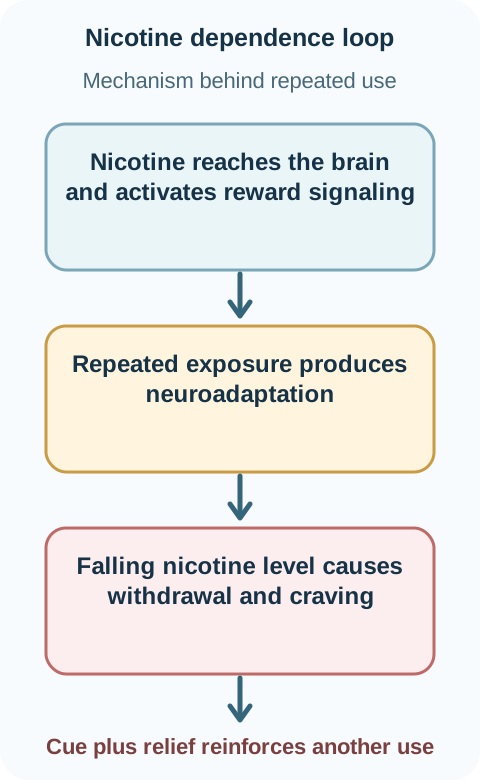
Central relationship: inhaled nicotine reaches the brain rapidly and activates neuronal nicotinic acetylcholine receptors, including alpha4beta2 receptors in reward pathways. Dopamine signaling reinforces repeated use. Repeated exposure produces neuroadaptation, so a falling nicotine level can produce craving, irritability, restlessness, and difficulty concentrating. Dependence is therefore a learned and biologic process, not a character defect. [4][6][9]
Reinforcement and withdrawal form a cycle. Treatment can reduce withdrawal and weaken the connection between a cue and smoking.
Mechanism to treatment: nicotine replacement supplies nicotine without cigarette combustion products. A patch provides slower background delivery, while gum or lozenge can address shorter episodes of craving. Varenicline is a partial alpha4beta2 receptor agonist that reduces withdrawal while limiting the reward from smoking. Bupropion changes dopamine and norepinephrine signaling and has its own seizure-related exclusions. The treatment choice still depends on the patient's history, preferences, contraindications, and follow-up plan. [4][6][17][18][20]
Across levels: Level 1 asks what drives dependence and how medicines alter it. Level 2 asks which treatment and technique fit the patient. Level 3 asks how to prevent relapse, protect others, and connect cessation with chronic disease care. The Beyond section adds typical adult schedules and escalation points for learning; verify prescribing decisions against current labeling and the patient's clinical context.
Try it here · Checkpoint 1 of 3
Make your prediction before reading the choices. A first attempt is just a starting point.
Case 7
Show answer and explanations for case 7
A. Replace the patch with 2 mg gum used only after meals (Why this does not fit)
This loses effective background coverage and selects the lower gum strength despite smoking within 30 minutes of waking.
Reasoning steps for option A
Why might gum after meals appeal?
His residual urges occur after meals despite good patch control.
What do 15 minutes after waking and effective 21 mg coverage imply?
Use 4 mg rather than 2 mg gum and preserve the patch baseline instead of replacing it.
B. Keep the patch and add 2 mg gum for breakthrough urges (Why this does not fit)
The timing strategy is suitable; the prequit time to first cigarette supports 4 mg rather than 2 mg gum.
Reasoning steps for option B
Why add short-acting gum to a working patch?
The patch controls baseline withdrawal but not brief after-meal urges.
Which gum strength matches a cigarette within 15 minutes of waking?
Four milligrams, not two; early first cigarette guides oral NRT strength.
C. Keep the patch and add 4 mg gum for breakthrough urges (Best answer)
Steady withdrawal is already controlled, supporting continued patch use. Smoking within 30 minutes of waking supports 4 mg gum for episodic symptoms, with proper technique and follow-up.
Reasoning steps for option C
What does the 21 mg patch already accomplish?
It controls daytime background withdrawal without adverse effects.
How should the after-meal urge and early first cigarette be addressed?
Add 4 mg gum for episodic craving while keeping effective baseline coverage.
D. Replace the patch with 4 mg gum used only after meals (Why this does not fit)
The gum strength fits dependence history; after-meal-only dosing would abandon the effective continuous baseline coverage.
Reasoning steps for option D
Why choose 4 mg gum?
He formerly smoked within 15 minutes of waking, within the 30-minute criterion.
Why not replace the patch with after-meal-only gum?
That abandons effective continuous control of background withdrawal; match rescue and baseline to distinct time patterns.
Takeaway: Steady withdrawal is already controlled, supporting continued patch use. Smoking within 30 minutes of waking supports 4 mg gum for episodic symptoms, with proper technique and follow-up.
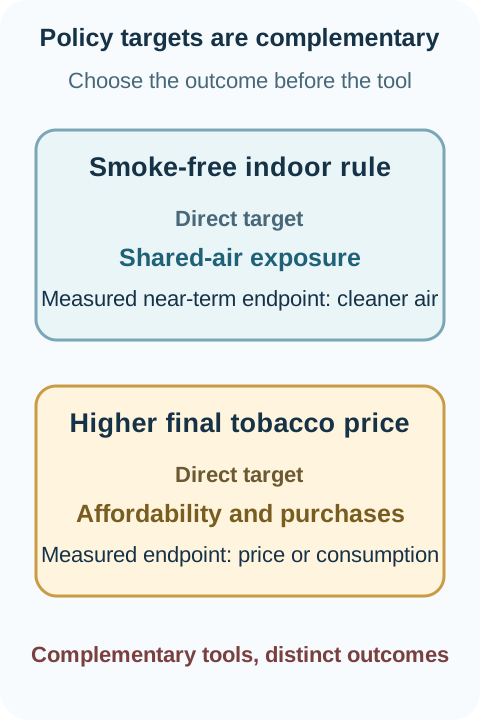
Question: If a city bans smoking in enclosed workplaces, what changes first: the price of a cigarette or a coworker's exposure? Smoke-free rules protect people sharing indoor air and reduce opportunities to smoke; excise taxes instead increase the price paid when a purchase is made. They are complementary structural policies, not interchangeable winners in a universal ranking. WHO's MPOWER framework includes protecting people from smoke, raising taxes, warning about harms, offering cessation support and other measures. [1][2][3]
Two structural pathways: protection from involuntary exposure and reduced affordability. The arrows are conceptual, not measured effect sizes.
Try: A school board asks how to protect cafeteria staff now; choose between a tobacco tax and a comprehensive indoor smoke-free rule. Consequence: the rule directly removes workplace smoke exposure; a tax may reduce consumption but cannot guarantee this staff member's air is smoke-free. Now change the endpoint to discouraging youth purchases: increasing price becomes a particularly relevant tool.
Enforcement, baseline tax, illicit trade, local implementation and substitution affect actual results. A warning label is not useless: prominent graphic warnings communicate risk and support quit intentions, while packaging and retail rules can complement broader policies. Retail age-of-sale enforcement and access restrictions can support youth prevention. The smoke-free legislation review found clearer cardiovascular benefits than consistent changes in smoking prevalence or consumption; do not promise a fixed prevalence decline after one year. [3][1]
A bounded price prediction
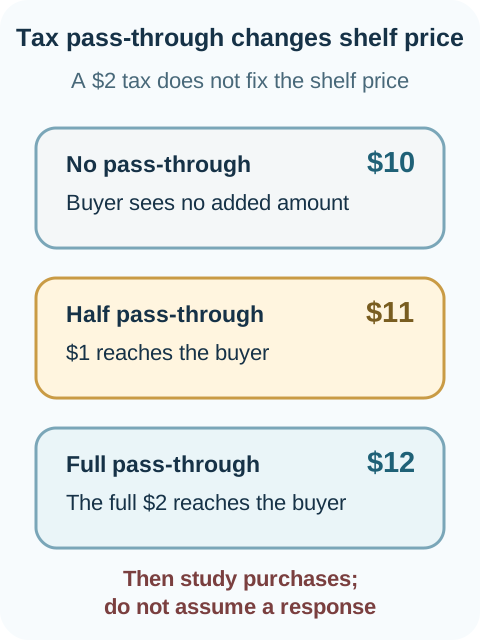
Imagine a pack costs $10 and a $2 tax is fully passed through: displayed shelf price becomes $12. If only half is passed through, shelf price becomes $11; if none is passed through, it remains $10. First predict which price a buyer sees under each assumption, then compare these three visible outcomes. The tax amount alone does not determine the shelf price. This arithmetic is a teaching model, not a forecast of smoking prevalence; income, product substitution and industry pricing also matter. [2]
Predict the shelf price, then compare half and full tax pass-through
The orange extension changes from $1 to $2 as pass-through changes from half to full. Close and reopen to compare again; all worked arithmetic is also visible above.
Transfer: Transfer: when comparing a tax proposal with a clean-air ordinance, specify whether the measured outcome is price, consumption, initiation or exposure before claiming superiority.
Conversation: turn identification into a supported quit attempt
Misconception: telling someone to quit is the entire intervention. Nicotine stimulates brain nicotinic receptors and reinforces repeated use; withdrawal can include irritability, restlessness, difficulty concentrating and craving. Dependence explains why a plan, medication when appropriate, and repeated support outperform a lecture. Ask about cigarettes, other tobacco and nicotine products, amount, prior attempts and interest in quitting without assuming a former smoker still smokes. [4][5]
Use the 5 As as a clinical map: Ask about use; Advise clearly and personally to quit; Assess willingness; Assist with counseling, a quit plan and approved treatment when indicated; Arrange follow-up. The map is not a prerequisite gate that forbids helping someone who volunteers readiness. Someone who is not ready still deserves a nonjudgmental discussion of concerns and an invitation to revisit; someone ready can identify triggers, choose a date and enlist support. A recent quitter needs reinforcement and relapse-prevention follow-up rather than another generic warning. Behavioral counseling plus pharmacotherapy is effective for nonpregnant adults. [4]
Try: A patient says, “I quit two weeks ago, but the commute makes me want one.” Before recommending a new quit date, decide whether this is initiation or maintenance. Visible consequence: acknowledge abstinence, identify the commute cue, rehearse an alternative and arrange contact, preferably during the first week of a new quit attempt; treating the patient as still smoking misses an important success.
Transfer to a patient who says “not yet”: ask what matters to them and offer future support rather than ending care. Offer a quitline or counseling referral if available, and record the patient's current status so the next clinician can respond accurately. [5]
Medicines: cover baseline withdrawal and breakthrough craving
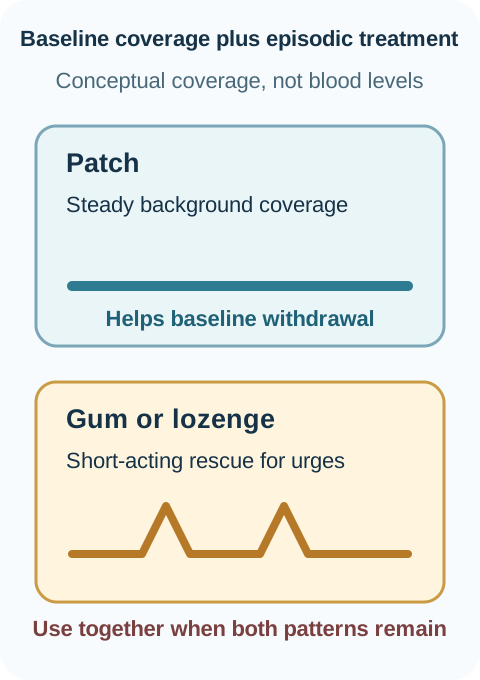
Question: A person wears a nicotine patch but still wants a cigarette after lunch. Does that prove treatment failed? The patch supplies relatively steady nicotine; gum or a lozenge can address episodic craving. Combining long-acting and short-acting nicotine replacement therapy (NRT) is more effective than a single NRT form. NRT supplies nicotine without combustion products, although nicotine itself is not harmless. Gum is chewed briefly then parked between cheek and gum; acidic beverages can interfere with oral nicotine absorption.
Patch and gum dosing: The patch is available in 7, 14 and 21 mg strengths: people smoking more than 10 cigarettes daily commonly begin at 21 mg, with later step-down individualized. Gum comes in 2 and 4 mg; smoking within 30 minutes of waking usually points to 4 mg. Use scheduled gum early in a quit attempt when instructed, not only after cravings become overwhelming. Avoid eating or drinking for 15 minutes before or during gum use; chew and park repeatedly for about 30 minutes.
Technique and safety: Other NRT forms include lozenges, inhaler and nasal spray. A brief smoking lapse does not require stopping a patch; reassess triggers and symptoms and recommit to abstinence. Fold used patches closed and keep all nicotine products away from children and pets. Match dose and schedule to dependence and product instructions rather than guessing from this diagram. [4][17][18]
The level line represents baseline coverage, the peaks represent breakthrough cravings; neither line depicts measured blood nicotine concentrations.
Try: Predict which component addresses a predictable after-meal urge. Consequence: a short-acting form can be used for that craving while the patch addresses background withdrawal; add a plan for the meal cue rather than simply increasing all doses. Transfer to insomnia with a patch: review timing or formulation and assess other causes before abandoning cessation treatment. Patch skin irritation and oral-form jaw or gastrointestinal effects may guide selection. [4]
Varenicline partially activates alpha4beta2 nicotinic receptors, reducing withdrawal and smoking reward. For a typical adult regimen, start 0.5 mg daily for days 1 to 3, 0.5 mg twice daily for days 4 to 7, then 1 mg twice daily from day 8, commonly for 12 weeks; select a quit date and adjust for severe renal impairment.
Renal and seizure safety: When creatinine clearance is below 30 mL/min, start 0.5 mg once daily and do not exceed 0.5 mg twice daily; for end-stage renal disease on hemodialysis, the maximum is 0.5 mg once daily if tolerated. Nausea and vivid dreams are common. Monitor for mood or behavioral changes and stop the medicine and seek medical assessment if a seizure occurs: rare seizure reports mean it is wrong to declare varenicline categorically safe in anyone with a seizure history.
Psychiatric monitoring: Stable psychiatric illness alone does not exclude varenicline. The EAGLES trial did not find a significant excess of its prespecified moderate or severe neuropsychiatric events attributable to varenicline versus patch or placebo, but monitoring remains necessary. Review current labeling and individualized risks before prescribing. [16][6]
Bupropion SR acts through dopamine and norepinephrine pathways; an adult regimen commonly begins 150 mg daily for 3 days, then 150 mg twice daily at least 8 hours apart, beginning before the quit date. It is contraindicated with a seizure disorder, current or prior bulimia or anorexia, concurrent monoamine oxidase inhibitor use, and abrupt discontinuation of alcohol, benzodiazepines, barbiturates or antiepileptic drugs.
Screen for interactions and other contraindications; monitor mood and blood pressure, particularly when combined with a nicotine patch. The cessation-specific label recommends starting one week before the quit date and treating for 7 to 12 weeks. If a patient has seizures, do not merely swap automatically to varenicline: review its seizure warning and consider NRT with counseling and individual assessment.
These doses are educational examples, not a prescription. [19][20]
Special populations: avoid an automatic medication rule
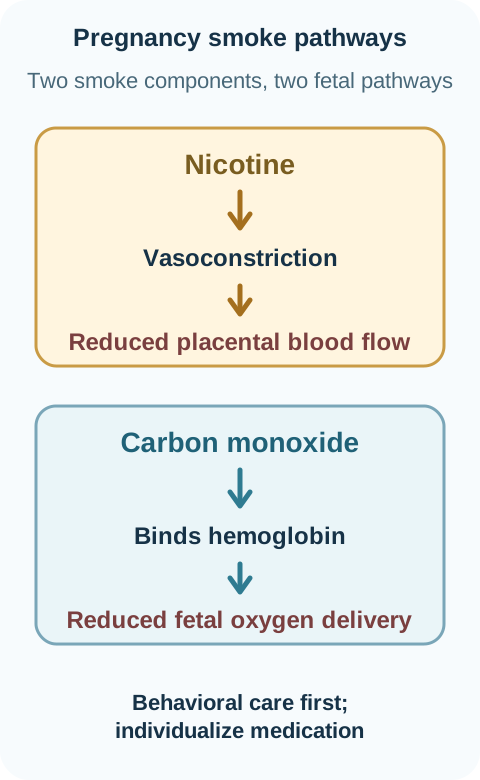
Misconception: after counseling fails in pregnancy, NRT must be prescribed. Smoking in pregnancy raises risks of fetal growth restriction, preterm birth, placenta previa, placental abruption, oral clefts, perinatal death; nicotine can impair placental blood flow while carbon monoxide reduces fetal oxygen delivery, so cessation matters urgently.
Pregnancy decision: Behavioral interventions have established benefit and are first-line. The USPSTF finds evidence insufficient to determine the balance of benefits and harms of cessation pharmacotherapy in pregnancy. If counseling alone has not worked, discuss dependence severity and potential risks with the pregnant patient and obstetric team; NRT may be considered after discussing the known harms of continued smoking and possible treatment risks, with a clear commitment to quit and close supervision rather than as a blanket default.
Quitting at any point in pregnancy benefits the patient and fetus. Varenicline and bupropion have limited pregnancy-specific cessation evidence. Old lettered pregnancy categories should not substitute for current risk discussion. [4][7]
Pregnancy counseling separates the known harms of continued smoking from the remaining uncertainty about cessation medication.
Try: A pregnant patient smoking daily asks for a patch after two attempts. Predict the first response: offer tailored behavioral support and explore prior attempts, then discuss uncertainty and individualized options rather than promising that medication is proven safe or demanding continued smoking. Consequence: the patient receives an actionable plan while avoiding an unsupported universal safety claim. Transfer to postpartum care: ask about relapse and protect the infant's home and car from smoke.
Youth prevention: For school-aged children and adolescents, primary care clinicians should offer education or brief counseling to prevent initiation, including e-cigarette use. Evidence is insufficient for a universal primary-care cessation medication recommendation in youth; assess dependence, context and co-occurring concerns and arrange age-appropriate support.
Adolescent treatment: The AAP advises that clinicians may consider prescribed off-label NRT for a motivated adolescent with moderate or severe nicotine dependence, together with counseling and follow-up; under-18 users require a prescription for NRT. A 16-year-old with seizures should not receive bupropion by rote, nor should varenicline be called seizure-safe; evaluate collaboratively. E-cigarettes are not FDA-approved cessation medication and should not be prescribed as an automatic substitute for evidence-based support.
Adult evidence: For adults, a Cochrane review finds nicotine e-cigarettes improve cessation compared with NRT in studied settings; that finding does not establish long-term safety, make vaping appropriate for youth or pregnancy, or by itself settle population-policy choices. Continued cigarette smoking during dual use sustains combustion exposure. [13][12][4]
Try it here · Checkpoint 2 of 3
Make your prediction before reading the choices. A first attempt is just a starting point.
Case 14
Show answer and explanations for case 14
A. Benefit is established and important harm is excluded; prescribe NRT routinely (Why this does not fit)
Both intervals include 1. The cessation estimate remains imprecise, and the preterm-birth interval includes a potentially important increase in harm.
Reasoning steps for option A
Why might RR 1.4 for cessation sound promising?
Its point estimate favors NRT.
Do these intervals establish benefit and exclude preterm harm?
No; 0.8 to 2.4 includes no cessation effect and 0.6 to 2.1 includes potentially important preterm harm.
B. Benefit is unproven and harm is excluded; offer NRT without further risk discussion (Why this does not fit)
The cessation conclusion recognizes uncertainty; a nonsignificant safety result does not exclude important harm when its interval extends to 2.1.
Reasoning steps for option B
Why call cessation benefit unproven?
The 95% interval of 0.8 to 2.4 includes 1.
Does preterm RR 0.6 to 2.1 exclude harm?
No; it extends to 2.1, so discuss uncertainty rather than assuring safety.
C. Benefit is established and harm remains uncertain; replace behavioral treatment with NRT (Why this does not fit)
The safety uncertainty is recognized; the efficacy interval also includes no benefit, and ongoing behavioral support should not be discarded.
Reasoning steps for option C
Why acknowledge safety uncertainty?
The preterm-birth interval spans 0.6 to 2.1.
What prevents replacing behavioral care with NRT?
The cessation interval also includes 1, and behavioral support remains first-line in pregnancy.
D. Both benefit and harm remain uncertain; continue behavioral care and discuss individualized supervised options (Best answer)
The cessation interval includes no effect, while the safety interval includes meaningful harm as well as no harm. Persistent smoking and commitment to quit warrant individualized risk-benefit discussion, not automatic treatment or a safety guarantee.
Reasoning steps for option D
Does the trial prove cessation benefit?
No; RR 1.4 has a 95% interval from 0.8 to 2.4.
What follows from the preterm interval and continued smoking?
RR 0.6 to 2.1 leaves harm uncertain; continue behavioral support and discuss supervised individualized options.
Takeaway: The cessation interval includes no effect, while the safety interval includes meaningful harm as well as no harm. Persistent smoking and commitment to quit warrant individualized risk-benefit discussion, not automatic treatment or a safety guarantee.
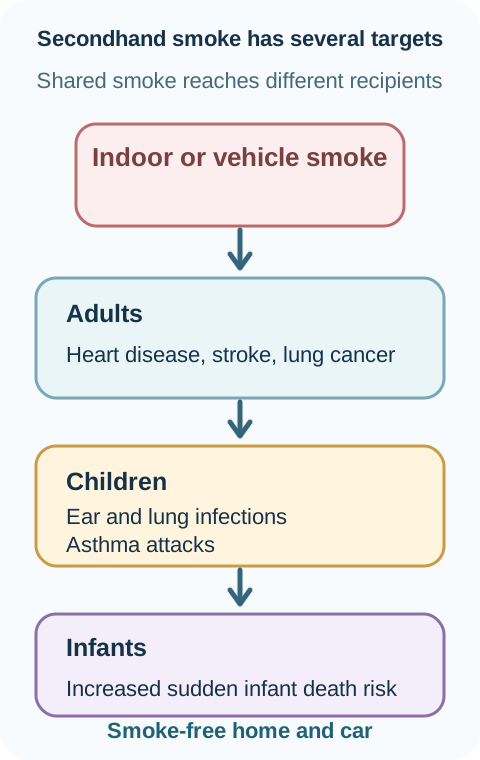
Question: A child has recurrent ear infections and a parent smokes only in the car. Is opening a window adequate protection? Secondhand smoke has no established safe exposure level. In adults it causes coronary heart disease, stroke and lung cancer. Even brief exposure can injure vascular endothelium and increase platelet activity; no universal 30-minute threshold defines safety.
CDC estimates that exposed nonsmoking adults have about 25% to 30% higher coronary risk, 20% to 30% higher stroke risk and 20% to 30% higher lung cancer risk than unexposed nonsmokers. These are relative increases, not each person's absolute probability. In children, it increases respiratory infections, middle-ear disease and asthma attacks, and in infants it is linked causally to sudden infant death syndrome (SIDS).
Smoke exposure during pregnancy is associated with lower birth weight, distinct from harms caused by the pregnant person's own smoking. [8]
One exposure route, different vulnerable recipients. The diagram does not imply that each outcome has equal likelihood.
Try: Decide whether a smoke-free bedroom alone protects an infant when smoking occurs in the kitchen. Consequence: smoke moves through shared indoor air, so a completely smoke-free home and car are more protective than room-by-room exceptions or ventilation. Offer cessation help to household members without blaming the family; keep the child's ear disease or asthma under appropriate clinical care. Transfer to a nonsmoking pregnant worker: workplace smoke-free protection matters even when the person herself does not smoke. [8]
Long-term: prevent disease and screen the right person
Misconception: once someone has smoked for decades, quitting and prevention no longer matter. Tobacco exposure contributes to lung cancer, COPD, atherosclerotic cardiovascular disease, bladder and kidney cancer, and head and neck and esophageal cancer. Smoking causes most lung cancer deaths in the United States, but lung cancer also occurs without a smoking history. Smoke carcinogens contact airway tissues and are excreted through urine, exposing bladder urothelium.
Alcohol and tobacco together amplify head and neck cancer risk; HPV is another important cause of oropharyngeal cancer, so do not attribute every lesion solely to smoking. Persistent oral sores, hoarseness or dysphagia require assessment. [14]
Cancer and COPD: Adenocarcinoma is the most common lung cancer histologic type overall; squamous carcinoma is strongly associated with smoking but is not the most common type among current smokers by default. Smoking cessation improves cardiovascular prognosis and slows the accelerated decline in lung function in COPD, even when inhalers remain necessary for symptoms.
Recovery timeline: Heart-attack risk drops sharply within 1 to 2 years after quitting. The added risk of coronary heart disease falls by about half at 3 to 6 years; at about 15 years, coronary risk approaches that of someone who never smoked. These are different endpoints, not a single universal recovery clock. [10][9]
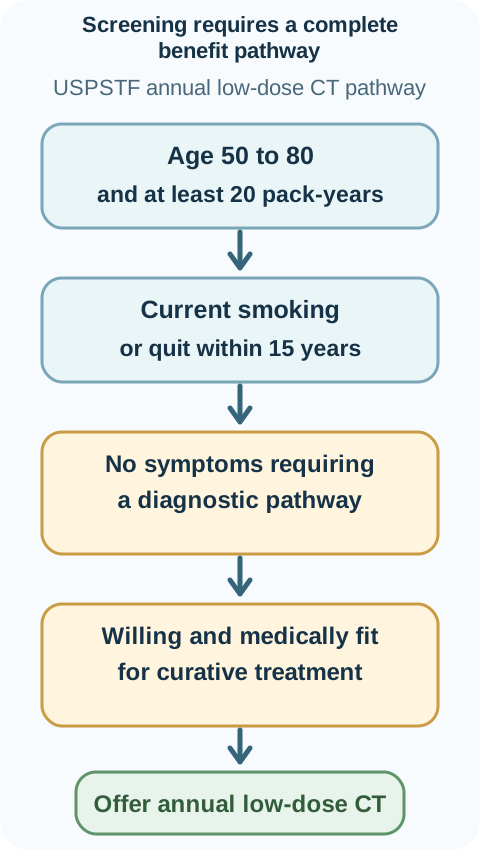
Try: A 56-year-old who smoked one pack daily for 22 years quit 8 years ago and has no lung symptoms. Calculate 1 pack/day × 22 years = 22 pack-years. Consequence: under USPSTF criteria, offer shared decision-making about annual low-dose CT: age 50 to 80, at least 20 pack-years, current smoking or quit within 15 years.
Stop when 15 years smoke-free or a health problem substantially limits life expectancy or the ability or willingness to undergo curative lung surgery. Screening can yield false positives and does not replace cessation; hemoptysis or unexplained weight loss requires diagnostic evaluation, not the routine screening pathway. Painless visible hematuria also needs its own urinary-tract evaluation even in a former smoker.
Transfer: changing quit time to 17 years removes this person from this specific USPSTF screening criterion, but does not erase prior risk. [11]
Screening is for an eligible asymptomatic person. Symptoms or no acceptable downstream treatment pathway change the task.
Established disease: Distal ischemia in a younger tobacco user can suggest thromboangiitis obliterans (Buerger disease), an inflammatory occlusive vascular disease strongly linked to tobacco. Evaluate other causes of digital ischemia and pursue complete tobacco cessation; merely cutting down does not reliably arrest progression; protect ischemic tissue, assess wound infection and refer for vascular evaluation where needed. [15] A patient with COPD still benefits from cessation even if spirometry does not return to normal. The practical distinction is between preventing further exposure, treating established disease and using screening only in eligible asymptomatic people. [9]
Beyond: dosing, monitoring, and escalation in real care
Typical adult schedules: a common varenicline schedule is 0.5 mg once daily on days 1 to 3, 0.5 mg twice daily on days 4 to 7, then 1 mg twice daily, usually for 12 weeks. Severe renal impairment requires a lower ceiling. A common bupropion SR schedule is 150 mg once daily for 3 days, then 150 mg twice daily at least 8 hours apart, started before the quit date. Patch and short-acting nicotine doses depend on prior use and product instructions. These are learning ranges, not a prescription; verify against current labeling before use. [6][17][18][20]
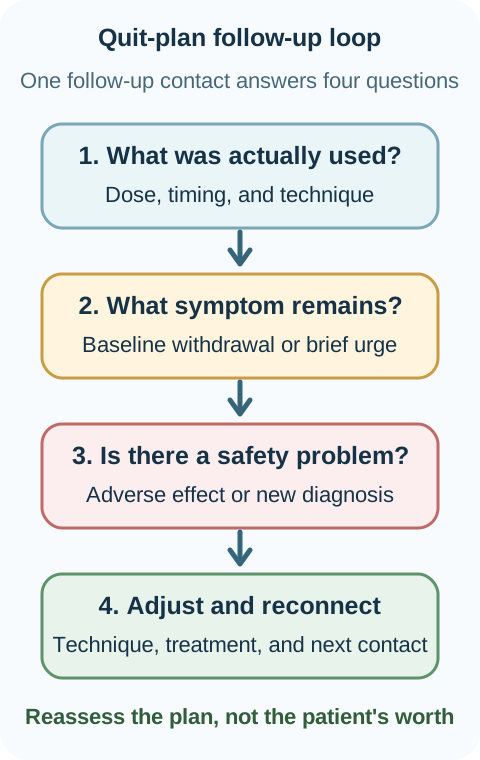
First follow-up: ask about actual product use, baseline withdrawal, predictable breakthrough urges, adverse effects, lapses, and the cue that preceded each lapse. Correct technique before calling a medicine ineffective. Continue effective background treatment after a limited lapse when clinically appropriate, restore abstinence promptly, and arrange another contact rather than treating the attempt as lost. [5][17][18]
Reassessment is a loop: verify use, interpret symptoms, adjust one cause at a time, and reconnect.
Escalate the right problem: a seizure during varenicline treatment requires stopping the medicine and medical assessment. Suspected nicotine poisoning, severe chest symptoms, or major mood or behavior changes require prompt evaluation. Pregnancy medication decisions should involve the obstetric team. Ischemic digits or ulcers need vascular and wound assessment; hemoptysis with weight loss, painless visible hematuria, or a persistent oral lesion with a firm node requires diagnostic evaluation rather than routine screening or cessation follow-up alone. [6][7][9][14][15]
Counsel with precision: tobacco-product marketing authorization is not approval as a cessation medicine. Adult trial efficacy does not prove long-term safety or make continued dual cigarette use safe. A smoke-free rule, a tax, a medication, and a screening program answer different questions, so name the endpoint before promising benefit. [1][2][3][13][21]
Try it here · Checkpoint 3 of 3
Make your prediction before reading the choices. A first attempt is just a starting point.
Case 25
Show answer and explanations for case 25
A. Marketing authorization establishes cessation-drug approval, but the remaining cigarettes still carry risk (Why this does not fit)
The continued smoking risk is correctly recognized; tobacco-product authorization is not approval as a cessation medication.
Reasoning steps for option A
What part of the proposed response is right?
Six cigarettes daily still sustain combustion exposure.
What does tobacco-product marketing authorization not establish?
Approval as a cessation drug; distinguish regulatory status from the goal of complete cigarette abstinence.
B. Authorization is not cessation-drug approval; continued smoking remains harmful, so plan complete cessation (Best answer)
Regulatory category, adult trial efficacy and this patient's ongoing combustion exposure are distinct. Offer an individualized complete-cessation plan and established counseling and medication options.
Reasoning steps for option B
What does his drop from 20 to six cigarettes show?
A reduction, not cigarette abstinence.
How should authorization and adult efficacy be separated?
Marketing permission is not cessation-drug approval; adult trial efficacy does not make continued smoking safe.
C. Marketing authorization is not cessation-drug approval, so controlled trials cannot support a cessation effect (Why this does not fit)
Lack of approval does not mean lack of trial evidence; adult nicotine e-cigarette trials have demonstrated cessation benefit in studied settings.
Reasoning steps for option C
What regulatory distinction is accurate?
Tobacco-product authorization is not approval as a cessation medication.
Does that negate controlled adult cessation findings?
No; adult trials show benefit in studied settings, independently of drug-approval status.
D. Adult trial efficacy establishes that reducing to six cigarettes gives the same health benefit as abstinence (Why this does not fit)
The trial endpoint of smoking abstinence is not equivalent to this patient's continuing dual use; a reduced cigarette count does not establish equivalent benefit.
Reasoning steps for option D
Why might adult trial success seem reassuring?
Nicotine e-cigarettes improved cigarette cessation in studied adults.
What is different about this 45-year-old?
He still smokes six cigarettes daily, so trial abstinence cannot be equated with safe dual use.
Takeaway: Regulatory category, adult trial efficacy and this patient's ongoing combustion exposure are distinct. Offer an individualized complete-cessation plan and established counseling and medication options.
Practice: choose the endpoint and justify the next step
Case 1
Show answer and explanations for case 1
A. A: strengthen real-price policy; B: increase cigarette excise tax (Why this does not fit)
A still has an affordability-related gap; in B the unaddressed finding is occupational indoor exposure, which a further price increase does not directly prohibit.
Reasoning steps for option A
Why consider price action in A and B?
A has falling real prices and B saw youth purchases fall after a price increase.
What remains unprotected in B?
Forty percent of restaurant staff report indoor smoke exposure; target workplace air with a smoke-free rule, not another tax.
A has achieved substantial indoor protection but has falling real prices and persistent youth purchasing; B has a remaining workplace exposure gap despite its purchasing response.
Reasoning steps for option B
What gap remains after A reduced staff exposure from 40% to 3%?
Youth purchases remain high as real cigarette prices fall.
What remains after B reduced youth purchases?
Forty percent of staff still encounter indoor smoke; match price policy to affordability and smoke-free enforcement to exposure.
C. A: expand indoor smoke-free enforcement; B: enforce indoor smoke-free protection (Why this does not fit)
The B choice addresses its remaining gap; A already has low measured indoor exposure while affordability and youth purchasing remain unaddressed.
Reasoning steps for option C
Why enforce a smoke-free rule in B?
Forty percent of its restaurant staff still report indoor exposure.
Why not prioritize the same action in A?
A already reduced exposure to 3% while youth purchases and falling real prices remain its measured gap.
D. A: expand indoor smoke-free enforcement; B: increase cigarette excise tax (Why this does not fit)
Each action extends the intervention associated with the already improved endpoint rather than targeting the remaining measured gap in that county.
Reasoning steps for option D
Why might repeating both existing interventions seem attractive?
A reduced indoor exposure and B reduced youth purchases with those approaches.
What does each county still lack?
A needs affordability action and B needs workplace smoke protection; target the remaining endpoint rather than the successful one.
Takeaway: A has achieved substantial indoor protection but has falling real prices and persistent youth purchasing; B has a remaining workplace exposure gap despite its purchasing response.
A. Target price$12; smoking intensity has declined but prevalence is unchanged (Best answer)
Baseline income bought 100 packs, so$1200 requires a$12 price to restore that capacity. The same 200 of 1000 still smoke, while cigarettes per smoker have fallen.
Reasoning steps for option A
How many packs did the original income buy?
$1000 divided by $10 buys 100 packs.
What price buys that same number at the new income?
$1200 divided by 100 packs is $12.
Did the number of smokers change?
No; 200 of 1000 still smoke, while cigarettes per smoker declined.
B. Target price$12; smoking prevalence has declined but intensity is unchanged (Why this does not fit)
The price target correctly offsets income growth; the survey shows an unchanged smoker count and reduced consumption per smoker, not reduced prevalence.
Reasoning steps for option B
Why is the $12 target reasonable?
It restores 100 purchasable packs at the new $1200 income.
What would a prevalence decline require here?
Fewer than 200 smokers in the same 1000-person cohort.
Which measured quantity actually declined?
Mean cigarettes per smoker fell from 10 to 8.
C. Target price$11; smoking intensity has declined but prevalence is unchanged (Why this does not fit)
The survey interpretation is correct;$1200 at$11 buys about 109.1 packs rather than the baseline 100, so affordability is not restored.
Reasoning steps for option C
What do the unchanged counts establish?
Smoking prevalence remains 20%.
Does the $11 price restore original affordability?
No; $1200 divided by $11 buys about 109.1 packs rather than 100.
How should income changes be handled?
Compare income relative to price instead of nominal price alone.
D. Target price$11; smoking prevalence has declined but intensity is unchanged (Why this does not fit)
The target ignores the larger proportional income rise, and the survey change in cigarettes per smoker is mistaken for a change in smoker prevalence.
Reasoning steps for option D
What is wrong with leaving the target at $11?
Income has risen enough that $11 still buys more packs than at baseline.
What is wrong with calling the survey change lower prevalence?
The smoker count is unchanged; the reduction is in consumption per smoker.
Takeaway: Baseline income bought 100 packs, so$1200 requires a$12 price to restore that capacity. The same 200 of 1000 still smoke, while cigarettes per smoker have fallen.
A. Youth have the larger proportional decline; adults have the larger absolute decline (Best answer)
The predicted declines are 4% of 1000=40 adult packs and 8% of 200=16 youth packs. Relative responsiveness and total packs prevented rank the groups differently.
Reasoning steps for option A
What proportional changes follow a 10% price rise?
Adults decline 4% and youth 8% under the supplied linear rates.
What are those changes in weekly packs?
Forty of 1000 adult packs versus 16 of 200 youth packs; relative and absolute rankings differ.
B. Adults have the larger proportional decline; adults have the larger absolute decline (Why this does not fit)
The larger adult baseline produces more avoided packs, but the supplied youth response is 8% versus 4% in adults.
Reasoning steps for option B
Why might adults appear to lead?
Their larger 1000-pack baseline produces 40 avoided packs.
Which group is proportionally more responsive?
Youth decline 8% versus adults 4%; distinguish response rate from volume.
C. Youth have the larger proportional decline; youth have the larger absolute decline (Why this does not fit)
Youth are proportionally more responsive, but 8% of 200 is 16, smaller than 4% of 1000=40.
Reasoning steps for option C
Why select youth for proportional decline?
Their supplied response yields an 8% decline versus 4% in adults.
Does 8% of 200 exceed 4% of 1000?
No: 16 is less than 40 packs; multiply rates by each baseline before ranking counts.
D. Adults have the larger proportional decline; youth have the larger absolute decline (Why this does not fit)
Both rankings reverse the supplied response rates and their application to the different baseline purchase volumes.
Reasoning steps for option D
Why might a 1000-pack adult baseline suggest a stronger response?
It yields more packs avoided than the 200-pack youth baseline.
What do the supplied rates and products actually show?
Youth fall 8% versus adults 4%, but adults avoid 40 packs versus 16; separate both endpoints.
Takeaway: The predicted declines are 4% of 1000=40 adult packs and 8% of 200=16 youth packs. Relative responsiveness and total packs prevented rank the groups differently.
A. A 30-percentage-point reduction attributable to the law (Why this does not fit)
The 30-point decline is the raw change in A; it ignores the 10-point decline in B and concurrent clinics.
Reasoning steps for option A
What happened to exposure in County A?
It fell 30 percentage points, from 40% to 10%.
What must be subtracted before attributing the change?
County B fell 10 points, leaving 20 additional points; concurrent clinics prevent isolating the law.
B. A 20% relative reduction attributable to the law (Why this does not fit)
Subtracting changes yields 20 percentage points, not 20% relative risk; clinic expansion also prevents clean isolation of the law.
Reasoning steps for option B
Why might a 20-unit estimate appeal?
A fell 30 points and B fell 10 points.
What is the unit and causal limit?
The difference is 20 percentage points, not a 20% relative reduction; clinics and unverified parallel trends limit attribution.
C. A 20-percentage-point additional reduction, not necessarily caused entirely by the law (Best answer)
A falls 30 points and B falls 10, giving 20 additional points; concurrent clinics and the unverified parallel-trends assumption limit causal attribution.
Reasoning steps for option C
What are the two before-to-after changes?
A declines 30 points and B declines 10 points.
What does subtracting them establish?
A 20-point additional reduction, not proof it all came from the law given clinics and uncertain parallel trends.
D. A 10-percentage-point additional reduction, not necessarily caused entirely by the law (Why this does not fit)
The causal caution is appropriate; 10 points is the final between-county difference, not the difference in changes from unequal starting rates. The additional decline is 30 minus 10, or 20 points.
Reasoning steps for option D
Why does 10 points appear in these data?
Final rates differ by 20% minus 10%, or 10 points.
What comparison answers a difference-in-differences question?
Subtract the 10-point decline in B from A’s 30-point decline to get 20 points, with causal caution.
Takeaway: A falls 30 points and B falls 10, giving 20 additional points; concurrent clinics and the unverified parallel-trends assumption limit causal attribution.
A. Start bupropion before the quit date; schedule contact within the first postquit week (Why this does not fit)
Starting bupropion before quitting is familiar and follow-up timing is appropriate; the established seizure disorder contraindicates bupropion.
Reasoning steps for option A
Why consider prequit bupropion and early contact?
Bupropion is often begun before quitting, and first-week contact supports the attempt.
What excludes it for this 35-year-old?
His documented seizure disorder contraindicates bupropion; keep the early contact but use suitable NRT.
B. Plan patch use with the quit attempt; schedule contact within the first postquit week (Best answer)
The patch avoids the seizure-related bupropion contraindication. Early planned contact addresses withdrawal, triggers and treatment problems when they first arise.
Reasoning steps for option B
What medication has he accepted without a contraindication?
A nicotine patch for his quit attempt in ten days.
When should the first postquit contact occur?
Within the first week; pair appropriate medication with early withdrawal and trigger support.
C. Plan patch use with the quit attempt; schedule the first contact three months later (Why this does not fit)
The medication is suitable; delaying the first scheduled contact misses the recommended early support period.
Reasoning steps for option C
Why does a patch fit his seizure history?
He has no NRT contraindication and accepts a patch.
What is lost if contact waits three months?
Early postquit support for withdrawal and triggers; medication alone does not complete follow-up.
D. Start bupropion before the quit date; schedule the first contact three months later (Why this does not fit)
Both the medication contraindication and the long delay in planned follow-up remain unaddressed.
Reasoning steps for option D
Why could prequit dosing and later follow-up seem routine?
Bupropion commonly begins before a quit date and follow-up can assess progress.
Which two supplied constraints defeat the plan?
Seizures contraindicate bupropion, and three months delays the needed first-week contact.
Takeaway: The patch avoids the seizure-related bupropion contraindication. Early planned contact addresses withdrawal, triggers and treatment problems when they first arise.
A. Take the patch off at bedtime and use a fresh patch in the morning; resume abstinence now (Best answer)
The symptom pattern supports an overnight patch effect. A single lapse does not require stopping effective daytime NRT or postponing the quit attempt.
Reasoning steps for option A
What explains dreams only with overnight patch wear?
An overnight patch effect is plausible while daytime coverage remains effective.
Does one cigarette on day three require a new quit date?
No; remove the patch at bedtime, use a fresh one in the morning and resume abstinence now.
B. Take the patch off at bedtime and use a fresh patch in the morning; set a new quit date next month (Why this does not fit)
The sleep adjustment is reasonable; deferring abstinence unnecessarily ends a still-viable attempt after one cigarette.
Reasoning steps for option B
Why remove the patch overnight?
Dreams occur only when it is worn overnight.
Why not postpone quitting until next month?
One cigarette during an argument is a lapse, not a reason to end a viable quit attempt.
C. Keep the patch on overnight but reduce daytime dosing; resume abstinence now (Why this does not fit)
Immediate recommitment is appropriate; reducing effective daytime treatment does not specifically address symptoms tied to overnight wear.
Reasoning steps for option C
Why resume abstinence immediately?
He wants to remain abstinent after a single cigarette.
Why not reduce daytime dosing instead?
Daytime withdrawal is controlled and dreams track overnight wear; adjust timing, not effective daytime coverage.
D. Keep the patch on overnight but reduce daytime dosing; set a new quit date next month (Why this does not fit)
The plan reduces coverage when it is helping, retains the suspected sleep trigger and delays abstinence despite a limited lapse.
Reasoning steps for option D
Why might a restart seem prudent?
He smoked one cigarette and has vivid dreams.
Which facts favor a narrower adjustment?
Daytime control is good and dreams occur only overnight; remove at bedtime and recommit now rather than postpone.
Takeaway: The symptom pattern supports an overnight patch effect. A single lapse does not require stopping effective daytime NRT or postponing the quit attempt.
A. Bupropion SR, using the usual 150 mg daily start followed by 150 mg twice daily (Why this does not fit)
This is a familiar cessation regimen; prior bulimia remains a contraindication even in remission, and renal impairment also requires consideration.
Reasoning steps for option A
Why is the 150 mg then twice-daily regimen recognizable?
It is the usual bupropion SR cessation titration.
What does remote bulimia change?
Prior bulimia remains a contraindication even in remission; dose familiarity cannot override it.
B. Varenicline, starting 0.5 mg daily and titrating to 1 mg twice daily (Why this does not fit)
Varenicline avoids the bulimia-related bupropion exclusion; the proposed usual maximum is too high for creatinine clearance below 30 mL/min.
Reasoning steps for option B
Why favor varenicline over bupropion here?
Varenicline avoids the bulimia-related contraindication.
What does creatinine clearance of 22 mL/min prohibit?
It is below 30, so 1 mg twice daily exceeds the reduced maximum of 0.5 mg twice daily.
C. Varenicline, starting 0.5 mg daily and titrating if tolerated to no more than 0.5 mg twice daily (Best answer)
Prior bulimia excludes bupropion. Severe renal impairment without dialysis permits this reduced varenicline regimen, with routine symptom and mood monitoring.
Reasoning steps for option C
Which oral agent avoids the prior-bulimia exclusion?
Varenicline.
What regimen fits clearance 22 mL/min without dialysis?
Start 0.5 mg daily and if tolerated use at most 0.5 mg twice daily, with monitoring.
D. Bupropion SR, using a reduced dose or frequency because of renal impairment (Why this does not fit)
Dose reduction can address reduced clearance; it does not eliminate the contraindication from prior bulimia.
Reasoning steps for option D
Why might reducing bupropion address one concern?
Kidney impairment can warrant dose or frequency adjustment.
Does it address her remote bulimia?
No; prior bulimia independently contraindicates bupropion regardless of renal adjustment.
Takeaway: Prior bulimia excludes bupropion. Severe renal impairment without dialysis permits this reduced varenicline regimen, with routine symptom and mood monitoring.
A. Continue varenicline at a lower dose; reserve bupropion as the next routine option (Why this does not fit)
A lower dose may seem to preserve cessation benefit; labeling directs discontinuation after a seizure, and a new seizure also makes routine bupropion substitution inappropriate without assessment.
Reasoning steps for option A
Why might lower-dose varenicline seem useful?
It could appear to preserve cessation benefit after a seizure.
What does a seizure during varenicline treatment require?
Stop varenicline; do not routinely substitute seizure-risk bupropion before assessment.
B. Stop varenicline; reassess seizure risk before selecting another aid rather than routinely substituting bupropion (Best answer)
Varenicline labeling calls for stopping treatment after a seizure. Bupropion has its own seizure-related contraindications and risks, so continued counseling and individualized alternatives require reassessment.
Reasoning steps for option B
What action follows the generalized seizure in week two?
Stop varenicline under its seizure warning.
How should the immediate bupropion request be handled?
Reassess seizure risk first and continue individualized cessation support rather than automatically switching.
C. Stop varenicline; start bupropion immediately because it acts at different neurotransmitter pathways (Why this does not fit)
Discontinuation is correct; a different mechanism does not eliminate bupropion's seizure risk after this event.
Reasoning steps for option C
Why stop varenicline?
The seizure occurred during varenicline treatment.
Why is a different neurotransmitter pathway not sufficient reassurance?
Bupropion has its own seizure-related risks, so an immediate switch is inappropriate.
D. Continue varenicline with closer monitoring; defer bupropion while the seizure evaluation proceeds (Why this does not fit)
Deferring bupropion for reassessment is prudent; continuing varenicline confuses caution for a prior seizure history with the instruction to stop after a seizure during treatment.
Reasoning steps for option D
Why defer bupropion while causes are evaluated?
A new generalized seizure raises concern about seizure risk.
Why not continue varenicline with monitoring?
Its labeling directs discontinuation after a seizure on treatment, not merely closer observation.
Takeaway: Varenicline labeling calls for stopping treatment after a seizure. Bupropion has its own seizure-related contraindications and risks, so continued counseling and individualized alternatives require reassessment.
A. Start during withdrawal at 150 mg daily for 3 days, then 150 mg twice daily (Why this does not fit)
The gradual titration is correct; abrupt alcohol discontinuation is a contraindicated period for bupropion despite medical supervision.
Reasoning steps for option A
What is familiar about the proposed titration?
Bupropion commonly starts 150 mg daily for three days before twice-daily dosing.
What forbids starting tomorrow?
Abrupt alcohol cessation is a contraindicated period even in a supervised program; use available counseling and NRT.
B. Defer during withdrawal; if later appropriate, start 150 mg daily for 3 days before increasing to 150 mg twice daily (Best answer)
The withdrawal-related seizure risk first requires avoiding bupropion. If later reassessment supports use, gradual initiation reduces dose-related seizure risk; doses are at least 8 hours apart.
Reasoning steps for option B
What is the immediate alcohol-related concern?
He will abruptly stop heavy alcohol use during withdrawal.
If later reassessment permits bupropion, how should it begin?
Start 150 mg daily for three days then 150 mg twice daily at least eight hours apart.
C. Defer during withdrawal; if later appropriate, begin 150 mg twice daily on the first day (Why this does not fit)
The timing addresses alcohol withdrawal; it omits the initial 3 days of once-daily dosing intended to reduce seizure risk.
Reasoning steps for option C
Why defer bupropion during withdrawal?
Abrupt alcohol discontinuation is a contraindicated period.
What is missing from a first-day 150 mg twice-daily start?
The initial three days at 150 mg once daily, used to reduce dose-related seizure risk.
D. Start during withdrawal at 150 mg twice daily from the first day (Why this does not fit)
This combines the contraindicated withdrawal period with a starting dose that skips gradual titration.
Reasoning steps for option D
Why might a full dose during supervision seem feasible?
He is entering a supervised withdrawal program.
Which two labeled precautions still apply?
Do not start during abrupt alcohol discontinuation and do not skip the once-daily initial titration.
Takeaway: The withdrawal-related seizure risk first requires avoiding bupropion. If later reassessment supports use, gradual initiation reduces dose-related seizure risk; doses are at least 8 hours apart.
A. Use over-the-counter patch and lozenge without a prescription (Why this does not fit)
A lozenge avoids painful chewing; under-18 NRT use requires a prescription and individualized off-label assessment rather than adult OTC access.
Reasoning steps for option A
Why choose a lozenge over gum?
His temporomandibular dysfunction makes chewing painful.
Can this 17-year-old use adult OTC NRT access?
No; under-18 NRT requires a prescription and individualized off-label assessment.
B. Consider prescribed off-label patch plus lozenge with counseling and follow-up (Best answer)
Dependence and motivation support considering supervised off-label NRT. Prescription access is needed at 17, and a non-chewing short-acting form accommodates the jaw problem.
Reasoning steps for option B
What makes supervised NRT worth considering?
He is motivated, moderately dependent and still smokes despite counseling.
Which formulation and access address both constraints?
Prescribed off-label patch plus non-chewing lozenge, alongside counseling and close follow-up.
C. Consider prescribed off-label patch plus gum with counseling and follow-up (Why this does not fit)
The prescribing approach fits the age group; gum unnecessarily requires chewing in a patient with painful temporomandibular dysfunction.
Reasoning steps for option C
Why is prescribing off-label NRT reasonable to consider?
He has moderate dependence and can attend follow-up with family.
What defeats gum as his rescue form?
Painful temporomandibular dysfunction; use a non-chewing option instead.
D. Use over-the-counter patch plus gum without a prescription (Why this does not fit)
Both adult OTC access and the chewing formulation conflict with the supplied age and jaw symptoms.
Reasoning steps for option D
Why might a patch and gum cover two craving patterns?
A patch supplies baseline nicotine and gum addresses breakthrough urges.
Which supplied facts defeat this exact plan?
Age 17 requires prescription access, and chewing aggravates his jaw pain.
Takeaway: Dependence and motivation support considering supervised off-label NRT. Prescription access is needed at 17, and a non-chewing short-acting form accommodates the jaw problem.
A. The exposure index falls 55%; the uncontrolled before-after comparison does not isolate the law's causal effect (Best answer)
The index falls from 10 to 0.5 times 1 plus 0.5 times 8=4.5, a 55% reduction. Without a comparison group or control of other changes, that association does not isolate the law's effect.
Reasoning steps for option A
What is the baseline personal exposure index?
All shift time is at indoor concentration 10, so the index is 10.
What is the later time-weighted index?
Half of 1 plus half of 8 equals 4.5.
What proportional reduction is that?
The fall is 5.5 out of 10, or 55%.
Does this design isolate the law as the cause?
No; the uncontrolled before-after comparison cannot exclude other explanations.
B. The exposure index falls 90%; the uncontrolled before-after comparison does not isolate the law's causal effect (Why this does not fit)
The causal caution is appropriate;90% describes the indoor concentration change and ignores the increased time at the entrance.
Reasoning steps for option B
What measurement fell by 90%?
The indoor concentration fell from 10 to 1.
Why is that not the server exposure reduction?
Half the later shift is at entrance concentration 8.
What does time weighting yield?
A later index of 4.5 gives a 55% decline; the causal caution remains appropriate.
C. The exposure index falls 55%; this design establishes that the law caused the entire change (Why this does not fit)
The time-weighted arithmetic is correct; a single uncontrolled before-after comparison cannot exclude other explanations for the change.
Reasoning steps for option C
Why is the 55% calculation correct?
The index falls from 10 to 4.5 after weighting each location by time.
What prevents assigning all of that change to the law?
No comparison group or control of concurrent changes is supplied.
D. The exposure index falls 90%; this design establishes that the law caused the entire change (Why this does not fit)
The estimate ignores entrance exposure, and the design does not support attributing the full observed change to the law.
Reasoning steps for option D
What information does a 90% estimate omit?
It omits the half shift at the unchanged entrance concentration.
What independent limitation affects causality?
An uncontrolled before-after design cannot isolate the policy effect.
Takeaway: The index falls from 10 to 0.5 times 1 plus 0.5 times 8=4.5, a 55% reduction. Without a comparison group or control of other changes, that association does not isolate the law's effect.
A. No screening because total exposure is 16 pack-years (Why this does not fit)
Sixteen pack-years incorrectly applies the initial 0.5 pack per day to all 32 years; the correct total is 0.5 times 20 plus 1 times 12, or 22 pack-years.
Reasoning steps for option A
Why might 16 pack-years appear?
Applying 0.5 pack daily to all 32 smoking years gives 16.
What does the second 12-year period add?
One pack daily for 12 years adds 12 to the first period’s 10, totaling 22 pack-years.
B. One low-dose CT, with further imaging only if symptoms develop (Why this does not fit)
The patient meets risk and treatment criteria; a normal initial study does not replace the recommended annual screening schedule while eligible.
Reasoning steps for option B
Why offer LDCT at all?
At 58 with 22 pack-years and an eight-year quit interval, he meets the screening thresholds.
Why not stop after one normal scan?
Eligible asymptomatic patients are offered annual low-dose CT, not a one-time screen.
C. Annual chest radiography because he stopped smoking more than 5 years ago (Why this does not fit)
Eight years since cessation remains within the USPSTF 15-year interval; radiography is not the recommended screening test.
Reasoning steps for option C
Why does remote cessation alter screening consideration?
Quit time is part of eligibility.
Does eight years require chest radiography instead?
No; it is within 15 years and annual low-dose CT is the recommended modality.
D. Annual low-dose CT while he remains eligible (Best answer)
He has 22 pack-years, is 58, quit 8 years ago, is asymptomatic and would accept curative treatment, meeting the specified guideline criteria.
Reasoning steps for option D
What are his separate smoking exposures?
Ten cigarettes daily for 20 years gives 10 pack-years; 20 daily for 12 gives 12 more.
Do age, quit interval and treatment suitability support annual LDCT?
Yes; he is 58, quit eight years ago, is asymptomatic, is medically fit and would accept curative treatment.
Takeaway: He has 22 pack-years, is 58, quit 8 years ago, is asymptomatic and would accept curative treatment, meeting the specified guideline criteria.
A. Retain the routine annual screening appointment as the complete evaluation (Why this does not fit)
Her 30 pack-years meet the exposure criterion; new symptoms require a diagnostic pathway rather than screening alone.
Reasoning steps for option A
Why was screening initially plausible?
Two packs daily for 15 years gives 30 pack-years, and she quit six years ago.
What changes the pathway now?
New hemoptysis and weight loss require prompt diagnostic evaluation, not routine screening alone.
B. Arrange prompt diagnostic evaluation of the symptoms rather than relying on screening (Best answer)
The exposure calculation identifies substantial risk, but hemoptysis and weight loss change the clinical task from finding occult disease to evaluating suspected disease.
Reasoning steps for option B
What is her calculated tobacco exposure?
Thirty pack-years.
What do new hemoptysis and unexplained weight loss demand?
Diagnostic assessment of suspected disease rather than screening an asymptomatic person.
C. Treat presumed chronic bronchitis and reconsider imaging if symptoms remain after several months (Why this does not fit)
Smoking history makes bronchitis plausible; associated unexplained weight loss and hemoptysis should not be attributed to it without timely evaluation.
Reasoning steps for option C
Why might bronchitis occur to a clinician?
She has a substantial smoking history and hemoptysis.
Which accompanying finding prevents waiting several months?
Unintentional weight loss with new hemoptysis merits timely diagnostic evaluation.
D. Obtain spirometry first and pursue cancer evaluation only if obstruction is absent (Why this does not fit)
COPD can coexist with cancer; airflow obstruction would not explain away the concerning symptom combination.
Reasoning steps for option D
Why might spirometry be considered?
Smoking can cause obstructive lung disease.
Would obstruction explain away the current symptoms?
No; COPD can coexist with cancer, and hemoptysis plus weight loss still needs diagnostic evaluation.
Takeaway: The exposure calculation identifies substantial risk, but hemoptysis and weight loss change the clinical task from finding occult disease to evaluating suspected disease.
A. Continue annual LDCT until age 80 because she still meets age and exposure thresholds (Why this does not fit)
She meets numerical criteria; screening guidance also requires a reasonable pathway to benefit through diagnostic evaluation and curative treatment.
Reasoning steps for option A
Why does continued LDCT seem numerically eligible?
She is 76, has 45 pack-years and quit ten years ago.
What prevents expected screening benefit?
She declines biopsy and curative treatment; eligibility also depends on a feasible downstream pathway.
B. Reduce LDCT to every two years to limit the burden of follow-up (Why this does not fit)
Less frequent imaging may appear less burdensome; it does not resolve her decision not to undergo the interventions that provide screening benefit.
Reasoning steps for option B
Why might biennial imaging seem kinder?
It could reduce screening frequency for someone with advanced frailty.
Does it solve her stated refusal?
No; any detected lesion still lacks an acceptable biopsy and curative-treatment pathway.
C. Stop routine LDCT and continue goal-concordant care and cessation maintenance (Best answer)
The high baseline cancer risk remains, but her health and informed refusal of downstream curative care substantially limit screening benefit.
Reasoning steps for option C
Does stopping LDCT imply low lung-cancer risk?
No; her 45 pack-years still confer substantial risk.
Why stop routine screening nonetheless?
Advanced frailty and informed refusal of biopsy and curative care limit benefit; continue goal-concordant care.
D. Obtain one final LDCT before honoring the decision about future screening (Why this does not fit)
A final scan can feel reassuring; the same lack of an acceptable downstream pathway applies to that scan now.
Reasoning steps for option D
Why might one last LDCT feel reassuring?
Her daughter requests continued imaging despite high baseline risk.
What makes even one scan unsuitable now?
She already declines downstream biopsy and curative treatment, so its potential benefit is limited.
Takeaway: The high baseline cancer risk remains, but her health and informed refusal of downstream curative care substantially limit screening benefit.
The immediate rise reflects improved airway caliber. Cessation addresses the longer-term smoking-related loss while existing obstruction and indicated inhaler treatment may persist.
Reasoning steps for option D
What distinguishes the immediate response from the serial predose trend?
The acute response reflects changing airway caliber; the multiyear trend reflects ongoing loss.
What should be predicted after cessation?
Slower smoking-related decline, while existing obstruction and indicated inhaler needs may persist.
Takeaway: The immediate rise reflects improved airway caliber. Cessation addresses the longer-term smoking-related loss while existing obstruction and indicated inhaler treatment may persist.
A. Distal inflammatory thrombotic disease; replace cigarettes with smokeless tobacco (Why this does not fit)
The distribution and thrombophlebitis fit thromboangiitis obliterans; noncombustible tobacco can still sustain disease, so changing tobacco form is insufficient.
Reasoning steps for option A
What pattern supports distal inflammatory thrombotic disease?
A 34-year-old user has distal occlusions, proximal sparing and superficial thrombophlebitis.
Why not substitute smokeless tobacco?
Continued tobacco can sustain Buerger disease; complete tobacco cessation is the transferable target.
B. Distal inflammatory thrombotic disease; completely stop all tobacco use (Best answer)
The distal pattern with proximal sparing and superficial thrombophlebitis in a young user favors Buerger disease. Complete tobacco cessation addresses progression while established tissue injury still needs care.
Reasoning steps for option B
What finding favors Buerger disease over proximal atherosclerosis?
Distal segmental occlusions with proximal arteries spared and thrombophlebitis.
What tobacco and tissue actions follow?
Stop all tobacco to address progression while continuing wound and vascular care.
C. Predominantly proximal atherosclerotic disease; completely stop all tobacco use (Why this does not fit)
Cessation is beneficial for atherosclerotic disease too; the supplied distal distribution, spared proximal vessels and thrombophlebitis favor a different process.
Reasoning steps for option C
Why recommend cessation in either vascular disease?
Tobacco worsens vascular risk.
What defeats the proposed proximal diagnosis?
The supplied occlusions are distal with proximal sparing and thrombophlebitis, favoring Buerger disease.
D. Predominantly proximal atherosclerotic disease; replace cigarettes with smokeless tobacco (Why this does not fit)
Both the anatomic interpretation and the assumption that switching tobacco form adequately treats this distal tobacco-associated disease are inappropriate.
Reasoning steps for option D
Why might proximal atherosclerosis and switching products appeal?
Tobacco causes vascular disease and smokeless products avoid combustion.
What do anatomy and disease mechanism require instead?
Distal segmental disease with thrombophlebitis favors Buerger disease, for which complete tobacco cessation is needed.
Takeaway: The distal pattern with proximal sparing and superficial thrombophlebitis in a young user favors Buerger disease. Complete tobacco cessation addresses progression while established tissue injury still needs care.
A. Repeat urinalysis in one year because bleeding stopped (Why this does not fit)
Intermittent resolution does not eliminate the need to evaluate visible hematuria.
Reasoning steps for option A
Why might observation seem enough?
The visible bleeding has resolved today.
What persists despite resolution?
Two painless gross-hematuria episodes confirmed by microscopy in an older former smoker warrant urinary-tract evaluation.
B. Give empiric antibiotics and repeat culture despite a negative culture (Why this does not fit)
The negative culture does not support infection as the cause of visible bleeding.
Reasoning steps for option B
Why consider infection?
Bleeding can arise from urinary infection.
What supplied test defeats empiric antibiotics?
Culture is negative, so a bacterial explanation lacks support; evaluate visible hematuria.
C. Perform renal ultrasound alone and defer bladder assessment (Why this does not fit)
Upper-tract imaging alone can miss a urothelial source in the bladder.
Reasoning steps for option C
Why image the kidneys?
Visible hematuria can indicate an upper-tract source.
What could ultrasound alone miss?
A bladder urothelial source; include bladder assessment in urologic evaluation.
D. Arrange appropriate urologic evaluation, including bladder assessment (Best answer)
Older age, former smoking and confirmed visible hematuria warrant urinary-tract evaluation including the bladder. A negative culture provides no support for a bacterial explanation here; it does not establish that every possible infection has been excluded.
Reasoning steps for option D
What makes the bleeding clinically significant?
At 67 with former smoking, he has two painless visible episodes and confirmed red cells.
Does resolution or a negative culture remove the need for bladder evaluation?
No; arrange urinary-tract evaluation including the bladder rather than presuming infection.
Takeaway: Older age, former smoking and confirmed visible hematuria warrant urinary-tract evaluation including the bladder. A negative culture provides no support for a bacterial explanation here; it does not establish that every possible infection has been excluded.
A. The absolute increase in cigarette abstinence is 5 percentage points, and 14% of the e-cigarette group is nicotine-free (Why this does not fit)
The smoking-abstinence difference is 5 points; persistent vaping in 100 abstainers means 14% cannot be interpreted as nicotine abstinence.
Reasoning steps for option A
What is 140 minus 90 per 1000?
Fifty additional cigarette-abstinent participants, or five percentage points.
Why is 14% not nicotine-free?
One hundred of the 140 cigarette abstainers still vape nicotine; distinguish cigarette from nicotine abstinence.
B. The absolute increase in cigarette abstinence is 50 percentage points, without proving nicotine abstinence or long-term safety (Why this does not fit)
The endpoint and safety limits are correctly recognized; 50 additional abstainers per 1000 is 5 percentage points, not 50.
Reasoning steps for option B
Why does 50 appear in the comparison?
There are 50 more verified cigarette abstainers per 1000 assigned e-cigarettes.
What percentage-point difference is that?
Five, not 50; the endpoint also says nothing definitive about nicotine abstinence or long-term safety.
C. The absolute increase in cigarette abstinence is 5 percentage points, without proving nicotine abstinence or long-term safety (Best answer)
The groups differ by 50 per 1000. Continuing vaping distinguishes smoking abstinence from nicotine abstinence, and this endpoint does not establish long-term safety.
Reasoning steps for option C
What are the two verified cigarette-abstinence rates?
Fourteen percent with e-cigarettes and nine percent with NRT.
What do 100 continuing nicotine vapers limit?
The five-point cigarette-abstinence advantage does not prove nicotine abstinence or long-term safety.
D. The absolute increase in cigarette abstinence is 5 percentage points and should be expected in pregnant adolescents (Why this does not fit)
The absolute arithmetic is correct; nonpregnant adult results cannot simply be generalized to pregnant adolescents.
Reasoning steps for option D
What arithmetic supports five points?
Fourteen percent minus nine percent is five percentage points.
Why not apply it to pregnant adolescents?
The randomized groups were nonpregnant adults; do not generalize that population-specific finding automatically.
Takeaway: The groups differ by 50 per 1000. Continuing vaping distinguishes smoking abstinence from nicotine abstinence, and this endpoint does not establish long-term safety.