Explain pregnancy-related loading, distinguish lumbar and pelvic pain, assess function, adapt activity and positioning, and recognize urgent warning symptoms.
A larger lumbar curve can help a pregnant patient remain balanced without explaining why the patient hurts. The useful decision is whether the presentation reflects an ordinary loading adaptation, a lumbar or pelvic pain pattern needing support, or a condition requiring urgent assessment.
Build the loading model, locate the symptoms, compare function over time, and choose an appropriate activity or referral plan. The examples are teaching scenarios, not instructions for self-diagnosis or unsupervised manipulation.
1. Why can a larger curve help balance?
Picture a patient at 28 weeks who develops back-muscle fatigue during long shifts. There is no focal weakness, sensory loss, fever or obstetric warning symptom. The abdomen projects farther forward, but the patient remains upright without falling. How can added anterior mass coexist with a balanced stance?
The growing uterus adds mass in front of the trunk. Without a compensating change elsewhere, this tends to shift the trunk's center of mass anteriorly and increases the forward rotational demand about the hips. Lumbar extension can bring the upper trunk posteriorly, helping keep the combined load over the lower limbs. Anterior pelvic tilt can accompany this adaptation, but individuals do not all adopt the same curve or pelvic angle. A description of the uncompensated load is not a measurement of the person's final whole-body center of mass. [1]
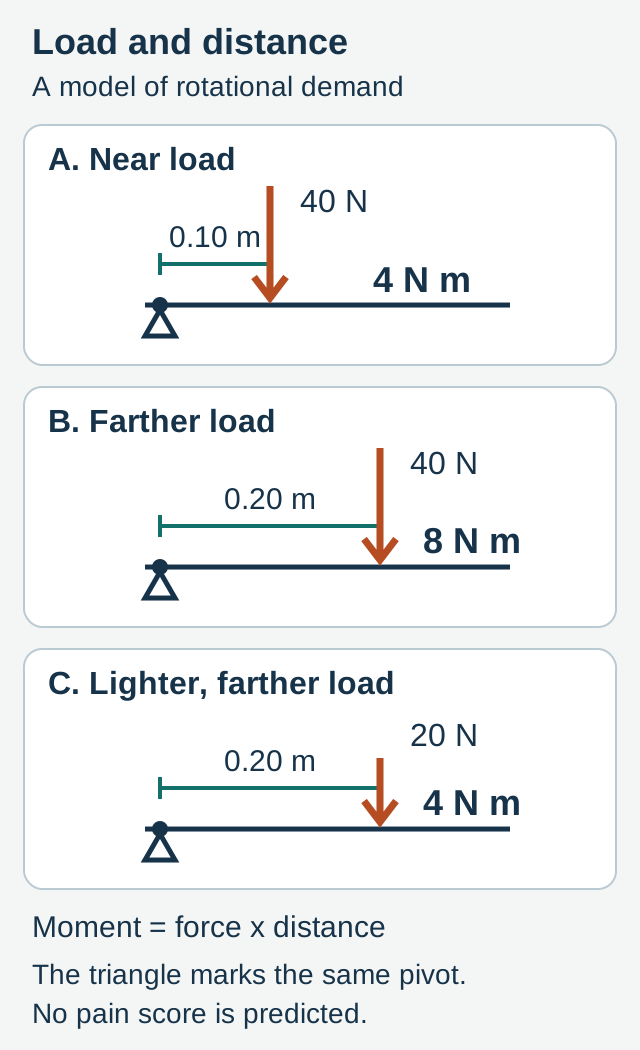
Trace the vertical load arrow in the load-arm diagram. The horizontal distance between that line and the reference pivot is the moment arm. For a simplified external load, rotational demand equals force multiplied by perpendicular distance. This is a useful model of why holding an object farther away can increase demand without adding weight. It is not a calculation of total spinal compression, fetal weight, muscle force or pain.
Predict rotational demand from force and distance, then distinguish the result from pain or spinal-force predictions. [1][2]
Predict the external moment before checking the arithmetic
Model state
Force
Arm
Model stateA: near
Force40 N
Arm0.10 m
Model stateB: farther
Force40 N
Arm0.20 m
Model stateC: lighter, farther
Force20 N
Arm0.20 m
Your prediction: Rank the three states. Then identify which variable changed in each comparison. State B has twice the modeled rotational demand of A, whereas C equals A. The visible consequence is about a lever, not a diagnosis.
Check the three moments
A is 4 N m, B is 8 N m, and C is 4 N m. Greater distance can offset a smaller load.
Transfer: A patient may benefit from bringing a carried object closer, using support or shortening a fatiguing task. None of those responses establishes that the lumbar curve was abnormal. Look for the task that changed, then assess the patient rather than treating the sketch. [1][3]
2. Why does similar posture produce different pain?
Two patients have similar gestational ages and similar lumbar curves. One walks comfortably; the other struggles after a sleepless night and a long standing shift. What information is missing from the photograph?
Pregnancy alters more than spinal shape. Abdominal-wall length, ligament behavior, body mass distribution, stance width and walking strategy all change how forces are shared. Paraspinal, abdominal and pelvic muscles must provide support over repeated tasks. A wider stance may support balance, while a shorter stride or slower pace may be a response to symptoms rather than their original cause. Avoid assigning the same mechanical explanation to every patient. [1][3][8]
Previous lumbar or pelvic pain, fatigue, current task exposure and the ability to recover deserve attention. Ligamentous laxity may contribute, but neither a presumed hormone level nor an apparent pelvic asymmetry establishes the pain generator. Sleep interruption, worry and practical support needs belong in the history because they affect daily coping and the feasibility of treatment; acknowledging them does not mean pain is imaginary. [3][8]
Compare: In a small longitudinal study of 34 pregnant women, lumbar and thoracic curvature increased, but posture was not significantly related to reported back pain. That finding challenges a simple curve-causes-pain rule. It does not prove that loading never matters or that all possible posture effects have been excluded. [2]
Your task: For the two patients, name one exposure, one symptom measure and one functional measure worth comparing. For example, compare uninterrupted standing time, pain during that task and walking tolerance afterward. A larger curve on a painless day should not cancel a report of substantial pain on another day.
Check the inference from a painless larger curve
The curve alone is insufficient to explain the symptom difference. Investigate task demand, pain distribution and recovery instead of assuming a single structural defect.
Transfer: When a treatment helps, record the improvement without claiming it restored the pelvis to a unique correct position. An improvement in comfort or endurance can be worthwhile even when the visible curve is unchanged. [2][8][9]
3. Where is the pain, and which task reproduces it?
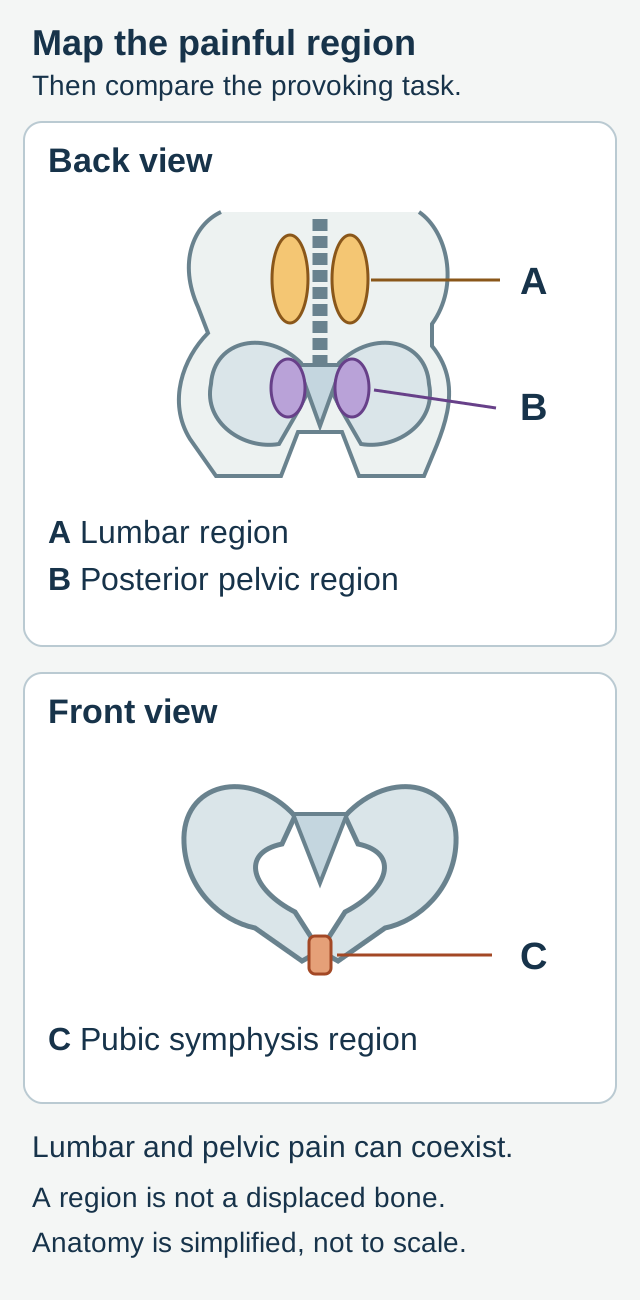
A patient points to the lower back. Before naming a joint, ask the patient to indicate the painful region with one finger or shade it on a body map. Then ask what happens during standing, stairs, rolling in bed, dressing and getting out of a car. The same everyday label, back pain, can describe different patterns. [3][8]
Use location together with task behavior
Pattern
Typical region
Helpful comparison
PatternLumbar pain
Typical regionAbove the lumbosacral junction; paraspinal region
Helpful comparisonSustained standing or spinal motion versus pelvic transfers
PatternPosterior pelvic girdle pain
Typical regionPosterior pelvis near the sacroiliac region; possible buttock or thigh pain
Helpful comparisonStairs, rolling and single-leg loading
PatternAnterior pelvic girdle pain
Typical regionPubic symphysis or adjacent groin
Helpful comparisonAsymmetric loading, dressing or separating the knees
The regional diagram is a map of possible symptoms, not proof of a displaced bone. Lumbar and pelvic girdle pain can coexist. A focused examination should consider the lumbar spine, hips, neurologic findings and relevant pelvic pain-provocation or functional tests. No single location, click or palpated asymmetry conclusively identifies an injured joint. Positional palpation alone is not a reliable basis for labeling pelvic girdle pain. [8]
Connect a pain map to the activity that reproduces symptoms. Location does not establish displacement or a single tissue diagnosis. [3][8]
Your task: Match pain near the posterior pelvic ring during stair climbing and turning in bed to the map. Then predict whether replacing standing dressing with seated dressing reduces the provoking demand. The important change is reduced single-leg loading, not a promise that the pelvis has been realigned. For anterior pubic pain during car transfers, a comfortable, supported transfer with the legs together may be more useful than a longer stride. [3]
Check the posterior-pelvis example
The distribution and task pattern support a posterior pelvic girdle presentation. Confirm the clinical pattern and exclude competing causes; a regional label does not identify one specific damaged tissue.
Transfer: Burning leg pain accompanied by a new motor deficit needs a neurologic assessment, not automatic reassignment to the pelvic map. A patient can have a common pregnancy-related pain pattern and a second condition at the same time. [7][8]
4. What should improve when care is helping?
A clinician reports that the patient's spine looks straighter. The patient reports that walking is harder and sleep is worse. Which report better answers whether daily life is improving? Appearance is a description; function is an outcome.
Choose a few repeatable activities with the patient: minutes of comfortable walking, uninterrupted standing time, getting out of bed, dressing or climbing stairs. Record the painful region, the activity dose, sleep disruption and neurologic findings when indicated. Use comparable conditions at follow-up. A lower pain score after avoiding nearly every activity is not equivalent to tolerating more activity with less pain. [3][8]
Compare symptoms and function across follow-up visits.
Measure
Visit A
Visit B
MeasureComfortable walking
Visit A6 minutes
Visit B18 minutes
MeasurePain after the same 5-minute walk
Visit A6 of 10
Visit B3 of 10
MeasureNight awakenings from pain
Visit A4
Visit B1
MeasureVisible lumbar curve
Visit ASimilar
Visit BSimilar
Your task: Choose which measurements support benefit, then say what they cannot establish. Walking tolerance, matched-task pain and sleep have improved. The unchanged curve does not negate those gains; the gains do not establish permanent anatomical correction.
Check the competing explanation
Better task tolerance may reflect pacing, support, exercise, symptom relief or several factors. A before-and-after observation does not isolate the treatment component responsible.
For pelvic girdle symptoms, individually selected exercises, activity advice and a trial of appropriate support may help. Gentle, pregnancy-adapted manual care can be an adjunct after assessment and consent. It should not require painful positioning. In the 400-participant PROMOTE trial, OMT outcomes were better than usual care alone but not significantly different from placebo ultrasound. That comparison does not demonstrate a unique realignment effect or establish safety for every technique and every obstetric condition. [3][9]
Transfer: Persistent severe limitation warrants reassessment rather than repeated attempts to change a curve. Pelvic pain alone usually does not require cesarean birth, and symptoms persisting after birth deserve continued assessment and care, not dismissal. [3]
5. How should activity and positioning change?
A previously active patient at 30 weeks has local discomfort with long walks but tolerates short walks. Stopping every activity would avoid the task, but would it be the best default plan? In the absence of medical or obstetric contraindications, pregnancy usually calls for adaptation rather than blanket inactivity. A previously inactive person should begin gradually instead of abruptly adopting a demanding routine. [4][5]
Discuss the activity, symptom response and recovery with the maternity team or a clinician experienced in pregnancy-related pain. Reduce duration or provoking load, add breaks, and consider a better-tolerated alternative such as water-based activity. Comfortable conversational effort is a useful practical guide during aerobic activity. Avoid overheating, maintain hydration, and reassess activities with substantial fall or collision risk. Painful asymmetric tasks can be modified without prohibiting all conditioning. [3][5]
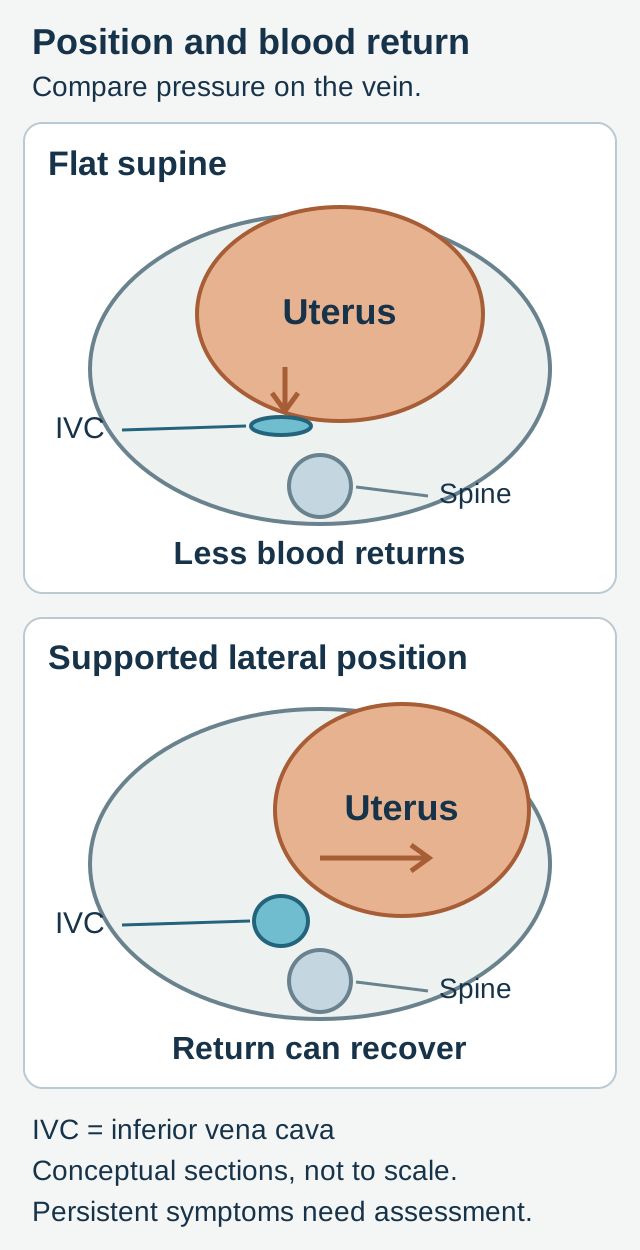
Position also affects circulation. In later pregnancy, lying flat can allow the uterus to compress major vessels, particularly the inferior vena cava. Reduced venous return lowers cardiac filling and may cause hypotension, nausea or dizziness. The position diagram separates the uterine load from the vessel behind it. Follow the narrowing first, then predict what happens to blood returning to the heart. This is a vascular effect, not evidence of worsening lordosis. [5]
Predict reduced venous return and the expected response to repositioning. Persistent symptoms require assessment rather than reassurance. [5][6]
By around 20 weeks, avoid prolonged flat supine exercise; NHS advice starts this precaution particularly after 16 weeks. This is not a sharp physiological threshold, a rule that every brief examination is dangerous, or a substitute for individualized maternity advice. Supported side-lying, seated or standing activities can be appropriate alternatives. A patient who becomes dizzy should stop, be helped into a safe lateral position and have symptoms and vital signs reassessed. Persistent symptoms, chest pain, breathlessness or collapse require urgent medical help. [5][6]
Your prediction: A patient becomes nauseated with a blood pressure of 82/50 mmHg after lying flat. Predict the direction of change in venous return when the uterine load is shifted off the vessels by lateral positioning. Then identify the finding that would make simple reassurance unsafe.
Check the circulatory prediction
Relieving compression can increase venous return and improve filling and pressure. Persistent hypotension or cardiopulmonary symptoms demand escalation, even when the episode began supine.
Transfer: Before a manual-care session, plan a comfortable supported position, obtain consent and screen for contraindications. An improved posture is never a reason to continue a session during dizziness, bleeding or new neurologic symptoms. [3][6][7]
6. When does the assessment need a different priority?
A familiar mechanical pattern does not protect a patient from a new illness. Start by asking whether today's symptoms differ from the established pattern. A new warning symptom should change the plan before exercise, manipulation or reassurance.
Safety findings that take priority over the posture assessment
Finding
Why the plan changes
FindingNew saddle sensory loss, urinary retention, bowel dysfunction or bilateral leg weakness
Why the plan changesPossible serious neural compression; emergency assessment is required. [7]
FindingRegular tightenings, unusual backache or fluid loss before 37 weeks
Why the plan changesPossible preterm labour or membrane rupture; contact maternity services urgently. [10]
FindingVaginal bleeding, reduced fetal activity, severe persistent abdominal pain or fainting
Why the plan changesMaternal or fetal assessment takes priority; do not wait for a musculoskeletal treatment response. [6]
FindingFever, rapidly worsening severe pain, significant trauma or inability to bear weight
Why the plan changesEvaluate for infection, injury or another serious cause; pregnancy-related pain is not an exclusion test. [6][7]
Progressive weakness deserves urgent clinical assessment even before bowel or bladder symptoms appear. Chest pain, substantial breathlessness or collapse warrants emergency care. For a suspected emergency, arrange appropriate immediate help rather than asking the patient to finish a treatment session or drive while unwell. [6][7]
Your task: A patient with previously predictable posterior pelvic discomfort now has new urinary retention and numbness when wiping. Say which new information outranks the old diagnosis. The bladder and sensory changes require emergency assessment for a possible compressive neurologic disorder; familiar pelvic pain does not account for them. [7]
Check why a brief treatment trial is inappropriate
A temporary change in pain would not exclude neural compression. Do not delay urgent evaluation to test a manual technique, exercise or support belt.
Transfer: Another patient's usual backache improves with rest, but fetal activity is reduced compared with its usual pattern. The relief of backache does not answer the fetal question. Obtain prompt maternity assessment. Once serious causes have been addressed, return to a patient-specific plan based on symptoms, function, tolerance and follow-up, not curve size alone. [6]
Apply the lesson
Case 1
Show answer and explanations for case 1
A. The external moment doubles; pain should double. (Why this does not fit)
Greater external moment can increase muscular demand. The arm doubles, but this model contains no relation between moment and reported pain. Calculate demand without assigning a proportional pain response. [1] [2]
Reasoning steps for option A
How can a longer lever arm increase demand?
Greater external moment can increase muscular demand.
Does doubling the arm prove pain must double?
The arm doubles, but this model contains no relation between moment and reported pain.
What follows for moment and pain prediction?
The arm doubles, so external moment rises from 3 to 6 N m; that calculation cannot specify how much pain changes.
B. The external moment is unchanged; pain is not predicted. (Why this does not fit)
The parcel weight has not changed. Moment depends on distance as well as force, and the distance doubles. An unchanged force does not imply an unchanged external moment. [1] [2]
Reasoning steps for option B
Why might fixed parcel weight suggest no change?
The parcel weight has not changed.
Which other variable changes in the moment calculation?
Moment depends on distance as well as force, and the distance doubles.
What happens to moment despite unchanged force?
The 30 N force is unchanged, but doubling its arm doubles external moment from 3 to 6 N m.
C. The external moment doubles; pain is not predicted. (Best answer)
External moment is force multiplied by perpendicular distance. The values change from 3 N m to 6 N m while pain is unmeasured. The model predicts rotation demand, not a pain score. [1] [2]
Reasoning steps for option C
What equation relates load and arm to moment?
External moment is force multiplied by perpendicular distance.
What are the near and far moments, and was pain measured?
The values change from 3 N m to 6 N m while pain is unmeasured.
What does this model predict, and what does it not?
The lever model predicts doubled rotational demand, from 3 to 6 N m, but not a pain score.
D. The external moment halves; pain is not predicted. (Why this does not fit)
A shorter arm would reduce the external moment. The described arm becomes longer, not shorter. The direction of the distance change determines the direction of the moment change. [1] [2]
Reasoning steps for option D
What arm change would halve moment?
A shorter arm would reduce the external moment.
Does this parcel move closer or farther from the pivot?
The described arm becomes longer, not shorter.
Does the observed distance halve or double moment?
The arm doubles rather than halves, so the external moment doubles rather than halves.
Takeaway: Distinguish a valid mechanical prediction from an unsupported prediction of pain.
A. Posterior trunk positioning offsets the added anterior load. (Best answer)
Changing the position of the upper trunk can counter an anterior loading tendency. The patient remains balanced and the final whole-body center of mass has not been measured. Do not equate an uncompensated load effect with the final compensated posture. [1] [2]
Reasoning steps for option A
How can upper-trunk position compensate for anterior mass?
Changing the position of the upper trunk can counter an anterior loading tendency.
What does balanced standing reveal and what remains unmeasured?
The patient remains balanced and the final whole-body center of mass has not been measured.
How do loading tendency and compensated posture differ?
The anterior abdominal load is partly offset by posterior upper-trunk positioning; preserved balance does not quantify final whole-body center of mass.
B. The new lumbar contour establishes painful ligament failure. (Why this does not fit)
Ligament behavior can contribute to symptoms in some pregnancies. This patient has no pain or functional deficit, and no ligament injury is demonstrated. An asymptomatic contour is not a diagnosis of tissue failure. [1] [2]
Reasoning steps for option B
Why might ligament behavior matter to symptoms?
Ligament behavior can contribute to symptoms in some pregnancies.
Is pain, disability, or ligament injury demonstrated?
This patient has no pain or functional deficit, and no ligament injury is demonstrated.
What can asymptomatic contour establish about tissue failure?
No pain, functional loss, or demonstrated ligament injury supports diagnosing painful ligament failure from this contour.
C. The posture confirms that overall balance has deteriorated. (Why this does not fit)
Anterior mass would challenge balance without adaptation. The observed posterior trunk adjustment is a compensating change, and balance is preserved. A challenge to balance is not the same as demonstrated loss of balance. [1] [2]
Reasoning steps for option C
What balance challenge does anterior mass create?
Anterior mass would challenge balance without adaptation.
How does posterior trunk adjustment affect balance?
The observed posterior trunk adjustment is a compensating change, and balance is preserved.
Does a potential challenge prove balance loss?
Although anterior mass could challenge balance, the posterior trunk adjustment accompanies preserved standing balance.
D. The final center of mass follows the uterine position alone. (Why this does not fit)
The uterus is an important added anterior load. The upper trunk and other body segments also contribute to combined mass distribution. A single segment does not determine the final whole-body center of mass. [1] [2]
Reasoning steps for option D
Why consider uterine mass in postural interpretation?
The uterus is an important added anterior load.
Which other segments affect combined mass distribution?
The upper trunk and other body segments also contribute to combined mass distribution.
Can one segment determine whole-body center of mass?
The uterus contributes anterior mass, but upper trunk and other segments also determine whole-body center of mass.
Takeaway: Interpret compensation without converting a normal examination into a structural pain diagnosis.
A. Use repeated end-range lumbar extension before each transfer. (Why this does not fit)
Lumbar-directed exercise can be relevant when spinal motion reproduces symptoms. The main provocations here are pelvic transfers and single-leg tasks rather than repeated spinal motion. A lumbar contour intervention is less targeted than reducing asymmetric pelvic loading. [3] [8]
Reasoning steps for option A
When might lumbar exercise target symptoms?
Lumbar-directed exercise can be relevant when spinal motion reproduces symptoms.
Which activities rather than spinal motion provoke this pain?
The main provocations here are pelvic transfers and single-leg tasks rather than repeated spinal motion.
Which demand should management target first?
Modify asymmetric pelvic loading during rolling, stairs, and dressing rather than prescribing repeated end-range lumbar extension for the contour.
B. Lengthen the walking stride to reduce the number of steps. (Why this does not fit)
Changing gait can change how often a load is applied. A longer stride can increase asymmetric pelvic demand, and step count is not the identified problem. Fewer repetitions do not guarantee a better-tolerated load. [3] [8]
Reasoning steps for option B
How might stride length affect loading frequency?
Changing gait can change how often a load is applied.
Could longer strides increase pelvic demand?
A longer stride can increase asymmetric pelvic demand, and step count is not the identified problem.
Do fewer steps guarantee better tolerance?
A longer stride can increase the asymmetric pelvic demand that provokes symptoms even if it reduces step count.
C. Carry daily supplies on the less painful hip during dressing. (Why this does not fit)
Offloading an uncomfortable side may seem protective. A one-sided carried load still increases asymmetry while the patient stands on one leg. Compensation by additional asymmetry does not address the provoking task. [3] [8]
Reasoning steps for option C
Why might shifting a carried load seem protective?
Offloading an uncomfortable side may seem protective.
What demand remains during one-legged dressing?
A one-sided carried load still increases asymmetry while the patient stands on one leg.
Does unilateral loading resolve the provoking task?
A hip-carried load adds asymmetry during one-legged dressing rather than removing the provoking single-leg demand.
D. Sit for dressing and use supported, symmetrical transfers. (Best answer)
Posterior pelvic symptoms are often aggravated by single-leg loading and transfers. The pain location and three provoking activities fit this pattern with a reassuring neurologic examination. Reduce the identified task demand while arranging appropriate pelvic girdle assessment. [3] [8]
Reasoning steps for option D
How can seated dressing reduce pelvic loading?
Posterior pelvic symptoms are often aggravated by single-leg loading and transfers.
Which location, activities, and neurologic findings favor this choice?
The pain location and three provoking activities fit this pattern with a reassuring neurologic examination.
What task modifications and assessment follow?
Use seated dressing and supported, symmetrical transfers to limit single-leg demand, with appropriate pelvic girdle assessment.
Takeaway: Select an adaptation that reduces the particular asymmetric loading rather than attempting generic curve correction.
A. Reduce knee separation during every car transfer. (Why this does not fit)
Car-transfer advice can help anterior or posterior pelvic pain. Transfers are comfortable and sustained standing is the reproducible exposure. Treat the recorded limitation rather than importing a different pelvic pain pattern. [3] [8]
Reasoning steps for option A
When might car-transfer advice help?
Car-transfer advice can help anterior or posterior pelvic pain.
Are transfers or sustained standing the trigger here?
Transfers are comfortable and sustained standing is the reproducible exposure.
Which actual limitation deserves treatment?
Car transfers are comfortable; address standing-provoked lumbar ache instead of treating a nonexistent transfer limitation.
B. Alternate supported positions and grade standing tolerance. (Best answer)
Long uninterrupted standing can exceed current lumbar muscular tolerance. Pain is above the lumbosacral junction, linked to standing duration and relieved by a break. A paced exposure plan matches the lumbar endurance pattern without claiming structural correction. [3] [8]
Long uninterrupted standing can exceed current lumbar muscular tolerance.
Which region, exposure, and relief pattern support pacing?
Pain is above the lumbosacral junction, linked to standing duration and relieved by a break.
What graded standing plan follows?
Alternate supported positions, take breaks, and gradually grade standing tolerance without claiming structural correction.
C. Base treatment on the more prominent posterior pelvic landmark. (Why this does not fit)
Pelvic examination can contribute to a regional assessment. A landmark difference does not explain this time-dependent lumbar ache or replace the functional history. Positional palpation alone should not determine the treatment target. [3] [8]
Reasoning steps for option C
What can a pelvic landmark add to examination?
Pelvic examination can contribute to a regional assessment.
Does its prominence explain time-dependent lumbar ache?
A landmark difference does not explain this time-dependent lumbar ache or replace the functional history.
Should palpated position dictate treatment?
A prominent posterior pelvic landmark cannot substitute for assessing standing duration and above-junction lumbar symptoms.
D. Increase stride length to reduce pelvic load during work. (Why this does not fit)
Gait changes can be relevant when walking provokes symptoms. The exposure in this case is standing rather than walking or asymmetric transfers. A gait prescription does not address the demonstrated standing limitation. [3] [8]
Reasoning steps for option D
When would gait advice address symptoms?
Gait changes can be relevant when walking provokes symptoms.
Is walking or standing the limiting exposure?
The exposure in this case is standing rather than walking or asymmetric transfers.
What does stride advice miss here?
Changing stride length addresses walking rather than the sustained standing that reproduces this lumbar ache.
Takeaway: Link the time-dependent exposure to a graded, supported standing plan.
A. Turn with the legs together within a comfortable range. (Best answer)
Pubic-region pain can be aggravated by separating the legs and asymmetric loading. The car exit and one-legged dressing are the specific provoking tasks. A supported, coordinated transfer targets the anterior pelvic loading pattern. [3] [8]
Reasoning steps for option A
Why limit knee separation during a car exit?
Pubic-region pain can be aggravated by separating the legs and asymmetric loading.
What happens during car exits and one-legged dressing?
The car exit and one-legged dressing are the specific provoking tasks.
What specific supported transfer reduces pubic pain?
Turn out of the car with the legs together within a comfortable range and use support; sit for dressing to reduce asymmetric pubic loading.
B. Lead with a wider step to clear the car more quickly. (Why this does not fit)
A larger step can shorten the number of transfer actions. The separated-leg position itself reproduces this patient's symptoms. Reducing task duration does not justify increasing the provoking range. [3] [8]
Reasoning steps for option B
Why might a wider step seem efficient?
A larger step can shorten the number of transfer actions.
How does separated-leg positioning affect pain?
The separated-leg position itself reproduces this patient's symptoms.
Does quicker exit justify increasing painful range?
A wider step increases the painful separated-leg range even if the car exit is quicker.
C. Practice standing dressing to build single-leg endurance first. (Why this does not fit)
Graded exercise may improve function when selected appropriately. The immediate task repeatedly causes pubic pain and a seated alternative is available. Select a tolerable task modification before progressing a painful single-leg activity. [3] [8]
Reasoning steps for option C
When might graded single-leg exercise be useful?
Graded exercise may improve function when selected appropriately.
Is standing dressing tolerable and what alternative exists?
The immediate task repeatedly causes pubic pain and a seated alternative is available.
What should precede progressing this painful task?
Choose seated dressing now, then progress single-leg activity only as tolerated rather than repeatedly provoking pubic pain.
D. Increase lumbar extension before separating the knees. (Why this does not fit)
Lumbar position can matter when spinal motion reproduces pain. The described pain is anterior pelvic and is linked to asymmetrical leg positioning. A lumbar-directed maneuver does not specifically address this transfer demand. [3] [8]
Reasoning steps for option D
When would lumbar extension target symptoms?
Lumbar position can matter when spinal motion reproduces pain.
Where is pain and which leg movements provoke it?
The described pain is anterior pelvic and is linked to asymmetrical leg positioning.
Which adaptation is more targeted?
Modify separated-leg and single-leg tasks causing anterior pelvic pain instead of relying on lumbar extension.
Takeaway: Predict benefit from reducing the provoking transfer geometry rather than increasing it.
A. Track lumbar contour and attribute both symptoms to its change. (Why this does not fit)
A lumbar curve is easy to observe at repeated visits. Two pain regions respond differently to two types of task. A single contour measurement cannot represent both functional problems. [3] [8]
Reasoning steps for option A
Why might contour seem easy to monitor?
A lumbar curve is easy to observe at repeated visits.
How do two pain regions differ by task?
Two pain regions respond differently to two types of task.
Can one curve measurement capture both problems?
Lumbar contour alone cannot capture standing-related lumbar ache and separately provoked pelvic transfer pain.
B. Track resting pain and omit the provoking activities. (Why this does not fit)
Resting pain can describe baseline comfort. The limitations occur during standing and transfers, with different responses to rest. A resting score alone can miss changes in task tolerance. [3] [8]
Reasoning steps for option B
What does resting pain measure?
Resting pain can describe baseline comfort.
When do symptoms occur and how do they respond to rest?
The limitations occur during standing and transfers, with different responses to rest.
Which task-specific changes would resting scores miss?
Record standing tolerance and transfer pain as well as baseline comfort; resting pain alone misses task-specific change.
C. Track standing tolerance and transfer pain as separate outcomes. (Best answer)
Lumbar and pelvic girdle pain may coexist. The distinct locations, provocations and responses support two clinically useful symptom patterns. Measure each relevant task rather than forcing both into one regional label. [3] [8]
Reasoning steps for option C
Why monitor lumbar and pelvic symptoms separately?
Lumbar and pelvic girdle pain may coexist.
What findings distinguish their patterns?
The distinct locations, provocations and responses support two clinically useful symptom patterns.
Which specific outcomes should be tracked?
Track standing tolerance for the lumbar complaint and pain during transfers for the pelvic complaint as separate outcomes.
D. Track the posterior landmark position and infer lumbar recovery. (Why this does not fit)
A pelvic landmark might be included in an examination. Its position is not a validated substitute for either standing tolerance or transfer symptoms. An anatomical observation does not demonstrate recovery in a separate painful task. [3] [8]
Reasoning steps for option D
Why might a posterior landmark be noted?
A pelvic landmark might be included in an examination.
Does its position measure either symptomatic task?
Its position is not a validated substitute for either standing tolerance or transfer symptoms.
Can it demonstrate recovery in standing or transfers?
A posterior landmark position cannot demonstrate improvement in either standing tolerance or transfer pain.
Takeaway: Choose outcome measures that can detect improvement in each pattern independently.
A. Repeat positional palpation until the examiners agree on rotation. (Why this does not fit)
Agreement between examiners is important for reliable clinical observations. Agreement on a landmark position would not establish the origin of this task-related pain. Do not use presumed positional displacement as the diagnostic endpoint. [2] [8]
Reasoning steps for option A
Why seek examiner agreement on palpation?
Agreement between examiners is important for reliable clinical observations.
Would agreement on rotation establish the pain source?
Agreement on a landmark position would not establish the origin of this task-related pain.
What should replace displacement as an endpoint?
Even agreement about landmark rotation would not identify the pain source; use task-linked clinical findings instead of a displacement label.
B. Assess pain provocation and function while considering lumbar and hip causes. (Best answer)
Clinical pelvic assessment uses symptom reproduction, function and competing regional causes. The history supports a pelvic pattern, but an isolated disputed landmark does not establish it. Use concordant clinical findings rather than presumed bone position. [2] [8]
Reasoning steps for option B
Why assess provocation, function, lumbar and hip causes?
Clinical pelvic assessment uses symptom reproduction, function and competing regional causes.
Does a disputed landmark establish pelvic pain origin?
The history supports a pelvic pattern, but an isolated disputed landmark does not establish it.
Which concordant findings guide assessment?
Assess concordant pain provocation and function while considering lumbar and hip causes, rather than accepting disputed landmark position as proof.
C. Obtain a routine pelvic CT to quantify the asymmetric landmark. (Why this does not fit)
Imaging can be useful for selected structural questions. No trauma or other serious structural concern is presented, and the proposed question is a routine positional label. Routine CT is not the appropriate way to establish uncomplicated pelvic girdle pain. [2] [8]
Reasoning steps for option C
When might structural imaging be indicated?
Imaging can be useful for selected structural questions.
Is trauma or serious concern present?
No trauma or other serious structural concern is presented, and the proposed question is a routine positional label.
Why not use routine CT for a positional label?
Without trauma or another serious structural concern, routine pelvic CT cannot establish uncomplicated pelvic girdle pain from landmark asymmetry.
D. Measure the lumbar curve and assign pain severity from that value. (Why this does not fit)
Posture can be documented during a musculoskeletal examination. The pain is task-dependent and pelvic, and curvature alone does not establish symptom severity. A curve measurement cannot replace the relevant clinical assessment. [2] [8]
Reasoning steps for option D
Why document lumbar posture?
Posture can be documented during a musculoskeletal examination.
Does curve size explain task-dependent pelvic pain severity?
The pain is task-dependent and pelvic, and curvature alone does not establish symptom severity.
What must be assessed beyond contour?
Assess pelvic pain provocation and function; lumbar curve size alone neither establishes cause nor quantifies task-dependent pain severity.
Takeaway: Select symptom-provocation and functional assessment over unreliable positional or routine imaging surrogates.
A. The unchanged contour indicates an inadequate clinical response. (Why this does not fit)
Posture may be documented as part of follow-up. Three patient-relevant outcomes improve despite a similar contour. An unchanged anatomical description does not negate functional improvement. [2] [3] [9]
Reasoning steps for option A
Why might similar photographs raise concern?
Posture may be documented as part of follow-up.
How did walking, matched-task pain and sleep change numerically?
Comfortable walking rises from 6 to 18 minutes, same 5-minute-walk pain falls from 6/10 to 3/10, and awakenings fall from four to one despite similar contour.
Do gains count despite unchanged contour?
Those gains in walking, matched-task pain, and sleep demonstrate clinical improvement despite unchanged contour.
B. The response establishes permanent correction of pelvic alignment. (Why this does not fit)
Improved comfort can occur after a course of care. The measurements describe symptoms and function, not alignment or permanence. A clinical benefit cannot establish an unmeasured structural explanation. [2] [3] [9]
Reasoning steps for option B
Why might symptom relief tempt a realignment claim?
Improved comfort can occur after a course of care.
Do measured gains quantify alignment or permanence?
The 6-to-18-minute walking gain, 6/10-to-3/10 matched-task pain reduction, and four-to-one awakening reduction do not measure pelvic alignment or permanence.
What conclusion about permanent correction is unsupported?
Functional benefit over three weeks does not establish permanent pelvic realignment, which was not measured.
C. The photographs show that the original pain was nonphysical. (Why this does not fit)
Posture and pain do not always vary together. The original pain and functional limitations were clinically meaningful despite an unchanged contour. Lack of a visible structural change does not make pain imaginary. [2] [3] [9]
Reasoning steps for option C
Why might posture-pain discordance be misread?
Posture and pain do not always vary together.
Were initial limitations real despite similar photographs?
The original 6-minute walking tolerance, 6/10 matched-task pain, and four nightly awakenings were meaningful despite similar photographs.
Does unchanged contour make pain imaginary?
Similar photographs cannot invalidate genuine pain or limitations that subsequently improved.
D. Function improved without a demonstrated contour change. (Best answer)
Matched tasks and daily function are useful outcome measures. Walking, matched-task pain and sleep all improve while appearance remains similar. Document benefit without claiming a mechanism that was not measured. [2] [3] [9]
Reasoning steps for option D
Which repeatable outcomes show benefit?
Matched tasks and daily function are useful outcome measures.
What numerical changes occur in walking, pain and sleep?
Walking increases from 6 to 18 minutes; pain after the same 5-minute walk falls from 6/10 to 3/10; awakenings drop from four to one, while contour remains similar.
How should benefit be documented without claiming realignment?
Document improved walking, matched-task pain, and sleep without attributing them to unmeasured contour or alignment correction.
Takeaway: Separate evidence of benefit from proof of anatomical realignment.
A. The lower pain score shows improved tolerance of ordinary activity. (Why this does not fit)
A lower symptom score can indicate benefit when exposure is comparable. Activity has sharply decreased and dressing function has worsened. Less pain during less activity does not establish improved tolerance. [2] [3] [4]
Reasoning steps for option A
When can lower pain indicate functional improvement?
A lower symptom score can indicate benefit when exposure is comparable.
What happened to walking and dressing while pain fell?
Pain falls from 6/10 to 2/10, but walking shrinks from 25 to 3 minutes and dressing now requires help.
Does reduced pain at lower exposure establish tolerance?
A lower pain score during only 3 rather than 25 minutes of walking does not demonstrate better ordinary-activity tolerance.
B. Lower pain during less activity does not establish improved tolerance. (Best answer)
Pain depends partly on the conditions under which it is measured. Walking is curtailed and a daily task now requires assistance. Reassess functional goals and tolerable activity rather than treating the score as recovery. [2] [3] [4]
Reasoning steps for option B
Why compare pain under similar activity exposure?
Pain depends partly on the conditions under which it is measured.
How much did walking fall and what changed in dressing?
Daily walking falls from 25 to 3 minutes and dressing now requires assistance despite a 6/10-to-2/10 pain-score change.
Which functional goals merit reassessment?
Reassess safe, tolerable walking and independent dressing goals rather than interpreting a lower score under greatly reduced exposure as recovery.
C. The straighter contour validates continued reduction of walking. (Why this does not fit)
A change in appearance may accompany changed activity. There is no evidence that the contour is the cause of symptoms or that reduced activity is beneficial. An appearance change does not justify avoidant restriction in an otherwise uncomplicated pregnancy. [2] [3] [4]
Reasoning steps for option C
Why might a less pronounced curve look favorable?
A change in appearance may accompany changed activity.
Is contour a proven pain cause or reduced walking a proven benefit?
The slightly less pronounced contour does not show that it caused pain or that cutting walking from 25 to 3 minutes is beneficial.
Should appearance validate avoidance?
A straighter appearance cannot justify continued avoidance when walking and dressing function have deteriorated.
D. The persistent sleep problem makes the pain score clinically irrelevant. (Why this does not fit)
Sleep is a meaningful part of symptom assessment. Pain, sleep and function provide different information rather than canceling one another. Integrate all outcomes instead of discarding a measure that disagrees with another. [2] [3] [4]
Reasoning steps for option D
Why include sleep in symptom review?
Sleep is a meaningful part of symptom assessment.
How do pain, sleep, walking and dressing differ?
Pain falls from 6/10 to 2/10, yet sleep remains interrupted while walking drops from 25 to 3 minutes and dressing needs help.
How should discordant measures be weighed?
Keep the pain score, persistent sleep disruption, and worsening walking and dressing function in the assessment rather than discarding any one outcome.
Takeaway: Select comparable activity and functional outcomes before deciding whether the plan is successful.
A. The response establishes a fixed sacroiliac displacement needing correction. (Why this does not fit)
Changing external support can alter the experience of a pelvic loading task. No bone displacement was measured, and the response was functional rather than anatomical. A response to support does not establish a positional defect. [3] [8]
Reasoning steps for option A
What might improved leg lifting with gentle pelvic support suggest about loading, without proving a sacroiliac bone moved?
Changing external support can alter the experience of a pelvic loading task.
Was sacroiliac displacement actually measured during this supervised test, or was only task performance observed?
No sacroiliac bone displacement was measured during the supervised leg lift; only easier task performance with gentle support was observed.
Why should the clinician reject a fixed positional lesion as the explanation for this functional change?
A response to support does not establish a positional defect.
B. The response excludes any concurrent lumbar contribution to pain. (Why this does not fit)
The task provides information about pelvic load tolerance. The test does not evaluate every possible lumbar contributor. A useful pelvic finding does not exclude a second regional pain pattern. [3] [8]
Reasoning steps for option B
Why might easier leg lifting point toward a pelvic loading contribution without settling the entire pain differential?
The task provides information about pelvic load tolerance.
Did this single supported leg-lift assess the patient’s possible concurrent lumbar pain generators?
The single supported leg lift assesses pelvic load tolerance, not every possible concurrent lumbar pain contributor.
How should a positive pelvic task response affect, rather than close, evaluation of lumbar symptoms?
A useful pelvic finding does not exclude a second regional pain pattern.
C. Support improved this task; anatomical displacement was not established. (Best answer)
External support can be assessed by its effect on a meaningful task. The leg lift became easier, but no positional lesion was demonstrated. Record the functional response without adding an unmeasured structural explanation. [3] [8]
Reasoning steps for option C
What does the change in difficulty of the supported leg lift directly demonstrate?
Gentle pelvic support made this one supervised leg-lift task easier.
Which anatomical claim remains unsupported despite improvement during the supported task?
No sacroiliac displacement or positional lesion was demonstrated by the improved leg lift.
How can the result be documented in terms of observed function rather than inferred displacement?
Record the functional response without adding an unmeasured structural explanation.
D. The response predicts that the same support will help every daily task. (Why this does not fit)
An immediate response can inform an individualized support trial. Only one supervised task has been assessed, not walking, sleep or all transfers. Check benefit and comfort during the actual activities that matter to the patient. [3] [8]
Reasoning steps for option D
Why is the supported leg-lift result a reason to trial support rather than promise broad relief?
An immediate response can inform an individualized support trial.
Which activities besides this supervised leg lift have not yet been tested with support?
Walking, sleep, and other transfers were not tested; only one supervised leg-lift task improved.
What patient-specific activities and comfort measures should be checked before recommending ongoing support?
Check benefit and comfort during the actual activities that matter to the patient.
Takeaway: Limit the conclusion to the tested task rather than inferring displacement, exclusion of other pain or universal benefit.
A. Reduced venous return; stop supine exercise and reassess laterally. (Best answer)
The gravid uterus can compress major vessels when the patient is flat. The pressure fall began in that position and improves after lateral repositioning. Stop the provoking exercise, reassess circulation and escalate if recovery is incomplete. [5] [6]
Reasoning steps for option A
How could prolonged flat positioning at 28 weeks produce both nausea and a sharp blood-pressure decline?
At 28 weeks, the gravid uterus can compress major vessels during prolonged flat supine exercise, reducing venous return and blood pressure.
What does symptom improvement after assisted left-side positioning indicate about the suspected mechanism?
The drop from 112/70 to 82/50 mmHg began while flat, and nausea and lightheadedness improved on the left side, supporting a positional circulatory cause.
What should happen to the supine exercise, and when would incomplete recovery require escalation?
Stop flat supine exercise, maintain a supported lateral position, reassess blood pressure and symptoms, and escalate if recovery is incomplete.
B. Lumbar nerve compression; repeat exercise with a flatter spinal curve. (Why this does not fit)
Exercise position can provoke some neurologic symptoms. The dominant findings are hypotension and nausea, not a focal neurologic deficit. Changing lumbar contour does not address the demonstrated circulatory problem. [5] [6]
Reasoning steps for option B
Could a lumbar nerve problem plausibly explain this episode merely because it occurred during an exercise?
Exercise position can provoke some neurologic symptoms.
Are hypotension and nausea accompanied by a focal neurologic finding that would favor nerve compression?
A fall from 112/70 to 82/50 mmHg with nausea and lightheadedness, without a focal neurologic deficit, favors circulatory compromise over lumbar nerve compression.
Why would flattening the lumbar curve and repeating the exercise miss the principal hazard?
Changing lumbar contour does not address the demonstrated circulatory problem.
C. Exercise deconditioning; continue the position at a lower repetition rate. (Why this does not fit)
Deconditioning can affect exercise tolerance. The response is tightly linked to lying flat and improves with lateral positioning. Do not continue a posture that is provoking hypotension. [5] [6]
Reasoning steps for option C
Why might reduced fitness initially seem relevant to exercise intolerance?
Deconditioning can affect exercise tolerance.
How do onset while flat and improvement on the side distinguish this event from general deconditioning?
Symptoms started during prolonged flat positioning and improved after turning onto the left side, rather than tracking exercise repetition rate.
Why is reducing repetitions while retaining the hypotensive position inappropriate?
Do not continue a posture that is provoking hypotension.
D. Primary pelvic instability; add a support belt before resuming supine work. (Why this does not fit)
Pelvic support can help selected painful functional tasks. The event involves blood pressure and presyncope rather than task-specific pelvic pain. A belt is not a treatment for reduced venous return from supine positioning. [5] [6]
Reasoning steps for option D
When would pelvic support be relevant to a pregnant patient’s painful loading task?
Pelvic support can help selected painful functional tasks.
Is this episode dominated by pelvic task pain or by presyncope and documented hypotension?
Documented hypotension and presyncope, not task-specific pelvic pain, dominate this episode.
Why would adding a belt not make it safe to resume the provoking supine posture?
A belt is not a treatment for reduced venous return from supine positioning.
Takeaway: Choose immediate positioning and reassessment rather than further musculoskeletal loading.
A. Repeat the supine position briefly to confirm the original trigger. (Why this does not fit)
Reproduction of symptoms can clarify some stable mechanical presentations. Persistent hypotension with chest and breathing symptoms is not a stable mechanical question. Do not provoke another episode while urgent cardiopulmonary assessment is needed. [5] [6]
Reasoning steps for option A
In what kind of stable mechanical presentation might repeating a position help clarify the trigger?
Reproduction of symptoms can clarify some stable mechanical presentations.
What do persistent 84/52 mmHg pressure and new chest tightness and dyspnea make different here?
Five minutes after turning lateral, blood pressure remains 84/52 mmHg and new chest tightness and dyspnea make this an unstable cardiopulmonary concern.
Why must confirming the original supine trigger yield to urgent evaluation?
Do not provoke another episode while urgent cardiopulmonary assessment is needed.
B. Complete the treatment seated and arrange review the following day. (Why this does not fit)
Seated treatment may avoid a poorly tolerated supine posture. Changing the treatment position does not explain or resolve the ongoing warning symptoms. Deferring assessment while continuing treatment is unsafe here. [5] [6]
Reasoning steps for option B
Why could sitting up ordinarily be considered after intolerance of a flat treatment posture?
Seated treatment may avoid a poorly tolerated supine posture.
Do chest and breathing symptoms with persisting hypotension resolve simply by changing treatment position?
The patient still has 84/52 mmHg pressure, chest tightness, and difficulty breathing despite lateral positioning; sitting up to continue treatment does not resolve these warning signs.
What is the risk of continuing treatment and postponing assessment until tomorrow?
Deferring assessment while continuing treatment is unsafe here.
C. Observe until lumbar muscle relaxation normalizes the pressure. (Why this does not fit)
Symptoms beginning during a treatment may be mistakenly attributed to muscle tension. Persistent low pressure and new cardiopulmonary symptoms require a broader assessment. Do not assume a musculoskeletal cause or wait for a manual-care effect. [5] [6]
Reasoning steps for option C
Why might onset during manual treatment invite an incorrect muscular explanation?
Symptoms beginning during a treatment may be mistakenly attributed to muscle tension.
Which ongoing circulatory and cardiopulmonary findings contradict waiting for lumbar relaxation?
Persistent blood pressure of 84/52 mmHg and new chest tightness and dyspnea require urgent assessment, not lumbar relaxation.
What assessment priority replaces passive observation for a presumed musculoskeletal reaction?
Do not assume a musculoskeletal cause or wait for a manual-care effect.
D. Activate emergency assessment while maintaining a supported lateral position. (Best answer)
Persistent circulatory and cardiopulmonary symptoms can indicate a serious condition. The patient has not recovered after the presumed compression was relieved. Arrange emergency help and ongoing monitoring rather than relying on the initial positional explanation. [5] [6]
Reasoning steps for option D
Why does the failure to recover after lateral repositioning change the level of concern?
At 30 weeks, persistent hypotension after five minutes lateral and new chest tightness and dyspnea argue against a self-limited positional episode.
Which new symptoms alongside sustained hypotension require emergency rather than routine follow-up?
Blood pressure remains 84/52 mmHg with chest tightness and difficulty breathing despite repositioning.
What immediate positioning, monitoring, and emergency response follow from these findings?
Activate emergency assessment now, maintain a supported lateral position, and continue monitoring while help arrives.
Takeaway: Prioritize emergency assessment of persistent hypotension with new cardiopulmonary symptoms.
A. Begin the same vigorous running schedule used by a trained friend. (Why this does not fit)
Some patients who were already training vigorously can continue with appropriate review. This patient was sedentary and has not established tolerance for a vigorous program. Previous training status matters when choosing the starting dose. [4] [5]
Reasoning steps for option A
Under what prior-training circumstances might continued vigorous running be reasonable in pregnancy?
Some patients who were already training vigorously can continue with appropriate review.
Has this previously sedentary patient demonstrated tolerance for a vigorous running schedule?
This patient was sedentary before pregnancy and has established tolerance only for short walks, not vigorous running.
How should her baseline activity modify the starting exercise dose despite no obstetric restriction?
Previous training status matters when choosing the starting dose.
B. Delay conditioning until the lumbar contour returns to its earlier shape. (Why this does not fit)
The patient associates the new contour with muscular fatigue. No contraindication is identified and short walks are comfortable. A visible pregnancy adaptation is not a reason to postpone all conditioning. [4] [5]
Reasoning steps for option B
Why might a patient with standing fatigue blame a changed lumbar contour for limited activity?
The patient associates the new contour with muscular fatigue.
Do comfortable short walks and absence of contraindications support waiting for the contour to reverse?
At 22 weeks, the maternity assessment finds no exercise contraindication and short walks are pain-free despite a changed lumbar contour.
Why should normal pregnancy-related shape changes not determine when conditioning can begin?
A visible pregnancy adaptation is not a reason to postpone all conditioning.
C. Start short comfortable sessions and increase according to tolerance. (Best answer)
Adapted activity is encouraged when contraindications are absent. A previously sedentary patient tolerates short walks but has not built sustained exercise capacity. Begin gradually and monitor symptoms, effort and recovery with the care team. [4] [5]
Reasoning steps for option C
How do no exercise contraindication and comfortable short walks support beginning activity now?
At 22 weeks there is no medical or obstetric contraindication, and short walks are comfortable despite occasional standing-related lumbar fatigue.
How does prior sedentary status constrain the first session length and progression?
Previously sedentary status favors short comfortable starting sessions rather than an abrupt vigorous schedule.
What symptoms, perceived effort, and recovery should inform gradual increases with the care team?
Increase gradually while monitoring symptoms, exertion, and recovery with the maternity care team.
D. Use prolonged flat supine strengthening instead of upright exercise. (Why this does not fit)
Supported exercise may appear less demanding than standing. At this gestational stage prolonged flat supine positioning can impair venous return. A lower perceived muscular demand does not make every position appropriate. [4] [5]
Reasoning steps for option D
Why might supported strengthening appear easier than prolonged standing for this patient?
Supported exercise may appear less demanding than standing.
What circulatory concern accompanies prolonged flat supine exercise at 22 weeks?
At 22 weeks, prolonged flat supine positioning can impair venous return even if supported strengthening feels easier.
Why choose a tolerable activity plan without substituting an avoidable prolonged flat posture?
A lower perceived muscular demand does not make every position appropriate.
Takeaway: Use previous inactivity and present tolerance to choose gradual rather than abrupt vigorous conditioning.
A. Keep the running volume and reduce stride length as the sole change. (Why this does not fit)
A shorter stride can sometimes alter pelvic loading. The current running volume produces prolonged symptoms, and a comfortable alternative has been identified. A small gait change alone does not address the demonstrated dose intolerance. [3] [4] [5]
Reasoning steps for option A
How could a shorter stride plausibly alter running-related pelvic load?
A shorter stride can sometimes alter pelvic loading.
Does changing stride alone address pain lasting the rest of the day at the current running volume?
Usual-volume jogging causes posterior pelvic pain lasting the rest of the day, so a shorter stride alone does not demonstrate tolerance of that volume.
Why should the comfortable pool alternative influence the plan instead of preserving the intolerable dose?
A small gait change alone does not address the demonstrated dose intolerance.
B. Substitute tolerated pool sessions and reassess pelvic function. (Best answer)
A different activity can preserve conditioning with a better-tolerated loading pattern. Pool sessions are comfortable and no obstetric restriction has been identified. Use the tolerated alternative while monitoring daily pelvic tasks and recovery. [3] [4] [5]
Reasoning steps for option B
What does the contrast between painful jogging and comfortable supervised pool sessions reveal about activity tolerance?
Jogging and stairs provoke posterior pelvic symptoms, while short supervised pool sessions are comfortable, identifying a better-tolerated loading pattern.
What obstetric restriction, if any, prevents substituting these tolerated sessions?
Assessment identified no obstetric contraindication to the comfortable pool sessions.
How should conditioning and daily pelvic function be monitored after the substitution?
Substitute tolerated pool sessions and reassess pelvic pain on daily tasks such as stairs as well as post-session recovery.
C. Suspend conditioning until the posterior pelvic landmarks are symmetrical. (Why this does not fit)
A patient may associate pelvic pain with a perceived asymmetry. Landmark symmetry is not an established treatment endpoint, and some activity is tolerated. Do not make normal function conditional on an unproven positional target. [3] [4] [5]
Reasoning steps for option C
Why could perceived pelvic asymmetry seem like an explanation for posterior pelvic pain?
A patient may associate pelvic pain with a perceived asymmetry.
Is symmetrical posterior landmark position a proven prerequisite for the activity this runner tolerates?
Posterior pelvic landmark symmetry is not an established treatment endpoint; this runner can already tolerate pool activity.
Why should comfortable conditioning not be withheld pending an unvalidated alignment endpoint?
Do not make normal function conditional on an unproven positional target.
D. Add unilateral weighted exercises before each run to stabilize the pelvis. (Why this does not fit)
Strengthening can be part of an individualized rehabilitation plan. Single-leg pelvic tasks are already provocative, and this added load has not been assessed. Do not add a specific provoking load simply because it is described as strengthening. [3] [4] [5]
Reasoning steps for option D
Why might strengthening be proposed for pelvic pain in a running patient?
Strengthening can be part of an individualized rehabilitation plan.
How do provocative single-leg tasks and untested unilateral loading undermine this particular pre-run addition?
Single-leg pelvic tasks are already provocative, and unilateral weighted loading before a run has not been tested for tolerance.
Why should strengthening be individualized instead of automatically adding weights before each painful run?
Do not add a specific provoking load simply because it is described as strengthening.
Takeaway: Select a demonstrated tolerable alternative and reassess function rather than maintaining the painful dose.
A. Use the absence of symptoms during examination to approve the full routine. (Why this does not fit)
Individual tolerance is important when planning activity. A short observed exposure does not establish tolerance of a substantially longer routine. Do not generalize a brief symptom-free examination to prolonged flat exercise. [4] [5]
Reasoning steps for option A
What does tolerating a brief supervised supine examination establish about immediate symptoms?
The brief clinician-supervised examination at 23 weeks was tolerated without dizziness, but only for that short exposure.
How does a daily 25-minute flat routine differ from the observed brief exposure?
The proposed daily routine requires 25 minutes completely flat, substantially longer than the symptom-free brief examination.
Why cannot the short symptom-free examination authorize the entire proposed exercise duration?
Do not generalize a brief symptom-free examination to prolonged flat exercise.
B. Prohibit every brief supine examination for the rest of pregnancy. (Why this does not fit)
Supine positioning can impair venous return in later pregnancy. The precaution concerns prolonged positioning and clinical tolerance, not an automatic ban on every brief assessment. Apply the precaution to duration, symptoms and clinical context. [4] [5]
Reasoning steps for option B
What later-pregnancy vascular concern motivates caution with flat positioning?
Supine positioning can impair venous return in later pregnancy.
Does that concern amount to an absolute prohibition on every brief, monitored clinical examination?
No: the risk of reduced venous return with prolonged supine positioning does not automatically forbid every brief, monitored examination.
How should duration, symptoms, and clinical need govern the positioning decision?
Apply the precaution to duration, symptoms and clinical context.
C. Retain the full routine and use a lumbar support roll as the only change. (Why this does not fit)
A roll may change comfort or spinal contour. It does not establish relief of major-vessel compression during prolonged flat positioning. Musculoskeletal comfort does not confirm circulatory suitability. [4] [5]
Reasoning steps for option C
What aspect of the proposed exercise might a lumbar roll improve?
A roll may change comfort or spinal contour.
Would a roll reliably prevent major-vessel compression during 25 minutes lying completely flat?
A lumbar roll may change spinal comfort but does not establish relief of major-vessel compression during a 25-minute completely flat routine.
Why is improved spinal comfort insufficient evidence of circulatory tolerance?
Musculoskeletal comfort does not confirm circulatory suitability.
D. Use supported alternative positions and monitor symptoms. (Best answer)
Position and duration both matter when planning exercise in midpregnancy. The proposed routine is prolonged even though the earlier examination was brief and tolerated. Adapt the routine rather than extrapolating from the short examination. [4] [5]
Reasoning steps for option D
How do gestational stage and planned exercise duration affect positioning advice?
At 23 weeks, a planned daily 25-minute completely flat routine merits more caution than a brief supervised examination.
Why is brief symptom-free examination not an adequate test of a prolonged daily flat routine?
The brief exam was symptom-free, but it did not test circulatory tolerance of 25 minutes flat.
What supported alternatives and symptom monitoring better preserve exercise while addressing the risk?
Use supported alternative exercise positions, monitor dizziness and other symptoms, and adjust the routine rather than extrapolate from the short exam.
Takeaway: Apply the prolonged-supine precaution without converting it into a universal prohibition on brief clinical positioning.
A. The added-care benefit does not isolate an OMT-specific effect. (Best answer)
The trial supports a clinical comparison with usual care. OMT did not separate significantly from placebo ultrasound, and alignment correction was not the reported outcome. Do not claim a unique structural mechanism from these comparisons. [9]
Reasoning steps for option A
What can improved pain and function in both added-treatment arms versus usual care support?
In the PROMOTE trial, both added-treatment groups reported better pain and back-related function than usual care alone.
Does failure of OMT to separate from placebo ultrasound identify an OMT-specific effect or corrected alignment?
OMT did not differ significantly from placebo ultrasound, and the reported pain and function outcomes did not establish alignment correction.
How should the trial comparison be described without asserting an unmeasured unique mechanism?
Describe improvement versus usual care without claiming an OMT-specific effect or alignment-mediated mechanism.
B. The nonsignificant difference establishes clinical equivalence. (Why this does not fit)
The observed adjunct groups had similar reported outcomes. Failure to find a difference is not the same as a prespecified demonstration of equivalence. Report the comparison without converting it into an equivalence conclusion. [9]
Reasoning steps for option B
Why could similar reported outcomes in the two adjunct groups suggest a question about equivalence?
The observed adjunct groups had similar reported outcomes.
Was equivalence established by a prespecified equivalence analysis, or was only a difference nonsignificant?
The OMT versus placebo ultrasound comparison was nonsignificant; no prespecified equivalence demonstration is provided.
What narrower statement about the OMT versus placebo comparison remains warranted?
Report the comparison without converting it into an equivalence conclusion.
C. The usual-care contrast isolates an alignment-mediated benefit. (Why this does not fit)
The trial measured pain and back-related function after additional care. Alignment and mediation through alignment were not established by the supplied comparisons. Do not identify an unmeasured anatomical mediator from an outcome difference. [9]
Reasoning steps for option C
What outcomes did the comparison with usual care actually measure?
PROMOTE compared pain and back-related function after usual care, usual care plus OMT, and usual care plus placebo ultrasound.
Did the reported comparisons measure spinal alignment or demonstrate mediation through its correction?
Neither alignment nor mediation by alignment was established by those reported comparisons.
Why cannot better pain and function by themselves identify alignment as the causal pathway?
Do not identify an unmeasured anatomical mediator from an outcome difference.
D. The control-treatment result excludes useful adjunctive care. (Why this does not fit)
A nonsignificant difference from a comparator limits claims of specific efficacy. Both adjunct groups improved compared with usual care in the reported outcomes. Lack of separation from a control does not exclude benefit over usual care. [9]
Reasoning steps for option D
What limitation does nonseparation from placebo ultrasound place on claims of specific OMT benefit?
A nonsignificant difference from a comparator limits claims of specific efficacy.
How did both added-treatment groups compare with usual care for pain and back-related function?
Both OMT and placebo-ultrasound adjunct groups had better pain and back-related function outcomes than usual care alone.
Why does inability to isolate a specific effect not erase the reported adjunct-versus-usual-care result?
Lack of separation from a control does not exclude benefit over usual care.
Takeaway: Separate clinical effectiveness evidence from equivalence, universal generalization and unmeasured causal mechanisms.
A. Retain the painful position and shorten the session as the only adjustment. (Why this does not fit)
Reducing duration can help when an otherwise suitable task becomes fatiguing. The position itself provokes pubic pain and a comfortable alternative is available. Duration reduction alone does not justify maintaining a painful treatment position. [3] [5] [9]
Reasoning steps for option A
When might shortening a manual-care session improve tolerance of an otherwise acceptable position?
Reducing duration can help when an otherwise suitable task becomes fatiguing.
Is the problem here duration or pubic pain triggered by the position itself despite a comfortable alternative?
At 32 weeks the proposed position itself provokes pubic pain, whereas supported side-lying is comfortable; duration is not the sole problem.
Why should the clinician change the posture rather than merely shorten exposure to it?
Duration reduction alone does not justify maintaining a painful treatment position.
B. Adapt the plan to supported comfort with ongoing consent. (Best answer)
Manual care is an adjunct whose delivery should fit the patient's clinical context. The patient tolerates side-lying but not the proposed pubic-loading position. Use an appropriately adapted plan and stop or reassess if symptoms arise. [3] [5] [9]
Reasoning steps for option B
How should an adjunctive manual-care plan respond to the patient’s reported positional comfort?
Manual care is an adjunct whose delivery should fit the patient's clinical context.
Which supported posture is tolerated, and what does the painful pubic-loading posture tell the clinician?
Supported side-lying is comfortable with normal vital signs, while the proposed pubic-loading position causes pain.
How do ongoing consent and reassessment guide care if symptoms emerge during the adapted plan?
Use supported side-lying with ongoing consent; stop or reassess if pain or other warning symptoms arise.
C. Increase positioning force gradually until the pelvis accepts the protocol. (Why this does not fit)
Graded exposure can be useful in selected rehabilitation settings. This is a painful treatment position, not an agreed graded functional goal. Do not use a supposed positional correction to justify escalating pain. [3] [5] [9]
Reasoning steps for option C
In what circumstance can graded exposure serve an agreed rehabilitation goal?
Graded exposure can be useful in selected rehabilitation settings.
Is increasing force in a painful treatment posture an agreed functional goal or an unsupported correction attempt?
The painful treatment posture is not an agreed graded functional goal, and increased force to correct a supposed position is unsupported.
Why is escalating pubic pain not justified by a claim that the pelvis must accept the protocol?
Do not use a supposed positional correction to justify escalating pain.
D. Substitute prolonged flat supine treatment to avoid asymmetric hip loading. (Why this does not fit)
Avoiding an uncomfortable hip position may be reasonable. Prolonged flat supine treatment creates a separate circulatory concern in later pregnancy. Choose an alternative that addresses both comfort and pregnancy positioning precautions. [3] [5] [9]
Reasoning steps for option D
Why might avoiding asymmetric hip loading seem appealing when positioning causes pubic pain?
Avoiding an uncomfortable hip position may be reasonable.
What additional circulatory concern arises from prolonged flat supine treatment at 32 weeks?
At 32 weeks, prolonged flat supine treatment raises a separate concern for reduced venous return.
How can an alternative address pubic comfort without introducing prolonged-supine risk?
Choose an alternative that addresses both comfort and pregnancy positioning precautions.
Takeaway: Select a comfortable, consent-based alternative that also respects later-pregnancy circulatory precautions.
A. Begin pelvic-floor exercises and reassess bladder emptying next week. (Why this does not fit)
Pelvic-floor training can help selected pregnancy-related urinary leakage. This patient has new retention and altered perineal sensation, not isolated cough-related leakage. Do not treat a possible compressive neurologic syndrome as routine pelvic-floor weakness. [7]
Reasoning steps for option A
What urinary presentation would pelvic-floor training ordinarily address here?
Selected pregnancy-related stress leakage, rather than inability to void, may benefit from pelvic-floor training.
How does inability to initiate voiding with perineal numbness differ from stress leakage?
New inability to start urination despite a full bladder plus numbness when wiping suggests neural dysfunction, not cough-triggered leakage.
Why is a one-week pelvic-floor trial unsafe in this presentation?
Waiting a week to treat presumed weakness would delay emergency evaluation of retention and new perineal sensory loss.
B. Trial a support belt before deciding whether imaging is needed. (Why this does not fit)
A support belt can help selected pelvic loading symptoms. The new bladder and sensory changes are not explained by the prior mechanical pain pattern. A musculoskeletal response cannot exclude serious neural compression. [7]
Reasoning steps for option B
What earlier symptom could make a support belt seem relevant?
The previously assessed posterior pelvic pain might respond to external support during loading.
Which two new symptoms escape an explanation based on pelvic loading?
Neither new urinary retention nor perineal numbness is explained by the earlier pelvic loading pattern.
Can a response to a belt rule out neural compression?
No. Even if pelvic pain improves with a belt, serious neural compression remains possible.
C. Wait for incontinence to confirm that neurologic referral is warranted. (Why this does not fit)
Bladder dysfunction can be a sign of significant neural involvement. Urinary retention itself is a warning symptom, especially with new perineal sensory loss. Do not wait for a later form of bladder dysfunction before seeking emergency assessment. [7]
Reasoning steps for option C
Why might incontinence seem like the threshold for escalation?
Incontinence is a recognizable manifestation of bladder dysfunction.
Does retention with altered sensation already cross that threshold?
Yes. New retention plus perineal sensory loss is already a neurologic warning pattern without leakage.
What should happen before leakage ever develops?
Arrange emergency assessment now rather than wait for incontinence.
D. Arrange emergency assessment for possible cauda equina compression. (Best answer)
New bladder dysfunction and perineal sensory loss can reflect serious neural compression. Both warning findings are present despite moderate pain and no leakage. The new neurologic pattern takes priority over the previous pelvic pain diagnosis. [7]
Reasoning steps for option D
What syndrome must new retention and saddle sensory change raise?
Possible cauda equina compression must be considered.
Why do moderate pain and absent leakage not lower urgency?
New retention and perineal numbness are warning findings even if pain is moderate and leakage absent.
Which problem now supersedes the established posterior pelvic pain?
Emergency assessment of the new bladder and sensory deficits takes priority over treatment of prior pelvic pain.
Takeaway: Recognize that emergency evaluation is warranted without waiting for severe pain or incontinence.
A. Both presentations require the same routine pelvic-floor program first. (Why this does not fit)
Cough-related leakage can be associated with pelvic-floor dysfunction in pregnancy. Patient B has emptying difficulty plus sensory change, which is a different pattern. Do not apply the benign explanation for A to B. [5] [7]
Reasoning steps for option A
For which patient could pelvic-floor care address cough-related leakage?
Patient A: cough-only leakage with normal voiding and intact perineal sensation can receive targeted routine review.
What makes B unlike A despite both reporting urinary symptoms?
B has difficulty emptying the bladder and new perineal sensory loss, unlike A's cough-only leakage.
Why must B not enter A's routine pathway?
B's bladder and sensory warning signs require emergency assessment, not A's routine pelvic-floor pathway.
B. Normal leg strength permits delayed review for both presentations. (Why this does not fit)
A normal motor examination is reassuring for the functions it tests. It does not negate B's new perineal sensory and bladder findings. The absence of weakness does not exclude an important compressive neurologic presentation. [5] [7]
Reasoning steps for option B
What does preserved leg power actually establish for B?
Normal leg strength indicates preserved strength on the tested motor examination only.
Which bladder and sensory findings remain concerning despite normal strength?
B still has new perineal sensory loss and difficulty emptying the bladder.
Why does normal strength not justify delayed review?
Preserved leg power does not exclude serious neural compression involving bladder and saddle sensation.
C. Patient B needs emergency assessment; patient A needs a targeted routine review. (Best answer)
Urinary symptoms must be interpreted by their pattern and accompanying findings. B has new emptying and saddle sensory abnormalities; A has isolated cough-related leakage. Separate the emergency pattern from the nonemergency presentation rather than grouping all urinary symptoms together. [5] [7]
Reasoning steps for option C
Which patient has isolated stress-type leakage, and which has warning symptoms?
A has isolated cough-related leakage; B has new emptying difficulty and reduced perineal sensation.
How do B's emptying difficulty and perineal sensory loss alter triage?
B's combined bladder-emptying and saddle sensory changes require emergency assessment despite normal leg strength.
What distinct assessment priority follows for A and B?
Arrange emergency assessment for B and targeted routine review for A.
D. Patient A has the greater urgency because leakage indicates a later stage. (Why this does not fit)
Some severe neurologic disorders can affect continence. A's leakage is limited to coughing with preserved emptying and sensation, unlike B's warning pattern. Leakage alone does not rank urgency without the associated clinical context. [5] [7]
Reasoning steps for option D
Why can urinary leakage sometimes suggest a neurologic problem?
Severe neurologic disorders can disrupt continence, so leakage can be relevant in context.
How does A's cough-only leakage contrast with B's symptoms?
A leaks only when coughing and voids normally with intact sensation; B has new emptying and sensory deficits.
Which patient actually needs urgent assessment?
B needs urgent assessment; A can receive targeted routine review.
Takeaway: Assign emergency priority to the latter even with preserved leg strength.
A. Contact maternity services urgently for assessment of possible preterm labour. (Best answer)
Regular tightenings and unusual backache before 37 weeks can indicate preterm labour. The current episodic pain differs from the old standing-related pattern and accompanies abdominal tightenings. Obstetric assessment takes priority over a trial of musculoskeletal treatment. [10]
Reasoning steps for option A
What features at 29 weeks raise concern for preterm labour?
At 29 weeks, regular abdominal tightenings with new pelvic pressure and changed back discomfort suggest possible preterm labour.
How has today's back discomfort departed from the standing-related ache?
The episodes now occur every several minutes with tightenings and no longer improve with sitting.
Why should maternity assessment precede lumbar treatment?
Contact maternity services urgently because possible preterm labour takes priority over musculoskeletal treatment.
B. Repeat the standing-tolerance assessment before making a referral. (Why this does not fit)
A repeated functional test can help monitor a stable mechanical complaint. Today's symptoms are no longer linked to standing and include an obstetric warning pattern. The old exposure test should not delay maternity assessment. [10]
Reasoning steps for option B
When would repeating a standing-tolerance test be useful?
It could monitor the former stable ache provoked by prolonged standing.
What makes standing an irrelevant trigger for today's episodes?
Today's episodes continue despite sitting and occur with regular abdominal tightenings.
Why should the old mechanical test not delay referral?
Repeating a standing test would delay urgent maternity evaluation of possible preterm labour.
C. Begin lumbar soft-tissue treatment because the neurologic screen is normal. (Why this does not fit)
A reassuring neurologic screen reduces concern for some neural disorders. It does not address the possibility of preterm labour. A normal neurologic examination is not obstetric clearance. [10]
Reasoning steps for option C
What does the absence of leg numbness or retention help assess?
No leg numbness or retention reduces concern for some neurologic presentations, not obstetric complications.
Does a normal neurologic screen evaluate regular abdominal tightenings?
No. It cannot assess regular tightenings and pressure before 37 weeks.
Why is soft-tissue treatment insufficient as the first response?
Possible preterm labour needs maternity assessment before treating lumbar soft tissues.
D. Schedule routine pelvic physiotherapy because pressure suggests girdle pain. (Why this does not fit)
Pelvic symptoms can accompany common pregnancy-related musculoskeletal pain. Regular abdominal tightenings and a changed backache pattern require a different immediate priority. Do not equate pelvic pressure during tightenings with a confirmed pelvic girdle diagnosis. [10]
Reasoning steps for option D
How might pelvic pressure otherwise suggest musculoskeletal pain?
Pelvic pressure can occur with musculoskeletal complaints in pregnancy.
Which accompanying recurrent symptom changes its meaning at 29 weeks?
Regular abdominal tightenings every several minutes accompany new pressure and backache at 29 weeks.
Why is routine physiotherapy not the immediate priority?
Urgent maternity assessment, not routine pelvic physiotherapy, addresses this obstetric warning pattern.
Takeaway: Use gestational age and regular tightenings to prioritize maternity assessment.
A. Recommend planned cesarean birth to prevent persistent pelvic pain. (Why this does not fit)
Severe pelvic symptoms can understandably prompt concern about delivery. No obstetric indication is identified, and cesarean birth has not been shown to improve pelvic girdle pain. Do not recommend cesarean birth as a proven treatment for this pain pattern. [3]
Reasoning steps for option A
Why might stair pain raise concern about birth mode?
Pain on stairs can prompt fear that the pelvis will obstruct vaginal birth.
Is there an obstetric indication or evidence that cesarean birth treats this pain?
No independent cesarean indication is identified, and cesarean birth is not proven to relieve pelvic girdle pain.
Why not prescribe cesarean birth to prevent persistent pain?
Stair-related pain alone neither demonstrates obstruction nor makes cesarean birth a proven pain treatment.
B. Recommend induction at 37 weeks to shorten pelvic loading. (Why this does not fit)
Earlier delivery may appear attractive when pelvic loading is uncomfortable. No separate obstetric indication is identified, and pelvic pain does not usually require induction. Base delivery timing on individual obstetric assessment rather than presumed pain prevention. [3]
Reasoning steps for option B
Why might earlier delivery appear to reduce pelvic loading?
Earlier birth might seem to end pregnancy-related pelvic loading sooner.
What finding is missing to justify induction at 37 weeks?
Obstetric review identifies no separate indication for induction; pelvic girdle pain alone usually does not require it.
What should determine delivery timing instead of pelvic discomfort alone?
Individual obstetric indications, not presumed relief of task-related pelvic pain, should guide timing.
C. Delay further physiotherapy until after vaginal birth. (Why this does not fit)
Some patients fear that antenatal therapy will aggravate pelvic symptoms. The current plan has improved function, and pelvic symptoms can be treated during pregnancy. Supportive care need not wait for birth. [3]
Reasoning steps for option C
What concern might lead to pausing antenatal physiotherapy?
Concern that activity or therapy might worsen pelvic symptoms could lead to deferral.
How has adapted activity affected this patient's function?
Function has improved with support and adapted activity during pregnancy.
Should supportive care stop until vaginal birth?
No. Continue appropriate supportive care and adjust it to tolerance before birth.
D. Discuss supported birth positions and individual obstetric indications. (Best answer)
Many patients with pelvic girdle pain can have a vaginal birth. No separate cesarean indication is present, and a task-related pain pattern does not establish obstruction. Plan support and positioning with the maternity team without treating pain alone as a delivery indication. [3]
Reasoning steps for option D
What does assessed pelvic girdle pain imply about vaginal birth?
Pelvic girdle pain does not by itself preclude vaginal birth.
Does stair pain establish obstruction when obstetric review finds no indication?
No. Stair pain is a functional provocation, and obstetric review identifies no independent cesarean indication.
What practical birth planning and indication-based counseling are appropriate?
Discuss supported positions and comfort with the maternity team while basing delivery decisions on individual obstetric indications.
Takeaway: Base delivery decisions on individual obstetric indications while planning comfort and support.
A. Arrange urgent medical and maternity assessment for a possible systemic cause. (Best answer)
Fever and rapidly worsening pain can accompany infection or another serious illness. Systemic symptoms are new and are not explained by familiar paraspinal tenderness. Do not let reproducible tenderness or a normal neurologic screen delay assessment. [6] [7]
Reasoning steps for option A
What systemic possibilities are raised by fever and rapid worsening?
Fever at 38.6 C, shivering and rapidly worsening pain raise concern for infection or other systemic illness.
Can paraspinal tenderness explain shivering and 38.6 C temperature?
No. Tenderness explains some local pain but not high temperature or shivering.
Why arrange urgent medical and maternity review despite normal neurology?
Urgent medical and maternity assessment is warranted because systemic warning findings persist despite normal neurology.
B. Continue the established stretching plan because palpation reproduces the pain. (Why this does not fit)
Reproducible tenderness can occur with a musculoskeletal complaint. It does not explain fever, shivering and rapid progression. A mechanical examination finding does not exclude systemic illness. [6] [7]
Reasoning steps for option B
What does reproducible paraspinal pain suggest about one component?
Palpation-provoked pain may indicate a musculoskeletal component.
Which new findings cannot be explained by local tenderness?
Fever of 38.6 C, shivering, general illness and rapid deterioration remain unexplained.
Why is the existing stretching plan inadequate now?
Stretching alone does not assess a possible systemic cause of the new febrile illness.
C. Repeat the neurologic screen tomorrow before considering another diagnosis. (Why this does not fit)
Neurologic findings are important in back-pain assessment. The immediate concern includes systemic disease, which can exist with normal limb neurology. Do not require a neurologic deficit before evaluating fever and worsening pain. [6] [7]
Reasoning steps for option C
Why include a neurologic examination in back-pain assessment?
Neurologic examination helps identify deficits accompanying back pain.
Can a normal limb screen exclude the systemic illness suggested by fever?
No. Infection or another systemic cause may occur without abnormal limb neurology.
Why not postpone assessment for a repeat screen tomorrow?
Fever, shivering and rapidly worsening pain warrant urgent assessment today, not another screen tomorrow.
D. Adjust the support belt and reassess after the next standing shift. (Why this does not fit)
Support can help some stable activity-related pelvic or lumbar symptoms. The current illness includes fever and generalized symptoms rather than an isolated load intolerance. A support trial is not an appropriate test of whether systemic illness is present. [6] [7]
Reasoning steps for option D
For what stable symptoms might a support belt be useful?
Support may help stable loading-related lumbar or pelvic symptoms.
How does this febrile presentation differ from isolated standing intolerance?
Fever and feeling generally unwell distinguish today's illness from isolated standing-related discomfort.
Can belt adjustment establish whether systemic illness is present?
No. A belt response cannot rule out infection or another systemic cause.
Takeaway: Prioritize urgent assessment instead of continuing a previously appropriate mechanical plan.
A. Repeat single-leg exercises to determine whether the pelvis can be stabilized. (Why this does not fit)
A functional task can be useful in an uncomplicated pelvic pain assessment. The abrupt traumatic onset and inability to bear weight raise concern for injury. Do not use repeated painful loading as a substitute for injury assessment. [6] [7]
Reasoning steps for option A
When might single-leg testing inform pelvic pain assessment?
Single-leg tasks can characterize uncomplicated activity-related pelvic pain.
Why is single-leg loading inappropriate after this fall?
A stair fall followed by focal pain and inability to bear weight raises concern for injury rather than uncomplicated pelvic loading pain.
What should replace repeated exercise given inability to bear weight?
Arrange urgent injury and obstetric assessment instead of retesting painful single-leg loading.
B. Arrange urgent injury assessment with obstetric evaluation. (Best answer)
A fall can create a new maternal injury and requires pregnancy-specific consideration. Severe new focal pain and inability to bear weight differ from the old walking-related discomfort. Absence of bleeding does not exclude injury or replace obstetric assessment. [6] [7]
Reasoning steps for option B
What new risks does a fall down stairs introduce at 28 weeks?
A fall can cause new maternal pelvic injury and warrants pregnancy-specific obstetric consideration.
How do focal pain and lost weight-bearing differ from prior walking discomfort?
The abrupt focal pain and inability to bear weight differ from mild pain only after long walks.
Why include obstetric review despite no bleeding?
Absent bleeding does not clear traumatic injury or remove the need for obstetric evaluation.
C. Reassure from the usual fetal activity and resume the earlier pain plan. (Why this does not fit)
Usual fetal activity is useful information to report to the maternity team. It does not evaluate the maternal pelvis or explain loss of weight-bearing ability. One reassuring observation does not clear a new traumatic presentation. [6] [7]
Reasoning steps for option C
What does apparently usual fetal activity tell the clinician?
Apparently usual fetal activity is useful information for the obstetric assessment.
Does it assess focal pelvic injury or inability to bear weight?
No. It does not assess focal maternal pelvic injury or explain inability to bear weight.
Why can the previous mild-pain plan not simply resume?
The fall created a new disabling presentation requiring urgent evaluation, not the earlier walking-related pain plan.
D. Use gentle manipulation first because pregnancy limits diagnostic choices. (Why this does not fit)
Care must account for pregnancy when selecting diagnostic and treatment methods. Pregnancy does not justify treating an unassessed potential injury with manipulation. Appropriate assessment should guide any later musculoskeletal care. [6] [7]
Reasoning steps for option D
Why must pregnancy inform choice of diagnostic methods?
Pregnancy calls for appropriate diagnostic and treatment choices for both patient and fetus.
Does pregnancy justify manipulating a pelvis before traumatic injury is assessed?
No. Potential injury after a fall must be assessed before manipulating the painful pelvis.
Which step must precede any later manual intervention?
Urgent injury assessment with obstetric evaluation should precede any manual care.
Takeaway: Choose injury and obstetric assessment despite absent bleeding and apparently usual fetal activity.
A. Reassure because the back pain responded to a mechanical intervention. (Why this does not fit)
Rest-responsive pain supports a mechanical explanation for that particular symptom. It does not explain or assess the separate change in fetal activity. Do not use improvement in maternal backache as evidence of fetal wellbeing. [6]
Reasoning steps for option A
What does relief with supported rest suggest about lumbar fatigue?
Rest-responsive lumbar fatigue suggests a mechanical component to that maternal symptom.
Does improved maternal pain assess the marked reduction in fetal activity?
No. Relief of backache gives no assessment of markedly reduced fetal activity.
Why is reassurance based only on backache relief unwarranted?
The separate fetal activity change warrants prompt maternity assessment despite improvement in back pain.
B. Continue exercise and compare the lumbar contour at the next routine visit. (Why this does not fit)
Routine functional follow-up may be suitable for stable mechanical fatigue. A new change in fetal activity requires a different assessment priority. Posture follow-up cannot answer the immediate fetal concern. [6]
Reasoning steps for option B
When would routine contour follow-up be reasonable?
It would fit stable lumbar fatigue without a new obstetric concern.
What separate change at 33 weeks overrides exercise follow-up?
Markedly reduced fetal activity compared with the usual pattern is a separate concern at 33 weeks.
Why cannot a later posture comparison address the fetal concern?
A later lumbar contour comparison cannot assess the current change in fetal activity; arrange maternity review.
C. Arrange prompt maternity assessment of the reduced fetal activity. (Best answer)
A marked change from the usual fetal activity pattern is a maternal warning report. The concern persists independently of the now-resolved lumbar fatigue. Seek maternity assessment rather than waiting for back symptoms to recur. [6]
Reasoning steps for option C
Which reported change from the usual fetal pattern matters today?
Fetal activity is markedly less than its usual pattern today.
Does resolved lumbar fatigue lessen that independent concern?
No. Resolution of maternal lumbar fatigue does not resolve a reported change in fetal activity.
What assessment should be arranged now rather than awaiting recurrent pain?
Arrange prompt maternity assessment of reduced fetal activity now.
D. Defer assessment unless the patient also develops vaginal bleeding. (Why this does not fit)
Bleeding would add another important obstetric warning symptom. Reduced fetal activity warrants assessment even without bleeding. Do not require a second warning symptom before addressing the first. [6]
Reasoning steps for option D
Why would vaginal bleeding add concern?
Bleeding would be an additional obstetric warning sign.
Is bleeding required when fetal activity is markedly reduced?
No. A marked reduction in fetal activity requires assessment even without vaginal bleeding.
What action is warranted without a second warning sign?
Seek maternity assessment for reduced fetal activity without waiting for bleeding.
Takeaway: Prioritize maternity assessment despite relief of pain and absent bleeding.
A. End follow-up because the lumbar curve is closer to its earlier appearance. (Why this does not fit)
Postpartum changes reduce some of the loading demands of pregnancy. Pain and functional limitations persist despite the changed contour. Appearance cannot establish recovery or override the continuing symptoms. [2] [3] [8]
The loss of pregnancy-related abdominal load may reduce some mechanical demands.
What tasks remain impaired despite a less pronounced curve?
Stairs, bed transfers and walking remain limited by posterior pelvic pain despite a less pronounced lumbar curve.
Why does contour recovery not justify discharge?
Persistent pain and task limitations require reassessment; curve appearance alone does not establish recovery.
B. Repeat positional correction until a single symmetrical pelvic endpoint is reached. (Why this does not fit)
Manual care may be one component of selected rehabilitation plans. The patient needs reassessment of persistent symptoms, not an assumed positional target. Do not equate a palpated alignment endpoint with functional recovery. [2] [3] [8]
Reasoning steps for option B
Where could manual treatment fit in rehabilitation?
Selected manual interventions can contribute to an individualized rehabilitation plan.
What is missing from a purely symmetrical pelvic endpoint?
A symmetrical palpated position is not a demonstrated measure of relief on stairs, transfers or walking.
Why should function rather than palpated alignment guide follow-up?
Track pain and functional performance rather than pursuing an assumed alignment endpoint alone.
C. Assume permanent structural failure because the pain outlasted pregnancy. (Why this does not fit)
Persistent pain can warrant assessment for competing causes. Duration alone does not establish permanent damage, and no such lesion has been demonstrated. Investigate the clinical pattern without prematurely labeling irreversible injury. [2] [3] [8]
Reasoning steps for option C
Why does persistent postpartum pain merit differential assessment?
Continued pain on stairs and transfers warrants evaluation of pelvic, lumbar, hip and other contributors.
Does eight weeks of symptoms prove permanent structural injury?
No. Eight weeks of symptoms alone does not demonstrate irreversible tissue failure.
How should the clinician avoid an irreversible-damage label?
Reassess the persistent functional pattern without diagnosing permanent structural damage without evidence.
D. Reassess regional causes and continue an individualized functional plan. (Best answer)
Some pelvic girdle symptoms persist after birth and warrant continued care. The contour has changed but the same daily tasks remain limited without an acute warning pattern. Reassess lumbar, pelvic and hip contributors and use functional goals to guide further management. [2] [3] [8]
Reasoning steps for option D
What does persistent postpartum pelvic pain mean for follow-up?
Persistent pelvic girdle symptoms after birth still warrant follow-up and rehabilitation.
What functional deficits remain despite less lordosis and no acute warnings?
Stairs, bed transfers and walking remain limited despite reduced lordosis; review identifies no acute warning finding.
Which regions and goals belong in continued care?
Reassess lumbar, pelvic and hip contributors and continue individualized goals for stairs, transfers and walking.
Takeaway: Choose continued differential assessment and rehabilitation rather than dismissal or an unproven structural label.