Hypothalamic and Pituitary Drugs: Timing, Targets and Water
Trace pulse timing, secretion, peripheral growth signaling and renal water handling to predict drug effects and distinguish hazardous complications.
How can the same hypothalamic signal restore fertility or suppress puberty, and how can changing a collecting-duct receptor alter serum sodium? Follow signal, receptor, timing and target in that order.
1. Axis and pattern: where does the signal land?
Imagine a pump supplying gonadotropin-releasing hormone (GnRH) intermittently, then an agonist depot bathing the same pituitary continuously. Predict luteinizing hormone (LH) and follicle-stimulating hormone (FSH) before reading further. Hypothalamic releasing hormones reach the anterior pituitary through portal blood. Its gonadotrophs release LH and FSH to regulate ovaries and testes. Thyrotropin-releasing hormone regulates thyroid-stimulating hormone; corticotropin-releasing hormone regulates adrenocorticotropic hormone and adrenal cortisol; growth hormone-releasing hormone and somatostatin govern growth hormone (GH). Dopamine tonically inhibits prolactin. By contrast, hypothalamic neuronal axons carry antidiuretic hormone and oxytocin for release from the posterior pituitary, which stores rather than synthesizes them. [3]
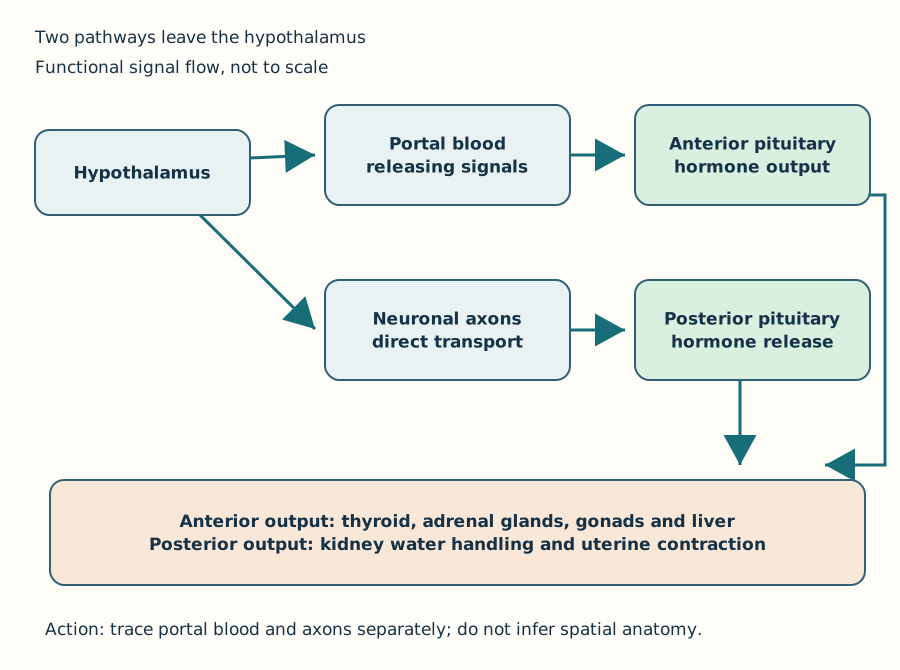
Trace portal blood to anterior hormone output, then axons to posterior hormone release. This compares signaling routes, not anatomical locations. [3]Cover each rightmost box, predict luteinizing hormone and follicle-stimulating hormone, then compare the two paths. An antagonist blocks the receptor without an agonist flare. [3]
Portal and axonal output pathways: Functional signal flow schematic, not to scale. Hypothalamic releasing signals travel in portal blood to the anterior pituitary, whose outputs regulate thyroid, adrenal glands, gonads and liver. Separate neuronal axons carry hormones to the posterior pituitary for release affecting kidney water handling and uterine contraction. The anterior output arrow routes outside the separate posterior box; the posterior path is not downstream of the anterior pituitary. Trace portal blood to anterior hormone output, then axons to posterior hormone release. This compares signaling routes, not anatomical locations.
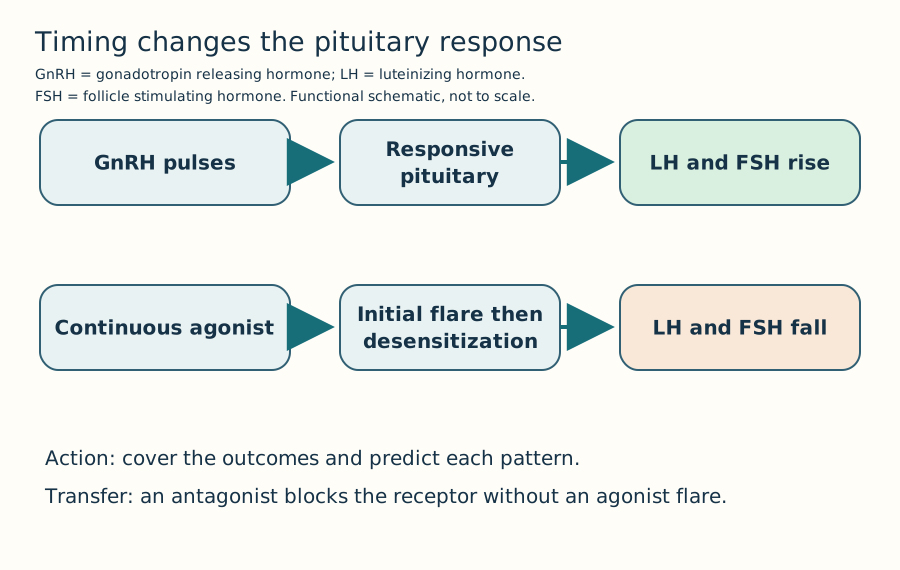
Pulse timing changes gonadotropin output: Gonadotropin releasing hormone (GnRH) pulses preserve pituitary responsiveness and raise luteinizing hormone (LH) and follicle stimulating hormone (FSH). A continuous GnRH agonist causes a brief flare then lowers LH and FSH. Functional signal flow schematic, not to scale. Cover each rightmost box, predict luteinizing hormone and follicle-stimulating hormone, then compare the two paths. An antagonist blocks the receptor without an agonist flare.
A cohort of selected patients with functional hypothalamic amenorrhea documents pulsatile gonadotropin-releasing hormone treatment [18]; antagonist degarelix suppresses gonadotropins without agonist flare [19]. Ganirelix competitively prevents premature luteinizing hormone surges during controlled ovarian stimulation [20].
Trace the axis-route figure from hypothalamus through portal vessels to anterior pituitary and from hypothalamic axons to the posterior lobe; then point to gonads, thyroid, adrenals, liver and kidney downstream. A pituitary mass can disrupt these outputs without secreting anything: an upward-growing nonfunctioning macroadenoma can compress the optic chiasm and its crossing nasal retinal fibers, producing loss of both temporal visual fields. This is not evidence of a prolactinoma.
The topic-specific prediction mechanic is a two-column pulse versus continuous trace: under each delivery pattern, write receptor response, LH/FSH output, then gonadal steroid direction. Intermittent exposure preserves responsiveness and releases gonadotropins. A sustained agonist produces an initial flare, then receptor desensitization and reduced LH/FSH. [15] Exact 60- or 90-minute delivery is not a universal clinical rule, and pulsatile leuprolide is not a routine description of in vitro fertilization: selected patients with hypothalamic GnRH deficiency may receive pulsatile GnRH, while reproductive protocols use agonists or antagonists to control premature surges.
Predict before opening: a patient with low testosterone, low LH and FSH, and congenital loss of smell receives pulsatile GnRH rather than depot leuprolide. Which pattern restores pituitary output?
Continuous leuprolide, goserelin, nafarelin or histrelin can suppress sex steroids for prostate cancer, endometriosis, fibroids or central precocious puberty. Cetrorelix and ganirelix block GnRH receptors directly during assisted reproduction to prevent premature LH surge; degarelix antagonizes the receptor without the initial testosterone flare in prostate cancer. Agonist flare may worsen painful metastases and require preventive planning. [15] Sustained sex-steroid suppression can cause hot flashes, vaginal dryness and bone loss.
Reveal prediction answer
The pump can restore luteinizing hormone and follicle-stimulating hormone if pituitary gonadotropes remain functional; continuous depot stimulation ultimately suppresses them.
Transfer this timing rule to a child with advanced bone age and central pubertal LH response: sustained treatment can slow premature puberty, but investigate the cause, particularly in boys. Contrast low gonadotropins with low estradiol in functional hypothalamic amenorrhea against high gonadotropins in primary ovarian insufficiency. Pubertal signs from adrenal or peripheral gonadal steroids do not automatically indicate hypothalamic activation. [3]
Try it here · Checkpoint 1 of 3
Make your prediction before reading the choices. A first attempt is just a starting point.
Case 1
Show answer and explanations for case 1
A. Pulsatile gonadorelin (Best answer)
Anosmia plus low gonadotropins and estradiol points to deficient hypothalamic gonadotropin-releasing hormone, not ovarian failure. Timed gonadorelin pulses can recruit pituitary luteinizing hormone and follicle-stimulating hormone secretion and support ovulation; this is not routine pulsatile leuprolide administration for in vitro fertilization.
Reasoning steps for option A
Does low estradiol with very low luteinizing and follicle-stimulating hormones suggest ovarian failure?
No. Failed ovaries would ordinarily remove negative feedback and raise gonadotropins; this pattern localizes insufficient drive above the ovaries.
Why might timed gonadorelin work when anosmia accompanies absent spontaneous puberty?
Congenital loss of hypothalamic releasing-hormone signaling fits the smell deficit; intermittent replacement can engage the structurally intact pituitary to recruit follicles.
B. Continuous leuprolide infusion (Why this does not fit)
Leuprolide is initially stimulatory but sustained exposure desensitizes pituitary gonadotropin-releasing hormone receptors. In a patient already lacking gonadotropin drive, chronic infusion would not reproduce the needed intermittent signal.
Reasoning steps for option B
Would sustained leuprolide exposure preserve the gonadotropin pulses missing in this woman?
No. After transient stimulation, persistent agonism desensitizes gonadotropes and further lowers ovarian stimulation.
What would that do to her goal of endogenous follicular recruitment?
Follicles need renewed follicle-stimulating hormone and luteinizing hormone output; a depot-like suppressive pattern works against conception through this route.
C. Continuous degarelix administration (Why this does not fit)
Degarelix immediately blocks pituitary gonadotropin-releasing hormone receptors. The patient's deficiency is upstream of an otherwise functional pituitary, so receptor blockade would reduce rather than restore gonadotropin output.
Reasoning steps for option C
Where would degarelix act relative to her suspected hypothalamic defect?
It blocks releasing-hormone receptors on the pituitary, downstream from the deficient hypothalamic signal.
Can immediate receptor blockade correct her low gonadotropins?
No. With little baseline gonadotropin output, blocking the remaining pituitary response would not restore ovarian estradiol or ovulation.
D. Continuous gonadorelin infusion (Why this does not fit)
The molecular hormone matches what is missing, but constant delivery does not mimic hypothalamic pulses. Sustained receptor stimulation causes desensitization and fails the proposed goal of endogenous cyclic gonadotropin release.
Reasoning steps for option D
Is giving the correct hormone molecule sufficient if delivery is continuous?
No. Gonadotropes encode the timing of gonadorelin exposure as well as its identity.
How would constant gonadorelin differ from the portable pump's intended pulses?
Does galactorrhea with amenorrhea prove a secreting pituitary tumor? Dopamine inhibits anterior pituitary lactotrophs; increased prolactin suppresses hypothalamic GnRH pulses, lowering LH, FSH and ovarian estrogen indirectly. Prolactin drives milk synthesis, distinct from oxytocin-driven ejection. Pregnancy, medications, hypothyroidism and stalk disruption can also elevate prolactin. Evaluate the cause before calling every raised measurement a prolactinoma. [1][5]
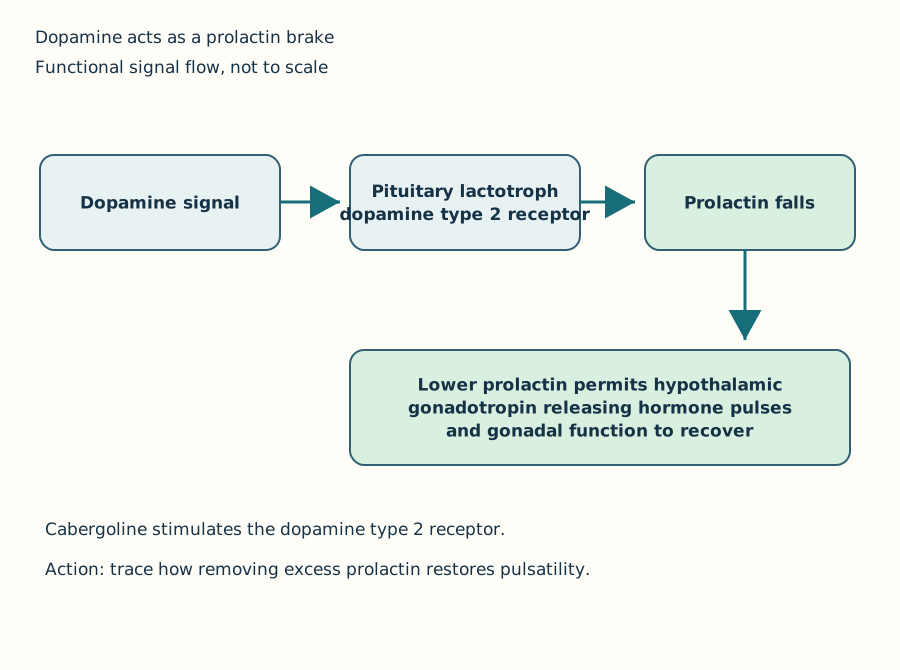
Follow the dopamine brake and predict what cabergoline changes. It reduces prolactin at its source rather than directly replacing gonadotropins. [1][5]
Dopamine restrains prolactin: Functional signal flow schematic, not to scale. Dopamine acts on pituitary lactotroph dopamine type 2 receptors to lower prolactin; lowering excess prolactin permits gonadotropin releasing hormone pulses and gonadal function to recover. Follow the dopamine brake and predict what cabergoline changes. It reduces prolactin at its source rather than directly replacing gonadotropins.
A comparative amenorrhea trial measured recovery of prolactin and menstrual function, but included too few macroprolactinomas to prove comparative tumor shrinkage [2].
Follow the prolactin-brake diagram: dopamine type 2 receptor activation lowers prolactin; reduced prolactin allows GnRH pulsatility and gonadal function to recover. Trace what cabergoline changes and contrast a GnRH depot, which suppresses gonadotropins without treating the prolactin source. A growing mass with headaches or field loss requires assessment of the chiasm and other pituitary outputs as well as secretion.
Predict before opening: a symptomatic prolactinoma shrinks rapidly after cabergoline. Should medicine stop immediately after one favorable scan?
Cabergoline commonly normalizes prolactin and reduces tumor size more effectively than bromocriptine for symptomatic prolactinoma, while bromocriptine has longer pregnancy experience. For a well-circumscribed prolactinoma, experienced transsphenoidal surgery can be an initial option after shared discussion, not only after drug failure. Do not stop therapy after one favorable scan: selected patients can attempt supervised withdrawal after durable biochemical control and substantial tumor reduction, with later prolactin surveillance. [2][5]
Reveal prediction answer
No immediate withdrawal. Reassess after sustained control and follow-up, rather than after a single scan.
Transfer to pregnancy: most patients stop dopamine agonists once pregnancy is confirmed, whereas a large tumor near the chiasm may warrant individualized continued treatment and symptom or visual-field surveillance. Routine prolactin measurements during pregnancy do not track tumor growth reliably. Bromocriptine has a longer pregnancy exposure history, but cabergoline is not automatically replaced in every patient. Consider dose and duration when discussing cabergoline-associated valve disease; do not imply inevitable fibrosis at usual prolactinoma doses. Bromocriptine also has selected Parkinson disease and type 2 diabetes applications; neuroleptic malignant syndrome requires specialist-directed care rather than reflex replacement of acute stabilization. [5]
3. Growth excess: suppress secretion or block action?
An acromegaly patient still has high insulin-like growth factor 1 (IGF-1) after surgery. Ask whether treatment should reduce pituitary GH secretion or interrupt GH action in peripheral tissues. GH stimulates liver and tissue IGF-1 production. Octreotide and lanreotide stimulate somatostatin receptors that inhibit GH secretion; they can also alter thyroid-stimulating hormone, insulin, glucagon and gastrointestinal peptide release. Pituitary surgery is often the first treatment for resectable disease; persistent disease needs individualized additional treatment. [4]
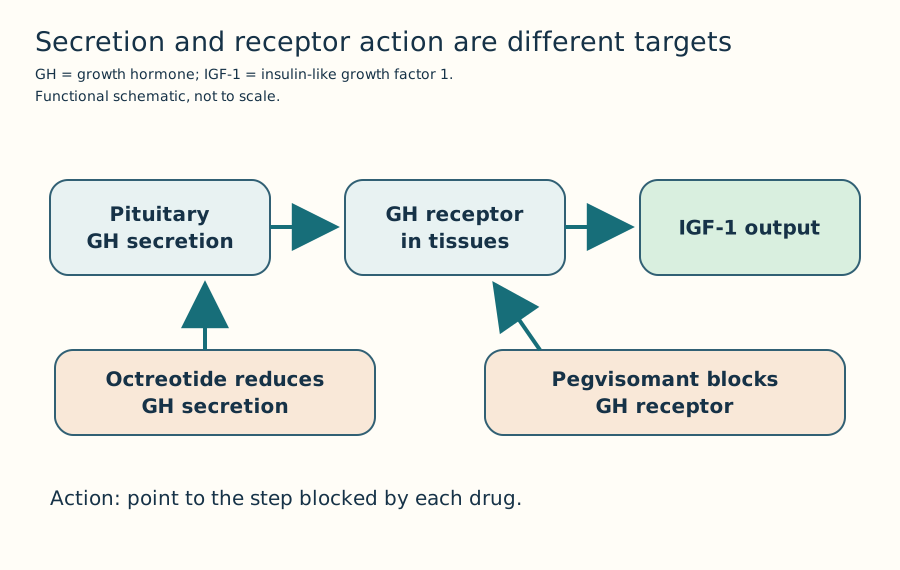
Point to the octreotide and pegvisomant targets before choosing a response marker. Insulin-like growth factor 1 reflects peripheral action, even if growth hormone remains high. [4]
Two targets for growth excess: Pituitary growth hormone (GH) secretion stimulates tissue GH receptors and insulin-like growth factor 1 (IGF-1) output. Octreotide reduces GH secretion; pegvisomant blocks the GH receptor. Functional signal flow schematic, not to scale. Point to the octreotide and pegvisomant targets before choosing a response marker. Insulin-like growth factor 1 reflects peripheral action, even if growth hormone remains high.
In acute variceal bleeding, vasoactive therapy accompanies antibiotics and urgent endoscopy, not solitary long-term antisecretory therapy [16]. Octreotide is also a labeled therapy for selected secreting tumors [10].
Trace the growth-fork diagram: one branch follows GH to hepatic IGF-1; another follows peptides released from a gut neuroendocrine tumor. Place octreotide upstream of secretion and pegvisomant at the GH receptor. If IGF-1 falls but GH remains high after pegvisomant, the receptor antagonist can still be effective; monitor IGF-1 and residual tumor rather than treating GH alone as its response marker. [4]
Predict before opening: during manipulation of a serotonin-secreting tumor, flushing, bronchospasm and hemodynamic instability appear. Does a GH receptor antagonist or a secretion-directed drug address the immediate mediator surge?
Long-acting octreotide or lanreotide inhibits growth hormone secretion in acromegaly; octreotide can also suppress serotonin-mediated flushing and diarrhea in metastatic carcinoid syndrome and reduce secretory diarrhea from a vasoactive intestinal peptide-secreting tumor. Acute carcinoid crisis needs prompt clinical assessment and a secretion-directed agent, rather than a growth hormone receptor antagonist. Excess gastrin or glucagon from other functional neuroendocrine tumors requires tumor-specific assessment rather than assuming every syndrome shares a labeled indication. By suppressing digestive and pancreatic secretions, somatostatin analogues can cause gallstones, fat malabsorption with greasy stools, and altered glucose control. [4][10]
Transfer to refractory high IGF-1: blocking peripheral GH action may help even if GH remains high, while a patient with secretion-driven flushing needs suppression at the source. The drug target, not simply the endocrine organ involved, decides which marker should improve. [4][13]
Try it here · Checkpoint 2 of 3
Make your prediction before reading the choices. A first attempt is just a starting point.
Case 8
Show answer and explanations for case 8
A. Subcutaneous pegvisomant (Why this does not fit)
Pegvisomant blocks growth hormone receptors in acromegaly, not secretion from a serotonin-producing neuroendocrine tumor. It cannot promptly stop the mediator surge responsible for this procedure-triggered crisis.
Reasoning steps for option A
What receptor does pegvisomant antagonize?
It blocks the peripheral growth hormone receptor in acromegaly.
Would that stop mediator release during this liver procedure?
No. Carcinoid crisis requires acute management of tumor mediator release and shock.
B. Intravenous phentolamine (Why this does not fit)
Alpha-adrenergic blockade targets catecholamine-mediated pheochromocytoma crisis. Flushing, watery diarrhea and bronchospasm after manipulation of a serotonin-secreting tumor instead identify carcinoid crisis; blockade does not inhibit mediator release and may worsen hypotension.
Reasoning steps for option B
When might intravenous phentolamine be relevant to an endocrine tumor crisis?
Alpha blockade can address catecholamine-mediated pheochromocytoma crisis.
Does that match flushing, diarrhea and bronchospasm after manipulation of a serotonin-secreting tumor?
No. This is a carcinoid mediator crisis with marked hypotension; alpha blockade does not suppress its secretion.
C. Oral telotristat ethyl (Why this does not fit)
Telotristat inhibits serotonin synthesis for chronic carcinoid-syndrome diarrhea, generally alongside somatostatin analogue therapy. Oral chronic symptom control is too slow to suppress this acute procedure-triggered mediator surge and shock.
Reasoning steps for option C
What is the intended target of oral telotristat?
It inhibits serotonin synthesis to help control chronic carcinoid-syndrome diarrhea.
Can it rapidly reverse bronchospasm and shock after tumor manipulation?
No. Its chronic oral action is too slow for the acute crisis; octreotide is the targeted adjunct.
D. Intravenous octreotide (Best answer)
Tumor manipulation followed immediately by flushing, diarrhea, bronchospasm and shock suggests carcinoid crisis. Intravenous octreotide suppresses further mediator release as a targeted adjunct to airway and circulatory resuscitation.
Reasoning steps for option D
What connects abrupt flushing, bronchospasm, diarrhea and shock to the liver procedure?
Manipulation of a serotonin-secreting neuroendocrine tumor can provoke a sudden vasoactive mediator release.
Why give intravenous octreotide alongside airway and circulatory support?
It can suppress further tumor secretion during suspected carcinoid crisis; it does not replace immediate resuscitation.
Takeaway: For suspected carcinoid crisis, octreotide is a targeted adjunct to airway and hemodynamic resuscitation.
4. Growth deficiency: replacement and warning patterns
A child on somatropin develops a limp. Is a normalizing IGF-1 reassuring enough to ignore hip symptoms? Recombinant GH supports growth directly and through IGF-1. Established pediatric GH deficiency, Turner syndrome, selected growth failure with chronic kidney disease or Prader-Willi syndrome and some idiopathic short stature are distinct indication contexts; adult deficiency requires its own assessment. human immunodeficiency virus-associated wasting has a distinct indication under some other somatropin products and is not an indication for every brand. [9] Growth hormone-releasing hormone analogues such as sermorelin are not routine interchangeable somatropin replacement. mecasermin replaces insulin-like growth factor 1 in children aged at least two years with severe primary IGF-1 deficiency and normal or high GH, or with GH gene deletion and neutralizing antibodies; it does not substitute for somatropin in ordinary GH deficiency.
Because it can cause severe hypoglycemia, give it within 20 minutes before or after a meal or snack and withhold the dose when food is unavailable. [8]
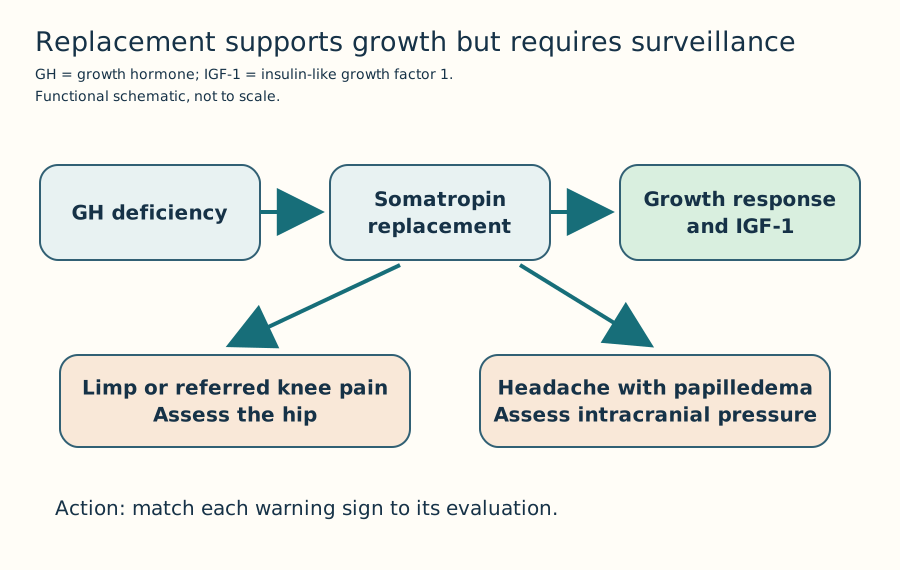
Match a limp or referred knee pain to hip assessment and headache with papilledema to intracranial pressure assessment; an appropriate growth marker does not dismiss symptoms. [8][9]
Growth replacement and warning signs: Growth hormone (GH) deficiency leads to somatropin replacement and insulin-like growth factor 1 (IGF-1) growth response. A limp requires hip assessment; headache with papilledema requires assessment of intracranial pressure. Functional signal flow schematic, not to scale. Match a limp or referred knee pain to hip assessment and headache with papilledema to intracranial pressure assessment; an appropriate growth marker does not dismiss symptoms.
Compare two concrete patient sketches: one limps with restricted hip internal rotation or referred knee pain, the other has headache and papilledema. Before reading the answer, localize the first problem to the proximal femoral growth plate and the second to intracranial pressure. The visible consequence of rapid skeletal growth can be slipped capital femoral epiphysis, warranting urgent examination and hip imaging; headache with visual changes warrants evaluation for intracranial hypertension. Neither is ruled out by an apparently appropriate IGF-1. GH can worsen insulin resistance, while sustained excess may cause acromegaloid changes. [9]
Predict before opening: a treated child has new knee pain and a limp but an age-appropriate IGF-1. What should be evaluated?
Reveal prediction answer
Examine and image the hip for slipped capital femoral epiphysis, including when pain is felt at the knee. Transfer to a child with headache and papilledema: evaluate for intracranial hypertension instead of assuming a skeletal injury.
5. Water perturbation: receptor signaling changes urine and sodium
After pituitary surgery a patient passes liters of dilute urine and sodium rises. Is hypothalamic arginine vasopressin (AVP), historically called antidiuretic hormone (ADH), missing, or is the kidney unresponsive? Posterior pituitary release supplies AVP to V2 receptors, the renal vasopressin receptor subtype that tells collecting-duct cells to conserve water. These receptors sit on principal cells.
These insert aquaporin-2 water channels and retain water. Central diabetes insipidus, also called AVP deficiency, generally responds to desmopressin; nephrogenic diabetes insipidus, or AVP resistance, responds poorly. Desmopressin favors V2 antidiuretic over V1 vasoconstrictor activity. Assess paired serum and urine concentration and volume status, not thirst alone.
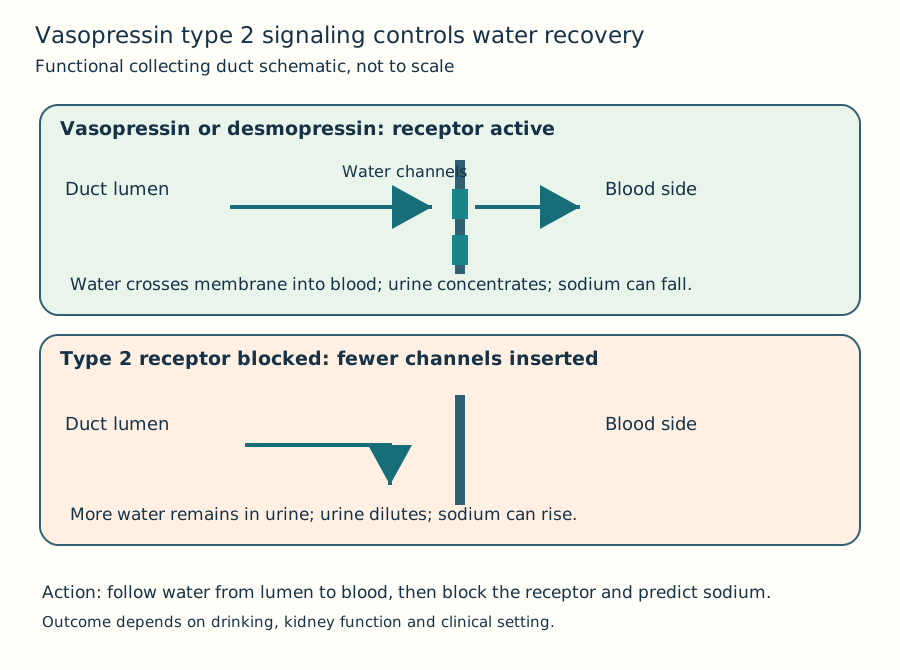
Trace water across the upper membrane before following the blocked receptor path below. Predict urine and sodium direction: activating type 2 signaling retains water, while blocking it increases water excretion. Sodium effects depend on clinical context. [7][11]
Deficient vasopressin secretion and kidney resistance both produce hypotonic polyuria but differ in the urine response to desmopressin [21]. When lithium must continue, amiloride can improve renal concentrating response in selected patients [22]. Demeclocycline has an unpredictable effect and can impair kidney function [23].
V2 water handling: Functional collecting duct schematic, not to scale. Arginine vasopressin or desmopressin activates vasopressin type 2 receptors to insert aquaporin-2 water channels into the cell membrane. Water travels from duct lumen to blood and urine concentrates. A receptor antagonist reduces channel insertion; water remains in urine, which becomes more dilute. Trace water across the upper membrane before following the blocked receptor path below. Predict urine and sodium direction: activating type 2 signaling retains water, while blocking it increases water excretion. Sodium effects depend on clinical context.
Oral tolvaptan raised serum sodium in clinical trials [6], but its label requires monitored initiation, restricts duration and warns against use with underlying liver disease [7].
Use the water-perturbation figure in three passes. First, remove AVP: aquaporin insertion falls, urine becomes dilute and, without adequate drinking, serum sodium can rise. Second, give desmopressin in AVP deficiency: urine concentrates and retained water can lower sodium. Third, block V2 in inappropriate antidiuresis: electrolyte-free water excretion increases and sodium can rise. Predict direction before comparing the three traces. Aquaresis primarily loses water; it does not literally mean that no solute ever leaves. In hypovolemic hyponatremia restore circulating volume rather than reflexively blocking AVP.
Predict before opening: a patient taking desmopressin drinks excessive free water and develops confusion with low sodium. What is the opposite V2 perturbation, and what safety limit applies?
Tolvaptan produces aquaresis by antagonizing kidney vasopressin type 2 receptors. For indicated clinically significant euvolemic or hypervolemic hyponatremia, initiate or reinitiate in a hospital with serum sodium monitoring, avoid fluid restriction during the first 24 hours, and do not use as emergency treatment of severe neurological symptoms. Limit use to 30 days and avoid underlying liver disease including cirrhosis. Conivaptan is an intravenous vasopressin receptor antagonist used in selected hospitalized cases, not a substitute for volume assessment: vasopressin antagonism can worsen hypovolemia, while heart failure and cirrhosis create distinct hypervolemic contexts. [7][23]
Reveal prediction answer
Desmopressin-associated water retention can cause dangerous dilutional hyponatremia. V2 antagonism promotes free-water excretion rather than retention, raising sodium if water intake does not replace losses.
Transfer to AVP-resistant polyuria: identify and address the cause, restrict excess dietary solute and consider selected thiazide or amiloride treatment, especially with lithium-related disease. Demeclocycline can induce renal resistance in inappropriate antidiuresis but risks nephrotoxicity and is not first-line by default. Desmopressin also releases endothelial von Willebrand factor and factor VIII for selected responsive type 1 von Willebrand disease and mild hemophilia A with adequate factor VIII activity; it can be used for selected enuresis with water-intoxication precautions. Intranasal and injection formulations have different labeled indications and doses. [11]
Try it here · Checkpoint 3 of 3
Make your prediction before reading the choices. A first attempt is just a starting point.
Case 21
Show answer and explanations for case 21
A. Central vasopressin deficiency (Best answer)
Postoperative hormone loss causes dilute water loss and rising sodium; the strong desmopressin response demonstrates preserved collecting-duct function.
Reasoning steps for option A
Where does postoperative dilute hypernatremic polyuria localize?
Pituitary surgery may disrupt vasopressin supply.
What does strong desmopressin-induced urine concentration establish?
Preserved renal V2 response supports central vasopressin deficiency rather than kidney resistance.
B. Nephrogenic resistance to vasopressin (Why this does not fit)
Renal resistance would blunt rather than produce this marked concentration after desmopressin.
Reasoning steps for option B
What response would renal resistance to vasopressin predict after desmopressin?
A resistant collecting duct would remain relatively unable to concentrate urine despite replacement hormone.
Why does the measured post-treatment urine contradict renal resistance?
Concentration to 560 mOsm/kg demonstrates substantial intact renal antidiuretic signaling in this postoperative patient.
C. Postoperative hyperglycemic osmotic diuresis (Why this does not fit)
Stress hyperglycemia can cause postoperative polyuria, but extremely dilute urine followed by marked desmopressin concentration favors missing vasopressin.
Reasoning steps for option C
How could surgery cause osmotic urine losses?
Perioperative stress can raise glucose, allowing urinary glucose to draw water out.
What measurement favors deficient vasopressin instead?
Urine at 85 mOsm/kg concentrates to 560 after desmopressin, showing a responsive kidney missing its antidiuretic signal.
D. Primary excessive water intake alone (Why this does not fit)
Excess drinking alone would not explain rising sodium with substantial water loss in this postoperative setting.
Reasoning steps for option D
What sodium pattern would isolated excessive water drinking tend to produce?
Retained ingested water would lower or stabilize sodium rather than raise it from 140 to 150 mmol/L during copious urination.
Why is the response to desmopressin informative beyond the reported fluid intake?
A dramatic concentrating response after pituitary surgery identifies an antidiuretic hormone deficit as the immediate cause of the dilute water loss.
Takeaway: Postoperative hypotonic polyuria with a strong desmopressin response supports central vasopressin deficiency; monitor sodium and fluid balance.
6. Oxytocin: uterus first, water as an adverse effect
During labor induction stronger contractions develop alongside headache and falling sodium. Could one posterior-pituitary peptide act at both uterus and kidney? Oxytocin is synthesized in hypothalamic neurons and released from the posterior pituitary. It causes uterine smooth-muscle contraction and breast myoepithelial contraction for milk ejection, which is distinct from prolactin-dependent milk synthesis. Clinical uses include indicated labor induction or augmentation and prevention or treatment of postpartum hemorrhage due to uterine atony.
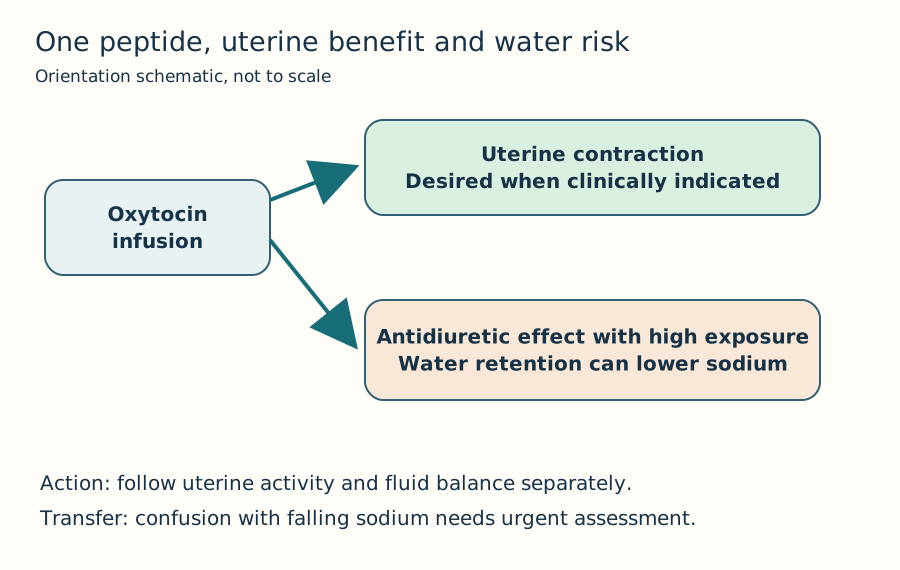
Trace uterine benefit separately from antidiuretic risk. New confusion and falling sodium require assessment rather than assuming uterine response guarantees safety. [12]
Oxytocin has two clinically relevant paths: Oxytocin infusion can produce uterine contraction while high exposure with substantial water administration can cause antidiuresis and falling serum sodium. Functional signal flow schematic, not to scale. Trace uterine benefit separately from antidiuretic risk. New confusion and falling sodium require assessment rather than assuming uterine response guarantees safety.
Uterine hyperstimulation and water intoxication are distinct safety concerns during oxytocin administration [12].
Compare uterine and renal outcomes in a patient on a prolonged infusion. Predict that excessive uterine stimulation can cause tachysystole with fetal compromise and sometimes uterine injury, whereas sustained high oxytocin exposure, particularly with substantial hypotonic fluid, can exert antidiuretic activity and lower serum sodium. Follow contractions and fetal status alongside fluid input and maternal neurologic symptoms. Reassess infusion and treat symptomatic hyponatremia according to severity instead of giving more free water.
Predict before opening: uterine tone improves, but the patient becomes confused and serum sodium falls. Must the hypothalamus release extra AVP to explain this?
Reveal prediction answer
No. Oxytocin itself can exert antidiuretic effects at substantial exposure, compounded by administered free water. Transfer the distinction to postpartum hemorrhage treatment: desired uterine contraction never eliminates monitoring for excessive contractions and water intoxication.
Distinguish from pituitary hormones: calcitonin rapidly inhibits osteoclast bone resorption in severe hypercalcemia but loses effect within 48 to 72 hours due to tachyphylaxis. For severe malignancy-related calcium above 14 mg/dL, use it briefly alongside an intravenous bisphosphonate or denosumab rather than alone. [17] It arises from thyroid C cells, not the pituitary. [14] A dehydrated patient with severe symptomatic hypercalcemia needs appropriate hydration and a durable antiresorptive plan, not indefinite calcitonin monotherapy.
Practice
Case 2
Show answer and explanations for case 2
A. Histrelin implant (Why this does not fit)
Continuous histrelin is suppressive after receptor desensitization, but it starts as an agonist. Changing the delivery device does not make initial androgen stimulation disappear.
Reasoning steps for option A
Does histrelin's implant formulation imply flare-free androgen withdrawal?
No. The active drug still stimulates gonadotropin-releasing hormone receptors at first.
How does that first phase compare with the oncologist's stated constraint?
Any early luteinizing hormone and testosterone increase conflicts with avoiding exacerbation of neurologic compression.
B. Degarelix injection (Best answer)
A gonadotropin-releasing hormone receptor antagonist suppresses pituitary luteinizing hormone promptly without the initial testosterone surge associated with agonists. Spinal canal compromise makes avoiding flare clinically consequential.
Reasoning steps for option B
Why does the impending spinal cord injury change the acceptable timing of testosterone suppression?
A brief increase in androgen signaling could worsen symptoms while the epidural lesion already threatens neurologic function.
What does degarelix do before an agonist could downregulate its receptor?
It antagonizes pituitary gonadotropin-releasing hormone receptors immediately, reducing luteinizing hormone and testosterone without an initial agonist flare.
C. Leuprolide depot (Why this does not fit)
Depot leuprolide eventually suppresses testosterone, but the first phase of agonism can transiently increase luteinizing hormone and testosterone. This patient cannot safely treat eventual suppression as equivalent to immediate blockade.
Reasoning steps for option C
Is eventual testosterone suppression the only relevant feature of leuprolide here?
No. Its early stimulatory interval matters because this patient already has leg weakness from canal narrowing.
What transient endocrine change precedes depot leuprolide's suppressive effect?
Initial pituitary receptor activation raises luteinizing hormone and testosterone, creating avoidable flare risk despite later androgen deprivation.
D. Goserelin implant (Why this does not fit)
Goserelin is also a long-acting gonadotropin-releasing hormone receptor agonist. Its eventual downregulation does not remove the initial flare hazard while spinal cord compression is threatened.
Reasoning steps for option D
Would an implant of goserelin eliminate the initial receptor activation?
No. Implant delivery prolongs exposure but does not turn this agonist into an antagonist.
Why is its later efficacy insufficient in this particular presentation?
Downregulation follows an initial testosterone rise; spinal canal compromise makes the delay and flare clinically important.
Takeaway: When an androgen flare would be dangerous, immediate GnRH receptor blockade can be preferable to an agonist.
A. Selective dopamine type 2 receptor activation (Why this does not fit)
Dopamine type 2 activation primarily inhibits prolactin release. Her pubertal stimulated luteinizing hormone and low estradiol after sustained gonadotropin-releasing hormone agonism implicate pituitary gonadotrope desensitization instead.
Reasoning steps for option A
Which anterior pituitary output is most directly implicated by the stimulated test?
A pubertal luteinizing hormone response implicates gonadotropes, not primarily prolactin-producing lactotrophs.
Would dopamine type 2 stimulation explain suppression following a gonadotropin-releasing hormone agonist?
No. Dopaminergic prolactin inhibition does not account for the specific receptor exposure or the observed decline in ovarian estradiol.
B. Direct ovarian estrogen receptor blockade (Why this does not fit)
Blocking ovarian estrogen responses would not explain the falling measured estradiol after a pituitary agonist. Desensitized gonadotropes reduce luteinizing hormone and follicle-stimulating hormone drive to ovarian estrogen synthesis.
Reasoning steps for option B
Does the prescribed drug act at ovarian estrogen receptors?
No. The prolonged releasing-hormone agonist acts on pituitary gonadotropes.
Would activating or blocking peripheral estrogen receptors directly explain reduced measured estradiol?
Not as well: the fall in estrogen synthesis follows reduced luteinizing hormone and follicle-stimulating hormone drive after pituitary desensitization.
C. Gonadotropin-releasing hormone receptor desensitization (Best answer)
A pubertal stimulated luteinizing hormone response identifies central axis activation. Sustained agonist exposure subsequently desensitizes pituitary gonadotropes, reducing gonadotropin drive and ovarian estradiol production.
Reasoning steps for option C
What does the pubertal stimulated luteinizing hormone response establish about the source of early maturation?
The hypothalamic-pituitary gonadal axis is active, so pituitary gonadotropes are a meaningful treatment target.
Why is estradiol low months after sustained agonist therapy rather than persistently high?
Continuous stimulation progressively desensitizes the pituitary receptors, reducing gonadotropins and ovarian estrogen production.
D. Immediate competitive gonadotropin-releasing hormone receptor blockade (Why this does not fit)
A receptor antagonist could promptly block gonadotropin release, but she received a long-acting agonist. Its later suppression follows sustained stimulation and receptor desensitization rather than immediate competitive blockade.
Reasoning steps for option D
Would competitive blockade require an initial period of pituitary stimulation?
No. An antagonist prevents receptor signaling immediately instead of first activating it.
Does that mechanism describe the long-acting agonist the child received?
No. Her later suppression follows adaptation to sustained activation, not occupancy by a receptor blocker.
A. Pulsatile gonadorelin infusion (Why this does not fit)
Pulsatile gonadorelin stimulates pituitary luteinizing hormone and follicle-stimulating hormone secretion in hypothalamic deficiency. Adding pulses to this stimulation cycle would not provide the immediate blockade needed to avoid a premature surge.
Reasoning steps for option A
What is pulsatile gonadorelin designed to elicit from a responsive pituitary?
It promotes recurring gonadotropin secretion, useful for selected patients who lack hypothalamic pulses.
Would increasing gonadotropin drive protect this stimulation cycle from an early surge?
No. The immediate objective is to restrain luteinizing hormone until the team selects the trigger time.
B. First dose of leuprolide (Why this does not fit)
An initial agonist dose can stimulate gonadotropin release. Although agonists have roles in planned fertility protocols, first-dose stimulation does not provide prompt, flare-free receptor blockade on cycle day 7.
Reasoning steps for option B
What happens shortly after an initial leuprolide dose?
Agonism can transiently stimulate pituitary gonadotropin release before sustained exposure causes desensitization.
Why is that initial phase a poor match for the requested add-on?
The cycle needs direct, prompt, flare-free prevention of a premature luteinizing hormone surge, not delayed suppression.
C. Continuous leuprolide begun before stimulation (Why this does not fit)
A long agonist protocol begun sufficiently early can suppress gonadotropins after an initial stimulatory phase and receptor downregulation. It is a credible reproductive strategy, but cannot be newly added on cycle day 7 to provide immediate, flare-free blockade.
Reasoning steps for option C
Can an early-started continuous leuprolide protocol prevent a premature surge?
Yes, after an initial stimulatory period, sustained agonism downregulates gonadotropin-releasing hormone receptors.
Can it be newly added on day 7 to give immediate flare-free blockade?
No. Its suppression needs advance initiation, whereas ganirelix competitively blocks the receptor promptly.
D. Ganirelix acetate injection (Best answer)
Ganirelix promptly antagonizes pituitary gonadotropin-releasing hormone receptors. In an ongoing stimulated cycle it prevents a premature luteinizing hormone surge without an initial agonist flare or delayed downregulation.
Reasoning steps for option D
Why is immediate suppression useful when follicles are already growing?
An unscheduled luteinizing hormone surge could trigger ovulation before the planned maturation trigger and retrieval.
How does ganirelix meet the timing requirement?
Competitive pituitary receptor antagonism prevents a premature surge without waiting for agonist-induced downregulation.
Takeaway: GnRH antagonists can promptly prevent premature luteinizing hormone surges in stimulated cycles.
A. Pituitary gonadotropin-releasing hormone receptor downregulation (Best answer)
Depot agonist exposure suppresses gonadotropins after an early stimulatory phase. Reduced ovarian estradiol can improve estrogen-responsive endometriosis while causing vasomotor and genitourinary hypoestrogenic symptoms; consider bone-health and add-back planning when appropriate.
Estrogen supports activity of ectopic endometrial tissue, so reduced ovarian stimulation can diminish symptoms.
How does depot goserelin also account for hot flashes and vaginal dryness?
Sustained agonist exposure downregulates pituitary receptors and gonadotropin output; the resulting systemic hypoestrogenism produces both adverse symptoms.
B. Immediate pituitary gonadotropin-releasing hormone receptor blockade (Why this does not fit)
Direct blockade could produce low estrogen but describes an antagonist, not the prescribed goserelin agonist. The receptor adapts after sustained stimulation rather than being competitively blocked at the outset.
Reasoning steps for option B
Could direct receptor blockade also reduce ovarian estrogen?
Yes, an antagonist could lower gonadotropin drive, so the downstream estrogen finding alone cannot identify the drug mechanism.
What feature rules it out as the explanation for this prescribed agent?
Goserelin is an agonist whose chronic effect depends on receptor desensitization rather than immediate competitive exclusion.
C. Direct peripheral estrogen receptor activation (Why this does not fit)
Estrogen receptor activation would not explain hot flashes, vaginal dryness and menstrual suppression together. The shared explanation is reduced ovarian estrogen synthesis following gonadotropin suppression.
Reasoning steps for option C
Would activating peripheral estrogen receptors predict vaginal dryness and hot flashes?
No. Those symptoms fit withdrawal of estrogenic activity, not direct estrogen receptor stimulation.
What shared endocrine change explains both amenorrhea and the new vasomotor symptoms?
D. Selective inhibition of pituitary prolactin release (Why this does not fit)
Suppressing prolactin does not account for goserelin's ovarian steroid suppression or the hypoestrogenic symptoms. The clinically relevant pituitary output is luteinizing hormone and follicle-stimulating hormone.
Reasoning steps for option D
What is the principal pituitary hormone lowered through dopamine-mediated lactotroph inhibition?
Prolactin, rather than the luteinizing hormone and follicle-stimulating hormone output targeted by depot goserelin.
Would selective prolactin suppression predict this pattern of endometriosis relief and estrogen withdrawal?
No. Her paired therapeutic and adverse effects follow ovarian steroid suppression after chronic gonadotrope desensitization.
Takeaway: Chronic GnRH agonism can relieve estrogen-dependent disease at the cost of hypoestrogenic effects.
Ketoconazole inhibits steroid synthesis and may be used for hypercortisolism, not as a pituitary somatostatin receptor agonist. It does not supply the requested inhibition of growth hormone release in this case.
Reasoning steps for option A
Which endocrine pathway does ketoconazole chiefly inhibit?
It inhibits steroid synthesis, including adrenal cortisol production.
Does that inhibit growth hormone release from this residual lesion?
Pegvisomant can lower insulin-like growth factor 1 in acromegaly by antagonizing peripheral growth hormone receptors. It blocks growth hormone action rather than inhibiting its release from this residual pituitary lesion.
Reasoning steps for option C
Could pegvisomant reduce this patient's elevated insulin-like growth factor 1?
Yes. Blocking tissue growth-hormone receptors can reduce downstream growth-factor production.
Does that make it the requested inhibitor of secretion from the residual lesion?
No. Pituitary growth hormone may remain elevated because pegvisomant acts at peripheral receptors instead of suppressing tumor release.
D. Tesamorelin (Why this does not fit)
Tesamorelin stimulates pituitary growth hormone-releasing hormone receptors and increases growth hormone secretion. That direction is inappropriate when the residual lesion is already producing excess growth hormone.
Reasoning steps for option D
Which pituitary receptor does tesamorelin stimulate?
It activates the growth hormone-releasing hormone receptor and promotes growth hormone release.
Would that help with high insulin-like growth factor 1 and a residual secreting adenoma?
No. Increased growth hormone release opposes the requested antisecretory action.
A. Serum prolactin concentration (Why this does not fit)
Prolactin is a lactotroph output and may be relevant to a mixed-secreting lesion, but it is not the principal readout of pegvisomant's growth hormone receptor blockade in this patient.
Reasoning steps for option A
What cell type is chiefly represented by serum prolactin?
Lactotroph activity, a different pituitary output from the peripheral growth-hormone action being blocked.
Would a prolactin result establish that pegvisomant controlled this patient's acromegaly?
No. Even if clinically relevant for another pituitary issue, it cannot substitute for insulin-like growth factor 1 as the treatment readout.
B. Morning serum cortisol concentration (Why this does not fit)
Cortisol assesses adrenal-axis function, which matters in some pituitary patients, but cannot establish whether growth hormone receptor antagonism normalized the downstream growth factor signal.
Reasoning steps for option B
Which endocrine axis does morning cortisol help evaluate?
The hypothalamic-pituitary-adrenal axis, important in some patients after pituitary surgery.
Can a cortisol value indicate whether growth-hormone receptor antagonism succeeded?
No. It does not measure downstream growth-factor production, which normalized in this patient.
C. Age-adjusted insulin-like growth factor 1 (Best answer)
Pegvisomant antagonizes peripheral growth hormone receptors and lowers hepatic growth hormone-dependent insulin-like growth factor 1 production. Circulating growth hormone need not fall and can rise, making normalized age-adjusted insulin-like growth factor 1 the treatment-response measure.
Reasoning steps for option C
Which biochemical product reflects growth-hormone signaling at peripheral receptors?
What does its normalization show after pegvisomant despite elevated circulating growth hormone?
Peripheral antagonism is working biochemically; continue separate surveillance of the residual pituitary lesion.
D. Random growth hormone concentration (Why this does not fit)
The drug does not directly silence the pituitary. A high random growth hormone level despite normalized insulin-like growth factor 1 therefore does not demonstrate failure of peripheral receptor blockade.
Reasoning steps for option D
Does pegvisomant directly inhibit the pituitary cells making growth hormone?
No. It blocks receptors in target tissues, so secretion may persist or increase.
Why should the raised random growth-hormone value not override the normalized downstream marker?
A secretion assay measures a signal the drug is not designed to lower and is not its principal response measure.
Takeaway: Monitor age-adjusted insulin-like growth factor 1 rather than growth hormone for pegvisomant biochemical effect.
Octreotide inhibits gallbladder contractility and reduces bile secretion, encouraging sludge and stones with chronic exposure. New biliary pain calls for clinical evaluation rather than assuming all gastrointestinal symptoms are harmless injection effects.
Reasoning steps for option A
What drug exposure preceded new biliary pain and ultrasound-confirmed stones?
Sixteen months of octreotide therapy supplies a plausible sustained influence on gallbladder function.
How does impaired gallbladder emptying promote this finding?
Bile stagnates when contraction is inhibited, encouraging sludge and gallstone formation.
B. Increased gallbladder contraction after meals (Why this does not fit)
Repeated vigorous emptying would oppose the biliary stasis implicated in this treatment-associated stone formation. Octreotide's labeled effect is inhibition of gallbladder contraction.
Reasoning steps for option B
Would vigorous emptying after meals favor prolonged biliary stasis?
No. Stronger contraction would tend to clear gallbladder contents rather than retain them.
Which direction does octreotide shift gallbladder contraction?
It inhibits motility, so increased meal-associated contraction reverses the drug's relevant physiological effect.
C. Enhanced pancreatic enzyme delivery to bile (Why this does not fit)
Octreotide can suppress pancreatic enzyme secretion and bile acids, contributing to fat malabsorption. That mechanism is not increased enzyme delivery and does not explain the observed gallstones as directly as biliary stasis.
Reasoning steps for option C
Does octreotide increase pancreatic digestive-enzyme secretion?
No. Its antisecretory actions can decrease pancreatic output and contribute to malabsorption.
Would enhanced enzyme delivery into bile explain mobile gallstones better than stasis?
No. The imaging and postprandial biliary pain point to stones, for which impaired gallbladder emptying is the pertinent drug effect.
D. Dopamine-mediated prolactin suppression (Why this does not fit)
Prolactin suppression belongs to dopamine agonists. This patient's exposure is a somatostatin analogue, whose documented gallbladder effects provide a specific mechanism for stones.
Reasoning steps for option D
Which drugs characteristically use dopamine receptors to lower prolactin?
Dopamine agonists such as cabergoline act on lactotrophs; octreotide is a somatostatin analogue.
Could altered prolactin alone account for this patient's new biliary stones?
No. Gallbladder hypomotility during prolonged octreotide exposure provides the closer anatomical and pharmacological link.
Takeaway: Chronic octreotide may cause gallbladder stasis, sludge and gallstones.
A. Selective suppression of cortisol synthesis (Why this does not fit)
A lone decrease in cortisol would not explain a fasting glucose rise or variable glycemic effects. Octreotide's relevant effects include changes in insulin, glucagon and growth hormone secretion rather than selective cortisol-synthesis inhibition.
Reasoning steps for option A
Would a selective decrease in cortisol explain both possible directions of glucose change?
No. A single decrease in a glucose-raising hormone cannot account for both hyperglycemia and hypoglycemia.
Which hormone changes are more directly linked to octreotide in this patient?
Altered insulin, glucagon and growth hormone secretion can shift fasting glucose; monitor and assess treatment needs rather than assume insulin doses.
B. Altered pancreatic and pituitary hormone secretion (Best answer)
Octreotide changes insulin, glucagon and growth hormone secretion together, so their competing effects can shift glucose in either direction. The measured increase warrants monitoring and assessment for diabetes, with treatment adjusted if clinically indicated; no existing insulin regimen is assumed.
Reasoning steps for option B
Why is the rise from fasting glucose 106 to 167 worth monitoring after octreotide starts?
The fasting rise after starting octreotide warrants repeat glucose assessment and consideration of treatment if indicated, without assuming a preexisting insulin regimen.
Why can the glucose effect vary in direction between patients?
Somatostatin signaling modifies insulin, glucagon and growth-hormone secretion together; their competing influences change the net glucose response.
C. Selective activation of pancreatic insulin release (Why this does not fit)
More insulin alone would tend to lower rather than raise this patient's fasting glucose. Octreotide changes multiple endocrine outputs instead of selectively stimulating insulin release, accounting for variable net glucose effects.
Reasoning steps for option C
Would selectively increased insulin secretion explain the higher fasting glucose?
No. Additional insulin would tend to lower circulating glucose, contrary to her measured change.
Does octreotide principally stimulate insulin release in isolation?
No. It inhibits or modifies multiple pancreatic and pituitary hormone outputs, permitting either direction of glycemic disturbance.
D. Direct blockade of renal glucose reabsorption (Why this does not fit)
Blocking renal glucose reabsorption causes urinary glucose loss and generally lowers plasma glucose. Octreotide acts on somatostatin receptors, not renal sodium-glucose cotransporters, and her glucose rose after its introduction.
Reasoning steps for option D
What glucose effect would blocking renal reabsorption ordinarily produce?
More glucose would leave in urine, generally lowering rather than raising plasma glucose.
Is the renal glucose transporter the pharmacological target of her new therapy?
No. Octreotide activates somatostatin receptors and alters endocrine secretion, not renal sodium-glucose cotransport.
Takeaway: Monitor glucose on octreotide because its simultaneous endocrine actions can shift glucose in either direction.
A. Begin bromocriptine and monitor prolactin and tumor response (Why this does not fit)
Bromocriptine is a viable dopamine agonist alternative that can lower prolactin and restore ovulation; pregnancy goals do not rule it out. Cabergoline is generally preferred initially for greater prolactin normalization and tumor shrinkage with better tolerability [2,5].
Reasoning steps for option A
Can bromocriptine lower prolactin and permit ovulation in this patient?
Yes. It is a viable dopamine agonist alternative, not a contraindicated choice.
Why is cabergoline the single generally preferred initial agonist?
It usually normalizes prolactin and shrinks tumors more effectively with better tolerability [2,5].
B. Use hormonal contraception and observe the lesion (Why this does not fit)
Contraception may control some menstrual symptoms but neither fulfills her pregnancy goal nor constitutes a dopamine agonist. It does not directly inhibit lactotroph prolactin secretion from her pituitary lesion.
Reasoning steps for option B
Would hormonal contraception reduce the prolactin secreted by her 7-mm lesion?
No. Exogenous sex steroids can regulate bleeding but do not activate lactotroph dopamine receptors or shrink a prolactinoma.
How does contraception relate to her stated pregnancy goal?
It prevents conception while used and does not reverse the prolactin-driven interruption of ovulatory cycles.
C. Begin cabergoline and monitor prolactin and tumor response (Best answer)
Amenorrhea, repeated elevated prolactin and a 7-mm lesion support symptomatic microprolactinoma. Cabergoline is generally preferred among initial dopamine agonists because it more effectively normalizes prolactin and reduces tumor size with better tolerability; monitor response and discuss pregnancy planning [2,5].
Reasoning steps for option C
What do repeated prolactin elevation, amenorrhea and a 7-mm lesion indicate?
They support a symptomatic microprolactinoma for which dopamine agonism can restore fertility.
Which initial agonist is generally preferred when medication is elected?
Cabergoline has generally superior prolactin normalization, tumor response and tolerability; bromocriptine remains viable [2,5].
D. Refer for transsphenoidal surgery as the only first-line treatment (Why this does not fit)
Surgery is a discussable option with an experienced surgeon, but is not the only initial treatment and is not a dopamine agonist. She has chosen medication without optic compression, making a generally preferred medical agent the requested choice.
Reasoning steps for option D
Is an operation biologically capable of treating this microprolactinoma?
Yes. Experienced transsphenoidal resection can remove a localized secreting lesion and is a discussable initial option.
Why is calling surgery the only first-line treatment inaccurate here?
She has elected medication after discussion, has no optic compression, and dopamine agonism can lower prolactin and restore ovulation without an obligatory operation.
Takeaway: Cabergoline is generally preferred as an initial dopamine agonist for symptomatic prolactinoma; bromocriptine remains a viable alternative [2,5].
A. Taper cabergoline now and repeat imaging in one year (Why this does not fit)
A taper after only six months with residual tumor is premature, and imaging alone could miss biochemical recurrence.
Reasoning steps for option A
Would tapering today test a mature, durable remission?
Not reliably: only six months of treatment have elapsed, and the 7-mm residual lesion still has potential to resume secretion.
Why is imaging in one year alone an inadequate withdrawal plan?
Prolactin can rise and menstrual dysfunction recur before a scheduled scan; biochemical surveillance is needed after any eventual taper.
B. Switch to bromocriptine now before attempting withdrawal (Why this does not fit)
Switching dopamine agonists does not establish remission or eliminate a visible lesion; current treatment is effective and tolerated.
Reasoning steps for option B
Does substituting bromocriptine eliminate the remaining lactotroph tissue?
No. Bromocriptine also stimulates dopamine receptors and suppresses secretion while administered; it does not make a visible remnant disappear automatically.
What clinical feature here would justify switching drugs?
Neither resistance nor intolerance is described: cabergoline has normalized prolactin and restored menses, so switching does not accelerate withdrawal eligibility.
C. Stop now because normal prolactin proves durable remission (Why this does not fit)
Normal prolactin on treatment demonstrates drug response, not sustained remission off treatment; the lesion also remains visible.
Reasoning steps for option C
What does normalized prolactin after six months of cabergoline actually establish?
It demonstrates suppression of lactotroph secretion while the dopamine agonist is being taken, not autonomous remission.
Does the 7-mm remnant support stopping today?
No. A visible residual tumor and short treatment duration make sustained control after withdrawal less likely than after prolonged control and marked shrinkage.
D. Continue cabergoline; reassess later (Best answer)
Six months of biochemical response with a visible residual lesion does not meet usual favorable withdrawal criteria. Continue effective treatment while tracking prolactin and anatomy.
Reasoning steps for option D
Why continue the same agent after menses and prolactin normalize?
Cabergoline is achieving both biochemical control and recovery from prolactin-mediated gonadotropin suppression without intolerance.
What should be reconsidered at a later review?
Duration of normal prolactin, maintenance dose, and further shrinkage can inform a supervised withdrawal trial with subsequent prolactin surveillance.
Takeaway: Normal prolactin at six months with a residual lesion is not an indication for routine dopamine agonist withdrawal.
A. Stop cabergoline; monitor symptoms (Best answer)
For an uncomplicated microprolactinoma, the dopamine agonist is generally stopped when pregnancy is established. Clinical surveillance detects symptomatic enlargement; investigate new headache or visual disturbance.
Reasoning steps for option A
Why can cabergoline usually be stopped at pregnancy confirmation here?
Her lesion was only 6 mm before conception, and there is no headache, chiasmal symptom, or visual-field deficit suggesting expansion.
What would prompt renewed tumor assessment during gestation?
New persistent headache or visual disturbance would prompt visual-field evaluation and appropriate imaging, with treatment reconsidered if growth becomes clinically important.
B. Continue cabergoline and obtain monthly prolactin levels (Why this does not fit)
Routine continuation is generally unnecessary for an uncomplicated microlesion, and physiologic prolactin increases during pregnancy make serial prolactin levels poor surveillance tests.
Reasoning steps for option B
Does an asymptomatic 6-mm microprolactinoma ordinarily require continued agonism throughout pregnancy?
Usually not. After conception, uncomplicated microlesions have relatively low clinically significant enlargement risk and treatment is commonly stopped.
Would monthly prolactin measurements reliably reveal gestational enlargement?
No. Prolactin rises physiologically in pregnancy and does not track tumor growth well; symptoms and visual changes matter more.
C. Stop cabergoline and order monthly pituitary magnetic resonance imaging (Why this does not fit)
Stopping is appropriate, but routine serial imaging of an asymptomatic microlesion is not; imaging is reserved for concerning symptoms or findings.
Reasoning steps for option C
Which part of this option aligns with usual care?
Stopping cabergoline after pregnancy is confirmed is generally appropriate for this small, asymptomatic lesion.
Why are monthly magnetic resonance scans unnecessary?
Intact fields and absent headache provide no indication for repeated imaging; investigate new symptoms or field loss instead of imaging every month.
D. Increase cabergoline to prevent gestational tumor growth (Why this does not fit)
The small lesion has no compression symptoms; prophylactic dose escalation is not the usual pregnancy strategy.
Reasoning steps for option D
What would a higher cabergoline dose do at the lactotroph?
It would increase dopamine receptor stimulation and suppress prolactin secretion, potentially shrinking a symptomatic prolactinoma.
Does this woman have a present indication for escalation?
No. The microlesion is asymptomatic with normal visual fields; routine prophylactic dose escalation adds exposure without evidence of gestational growth.
Takeaway: After pregnancy confirmation in an uncomplicated microprolactinoma, stop the dopamine agonist and follow symptoms rather than serial prolactin.
A. Order resection before attempting medication withdrawal (Why this does not fit)
There is no visible tumor or intolerance prompting surgery; a monitored trial off medication is less invasive.
Reasoning steps for option A
Could transsphenoidal surgery remove a localized prolactinoma?
Yes, surgery is a legitimate option in selected patients, especially with preference, intolerance, or other individualized indications.
Why is resection not required before this particular withdrawal attempt?
No lesion remains visible and medical control has lasted three years; an operation has procedural risks without a demonstrated target that must first be excised.
B. Supervised withdrawal with follow-up (Best answer)
More than two years of control, low maintenance dose and no visible remnant favor a carefully monitored withdrawal trial, although relapse remains possible.
Reasoning steps for option B
Which features support an attempt to withdraw cabergoline?
Three years of normal prolactin, the lowest effective dose, and no visible lesion make durable remission more plausible than after brief treatment with a remnant.
Why must this be supervised rather than declared a cure?
Residual microscopic lactotroph disease can resume secretion; serial prolactin assessment after stopping detects biochemical recurrence.
C. Continue indefinitely because relapse is inevitable after withdrawal (Why this does not fit)
Relapse is possible but not inevitable; favorable duration, dose and imaging permit discussing withdrawal with surveillance.
Reasoning steps for option C
Is recurrence biologically possible after a normal scan?
Yes. Imaging cannot exclude every viable prolactin-secreting cell, and prolactin may rise again when dopamine receptor stimulation ends.
Does that possibility make indefinite medication mandatory?
No. Prolonged biochemical control and absent visible remnant justify an informed withdrawal trial with surveillance when the patient prefers it.
D. Stop therapy permanently without biochemical surveillance (Why this does not fit)
Good withdrawal candidacy does not guarantee permanent remission; periodic prolactin assessment is needed after stopping.
Reasoning steps for option D
What changes when the dopamine agonist is removed?
Lactotrophs no longer receive cabergoline's inhibitory dopamine type 2 signal; any surviving tumor cells may again secrete prolactin.
Why is permanent cessation without testing distinct from a supervised trial?
A normal scan and prior normal prolactin cannot predict every relapse; follow-up prolactin testing can identify recurrence before prolonged reproductive symptoms develop.
Takeaway: Selected patients controlled for at least two years on a low dopamine agonist dose with no visible tumor can attempt monitored withdrawal.
A. Diagnose prolactinoma from any prolactin elevation and defer visual evaluation (Why this does not fit)
Mild prolactin elevation can result from stalk interruption. Visual loss is an urgent mass-effect finding and cannot be deferred.
Reasoning steps for option A
Does prolactin of 38 ng/mL prove a 30-mm mass secretes prolactin?
No. Compression of the pituitary stalk can reduce hypothalamic dopamine delivery and mildly disinhibit normal lactotrophs.
Why can visual testing not be postponed?
The mass elevates the chiasm and temporal field loss indicates injury to crossing retinal fibers; continuing compression threatens vision.
B. Diagnose a nonfunctioning mass without checking assay dilution (Why this does not fit)
Stalk effect is plausible but a large secretory tumor can yield falsely modest prolactin through assay hook effect; dilution changes the treatment pathway.
Reasoning steps for option B
Why is a nonfunctioning adenoma plausible here?
A large mass can interrupt the stalk's dopamine input, producing modest prolactin elevation without being a prolactinoma.
What assay problem prevents definitive classification from the undiluted result?
Extremely high prolactin can saturate both antibodies in a sandwich immunoassay, producing a falsely modest value called the hook effect; dilution can expose it.
C. Diluted prolactin assay and urgent visual assessment (Best answer)
A large mass with modest prolactin suggests stalk disconnection and a nonfunctioning mass, but the high-dose hook effect can falsely lower an undiluted immunoassay result. Dilution helps exclude a macroprolactinoma; progressive chiasmal loss requires prompt specialist evaluation.
Reasoning steps for option C
How does sample dilution distinguish two mechanisms behind prolactin of 38 ng/mL?
A sharp rise in measured prolactin after dilution supports assay saturation from massive secretion; a persistently modest result favors stalk disinhibition.
Why assess visual function urgently at the same time?
Progressive bitemporal loss with an elevated chiasm documents clinically important compression, irrespective of whether the mass secretes prolactin.
D. Repeat undiluted prolactin after six months of observation (Why this does not fit)
Repeating the same assay without dilution does not exclude the hook effect, and progressive field loss makes observation unsafe.
Reasoning steps for option D
Would another undiluted sample resolve antibody saturation?
No. If antigen excess causes the hook effect, repeating the same assay conditions can reproduce the falsely low measurement.
What risk accompanies six months without visual assessment?
Further chiasmal compression may deepen the existing temporal field deficit while a potentially treatable secretory tumor remains unidentified.
Takeaway: Large sellar mass plus modest prolactin can indicate stalk effect; dilute prolactin to exclude hook effect while urgently addressing chiasmal compromise.
A. Stop permanently because valve injury is inevitable at any dose (Why this does not fit)
A categorical prediction ignores dose and cumulative exposure. Evaluate symptoms and individual cardiac risk rather than assume inevitable valvulopathy.
Reasoning steps for option A
Does dopamine agonism cause valve injury in every patient at every dose?
No. Fibrotic valve concerns are particularly associated with higher cumulative exposure; an individual low-dose risk cannot be treated as certainty.
Why is permanent cessation a separate decision from addressing orthostasis?
Stopping a successful macroprolactinoma treatment could allow prolactin secretion and tumor growth to recur; tolerability and actual valve findings should guide adjustment.
B. Ignore the blood pressure fall because only valve effects matter (Why this does not fit)
Symptomatic orthostasis is clinically relevant now and warrants safety counseling and adjustment even without evidence of valve dysfunction.
Reasoning steps for option B
What adverse effect is already measurable in this patient?
Standing systolic pressure falls by 24 mm Hg with symptoms, consistent with orthostatic hypotension that deserves attention.
Why does focusing solely on valves miss an immediate hazard?
Positional hypotension can lead to falls or syncope now, independent of whether cabergoline causes any valvular change over time.
C. Increase the dose because positional symptoms signify treatment resistance (Why this does not fit)
The blood pressure change fits an adverse effect, not evidence of persistent prolactin secretion; escalating can worsen tolerability.
Reasoning steps for option C
What does the fall from 116/74 to 92/62 mm Hg on standing indicate?
It supports symptomatic orthostatic hypotension after cabergoline, a dopamine agonist adverse effect rather than a biochemical marker of resistance.
What could dose escalation do to these symptoms?
More dopaminergic exposure could worsen positional lightheadedness; resistance would require evidence of inadequate prolactin or tumor response.
D. Assess orthostasis and valve risk (Best answer)
The measured positional fall supports orthostatic hypotension, an actionable dopamine agonist adverse effect. Valve concern merits individualized assessment, but risk at usual prolactinoma doses is not equivalent to that seen with much higher Parkinson disease exposures.
Reasoning steps for option D
Which immediate adverse effect is objectively documented?
The positional blood pressure drop accompanies lightheadedness, warranting review of dosing, hydration, falls risk and other hypotensive medicines.
How should the valve concern be framed?
Valve risk is related in part to exposure and dose; clinically significant injury is not inevitable at typical prolactinoma doses, so assess individual risk rather than abandon effective therapy reflexively.
Takeaway: Cabergoline can cause orthostasis; valvular risk assessment must account for dose and exposure rather than extrapolate directly from high-dose use.
A. Urgent hip evaluation; restrict weight bearing (Best answer)
Hip disease can refer pain to the knee. A new limp and painful hip rotation during growth-promoting treatment require prompt assessment for slipped capital femoral epiphysis, with weight bearing avoided pending evaluation.
Reasoning steps for option A
Where should imaging focus despite the child's stated knee pain?
The ipsilateral hip, because restricted painful rotation and referred knee pain indicate possible slipped capital femoral epiphysis.
Why restrict weight bearing pending assessment?
Loading an affected growth plate could increase displacement and compromise the femoral head, so urgent orthopedic evaluation is appropriate.
B. Image the knee and permit walking if results are normal (Why this does not fit)
Hip pathology can cause referred knee pain, so a normal knee image cannot exclude a proximal femoral growth plate slip.
Reasoning steps for option B
Can proximal femoral disease cause pain felt at the knee?
Yes. Slipped capital femoral epiphysis can present as referred knee pain despite a normal local knee examination.
What does painful limitation of hip internal rotation change?
It localizes concern to the hip growth plate; a normal knee image would not exclude a slip, and walking could worsen displacement.
C. Hold somatropin and review the knee at a routine visit (Why this does not fit)
Temporarily withholding medication does not replace urgent orthopedic evaluation of a new limp with painful hip rotation.
Reasoning steps for option C
Why might pausing somatropin be considered during assessment?
Growth hormone treatment can be associated with slipped capital femoral epiphysis, so new limping warrants treatment review.
Why is a routine visit too late for this examination pattern?
Painful hip rotation plus a limp suggests a potentially unstable proximal femoral epiphysis needing prompt imaging and protected weight bearing.
D. Lower somatropin and reassess the hip at the next routine visit (Why this does not fit)
Reducing the dose does not protect an unstable proximal femoral growth plate. Pain with hip rotation and a new limp require prompt evaluation rather than delayed reassessment.
Reasoning steps for option D
Can dose reduction immediately stabilize a suspected proximal femoral growth plate slip?
No. A structural hip lesion may progress with weight bearing even if the growth stimulus is reduced.
Is a routine later appointment appropriate after a new limp and painful hip rotation?
These localizing symptoms warrant urgent hip assessment and protection from weight bearing now.
Takeaway: During somatropin treatment, new limp or hip or knee pain warrants prompt evaluation for slipped capital femoral epiphysis.
A. Continue somatropin and treat headache with analgesics alone (Why this does not fit)
Analgesia alone leaves papilledema and potentially elevated intracranial pressure unaddressed.
Reasoning steps for option A
Can analgesia resolve the process producing papilledema?
Pain medicine may mask headache but does not lower the underlying intracranial pressure or protect optic nerve function.
What feature makes unchanged somatropin treatment unsafe pending evaluation?
Morning headache, vomiting, blurred vision and swollen optic discs emerged two months after starting therapy, fitting a recognized treatment warning.
B. Hold somatropin; urgently assess intracranial hypertension and vision (Best answer)
Already documented papilledema with headache and vomiting suggests raised intracranial pressure. Hold GH and urgently assess vision, intracranial pressure and alternative causes; repeating a disc examination alone is insufficient.
Reasoning steps for option B
What does documented papilledema imply during GH treatment?
Raised intracranial pressure with threatened vision, not a need merely to repeat fundus examination.
What immediate assessment follows holding somatropin?
Urgent evaluation of intracranial hypertension, visual function and other causes.
C. Substitute mecasermin without evaluating the optic discs (Why this does not fit)
The optic discs are already abnormal; mecasermin is not an automatic substitute for growth hormone deficiency and also carries an intracranial hypertension warning.
Reasoning steps for option C
Could a downstream growth factor replace somatropin for this child?
Mecasermin supplies insulin-like growth factor 1, so bypassing growth hormone might seem attractive after somatropin-associated symptoms.
What must happen before another growth drug is considered?
Blurred vision and papilledema require urgent intracranial hypertension assessment; mecasermin also carries that warning.
D. Continue somatropin pending routine ophthalmology follow-up (Why this does not fit)
Routine surveillance is useful, but established papilledema with symptoms requires urgent assessment and holding the possible trigger.
A. Continue the schedule unchanged but check glucose daily (Why this does not fit)
Monitoring cannot replace withholding mecasermin when food is missed after a documented glucose-lowering episode.
Reasoning steps for option A
What caused confusion and sweating immediately after this particular dose?
Mecasermin's insulin-like action lowered glucose when no meal accompanied administration; oral glucose relieved the acute symptoms.
Why is daily monitoring alone inadequate?
Keeping the same food-free dosing pattern invites another symptomatic drop between checks; administration must be tied to available food.
B. Reduce the next mecasermin dose and monitor glucose more often (Why this does not fit)
Dose adjustment can be considered for recurrent hypoglycemia despite meals, but here skipped food is the immediate preventable trigger.
Reasoning steps for option B
Why consider reducing the next dose after glucose fell to 48 mg/dL?
Mecasermin lowers glucose, so reducing exposure could seem protective.
Which immediate trigger should be corrected first?
Breakfast was skipped before this dose and oral glucose relieved symptoms; food with each dose addresses the preventable event.
C. Give mecasermin near food; withhold if unable to eat (Best answer)
Confirmed GH receptor dysfunction causes severe primary IGF-1 deficiency despite preserved GH. Mecasermin supplies downstream IGF-1 but can lower glucose; administer within 20 minutes before or after food and withhold the dose if food is unavailable.
Reasoning steps for option C
Why is mecasermin appropriate for this confirmed receptor defect?
Severe primary IGF-1 deficiency persists despite normal or high GH because defective GH signaling limits downstream IGF-1 production.
How can recurrence of this documented hypoglycemia be prevented?
Give each dose within 20 minutes before or after food and withhold it when no meal or snack is available.
D. Replace mecasermin with somatropin and check fasting glucose (Why this does not fit)
A confirmed GH receptor defect prevents adequate IGF-1 production despite GH; somatropin and fasting checks do not prevent this food-free dose reaction.
Reasoning steps for option D
Why might somatropin seem suitable for poor growth?
The confirmed growth hormone receptor defect persists despite normal or high hormone levels; fasting checks cannot prevent a food-free mecasermin dose reaction.
Takeaway: Severe primary insulin-like growth factor 1 deficiency with preserved growth hormone can warrant mecasermin, which must be paired with food to reduce hypoglycemia.
A. Start somatropin with repeat polysomnography in six months (Why this does not fit)
A future study cannot mitigate the severe respiratory impairment already documented before treatment begins.
Reasoning steps for option A
Why is somatropin considered for Prader-Willi syndrome?
Growth hormone treatment can support linear growth and body composition in selected affected children.
Why does a sleep study six months later not make starting safe now?
Severe obstructive apnea with repeated desaturation is current respiratory impairment; somatropin should be deferred while airway risk is evaluated and addressed.
B. Start a reduced somatropin dose with overnight oximetry (Why this does not fit)
Reduced dose and surveillance cannot override the labeled contraindication in severe obesity or respiratory impairment.
Reasoning steps for option B
Does lowering the growth hormone dose eliminate the respiratory concern?
No. Severe obesity and documented severe obstructive sleep apnea raise immediate safety concerns that dose reduction alone cannot negate.
What can overnight oximetry accomplish and what can it not?
It can document desaturation during monitoring but cannot treat an obstructed airway or justify starting despite existing severe impairment.
C. Treat sleep apnea and start somatropin simultaneously with close oximetry (Why this does not fit)
Airway treatment is appropriate, but severe current respiratory impairment and severe obesity preclude starting GH before reassessment.
Reasoning steps for option C
Why treat the airway while beginning growth treatment?
Poor linear growth favors somatropin, and apnea treatment addresses nocturnal desaturation.
Why not initiate both at once?
Severe obstructive sleep apnea and severe obesity require respiratory stabilization and reassessment before growth hormone exposure.
D. Defer somatropin pending airway evaluation (Best answer)
Somatropin can treat growth failure in Prader-Willi syndrome, but severe obesity or severe respiratory impairment contraindicates treatment because sudden deaths have been reported. Address airway disease first.
Reasoning steps for option D
Why does the current sleep finding supersede immediate growth treatment?
Severe obstructive sleep apnea with repeated desaturation indicates substantial baseline respiratory compromise in a severely obese child.
What sequence preserves a possible later growth benefit?
Evaluate and manage the airway and reassess respiratory safety first; consider somatropin only when the contraindicating risk has been addressed.
Takeaway: Somatropin may treat Prader-Willi growth failure but is contraindicated with severe obesity or severe respiratory impairment.
A. Hold desmopressin at home and restrict fluids until sodium normalizes (Why this does not fit)
Fluid and dose changes may eventually be necessary, but symptomatic sodium 119 requires supervised care; abrupt aquaresis risks rapid overcorrection.
Reasoning steps for option A
Why consider withholding the nightly drug and reducing drinking?
Desmopressin retains water, while several liters of intake can dilute sodium.
Why is an unsupervised stop unsafe here?
Headache and sodium 119 mmol/L call for supervised care; abrupt aquaresis could correct sodium dangerously fast.
B. Stop desmopressin and discharge without surveillance (Why this does not fit)
Sudden loss of antidiuresis can cause rapid sodium rise, while symptomatic hyponatremia requires urgent supervision.
Reasoning steps for option B
What may happen when desmopressin wears off in a patient with central deficiency?
The untreated pituitary deficit can reappear as a sudden large-volume dilute diuresis.
Why is discharge without serial sodium and urine checks unsafe?
After sodium of 119 mmol/L, an uncontrolled aquaresis can overcorrect sodium rapidly even though the original problem was water retention.
C. Excess water retention; urgent monitored care (Best answer)
Drinking during antidiuresis causes symptomatic hyponatremia. Monitor sodium and urine output in hospital; abrupt unsupervised withdrawal may cause aquaresis and rapid sodium overcorrection.
Reasoning steps for option C
How can sodium reach 119 mmol/L while desmopressin is being taken?
Continued antidiuresis retains the several liters of water consumed during illness, diluting serum sodium.
Why does this symptomatic patient need monitored rather than unsupervised correction?
Headache and nausea warrant urgent assessment, and changing desmopressin abruptly can trigger brisk water diuresis and dangerously rapid sodium correction.
D. Untreated water loss; double desmopressin (Why this does not fit)
Low sodium after excess drinking indicates retained free water, not uncontrolled water loss.
Reasoning steps for option D
What serum sodium direction would uncontrolled vasopressin deficiency usually produce?
Ongoing dilute water loss without replacement tends to raise sodium, not lower it to 119 mmol/L after heavy drinking.
Why would doubling desmopressin worsen the present problem?
More antidiuretic action would trap additional ingested water and aggravate symptomatic dilutional hyponatremia.
A. Production of new platelets; encourage extra water (Why this does not fit)
The drug does not create platelets, and unrestricted drinking risks dilutional hyponatremia.
Reasoning steps for option A
Does desmopressin manufacture new platelets for the dental procedure?
No. Its hemostatic benefit in this responder comes from release of stored von Willebrand factor and factor VIII, not platelet production.
Why is encouragement to drink extra water particularly risky?
Its simultaneous antidiuretic effect would retain that water and can lower serum sodium.
B. Direct inhibition of fibrinolysis; increase fluids (Why this does not fit)
Antifibrinolytics are separate treatments; desmopressin mobilizes endothelial hemostatic proteins.
Reasoning steps for option B
Is direct inhibition of fibrin breakdown the documented response here?
No. The challenge measured a rise in von Willebrand factor activity, supporting release from endothelial storage rather than an antifibrinolytic mechanism.
What is wrong with increasing fluids alongside desmopressin?
More free water during antidiuresis increases hyponatremia risk without explaining the improved hemostatic assay.
C. Suppression of factor VIII; ignore fluid intake (Why this does not fit)
Factor VIII rises rather than falls, and antidiuresis makes water intake clinically important.
Reasoning steps for option C
What happens to factor VIII after effective desmopressin in a suitable responder?
Factor VIII activity generally rises along with released von Willebrand factor rather than being suppressed.
Why must fluid intake still be addressed even though the indication is bleeding prevention?
The renal vasopressin-like action persists independently of the hemostatic goal and may cause water intoxication.
D. Release stored von Willebrand factor; restrict water (Best answer)
Desmopressin releases endothelial von Willebrand factor and factor VIII in responders; antidiuresis requires fluid restriction to reduce hyponatremia risk.
Reasoning steps for option D
Why does a documented desmopressin challenge response matter for this procedure?
It shows that this patient's endothelial stores can release clinically useful von Willebrand factor activity before the dental intervention.
Why restrict drinking after administering the drug?
Desmopressin also promotes renal water retention, so unrestricted water intake could cause dilutional hyponatremia.
Takeaway: Desmopressin mobilizes von Willebrand factor and factor VIII in documented responders; restrict water.
A. Hospital initiation with sodium monitoring (Best answer)
vasopressin type 2 blockade promotes free-water excretion and can raise sodium too rapidly; initiation and re-initiation require hospital monitoring. It is not for urgent neurologic rescue.
Reasoning steps for option A
How does tolvaptan change water handling in inappropriate antidiuresis?
Blocking renal vasopressin type 2 receptors produces aquaresis, allowing water to leave without proportional sodium loss.
Why must treatment begin under hospital observation?
Sodium may rise too fast after blockade, so serial sodium measurements and adjustment of treatment are essential at initiation.
B. Try a low first dose at home with repeat sodium tomorrow (Why this does not fit)
Even a small oral dose can cause unexpectedly rapid aquaresis; tolvaptan initiation requires hospital sodium monitoring.
Reasoning steps for option B
Why does a small home dose sound appealing after restriction failed?
Blocking renal vasopressin receptors can excrete retained free water and raise sodium.
Can tomorrow’s blood test catch the principal danger?
Even a low dose can cause rapid unpredictable aquaresis before that test; initiation requires inpatient sodium monitoring.
C. Use it for emergent seizures without surveillance (Why this does not fit)
Tolvaptan is not indicated for urgent treatment of serious neurologic symptoms.
Reasoning steps for option C
Does the present alert patient's situation describe an emergent seizure?
No. The stem describes persistent hyponatremia despite fluid restriction, not a convulsive neurologic emergency.
Why is tolvaptan without surveillance especially wrong for emergency rescue?
Its aquaretic rate can be unpredictable and it is not the monitored hypertonic saline strategy used for severe neurologic symptoms.
D. Combine the first day with strict fluid restriction (Why this does not fit)
First-day fluid restriction can increase the risk of overly rapid sodium correction.
Reasoning steps for option D
What happens if intake is sharply restricted just as vasopressin signaling is blocked?
Water leaves through the kidney while little water enters, increasing the chance of a steep serum sodium rise.
Why is first-day strict fluid restriction hazardous even if restriction was tried before?
The prior restriction occurred without drug-induced aquaresis; combining both at initiation changes the correction rate and can cause overcorrection.
Takeaway: Tolvaptan raises sodium through aquaresis; start or restart in hospital with sodium surveillance.
A. Add hypertonic saline routinely to tolvaptan to accelerate correction (Why this does not fit)
Hypertonic saline has a role for severe neurologic symptoms, but routine combination risks overcorrection and cannot remove the cirrhosis warning.
Reasoning steps for option A
Why might hypertonic saline seem useful alongside an antagonist?
It can rapidly raise sodium when severe neurologic symptoms demand rescue.
What makes routine combination inappropriate here?
No severe neurologic symptom is given, combined correction risks overshooting, and saline does not eliminate the cirrhosis warning for tolvaptan.
B. Avoid tolvaptan; pursue alternative monitored management (Best answer)
V2 blockade can raise sodium in hypervolemic hyponatremia, but the hyponatremia label advises avoiding tolvaptan in underlying liver disease including cirrhosis because recovery from liver injury may be impaired. Reassess symptoms, volume and alternatives with specialist input.
Reasoning steps for option B
Why does cirrhosis change tolvaptan eligibility?
Underlying liver disease can compromise recovery from drug-induced hepatic injury; the hyponatremia label advises avoidance.
Does hospital sodium monitoring remove that liver warning?
No. Choose individualized monitored alternative management after reassessing volume and symptoms.
C. Start low-dose tolvaptan in hospital with frequent sodium checks (Why this does not fit)
Hospital monitoring mitigates rapid correction but does not remove the warning to avoid tolvaptan in underlying liver disease including cirrhosis.
Reasoning steps for option C
Why does hospital-based low dosing seem cautious?
Tolvaptan promotes free-water excretion, and frequent blood tests help detect rapid sodium correction.
Which risk persists despite careful sodium checks?
Cirrhosis is underlying liver disease; monitoring sodium cannot remove the drug’s liver-injury warning.
D. Use conivaptan routinely instead because it has no volume risks (Why this does not fit)
An intravenous vasopressin antagonist is not an automatic safe workaround; volume and sodium correction risks still require individualized review.
Reasoning steps for option D
Why try another vasopressin antagonist instead?
Conivaptan can also increase water excretion without the proposed oral tolvaptan regimen.
What prevents assuming this switch is automatically safe?
Edema, cirrhosis and the potential for rapid sodium shifts still demand individualized volume and correction-rate assessment.
Takeaway: The hyponatremia tolvaptan label advises avoiding use in underlying liver disease including cirrhosis; pursue individualized monitored alternatives.
A. Reduce the oxytocin rate and continue fetal tracing surveillance (Why this does not fit)
Rate reduction may suffice without fetal compromise, but recurrent decelerations with tachysystole require stopping oxytocin and resuscitative measures.
Reasoning steps for option A
Why might simply reducing the infusion seem enough?
Less oxytocin can slow excessive contractions if fetal status remains reassuring.
Which concurrent signal makes reduction alone inadequate?
Six contractions per ten minutes with recurrent fetal decelerations require stopping oxytocin and immediate resuscitative measures.
B. Continue unchanged because frequent contractions show progress (Why this does not fit)
Associated decelerations require prompt corrective action rather than passive observation.
Reasoning steps for option B
Does contraction frequency alone establish healthy labor progress?
No. Six contractions per ten minutes is tachysystole rather than proof of productive cervical change.
What does the simultaneous fetal tracing require that unchanged infusion misses?
Recurrent decelerations require intervention and reassessment of fetal status while the uterotonic stimulus is removed.
C. Discharge when contractions become regular (Why this does not fit)
The concerning fetal tracing needs continued monitoring and appropriate intervention.
Reasoning steps for option C
Does this contraction pattern indicate a stable patient ready to leave induction?
No. Tachysystole during an oxytocin infusion requires ongoing maternal and fetal assessment.
Why are recurrent decelerations incompatible with discharge simply because contractions are regular?
The tracing suggests compromised fetal oxygenation and may require further intervention if it does not recover after stopping oxytocin.
D. Stop oxytocin; intrauterine resuscitation (Best answer)
Tachysystole reduces time for placental reperfusion; stop the infusion, reposition the patient, assess blood pressure and tracing, and escalate if abnormalities persist.
Reasoning steps for option D
How do six contractions in ten minutes averaged over 30 minutes classify?
This exceeds five contractions per ten minutes and meets the threshold for uterine tachysystole.
Why stop oxytocin and assess the fetus now?
Recurrent decelerations suggest inadequate fetal recovery between contractions; stopping the stimulant and intrauterine resuscitation address impaired placental reperfusion.
Takeaway: Oxytocin-associated tachysystole with fetal decelerations calls for stopping infusion and immediate supportive reassessment.
A. Antidiuresis with hypotonic infusion (Best answer)
Prolonged oxytocin can have vasopressin-like antidiuretic effects. Stop oxytocin and hypotonic fluids, urgently evaluate symptoms and monitor sodium during tailored correction.
Reasoning steps for option A
How can prolonged high-dose oxytocin affect water excretion?
Oxytocin can exert vasopressin-like antidiuretic activity, reducing the kidney's clearance of free water.
What does large-volume hypotonic infusion add to sodium of 121 mmol/L and confusion?
It supplies water that is retained and dilutes sodium; stop the contributing infusions and urgently monitor symptom-directed correction.
B. Stop hypotonic fluid but continue oxytocin unchanged (Why this does not fit)
Removing free water helps, but high-dose oxytocin itself can cause antidiuresis and should also be stopped during urgent assessment.
Reasoning steps for option B
Why stop the hypotonic infusion first?
Large volumes of electrolyte-free water can dilute serum sodium during labor.
What additional driver of water retention remains?
High-dose prolonged oxytocin also has antidiuretic action; confusion and sodium 121 mmol/L require stopping it and urgent assessment.
C. Renal water loss; give desmopressin (Why this does not fit)
Low sodium during substantial hypotonic fluid administration supports water retention rather than renal water loss.
Reasoning steps for option C
What sodium direction would dominant renal free-water loss favor?
Losing water without solute tends to concentrate sodium, unlike the measured hyponatremia after hypotonic fluid loading.
Why would desmopressin be the wrong routine response?
It adds antidiuretic activity while water retention is already implicated; management requires careful evaluation of symptomatic hyponatremia instead.
D. Expected labor adaptation; maintain infusion (Why this does not fit)
Confusion with marked hyponatremia is an urgent clinical problem, not normal labor physiology.
Reasoning steps for option D
Are headache and confusion with sodium of 121 mmol/L merely expected labor findings?
No. They are concerning neurologic manifestations of substantial hyponatremia that require urgent evaluation.
What happens if both high-dose oxytocin and hypotonic infusion continue?
The drug may sustain antidiuresis while the infusion adds free water, worsening dilution and potentially neurologic injury.
Takeaway: Prolonged oxytocin plus hypotonic fluid can cause dilutional hyponatremia; stop contributors and monitor correction.
A. Give intravenous bisphosphonate alone as the immediate bridge (Why this does not fit)
An IV bisphosphonate provides durable antiresorptive control but acts too slowly to replace rapid calcitonin bridging for severe symptomatic hypercalcemia.
Reasoning steps for option A
Why is intravenous bisphosphonate a genuine treatment option?
It gives durable antiresorptive control for malignancy-associated hypercalcemia.
Why not use it alone as the requested immediate bridge?
Its onset is delayed; calcitonin provides rapid temporary lowering while the durable agent starts to work.
B. Brief calcitonin as a bridge (Best answer)
For severe cancer hypercalcemia calcitonin gives rapid temporary reduction; tachyphylaxis limits use to 48 to 72 hours alongside denosumab or intravenous bisphosphonate.
Reasoning steps for option B
Why is an additional fast-acting agent needed at calcium 15.2 mg/dL with confusion?
Severe symptomatic hypercalcemia needs prompt reduction while definitive antiresorptive therapy takes effect.
Why use calcitonin only as a bridge alongside hydration and antiresorption?
It lowers calcium quickly, but tachyphylaxis limits sustained benefit to roughly 48 to 72 hours.
C. Calcitonin alone for several weeks (Why this does not fit)
Tachyphylaxis makes calcitonin unsuitable as durable sole treatment.
Reasoning steps for option C
Can calcitonin reduce calcium rapidly in the first day?
Yes. Its early effect can help stabilize this confused patient while the definitive agent begins to work.
Why is several weeks of calcitonin alone inadequate?
The effect wanes rapidly through tachyphylaxis, leaving severe malignancy-associated hypercalcemia without durable antiresorptive control.
D. Defer all treatment until next month (Why this does not fit)
Severe symptomatic hypercalcemia and dehydration require urgent assessment and treatment.
Reasoning steps for option D
What makes this calcium result clinically urgent rather than an incidental laboratory abnormality?
Calcium of 15.2 mg/dL occurs with dehydration and confusion, indicating severe symptomatic disease.
Why cannot treatment be deferred until next month?
Ongoing hypercalcemia can worsen neurologic and renal dysfunction; hydration and immediate short- and longer-acting treatments are needed now.
Takeaway: Calcitonin is a rapid bridge in severe cancer hypercalcemia, limited to 48 to 72 hours by tachyphylaxis.