Recognize inadequate breathing, use naloxone safely, anticipate recurrent toxicity, and distinguish withdrawal from respiratory complications.
When does a patient need more naloxone, airway support or continued observation? Work through breathing measurements, receptor effects and treatment responses to distinguish these decisions.
Start with the breath, not the pupil
A person can look asleep while carbon dioxide accumulates and oxygen delivery fails. Naloxone can reverse the opioid contribution, but assisted breathing cannot wait for the medicine to work.
What makes an apparent overdose immediately dangerous? Consider a 22-year-old who is difficult to rouse and takes six shallow breaths per minute. Small pupils support opioid exposure, but the inadequate breaths determine the urgency. Opioid effects at brainstem mu receptors reduce the respiratory response to carbon dioxide. Breathing may become slow, shallow or absent. [1][7]
The familiar pattern combines depressed consciousness, respiratory depression and miosis. Bradycardia, hypotension and reduced gut motility may accompany it. None of these findings is individually diagnostic. Hypoxia or another drug can produce larger pupils despite opioid toxicity; pontine disease can produce small pupils without opioid toxicity. Look for trauma, focal neurological findings, hypoglycemia and co-exposures while providing resuscitation. [2][7]
Count the breaths and inspect their size
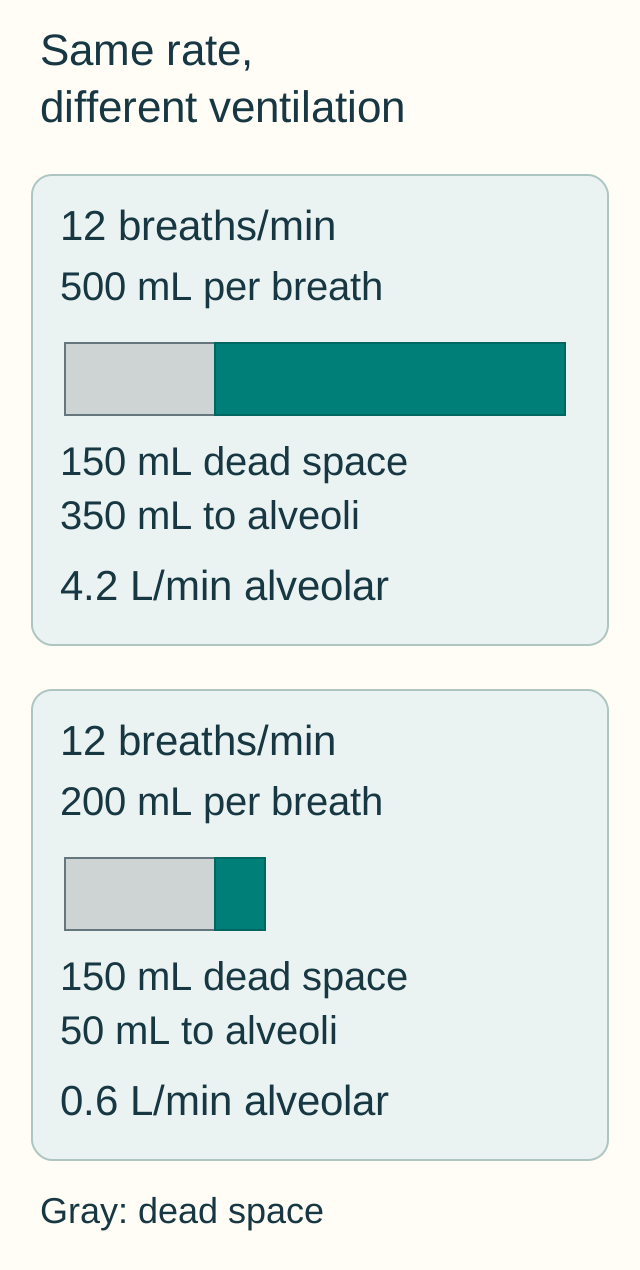
The ventilation diagram compares equal breathing rates with different breath volumes. In its simplified example, an adult takes 12 breaths/min with a tidal volume of 500 mL and a supplied dead-space volume of 150 mL. Fresh gas reaching the alveoli is approximately (500 - 150) x 12 = 4,200 mL/min. If the breaths shrink to 200 mL, the same calculation gives only 600 mL/min. These are teaching assumptions, not measured patient values.
Bar lengths represent the supplied breath volumes. Gray represents conducting-airway dead space; the remaining segment reaches the alveoli. [2][7]
Try the comparison: cover the two calculated totals and decide whether a rate of 12 makes the smaller breaths adequate. It does not: much of each small breath only ventilates conducting airways. This explains why rate alone is an incomplete endpoint. Assess chest excursion, airway patency, oxygenation and, when available, the carbon dioxide trend. Supplemental oxygen can improve the saturation while inadequate ventilation persists. [2]
Apply the comparison to a monitor reading
A somnolent patient on oxygen has a saturation of 98%, minimal chest excursion and a rising end-tidal carbon dioxide trend. The reassuring saturation does not establish adequate ventilation. Support breathing and reassess the opioid contribution rather than waiting for desaturation. [1][2]
A standard urine opiate immunoassay may miss fentanyl, methadone or buprenorphine unless suitable separate tests are included. A negative screen cannot exclude these exposures; a positive result does not establish current impairment. Treat the clinical emergency without waiting for toxicology testing. [8]
Support breathing while choosing the rescue route
Should fear of withdrawal delay naloxone in an apneic patient? No. Loss of ventilation is the immediate danger. Activate emergency help, open and support the airway, give oxygen and provide assisted breaths. A trained clinician who confirms a pulse but finds absent or inadequate breathing provides ventilation while naloxone is prepared. If a lay rescuer finds an unresponsive person who is not breathing normally, CPR with breaths and emergency-dispatch guidance take priority. Naloxone must not interrupt CPR, defibrillation or other resuscitation. [1]
Naloxone competitively antagonizes opioid receptors, especially the mu-mediated effects responsible for respiratory depression. It does not supply oxygen, clear an obstructed airway or reverse every sedative. A response supports an opioid contribution, not necessarily a single-drug exposure. [1][3]
Adult rescue contexts are not interchangeable
Situation
Approach
What to reassess
SituationCommunity rescue with a 4 mg/0.1 mL nasal device
ApproachGive the entire single-use spray into one nostril. Do not prime it. Use a new device in the other nostril every 2 to 3 minutes if there is no adequate response or respiratory depression returns.
What to reassessContinue indicated breathing support or CPR and emergency assistance. Do not wait for a preset onset time. [1][4]
SituationSevere adult respiratory depression in monitored care
ApproachThe injection label permits 0.4 to 2 mg IV initially, repeated at 2 to 3 minute intervals according to response. IM or subcutaneous injection is an alternative when IV access is unavailable; use the actual product and local protocol.
What to reassessVentilation, oxygenation, perfusion and airway protection. Escalate treatment promptly when inadequate. [3]
SituationLikely dependence, with ventilation already supported
ApproachSmall IV increments can limit abrupt withdrawal. A published case series began at 0.04 mg; postoperative labeling describes 0.1 to 0.2 mg increments. These are monitored titration strategies, not reasons to under-treat apnea.
What to reassessFind the effective dose while repeatedly checking breath depth, rate and airway safety. Even small doses can precipitate withdrawal. [2][3][5]
IV action is generally apparent within about two minutes; non-IV routes may take longer and response varies. If the effect is insufficient, continue ventilation and reassess delivery, dose, the exposure and alternative diagnoses. High-affinity buprenorphine may respond incompletely and require repeated treatment or an infusion with expert support. Never wait for a drug response to establish a safe airway. [1][3][4]
Choose an endpoint: compare a patient taking substantial spontaneous breaths, maintaining oxygenation and protecting the airway with one who has the same rate but remains shallow and obstructed. Only the first has achieved the immediate reversal goal. The immediate goal is adequate ventilation and airway protection, not complete wakefulness. Avoid unnecessary reversal of analgesia, but do not accept persistent inability to protect the airway. [2][3]
Transfer the dosing decision to a different setting
A hospital patient receiving long-term oxycodone is hypoventilating while a clinician provides effective bag-mask ventilation and has IV access. Small, promptly titrated IV doses are reasonable. A bystander with a nasal spray and an unresponsive person should use the supplied full dose, not attempt dilution or partial spraying. The difference is the available respiratory support and delivery system, not whether the life deserves rescue. [1][3][4][5]
Residual drowsiness after adequate respiratory reversal can reflect a co-exposure. Flumazenil is not a routine response to mixed opioid and benzodiazepine poisoning: chronic benzodiazepine exposure increases the risk of precipitated withdrawal and seizures. Continue supportive assessment rather than pursuing complete alertness with another antagonist. [1]
When spontaneous breathing is adequate, an unresponsive person can be positioned laterally in the recovery position while being observed. Positioning does not replace assisted ventilation, suction or definitive airway treatment when breathing or airway protection is inadequate. [1][4]
Reversal is temporary protection, not drug clearance
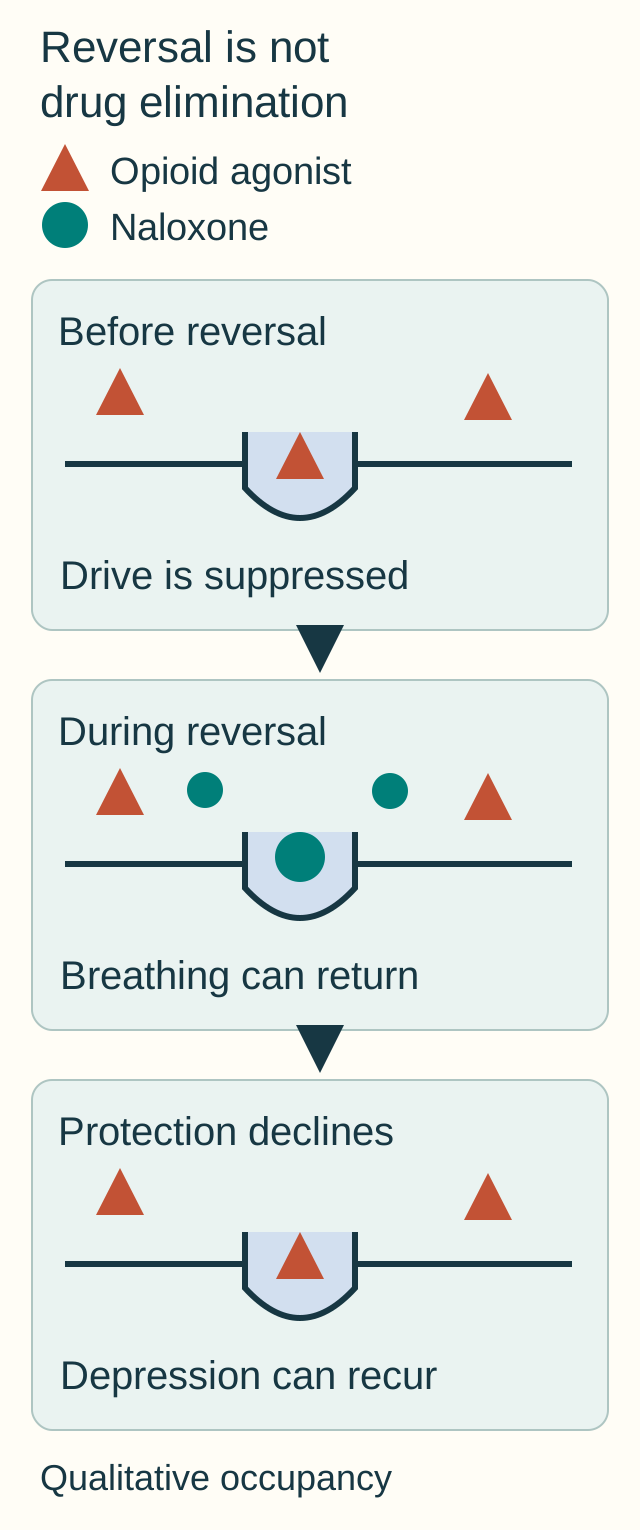
How can the same patient stop breathing again without taking another opioid? Naloxone competes at receptors but does not destroy opioid molecules or accelerate their elimination. Antagonist exposure can fall while enough opioid remains to suppress ventilation. The original illness can therefore return after a successful response. There is no universal recurrence clock. [1][3]
Read the three-state receptor diagram from exposure to reversal to recurrence. Predict what happens to breathing when antagonist occupancy falls but substantial agonist exposure persists. The visible result is renewed opioid signaling, not tolerance to the rescue drug after one dose. The diagram is qualitative: it is not a plasma-concentration graph, dose calculator or patient-specific timetable. [3][9]
Read downward and predict the respiratory consequence before checking the panel text. The cup is a binding-site symbol, not an ion channel. Occupancy is qualitative and is not a concentration, dose or time model. [3][9]
Predict, compare and reassess
In a monitored example, titrated IV doses totaling 0.6 mg restore adequate spontaneous breathing. Later, the person again becomes difficult to rouse, with shallow breaths at 7/min. No new exposure has occurred. Before opening the outcomes, decide whether the second assessment calls for breathing support, treatment of withdrawal or discharge.
Compare the recurrent-depression outcome
Renewed shallow, slow breathing calls for immediate ventilatory support and further naloxone according to response. Repeated recurrence can justify an infusion in monitored care. New vomiting, agitation or pupil size alone would not establish recurrent respiratory depression. [1][2]
Change one finding: breathing remains adequate
Now substitute substantial breaths at 16/min, a protected airway, sweating and abdominal cramps after reversal. Automatic additional boluses are not indicated by these symptoms alone. Assess for precipitated withdrawal and other illness while continuing respiratory observation. The action changes because the respiratory state changed. [2][3]
The general rule stays visible: reassess the current respiratory state, then match the intervention to it. Do not treat a clock, a pupil diameter or a desire for complete alertness instead of the patient.
From a successful bolus to an infusion
Use the total titrated dose that produced adequate reversal, not a single ineffective starting dose. The classic pharmacokinetic nomogram suggests an initial hourly infusion near two-thirds of that effective bolus: 0.6 mg x 2/3 = 0.4 mg/hour. This is a starting estimate, not a fixed prescription. The RCEM/NPIS protocol instead starts at 60% of the effective reversal dose per hour in its recurrence pathway. Follow one local protocol with toxicology advice and adjust to ventilation, airway safety and withdrawal. Recurrent depression during an infusion still requires prompt respiratory support and reassessment for additional bolus treatment; a rate change is not an instantaneous rescue. [2][6]
Methadone, extended-release morphine or other extended-release preparations, ongoing absorption and buprenorphine can require sustained treatment. Do not assign the same duration to every opioid or equate an IV fentanyl exposure with a patch. Heroin exposure is also influenced by active metabolites, co-exposures and the actual contents of an illicit product. [1][2][3]
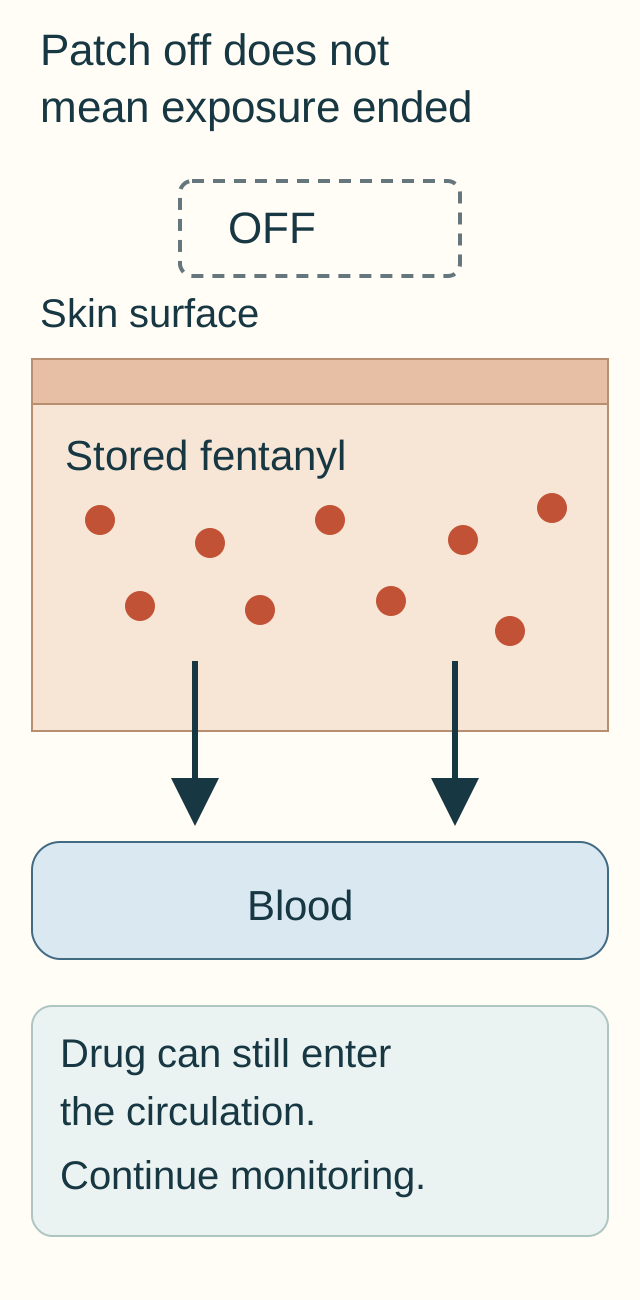
Transfer to the patch diagram: detaching every fentanyl patch stops delivery from the external source, but drug already in the skin can continue entering blood. External heat can increase absorption. If a patch accidentally transfers to another person, detach it, wash the exposed skin with water and seek medical attention; cleaning the surface does not empty an established skin reservoir. The cited transdermal label reports about 20 to 27 hours for serum concentrations to fall by half after patch removal and calls for monitoring at least 72 to 96 hours beyond an overdose. That product-specific warning is not an observation rule for every opioid. Source control, monitored respiratory treatment and specialist guidance remain necessary. [7]
The dots represent fentanyl already present in skin. Detaching the patch stops delivery from the external system but does not instantly empty this reservoir. [7]
Preserve breathing without creating unnecessary withdrawal
Why can the rescue produce distress after it restores ventilation? Repeated opioid exposure can produce physical dependence. Rapid receptor antagonism abruptly opposes the opioid effects to which the body has adapted. Dependence can occur during prescribed treatment; it is not, by itself, a diagnosis of opioid use disorder. [3][7] For a stable patient planning to discontinue long-term fentanyl therapy, use a patient-agreed gradual taper with follow-up, not abrupt cessation. This planned-care principle does not delay source control and respiratory rescue during an overdose. [7]
Contrast two patients after naloxone. One remains cyanotic with shallow breaths and needs respiratory rescue. The other is breathing effectively but develops yawning, sweating, larger pupils, piloerection, abdominal cramps, nausea, vomiting, tachycardia and a blood-pressure rise. The second pattern is compatible with precipitated withdrawal. Pain and intense opioid craving can occur as opioid effects are abruptly opposed. The same agitation could also reflect hypoxia or a co-exposure, so reassess rather than naming withdrawal from behavior alone. [2][3][4]
Make a two-column comparison: place breath depth, airway protection and oxygenation in the respiratory column; place sweating, cramps, craving and pain in the withdrawal column. A finding in the second column does not establish safety in the first. Both problems can occur in the same patient.
In monitored care, titrating to adequate ventilation can reduce unnecessary reversal, but no dose guarantees freedom from withdrawal. In respiratory arrest, use effective rescue promptly even when dependence is likely. A person without dependence generally has less withdrawal risk; unknown history is not proof of opioid-naive status. [1][3][5]
After airway and respiratory stabilization, offer a calm environment and symptom-directed care. Vomiting requires aspiration precautions and suction when indicated. Antiemetics may help after airway assessment. Clinicians sometimes use an alpha-2 agonist such as clonidine for autonomic withdrawal symptoms, but hypotension or bradycardia makes that choice hazardous; it is not an automatic response to agitation. This is off-label symptom treatment, not treatment of recurrent respiratory depression. [14] Benzodiazepines can worsen respiratory depression. Neither an antipsychotic nor dexmedetomidine is a routine next step simply because a person is agitated after naloxone. Sedative selection for dangerous agitation requires a clinician to consider co-exposures, circulation, seizure risk and airway capability; it is not a substitute for reassessing hypoxia or recurrent toxicity. [2][7]
Apply the comparison to an agitated patient
A patient develops cramps and sweating after reversal but then becomes drowsy, with a falling respiratory rate. Do not assume the earlier withdrawal symptoms protect against recurrent toxicity. Repeat the airway and ventilation assessment and treat the new respiratory depression. Antagonism and symptoms change over time. [1][2][3]
Avoid a contest over wakefulness. The immediate aim is a living, adequately ventilating patient with a safe airway; the next aim is humane treatment of withdrawal, pain and the underlying exposure. [1][2]
Connect the receptor to the organ effects
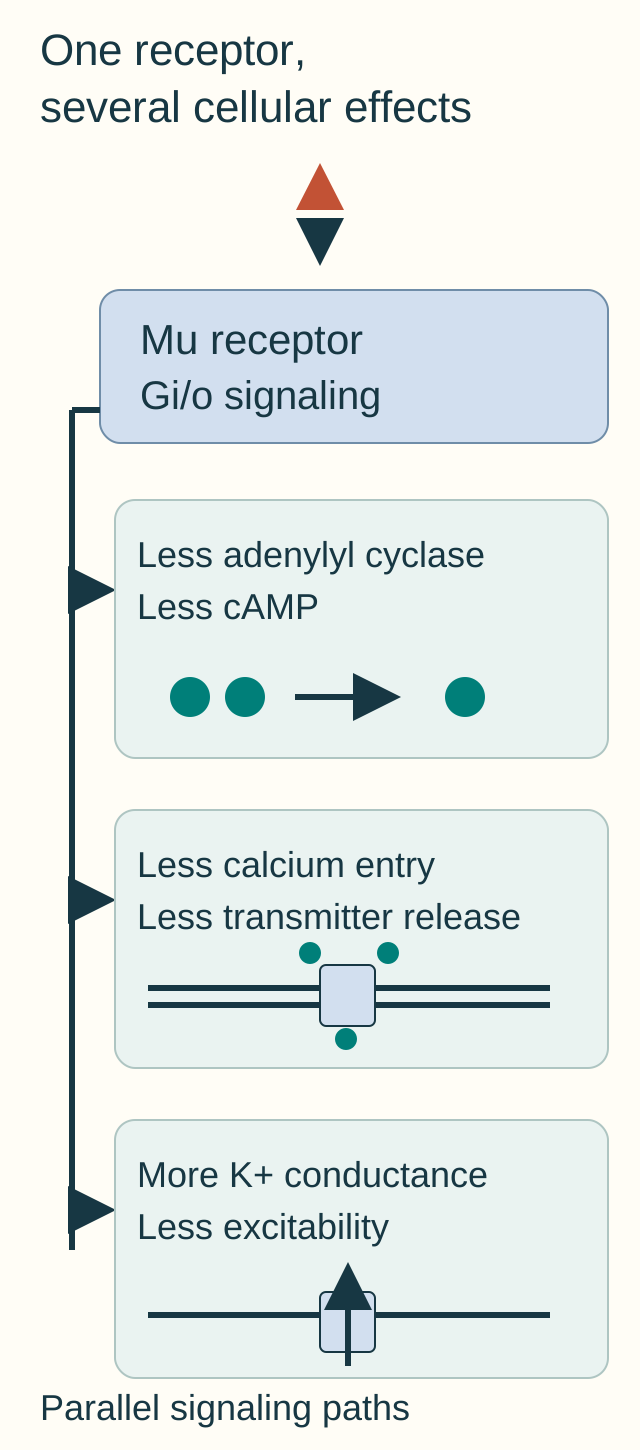
How does one receptor family produce slow breathing, analgesia and constipation? Location and circuit connections determine the result. Mu receptors are G protein-coupled receptors, not ion channels. Agonist binding engages Gi/o signaling, inhibits adenylyl cyclase and reduces cAMP. G protein subunits can inhibit voltage-gated calcium channels and increase potassium conductance, including through neuronal GIRK channels. Less calcium entry can reduce transmitter release; greater potassium conductance can hyperpolarize a neuron. [9][10]
Use the signaling diagram to trace the two branches separately. At a presynaptic terminal, predict the effect of less calcium entry on vesicle release. At a postsynaptic membrane, predict the effect of greater outward potassium current on excitability. These effects are related, but neither requires pretending that the receptor itself is a calcium or potassium pore. [9][10]
The branches represent possible parallel effects in appropriate cells, not a mandatory sequence in every neuron. The receptor is distinct from the downstream ion channels; circuit output depends on which cell is inhibited. [9][10][13]
Site changes the clinical expression
Site or circuit
Relevant consequence
Site or circuitBrainstem respiratory networks
Relevant consequenceReduced respiratory drive and responsiveness to carbon dioxide help explain slow or absent ventilation. [7]
Site or circuitSpinal and descending pain pathways
Relevant consequenceReduced nociceptive transmission contributes to analgesia. In the periaqueductal gray, reducing inhibitory GABA release can disinhibit descending antinociceptive output. Inhibiting one neuron need not inhibit the entire circuit. [7][13]
Site or circuitPupillary control pathways
Relevant consequenceThe usual net autonomic effect favors constriction. The Edinger-Westphal parasympathetic output participates in pupillary constriction, but pupil size is not a map of receptor occupancy or an exclusion test for overdose. [2][7]
Site or circuitEnteric pathways
Relevant consequenceReduced propulsive gut activity contributes to constipation; this does not measure the severity of respiratory depression. [7][11]
Naloxone acts at opioid receptors rather than chemically binding and neutralizing the opioid in blood. It antagonizes mu effects and also has activity at other opioid receptor subtypes, including kappa and delta. For clinical rescue, it is an antagonist without clinically meaningful opioid agonist effects at usual doses. Laboratory studies of small, assay-dependent signals do not justify describing it as an opioid substitute. [3][4][9]
Buprenorphine's high affinity and slow dissociation can make reversal incomplete or slower than expected. That does not turn naloxone into the cause of the original respiratory depression, nor make ventilation optional. Continue respiratory support and obtain specialist guidance for repeat treatment. [3][4]
Transfer across routes: naloxone reaches the central nervous system rapidly after parenteral administration and is metabolized largely by hepatic glucuronidation. Extensive first-pass metabolism limits systemic exposure to swallowed naloxone. An enteral preparation used to oppose gut effects is therefore not a substitute for nasal or injectable emergency rescue. Never give oral medication to an obtunded person. [3][11]
Reassess complications and plan beyond the first response
What if breathing becomes faster but oxygenation worsens? Consider a patient whose initial shallow breaths improve after naloxone but who then develops crackles, increasing oxygen needs and frothy secretions. Recurrent central depression is not the only explanation. Pulmonary edema can accompany an opioid overdose or appear after reversal; aspiration and cardiac disease also belong in the assessment. A temporal association alone does not establish that naloxone caused the lung injury. [2][3][4][7]
Compare rate with gas exchange again. Adequate respiratory drive does not guarantee open, functioning airspaces. Provide oxygen and appropriate ventilatory support, investigate the cause and escalate the airway when required. Positive-pressure support may be useful, but noninvasive support is unsuitable when airway protection is inadequate or active vomiting makes aspiration likely. Diuretics should follow evidence of fluid overload or a cardiac indication, not the word edema alone. [2]
Apply the contrast: new shallow breaths with rising carbon dioxide suggest renewed ventilatory depression; new crackles and hypoxemia despite substantial breaths suggest an additional pulmonary problem. Both can coexist. A repeat examination is more informative than assuming every deterioration needs the same drug.
Observation continues until recurrent respiratory depression is unlikely and consciousness, vital signs and airway safety have recovered. The required interval depends on the opioid, formulation, route, co-exposures, naloxone treatment and clinical course. A response at one hour does not establish safety after methadone, extended-release exposure or a fentanyl patch. Repeated naloxone, an infusion, persistent oxygen needs, aspiration, unstable vital signs or unresolved diagnostic concerns may require admission and longer monitoring. [1][2][7]
For context, RCEM/NPIS describes observation for at least four hours after the last naloxone dose and at least six hours after suspected exposure in its general pathway, with longer observation for selected long-acting exposures. These are minimums within a clinical protocol, not discharge guarantees or a universal upper limit. The much longer transdermal fentanyl warning in the preceding section takes precedence for that product's overdose risk. [2][7]
Test a discharge proposal
A person is conversant after a second naloxone dose but has a suspected extended-release ingestion and still needs oxygen. Talking is encouraging, but recurrence risk and abnormal respiratory status remain. Continue monitored care rather than using alertness or elapsed time alone as clearance. [1][2]
When discharge is appropriate, provide naloxone access, overdose-response teaching and a practical connection to ongoing care. Explain recurrence, the danger of combining opioids with other sedatives and the importance of another person knowing how to respond. Assess for opioid use disorder without inferring it solely from physical dependence. Offer medication treatment when indicated and clinically appropriate. Withdrawal symptom control alone is not ongoing treatment for opioid use disorder. [14] A randomized emergency-department trial found better short-term treatment engagement with initiated buprenorphine plus follow-up than with referral alone; it did not establish that naloxone itself treats opioid use disorder. [1][12]
Keep the whole sequence together: support breathing, antagonize the opioid contribution, watch for recurrence and complications, then connect the patient with prevention and treatment. Initial reversal is one part of care, not its finish.
Practice
Case 1
Show answer and explanations for case 1
A. Apply oxygen by nasal cannula and reassess (Why this does not fit)
Supplemental oxygen helps a patient who can ventilate sufficiently. Minimal chest excursion at 3/min requires ventilation, not oxygen delivery alone.
Reasoning steps for option A
When would nasal oxygen be enough for this oxycodone patient?
Nasal oxygen alone is suitable only when spontaneous breathing moves enough air; this patient makes just three minimal breaths per minute.
What do 3 shallow breaths/min and 72% saturation demand instead?
Three shallow breaths/min with 72% saturation requires assisted ventilation, not simply more inspired oxygen.
B. Start chest compressions and apply a defibrillator (Why this does not fit)
Chest compressions are required when effective circulation is absent. A definite carotid pulse is documented, so the immediate missing function is ventilation.
Reasoning steps for option B
What circulatory finding would justify compressions here?
Compressions and a defibrillator address absent effective circulation or a shockable arrest.
How does the definite carotid pulse change the immediate priority?
A definite carotid pulse at 64/min means circulation persists; the immediate deficit is breathing.
C. Open the airway and provide bag-mask ventilation (Best answer)
Assisted ventilation supplies gas when spontaneous breathing is inadequate. The present pulse and three shallow breaths/min make immediate breathing support the priority while naloxone is prepared.
Reasoning steps for option C
What missing physiological function does bag-mask ventilation replace?
Bag-mask breaths deliver air to the lungs when spontaneous breaths are too infrequent and shallow.
Why must ventilation begin while the second clinician prepares naloxone?
At three minimal breaths/min, ventilate immediately rather than wait for naloxone to be prepared and take effect.
D. Check a bedside glucose before respiratory treatment (Why this does not fit)
Hypoglycemia can cause unresponsiveness and warrants assessment. The profound respiratory failure must be treated while diagnostic checks proceed, not after them.
Reasoning steps for option D
Why might glucose be checked in an unresponsive patient?
Glucose testing checks for hypoglycemia as another cause of unresponsiveness.
Why can a glucose check not precede respiratory support at 3 breaths/min?
Profound hypoventilation with saturation 72% is immediately dangerous; support breathing while glucose is checked.
E. Complete IV access before providing assisted breaths (Why this does not fit)
IV access permits rapidly titratable naloxone administration. Securing access must not postpone assisted breaths in a patient with this degree of hypoxemia.
Reasoning steps for option E
What would IV access enable in this suspected overdose?
IV access can permit titrated naloxone administration.
Why should placing an IV not delay assisted breaths with saturation 72%?
Placing an IV cannot take priority over breaths when saturation is 72% and respirations are three shallow breaths/min.
Takeaway: A present pulse does not make profound hypoventilation safe; assist breathing while naloxone is prepared.
A. Oxygenation is supported while ventilation remains inadequate despite the normal saturation (Best answer)
Oxygen delivery and carbon dioxide clearance are distinct physiological functions. Small breaths and rising carbon dioxide identify inadequate ventilation despite the oxygen-supported saturation.
Reasoning steps for option A
What distinct functions do the 98% saturation and carbon dioxide trend measure?
How do small breaths and end-tidal carbon dioxide of 68 establish hypoventilation?
Small breaths with end-tidal carbon dioxide rising from 43 to 68 mm Hg show inadequate ventilation despite saturation 98%.
B. Ventilation is adequate because the rate is normal (Why this does not fit)
A normal rate can accompany adequate ventilation when breath volumes are sufficient. The small excursion and rising carbon dioxide show that the counted breaths are not sufficient here.
A frequency of 12/min might appear normal if each breath had adequate tidal volume.
Why do small chest excursions and rising carbon dioxide override that rate?
The small excursions and carbon dioxide increase to 68 show that twelve counted breaths do not provide enough effective ventilation.
C. The carbon dioxide rise indicates improved alveolar ventilation (Why this does not fit)
Increasing alveolar ventilation generally increases carbon dioxide elimination. With no described rise in production, the rising measured carbon dioxide supports worsening rather than improved clearance.
Reasoning steps for option C
How should increased alveolar ventilation affect carbon dioxide clearance?
Does the rise from 43 to 68 support improved clearance?
No. Rising carbon dioxide from 43 to 68 favors worsening clearance, not improved alveolar ventilation.
D. The saturation excludes a clinically significant opioid effect (Why this does not fit)
Saturation can fall during opioid-associated respiratory failure. Supplemental oxygen can delay that fall, so the saturation does not negate the abnormal breathing and carbon dioxide trend.
Reasoning steps for option D
Can 98% saturation on 4 L/min oxygen rule out morphine-related respiratory depression?
No. Oxygen at 4 L/min can sustain saturation despite morphine-related hypoventilation.
Which measurements show an opioid effect remains clinically important?
Small breaths and end-tidal carbon dioxide climbing to 68 mm Hg reveal clinically important impaired ventilation.
E. Carbon dioxide retention requires an obstructed expiratory airway (Why this does not fit)
Severe airflow obstruction can cause carbon dioxide retention. A reduction in central drive and tidal volume after morphine can also reduce ventilation without an obstructive disorder.
Reasoning steps for option E
How can airflow obstruction produce carbon dioxide retention?
Severe expiratory airflow obstruction can reduce effective alveolar ventilation and retain carbon dioxide.
What alternative mechanism after morphine fits this patient without obstruction?
Morphine can depress respiratory drive and tidal volume, causing retention without requiring obstructed expiration.
Takeaway: A normal saturation on supplemental oxygen does not exclude severe hypoventilation.
A. The result excludes opioid toxicity; pursue sedative reversal (Why this does not fit)
A negative test can reduce concern for a substance the assay reliably detects. That reasoning cannot be extended to fentanyl when the laboratory explicitly states that it is not included.
Reasoning steps for option A
What does a negative opiate screen actually exclude?
A negative screen reduces concern only for drugs that the particular immunoassay detects; it does not exclude all opioids.
Why does the laboratory exclusion of fentanyl matter for this tablet exposure?
The lab says fentanyl is absent from this assay, so a fentanyl-containing counterfeit tablet could still cause toxicity.
B. The result requires mass spectrometry before antagonist treatment (Why this does not fit)
Confirmatory testing can establish the identity of an exposure more specifically. It cannot justify delaying time-sensitive reversal and ventilatory support in this patient.
Reasoning steps for option B
What information could mass spectrometry provide?
Mass spectrometry can identify exposure more specifically than the limited immunoassay.
Why must treatment of 5 shallow breaths/min not await that result?
Five shallow breaths/min demands ongoing ventilation and prompt naloxone, not a wait for confirmation.
C. The result establishes a nonopioid cause of the small pupils (Why this does not fit)
Some nonopioid conditions can produce small pupils and depressed consciousness. The negative limited assay does not positively identify such a condition or negate the suspected opioid exposure.
Reasoning steps for option C
Could another disorder cause small pupils and obtundation?
Yes. Some nonopioid conditions can cause miosis and obtundation.
Does this limited negative screen establish such a nonopioid cause?
No. A negative assay lacking fentanyl neither identifies a nonopioid cause nor excludes opioid toxicity.
D. The result predicts that multiple naloxone doses will be ineffective (Why this does not fit)
Naloxone response depends on opioid receptor effects and adequate antagonist delivery. A test's detection limit does not establish receptor pharmacology or predict failure of treatment.
Reasoning steps for option D
What determines whether naloxone can reverse respiratory depression?
Naloxone response depends on an opioid-mediated receptor effect and sufficient antagonist delivery.
Does a fentanyl-blind screen predict failure of repeat naloxone?
No. Failure of an assay to detect fentanyl says nothing about receptor responsiveness or repeat-dose efficacy.
E. The result does not exclude an opioid contribution; give naloxone while supporting ventilation (Best answer)
Standard opiate immunoassays do not reliably cover every synthetic opioid. The assay lacks fentanyl detection, while the clinical respiratory syndrome warrants naloxone alongside ventilation.
Reasoning steps for option E
Which synthetic opioid may escape this opiate immunoassay?
Fentanyl is not detected by the opiate assay described by the laboratory.
Why do 5 shallow breaths/min warrant naloxone despite the result?
Shallow breathing at 5/min with possible fentanyl exposure warrants naloxone alongside assisted ventilation despite a negative screen.
Takeaway: An assay that does not detect fentanyl cannot exclude fentanyl-associated toxicity.
A. Treat stimulant agitation first with a sedative bolus (Why this does not fit)
Sedatives can be appropriate for dangerous stimulant-related agitation in monitored care. This patient is obtunded and barely ventilating rather than dangerously agitated; further respiratory depression would be harmful.
Reasoning steps for option A
When would sedation for stimulant exposure be appropriate?
A monitored sedative may be appropriate for dangerous stimulant agitation, not this patient who responds only to pain.
Why is a sedative bolus harmful in this obtunded patient breathing 4/min?
At four shallow breaths/min, a sedative risks further suppressing respiratory drive.
B. Give naloxone, continue ventilation and assess co-exposures while reassessing respiratory status (Best answer)
Pupil size is influenced by hypoxia and other substances as well as opioids. The respiratory depression remains compatible with an opioid contribution despite the dilated pupils.
Reasoning steps for option B
What can dilate pupils during a mixed exposure?
Hypoxia and a co-ingested stimulant can influence pupil diameter even when an opioid is involved.
Why should ventilation and naloxone continue despite 6-mm pupils?
Six-mm pupils do not negate the opioid-compatible respiratory depression; continue assisted ventilation and give naloxone while assessing co-exposures.
C. Withhold naloxone until the pupils become constricted (Why this does not fit)
Miosis is common in uncomplicated opioid intoxication. It is not required for treatment when severe hypoventilation and a possible mixed exposure are present.
Reasoning steps for option C
How typical is miosis in uncomplicated opioid toxicity?
Miosis is common in uncomplicated opioid intoxication but is not universal, particularly with mixed exposures.
Must pupils constrict before treating this severe hypoventilation?
No. Severe hypoventilation and possible opioid exposure require treatment without waiting for pupils to constrict.
D. Use oxygen alone while waiting for the stimulant effect to end (Why this does not fit)
Oxygen can improve the inspired oxygen concentration. It does not replace assisted ventilation at 4/min or treat a possible opioid contribution.
Reasoning steps for option D
What can supplemental oxygen accomplish here?
Oxygen raises the inspired oxygen concentration and may support oxygenation.
Why is oxygen alone inadequate with shallow breaths at 4/min?
At four shallow breaths/min, oxygen alone does not provide adequate ventilation or reverse a possible opioid effect.
E. Obtain a urine toxicology result before considering an antagonist (Why this does not fit)
Toxicology testing can supplement the later exposure assessment. It neither promptly establishes all co-exposures nor justifies delaying treatment of this respiratory syndrome.
Reasoning steps for option E
What role might urine testing have after stabilization?
Urine testing can supplement the later assessment of suspected co-exposures.
Why cannot toxicology results delay an antagonist here?
A toxicology result neither rapidly identifies all exposures nor justifies delaying naloxone for severe hypoventilation.
Takeaway: Dilated pupils in a hypoxic or mixed exposure do not exclude opioid-associated respiratory depression.
A. Serial urine opioid measurements to estimate receptor occupancy (Why this does not fit)
Urine testing can sometimes document exposure to a detectable drug. It cannot quantify brain receptor occupancy or explain away this abrupt focal neurological syndrome.
Reasoning steps for option A
Can urine opioid levels estimate brain receptor occupancy?
No. Urine opioid measurements may document detectable exposure but cannot quantify brain receptor occupancy.
Why does this test not address sudden headache and focal deficits?
Testing urine cannot resolve sudden headache, impaired gaze, and asymmetric limb responses suggesting a structural brain lesion.
B. A prolonged naloxone infusion before neurological imaging (Why this does not fit)
An infusion is useful for recurrent opioid-related respiratory depression after a response. The patient has focal deficits and no demonstrated response, so infusion should not delay investigation of a structural lesion.
Reasoning steps for option B
When is a naloxone infusion useful?
An infusion is useful when opioid-related respiratory depression recurs after effective naloxone boluses.
Why do absent neurological improvement and focal signs favor imaging first?
Here adequate ventilation is secured, focal deficits persist, and naloxone produced no neurological improvement; urgent imaging takes priority.
C. Lumbar puncture before any cranial imaging is performed (Why this does not fit)
Cerebrospinal fluid can help investigate selected causes of severe headache. Coma with focal neurological abnormalities calls for urgent imaging before deciding whether lumbar puncture is appropriate.
Reasoning steps for option C
When can cerebrospinal fluid aid headache evaluation?
CSF testing may aid selected severe-headache evaluations after appropriate initial assessment.
Why should coma with focal abnormalities prompt imaging before lumbar puncture?
Coma and focal neurological deficits require urgent cranial imaging before determining whether lumbar puncture is appropriate.
D. Urgent noncontrast head CT with stroke-team evaluation (Best answer)
An acute intracranial hemorrhage or brainstem process can cause coma with small pupils. The sudden headache and focal examination make urgent neurological imaging the priority after airway stabilization.
Reasoning steps for option D
What intracranial processes can cause coma and tiny pupils?
Intracranial hemorrhage or a brainstem lesion can cause coma and small pupils.
Which sudden-onset and focal findings prioritize noncontrast CT?
Sudden severe headache with impaired horizontal gaze and asymmetric limb responses makes urgent noncontrast CT and stroke evaluation necessary.
E. Observation for sedative clearance with repeat pupil checks (Why this does not fit)
Time and serial examination can help follow an uncomplicated sedative exposure. A sudden severe headache and focal deficits are not adequately evaluated by waiting for presumed drug clearance.
Reasoning steps for option E
When is serial observation of sedative clearance reasonable?
Observation can follow an uncomplicated suspected sedative exposure without focal alarming findings.
Why do headache, gaze impairment, and asymmetry require urgent investigation?
Sudden severe headache, abnormal gaze, and asymmetric responses cannot be safely attributed to sedative clearance without urgent imaging.
Takeaway: Small pupils are not pathognomonic; abrupt onset and focal deficits require an intracranial evaluation.
A. Give repeated boluses until she is fully alert without stimulation (Why this does not fit)
Complete wakefulness can be reassuring when assessing overall recovery. It is not the immediate titration requirement once ventilation and airway protection are adequate, and extra antagonism can worsen pain or withdrawal.
Reasoning steps for option A
Why might full alertness seem a useful treatment endpoint?
Full alertness can reassure clinicians about recovery, but is not the required naloxone endpoint.
Why should drowsiness alone not prompt more naloxone after breathing recovers?
She breathes substantially at 14/min and protects her airway; further antagonist just for drowsiness could precipitate pain or withdrawal.
B. Give a fixed 2 mg IV dose to prevent later recurrence (Why this does not fit)
A larger bolus can produce stronger initial receptor antagonism. It does not guarantee sustained protection and may unnecessarily reverse analgesia in this dependent patient.
Reasoning steps for option B
Would a 2 mg bolus ensure lasting reversal?
No. A fixed 2 mg naloxone bolus does not guarantee protection once its effect wears off.
What costs could excess antagonist impose on this oxycodone-treated patient?
Excess antagonist in this long-term oxycodone recipient can reverse analgesia and precipitate withdrawal unnecessarily.
C. Start an infusion solely because any drowsiness persists (Why this does not fit)
An infusion can sustain reversal when opioid effects repeatedly outlast bolus treatment. No recurrent respiratory depression or sustained antagonist requirement is established by the described drowsiness alone.
Reasoning steps for option C
What clinical pattern calls for a naloxone infusion?
An infusion is appropriate for recurring respiratory depression or a sustained requirement for antagonist.
Does persistent drowsiness with 14 substantial breaths/min establish that pattern?
No. She has 14 substantial breaths/min, saturation 96% on room air, and airway protection; drowsiness alone is insufficient.
D. End respiratory observation because the first titration succeeded (Why this does not fit)
A successful response indicates that the opioid contribution is reversible. The opioid may persist after naloxone declines, so initial improvement does not end monitoring.
Reasoning steps for option D
What does the response to 0.08 mg demonstrate?
The 0.08 mg titration shows opioid-responsive ventilation can be restored without full arousal.
Why must respiration still be observed after that response?
Opioid effects may outlast naloxone, so initial recovery still requires respiratory monitoring.
E. Pause bolus dosing and continue close respiratory monitoring (Best answer)
Titration aims for adequate ventilation and airway safety without excessive reversal. Those endpoints are now present, so further boluses are not indicated solely to eliminate drowsiness.
Reasoning steps for option E
Which airway and ventilation endpoints has small-dose naloxone achieved?
She now has substantial breaths at 14/min, saturation 96% on room air, and the ability to cough and handle secretions.
A. Use recovery positioning and monitor breathing until the ambulance arrives (Why this does not fit)
Recovery positioning is useful for an unresponsive person who is breathing normally. Occasional gasps are not normal breathing; the new unresponsiveness requires dispatcher-guided resuscitation rather than positioning alone.
Reasoning steps for option A
When is recovery positioning enough for an unresponsive person?
Recovery positioning is appropriate when an unresponsive person is breathing normally.
Why are occasional gasps 20 minutes later not adequate breathing?
Occasional gasps are abnormal breathing; recurrence of unresponsiveness requires dispatcher-guided CPR with breaths.
B. Resume CPR with breaths while the second rescuer repeats naloxone (Best answer)
An earlier response with withdrawal symptoms does not prevent recurrent opioid toxicity when antagonist protection declines. The person is now unresponsive and not breathing normally, so the rescuers resume CPR with breaths and repeat the full nasal dose from a new device in the other nostril without delaying resuscitation.
Reasoning steps for option B
Can sweating and cramps after the first spray exclude recurrent toxicity?
No. Sweating and cramps suggest withdrawal after the initial reversal but do not rule out renewed toxicity as naloxone wanes.
What should two rescuers do for recurrent unresponsiveness and gasps?
Resume CPR with breaths; the second rescuer gives the full dose from a new nasal spray in the other nostril without delaying CPR.
C. Give rescue breaths alone while the second rescuer monitors responsiveness (Why this does not fit)
Rescue breaths alone are used by trained rescuers when a definite pulse is established. These lay rescuers have not established a pulse; dispatcher-guided CPR with breaths is appropriate for unresponsiveness and abnormal breathing, alongside repeat naloxone.
Reasoning steps for option C
When are rescue breaths without compressions appropriate?
Rescue breaths without compressions are for a trained rescuer who has established a definite pulse.
Why do lay rescuers without an established pulse follow dispatcher-guided CPR?
These bystanders have no established pulse; dispatcher-guided CPR with breaths plus repeat naloxone is appropriate.
D. Repeat the nasal dose and reassess before restarting CPR with breaths (Why this does not fit)
A repeat nasal dose is appropriate when respiratory depression returns after an initial response. Naloxone is not instantaneous respiratory or circulatory support, so reassessment of its effect must not postpone indicated CPR.
Reasoning steps for option D
Why is another nasal dose indicated after recurrence?
Respiratory depression returned after an initial naloxone response, so another available spray is indicated.
Why must CPR with breaths resume before waiting for a drug response?
Naloxone does not instantly support breathing or circulation; CPR with breaths must not wait for the repeat dose to act.
E. Resume CPR with breaths and reserve further naloxone for paramedics (Why this does not fit)
CPR supports circulation and gas delivery during an unresponsive, abnormal-breathing emergency. Lay rescuers can also give another available nasal dose for recurrence; reserving it for paramedics unnecessarily postpones opioid antagonism.
Reasoning steps for option E
What does CPR provide while the person is unresponsive and gasping?
CPR with breaths supports circulation and gas exchange while the person is unresponsive and gasping.
Why should the second available spray not be reserved for paramedics?
The second rescuer can administer the available repeat nasal dose now; waiting for paramedics delays antagonism.
Takeaway: Initial awakening or withdrawal symptoms do not prevent recurrence; renewed abnormal breathing requires renewed rescue.
A. Defibrillate and continue cardiac-arrest resuscitation (Best answer)
Ventricular fibrillation requires prompt defibrillation with high-quality CPR. Naloxone may be considered without disrupting resuscitation, but it must not delay the ready shock.
Reasoning steps for option A
What treatment directly addresses pulseless ventricular fibrillation?
Pulseless ventricular fibrillation calls for prompt defibrillation and high-quality CPR.
Why must ready defibrillation take precedence over naloxone?
The defibrillator is ready, so naloxone must not delay shock or interrupt cardiac-arrest resuscitation.
B. Pause compressions while obtaining IV access for naloxone (Why this does not fit)
IV access permits medication delivery during resuscitation. Access for naloxone is not a reason to interrupt compressions or delay defibrillation in this shockable arrest.
Reasoning steps for option B
Why obtain IV access during an arrest?
IV access allows delivery of drugs during cardiac-arrest care.
Why must naloxone access not interrupt compressions or shock?
Establishing access for naloxone must not interrupt compressions or postpone a ready shock for ventricular fibrillation.
C. Give naloxone and assess its effect before defibrillation (Why this does not fit)
Naloxone can reverse opioid-related respiratory depression when circulation delivers it. The patient has ventricular fibrillation, and waiting for an antidote response would delay the indicated shock.
Reasoning steps for option C
In what circumstance can naloxone reverse respiratory depression?
Naloxone can reverse opioid-induced respiratory depression when circulation can deliver it to its receptors.
Why is waiting for its effect unsafe in pulseless ventricular fibrillation?
This patient is pulseless in ventricular fibrillation; waiting for naloxone would delay the required shock.
D. Treat with rescue breaths alone until a drug response occurs (Why this does not fit)
Rescue breaths address isolated respiratory failure when circulation is present. There is no pulse, so ventilation alone cannot replace compressions and defibrillation.
Reasoning steps for option D
When would rescue breaths alone be appropriate?
Rescue breaths alone address respiratory failure when a definite pulse and effective circulation remain.
How does absence of a pulse alter resuscitation priorities?
No pulse is present, so compressions and defibrillation are essential rather than ventilation alone.
E. Postpone the shock to confirm the opioid exposure history (Why this does not fit)
An exposure history can guide care after immediate threats are addressed. Neither confirmation nor exclusion of opioid exposure is needed to treat documented ventricular fibrillation.
Reasoning steps for option E
When might exposure history help treatment?
Exposure history can guide subsequent care once immediate resuscitation is underway.
Why is confirming opioids unnecessary before shocking documented VF?
Documented ventricular fibrillation needs immediate defibrillation regardless of whether opioid exposure is confirmed.
Takeaway: Suspected opioid exposure does not change the priority of defibrillation and CPR in ventricular fibrillation.
A. Irreversible inactivation of mu-opioid receptors (Why this does not fit)
Irreversible receptor inactivation can reduce the available receptor pool and eventually lower the attainable maximum. Restoration of the original maximum with more agonist supports surmountable competition rather than the proposed irreversible mechanism.
Reasoning steps for option A
How might irreversible receptor inactivation affect maximum response?
Irreversible inactivation reduces available mu receptors and can eventually lower the attainable maximal response.
What does restoration of the same maximum with extra agonist imply?
Extra agonist restores the original maximum, favoring surmountable competition rather than irreversible receptor loss.
B. Acceleration of hepatic opioid metabolism (Why this does not fit)
Increasing metabolic clearance can shorten drug exposure in a whole organism. It does not explain competitive antagonism in a receptor experiment or the shared binding-site response pattern.
Reasoning steps for option B
What can accelerated hepatic metabolism do in a patient?
Accelerated hepatic clearance may shorten opioid exposure in a living patient.
Why cannot metabolism explain a parallel shift in a receptor experiment?
A receptor concentration-response experiment shows a parallel rightward shift independent of hepatic clearance; metabolism cannot account for that pattern.
C. Noncompetitive inhibition of respiratory ion channels (Why this does not fit)
A noncompetitive reduction of signaling capacity is not generally overcome by more agonist at its receptor. The unchanged maximal agonist response argues against the proposed noncompetitive channel mechanism.
Reasoning steps for option C
Could noncompetitive signaling inhibition be overcome by extra agonist?
Generally no. Noncompetitive loss of signaling capacity is not simply overcome by raising agonist concentration.
What does the preserved maximal response argue against?
Preserved maximal response after extra agonist argues against noncompetitive inhibition of respiratory channels.
D. Direct activation of GABA-A receptor chloride channels (Why this does not fit)
GABA-A agonism increases inhibitory signaling and can worsen sedation. It neither produces the specified mu-agonist curve shift nor explains selective reversal of opioid-associated hypoventilation.
Reasoning steps for option D
What effect would GABA-A activation have on sedation?
GABA-A activation enhances inhibitory signaling and could worsen sedation.
Why would it not explain mu-agonist curve changes and improved breathing?
It cannot account for a parallel mu-agonist curve shift with preserved maximum or selective reversal of opioid respiratory effects.
E. Reversible competition for opioid-receptor binding (Best answer)
A reversible competitive antagonist shifts the agonist response curve rightward while sufficient agonist can preserve the maximum. That pattern matches the experiment and explains rapid reversal of the opioid contribution to respiratory depression.
Reasoning steps for option E
What curve pattern identifies reversible competitive antagonism?
A reversible competitive antagonist causes a parallel rightward agonist shift while greater agonist concentrations restore the same maximum.
How does competition also explain rapid reversal of opioid hypoventilation?
Competition at opioid receptors explains both the surmountable experimental shift and rapid improvement of opioid-associated hypoventilation.
Takeaway: Surmountable antagonism explains receptor-level reversal without chemical elimination of the opioid.
A. The patient rapidly developed tolerance to all opioid antagonists (Why this does not fit)
A reduced antagonist response would make subsequent comparable treatment less effective. The renewed response to naloxone instead supports a continuing opioid effect that can still be antagonized.
Reasoning steps for option A
What would tolerance to naloxone predict on repeat dosing?
Tolerance to antagonist action would predict reduced effectiveness of another naloxone bolus.
Why does renewed respiratory improvement contradict antagonist tolerance?
The repeat bolus again restores substantial breathing, contradicting loss of naloxone responsiveness.
B. Precipitated withdrawal progressively suppressed respiratory drive (Why this does not fit)
Withdrawal can cause autonomic and gastrointestinal distress after antagonism. Recurrent shallow bradypnea with rising carbon dioxide and repeat reversal is more consistent with renewed opioid effect.
Reasoning steps for option B
What symptoms can precipitated withdrawal cause?
Precipitated withdrawal can cause sweating, gastrointestinal upset, and autonomic distress.
Why do 6 breaths/min and carbon dioxide of 65 point elsewhere?
Recurrent bradypnea at 6/min with end-tidal carbon dioxide 65, reversed again by naloxone, fits renewed opioid effect rather than withdrawal.
C. Antagonist protection declined while opioid effects persisted after the initial reversal (Best answer)
Naloxone exposure can decline before the clinically important agonist effect ends. Two reversals of the same respiratory pattern without new drug access support that duration mismatch.
Reasoning steps for option C
What happens when naloxone effect ends before a long-acting opioid effect?
Respiratory depression can recur when naloxone protection wanes while a long-acting opioid continues to act.
Why do two responses without new exposure support this mismatch?
Without further drug access, two episodes of respiratory depression each reversed by naloxone support a duration mismatch.
D. Naloxone increased the rate of gastrointestinal opioid absorption (Why this does not fit)
Ongoing absorption can prolong an oral exposure independently of antidote use. The course does not establish that naloxone accelerated absorption; declining antagonism is sufficient to explain recurrent opioid-responsive depression.
Reasoning steps for option D
Can ongoing gastrointestinal absorption prolong opioid toxicity?
Yes. Continued absorption after an oral exposure can prolong opioid effects independently of naloxone.
Does this course show naloxone accelerated absorption?
No. The data do not show accelerated absorption from naloxone; declining antagonist protection sufficiently explains recurrence.
E. The initial naloxone response eliminated the opioid permanently (Why this does not fit)
Receptor antagonism can temporarily oppose an agonist's effects. It does not destroy the opioid, so the initial improvement cannot establish permanent elimination.
Reasoning steps for option E
Does naloxone destroy or permanently remove an opioid?
No. Naloxone temporarily competes with opioids at receptors; it does not destroy or permanently clear them.
Why can respiratory depression return after initial reversal?
Persisting agonist can depress breathing again once naloxone concentrations decline after initial reversal.
Takeaway: Recurrent hypoventilation after a response can reflect a duration mismatch rather than a new exposure.
The effective titrated dose is 0.2 + 0.4 + 0.6 = 1.2 mg; two-thirds is 0.8 mg/hour. Dividing 0.8 mg/hour by 0.08 mg/mL gives 10 mL/hour, which then requires clinical titration.
Reasoning steps for option A
How do all three naloxone increments set the effective reversal dose for 10 mL/hour?
All three increments contribute to reversal: 0.2 + 0.4 + 0.6 = 1.2 mg; two-thirds of that dose is 0.8 mg/hour.
At 0.08 mg/mL, how does the protocol convert 0.8 mg/hour to 10 mL/hour?
At 0.08 mg/mL, 0.8 mg/hour divided by 0.08 mg/mL is 10 mL/hour; titrate subsequently to ventilation.
B. 5 mL/hour (Why this does not fit)
Using only the final 0.6 mg increment gives two-thirds of 0.6, or 0.4 mg/hour. That calculation ignores the earlier effective titration increments; 5 mL/hour is not the stated cumulative-dose calculation.
Reasoning steps for option B
Why does 5 mL/hour result from counting only the 0.6 mg increment?
Counting only the last 0.6 mg gives 0.4 mg/hour after the two-thirds multiplier, or 5 mL/hour at 0.08 mg/mL.
Which earlier increments make the 5 mL/hour calculation incomplete?
The preceding 0.2 mg and 0.4 mg increments also contributed to effective reversal, so 5 mL/hour undercounts the cumulative dose.
C. 15 mL/hour (Why this does not fit)
Dividing the full 1.2 mg reversal dose by 0.08 mg/mL gives 15 mL. Delivering that amount each hour omits the specified two-thirds factor.
Reasoning steps for option C
How does the full 1.2 mg bolus translate into 15 mL at this concentration?
The entire effective bolus is 1.2 mg; divided by 0.08 mg/mL, it represents 15 mL.
Which two-thirds multiplier is missing from 15 mL/hour?
The protocol specifies two-thirds of the effective bolus per hour, not all 1.2 mg per hour; 15 mL/hour omits that multiplier.
D. 20 mL/hour (Why this does not fit)
A pump setting of 20 mL/hour at 0.08 mg/mL delivers 1.6 mg/hour. That is twice the calculated 0.8 mg/hour starting estimate in this protocol.
Reasoning steps for option D
How much naloxone per hour would 20 mL/hour deliver at 0.08 mg/mL?
20 mL/hour multiplied by 0.08 mg/mL delivers 1.6 mg/hour.
How does 1.6 mg/hour compare with the protocol starting dose?
1.6 mg/hour is twice the protocol estimate of 0.8 mg/hour.
E. 30 mL/hour (Why this does not fit)
A pump setting of 30 mL/hour at 0.08 mg/mL delivers 2.4 mg/hour. That equals twice the cumulative bolus each hour, not two-thirds of it.
Reasoning steps for option E
How much naloxone per hour would 30 mL/hour deliver?
30 mL/hour multiplied by 0.08 mg/mL delivers 2.4 mg/hour.
Why does 2.4 mg/hour fail the two-thirds-of-1.2-mg rule?
2.4 mg/hour is twice the cumulative 1.2 mg bolus, rather than two-thirds of that bolus.
Takeaway: Base the infusion estimate on the cumulative effective reversal dose and verify the concentration conversion.
A. Increase the infusion rate and await its next scheduled review (Why this does not fit)
Increasing a maintenance rate can help sustain a later adequate antagonist concentration. Waiting for that adjustment during falling saturation and shallow breathing leaves the current emergency untreated.
Reasoning steps for option A
What can a higher maintenance infusion rate accomplish after recurrent depression?
A higher maintenance rate may later sustain adequate naloxone exposure, but its adjustment is not immediate rescue.
Why is waiting for the next review unsafe at 6 shallow breaths/min with falling saturation?
At 6 shallow breaths/min with falling saturation and rising carbon dioxide, waiting for scheduled review leaves active ventilatory failure untreated.
B. Stop the infusion and treat presumed precipitated withdrawal (Why this does not fit)
Naloxone-associated withdrawal may warrant adjustment when ventilation remains adequate. The present pattern is recurrent hypoventilation, not evidence that antagonism should simply be stopped.
Reasoning steps for option B
When might naloxone-associated withdrawal justify changing an infusion?
Naloxone-associated withdrawal may warrant adjustment when ventilation remains adequate.
Why do rising end-tidal carbon dioxide and shallow breathing argue against stopping it?
The present pattern is recurrent hypoventilation, not evidence that antagonism should simply be stopped.
C. Ventilate, titrate a bolus and reassess the infusion because respiratory depression has recurred (Best answer)
A recurrent respiratory emergency needs immediate gas delivery and restoration of effective antagonism. A bolus can restore reversal while the infusion requirement is reassessed; a maintenance-rate change alone is not instantaneous rescue.
Reasoning steps for option C
Why must ventilation be supported immediately despite a running, patent infusion?
Despite a patent IV and running pump, shallow breaths at 6/min and falling saturation require immediate assisted ventilation.
How can a titrated bolus and subsequent infusion reassessment address breakthrough depression?
A titrated naloxone bolus can promptly restore reversal; then reassess the maintenance infusion needed to prevent recurrence.
D. Give a sedative to improve tolerance of respiratory monitoring (Why this does not fit)
Sedation sometimes supports a specific monitored procedure or severe agitation indication. This patient is already difficult to rouse and hypoventilating, so a sedative does not address the immediate respiratory problem.
Reasoning steps for option D
Under what circumstances can procedural sedation be appropriate?
Sedation sometimes supports a specific monitored procedure or severe agitation indication.
Why would sedation worsen this poorly rousable patient with hypoventilation?
This patient is already difficult to rouse and hypoventilating, so a sedative does not address the immediate respiratory problem.
E. Obtain confirmatory toxicology before modifying the treatment (Why this does not fit)
Specific toxicology may clarify the exposure later. The current respiratory deterioration requires treatment without waiting for a laboratory result.
Reasoning steps for option E
What later question could confirmatory toxicology answer?
Specific toxicology may clarify the exposure later.
Why must treatment precede toxicology while oxygenation and ventilation deteriorate?
The current respiratory deterioration requires treatment without waiting for a laboratory result.
Takeaway: An infusion is maintenance support, not a reason to delay rescue of recurrent respiratory depression.
A. Input stops promptly; monitor for delayed absorption from the intestine (Why this does not fit)
Extended-release oral products can sustain gastrointestinal absorption after a dose. This is a transdermal exposure, so detachment leaves a skin reservoir rather than establishing intestinal delivery.
Reasoning steps for option A
When can intestinal drug absorption persist after a dose?
Extended-release oral products can sustain gastrointestinal absorption after a dose.
Why does patch removal in this case implicate skin, not intestine, as the remaining depot?
This is a transdermal exposure, so detachment leaves a skin reservoir rather than establishing intestinal delivery.
B. Input continues from skin; monitor for recurrent respiratory depression (Best answer)
Fentanyl deposited within skin can continue entering blood after the external patches are detached. Because naloxone does not eliminate that drug and its protection can decline, successful source control still requires monitoring for recurrent respiratory depression.
Reasoning steps for option B
What remains in the skin after several days of fentanyl patch exposure?
Fentanyl deposited within skin can continue entering blood after the external patches are detached.
Why can respiratory depression return after naloxone despite detaching every patch?
Because naloxone does not eliminate that drug and its protection can decline, successful source control still requires monitoring for recurrent respiratory depression.
C. Input continues from skin; monitor for progressive antagonist accumulation (Why this does not fit)
The skin reservoir sustains fentanyl absorption after detachment. It does not supply naloxone or cause antagonist accumulation; persisting agonist exposure creates recurrence risk as antagonism declines.
Reasoning steps for option C
Which part of the claim correctly recognizes post-detachment skin input?
Fentanyl deposited in skin continues entering blood after patch removal, so that half of the option is correct.
Why does a fentanyl skin depot not cause naloxone accumulation?
The depot contains fentanyl, not naloxone; the concern is renewed agonist-mediated respiratory depression as antagonism declines.
D. Input stops promptly; monitor for opioid withdrawal as the main risk (Why this does not fit)
Detachment stops delivery from the external device, and naloxone can produce withdrawal in a dependent patient. Drug already in skin continues entering blood, so withdrawal surveillance cannot replace monitoring for recurrent respiratory depression.
Reasoning steps for option D
What external delivery ends when fentanyl patches are detached?
Detachment stops delivery from the external device, and naloxone can produce withdrawal in a dependent patient.
Why does residual skin fentanyl make withdrawal an insufficient primary monitoring target?
Drug already in skin continues entering blood, so withdrawal surveillance cannot replace monitoring for recurrent respiratory depression.
Takeaway: Patch detachment stops the external source but not immediate absorption from skin; respiratory observation remains necessary.
A. Stop heating, leave the patch in place and administer nasal naloxone (Why this does not fit)
Stopping external heat and giving naloxone address two contributors to the emergency. Leaving the fentanyl patch in place permits continued external delivery; detach it as rescue proceeds.
Reasoning steps for option A
How do stopping heat and giving nasal naloxone address this patch overdose?
Stopping heat removes the factor increasing fentanyl absorption, while nasal naloxone antagonizes the opioid effect causing respiratory depression.
Why must the patch also be detached while rescue continues?
Leaving the fentanyl patch in place permits continued external delivery; detach it as rescue proceeds.
B. Detach the patch and continue ventilation while awaiting IV titration (Why this does not fit)
Small IV naloxone increments can limit abrupt withdrawal when promptly available in monitored care. No IV access is available and respiratory failure is profound, so dependence does not justify postponing the available nasal rescue dose.
Reasoning steps for option B
Why might small IV naloxone increments be preferred in a dependent patient when available?
Small IV naloxone increments can limit abrupt withdrawal when promptly available in monitored care.
Why does 4/min breathing without IV access require the available nasal dose now?
No IV access is available and respiratory failure is profound, so dependence does not justify postponing the available nasal rescue dose.
C. Detach the patch and observe the response before administering naloxone (Why this does not fit)
Detaching the patch stops delivery from the external system. Fentanyl already in skin does not disappear immediately, so source control is not a substitute for naloxone and continued respiratory support.
Reasoning steps for option C
What source of fentanyl delivery does patch detachment stop?
Detaching the patch stops delivery from the external system.
Why is observation alone unsafe when fentanyl remains in the skin and breathing is severely depressed?
Fentanyl already in skin does not disappear immediately, so source control is not a substitute for naloxone and continued respiratory support.
D. Detach the patch, ventilate and give the full nasal dose (Best answer)
External heat can increase fentanyl absorption despite an unchanged nominal patch strength. The current severe hypoventilation requires prompt rescue with the full available nasal dose while ventilation continues and the external source is detached.
Reasoning steps for option D
How can a heating pad increase fentanyl exposure despite unchanged patch strength?
External heat can increase fentanyl absorption despite an unchanged nominal patch strength.
Why combine patch detachment, ongoing ventilation and the full 4 mg nasal device?
At 4 shallow breaths/min and 78% saturation, keep ventilating, remove the external source and administer the full available 4 mg nasal dose without waiting for IV access.
Takeaway: Heat can increase transdermal exposure; source control and withdrawal concerns must not delay respiratory rescue.
A. Continue intermittent boluses while reducing assisted breaths after each response (Why this does not fit)
Brief improvement shows that naloxone is opposing part of the opioid effect. Persistently shallow breathing and rising carbon dioxide when support is reduced show that this response is not sufficient to reduce assisted ventilation.
Reasoning steps for option A
What does the transient response to naloxone indicate about opioid effect?
Brief improvement shows that naloxone is opposing part of the opioid effect.
Why do 7 shallow breaths/min and rising carbon dioxide prohibit reducing assisted breaths?
Persistently shallow breathing and rising carbon dioxide when support is reduced show that this response is not sufficient to reduce assisted ventilation.
B. Stop antagonist treatment and assess recovery with scheduled blood gases (Why this does not fit)
Ventilatory support can maintain gas exchange while a drug effect persists. Repeated partial improvement supports a continuing opioid contribution; specialist-guided additional or sustained antagonism should be considered rather than abandoning reversal solely because the first doses are incomplete.
Reasoning steps for option B
What role can ventilatory support play during prolonged buprenorphine effect?
Ventilatory support can maintain gas exchange while a drug effect persists.
Why does repeated partial naloxone response favor considering sustained reversal rather than abandoning it?
Repeated partial improvement supports a continuing opioid contribution; specialist-guided additional or sustained antagonism should be considered rather than abandoning reversal solely because the first doses are incomplete.
C. Change the IV site and pause ventilation to reassess antagonist delivery (Why this does not fit)
Inadequate delivery can explain an absent or inconsistent antagonist response. The IV is confirmed patent and repeated doses produce partial improvement, so changing access does not resolve the persistent ventilatory failure or justify interrupting support.
Reasoning steps for option C
When might changing IV access explain inadequate naloxone response?
Inadequate delivery can explain an absent or inconsistent antagonist response.
Why do a patent IV and repeat partial responses make access change and paused ventilation inappropriate?
The IV is confirmed patent and repeated doses produce partial improvement, so changing access does not resolve the persistent ventilatory failure or justify interrupting support.
D. Reduce naloxone exposure and treat the bradypnea as precipitated withdrawal (Why this does not fit)
Withdrawal after antagonism can produce autonomic and gastrointestinal symptoms. Shallow bradypnea with carbon dioxide accumulation instead identifies continuing ventilatory depression, not a reason to treat withdrawal by reducing reversal.
Reasoning steps for option D
Which findings typically signal precipitated withdrawal after naloxone?
Withdrawal after antagonism can produce autonomic and gastrointestinal symptoms.
Why does persistent shallow bradypnea with rising carbon dioxide instead signal ventilatory failure?
Shallow bradypnea with carbon dioxide accumulation instead identifies continuing ventilatory depression, not a reason to treat withdrawal by reducing reversal.
E. Maintain ventilation and seek guidance for sustained naloxone (Best answer)
Buprenorphine has high receptor affinity and slow dissociation, which can make naloxone reversal incomplete or slower than expected. The partial response and ongoing carbon dioxide accumulation require continued ventilation with expert-guided repeat dosing or infusion rather than reliance on awakening alone.
Reasoning steps for option E
How do buprenorphine receptor affinity and dissociation affect naloxone reversal?
Buprenorphine has high receptor affinity and slow dissociation, which can make naloxone reversal incomplete or slower than expected.
Why do persistent hypercapnia and partial reversal call for ventilation plus expert-guided repeat doses or infusion?
The partial response still leaves shallow breaths and rising end-tidal carbon dioxide, requiring continued assisted ventilation and expert-guided repeat or sustained naloxone.
Takeaway: A partial naloxone response does not establish adequate ventilation during buprenorphine toxicity.
A. Repeat naloxone boluses until he remains fully awake without stimulation (Why this does not fit)
Naloxone reverses opioid-mediated respiratory depression rather than every cause of sedation. Breathing and airway protection have recovered, while diazepam can sustain drowsiness; extra naloxone solely to achieve wakefulness is not indicated.
Reasoning steps for option A
What treatment endpoint does naloxone target after oxycodone exposure?
Naloxone reverses opioid-mediated respiratory depression rather than every cause of sedation.
Why do 15 substantial breaths/min and airway protection make full wakefulness an inappropriate dosing target?
Breathing and airway protection have recovered, while diazepam can sustain drowsiness; extra naloxone solely to achieve wakefulness is not indicated.
B. Administer flumazenil to reverse the remaining diazepam-associated sedation (Why this does not fit)
Flumazenil can reverse benzodiazepine sedation in selected low-risk patients. Daily diazepam use raises the risk of withdrawal and seizures after flumazenil, and this mixed exposure with adequate breathing does not justify that risk merely to normalize alertness.
Reasoning steps for option B
When can flumazenil reverse benzodiazepine sedation?
Flumazenil can reverse benzodiazepine sedation in selected low-risk patients.
Why do two years of daily diazepam and adequate ventilation weigh against flumazenil here?
Daily diazepam use raises the risk of withdrawal and seizures after flumazenil, and this mixed exposure with adequate breathing does not justify that risk merely to normalize alertness.
C. Start a naloxone infusion to eliminate the remaining drowsiness (Why this does not fit)
An infusion can sustain reversal when opioid-related respiratory depression recurs. Current adequate ventilation and secretion handling do not establish an infusion requirement, and naloxone will not reverse the diazepam component.
Reasoning steps for option C
When does recurrent opioid respiratory depression warrant a naloxone infusion?
An infusion can sustain reversal when opioid-related respiratory depression recurs.
Why does residual diazepam-associated drowsiness alone not justify that infusion?
Current adequate ventilation and secretion handling do not establish an infusion requirement, and naloxone will not reverse the diazepam component.
D. Continue close respiratory and airway monitoring in hospital (Best answer)
The restored breathing with residual drowsiness is consistent with opioid antagonism plus continuing nonopioid sedation. Adequate airway protection permits monitored supportive care, while chronic diazepam exposure makes reflex flumazenil hazardous and continued observation remains necessary.
Reasoning steps for option D
How can opioid reversal coexist with persistent diazepam sedation?
The restored breathing with residual drowsiness is consistent with opioid antagonism plus continuing nonopioid sedation.
Why do effective coughing and room-air saturation support monitored care rather than reflex flumazenil?
Effective cough, command-following and 97% room-air saturation support monitored airway and respiratory care; chronic diazepam use makes flumazenil hazardous.
Takeaway: Residual sedation after respiratory recovery does not automatically require another antagonist; chronic benzodiazepine exposure changes flumazenil risk.
A. Give another naloxone bolus to treat the abdominal cramps (Why this does not fit)
Additional naloxone is useful when opioid-related respiratory depression persists or returns. The current cramps with adequate breathing suggest withdrawal rather than a need for more antagonism.
Reasoning steps for option A
What respiratory finding would warrant another naloxone bolus?
Another bolus would be warranted if opioid-related hypoventilation persisted or recurred, not merely for cramps.
Why are cramps with 18 substantial breaths/min more consistent with withdrawal than recurrent hypoventilation?
The current cramps with adequate breathing suggest withdrawal rather than a need for more antagonism.
B. Give repeated naloxone until the pupils and pain normalize (Why this does not fit)
Pupils and analgesia can change as opioid receptor effects are reversed. They are not dosing endpoints, and further antagonism can intensify the patient's pain and withdrawal symptoms.
Reasoning steps for option B
How can naloxone alter pupils and pain in a methadone-treated patient?
Pupils and analgesia can change as opioid receptor effects are reversed.
Why are normalized pupils and pain not endpoints for repeat naloxone?
Neither pupils nor pain measures adequate ventilation; repeated naloxone can intensify withdrawal and pain.
C. Provide symptom-directed care with continued respiratory monitoring for recurrent hypoventilation (Best answer)
Abrupt antagonism in a dependent patient can cause pain, sweating and gastrointestinal withdrawal symptoms. Breathing and airway safety are now adequate, so symptom-directed care and monitoring are preferable to an automatic additional bolus.
Reasoning steps for option C
What explains sweating, yawning, cramps and pain shortly after methadone antagonism?
Abrupt antagonism in a dependent patient can cause pain, sweating and gastrointestinal withdrawal symptoms.
How do adequate breathing and secretion handling favor symptom care with monitoring?
Breathing and airway safety are now adequate, so symptom-directed care and monitoring are preferable to an automatic additional bolus.
D. End observation because withdrawal excludes future respiratory depression (Why this does not fit)
Withdrawal demonstrates that opioid effects have been abruptly opposed. It does not guarantee that antagonist protection will persist as long as methadone's effect.
Reasoning steps for option D
What does the onset of withdrawal indicate about current receptor antagonism?
Withdrawal demonstrates that opioid effects have been abruptly opposed.
Why can methadone cause renewed respiratory depression after naloxone wanes?
It does not guarantee that antagonist protection will persist as long as methadone's effect.
E. Start a sedative infusion before reassessing the respiratory course (Why this does not fit)
A sedative may occasionally be needed for a specific severe indication under close monitoring. The described patient is alert without a dangerous behavioral emergency, and routine sedation could obscure or worsen later respiratory depression.
Reasoning steps for option E
When might sedation be needed for a severe indication under monitoring?
A sedative may occasionally be needed for a specific severe indication under close monitoring.
Why does this alert patient without dangerous agitation need respiratory reassessment instead of routine sedation?
The described patient is alert without a dangerous behavioral emergency, and routine sedation could obscure or worsen later respiratory depression.
Takeaway: Treat withdrawal symptoms humanely while observing for recurrence; distress alone is not an indication for more naloxone.
A. Administer an oral antiemetic before further airway assessment (Why this does not fit)
Antiemetics can reduce nausea in patients who can safely receive them. An oral drug is unsafe when the patient cannot protect the airway, and it does not clear existing contamination.
Reasoning steps for option A
When can an oral antiemetic safely treat post-naloxone nausea?
An oral antiemetic may treat nausea when the patient can safely swallow and protect the airway; this poorly responsive patient cannot clear vomit.
Why do gurgling and inability to clear vomit make oral dosing unsafe now?
An oral drug is unsafe when the patient cannot protect the airway, and it does not clear existing contamination.
B. Continue observation because 14 breaths/min meets the target rate (Why this does not fit)
A reasonable rate is one component of respiratory assessment. The gurgling, poor secretion handling and falling saturation show that this rate is not sufficient evidence of safety.
Reasoning steps for option B
What does a respiratory rate of 14/min establish by itself?
A rate of 14/min establishes respiratory frequency only, not airway protection, depth of ventilation or oxygenation.
Why do falling saturation and poor secretion handling override the reassuring rate?
The gurgling, poor secretion handling and falling saturation show that this rate is not sufficient evidence of safety.
C. Use noninvasive mask ventilation without clearing the mouth (Why this does not fit)
Noninvasive positive pressure can support selected patients with a protected airway. Active vomiting and inability to handle secretions make airway clearance and protection necessary before selecting a support method.
Reasoning steps for option C
What airway condition is needed before considering noninvasive mask ventilation?
Noninvasive positive pressure can support selected patients with a protected airway.
Why must vomit be cleared and airway protection assessed before applying a mask?
Active vomiting and inability to handle secretions make airway clearance and protection necessary before selecting a support method.
D. Clear the airway, support ventilation and assess intubation (Best answer)
Vomitus in an unprotected airway can obstruct ventilation and be aspirated. Gurgling, poor responsiveness and falling saturation require immediate airway clearance and support, with definitive airway management as needed.
Reasoning steps for option D
What danger does vomitus pose in a poorly responsive airway?
Vomitus in an unprotected airway can obstruct ventilation and be aspirated.
Why do gurgling, falling saturation and ineffective clearance demand suction, ventilation and possible intubation?
Gurgling, inability to clear vomit and falling saturation require immediate suction and ventilatory support, with intubation assessment if airway protection remains inadequate.
E. Give a sedative to suppress retching before suctioning (Why this does not fit)
Suppressing distress can sometimes facilitate a procedure with appropriate airway control. Further depressed consciousness before clearing this contaminated airway would worsen the immediate safety problem.
Reasoning steps for option E
When could procedural sedation be reasonable with airway control?
Suppressing distress can sometimes facilitate a procedure with appropriate airway control.
Why would sedation before clearing vomit increase this patient’s immediate airway risk?
Further depressed consciousness before clearing this contaminated airway would worsen the immediate safety problem.
Takeaway: An improved respiratory rate does not establish airway protection during vomiting.
A. Assess the cause of shock and support perfusion (Best answer)
Hypotension with cool extremities indicates impaired perfusion that requires prompt assessment and support. Withdrawal symptoms do not make this circulation safe, and blood-pressure-lowering symptom treatment should not precede stabilization.
Reasoning steps for option A
What does blood pressure 82/48 mm Hg with cool extremities indicate?
A pressure of 82/48 mm Hg with cool extremities indicates shock and impaired tissue perfusion.
Why do withdrawal symptoms not justify delaying assessment and support of perfusion?
Withdrawal symptoms do not make this circulation safe, and blood-pressure-lowering symptom treatment should not precede stabilization.
B. Give an autonomic suppressant before checking the circulation (Why this does not fit)
Autonomic suppressants can reduce selected withdrawal symptoms in appropriate patients. They can worsen hypotension; the documented pressure and cool extremities make perfusion the immediate concern.
Reasoning steps for option B
When could an autonomic suppressant be considered for withdrawal rather than prioritizing this patient's shock?
Such treatment may reduce withdrawal symptoms when circulation is stable; blood pressure 82/48 mm Hg with cool extremities instead requires perfusion support first.
Why could such a drug worsen the documented hypotension and cool perfusion?
They can worsen hypotension; the documented pressure and cool extremities make perfusion the immediate concern.
C. Give a large naloxone bolus to treat the low blood pressure alone (Why this does not fit)
Naloxone can be indicated for clinically significant circulatory depression caused by an opioid overdose, as well as for respiratory depression. Here, new shock after repeated vomiting with adequate ventilation does not establish opioid-mediated circulatory depression; assess and support perfusion rather than treating the pressure alone with an automatic large bolus.
Reasoning steps for option C
When could naloxone address opioid-related circulatory depression?
Naloxone can be indicated for clinically significant circulatory depression caused by an opioid overdose, as well as for respiratory depression.
Why does shock after vomiting with adequate breathing require evaluation rather than an automatic large bolus?
Adequate breathing after reversal plus shock following repeated vomiting does not prove opioid-mediated circulatory depression; investigate and support perfusion instead of automatically giving a large naloxone bolus.
D. Give a loop diuretic for the post-reversal circulatory change (Why this does not fit)
Diuresis may help selected patients with clinically established fluid overload. This patient has repeated vomiting and shock without a supplied overload finding, so reflex diuresis could worsen perfusion.
Reasoning steps for option D
What finding could support diuresis after reversal?
Diuresis may help selected patients with clinically established fluid overload.
Why do vomiting and shock without evidence of overload argue against a loop diuretic?
This patient has repeated vomiting and shock without a supplied overload finding, so reflex diuresis could worsen perfusion.
E. Plan discharge because alertness and saturation have normalized (Why this does not fit)
Alertness and normal oxygenation are important recovery findings. Blood pressure 82/48 mm Hg with cool extremities is unresolved instability and prevents a safe discharge decision.
Reasoning steps for option E
Which recovered findings could otherwise support discharge planning?
Alertness and normal oxygenation are important recovery findings.
Why does blood pressure 82/48 mm Hg with cool extremities preclude discharge despite normal saturation?
Blood pressure 82/48 mm Hg with cool extremities is unresolved instability and prevents a safe discharge decision.
Takeaway: A withdrawal-compatible presentation does not excuse hypotension; stabilize circulation and investigate its cause.
A. Give repeated naloxone until the oxygen saturation normalizes (Why this does not fit)
Naloxone can correct hypoxemia caused by opioid-related inadequate ventilation. This patient has substantial rapid breathing and new airspace disease, so extra antagonist alone does not address the pulmonary process.
Reasoning steps for option A
Does more naloxone treat persistent opioid-related hypoventilation?
Naloxone restores respiratory drive when opioid-related hypoventilation causes hypoxemia.
Why do 28 breaths/min and bilateral opacities argue against naloxone alone?
Breathing is now substantial at 28/min, but new bilateral opacities and saturation 84% despite oxygen indicate lung injury that more naloxone alone cannot correct.
B. Escalate respiratory support and assess the pulmonary injury because oxygenation remains impaired (Best answer)
Bilateral airspace disease can impair oxygenation even after central respiratory drive improves. A protected airway permits consideration of noninvasive positive pressure, with escalation if needed, while the cause is evaluated.
Reasoning steps for option B
How can bilateral airspace opacities impair oxygenation after breathing improves?
Airspace filling disrupts pulmonary oxygen transfer despite restoration of central respiratory drive.
Why can this alert patient receive escalated respiratory support while lung injury is assessed?
He is alert and cooperative without vomiting, allowing consideration of noninvasive positive pressure, with escalation if needed while the pulmonary cause is assessed.
C. Give high-dose furosemide solely because edema followed reversal (Why this does not fit)
Diuretics can be appropriate when hydrostatic edema and fluid excess are established. The supplied assessment does not establish volume overload; support and etiologic evaluation should not be replaced by reflex diuresis.
Reasoning steps for option C
When would furosemide address pulmonary edema?
Furosemide may help established hydrostatic pulmonary edema with excess fluid.
What do preserved systolic function and absent volume overload imply here?
Preserved left ventricular systolic function and no evidence of volume overload do not support reflex high-dose diuresis instead of respiratory support and evaluation.
D. Use an anxiolytic as the main treatment for the tachypnea (Why this does not fit)
Anxiety can increase breathing frequency in some patients. Marked hypoxemia, crackles and bilateral opacities establish a pulmonary problem that an anxiolytic does not treat.
Reasoning steps for option D
Can anxiety explain tachypnea alone?
Anxiety may increase respiratory rate but cannot by itself explain objective lung injury.
Do saturation 84%, crackles and opacities fit anxiety as the main problem?
Saturation 84% despite oxygen, bilateral crackles and opacities indicate a pulmonary cause rather than anxiety as the main problem.
E. Observe on unchanged oxygen until the naloxone effect ends (Why this does not fit)
Some post-exposure abnormalities can improve with time under adequate supportive care. Saturation 84% despite oxygen requires escalation now rather than waiting for the antagonist to decline.
Reasoning steps for option E
Can post-reversal lung findings resolve under supportive care?
Some pulmonary abnormalities improve over time when adequate supportive care is provided.
Why is saturation 84% despite oxygen unsafe for unchanged observation?
Persistent saturation of 84% on oxygen requires escalation now, not observation on unchanged oxygen until naloxone wears off.
Takeaway: New lung injury after reversal requires respiratory support and assessment; temporal association does not prove drug causation.
A. Pulmonary gas-exchange impairment; alveolar hypoventilation (Why this does not fit)
Lung disease can cause hypoxemia, and hypoventilation can raise carbon dioxide. This reverses the dominant supplied patterns: marked hypercapnia and shallow breathing are in A, while crackles with normal PaCO2 are in B.
Reasoning steps for option A
How does this reversed pair assign the cause of hypoxemia in A and B?
The proposed reversed assignment would attribute A’s hypoxemia to lung gas-exchange disease and B’s to inadequate alveolar ventilation.
Which patient actually has PaCO2 70 with shallow breathing, and which has crackles?
A instead has shallow breaths at 6/min and PaCO2 70, while B has crackles, PaO2 48 and PaCO2 40.
B. Alveolar hypoventilation; pulmonary gas-exchange impairment (Best answer)
High PaCO2 with shallow bradypnea identifies inadequate ventilation, whereas crackles with hypoxemia despite normal PaCO2 suggest an additional lung process. This assigns A's dominant failure to ventilation and B's to pulmonary oxygen transfer while acknowledging that mixed problems can coexist.
Reasoning steps for option B
What do A’s PaCO2 70 and B’s PaCO2 40 with crackles signify?
A’s PaCO2 of 70 with bradypnea indicates alveolar hypoventilation; B’s crackles and low PaO2 despite normal PaCO2 indicate pulmonary gas-exchange impairment.
Which dominant failure belongs to each patient despite possible mixed disease?
Ventilation is the dominant problem in A and pulmonary oxygen transfer in B, though mixed problems can coexist.
C. Primary metabolic acidosis; primary metabolic alkalosis (Why this does not fit)
Metabolic acid-base disorders can change pH and provoke compensatory changes in breathing. A's acidemia with high PaCO2 and bradypnea is respiratory, and B's supplied data do not establish metabolic alkalosis.
Reasoning steps for option C
Could metabolic disorders explain the pH changes in both patients?
Metabolic acid-base disorders can alter pH and lead to compensatory respiratory changes, but they are not demonstrated by these findings.
Does A’s hypercapnic acidemia or B’s normal pH establish the proposed metabolic pair?
A’s pH 7.20 with PaCO2 70 and bradypnea supports respiratory acidosis; B’s pH 7.40 does not establish metabolic alkalosis.
D. Primary hyperventilation; primary hyperventilation (Why this does not fit)
Primary hyperventilation usually lowers PaCO2 below the resting range. A has PaCO2 70 and B has PaCO2 40, so neither supplied pattern supports this pair as the dominant explanation.
Reasoning steps for option D
What PaCO2 change would primary hyperventilation cause?
Primary hyperventilation generally lowers PaCO2 below the normal 35 to 45 mm Hg range.
Do PaCO2 values of 70 in A and 40 in B support hyperventilation in both?
A’s PaCO2 is elevated at 70 and B’s is normal at 40, so neither supports primary hyperventilation as the dominant diagnosis.
Takeaway: Post-reversal deterioration can reflect different physiological failures; assess both ventilation and oxygen transfer.
A. Use a one-hour early-discharge assessment and send her home (Why this does not fit)
Some selected short-acting overdose populations have been studied using early reassessment rules. A documented long-acting methadone exposure with repeated respiratory recurrence is not established as safe by one reassuring hour.
Reasoning steps for option A
When might a one-hour early-discharge rule apply?
A one-hour early-discharge rule may apply to selected short-acting opioid exposures after appropriate reassessment.
Why do methadone and three required naloxone boluses defeat a reassuring hour?
Documented long-acting methadone and three boluses for recurrent shallow breathing make one stable hour insufficient to establish safety.
B. Give a preventive nasal dose and discharge with take-home naloxone (Why this does not fit)
Take-home naloxone is important for future emergency response and a nasal dose can provide temporary antagonism. Neither step guarantees protection for the remaining methadone effect or substitutes for monitored care after documented recurrence.
Reasoning steps for option B
What protection do a nasal naloxone dose and take-home supply provide?
A nasal dose temporarily antagonizes opioid effects, and take-home naloxone provides rescue for future emergencies.
Can they cover remaining methadone activity after three boluses?
Neither reliably covers ongoing methadone effect after repeated recurrence or replaces monitored care now.
C. Discharge with her sister after a final room-air walking saturation (Why this does not fit)
Ambulation and oxygenation can contribute to assessment of recovery in selected patients. They do not establish that the risk of another methadone-related respiratory episode has ended after three required boluses.
Reasoning steps for option C
What does a normal walking saturation demonstrate?
Normal walking oxygen saturation indicates adequate oxygenation during that brief assessment.
Does it rule out renewed respiratory depression from methadone?
It cannot establish that methadone-related respiratory depression will not recur after three naloxone boluses.
D. Count the observation interval from the first successful bolus (Why this does not fit)
Time since treatment is one component of an observation protocol. Later recurrent depression and further naloxone change the assessment; the first response cannot serve as an unchanged discharge clock.
Reasoning steps for option D
Can time since the first naloxone bolus determine discharge readiness?
Time since the first reversal can inform observation only if later clinical events do not invalidate that assessment.
What do later respiratory relapses and boluses do to that clock?
Recurrent shallow breathing requiring further naloxone resets the clinical assessment; the first bolus is not a valid unchanged discharge clock.
E. Continue monitoring and reassess the need for an infusion (Best answer)
A long-acting exposure with repeated respiratory recurrence can require extended observation and an infusion. One reassuring hour after the third bolus does not establish low risk of another episode.
Reasoning steps for option E
Why consider monitoring and a naloxone infusion with methadone?
Methadone can outlast naloxone, and repeated respiratory recurrence supports extended observation and consideration of infusion.
Does one stable hour after the third bolus exclude recurrence?
One stable hour after the third bolus does not exclude another episode of hypoventilation.
Takeaway: A reassuring interval after repeated reversal does not establish low recurrence risk with a long-acting opioid.
A. 41 additional patients engaged in treatment at 30 days (Best answer)
Subtracting the referral rate from the initiation-plus-follow-up rate gives 78 - 37 = 41 percentage points. That is 41 additional patients engaged in treatment per 100 at 30 days in the reported comparison, not a mortality or long-term remission result.
Reasoning steps for option A
How many percentage points separate 78% engagement from 37%?
Subtract 37% in the referral group from 78% in the initiation-plus-follow-up group: 41 percentage points.
What endpoint and time point does a 41-per-100 difference represent?
That is 41 additional patients engaged in treatment per 100 at 30 days, not a mortality or one-year remission estimate.
B. 41 fewer patients died from overdose within 30 days (Why this does not fit)
The two reported rates differ by 41 percentage points. They measure treatment engagement, not overdose deaths, so the numerical difference cannot be transferred to a mortality endpoint.
Reasoning steps for option B
Is the 41-point difference a measure of overdose mortality?
No. The numerical difference is 41 points, but the trial rates describe treatment engagement, not overdose deaths.
What outcome did the 78% and 37% trial rates actually measure?
The 78% and 37% figures measure treatment engagement at 30 days; no mortality difference is supplied.
C. 78 additional patients engaged in treatment at 30 days (Why this does not fit)
Seventy-eight percent is the engagement rate in the initiation-plus-follow-up group. It is not the incremental benefit over referral; the 37% referral rate must be subtracted to obtain 41 additional engagements per 100.
Reasoning steps for option C
What does the 78% treatment-engagement figure represent?
The 78% is the treatment-engagement rate among patients assigned buprenorphine initiation plus follow-up.
Why must referral’s 37% rate be subtracted for an absolute difference?
The referral-alone group also had 37% engagement, so the added engagement is 78 minus 37, or 41 per 100.
D. 37 additional patients engaged in treatment at 30 days (Why this does not fit)
Thirty-seven percent is the engagement rate with referral alone. The absolute between-group difference is 78 minus 37, not the comparator rate itself.
Reasoning steps for option D
What does the 37% referral-alone figure represent?
The 37% is the 30-day engagement rate in the referral-alone comparator group.
Why is it not the between-group improvement per 100?
It is the comparator rate, not the improvement; subtracting it from 78% gives a 41-point difference.
E. 41 additional patients maintained sustained remission at one year (Why this does not fit)
The absolute difference between the reported engagement rates is 41 percentage points. The assessment was at 30 days and concerned engagement, so these data do not establish sustained remission at one year.
Reasoning steps for option E
Does a 41-point difference establish one-year remission?
No. Although the engagement rates differ by 41 points, the trial data given do not measure one-year remission.
What was the actual trial endpoint and follow-up time?
The reported endpoint is treatment engagement at 30 days, not sustained remission at one year.
Takeaway: Subtract comparable event rates and preserve the measured endpoint: a 41-point engagement difference is not a mortality estimate.
A. Complete failure of the intestinal mucosa to absorb naloxone (Why this does not fit)
Failure of absorption would prevent substantial parent drug from entering portal blood. The experiment detects naloxone in portal blood, so complete nonabsorption cannot explain the result.
Reasoning steps for option A
Would failed intestinal absorption allow naloxone into portal blood?
No. Complete intestinal nonabsorption would leave little or no parent naloxone in portal blood.
What does detected portal parent drug rule out?
Detection of absorbed parent naloxone in portal blood rules out complete failure of intestinal absorption.
B. Loss of mu-receptor affinity whenever the drug is swallowed (Why this does not fit)
Receptor affinity is a property of the compound at the receptor, not a route label. The sampling shows presystemic conversion to metabolite, not evidence that unchanged naloxone loses affinity after oral administration.
Reasoning steps for option B
Does swallowing itself alter unchanged naloxone’s mu-receptor affinity?
No. The affinity of unchanged naloxone for the mu receptor does not disappear merely because it was swallowed.
Does hepatic metabolite formation instead explain the route difference?
A glucuronide in hepatic venous blood and little systemic parent drug point to presystemic conversion rather than changed receptor affinity.
C. Extensive hepatic first-pass metabolism of the absorbed drug (Best answer)
An orally absorbed drug passes through the liver before reaching the systemic circulation. Portal parent drug with hepatic venous metabolite and low systemic parent drug supports substantial first-pass metabolism.
Reasoning steps for option C
Which organ receives absorbed oral naloxone before systemic blood?
The portal circulation carries absorbed oral naloxone through the liver before systemic circulation.
How do portal parent drug, hepatic glucuronide and low systemic parent fit first-pass metabolism?
Portal parent drug followed by hepatic venous glucuronide and little systemic parent drug supports extensive hepatic first-pass metabolism.
D. Preferential renal excretion before the drug reaches portal blood (Why this does not fit)
Renal elimination acts on drug delivered through the systemic circulation to the kidneys. It cannot account for the observed portal-to-hepatic change before systemic entry.
Reasoning steps for option D
Could renal clearance occur before portal-to-hepatic passage?
No. Kidney elimination requires delivery through systemic circulation and cannot precede portal passage to the liver.
Where does the observed conversion occur relative to kidney exposure?
Conversion to glucuronide is evident between portal blood and hepatic venous blood, before systemic delivery to the kidneys.
E. An inability of intravenously administered naloxone to enter the brain (Why this does not fit)
Poor brain entry after IV dosing would limit rapid central antagonism. The observed rapid central IV effect contradicts that explanation and points instead to oral presystemic metabolism.
Reasoning steps for option E
Would poor brain entry allow rapid IV central effects?
No. Poor brain entry would prevent or blunt rapid central effects after IV administration.
How does rapid IV reversal distinguish oral presystemic loss?
Rapid central IV action shows naloxone can reach central receptors when it bypasses oral first-pass metabolism.
Takeaway: Oral absorption does not guarantee systemic availability when hepatic first-pass metabolism is substantial.
A. Opioid use disorder; initiate indefinite medication treatment for addiction (Why this does not fit)
Medication treatment is appropriate when opioid use disorder is established. Withdrawal during interruption of prescribed treatment does not by itself establish that diagnosis; the supplied assessment instead supports planning discontinuation around physical dependence.
Reasoning steps for option A
What additional behavior would establish opioid use disorder?
Impaired control, compulsive use or continued opioid use despite harm would support opioid use disorder, but none is identified here.
Do withdrawal alone and absent compulsive use justify addiction treatment?
Withdrawal on interruption of prescribed fentanyl establishes physical dependence, not opioid use disorder by itself, so indefinite addiction treatment is not justified on these facts.
B. Pharmacological tolerance; discontinue the current opioid prescription today (Why this does not fit)
Tolerance is reduced effect with repeated dosing and is different from withdrawal after interruption. The described abstinence symptoms show physical dependence, so abrupt discontinuation risks renewed withdrawal rather than providing an appropriate planned taper.
Reasoning steps for option B
Does withdrawal on interruption demonstrate tolerance or dependence?
Withdrawal after interruption indicates physical dependence; tolerance instead means diminished effect during repeated dosing.
Why is immediate discontinuation risky after yawning, diarrhea and cramps?
Her yawning, diarrhea, sweating and cramps after interruption predict renewed withdrawal if the prescription stops abruptly; an individualized taper is safer.
C. Acute opioid intoxication; administer naloxone and observe the response (Why this does not fit)
Naloxone is used to reverse clinically important opioid toxicity. This patient is alert, ventilating normally and seeking planned discontinuation; the previous symptoms occurred during interruption rather than acute intoxication.
Reasoning steps for option C
When does naloxone address an opioid emergency?
Naloxone reverses clinically important opioid toxicity, especially respiratory depression.
Does an alert patient breathing normally have acute intoxication?
She is alert with normal breathing and stable vital signs; her previous symptoms followed interruption, not acute intoxication.
D. Physical dependence; arrange a patient-agreed gradual individualized taper (Best answer)
Withdrawal after interruption of repeated exposure establishes physiological dependence without by itself establishing opioid use disorder. Because she is stable and requests discontinuation, a gradual individualized taper with agreement and follow-up addresses that dependence without abrupt withdrawal.
Reasoning steps for option D
What does withdrawal after two years of prescribed fentanyl establish?
Her prior withdrawal during interrupted long-term fentanyl exposure demonstrates physiological physical dependence without proving opioid use disorder.
Why is an agreed gradual taper appropriate without opioid use disorder?
She is stable, seeks discontinuation, and has no impaired control or compulsive use; a patient-agreed gradual individualized taper and follow-up address withdrawal risk.
Takeaway: Planned discontinuation in a stable physically dependent patient requires an individualized taper, not abrupt cessation or rescue naloxone.
A. 2.0 L/min; arterial carbon dioxide rises (Why this does not fit)
Multiplying 250 mL by 8/min gives total minute ventilation of 2.0 L/min. That includes dead-space gas; subtracting 150 mL from each breath gives only 0.8 L/min of alveolar ventilation, although carbon dioxide is correctly predicted to rise.
Reasoning steps for option A
What does 250 mL times 8 breaths/min calculate?
250 mL per breath times 8 breaths/min equals 2.0 L/min total minute ventilation, including dead space.
How does subtracting 150 mL dead space change alveolar ventilation?
Subtracting 150 mL dead space leaves 100 mL effective volume per breath, yielding 0.8 L/min alveolar ventilation.
B. 2.8 L/min; arterial carbon dioxide rises (Why this does not fit)
Combining the original effective volume of 500 - 150 mL with the new rate gives 2.8 L/min. The tidal volume also fell, so both current values must be used; the correct estimate is 0.8 L/min with reduced carbon dioxide clearance.
Reasoning steps for option B
Why does 350 mL times 8 produce 2.8 L/min?
The 350 mL effective breath volume comes from the old 500 mL tidal volume minus 150 mL dead space; using the new rate gives 2.8 L/min.
Which current tidal volume should replace baseline 500 mL?
The current tidal volume is 250 mL, not 500 mL; (250 minus 150) times 8 gives 0.8 L/min, with rising PaCO2.
C. 0.8 L/min; arterial carbon dioxide rises (Best answer)
Current alveolar ventilation is (250 - 150) x 8 = 800 mL/min, or 0.8 L/min, compared with a baseline of 4.2 L/min. With unchanged carbon dioxide production, lower alveolar ventilation reduces carbon dioxide clearance and raises arterial carbon dioxide.
Reasoning steps for option C
What is (250 minus 150) mL times 8 breaths/min?
The current effective breath volume is 100 mL; multiplied by 8/min it gives 800 mL/min, or 0.8 L/min.
With unchanged CO2 production, how does the fall from 4.2 to 0.8 L/min affect PaCO2?
Baseline ventilation was (500 minus 150) times 12 = 4.2 L/min; falling to 0.8 L/min reduces CO2 clearance and raises PaCO2 when production is unchanged.
D. 0.8 L/min; arterial carbon dioxide falls (Why this does not fit)
Subtracting dead space and multiplying by the new rate correctly gives 0.8 L/min. At unchanged carbon dioxide production, reduced alveolar ventilation raises rather than lowers arterial carbon dioxide.
Reasoning steps for option D
Does 0.8 L/min correctly account for dead space?
Yes. (250 minus 150) times 8 correctly gives 0.8 L/min alveolar ventilation.
Should PaCO2 fall or rise when alveolar ventilation falls?
PaCO2 rises, rather than falls, because reduced alveolar ventilation clears less CO2 at unchanged production.
E. 4.2 L/min; arterial carbon dioxide remains unchanged (Why this does not fit)
The baseline estimate is (500 - 150) x 12 = 4.2 L/min. During exposure both depth and rate fall; alveolar ventilation drops to 0.8 L/min, so arterial carbon dioxide does not remain unchanged under the supplied assumptions.
Reasoning steps for option E
Which settings give alveolar ventilation of 4.2 L/min?
The baseline tidal volume 500 mL, dead space 150 mL and rate 12/min give (500 minus 150) times 12 = 4.2 L/min.
How do the exposure rate and depth change ventilation and PaCO2?
During exposure tidal volume falls to 250 mL and rate to 8/min, giving 0.8 L/min; PaCO2 therefore rises, not stays constant.
Takeaway: Reduced depth and frequency lower alveolar ventilation; at unchanged carbon dioxide production, arterial carbon dioxide rises.
A. GABA release increases; descending-neuron firing decreases (Best answer)
Antagonizing the agonist restores GABA release from the inhibited input. Because that input inhibits the descending neuron, restored GABA reduces its firing toward baseline.
Reasoning steps for option A
What happens to agonist-suppressed GABA release when naloxone reverses it?
Naloxone reverses the mu agonist’s suppression of the GABA neuron, so GABA release increases toward baseline.
How does restored inhibitory GABA affect descending-neuron firing?
Restored GABA inhibits the descending antinociceptive neuron and lowers its firing relative to the agonist condition.
B. GABA release decreases; descending-neuron firing increases (Why this does not fit)
Further reduction of GABA would strengthen disinhibition of the descending neuron. That describes a larger agonist-like effect rather than reversal by naloxone.
Reasoning steps for option B
Does a further GABA decrease reverse mu-agonist action?
No. A further GABA decrease continues or strengthens the agonist-like suppression of inhibitory input.
Would increased firing indicate reversal or stronger disinhibition?
Increased descending-neuron firing reflects stronger disinhibition, not reversal by naloxone.
C. GABA release increases; descending-neuron firing increases (Why this does not fit)
The first part correctly restores the inhibitory transmitter release. The second part treats GABA as excitatory in the supplied circuit, where it is explicitly inhibitory.
Reasoning steps for option C
Does naloxone restore GABA release in this circuit?
Yes. Effective naloxone reverses agonist suppression and increases GABA release.
Would more inhibitory GABA increase the target neuron’s firing?
No. This circuit defines GABA as inhibitory, so more GABA decreases rather than increases descending-neuron firing.
D. GABA release decreases; descending-neuron firing decreases (Why this does not fit)
Reducing GABA would reduce inhibitory input onto the descending neuron. That should disinhibit rather than suppress the stated output, and it also opposes the expected reversal of the agonist effect.
Reasoning steps for option D
What would decreased GABA release do to inhibitory input?
Would less inhibition decrease firing as this pair predicts?
Less inhibitory input should increase firing through disinhibition, not decrease it; naloxone also should restore rather than further reduce GABA.
E. GABA release is unchanged; descending-neuron firing is unchanged (Why this does not fit)
No change would be expected if the antagonist did not reverse the ongoing agonist effect. The question specifies an effective naloxone concentration, so the opioid-dependent changes should be reversed.
Reasoning steps for option E
When would GABA release and firing remain unchanged?
Both would remain unchanged if naloxone failed to reverse the agonist effect.
Does effective naloxone permit persistence of the agonist state?
No. The stated effective antagonist concentration reverses mu agonism, increasing GABA release and reducing descending-neuron firing.
Takeaway: Reversing inhibition of an inhibitory input can reduce downstream activity; cell and circuit effects are not interchangeable.
A. Withhold naloxone and give oxygen by cannula until delivery planning (Why this does not fit)
Avoiding abrupt withdrawal is a consideration when a dependent patient is otherwise stable. It does not justify leaving severe hypoventilation inadequately treated, and oxygen alone does not replace ventilation.
Reasoning steps for option A
When does concern for withdrawal favor avoiding abrupt reversal?
Avoiding abrupt withdrawal matters in an otherwise stable opioid-dependent pregnant patient, but not at the expense of life-saving respiratory rescue.
Can nasal oxygen alone rescue breathing at 4/min and saturation 76%?
No. At 4 shallow breaths/min and saturation 76%, cannula oxygen cannot replace assisted ventilation or justify withholding naloxone.
B. Support breathing, give naloxone and assess mother and fetus (Best answer)
Maternal hypoventilation with severe hypoxemia threatens both maternal and fetal oxygen delivery. Effective rescue must not be withheld because withdrawal is possible; maternal and fetal monitoring should follow stabilization.
Reasoning steps for option B
How does severe maternal hypoventilation affect fetal oxygen delivery?
Maternal breathing at 4/min with saturation 76% severely limits maternal and fetal oxygen delivery.
Why must ventilation and naloxone precede maternal and fetal reassessment?
Support ventilation and give naloxone immediately despite withdrawal risk, then assess and monitor mother and fetus after stabilization.
C. Delay airway support until an obstetric ultrasound is completed (Why this does not fit)
Fetal assessment is important after a significant maternal emergency. It must not precede correction of life-threatening maternal ventilation failure.
Reasoning steps for option C
Is obstetric ultrasound useful after maternal stabilization?
Yes. Obstetric assessment, including ultrasound when indicated, matters after the maternal emergency is stabilized.
Can ultrasound precede airway rescue at 4 breaths/min?
No. Ultrasound must not delay treatment of maternal life-threatening hypoventilation at 4 breaths/min.
D. Give a sedative first to prevent agitation during withdrawal (Why this does not fit)
Sedation may be appropriate for selected indications with airway support and monitoring. Here it could worsen profound respiratory depression and should not precede rescue merely to prevent possible agitation.
Reasoning steps for option D
Could sedation reduce possible withdrawal agitation?
Sedation can address selected agitation indications only with suitable airway support and monitoring.
What risk does sedation pose during profound hypoventilation?
A sedative could further depress breathing at 4/min and must not precede rescue merely to prevent possible withdrawal agitation.
E. Use a minimal test dose and wait despite inadequate assisted breaths (Why this does not fit)
Small IV increments can be appropriate when effective ventilation is already supported and prompt titration is possible. Persistently inadequate breathing support requires urgent escalation rather than a prolonged low-dose test strategy.
Reasoning steps for option E
When are small IV naloxone increments reasonable?
Small IV increments can be reasonable when ventilation is effectively supported and naloxone can be promptly titrated.
Why is waiting with inadequate assisted breaths unsafe?
If assisted breaths remain inadequate, urgent escalation of airway and ventilation support is needed rather than waiting after a minimal test dose.
Takeaway: Potential withdrawal does not justify withholding life-saving respiratory rescue in pregnancy.