Abetalipoproteinemia: Build the Particle, Find the Block
Can blood be almost empty of fat while intestinal cells and liver fill with it? Build an ApoB particle, interrupt its lipid loader, and follow the consequences.
Jump to a section
Can an empty scaffold carry fat?
ApoB is a protein scaffold; MTP is the lipid loader. A lipoprotein packages water-insoluble lipid for travel in blood. In the intestine, ApoB-48 supports a chylomicron. In the liver, ApoB-100 supports VLDL (very-low-density lipoprotein). Both need MTP during assembly in the endoplasmic reticulum, the cell's protein-processing compartment [1], [4].
Assemble it before you export it
Predict: if the scaffold is present but its loader fails, what leaves the cell?
Scroll the diagram if needed.
Conceptual assembly: scaffold, lipid loading, then export. Compare cargo loading before and after export. Severe deficiency is simplified as failed loading; residual function varies.
Worked example. With working MTP, adding the scaffold and lipid builds a particle that can be exported. With severe deficiency, the same lipid remains in the cell and poorly lipidated ApoB is degraded. Switching tissue changes the particle from intestinal chylomicron to hepatic VLDL.
Does making ApoB messenger RNA guarantee a circulating particle?
No. The protein still needs successful lipidation and assembly.
If the shared loader fails, is the liver spared?
No. Both ApoB-48 and ApoB-100 particle assembly use MTP.
Why does LDL fall even though the intestine does not make LDL?
LDL normally arises from circulating VLDL, whose hepatic production is impaired.
Original Bone Wizardry construction; lesson references 1, 4 and 10. Trace the indicated transport step.
The MTTP gene is at 4q23. Its protein works with protein disulfide isomerase to transfer neutral lipid onto newly made ApoB. With severe MTP deficiency, poorly lipidated ApoB is targeted for degradation instead of leaving as a useful particle. Chylomicrons and VLDL become absent or extremely low; LDL also falls because VLDL normally gives rise to LDL [10].
Why two ApoB sizes? Intestinal APOBEC1 edits a cytidine in APOB messenger RNA to uridine, changing CAA (a glutamine instruction) into UAA (stop). Translation ends early, producing ApoB-48. The liver retains the full-length ApoB-100. Editing chooses the scaffold; MTP loads it.
Case 1
Show answer and explanations for case 1
A. Editing intestinal APOB messenger RNA (Why this does not fit)
What does intestinal RNA editing normally change?
It generates the shorter ApoB-48 form.
Why is an intestine-specific editing defect insufficient here?
Both intestinal and liver preparations retain lipid and secrete few apoB particles, so an intestine-only editing defect is insufficient.
ApoB-48 and ApoB-100 are different scaffolds that both rely on MTP for efficient assembly.
Read the complete explanation
What does intestinal RNA editing normally change? It generates the shorter ApoB-48 form. Why is an intestine-specific editing defect insufficient here? Both intestinal and liver preparations retain lipid and secrete few apoB particles, so an intestine-only editing defect is insufficient.
B. Transferring lipid onto nascent apoB (Best answer)
Which protein helps load lipid onto apoB during assembly?
Microsomal triglyceride transfer protein, MTP.
How does a shared loading defect connect both tissues to the blood results?
It reduces intestinal chylomicrons and hepatic VLDL, producing very low apoB particles and triglycerides.
Why can one loading defect affect both gut and liver?
ApoB-48 and ApoB-100 are different scaffolds that both rely on MTP for efficient assembly.
ApoB-48 and ApoB-100 are different scaffolds that both rely on MTP for efficient assembly.
Read the complete explanation
Which protein helps load lipid onto apoB during assembly? Microsomal triglyceride transfer protein, MTP. How does a shared loading defect connect both tissues to the blood results? It reduces intestinal chylomicrons and hepatic VLDL, producing very low apoB particles and triglycerides. Why can one loading defect affect both gut and liver? ApoB-48 and ApoB-100 are different scaffolds that both rely on MTP for efficient assembly.
C. Effluxing cellular cholesterol onto lipid-poor ApoA-I (Why this does not fit)
Which particle pathway chiefly depends on ABCA1 efflux?
Nascent HDL formation.
Which supplied experiment instead localizes the defect?
Both intestinal and hepatic apoB-particle output are impaired despite preserved initiation of scaffold synthesis.
ApoB-48 and ApoB-100 are different scaffolds that both rely on MTP for efficient assembly.
Read the complete explanation
Which particle pathway chiefly depends on ABCA1 efflux? Nascent HDL formation. Which supplied experiment instead localizes the defect? Both intestinal and hepatic apoB-particle output are impaired despite preserved initiation of scaffold synthesis.
D. Hydrolyzing triglycerides in circulating particles (Why this does not fit)
What does lipoprotein lipase do after particles enter blood?
It helps clear their triglycerides.
Which direction would failed clearance usually push triglycerides?
Upward, unlike the very low level and assembly failure here.
ApoB-48 and ApoB-100 are different scaffolds that both rely on MTP for efficient assembly.
Read the complete explanation
What does lipoprotein lipase do after particles enter blood? It helps clear their triglycerides. Which direction would failed clearance usually push triglycerides? Upward, unlike the very low level and assembly failure here.
E. Hydrolyzing stored neutral lipid inside lysosomes (Why this does not fit)
Why could a lysosomal defect produce lipid accumulation?
Stored cholesteryl esters and triglycerides may not be broken down.
What step is actually measured as abnormal here?
The comparison links retained lipid to deficient apoB-particle secretion in both tissues rather than documenting lysosomal storage.
ApoB-48 and ApoB-100 are different scaffolds that both rely on MTP for efficient assembly.
Read the complete explanation
Why could a lysosomal defect produce lipid accumulation? Stored cholesteryl esters and triglycerides may not be broken down. What step is actually measured as abnormal here? The comparison links retained lipid to deficient apoB-particle secretion in both tissues rather than documenting lysosomal storage.
Takeaway: ApoB-48 and ApoB-100 are different scaffolds that both rely on MTP for efficient assembly.
How can blood be lipid-poor while cells fill with fat?
Entry and export are different steps. Enterocytes are the absorptive cells lining the intestine. They can take up digested long-chain fatty acids and rebuild triglycerides, yet fail to export them in chylomicrons. Lipid therefore accumulates inside the cells while delivery to blood remains poor [1], [4].
Hold input constant; change export
Predict: can a lipid-poor blood compartment coexist with a lipid-rich cell?
Scroll the diagram if needed.
A fixed six-token input isolates export in this conceptual model. It does not measure fat absorption, synthesis or a patient's blood concentration.
Worked example. When the model exports its six tokens, none remain inside. When export is severely impaired, all six stay inside and none reach the output compartment. This isolates one cause of the apparent paradox; real cells have other inputs and pathways.
What changed in this comparison?
Export capacity changed; the six-token input stayed the same.
Why can fatty liver coexist with low triglycerides in blood?
Hepatocytes retain lipid when VLDL export is impaired.
Would a biopsy full of intestinal lipid identify MTTP alone?
No. Other intestinal export disorders can produce lipid-filled enterocytes.
Lipid-filled intestinal cells can produce pale, frosted mucosa, sometimes called gelee blanche. Biopsy often shows lipid vacuoles with preserved villi. This appearance also occurs in chylomicron retention disease: it identifies a transport problem, not one unique gene[5].
The liver faces a related export problem. It makes triglycerides but needs ApoB-100 and MTP to send them out in VLDL. Reduced export can cause fatty liver, enlargement and increased liver enzymes even when blood triglycerides are very low [3]. Fatty stools (steatorrhea), poor growth and abdominal distension reflect the intestinal consequences.
Read the spurs, then explain the cell
An acanthocyte has unevenly spaced projections of different lengths. Compare those irregular spurs with the more evenly distributed projections of an echinocyte. This is a morphology distinction: a spur cell alone does not establish abetalipoproteinemia.
Compare irregular and regular projections
Predict which outline matches the uneven spurs in the real smear.
Scroll the diagram if needed.
Drawn outlines are simplified comparisons, separate from the untouched photograph. Shape alone does not identify the cause.
Worked example. The acanthocyte outline has uneven spacing and length of projections. The echinocyte has more regular projections. A usual discocyte lacks those spurs. Compare whole images; the drawing does not label individual cells in the photograph.
Which distinction is more useful than simply counting spikes?
Their irregular spacing and variable lengths favor an acanthocyte.
Does that shape establish the MTTP genotype?
No. Acanthocytes occur in several conditions.
Why might irregular cells lower the ESR?
They aggregate into rouleaux less effectively, which can slow sedimentation.
ABL alters red-cell membrane lipid composition. Primary experiments found a higher sphingomyelin-to-phosphatidylcholine ratio and reduced membrane lipid fluidity. These findings accompany reduced deformability and irregular shape; they do not establish a complete outer-leaflet expansion explanation for every spur [8].
Less deformable cells can undergo increased removal, contributing to hemolysis. Their irregular shape also impairs stacking into rouleaux, the red-cell aggregates that help cells settle in an ESR tube. ESR can therefore be low. Neither the smear nor ESR is specific for ABL[1], [9], [22].
Case 4
Show answer and explanations for case 4
A. Intracellular precipitation of unstable hemoglobin (Why this does not fit)
What morphology can hemoglobin precipitation produce?
Heinz bodies and, after splenic processing, bite cells.
What is actually described and measured here?
Irregular membrane spurs with altered membrane lipid composition.
The measured membrane lipid change supports altered cell properties without proving every step of spur formation.
Read the complete explanation
What morphology can hemoglobin precipitation produce? Heinz bodies and, after splenic processing, bite cells. What is actually described and measured here? Irregular membrane spurs with altered membrane lipid composition.
B. Loss of membrane surface area has produced smooth spherocytes (Why this does not fit)
Why can membrane surface loss cause hemolysis?
Less deformable spherocytes are vulnerable to splenic clearance.
Which shape contradicts that specific morphology?
Uneven projections rather than a smooth rounded cell.
The measured membrane lipid change supports altered cell properties without proving every step of spur formation.
Read the complete explanation
Why can membrane surface loss cause hemolysis? Less deformable spherocytes are vulnerable to splenic clearance. Which shape contradicts that specific morphology? Uneven projections rather than a smooth rounded cell.
C. Altered membrane lipids accompany acanthocytes with reduced deformability (Best answer)
What name fits irregularly spaced, unequal spurs?
Acanthocytes.
How does the measured lipid ratio support the mechanism?
ABL membrane lipid changes accompany reduced fluidity and deformability, contributing to red-cell fragility.
Does the lipid measurement explain every individual spur geometrically?
The measured membrane lipid change supports altered cell properties without proving every step of spur formation.
The measured membrane lipid change supports altered cell properties without proving every step of spur formation.
Read the complete explanation
What name fits irregularly spaced, unequal spurs? Acanthocytes. How does the measured lipid ratio support the mechanism? ABL membrane lipid changes accompany reduced fluidity and deformability, contributing to red-cell fragility. Does the lipid measurement explain every individual spur geometrically? The measured membrane lipid change supports altered cell properties without proving every step of spur formation.
D. Sample aging has produced a transient field of regular echinocytes (Why this does not fit)
Why should smear artifact be considered?
Storage or preparation can produce crenated cells.
Which supplied controls argue against that explanation?
The irregular pattern recurs in promptly prepared samples rather than appearing only after aging.
The measured membrane lipid change supports altered cell properties without proving every step of spur formation.
Read the complete explanation
Why should smear artifact be considered? Storage or preparation can produce crenated cells. Which supplied controls argue against that explanation? The irregular pattern recurs in promptly prepared samples rather than appearing only after aging.
Takeaway: The measured membrane lipid change supports altered cell properties without proving every step of spur formation.
A, D, E and K travel with fat, but they do different jobs. Disrupted chylomicron transport can severely impair their absorption and delivery. Uptake is not necessarily zero. For vitamin E, human studies show poor bioavailability with residual transport, including apoB-independent routes [12].
Change the missing vitamin, then predict the function
Predict the consequence before selecting A, E, D or K.
Scroll the diagram if needed.
The highlight links a vitamin to one major function. It does not imply that an organ depends on only one vitamin; both A and E matter for retinal health.
Worked example. Selecting E highlights membrane protection and the risk to sensory pathways. Selecting A instead highlights visual chromophore supply and dark adaptation. The target changes because the vitamins have distinct functions.
A child loses vibration and position sense. Which function is threatened?
Vitamin E-dependent protection of vulnerable sensory pathways is a key concern in ABL.
Does vitamin A supply the antioxidant function being tested?
It supplies retinal for vision; it is not the best answer for this sensory-pathway pattern.
What if PT lengthens before the other clotting test?
Vitamin K deficiency can first reduce factor VII activity because its half-life is short.
Original Bone Wizardry construction; lesson references 1, 6, 12 and 17. Trace the indicated transport step.
Connect each vitamin to a function before predicting the finding
Vitamin
Function
Finding when deficient
VitaminA
FunctionSupplies retinal for the light-sensitive part of rhodopsin
Finding when deficientPoor dark adaptation; night blindness
VitaminE
FunctionProtects lipid membranes from oxidative injury
Finding when deficientSensory ataxia, impaired vibration/position sense, reduced reflexes
VitaminD
FunctionSupports calcium absorption and bone mineralization
Finding when deficientRickets in children; osteomalacia in adults
VitaminK
FunctionSupports gamma-carboxylation of clotting factors II, VII, IX and X
Finding when deficientProlonged PT/INR and bleeding
Position sense is the ability to know where a limb is without looking. Large sensory axons and dorsal columns carry position and vibration information; spinocerebellar pathways help coordinate movement. Vitamin E deficiency can injure these systems. A person may rely more on vision to stand, so closing the eyes reveals instability (a positive Romberg test) [6].
PT/INR assesses a clotting pathway that includes factor VII. Its short half-life, approximately four to six hours, helps explain why PT may lengthen early in vitamin K deficiency. Vitamin K also supports proteins C and S. For vision, separate A as chromophore supply from the broader retinal protection provided by both A and E [17].
Is the shared loader, scaffold or intestinal export route affected?
Compare what is preserved as well as what is lost. Severe MTTP disease affects intestinal and hepatic apoB-particle production. SAR1B-related chylomicron retention disease predominantly disrupts intestinal export, with relatively preserved hepatic ApoB-100. APOB-related disease changes the scaffold itself [1], [2], [5].
Preserve one route and the explanation changes
Predict: which defect leaves hepatic output relatively preserved?
Scroll the diagram if needed.
Bars show severely impaired versus relatively preserved output, not percentages, diagnostic thresholds or an individual prognosis. APOB phenotypes vary by variant.
Worked example. SAR1B predominantly impairs intestinal export, so the hepatic bar remains relatively preserved. Severe MTTP and biallelic APOB disease can impair both routes. Similar bars do not prove the same cause; family lipids and molecular testing help distinguish them.
Why is preserved hepatic ApoB-100 useful?
It argues against a severe shared assembly failure affecting both tissues.
Why can low LDL in a parent support APOB-related disease?
Heterozygous APOB variants often lower LDL, whereas MTTP carriers typically have normal lipids.
For two confirmed MTTP carriers, how is one-quarter risk obtained?
One-half transmission probability from each parent gives one-half times one-half, or one-quarter.
Patterns guide investigation; molecular testing confirms the cause
Gene
Pattern
Family finding
GeneMTTP
PatternSeverely reduced gut and liver apoB-particle output
Family findingRecessive; heterozygous parents typically have normal lipids
GeneAPOB
PatternBiallelic disease can resemble ABL; heterozygotes often have low LDL/apoB
Family findingCodominant effects; low LDL may occur in a parent too
Family findingRecessive; heterozygous parents typically have normal lipids
For two confirmed MTTP carriers, each parent has a one-half chance of transmitting the pathogenic allele. One-half multiplied by one-half gives one-quarter affected risk per pregnancy. Two of the four combinations produce a carrier. A previous child's outcome does not change the next pregnancy's probability.
Other comparisons: ABCA1 transfers cholesterol to ApoA-I; its loss causes Tangier disease with extremely low HDL and orange tonsils, often with low LDL too. TTPA at 8q12.3 supports hepatic vitamin E handling; biallelic disease can cause ataxia despite normal general fat absorption. FXN expansions cause Friedreich ataxia, a neurological mimic with a different mechanism [6], [11], [19].
Lysosomal acid lipase breaks down stored triglycerides and cholesteryl esters inside lysosomes. Its infantile deficiency causes severe hepatosplenomegaly and characteristic adrenal calcification, often without adrenal dysfunction. This storage problem differs from low circulating apoB particles caused by failed assembly [21].
Which route can deliver calories around the block?
Digestion comes before the bypass. MCT means medium-chain triglyceride. Digestion releases medium-chain fatty acids; especially C8/C10 (eight or ten carbons) largely enter portal blood without chylomicron packaging. They can travel bound to albumin. Intact triglycerides do not make that albumin-bound trip, and C12 has more lymphatic transport than shorter chains [13], [23].
Route the digested fatty acid
Predict: does C8/C10 need a repaired MTP loader to take its main route?
Scroll the diagram if needed.
Arrows show the predominant route after digestion. They do not imply absolute exclusion of other routes. No dose or diet is calculated.
Worked example. Long-chain fatty acids usually depend on chylomicron packaging for lymphatic export. C8/C10 fatty acids largely use portal blood after digestion, even when MTP is severely deficient. The bypass can supply calories without fixing fat-soluble vitamin transport.
What binds albumin on this route?
Fatty acids released by digestion, not intact triglyceride molecules.
Could MCT replace all other dietary fat?
No. Essential fatty acids are still needed.
Would better calorie delivery remove the need for vitamin treatment?
No. Vitamin availability requires its own supplementation and monitoring.
Original Bone Wizardry construction; lesson references 1, 13 and 23. Trace the indicated transport step.
A metabolic dietitian balances fat tolerance, growth and calories. A lower-fat plan, often around 10-20% of total calories, still includes essential fatty acids. C8/C10 MCT may help supply calories, but tolerance varies and it replaces neither essential fatty acids nor prescribed vitamin therapy [1].
Vitamin treatment compensates for poor availability; it does not repair MTP. Specialist regimens described in GeneReviews include vitamin E 100-300 IU/kg/day, A 100-400 IU/kg/day, D 800-1,200 IU/day and K 5-35 mg/week. These reference ranges require individual prescribing and monitoring, rather than an activity that calculates a dose [1]. Formulation and response matter [12].
Early treatment can prevent, delay or stabilize complications, but it cannot guarantee a particular outcome. Long-term reports include progression despite vitamins and some functional improvement. Continue assessment of nutrition, growth, vitamin status, liver, eyes and neurological function [14], [15].
Before or during pregnancy, a metabolic team adjusts vitamin A because excess retinoid exposure can harm fetal development. GeneReviews recommends about a 50% reduction with close serum beta-carotene monitoring; simply stopping all supplements risks deficiency. This is a specialist balance, not a guarantee of fetal protection [1], [16].
Case 3
Show answer and explanations for case 3
A. Increase C8/C10 alone to provide both energy and the missing fatty acid (Why this does not fit)
Why is more C8/C10 an attractive energy option?
It is relatively less dependent on chylomicron packaging after digestion.
Why would it not replace the missing fatty acid?
C8/C10 does not supply the essential fatty acid linoleic acid.
C8/C10 supplementation does not replace essential fatty acids or separately monitored vitamins.
Read the complete explanation
Why is more C8/C10 an attractive energy option? It is relatively less dependent on chylomicron packaging after digestion. Why would it not replace the missing fatty acid? C8/C10 does not supply the essential fatty acid linoleic acid.
B. Replace C8/C10 with a C12-rich preparation as the sole fat source (Why this does not fit)
Why might C12 seem interchangeable with shorter fatty acids?
It is sometimes grouped with medium-chain fats.
What prevents that substitution from solving both problems?
C12 has more lymphatic transport and still does not supply linoleic acid.
C8/C10 supplementation does not replace essential fatty acids or separately monitored vitamins.
Read the complete explanation
Why might C12 seem interchangeable with shorter fatty acids? It is sometimes grouped with medium-chain fats. What prevents that substitution from solving both problems? C12 has more lymphatic transport and still does not supply linoleic acid.
C. Replace C8/C10 with long-chain saturated fat as the sole fat source (Why this does not fit)
Why might long-chain fat appear to replace the usual dietary load?
It provides energy and resembles many ordinary food fats.
Which two limits remain?
Its delivery depends more on the impaired chylomicron route, and saturated fat does not supply linoleic acid.
C8/C10 supplementation does not replace essential fatty acids or separately monitored vitamins.
Read the complete explanation
Why might long-chain fat appear to replace the usual dietary load? It provides energy and resembles many ordinary food fats. Which two limits remain? Its delivery depends more on the impaired chylomicron route, and saturated fat does not supply linoleic acid.
D. Retain tolerated C8/C10 and restore measured essential-fatty-acid intake (Best answer)
What useful feature of C8/C10 should be preserved?
Its released fatty acids can provide calories through predominantly portal transport.
What separate requirement does the low linoleic acid reveal?
Essential fatty acids must be supplied in addition to the bypass calorie source.
What must a useful calorie bypass preserve?
C8/C10 supplementation does not replace essential fatty acids or separately monitored vitamins.
C8/C10 supplementation does not replace essential fatty acids or separately monitored vitamins.
Read the complete explanation
What useful feature of C8/C10 should be preserved? Its released fatty acids can provide calories through predominantly portal transport. What separate requirement does the low linoleic acid reveal? Essential fatty acids must be supplied in addition to the bypass calorie source. What must a useful calorie bypass preserve? C8/C10 supplementation does not replace essential fatty acids or separately monitored vitamins.
Takeaway: C8/C10 supplementation does not replace essential fatty acids or separately monitored vitamins.
Predict the mechanism from each new set of findings. Use the complete explanations whenever you need them.
Change cases freely. Earlier answers stay available during this visit.
Case 2
Show answer and explanations for case 2
A. Vitamin E (Best answer)
Which neurological system is suggested by impaired position sense and areflexia?
Large sensory fibers and related proprioceptive pathways.
Why is E particularly threatened in this biochemical context?
Severely impaired apoB-particle transport limits fat-soluble vitamin delivery.
Why does closing the eyes worsen balance in sensory ataxia?
Vision can partly compensate for lost position information; removing it exposes the sensory deficit.
Vision can partly compensate for lost position information; removing it exposes the sensory deficit.
Read the complete explanation
Which neurological system is suggested by impaired position sense and areflexia? Large sensory fibers and related proprioceptive pathways. Why is E particularly threatened in this biochemical context? Severely impaired apoB-particle transport limits fat-soluble vitamin delivery. Why does closing the eyes worsen balance in sensory ataxia? Vision can partly compensate for lost position information; removing it exposes the sensory deficit.
B. Vitamin B12 (Why this does not fit)
Why is B12 a serious competing explanation?
Its deficiency can also impair vibration and position sense.
Which supplied evidence makes it less likely here?
Normal B12 and methylmalonic acid reduce support for that deficiency.
Vision can partly compensate for lost position information; removing it exposes the sensory deficit.
Read the complete explanation
Why is B12 a serious competing explanation? Its deficiency can also impair vibration and position sense. Which supplied evidence makes it less likely here? Normal B12 and methylmalonic acid reduce support for that deficiency.
C. Vitamin A (Why this does not fit)
Why can A deficiency worsen function in dim light?
It impairs rod visual pigment and dark adaptation.
Which examination finding requires a sensory-pathway explanation instead?
Loss of toe position sense with absent reflexes despite normal strength.
Vision can partly compensate for lost position information; removing it exposes the sensory deficit.
Read the complete explanation
Why can A deficiency worsen function in dim light? It impairs rod visual pigment and dark adaptation. Which examination finding requires a sensory-pathway explanation instead? Loss of toe position sense with absent reflexes despite normal strength.
D. Thiamine (Why this does not fit)
Why is thiamine deficiency worth considering?
It can cause neuropathy and ataxia.
Which supplied result weakens it relative to the fat-soluble deficiency?
Whole-blood thiamine is in range, while a major fat-transport defect is documented.
Vision can partly compensate for lost position information; removing it exposes the sensory deficit.
Read the complete explanation
Why is thiamine deficiency worth considering? It can cause neuropathy and ataxia. Which supplied result weakens it relative to the fat-soluble deficiency? Whole-blood thiamine is in range, while a major fat-transport defect is documented.
E. Vitamin D (Why this does not fit)
What dysfunction is most directly associated with severe D deficiency?
Impaired bone mineralization and sometimes muscle weakness.
Which pattern is more specific here?
Areflexia and loss of joint position sense with preserved strength indicate sensory dysfunction.
Vision can partly compensate for lost position information; removing it exposes the sensory deficit.
Read the complete explanation
What dysfunction is most directly associated with severe D deficiency? Impaired bone mineralization and sometimes muscle weakness. Which pattern is more specific here? Areflexia and loss of joint position sense with preserved strength indicate sensory dysfunction.
Takeaway: Vision can partly compensate for lost position information; removing it exposes the sensory deficit.
A. Regeneration of the chromophore used by rod visual pigment (Best answer)
Which supplied symptom emphasizes rod function?
Delayed adaptation to darkness with relatively preserved daylight acuity.
Which measured deficiency limits the rod chromophore supply?
Low retinol limits vitamin A-derived retinal.
Do these findings exclude every other eye disorder?
Low retinol with impaired dark adaptation favors a nutritional rod-pigment mechanism; ophthalmic assessment remains necessary.
Low retinol with impaired dark adaptation favors a nutritional rod-pigment mechanism; ophthalmic assessment remains necessary.
Read the complete explanation
Which supplied symptom emphasizes rod function? Delayed adaptation to darkness with relatively preserved daylight acuity. Which measured deficiency limits the rod chromophore supply? Low retinol limits vitamin A-derived retinal. Do these findings exclude every other eye disorder? Low retinol with impaired dark adaptation favors a nutritional rod-pigment mechanism; ophthalmic assessment remains necessary.
B. Antioxidant protection of photoreceptor lipid membranes (Why this does not fit)
Why is this a plausible retinal mechanism?
Vitamin E supports membrane protection and retinal health.
Which supplied vitamin comparison favors a chromophore deficit instead?
Retinol is low while E monitoring is within target.
Low retinol with impaired dark adaptation favors a nutritional rod-pigment mechanism; ophthalmic assessment remains necessary.
Read the complete explanation
Why is this a plausible retinal mechanism? Vitamin E supports membrane protection and retinal health. Which supplied vitamin comparison favors a chromophore deficit instead? Retinol is low while E monitoring is within target.
C. Transmission of retinal signals through damaged optic-nerve axons (Why this does not fit)
Why can an optic-nerve disorder impair vision?
Axons carry retinal output toward the brain.
Which combined findings point more directly to rod visual pigment?
Dark-adaptation difficulty with low retinol and relatively preserved daylight acuity.
Low retinol with impaired dark adaptation favors a nutritional rod-pigment mechanism; ophthalmic assessment remains necessary.
Read the complete explanation
Why can an optic-nerve disorder impair vision? Axons carry retinal output toward the brain. Which combined findings point more directly to rod visual pigment? Dark-adaptation difficulty with low retinol and relatively preserved daylight acuity.
D. Central cone function from primary macular photoreceptor loss (Why this does not fit)
Why would cone or macular disease affect vision?
It can reduce daylight central acuity and color discrimination.
Which supplied contrast instead emphasizes a rod-related nutritional problem?
The prominent difficulty is entering darkness while central daylight acuity is relatively preserved.
Low retinol with impaired dark adaptation favors a nutritional rod-pigment mechanism; ophthalmic assessment remains necessary.
Read the complete explanation
Why would cone or macular disease affect vision? It can reduce daylight central acuity and color discrimination. Which supplied contrast instead emphasizes a rod-related nutritional problem? The prominent difficulty is entering darkness while central daylight acuity is relatively preserved.
Takeaway: Low retinol with impaired dark adaptation favors a nutritional rod-pigment mechanism; ophthalmic assessment remains necessary.
A. Reduced factor VIII function in the intrinsic pathway (Why this does not fit)
Which screening test is usually affected by a substantial VIII deficiency?
aPTT.
Which result points to another pathway in this infant?
aPTT is normal while PT is prolonged.
Severe vitamin K depletion can eventually prolong both PT and aPTT.
Read the complete explanation
Which screening test is usually affected by a substantial VIII deficiency? aPTT. Which result points to another pathway in this infant? aPTT is normal while PT is prolonged.
B. Reduced factor XII function in contact activation (Why this does not fit)
Which test is sensitive to major XII deficiency?
aPTT.
Why is this a poor fit to the supplied treatment response?
The isolated PT abnormality improves with vitamin K.
Severe vitamin K depletion can eventually prolong both PT and aPTT.
Read the complete explanation
Which test is sensitive to major XII deficiency? aPTT. Why is this a poor fit to the supplied treatment response? The isolated PT abnormality improves with vitamin K.
C. Consumption of platelets and fibrinogen across clot formation (Why this does not fit)
Why could consumption prolong clotting tests?
It removes factors and platelets used in coagulation.
Which supplied measurements weaken that mechanism?
Platelets and fibrinogen are normal, with a vitamin K-responsive PT.
Severe vitamin K depletion can eventually prolong both PT and aPTT.
Read the complete explanation
Why could consumption prolong clotting tests? It removes factors and platelets used in coagulation. Which supplied measurements weaken that mechanism? Platelets and fibrinogen are normal, with a vitamin K-responsive PT.
D. Reduced vitamin K-dependent factor VII function affecting PT first (Best answer)
Why can fat malabsorption affect this factor?
Vitamin K availability supports its gamma-carboxylation.
Why may PT change before aPTT?
Factor VII has a short half-life, so its activity can decline early.
Must aPTT remain normal in severe vitamin K deficiency?
Severe vitamin K depletion can eventually prolong both PT and aPTT.
Severe vitamin K depletion can eventually prolong both PT and aPTT.
Read the complete explanation
Why can fat malabsorption affect this factor? Vitamin K availability supports its gamma-carboxylation. Why may PT change before aPTT? Factor VII has a short half-life, so its activity can decline early. Must aPTT remain normal in severe vitamin K deficiency? Severe vitamin K depletion can eventually prolong both PT and aPTT.
Takeaway: Severe vitamin K depletion can eventually prolong both PT and aPTT.
A. Inflammatory destruction of villi preventing uptake (Why this does not fit)
How can villous disease cause malabsorption?
Loss of absorptive surface can reduce nutrient entry.
Which supplied histology instead supports retained intracellular lipid?
Villi are preserved and enterocytes contain lipid droplets.
Enterocyte lipid retention does not distinguish MTTP from SAR1B alone; compare hepatic output and genetic findings.
Read the complete explanation
How can villous disease cause malabsorption? Loss of absorptive surface can reduce nutrient entry. Which supplied histology instead supports retained intracellular lipid? Villi are preserved and enterocytes contain lipid droplets.
B. Intracellular packaging or export after lipid enters enterocytes (Best answer)
Does intracellular lipid demonstrate that some uptake occurred?
Yes. Lipid has reached the absorptive cells.
What produces retention if entry continues?
Impaired assembly or export can leave lipid inside the cells.
Does this biopsy alone distinguish MTTP from SAR1B disease?
Enterocyte lipid retention does not distinguish MTTP from SAR1B alone; compare hepatic output and genetic findings.
Enterocyte lipid retention does not distinguish MTTP from SAR1B alone; compare hepatic output and genetic findings.
Read the complete explanation
Does intracellular lipid demonstrate that some uptake occurred? Yes. Lipid has reached the absorptive cells. What produces retention if entry continues? Impaired assembly or export can leave lipid inside the cells. Does this biopsy alone distinguish MTTP from SAR1B disease? Enterocyte lipid retention does not distinguish MTTP from SAR1B alone; compare hepatic output and genetic findings.
C. Failure of luminal hydrolysis before fatty acids can enter cells (Why this does not fit)
Why can impaired digestion cause fatty stools?
Undigested lipid is poorly absorbed.
Which observation favors a later bottleneck here?
Large lipid stores are present inside enterocytes.
Enterocyte lipid retention does not distinguish MTTP from SAR1B alone; compare hepatic output and genetic findings.
Read the complete explanation
Why can impaired digestion cause fatty stools? Undigested lipid is poorly absorbed. Which observation favors a later bottleneck here? Large lipid stores are present inside enterocytes.
D. Accelerated breakdown of particles after normal export (Why this does not fit)
Could rapid clearance lower circulating lipid?
Yes, circulating concentration depends partly on clearance.
Why does that alone fail to explain this biopsy?
It does not directly account for enterocyte lipid retention.
Enterocyte lipid retention does not distinguish MTTP from SAR1B alone; compare hepatic output and genetic findings.
Read the complete explanation
Could rapid clearance lower circulating lipid? Yes, circulating concentration depends partly on clearance. Why does that alone fail to explain this biopsy? It does not directly account for enterocyte lipid retention.
Takeaway: Enterocyte lipid retention does not distinguish MTTP from SAR1B alone; compare hepatic output and genetic findings.
A. MTP-dependent loading of lipid onto intestinal and hepatic apoB (Why this does not fit)
What is the dominant particle deficit in severe MTP disease?
ApoB-containing particles, with very low triglycerides.
Which supplied contrast instead stands out?
HDL is nearly absent while apoB particles remain detectable.
Tangier disease may lower LDL too; interpret the whole pattern rather than low LDL alone.
Read the complete explanation
What is the dominant particle deficit in severe MTP disease? ApoB-containing particles, with very low triglycerides. Which supplied contrast instead stands out? HDL is nearly absent while apoB particles remain detectable.
B. APOB-dependent scaffolding of VLDL and chylomicrons (Why this does not fit)
What would an APOB defect chiefly lower?
ApoB-containing particles such as LDL and chylomicrons.
Why does the combination here point elsewhere?
The extreme HDL deficit and orange tonsils suggest impaired cholesterol efflux.
Tangier disease may lower LDL too; interpret the whole pattern rather than low LDL alone.
Read the complete explanation
What would an APOB defect chiefly lower? ApoB-containing particles such as LDL and chylomicrons. Why does the combination here point elsewhere? The extreme HDL deficit and orange tonsils suggest impaired cholesterol efflux.
C. ABCA1-dependent transfer of cellular cholesterol to lipid-poor ApoA-I (Best answer)
What does this transfer help form?
Nascent HDL.
How does failed efflux connect the blood and tissue findings?
HDL falls markedly while cholesterol accumulates in tissues, including tonsils.
Must LDL be normal in Tangier disease?
Tangier disease may lower LDL too; interpret the whole pattern rather than low LDL alone.
Tangier disease may lower LDL too; interpret the whole pattern rather than low LDL alone.
Read the complete explanation
What does this transfer help form? Nascent HDL. How does failed efflux connect the blood and tissue findings? HDL falls markedly while cholesterol accumulates in tissues, including tonsils. Must LDL be normal in Tangier disease? Tangier disease may lower LDL too; interpret the whole pattern rather than low LDL alone.
D. SAR1B-dependent export of intestinal chylomicrons (Why this does not fit)
What clinical history would support a severe intestinal export defect?
Early fat malabsorption with impaired chylomicron delivery.
Which paired findings are more characteristic of another pathway?
Orange tonsils and nearly absent HDL.
Tangier disease may lower LDL too; interpret the whole pattern rather than low LDL alone.
Read the complete explanation
What clinical history would support a severe intestinal export defect? Early fat malabsorption with impaired chylomicron delivery. Which paired findings are more characteristic of another pathway? Orange tonsils and nearly absent HDL.
Takeaway: Tangier disease may lower LDL too; interpret the whole pattern rather than low LDL alone.
A. MTP-dependent lipid loading shared by enterocytes and hepatocytes (Why this does not fit)
Why is MTP failure a plausible initial explanation?
It can cause fat malabsorption and lipid-filled enterocytes.
Which supplied compartment argues against a severe shared defect?
Hepatic apoB-100 output is relatively preserved.
Similar intestinal lipid retention can arise at different blocked steps; compare tissue output before assigning the cause.
Read the complete explanation
Why is MTP failure a plausible initial explanation? It can cause fat malabsorption and lipid-filled enterocytes. Which supplied compartment argues against a severe shared defect? Hepatic apoB-100 output is relatively preserved.
B. SAR1B-dependent trafficking predominantly affecting intestinal particle export (Best answer)
Can the same biopsy arise from different blocked steps?
Similar intestinal lipid retention can arise at different blocked steps; compare tissue output before assigning the cause.
Similar intestinal lipid retention can arise at different blocked steps; compare tissue output before assigning the cause.
Read the complete explanation
What does absent post-meal apoB-48 identify? Severely impaired intestinal chylomicron delivery. Which observation makes a predominantly intestinal defect more likely? Hepatic apoB-100 particles remain relatively preserved. Can the same biopsy arise from different blocked steps? Similar intestinal lipid retention can arise at different blocked steps; compare tissue output before assigning the cause.
C. APOB scaffold production severely impaired in both tissue types (Why this does not fit)
Why could scaffold deficiency mimic a loading disorder?
Both can prevent useful apoB-particle production.
Which measured result makes a severe two-tissue scaffold defect less fitting?
Similar intestinal lipid retention can arise at different blocked steps; compare tissue output before assigning the cause.
Read the complete explanation
Why could scaffold deficiency mimic a loading disorder? Both can prevent useful apoB-particle production. Which measured result makes a severe two-tissue scaffold defect less fitting? Preserved hepatic apoB-100 despite absent intestinal particles.
D. Lipoprotein-lipase-dependent clearance of circulating chylomicrons (Why this does not fit)
What does failed intravascular clearance tend to produce?
Accumulation of triglyceride-rich circulating particles.
Why does that not explain the post-meal result here?
The intestinal particles fail to appear, rather than accumulating after export.
Similar intestinal lipid retention can arise at different blocked steps; compare tissue output before assigning the cause.
Read the complete explanation
What does failed intravascular clearance tend to produce? Accumulation of triglyceride-rich circulating particles. Why does that not explain the post-meal result here? The intestinal particles fail to appear, rather than accumulating after export.
Takeaway: Similar intestinal lipid retention can arise at different blocked steps; compare tissue output before assigning the cause.
What are the four equally likely allele combinations before the new result?
One affected, two carrier and one unaffected noncarrier combination.
Which combinations remain after the affected genotype is excluded?
Three remain, of which two are carriers.
Does a previous affected child change the next pregnancy's initial recurrence risk?
The initial affected risk is 25% per pregnancy; excluding the affected genotype changes the carrier probability to two thirds.
The initial affected risk is 25% per pregnancy; excluding the affected genotype changes the carrier probability to two thirds.
Read the complete explanation
What are the four equally likely allele combinations before the new result? One affected, two carrier and one unaffected noncarrier combination. Which combinations remain after the affected genotype is excluded? Three remain, of which two are carriers. Does a previous affected child change the next pregnancy's initial recurrence risk? The initial affected risk is 25% per pregnancy; excluding the affected genotype changes the carrier probability to two thirds.
B. One half (Why this does not fit)
When is one half the carrier probability?
Before conditioning on whether the child has the affected genotype.
What additional information changes the denominator here?
Testing has excluded the one biallelic affected combination.
The initial affected risk is 25% per pregnancy; excluding the affected genotype changes the carrier probability to two thirds.
Read the complete explanation
When is one half the carrier probability? Before conditioning on whether the child has the affected genotype. What additional information changes the denominator here? Testing has excluded the one biallelic affected combination.
C. One third (Why this does not fit)
Which remaining genotype occupies one of the three combinations?
The unaffected noncarrier genotype.
Which genotype was the question asking about?
Carrier status, represented by two of the three remaining combinations.
The initial affected risk is 25% per pregnancy; excluding the affected genotype changes the carrier probability to two thirds.
Read the complete explanation
Which remaining genotype occupies one of the three combinations? The unaffected noncarrier genotype. Which genotype was the question asking about? Carrier status, represented by two of the three remaining combinations.
D. One quarter (Why this does not fit)
What does one quarter describe before testing in this family?
The affected probability in each pregnancy.
Why does it not answer the present question?
The affected genotype is already excluded, and the target is conditional carrier probability.
The initial affected risk is 25% per pregnancy; excluding the affected genotype changes the carrier probability to two thirds.
Read the complete explanation
What does one quarter describe before testing in this family? The affected probability in each pregnancy. Why does it not answer the present question? The affected genotype is already excluded, and the target is conditional carrier probability.
Takeaway: The initial affected risk is 25% per pregnancy; excluding the affected genotype changes the carrier probability to two thirds.
What makes a simple carrier state less fitting here?
Heterozygous MTTP carriers generally have normal lipid levels, unlike this vertical low-apoB pattern.
Reduced hepatic export can cause low circulating apoB particles and hepatic steatosis together.
Read the complete explanation
Why might MTTP be considered with low apoB? Biallelic MTTP disease strongly impairs particle assembly. What makes a simple carrier state less fitting here? Heterozygous MTTP carriers generally have normal lipid levels, unlike this vertical low-apoB pattern.
B. Increased receptor-mediated LDL clearance lowering the circulating pool (Why this does not fit)
Can enhanced clearance lower circulating LDL?
Yes. A smaller pool can reflect faster removal rather than reduced production.
Which supplied kinetic result distinguishes the family's mechanism?
Secretion is reduced while clearance is not accelerated.
Reduced hepatic export can cause low circulating apoB particles and hepatic steatosis together.
Read the complete explanation
Can enhanced clearance lower circulating LDL? Yes. A smaller pool can reflect faster removal rather than reduced production. Which supplied kinetic result distinguishes the family's mechanism? Secretion is reduced while clearance is not accelerated.
C. A heterozygous APOB defect reducing effective particle production and export (Best answer)
What family pattern can heterozygous APOB disease produce?
Low apoB and LDL across generations without severe infantile malabsorption.
How can liver fat rise while circulating particles fall?
Impaired export can retain triglyceride in hepatocytes.
Does low blood lipid exclude fat accumulation within the liver?
Reduced hepatic export can cause low circulating apoB particles and hepatic steatosis together.
Reduced hepatic export can cause low circulating apoB particles and hepatic steatosis together.
Read the complete explanation
What family pattern can heterozygous APOB disease produce? Low apoB and LDL across generations without severe infantile malabsorption. How can liver fat rise while circulating particles fall? Impaired export can retain triglyceride in hepatocytes. Does low blood lipid exclude fat accumulation within the liver? Reduced hepatic export can cause low circulating apoB particles and hepatic steatosis together.
D. A biallelic SAR1B defect selectively preventing intestinal export (Why this does not fit)
What history would support a severe SAR1B phenotype?
Childhood malabsorption from impaired chylomicron export.
Which supplied history and pedigree fit less well?
Normal fat absorption and a similar mild lipid phenotype in father and child.
Reduced hepatic export can cause low circulating apoB particles and hepatic steatosis together.
Read the complete explanation
What history would support a severe SAR1B phenotype? Childhood malabsorption from impaired chylomicron export. Which supplied history and pedigree fit less well? Normal fat absorption and a similar mild lipid phenotype in father and child.
Takeaway: Reduced hepatic export can cause low circulating apoB particles and hepatic steatosis together.
A. MTTP sequencing for a broad apoB-assembly defect (Why this does not fit)
Why can MTTP disease resemble this neurological presentation?
Chronic vitamin E deficiency can cause sensory and cerebellar dysfunction.
Which supplied studies weaken that mechanism?
Normal apoB, lipids, vitamin E and fat absorption.
Biochemical context and appropriate genetic testing separate ataxia syndromes with similar examination findings.
Read the complete explanation
Why can MTTP disease resemble this neurological presentation? Chronic vitamin E deficiency can cause sensory and cerebellar dysfunction. Which supplied studies weaken that mechanism? Normal apoB, lipids, vitamin E and fat absorption.
B. TTPA sequencing for isolated vitamin E handling failure (Why this does not fit)
Why is TTPA an important competing gene?
Its disease can resemble Friedreich ataxia without broad lipid abnormalities.
Which measurement weakens that particular mechanism?
Vitamin E is normal rather than severely deficient.
Biochemical context and appropriate genetic testing separate ataxia syndromes with similar examination findings.
Read the complete explanation
Why is TTPA an important competing gene? Its disease can resemble Friedreich ataxia without broad lipid abnormalities. Which measurement weakens that particular mechanism? Vitamin E is normal rather than severely deficient.
C. SAR1B sequencing for intestinal chylomicron retention (Why this does not fit)
What would a severe SAR1B defect usually add to the history?
Childhood fat malabsorption and impaired intestinal particle delivery.
Which findings oppose that pattern?
Normal fat absorption and no steatorrhea.
Biochemical context and appropriate genetic testing separate ataxia syndromes with similar examination findings.
Read the complete explanation
What would a severe SAR1B defect usually add to the history? Childhood fat malabsorption and impaired intestinal particle delivery. Which findings oppose that pattern? Normal fat absorption and no steatorrhea.
D. FXN repeat-expansion testing for a frataxin-related ataxia (Best answer)
Which combination particularly supports Friedreich ataxia here?
Progressive sensory/cerebellar findings with pes cavus and hypertrophic cardiomyopathy.
Why is a repeat-expansion test needed rather than assuming a nutritional cause?
The lipid and vitamin studies do not support the principal nutritional mimics.
Does a similar neurological examination establish the same mechanism?
Biochemical context and appropriate genetic testing separate ataxia syndromes with similar examination findings.
Biochemical context and appropriate genetic testing separate ataxia syndromes with similar examination findings.
Read the complete explanation
Which combination particularly supports Friedreich ataxia here? Progressive sensory/cerebellar findings with pes cavus and hypertrophic cardiomyopathy. Why is a repeat-expansion test needed rather than assuming a nutritional cause? The lipid and vitamin studies do not support the principal nutritional mimics. Does a similar neurological examination establish the same mechanism? Biochemical context and appropriate genetic testing separate ataxia syndromes with similar examination findings.
Takeaway: Biochemical context and appropriate genetic testing separate ataxia syndromes with similar examination findings.
A. Shared MTP-dependent loading of intestinal and hepatic apoB particles (Why this does not fit)
What broader biochemical pattern would severe MTP loss cause?
Markedly low apoB-containing particles and impaired fat-soluble vitamin delivery.
Which supplied findings do not match that broad defect?
Normal apoB/lipids and normal fecal fat.
Selective vitamin E handling failure can coexist with normal cholesterol and general fat absorption.
Read the complete explanation
What broader biochemical pattern would severe MTP loss cause? Markedly low apoB-containing particles and impaired fat-soluble vitamin delivery. Which supplied findings do not match that broad defect? Normal apoB/lipids and normal fecal fat.
B. APOB-dependent scaffolding of triglyceride-rich particles (Why this does not fit)
Why could this affect vitamin delivery?
ApoB-containing particles transport absorbed lipids and fat-soluble nutrients.
What argues against a severe scaffold defect here?
ApoB and the general lipid profile are normal.
Selective vitamin E handling failure can coexist with normal cholesterol and general fat absorption.
Read the complete explanation
Why could this affect vitamin delivery? ApoB-containing particles transport absorbed lipids and fat-soluble nutrients. What argues against a severe scaffold defect here? ApoB and the general lipid profile are normal.
C. TTPA-dependent hepatic handling of alpha-tocopherol (Best answer)
Which vitamin is handled specifically by alpha-tocopherol transfer protein?
Vitamin E.
How does that localization fit the otherwise normal studies?
A selective hepatic E-handling defect can spare fat absorption and the general lipid profile.
Can normal cholesterol exclude every inherited vitamin-transport disorder?
Selective vitamin E handling failure can coexist with normal cholesterol and general fat absorption.
Selective vitamin E handling failure can coexist with normal cholesterol and general fat absorption.
Read the complete explanation
Which vitamin is handled specifically by alpha-tocopherol transfer protein? Vitamin E. How does that localization fit the otherwise normal studies? A selective hepatic E-handling defect can spare fat absorption and the general lipid profile. Can normal cholesterol exclude every inherited vitamin-transport disorder? Selective vitamin E handling failure can coexist with normal cholesterol and general fat absorption.
D. SAR1B-dependent intestinal export of chylomicrons (Why this does not fit)
What would impaired chylomicron export tend to affect?
Dietary fat absorption and delivery of several fat-soluble nutrients.
Which supplied comparison favors a more selective process?
Normal fecal fat and other measured vitamin/lipid studies with isolated E depletion.
Selective vitamin E handling failure can coexist with normal cholesterol and general fat absorption.
Read the complete explanation
What would impaired chylomicron export tend to affect? Dietary fat absorption and delivery of several fat-soluble nutrients. Which supplied comparison favors a more selective process? Normal fecal fat and other measured vitamin/lipid studies with isolated E depletion.
Takeaway: Selective vitamin E handling failure can coexist with normal cholesterol and general fat absorption.
A. Increased dietary remnant delivery to hepatocytes (Why this does not fit)
Why could increased remnant delivery contribute to liver lipid?
Remnants carry dietary lipid to hepatocytes.
Which supplied disease pattern limits this explanation?
Very low apoB and triglycerides with steatorrhea favor reduced particle delivery rather than an excess of dietary remnants.
Blood lipid concentration and lipid retained within liver cells need not move in the same direction.
Read the complete explanation
Why could increased remnant delivery contribute to liver lipid? Remnants carry dietary lipid to hepatocytes. Which supplied disease pattern limits this explanation? Very low apoB and triglycerides with steatorrhea favor reduced particle delivery rather than an excess of dietary remnants.
B. Reduced export of hepatic triglyceride in VLDL (Best answer)
Does low circulating triglyceride mean hepatocytes contain no triglyceride?
No. Liver cells can synthesize or acquire lipid.
What happens when that lipid cannot be exported efficiently in VLDL?
It can accumulate within hepatocytes.
What two compartments must be kept separate?
Blood lipid concentration and lipid retained within liver cells need not move in the same direction.
Blood lipid concentration and lipid retained within liver cells need not move in the same direction.
Read the complete explanation
Does low circulating triglyceride mean hepatocytes contain no triglyceride? No. Liver cells can synthesize or acquire lipid. What happens when that lipid cannot be exported efficiently in VLDL? It can accumulate within hepatocytes. What two compartments must be kept separate? Blood lipid concentration and lipid retained within liver cells need not move in the same direction.
C. Reduced clearance of LDL particles from blood (Why this does not fit)
What blood pattern would impaired clearance tend to cause?
Increased circulating LDL-containing particles.
Why does it not explain the central contrast here?
ApoB particles are very low while fat is retained inside the liver.
Blood lipid concentration and lipid retained within liver cells need not move in the same direction.
Read the complete explanation
What blood pattern would impaired clearance tend to cause? Increased circulating LDL-containing particles. Why does it not explain the central contrast here? ApoB particles are very low while fat is retained inside the liver.
D. Reduced bile flow with retained biliary lipid (Why this does not fit)
Why could cholestasis enter a liver differential?
It can produce liver abnormalities and impaired fat absorption.
Which supplied tests favor impaired particle export over cholestasis?
Normal bilirubin and GGT with very low apoB and triglycerides favor impaired particle export in this pattern.
Blood lipid concentration and lipid retained within liver cells need not move in the same direction.
Read the complete explanation
Why could cholestasis enter a liver differential? It can produce liver abnormalities and impaired fat absorption. Which supplied tests favor impaired particle export over cholestasis? Normal bilirubin and GGT with very low apoB and triglycerides favor impaired particle export in this pattern.
Takeaway: Blood lipid concentration and lipid retained within liver cells need not move in the same direction.
A. A favors apoB-particle assembly failure; B favors cellular cholesterol-efflux failure (Best answer)
Which particle group is most depleted in A?
ApoB-containing particles, together with very low triglycerides.
Which combination separates B?
Nearly absent HDL with orange tonsils favors ABCA1-related efflux failure.
Can one total-cholesterol cutoff diagnose the transport defect?
Total cholesterol alone cannot identify the transport defect; compare particle fractions and clinical findings.
Total cholesterol alone cannot identify the transport defect; compare particle fractions and clinical findings.
Read the complete explanation
Which particle group is most depleted in A? ApoB-containing particles, together with very low triglycerides. Which combination separates B? Nearly absent HDL with orange tonsils favors ABCA1-related efflux failure. Can one total-cholesterol cutoff diagnose the transport defect? Total cholesterol alone cannot identify the transport defect; compare particle fractions and clinical findings.
B. Both favor the same apoB-assembly failure because total cholesterol is similar (Why this does not fit)
What does total cholesterol combine?
Cholesterol carried in several lipoprotein groups.
Why can equal totals conceal different mechanisms?
The apoB and HDL contributions differ greatly between these infants.
Total cholesterol alone cannot identify the transport defect; compare particle fractions and clinical findings.
Read the complete explanation
What does total cholesterol combine? Cholesterol carried in several lipoprotein groups. Why can equal totals conceal different mechanisms? The apoB and HDL contributions differ greatly between these infants.
C. A favors impaired triglyceride clearance; B favors apoB-assembly failure (Why this does not fit)
What would failed triglyceride clearance generally cause?
High circulating triglycerides.
Which supplied result contradicts that assignment in A?
Triglycerides are extremely low rather than elevated.
Total cholesterol alone cannot identify the transport defect; compare particle fractions and clinical findings.
Read the complete explanation
What would failed triglyceride clearance generally cause? High circulating triglycerides. Which supplied result contradicts that assignment in A? Triglycerides are extremely low rather than elevated.
D. A favors selective E handling failure; B favors intestinal particle retention (Why this does not fit)
Would isolated TTPA disease usually remove circulating apoB?
No. Its general lipid profile can remain normal.
Which tissue finding in B favors a different disorder?
Orange tonsils together with the extreme HDL deficit.
Total cholesterol alone cannot identify the transport defect; compare particle fractions and clinical findings.
Read the complete explanation
Would isolated TTPA disease usually remove circulating apoB? No. Its general lipid profile can remain normal. Which tissue finding in B favors a different disorder? Orange tonsils together with the extreme HDL deficit.
Takeaway: Total cholesterol alone cannot identify the transport defect; compare particle fractions and clinical findings.
A. FGF23-mediated renal phosphate wasting (Why this does not fit)
Why is renal phosphate loss a plausible rickets mechanism?
Inadequate phosphate can impair mineralization.
Which supplied result points away from this competing mechanism?
Renal testing does not show inappropriate phosphate wasting, while vitamin D is markedly low.
Fat-soluble vitamin absorption is impaired to a variable degree; supplementation requires individualized monitoring.
Read the complete explanation
Why is renal phosphate loss a plausible rickets mechanism? Inadequate phosphate can impair mineralization. Which supplied result points away from this competing mechanism? Renal testing does not show inappropriate phosphate wasting, while vitamin D is markedly low.
B. Deficient alkaline phosphatase activity in bone (Why this does not fit)
How can low alkaline phosphatase activity affect bone?
It can impair normal mineralization in hypophosphatasia.
Which laboratory direction argues against it here?
Alkaline phosphatase is increased, not low.
Fat-soluble vitamin absorption is impaired to a variable degree; supplementation requires individualized monitoring.
Read the complete explanation
How can low alkaline phosphatase activity affect bone? It can impair normal mineralization in hypophosphatasia. Which laboratory direction argues against it here? Alkaline phosphatase is increased, not low.
C. Defective type I collagen formation from vitamin C deficiency (Why this does not fit)
Why can vitamin C deficiency produce skeletal disease?
Collagen synthesis and tissue integrity are impaired.
Which measured deficiency and radiographic pattern favor another mechanism?
Very low vitamin D with metaphyseal cupping and high alkaline phosphatase supports nutritional rickets.
Fat-soluble vitamin absorption is impaired to a variable degree; supplementation requires individualized monitoring.
Read the complete explanation
Why can vitamin C deficiency produce skeletal disease? Collagen synthesis and tissue integrity are impaired. Which measured deficiency and radiographic pattern favor another mechanism? Very low vitamin D with metaphyseal cupping and high alkaline phosphatase supports nutritional rickets.
D. Poor vitamin D delivery impairing bone mineralization (Best answer)
How does impaired fat transport threaten vitamin D?
It reduces effective absorption and delivery of a fat-soluble vitamin.
What consequence connects low D and calcium to the radiographs?
Inadequate mineralization of growing bone produces rickets.
Does the transport defect imply vitamin absorption is absolutely zero?
Fat-soluble vitamin absorption is impaired to a variable degree; supplementation requires individualized monitoring.
Fat-soluble vitamin absorption is impaired to a variable degree; supplementation requires individualized monitoring.
Read the complete explanation
How does impaired fat transport threaten vitamin D? It reduces effective absorption and delivery of a fat-soluble vitamin. What consequence connects low D and calcium to the radiographs? Inadequate mineralization of growing bone produces rickets. Does the transport defect imply vitamin absorption is absolutely zero? Fat-soluble vitamin absorption is impaired to a variable degree; supplementation requires individualized monitoring.
Takeaway: Fat-soluble vitamin absorption is impaired to a variable degree; supplementation requires individualized monitoring.
A. Reduce vitamin A and monitor beta-carotene with the metabolic team (Best answer)
Why does pregnancy change the vitamin A balance?
Excess retinoid exposure can harm fetal development.
Why is stopping replacement also problematic in this patient?
She has continuing poor transport and a documented history of deficiency during interruption.
What specific starting adjustment does GeneReviews describe?
GeneReviews describes reducing vitamin A by about 50% with close beta-carotene monitoring; specialist assessment remains necessary.
GeneReviews describes reducing vitamin A by about 50% with close beta-carotene monitoring; specialist assessment remains necessary.
Read the complete explanation
Why does pregnancy change the vitamin A balance? Excess retinoid exposure can harm fetal development. Why is stopping replacement also problematic in this patient? She has continuing poor transport and a documented history of deficiency during interruption. What specific starting adjustment does GeneReviews describe? GeneReviews describes reducing vitamin A by about 50% with close beta-carotene monitoring; specialist assessment remains necessary.
B. Maintain vitamin A and monitor beta-carotene with the metabolic team (Why this does not fit)
Why might malabsorption seem protective against excess?
It reduces effective absorption.
Which risk remains relevant despite malabsorption?
Residual absorption means high-dose retinoid exposure can still matter during pregnancy.
GeneReviews describes reducing vitamin A by about 50% with close beta-carotene monitoring; specialist assessment remains necessary.
Read the complete explanation
Why might malabsorption seem protective against excess? It reduces effective absorption. Which risk remains relevant despite malabsorption? Residual absorption means high-dose retinoid exposure can still matter during pregnancy.
C. Pause vitamin A and monitor beta-carotene with the metabolic team (Why this does not fit)
Why might stopping seem to reduce fetal retinoid risk?
It removes the supplemental source.
Which supplied history makes a pause less attractive than a monitored reduction?
A previous interruption caused biochemical deficiency while the absorption problem persisted.
GeneReviews describes reducing vitamin A by about 50% with close beta-carotene monitoring; specialist assessment remains necessary.
Read the complete explanation
Why might stopping seem to reduce fetal retinoid risk? It removes the supplemental source. Which supplied history makes a pause less attractive than a monitored reduction? A previous interruption caused biochemical deficiency while the absorption problem persisted.
D. Increase vitamin A and monitor beta-carotene with the metabolic team (Why this does not fit)
Maternal and fetal tissues require essential nutrients.
Why is a dose increase a weaker starting choice than a monitored reduction?
The existing high-dose regimen has potential retinoid risk and needs specialist adjustment.
GeneReviews describes reducing vitamin A by about 50% with close beta-carotene monitoring; specialist assessment remains necessary.
Read the complete explanation
Why might pregnancy suggest increased nutritional needs? Maternal and fetal tissues require essential nutrients. Why is a dose increase a weaker starting choice than a monitored reduction? The existing high-dose regimen has potential retinoid risk and needs specialist adjustment.
Takeaway: GeneReviews describes reducing vitamin A by about 50% with close beta-carotene monitoring; specialist assessment remains necessary.
A. Reduced transcription causing too little new ApoB-100 to be made (Why this does not fit)
How could transcriptional suppression reduce secretion?
It would reduce available messenger RNA and protein production.
Which controlled measurements oppose it here?
Messenger RNA, translation initiation and early nascent synthesis are unchanged; later protein loss is accelerated.
The hepatic experiment supports a scoped ApoB-100 mechanism rather than a universal claim across tissues and isoforms.
Read the complete explanation
How could transcriptional suppression reduce secretion? It would reduce available messenger RNA and protein production. Which controlled measurements oppose it here? Messenger RNA, translation initiation and early nascent synthesis are unchanged; later protein loss is accelerated.
B. Accelerated secretion of empty ApoB-100 particles (Why this does not fit)
Why could faster secretion lower intracellular labeled protein?
Protein would leave the cell more rapidly.
Which extracellular result argues against that explanation?
Secreted ApoB-100 is reduced rather than increased.
The hepatic experiment supports a scoped ApoB-100 mechanism rather than a universal claim across tissues and isoforms.
Read the complete explanation
Why could faster secretion lower intracellular labeled protein? Protein would leave the cell more rapidly. Which extracellular result argues against that explanation? Secreted ApoB-100 is reduced rather than increased.
C. Increased proteasomal removal of poorly lipidated ApoB-100 (Best answer)
What does retention after proteasome inhibition implicate?
Proteasomal degradation contributes to the intracellular protein loss.
Why does retained protein still fail to restore normal particles?
Blocking degradation does not repair the MTP-dependent lipid-loading step.
Does this hepatic experiment establish identical handling of every ApoB isoform?
The hepatic experiment supports a scoped ApoB-100 mechanism rather than a universal claim across tissues and isoforms.
The hepatic experiment supports a scoped ApoB-100 mechanism rather than a universal claim across tissues and isoforms.
Read the complete explanation
What does retention after proteasome inhibition implicate? Proteasomal degradation contributes to the intracellular protein loss. Why does retained protein still fail to restore normal particles? Blocking degradation does not repair the MTP-dependent lipid-loading step. Does this hepatic experiment establish identical handling of every ApoB isoform? The hepatic experiment supports a scoped ApoB-100 mechanism rather than a universal claim across tissues and isoforms.
D. A late vesicle-fusion block as the sole cause of protein accumulation (Why this does not fit)
What would a pure late export block tend to do initially?
Retain assembled cargo in the secretory pathway.
Which pulse-label result instead demonstrates increased loss?
Intracellular protein disappears faster and is retained when the proteasome is inhibited.
The hepatic experiment supports a scoped ApoB-100 mechanism rather than a universal claim across tissues and isoforms.
Read the complete explanation
What would a pure late export block tend to do initially? Retain assembled cargo in the secretory pathway. Which pulse-label result instead demonstrates increased loss? Intracellular protein disappears faster and is retained when the proteasome is inhibited.
Takeaway: The hepatic experiment supports a scoped ApoB-100 mechanism rather than a universal claim across tissues and isoforms.
What sequence pattern would exon removal produce? A change in retained RNA segments or splice junctions. Which supplied difference instead involves a single base at the same codon? CAA in liver RNA becomes UAA in intestinal RNA.
B. C-to-U RNA editing creates a stop codon in the intestine (Best answer)
What does changing CAA to UAA do to translation?
It converts a glutamine codon to a stop codon.
Why can the DNA remain identical while protein length differs?
The change occurs in the RNA after transcription.
Why do the intestine and liver use different apoB forms from one gene?
What does changing CAA to UAA do to translation? It converts a glutamine codon to a stop codon. Why can the DNA remain identical while protein length differs? The change occurs in the RNA after transcription. Why do the intestine and liver use different apoB forms from one gene? Intestinal RNA editing creates ApoB-48, while liver translation produces full-length ApoB-100.
C. Proteolytic cleavage shortens the completed intestinal protein (Why this does not fit)
Could cleavage produce a shorter protein?
Yes, protein processing can change length.
Which upstream observation would cleavage not explain?
The tissue-specific C-to-U difference in messenger RNA.
Could cleavage produce a shorter protein? Yes, protein processing can change length. Which upstream observation would cleavage not explain? The tissue-specific C-to-U difference in messenger RNA.
D. A tissue-specific DNA mutation creates a stop codon (Why this does not fit)
Could a DNA stop variant shorten a protein?
Yes, if transcribed into a premature stop.
Which supplied control rules out that location for the change?
The studied DNA sequence is identical in the two tissues.
Could a DNA stop variant shorten a protein? Yes, if transcribed into a premature stop. Which supplied control rules out that location for the change? The studied DNA sequence is identical in the two tissues.
A. Low oral bioavailability with residual apoB-independent delivery (Best answer)
What does low oral exposure with comparable injected-tracer clearance suggest?
Poor entry from the oral dose rather than unusually rapid systemic removal.
How can tissue delivery improve while apoB stays very low?
Residual transport routes can deliver some vitamin without restoring apoB-particle assembly.
Do these model observations set a patient's vitamin dose?
Doses require specialist biochemical and clinical monitoring; the example explains mechanisms rather than prescribing an amount.
Doses require specialist biochemical and clinical monitoring; the example explains mechanisms rather than prescribing an amount.
Read the complete explanation
What does low oral exposure with comparable injected-tracer clearance suggest? Poor entry from the oral dose rather than unusually rapid systemic removal. How can tissue delivery improve while apoB stays very low? Residual transport routes can deliver some vitamin without restoring apoB-particle assembly. Do these model observations set a patient's vitamin dose? Doses require specialist biochemical and clinical monitoring; the example explains mechanisms rather than prescribing an amount.
B. Normal oral bioavailability with accelerated systemic clearance (Why this does not fit)
Why can rapid clearance lower drug or nutrient exposure?
It removes material after entry into the circulation.
Which route comparison argues against that explanation?
Injected-tracer clearance is comparable to control despite poor oral exposure.
Doses require specialist biochemical and clinical monitoring; the example explains mechanisms rather than prescribing an amount.
Read the complete explanation
Why can rapid clearance lower drug or nutrient exposure? It removes material after entry into the circulation. Which route comparison argues against that explanation? Injected-tracer clearance is comparable to control despite poor oral exposure.
C. Normal oral bioavailability with selective failure of tissue uptake (Why this does not fit)
Could impaired tissue entry contribute to low tissue vitamin?
Yes, distribution can affect tissue availability.
Which observations favor a different major limitation here?
Oral exposure is poor and tissue delivery is demonstrable after a larger oral dose.
Doses require specialist biochemical and clinical monitoring; the example explains mechanisms rather than prescribing an amount.
Read the complete explanation
Could impaired tissue entry contribute to low tissue vitamin? Yes, distribution can affect tissue availability. Which observations favor a different major limitation here? Oral exposure is poor and tissue delivery is demonstrable after a larger oral dose.
D. Low oral bioavailability with restored apoB-particle export (Why this does not fit)
A. Anterior horn cells and corticospinal motor pathways (Why this does not fit)
What would a predominantly motor lesion chiefly affect?
Strength, motor tone or motor reflex patterns.
Which supplied deficit requires a sensory explanation?
Loss of toe position sense despite preserved strength.
Vitamin E disease can also involve spinocerebellar pathways; these supplied sensory findings emphasize large afferents and proprioceptive pathways.
Read the complete explanation
What would a predominantly motor lesion chiefly affect? Strength, motor tone or motor reflex patterns. Which supplied deficit requires a sensory explanation? Loss of toe position sense despite preserved strength.
B. Spinothalamic pathways carrying pain and temperature (Why this does not fit)
Which sensation would a major spinothalamic lesion threaten?
Pain and temperature sensation.
Which supplied comparison argues for another sensory pathway?
Pinprick is preserved while position sense is lost.
Vitamin E disease can also involve spinocerebellar pathways; these supplied sensory findings emphasize large afferents and proprioceptive pathways.
Read the complete explanation
Which sensation would a major spinothalamic lesion threaten? Pain and temperature sensation. Which supplied comparison argues for another sensory pathway? Pinprick is preserved while position sense is lost.
C. A purely cerebellar cortical process with intact sensory afferents (Why this does not fit)
Why is cerebellar disease a plausible ataxia alternative?
It can impair coordination and stance.
Which findings show that sensory input is not intact?
Lost toe position sense and absent ankle reflexes.
Vitamin E disease can also involve spinocerebellar pathways; these supplied sensory findings emphasize large afferents and proprioceptive pathways.
Read the complete explanation
Why is cerebellar disease a plausible ataxia alternative? It can impair coordination and stance. Which findings show that sensory input is not intact? Lost toe position sense and absent ankle reflexes.
D. Large sensory axons and dorsal-column proprioceptive pathways (Best answer)
Which fibers provide joint-position information and part of the reflex arc?
Large sensory afferents.
Why can vision partly compensate for their dysfunction?
Visual position information can help balance when proprioceptive input is reduced.
Can vitamin E disease also involve coordination pathways?
Vitamin E disease can also involve spinocerebellar pathways; these supplied sensory findings emphasize large afferents and proprioceptive pathways.
Vitamin E disease can also involve spinocerebellar pathways; these supplied sensory findings emphasize large afferents and proprioceptive pathways.
Read the complete explanation
Which fibers provide joint-position information and part of the reflex arc? Large sensory afferents. Why can vision partly compensate for their dysfunction? Visual position information can help balance when proprioceptive input is reduced. Can vitamin E disease also involve coordination pathways? Vitamin E disease can also involve spinocerebellar pathways; these supplied sensory findings emphasize large afferents and proprioceptive pathways.
Takeaway: Vitamin E disease can also involve spinocerebellar pathways; these supplied sensory findings emphasize large afferents and proprioceptive pathways.
A. Increase vitamin E replacement and leave the retinoid regimen unchanged (Why this does not fit)
Why might E be considered after a visual change?
E contributes to retinal health as well as neurological function.
Which repeat measurement instead identifies an unmet need?
Retinol is low while E is within the monitored target.
Other complications can develop or progress, so ongoing organ-specific and biochemical surveillance remains necessary.
Read the complete explanation
Why might E be considered after a visual change? E contributes to retinal health as well as neurological function. Which repeat measurement instead identifies an unmet need? Retinol is low while E is within the monitored target.
B. Reassess vitamin A replacement and arrange ophthalmic follow-up while maintaining needed E (Best answer)
What does stable gait establish about the new visual complaint?
It does not establish adequate function in a different organ system.
Which finding gives the team a specific next target?
Low retinol with worsening dark adaptation warrants reassessing A delivery and the eyes.
What does neurological improvement fail to guarantee?
Other complications can develop or progress, so ongoing organ-specific and biochemical surveillance remains necessary.
Other complications can develop or progress, so ongoing organ-specific and biochemical surveillance remains necessary.
Read the complete explanation
What does stable gait establish about the new visual complaint? It does not establish adequate function in a different organ system. Which finding gives the team a specific next target? Low retinol with worsening dark adaptation warrants reassessing A delivery and the eyes. What does neurological improvement fail to guarantee? Other complications can develop or progress, so ongoing organ-specific and biochemical surveillance remains necessary.
C. Reduce vitamin E replacement and repeat retinol after the reduction (Why this does not fit)
Why might dose reduction enter a supplementation review?
Excess nutrient exposure can require adjustment in some circumstances.
Which supplied measurement fails to establish E excess as the cause here?
E is within its monitored target; retinol is low.
Other complications can develop or progress, so ongoing organ-specific and biochemical surveillance remains necessary.
Read the complete explanation
Why might dose reduction enter a supplementation review? Excess nutrient exposure can require adjustment in some circumstances. Which supplied measurement fails to establish E excess as the cause here? E is within its monitored target; retinol is low.
D. Keep both doses unchanged and repeat the eye review at the next annual visit (Why this does not fit)
Why might a stable neurological course seem reassuring?
It suggests no current gait deterioration.
Why does it not justify deferring assessment of this change?
Vision is worsening and a biochemical deficiency has already been documented.
Other complications can develop or progress, so ongoing organ-specific and biochemical surveillance remains necessary.
Read the complete explanation
Why might a stable neurological course seem reassuring? It suggests no current gait deterioration. Why does it not justify deferring assessment of this change? Vision is worsening and a biochemical deficiency has already been documented.
Takeaway: Other complications can develop or progress, so ongoing organ-specific and biochemical surveillance remains necessary.
A. Add pancreatic enzymes and restore calories using the original long-chain fat mixture (Why this does not fit)
When can enzyme replacement improve fat absorption?
When pancreatic digestion is inadequate.
Which supplied result and diagnosis favor a later transport problem?
Fecal elastase is normal and MTTP disease impairs intracellular particle assembly.
Improved calorie tolerance from C8/C10 does not replace essential fatty acids or vitamin requirements.
Read the complete explanation
When can enzyme replacement improve fat absorption? When pancreatic digestion is inadequate. Which supplied result and diagnosis favor a later transport problem? Fecal elastase is normal and MTTP disease impairs intracellular particle assembly.
B. Restore calories using C8/C10 as the sole fat source (Why this does not fit)
What calorie advantage does C8/C10 offer in this disorder?
Its digested fatty acids rely less on chylomicron packaging.
What would be missing if it became the only fat source?
Essential fatty acids such as linoleic acid still need to be supplied.
Improved calorie tolerance from C8/C10 does not replace essential fatty acids or vitamin requirements.
Read the complete explanation
What calorie advantage does C8/C10 offer in this disorder? Its digested fatty acids rely less on chylomicron packaging. What would be missing if it became the only fat source? Essential fatty acids such as linoleic acid still need to be supplied.
C. Restore calories with less long-chain fat, tolerated C8/C10 and measured essential fats (Best answer)
Which part of the diet should be adjusted to symptoms?
The poorly tolerated long-chain fat burden.
What must be preserved while making that adjustment?
Adequate energy, essential fatty acids and separately monitored vitamin replacement.
Does better calorie tolerance from MCT replace essential fatty acids or vitamins?
Improved calorie tolerance from C8/C10 does not replace essential fatty acids or vitamin requirements.
Improved calorie tolerance from C8/C10 does not replace essential fatty acids or vitamin requirements.
Read the complete explanation
Which part of the diet should be adjusted to symptoms? The poorly tolerated long-chain fat burden. What must be preserved while making that adjustment? Adequate energy, essential fatty acids and separately monitored vitamin replacement. Does better calorie tolerance from MCT replace essential fatty acids or vitamins? Improved calorie tolerance from C8/C10 does not replace essential fatty acids or vitamin requirements.
D. Reduce long-chain fat first and keep present energy intake until stools improve (Why this does not fit)
Why can reducing the long-chain fat load improve tolerance?
It reduces the amount entering the impaired export pathway.
Which existing problem argues against deferring energy restoration?
Growth is already faltering during inadequate calorie intake.
Improved calorie tolerance from C8/C10 does not replace essential fatty acids or vitamin requirements.
Read the complete explanation
Why can reducing the long-chain fat load improve tolerance? It reduces the amount entering the impaired export pathway. Which existing problem argues against deferring energy restoration? Growth is already faltering during inadequate calorie intake.
Takeaway: Improved calorie tolerance from C8/C10 does not replace essential fatty acids or vitamin requirements.
A. Lysosomal hydrolysis of cholesteryl esters and triglycerides (Best answer)
Which disease is favored by severe infantile hepatosplenomegaly with adrenal calcification?
Infantile lysosomal acid lipase deficiency is a leading fit for this combination.
Which stored substrates follow from the missing enzyme function?
Cholesteryl esters and triglycerides accumulate within lysosomes.
Does adrenal calcification establish adrenal failure?
Adrenal calcification can occur without adrenal dysfunction.
Adrenal calcification can occur without adrenal dysfunction.
Read the complete explanation
Which disease is favored by severe infantile hepatosplenomegaly with adrenal calcification? Infantile lysosomal acid lipase deficiency is a leading fit for this combination. Which stored substrates follow from the missing enzyme function? Cholesteryl esters and triglycerides accumulate within lysosomes. Does adrenal calcification establish adrenal failure? Adrenal calcification can occur without adrenal dysfunction.
B. Microsomal loading of triglyceride onto apoB (Why this does not fit)
Why can MTP deficiency enter a poor-growth differential?
It produces severe fat malabsorption in infancy.
Which supplied pattern favors a different location?
Elevated triglycerides with marked hepatosplenomegaly and adrenal calcification favor a storage disorder over profound apoB depletion.
Adrenal calcification can occur without adrenal dysfunction.
Read the complete explanation
Why can MTP deficiency enter a poor-growth differential? It produces severe fat malabsorption in infancy. Which supplied pattern favors a different location? Elevated triglycerides with marked hepatosplenomegaly and adrenal calcification favor a storage disorder over profound apoB depletion.
C. Lysosomal hydrolysis of sphingomyelin (Why this does not fit)
Why is sphingomyelinase deficiency a plausible storage competitor?
It can cause infantile hepatosplenomegaly.
Which clinical finding favors acid lipase over sphingomyelinase deficiency?
Adrenal calcification in this severe infantile visceral pattern is particularly characteristic of acid lipase deficiency.
Adrenal calcification can occur without adrenal dysfunction.
Read the complete explanation
Why is sphingomyelinase deficiency a plausible storage competitor? It can cause infantile hepatosplenomegaly. Which clinical finding favors acid lipase over sphingomyelinase deficiency? Adrenal calcification in this severe infantile visceral pattern is particularly characteristic of acid lipase deficiency.
D. Lysosomal hydrolysis of glucocerebroside (Why this does not fit)
Why can this defect enlarge liver and spleen?
Macrophage storage occurs in Gaucher disease.
Which combination is more characteristic of the alternative here?
Severe infantile hepatosplenomegaly with adrenal calcification particularly favors acid lipase deficiency.
Adrenal calcification can occur without adrenal dysfunction.
Read the complete explanation
Why can this defect enlarge liver and spleen? Macrophage storage occurs in Gaucher disease. Which combination is more characteristic of the alternative here? Severe infantile hepatosplenomegaly with adrenal calcification particularly favors acid lipase deficiency.
Takeaway: Adrenal calcification can occur without adrenal dysfunction.
A. Less rouleaux formation and slower settling (Why this does not fit)
What does rouleaux formation do to effective red-cell aggregates?
It creates larger stacks that can settle more readily.
Why would normal comparison cells not be expected to reduce stacking here?
They lack the irregular acanthocyte outline proposed to impede aggregation.
ESR depends on multiple blood properties; hemolysis and the transport diagnosis require their own evidence.
Read the complete explanation
What does rouleaux formation do to effective red-cell aggregates? It creates larger stacks that can settle more readily. Why would normal comparison cells not be expected to reduce stacking here? They lack the irregular acanthocyte outline proposed to impede aggregation.
B. More rouleaux formation and slower settling (Why this does not fit)
Which change is expected when aggregation improves?
More rouleaux formation.
Why is slower settling an inconsistent paired prediction under these controls?
Larger aggregates generally settle more readily when plasma and hematocrit are held constant.
ESR depends on multiple blood properties; hemolysis and the transport diagnosis require their own evidence.
Read the complete explanation
Which change is expected when aggregation improves? More rouleaux formation. Why is slower settling an inconsistent paired prediction under these controls? Larger aggregates generally settle more readily when plasma and hematocrit are held constant.
C. Less rouleaux formation and faster settling (Why this does not fit)
Which part of this pair matches the predicted effect of replacing irregular cells?
Faster settling can follow improved aggregation.
Which direction of rouleaux formation would support that effect?
More rather than less stacking.
ESR depends on multiple blood properties; hemolysis and the transport diagnosis require their own evidence.
Read the complete explanation
Which part of this pair matches the predicted effect of replacing irregular cells? Faster settling can follow improved aggregation. Which direction of rouleaux formation would support that effect? More rather than less stacking.
D. More rouleaux formation and faster settling (Best answer)
What geometric limitation is removed by replacing acanthocytes?
Irregular projections can impede normal red-cell aggregation.
What consequence follows when rouleaux form more readily?
The larger aggregates can settle faster under the matched conditions.
Does low ESR alone measure hemolysis or diagnose the transport defect?
ESR depends on multiple blood properties; hemolysis and the transport diagnosis require their own evidence.
ESR depends on multiple blood properties; hemolysis and the transport diagnosis require their own evidence.
Read the complete explanation
What geometric limitation is removed by replacing acanthocytes? Irregular projections can impede normal red-cell aggregation. What consequence follows when rouleaux form more readily? The larger aggregates can settle faster under the matched conditions. Does low ESR alone measure hemolysis or diagnose the transport defect? ESR depends on multiple blood properties; hemolysis and the transport diagnosis require their own evidence.
Takeaway: ESR depends on multiple blood properties; hemolysis and the transport diagnosis require their own evidence.
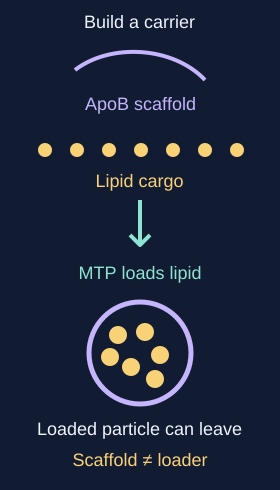
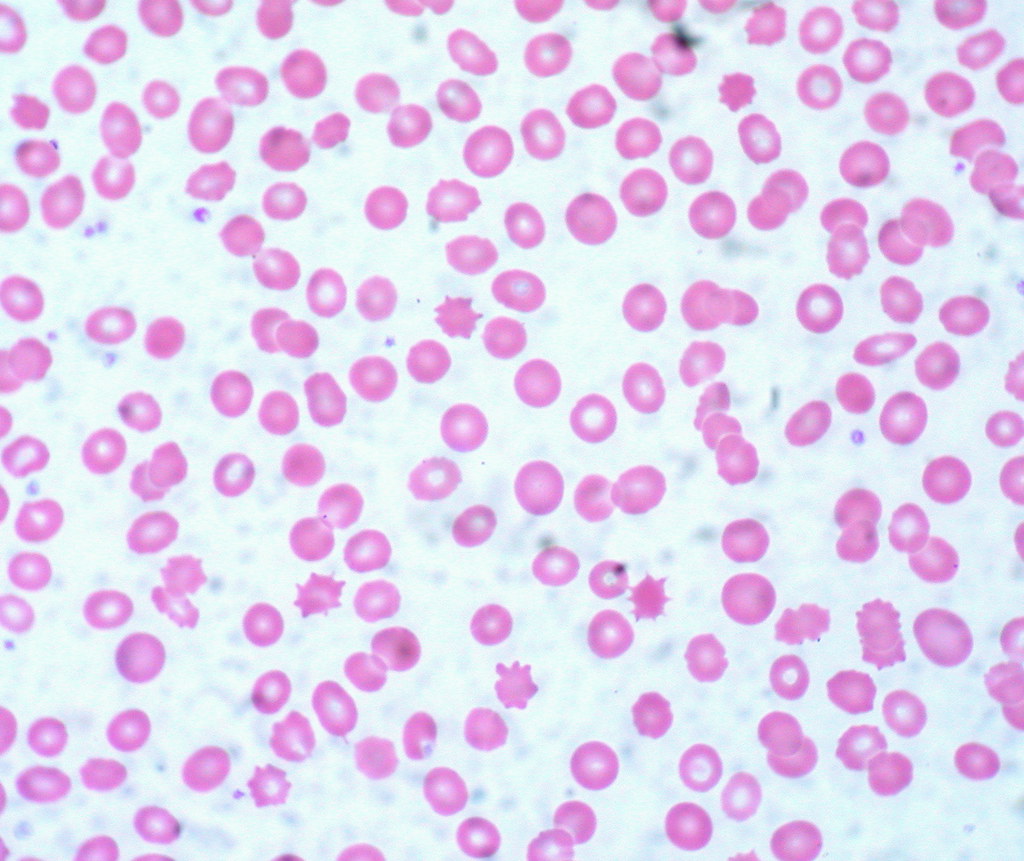
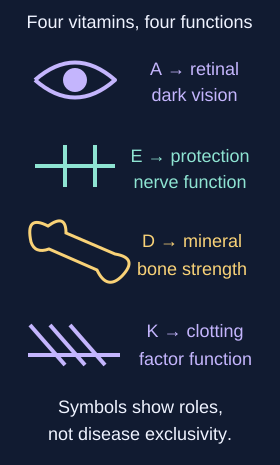
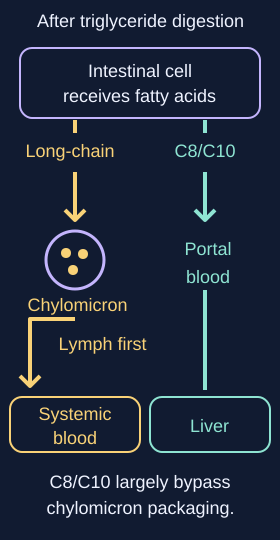
.jpg)