Medication Adherence: Exposure, Barriers and Safe Treatment
Distinguish underexposure from treatment failure, match support to the actual barrier, and manage medication gaps without delaying necessary care.
When treatment appears ineffective, ask two questions together: is the patient receiving it as intended, and is it safe to wait? Distinguish underexposure from insufficient treatment, identify the obstacle, and choose a plan that protects the patient today.
Was the medicine prescribed, obtained, or actually used?
A prescription is not the same as drug exposure. A person may never start treatment, miss doses while continuing it, or stop altogether. Even regular use can deliver little drug if inhaler technique is incorrect. These are different problems, not a single character trait called nonadherence. [1][5]
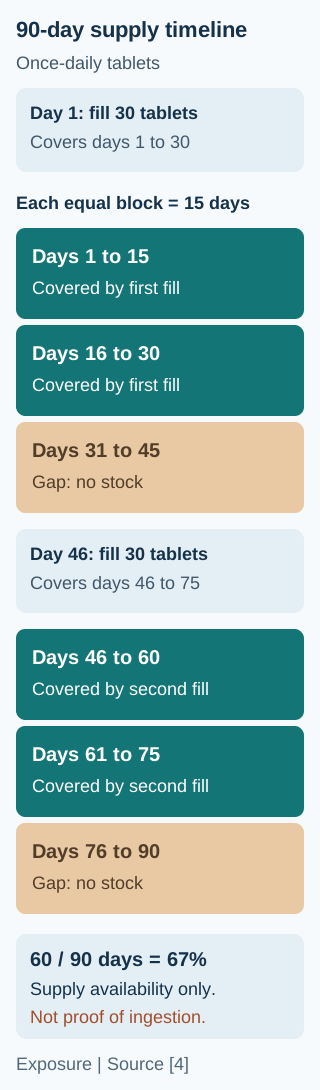
Two 30-day fills cover 60 of 90 days under the stated assumptions. Availability is not proof of ingestion. [4]
Consider a woman previously doing well on metformin whose glycated hemoglobin (HbA1c) rises to 9.8%. She has gained weight and misses evening tablets after starting night work. The missed doses identify one contributor, not necessarily the whole explanation. Ask about symptoms and actual doses; nutrition, disease progression, adverse effects, and access can all matter. [2]
Reconcile the prescription list with bottles, dispensing records, and the patient's account. Ask, "Walk me through yesterday's medicines," rather than, "You take everything, right?" Then ask about the last missed dose, extra doses, skipped refills, and device use. A respectful question permits a useful answer without requiring a defensive response. [1][11]
What each observation establishes
Observation
What it can show
What it cannot prove
ObservationSelf-report
What it can showExperience, timing, concerns
What it cannot proveExact exposure without recall error
ObservationRefill history
What it can showMedication available over time
What it cannot proveThat tablets were swallowed
ObservationPill count
What it can showTablets absent from a container
What it cannot proveWho took them or when
ObservationObserved demonstration
What it can showDosing or device skill now
What it cannot proveEvery dose at home
ObservationSelected drug assay
What it can showRecent exposure within assay limits
What it cannot proveLong-term use independent of sampling time and pharmacokinetics
Trace the supply timeline in the figure. Thirty tablets on day 1 cover days 1 through 30. Another 30 on day 46 cover days 46 through 75. Assuming one daily dose and no other supply, mark the uncovered intervals before calculating proportion of days covered. [4]
Check the timeline calculation
The gaps are days 31 through 45 and 76 through 90. Supply covers 60 of 90 days, or about 67%. A full bottle could still sit unused, so this is availability, not proof of ingestion.
The visible comparison is 60 covered days versus 30 uncovered days. Another pharmacy or leftover supply would change the calculation, so reconcile those possibilities. Transfer this distinction to inhalers: a timely refill does not show that aerosol reached the lungs. No single observation replaces the clinical interview. [4][5]
Try it here · Checkpoint 1 of 3
Make your prediction before reading the choices. A first attempt is just a starting point.
Case 3
Show answer and explanations for case 3
A. About 83% of days were covered; this establishes ingestion. (Why this does not fit)
About 83% counts only the 15-day gap before day 46 and overlooks days 76 to 90. Dispensing cannot establish actual ingestion, even when coverage is calculated correctly.
Reasoning steps for option A
Does 83% account for tablets after day 75?
No. The day-46 fill lasts through day 75; days 76 to 90 are also uncovered, leaving 60/90 days, about 67%.
Can these two pharmacy pickups establish swallowing?
No. Dispensing records show availability, not ingestion.
B. About 67% of days were covered; ingestion remains unknown. (Best answer)
Two 30-day supplies cover 60 of 90 days, approximately 67%. A refill record measures availability but not whether any dispensed tablets were swallowed.
Reasoning steps for option B
How many of days 1 to 90 can two 30-tablet fills cover?
Sixty days, or approximately 67% of the 90-day interval.
What remains unknown despite calculating 67% coverage?
Whether she swallowed any of the dispensed tablets; her report does not make dispensing proof of ingestion.
C. About 67% of days were covered; this establishes ingestion. (Why this does not fit)
Two 30-day supplies cover 60 of 90 days, approximately 67%. Dispensing cannot establish actual ingestion, even when coverage is calculated correctly.
Reasoning steps for option C
Is the option’s 67% supply figure sound?
Yes. Thirty tablets on day 1 and 30 on day 46 cover 60 of 90 once-daily days.
Does correct coverage arithmetic verify every dose was taken?
No; possession or dispensing cannot establish ingestion.
D. About 83% of days were covered; ingestion remains unknown. (Why this does not fit)
About 83% counts only the 15-day gap before day 46 and overlooks days 76 to 90. A refill record measures availability but not whether any dispensed tablets were swallowed.
Reasoning steps for option D
Which uncovered interval does the 83% figure omit?
Days 76 to 90 after the second 30-day fill runs out; both gaps yield 60/90 coverage.
What does the refill record reveal about actual swallowing?
Nothing definitive; it records supplied tablets, not doses ingested.
Takeaway: A refill metric estimates medication availability within defined assumptions, not intent or ingestion.
Do not let an adherence explanation delay necessary treatment
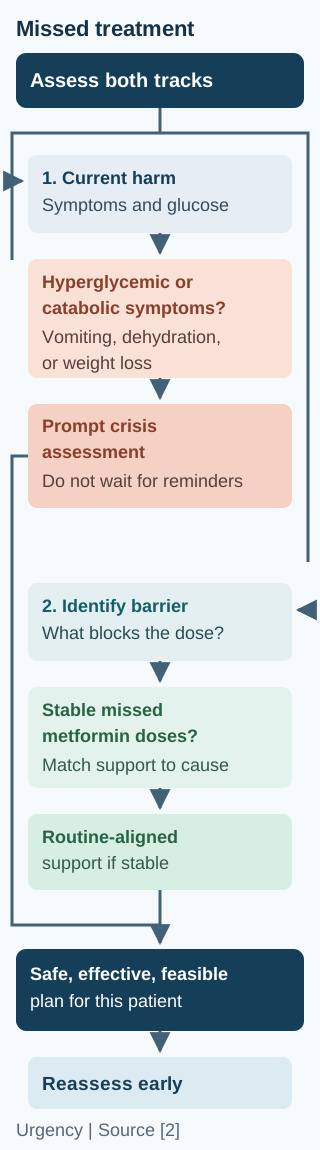
"Address adherence" and "treat the disease" are not opposing choices. First assess immediate risk, then determine whether the prescribed treatment remains safe, indicated, and sufficient. Referral, nutrition care, and additional medication may be needed alongside practical support. [2]
Prompt assessment for hyperglycemic or catabolic symptoms proceeds alongside practical support. This schematic is not a complete emergency protocol. [2]
Compare two people with missed metformin doses. One is comfortable, gaining weight, and has glucose around 190 mg/dL. The other has thirst, unintentional weight loss, and glucose 368 mg/dL. Predict who needs prompt assessment for insulin deficiency and metabolic crisis rather than a routine follow-up plan alone.
Check the clinical distinction
The second patient has catabolic symptoms with marked hyperglycemia. Check hydration, ketones, electrolytes, and acid-base status as indicated. The first still needs timely reassessment, not an indefinite delay.
The two-track safety figure keeps current risk and practical support in parallel. The American Diabetes Association recommends considering insulin with symptoms of hyperglycemia, HbA1c above 10%, or glucose at least 300 mg/dL. These findings need not all occur together. A number alone does not diagnose ketoacidosis, and an HbA1c below that threshold does not exclude an emergency. [2][27]
For a stable patient, agree on a feasible regimen and review symptoms and glucose early enough to detect persistent poor control. HbA1c commonly informs reassessment at about three months after a meaningful change, but do not wait three months to check access, adverse effects, or worsening symptoms. Individualize the interval. [2]
Apply the distinction elsewhere. Apparent resistant hypertension requires confirmed exposure and exclusion of a white-coat effect: office pressure is high while out-of-office measurements are controlled. In stable asthma or chronic obstructive pulmonary disease (COPD), inspect technique and use before assuming pharmacologic failure; acute respiratory distress still needs treatment now. Asthma therapy must include inhaled corticosteroid, not a long-acting beta agonist (LABA) alone. In depression, assess safety and sustained therapeutic exposure before assigning resistance. [4][5][6][26]
Now add heart failure or chronic kidney disease to the diabetic patient's history. Comorbidity-directed therapy, including agents with proven cardiovascular or kidney benefit when appropriate, need not wait for a perfect adherence record or a higher HbA1c. Consider affordability, renal function, hypoglycemia risk, and preferences alongside the indication. [2]
Try it here · Checkpoint 2 of 3
Make your prediction before reading the choices. A first attempt is just a starting point.
Case 2
Show answer and explanations for case 2
A. Ketoacidosis; initiate a monitored intravenous insulin protocol. (Why this does not fit)
Normal pH, bicarbonate and ketones do not support diabetic ketoacidosis in this presentation. Marked symptomatic hyperglycemia may require insulin, but that is different from an automatic intravenous ketoacidosis protocol.
Reasoning steps for option A
Do his pH 7.39, bicarbonate 24 and ketones 0.2 support ketoacidosis?
No; the acid-base and ketone results do not support DKA.
Does severe hyperglycemia automatically call for an IV DKA insulin protocol?
No. Insulin may be needed for symptomatic catabolic hyperglycemia, but this is not established DKA.
B. No ketoacidosis; restore metformin alone and reassess in three months. (Why this does not fit)
The acid-base and ketone results do not support ketoacidosis. Catabolic symptoms, glucose above 300 and HbA1c above 10% warrant considering insulin and timely review rather than metformin alone with a long delay.
Reasoning steps for option B
Is the option’s no-ketoacidosis interpretation supported?
Yes; normal pH, bicarbonate and low beta-hydroxybutyrate argue against DKA.
Can metformin alone wait three months with glucose 368 and 7-kg loss?
No. Catabolic symptoms and HbA1c 12.4% warrant considering insulin and timely review.
C. No ketoacidosis; consider insulin-based treatment with access support. (Best answer)
The acid-base and ketone results distinguish severe hyperglycemia from ketoacidosis. Catabolic weight loss and marked symptomatic hyperglycemia favor considering insulin while securing a feasible supply and follow-up.
Reasoning steps for option C
What distinguishes his glucose 368 from DKA?
Despite marked hyperglycemia, pH 7.39, bicarbonate 24 and ketones 0.2 do not establish ketoacidosis.
Why pair possible insulin with access support?
Weight loss, thirst and HbA1c 12.4% warrant prompt insulin consideration; cost stopped metformin, so reliable affordable supply and follow-up matter.
D. Ketoacidosis; restore oral therapy and reassess in three months. (Why this does not fit)
The given laboratory findings do not establish ketoacidosis. Even without ketoacidosis, this degree of symptomatic hyperglycemia requires prompt treatment reassessment rather than delayed oral-only review.
Reasoning steps for option D
Can the current laboratory values justify labeling this DKA?
No; pH, bicarbonate and beta-hydroxybutyrate do not support it.
Would oral-only treatment and a three-month delay address his catabolic symptoms?
No. Weight loss and marked symptomatic hyperglycemia require prompt reassessment, including insulin consideration.
Takeaway: Identified underuse does not justify delaying treatment of symptomatic severe hyperglycemia.
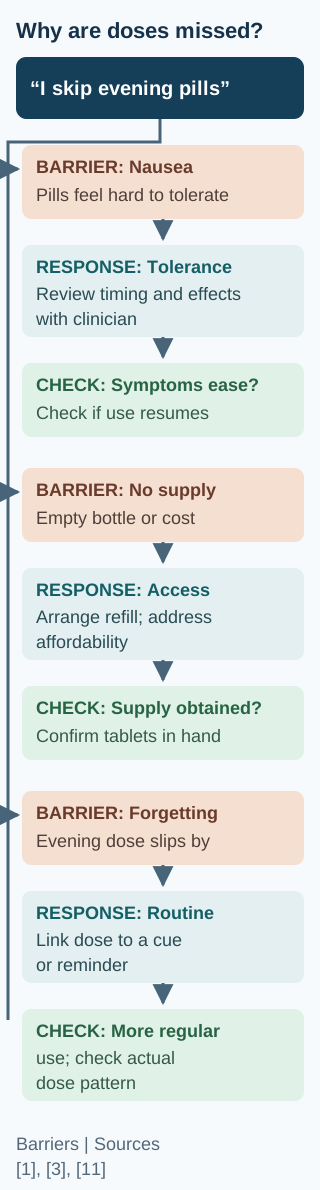
Why might the same reminder help one person and fail another? A reminder acts on remembering. It cannot create an affordable refill, prevent nausea, or make an unsafe prescription appropriate. Several barriers may coexist; start with the most consequential and ask what the patient wants help changing. [1][11]
A tolerability intervention, an access intervention and a routine intervention act on different obstacles. Check results rather than assume success. [1][3][11]
Match the barrier with a feasible response
Obstacle
Targeted response
Verify afterward
ObstacleCost or access
Targeted responseFormulary or generic options, coverage assistance, delivery, transportation
Verify afterwardAn affordable supply is obtained
ObstacleAdverse effects
Targeted responseAssess severity; adjust dose, formulation, timing, or agent when appropriate
Follow the barrier-routing figure. Start with, "I skip the evening dose." Choose the route for nausea after titration, then change the statement to, "I ran out before payday." Predict whether the original intervention still reaches the obstacle. This comparison tests clinical reasoning, not a dosing calculator.
Compare the two routes
Nausea calls for a tolerability assessment; running out before payday calls for an access plan. An alarm is off target for both unless forgetting also occurs.
The result is that nausea needs a tolerability review, while an unaffordable refill needs access support. Meals, a lower tolerated dose, slower titration, or an extended-release formulation may help metformin gastrointestinal intolerance. Improvement is not guaranteed. There is no rule that dose reduction is a last resort or that every adverse effect permits a within-class substitute. Metformin is contraindicated when estimated glomerular filtration rate (eGFR) is below 30 mL/min/1.73 m2; formulation changes do not correct that contraindication. [2][3]
Deprescribing begins with indication review, including nonprescription products. A proton pump inhibitor without an ongoing indication may be a candidate after gastrointestinal bleeding risk is assessed. Complicated reflux, Barrett esophagus, or high bleeding risk can justify continuation. Do not stop beneficial treatment merely because of observational safety associations or a normal value achieved during treatment. [19]
A prefilled organizer works only if the patient takes the correct compartment. Cognitive or functional impairment may require dependable daily assistance rather than another written schedule. Conversely, someone with intact skills and transport problems may benefit more from delivery than supervised administration. Choose with the patient and reassess the task in practice. [1][22]
A useful conversation tests understanding and respects choice
Does agreement establish understanding? Ask the patient to explain the plan in their own words. Teach-back tests how clearly the clinician communicated, not the patient's worth or memory. Re-explain a small part differently and check again; use demonstration for devices and tablet counts. Written instructions and pharmacist counseling reinforce this process. [22]
A patient prescribed methotrexate 15 mg weekly places six 2.5-mg tablets in every daily compartment. Count the intended weekly tablets, then compare her plan. The dose per occasion is correct, but the weekly interval is not. The visible consequence is a potentially fatal daily dosing error, which must be corrected before treatment starts. [16]
If she feared methotrexate because a neighbor received it for cancer, acknowledge that experience. Explain her specific regimen, folate supplementation and monitoring. Lower-dose use does not make the drug harmless: marrow, liver, lung, kidney, infection, and pregnancy risks remain relevant. A handout supports rather than replaces this discussion. [16]
For ambivalence, use open questions, reflective listening, and the patient's priorities. Someone wanting to travel with grandchildren but disliking daily tablets may respond to, "How might treatment fit your travel plans?" This values-based discussion differs from insisting on agreement. Ask permission to share evidence and retain room for informed refusal. [1]
Try, "What worries you most about this medicine?" Predict what changes if the answer is an actual symptom rather than a frightening online claim. Statin muscle symptoms deserve assessment; fear alone needs balanced counseling. Rare, generally reversible cognitive events appear in labeling, but those reports do not establish that statins cause dementia or prevent it. [15]
Compare the conversations
An actual symptom needs clinical evaluation as well as listening. A feared effect without symptoms needs accurate benefit-risk counseling and follow-up. Neither is solved by dismissing the concern.
Screen for depression and diabetes distress when indicated. Brief screening such as PHQ-2 followed by fuller assessment such as PHQ-9 is a starting point, not a diagnosis alone. Assess safety and treat mental-health needs alongside physical illness. Pump overrides may reflect real hypoglycemia, settings, knowledge gaps, burden, or fear; do not infer burnout from a phrase. [6][23]
Offer adolescents appropriate private discussion, explain confidentiality limits, assess self-harm risk, and plan suitable family support. In adults, refusal does not itself establish incapacity. Cultural humility means asking about the individual's experiences, not assigning distrust from ethnicity. An interpreter or trusted community worker may help when welcomed. [24][1][11]
Some missed treatment needs action today
Which consequences occur before a routine follow-up? A patient who stops furosemide because travel makes bathroom access difficult may develop congestion. New orthopnea and rapid weight gain need prompt assessment. Confirm which medicine was stopped and revise the practical routine in parallel, rather than simply adding another reminder. [25]
After a recent coronary stent, an unplanned P2Y12 inhibitor interruption can increase ischemic risk. Ticagrelor can cause dyspnea, but new breathlessness still needs evaluation for other causes. Coordinate continuation or substitution with the treating team; extra aspirin is not a substitute. Antiplatelet duration is individualized, not a universal minimum regardless of bleeding risk. [17]
Abrupt antidepressant cessation may cause withdrawal within days and can increase later relapse risk. Dizziness or electric-shock sensations soon afterward favor withdrawal over immediate depressive relapse. Lithium discontinuation likewise needs a gradual, monitored plan with psychiatric input. No universal withdrawal percentage or taper duration fits every patient. [6][7]
Planning pregnancy is not a reason to stop antiseizure treatment without review. Discuss seizure protection and fetal risk promptly. Levetiracetam, lamotrigine, or oxcarbazepine may be appropriate depending on syndrome and other factors. Avoid valproate when clinically feasible; recommend at least 0.4 mg folic acid daily before and during pregnancy for people taking antiseizure medication. [14]
For combined oral contraceptives, establish whether missed tablets were active and where the gap occurred. Two or more consecutive missed active pills generally require seven consecutive active pills before relying on the method again. A first-week gap with intercourse in the preceding five days warrants consideration of emergency contraception. Discuss current risk and future preferences without pressuring the patient toward an intrauterine device (IUD). [9][10]
Compare oral emergency options. After levonorgestrel, hormonal contraception may restart immediately with seven-day backup. After ulipristal, wait at least five days before hormonal restart, then use backup for seven days or until the next menses, whichever comes first. CDC's missed-combined-pill algorithm excludes ulipristal from its suggested emergency options because of this interaction. Test if no withdrawal bleed occurs within three weeks. [9][10]
Predict whether a negative test two days after intercourse permits postponing emergency contraception. It does not: the test cannot exclude pregnancy from that recent exposure. A time-sensitive response should not wait for testing to become informative. Transfer that reasoning to a post-stent medication gap: future follow-up does not protect against today's interruption. [10][17]
Check the shared principle
Provide a drug-specific safety response now while investigating the barrier. There is no single rule to double, restart, or hold every missed medicine.
Persistent HIV viremia during intermittent antiretroviral therapy (ART) calls for access, interaction, and resistance assessment. Test while the failing regimen is being taken or within four weeks after stopping non-long-acting treatment when possible. Do not deliberately interrupt ART during evaluation. Rebound can increase transmission risk; it neither proves resistance nor predicts a fixed timetable for CD4 decline. [11][12]
Long-acting cabotegravir/rilpivirine changes daily pills into scheduled visits, not freedom from adherence work. Standard switching requires sustained suppression and review of resistance, interactions, pregnancy considerations, and hepatitis B treatment. Make a missed-appointment plan. Selected use during ongoing viremia requires specialist judgment and intensive support, not an automatic switch. [11][13]
The FDA ended the clozapine Risk Evaluation and Mitigation Strategies (REMS) program effective June 13, 2025; enrollment and absolute neutrophil count (ANC) reporting to that program are no longer dispensing conditions. ANC monitoring according to prescribing information remains recommended because severe neutropenia risk persists. A missed draw calls for a prompt individualized prescriber plan and attention to needle fear, not an obsolete automatic federal dispensing prohibition. [8]
Try it here · Checkpoint 3 of 3
Make your prediction before reading the choices. A first attempt is just a starting point.
Case 21
Show answer and explanations for case 21
A. Use levonorgestrel EC; resume pills today with seven-day backup. (Best answer)
Levonorgestrel emergency contraception fits her preference to restart combined pills today. Seven consecutive active pills are needed before relying on the resumed contraceptive regimen.
Reasoning steps for option A
Why choose levonorgestrel after missing the first three active pills?
She had intercourse 48 hours ago, declines an IUD and wants an oral EC option compatible with restarting her combined pill today.
When can she rely on resumed combined pills?
After seven consecutive active pills; use backup for those seven days.
B. Use levonorgestrel EC; resume pills today without backup. (Why this does not fit)
Levonorgestrel emergency contraception fits her preference to restart combined pills today. One resumed active pill does not restore reliable contraceptive protection; use seven-day backup.
Reasoning steps for option B
Can levonorgestrel EC accommodate her same-day pill restart?
Yes; it fits her oral-option preference after recent unprotected intercourse.
Does one resumed active pill remove need for backup?
No. Seven consecutive active pills are needed before relying on the regimen.
C. Use ulipristal EC; resume pills today with seven-day backup. (Why this does not fit)
Ulipristal requires postponing hormonal pill restart rather than same-day resumption to avoid reducing EC effect. Seven consecutive active pills are needed before relying on the resumed contraceptive regimen.
Reasoning steps for option C
What conflicts between ulipristal and same-day combined-pill restart?
Hormonal pills should be postponed after ulipristal to avoid reducing its EC effect, contrary to her preference.
Would backup still be needed after eventual pill resumption?
Yes; seven consecutive active pills are required before relying on combined contraception.
D. Use ulipristal EC; resume pills today without backup. (Why this does not fit)
Ulipristal requires postponing hormonal pill restart rather than same-day resumption to avoid reducing EC effect. One resumed active pill does not restore reliable contraceptive protection; use seven-day backup.
Reasoning steps for option D
Can she take ulipristal and resume combined pills immediately without conflict?
No; same-day hormonal restart can reduce ulipristal effectiveness.
What else is missing if she resumes after missed first-week pills?
Seven days of backup until seven consecutive active pills restore protection.
Takeaway: Missed-pill management depends on the type and timing of missed active pills, not just a monthly count.
Check whether the plan changed exposure and the outcome
Does completing a follow-up visit prove adherence improved? No. Agree on an observable result: the refill was obtained, nausea became tolerable, inhaler use was demonstrated correctly, or daily assistance became available. Assess the clinical response and unintended harms too. More frequent contact is useful when it performs these tasks, not as a universal treatment. [1][11]
In a worked clinic example, 30 of 50 patients with refill gaps report cost, 12 adverse effects, and 8 forgetting. Before choosing another reminder, calculate how many identified barriers it directly targets: 8 of 50. The other 42 need a different response, such as a staffed reply route connected to pharmacy or financial assistance. These are illustrative counts, not measured outcomes of this lesson. Obtain messaging consent, protect privacy, and specify who responds to urgent concerns.
Check the service-design prediction
More reminders leave 42 reported cost or adverse-effect barriers unaddressed. Tailor the response, obtain messaging consent, protect privacy, and specify who responds and how urgent concerns are escalated.
The MI FREEE randomized trial found adherence 4 to 6 percentage points higher with full prescription coverage after myocardial infarction (MI), but did not demonstrate a significant reduction in its primary composite outcome. Cost support is a targeted tool, not proof that every outcome will improve. Do not assign universal success percentages to texts, calls, teach-back, or visits. [20]
The familiar 50% adherence estimate came from WHO's 2003 summary of chronic-disease treatment in developed countries. It is historical context, not a current diagnosis for half of every clinic or evidence that every problem is relational. Health-system, treatment, practical, and patient-level factors all require attention. [21]
Finally, test an alternative explanation. A patient's international normalized ratio (INR), used to monitor warfarin anticoagulation, falls after starting a daily kale smoothie despite timely refills. Predict the effect of more vitamin K: it can reduce the anticoagulant response. Review diet, interactions, and exposure, counsel consistent vitamin K intake, and adjust monitoring rather than accuse the patient or prohibit vegetables. Persistent poor control after a feasible trial should prompt reconsideration of diagnosis, dose, interactions, and additional treatment. [18]
A has substantial underexposure linked to shift work, so preserve the prescribed frequency while finding workable times. B has persistent hyperglycemia after an adequately implemented plan and warrants consideration of additional treatment.
Reasoning steps for option A
Why restore A’s evening metformin rather than raise its dose?
She misses four evening doses weekly after night shifts despite tolerating twice-daily metformin; find workable times while preserving frequency.
Why consider adding treatment for B now?
Twelve weeks of reconciled, maximally tolerated treatment still leaves her above target.
B. A: restore feasible dosing; B: repeat reminders without reassessing therapy. (Why this does not fit)
Restoring A's feasible dosing directly addresses an identified problem. Repeating reminders alone for B does not address persistent poor control despite a sustained implemented regimen.
Reasoning steps for option B
What does restoring A’s schedule correct?
It addresses documented shift-related underexposure of four evening metformin doses each week.
Would another reminder-only plan resolve B’s high HbA1c?
No. Her dosing and supplies support sustained implementation for 12 weeks, so treatment adequacy needs reassessment.
C. A: increase the dose immediately; B: assess treatment intensification. (Why this does not fit)
An immediate higher prescription for A may leave the missed evening doses unchanged. B does warrant assessment for intensification because adequate implementation has not achieved her target.
Reasoning steps for option C
Can a larger prescription compensate for A’s four missed evening doses?
No. The shift-work timing barrier remains; first restore feasible prescribed dosing.
Is intensification assessment reasonable for B?
Yes. She remains above target after 12 weeks on a maximally tolerated, consistently used regimen.
D. A: increase the dose immediately; B: repeat reminders without reassessing therapy. (Why this does not fit)
A needs a practical dosing assessment rather than assuming that a larger prescription supplies the missing doses. B needs treatment adequacy reassessed rather than further reminders as the entire plan.
Reasoning steps for option D
What is overlooked by immediately raising A’s dose?
Her missed evening doses and need for feasible timing, not simply more prescribed drug.
Why is limiting B to repeated reminders insufficient?
Persistent hyperglycemia despite verified sustained implementation calls for treatment reassessment.
Takeaway: Assess exposure and treatment adequacy separately; fixing missed doses must not become indefinite therapeutic delay.
A. Return to the tolerated dose; retain the previous renal monitoring plan. (Why this does not fit)
The temporal relation to dose escalation and prior tolerance support returning to the lower dose while reassessing gastrointestinal symptoms. However, newly reduced eGFR below 45 also requires review of the benefits and risks of continued metformin rather than unchanged renal follow-up.
Reasoning steps for option A
Why step back from 1000 to 500 mg twice daily?
Diarrhea followed the dose doubling and led to missed evenings despite meals; 500 mg twice daily was previously tolerated.
Can the previous renal follow-up plan remain unchanged at eGFR 38?
No. New eGFR below 45, down from 52, requires review of continued-metformin benefits and risks.
B. Continue the current dose with meal advice; review renal benefits and risks. (Why this does not fit)
An eGFR of 38 calls for reassessing continued metformin, not mandatory cessation solely because it is below 45. Meal advice alone leaves the poorly tolerated dose increase in place despite evidence that the lower dose was tolerated.
Reasoning steps for option B
Will advice to take the current dose with meals address this diarrhea?
Not adequately; he already takes tablets with meals and tolerated the lower dose before the increase.
Does eGFR 38 require benefit-risk reassessment?
Yes. It is below 45, though not the absolute contraindication threshold of less than 30.
C. Continue the current dose with meal advice; retain the previous renal monitoring plan. (Why this does not fit)
The dose-linked diarrhea argues for reconsidering the increased dose rather than relying only on meal advice. The fall in eGFR below 45 independently requires reassessment of continued treatment benefits and risks.
Reasoning steps for option C
Why reconsider the current 2000-mg daily dose despite meal advice?
Dose-linked diarrhea persists despite meals and causes missed evening doses; the prior lower dose was tolerated.
What does the fall from eGFR 52 to 38 change?
Continued metformin merits a new renal benefit-risk review rather than the old monitoring plan alone.
D. Return to the tolerated dose; review renal benefits and risks. (Best answer)
The prior tolerated dose provides a reasonable starting point for addressing the dose-linked gastrointestinal intolerance. The new eGFR of 38 also requires a benefit-risk review of continued metformin; it is not the absolute contraindication threshold of less than 30.
Reasoning steps for option D
What lower dose has a tolerability history?
He previously tolerated immediate-release 500 mg twice daily before diarrhea began on 1000 mg twice daily.
Does eGFR 38 automatically prohibit metformin or require review?
It calls for reassessing continued-treatment benefits and risks; absolute contraindication is below 30.
Takeaway: Dose reduction and slower titration are legitimate treatments for metformin intolerance, not last resorts.
A. Stop metformin and choose a renal-appropriate alternative. (Best answer)
An eGFR below 30 mL/min/1.73 m2 is a contraindication to metformin. Improving adherence to a contraindicated regimen would increase risk; a replacement plan and renal assessment are needed.
Reasoning steps for option A
What does persistent eGFR 24 mean for metformin?
It falls below the 30 mL/min/1.73 m2 contraindication threshold, even after acute-illness recovery.
Why choose an alternative instead of improving metformin adherence?
Reminders would increase exposure to a contraindicated drug; renal-appropriate replacement and renal assessment are needed.
B. Resume metformin at a lower dose with closer renal checks. (Why this does not fit)
At confirmed eGFR 24, metformin is contraindicated rather than merely dose-reduced; closer monitoring does not change the threshold.
Reasoning steps for option B
Can dose reduction overcome a confirmed eGFR of 24?
No. Metformin is contraindicated below 30, not simply eligible for a lower dose.
Would closer monitoring permit restarting metformin here?
No; monitoring does not alter the contraindication at persistently low eGFR.
C. Change to extended-release metformin with renal checks. (Why this does not fit)
Extended release may improve gastrointestinal tolerability but does not bypass the eGFR-below-30 contraindication.
Reasoning steps for option C
Which metformin problem might extended release solve?
Gastrointestinal tolerability, not kidney-related contraindication.
Would renal checks make XR metformin acceptable at eGFR 24?
No; the below-30 contraindication applies to the extended-release formulation too.
D. Use reminders to restore metformin and recheck later. (Why this does not fit)
Reminders address omission but cannot make metformin safe at persistently low eGFR.
Reasoning steps for option D
What barrier would reminders address in this woman?
Her omitted doses, but not the safety reason for avoiding metformin.
Can waiting for a later recheck justify restoring it now?
No. Persistent eGFR 24 after recovery already contraindicates metformin; use a renal-appropriate plan.
Takeaway: Before encouraging adherence, confirm that the prescription remains safe and indicated.
A. Interpret the ambulatory pattern as a white-coat effect; presume full drug exposure. (Why this does not fit)
A technically adequate ambulatory mean of 126/76 indicates an office-related white-coat effect. Neither refill gaps nor an unreviewed medicine list establishes full ingestion.
Reasoning steps for option A
How does ambulatory 126/76 relate to office 162/92?
The technically adequate normal ambulatory mean indicates a white-coat effect rather than sustained uncontrolled pressure.
Do pharmacy gaps plus an unreconciled list prove full exposure?
No; older supplies and doses during monitoring remain unverified.
B. Interpret the pattern as sustained hypertension; reconcile drug exposure. (Why this does not fit)
The ambulatory mean does not support sustained uncontrolled pressure despite office elevation. Unexplained refill gaps and possible older stock leave actual exposure unverified.
Reasoning steps for option B
Can high office readings alone establish sustained hypertension here?
No; ambulatory average 126/76 contradicts sustained uncontrolled pressure.
Why reconcile actual dosing despite refill gaps?
Unexplained gaps and possible old stock cannot determine what he took during ambulatory monitoring.
C. Interpret the pattern as a white-coat effect; reconcile drug exposure. (Best answer)
A technically adequate ambulatory mean of 126/76 indicates an office-related white-coat effect. Unexplained refill gaps and possible older stock leave actual exposure unverified.
Reasoning steps for option C
What pattern is supported by normal ambulatory pressure despite elevated office readings?
A white-coat effect, not confirmed sustained uncontrolled hypertension.
What must be checked before calling this resistant despite three prescriptions?
Reconcile older supplies and actual doses; the refill gaps do not establish exposure.
D. Interpret the pattern as sustained hypertension; presume full drug exposure. (Why this does not fit)
The ambulatory mean does not support sustained uncontrolled pressure despite office elevation. Neither refill gaps nor an unreviewed medicine list establishes full ingestion.
Reasoning steps for option D
Does the ambulatory study corroborate sustained 162/92 pressure?
A. Inadequate supply coverage; technique unlikely to impair delivery. (Why this does not fit)
Two 30-day supplies cannot cover all 90 days under the stated assumptions. Actuation before sealing the lips and rapid inhalation are additional delivery problems for this device.
Reasoning steps for option A
How much of the 90-day inhaler period did two supplies cover?
Two nonoverlapping 30-day supplies cover 60 days, leaving 30 uncovered.
Are pressing before lip seal and inhaling rapidly harmless technique?
No; both can impair delivery with this pressurized metered-dose inhaler.
B. Inadequate supply coverage; technique likely to impair delivery. (Best answer)
The available supply covers only 60 of 90 days, despite the report of daily use. The observed coordination and inhalation errors independently support teaching and repeat demonstration before assuming drug failure.
Reasoning steps for option B
Does his report of daily use erase the 30-day supply deficit?
No; only 60 of 90 days were supplied under the stated assumptions.
What does his demonstration add beyond supply history?
Actuation before sealing the lips and rapid inhalation independently suggest impaired delivery; teach and repeat demonstration.
C. Adequate supply coverage; technique likely to impair delivery. (Why this does not fit)
The observed technique can impair delivery and needs correction. However, it does not explain away the separate 30-day supply deficit.
Reasoning steps for option C
Is observed inhaler technique a credible delivery problem?
Yes; premature actuation and rapid inhalation can impair delivery.
Does correcting technique establish enough medicine was available?
No. The separate supply record leaves 30 of 90 days uncovered.
D. Adequate supply coverage; technique unlikely to impair delivery. (Why this does not fit)
The supply record leaves 30 days uncovered. The observed inhaler use also contains errors, so neither supply adequacy nor adequate technique is established.
Reasoning steps for option D
Why is the adequate-coverage half of this option unsupported?
Only two 30-day supplies exist for 90 days, with no other stock.
Why is the adequate-technique half also unsupported?
He actuates before sealing his lips and inhales rapidly, both observed delivery errors.
Takeaway: For inhaled treatment, possession and daily intention do not establish effective delivery.
A. A: an adequate failed trial; B: inadequate duration. (Why this does not fit)
A's calendar prescription duration does not establish a sustained therapeutic trial because repeated nausea-related interruptions dominate it. B's 12-week continuous therapeutic exposure is not too short solely because the prescription began four months ago.
Reasoning steps for option A
Did A complete an uninterrupted therapeutic sertraline trial?
No; nausea led to three-week interruptions and no continuous course exceeded two weeks.
Is B’s continuous 12-week therapeutic treatment too short by these facts?
No; her sustained reviewed exposure supports evaluation of persistent symptoms.
B. A: an adequate failed trial; B: persistent symptoms after adequate exposure. (Why this does not fit)
B has a reasonable basis for reviewing nonresponse after sustained exposure. A has not completed a comparable continuous trial, so calling both adequate failed trials ignores the dosing histories.
Reasoning steps for option B
Why is calling A an adequate failed trial premature?
Four months since prescription masks repeated short courses and nausea-related discontinuation.
What supports treatment review for B’s ongoing depression?
She remained substantially symptomatic despite daily tolerated therapeutic dosing for 12 weeks.
C. A: inadequate sustained exposure; B: inadequate duration. (Why this does not fit)
A needs nausea and consistent exposure addressed before classifying nonresponse. B's documented continuous therapeutic treatment warrants a review of persistent symptoms rather than attributing them to insufficient duration.
Reasoning steps for option C
What should be addressed before labeling A a nonresponder?
Nausea and interrupted exposure; she never exceeded two continuous therapeutic weeks.
Does B need merely more time because A’s trial was interrupted?
D. A: inadequate sustained exposure; B: persistent symptoms after adequate exposure. (Best answer)
A's short interrupted courses prevent equating four calendar months with an adequate trial. B has sustained therapeutic exposure, so reviewing diagnosis, additional treatment and shared next options is appropriate.
Reasoning steps for option D
Why does A’s calendar interval overstate exposure?
Her 10-day courses were separated by three-week nausea-related stoppages.
Why consider shared next treatment options for B?
She has persistent substantial symptoms despite a verified 12-week tolerated therapeutic dose; review diagnosis and additional treatment.
Takeaway: Time since prescription is not the same as time receiving a therapeutic regimen.
A. Explain secondary prevention while treating cognitive reports as proven dementia causation. (Why this does not fit)
Prior MI makes the statin a secondary-prevention treatment. Reported cognitive events cannot be converted into proof of dementia causation.
Reasoning steps for option A
What does his prior MI make atorvastatin prevention?
Secondary prevention, not optional primary prevention.
Do reports of memory symptoms prove statin-induced dementia?
No. Reported cognitive events cannot be taken as evidence of dementia causation.
B. Explain primary prevention while distinguishing reports from dementia causation. (Why this does not fit)
Calling post-MI therapy optional primary prevention misclassifies the indication. Reported reversible memory symptoms do not establish statin-caused dementia.
Reasoning steps for option B
Is a statin after MI merely optional primary prevention?
No; the previous MI establishes secondary prevention.
How should his dementia report be interpreted?
Reported reversible memory symptoms do not establish statin-caused dementia, especially without symptoms in him.
C. Explain primary prevention while treating cognitive reports as proven dementia causation. (Why this does not fit)
Calling post-MI therapy optional primary prevention misclassifies the indication. Reported cognitive events cannot be converted into proof of dementia causation.
Reasoning steps for option C
Which part mislabels the reason for his statin?
His MI makes the indication secondary prevention, not primary prevention.
Can adverse-event reports alone establish the dementia claim?
No; a report of cognitive events is not proof of causal dementia.
D. Explain secondary prevention while distinguishing reports from dementia causation. (Best answer)
Prior MI makes the statin a secondary-prevention treatment. Reported reversible memory symptoms do not establish statin-caused dementia.
Reasoning steps for option D
Why explain continuing benefit after his MI?
Atorvastatin addresses recurrent cardiovascular risk in secondary prevention.
Why not dismiss concern or assert proven dementia harm?
His report merits explanation, but cognitive reports do not prove statins cause dementia; he has no cognitive symptoms.
Takeaway: Discuss real benefits and uncertainties without promising that a drug has no adverse effects.
A. Assess the thyroid abnormality and plan supervised lithium change if chosen. (Best answer)
Elevated TSH and low free thyroxine warrant assessment as a potentially treatable contributor to symptoms. Stable mood on lithium does not make abrupt cessation risk-free; any change needs relapse planning.
Reasoning steps for option A
What treatable finding could contribute to her slowing and weight gain?
Elevated TSH with low free thyroxine indicates thyroid dysfunction needing assessment, rather than assuming irreversible intolerance.
Does two years of mood stability make abrupt stopping safe?
No; lithium changes should be supervised with relapse planning.
B. Assess the thyroid abnormality and stop lithium abruptly if chosen. (Why this does not fit)
Elevated TSH and low free thyroxine warrant assessment as a potentially treatable contributor to symptoms. Immediate unplanned cessation can increase relapse risk despite two years of stability.
Reasoning steps for option B
Why assess thyroid function rather than attribute every symptom to lithium intolerance?
The new high TSH and low free thyroxine may be a treatable contributor.
What risk does abrupt discontinuation introduce?
Mood relapse despite two years of stability; any chosen change needs a supervised plan.
C. Assume irreversible lithium intolerance and plan supervised drug change. (Why this does not fit)
Attributing every symptom to irreversible intolerance ignores the new thyroid findings. Stable mood on lithium does not make abrupt cessation risk-free; any change needs relapse planning.
Reasoning steps for option C
Does new hypothyroidism justify assuming irreversible drug intolerance?
No; thyroid abnormality deserves assessment as a potentially treatable contributor.
Is supervised change safer than sudden cessation if she chooses to stop?
Yes; stable bipolar I mood does not remove relapse risk from abruptly stopping lithium.
D. Assume irreversible lithium intolerance and stop lithium abruptly. (Why this does not fit)
Attributing every symptom to irreversible intolerance ignores the new thyroid findings. Immediate unplanned cessation can increase relapse risk despite two years of stability.
Reasoning steps for option D
What finding makes an irreversible-intolerance assumption premature?
Elevated TSH and low free thyroxine warrant evaluating thyroid contribution to symptoms.
Why is stopping lithium today without a plan inappropriate?
She is stable without acute toxicity symptoms, while abrupt cessation risks relapse and needs supervision.
Takeaway: Take burdensome adverse effects seriously while planning safe withdrawal or substitution.
A. Increased vitamin K fits the INR fall; refills prove ingestion. (Why this does not fit)
New daily kale increases vitamin K availability and can diminish warfarin effect, lowering INR. Refill timing and schedule knowledge are not evidence of ingestion for every dose.
Reasoning steps for option A
Can a new daily kale smoothie lower warfarin effect?
Yes. More vitamin K can diminish warfarin effect and fits the INR fall from 2.3 to 2.7 to 1.4.
Do timely refills establish each warfarin dose was swallowed?
No; pharmacy timing and accurate schedule recitation do not prove ingestion.
B. Increased vitamin K should raise INR; ingestion remains uncertain. (Why this does not fit)
Increased vitamin K is not expected to raise the INR on otherwise stable warfarin. Timely dispensing and recitation of the schedule do not prove doses were swallowed.
Reasoning steps for option B
Would increased kale vitamin K be expected to raise INR?
No. Increased vitamin K can oppose warfarin and lower INR.
What remains uncertain despite her accurate weekly schedule demonstration?
Whether she actually took every dose; knowledge and timely dispensing are indirect evidence.
C. Increased vitamin K fits the INR fall; ingestion remains uncertain. (Best answer)
New daily kale increases vitamin K availability and can diminish warfarin effect, lowering INR. Timely dispensing and recitation of the schedule do not prove doses were swallowed.
Reasoning steps for option C
Why investigate the smoothie when INR drops to 1.4?
It began two weeks ago and supplies daily vitamin K that can reduce warfarin effect.
Why not rule out missed tablets from refills and teach-back?
Neither timely fills nor knowing the schedule verifies swallowing each dose.
D. Increased vitamin K should raise INR; refills prove ingestion. (Why this does not fit)
Increased vitamin K is not expected to raise the INR on otherwise stable warfarin. Refill timing and schedule knowledge are not evidence of ingestion for every dose.
Reasoning steps for option D
How does daily kale affect INR during stable warfarin treatment?
Its vitamin K can lessen anticoagulation, lowering rather than raising INR.
Does her refill record resolve actual ingestion?
No; a timely refill cannot prove she swallowed every prescribed tablet.
Takeaway: An unexpected drug response may reflect diet or interactions, not missed doses.
A. Classify persistent rebound; interrupt ART before resistance testing. (Why this does not fit)
Two HIV RNA values around 9000 copies/mL after suppression support persistent rebound, not one blip. A planned ART interruption before testing is not required and can undermine care.
Reasoning steps for option A
Do two HIV RNA results of 8600 and 9100 represent persistent rebound?
Yes; repeated substantial viremia after prior suppression is not a single transient blip.
Would interrupting ART improve the available resistance assessment?
No; testing during current exposure preserves relevant selection information while restoring affordable prescribed dosing.
B. Classify persistent rebound; test resistance during current exposure. (Best answer)
Two HIV RNA values around 9000 copies/mL after suppression support persistent rebound, not one blip. Resistance testing during current exposure and access restoration avoid losing relevant selection information.
Reasoning steps for option B
Why classify the RNA pattern as rebound rather than a blip?
Substantial viremia persisted on repeat testing four weeks after 8600 copies/mL.
When should resistance testing occur while he remains on treatment?
Now during current exposure, alongside same-day supply and restoration of prescribed dosing; do not stop first.
C. Classify a transient blip; test resistance during current exposure. (Why this does not fit)
Repeated substantial viremia is not an isolated low-level blip. Resistance testing during current exposure and access restoration avoid losing relevant selection information.
Reasoning steps for option C
Is calling two results near 9000 a transient blip justified?
No. A blip is not repeated substantial viremia after previous suppression.
Is current-exposure resistance testing sensible despite incorrect blip label?
Yes; test now and address every-other-day dosing due to cost without interrupting ART.
D. Classify a transient blip; interrupt ART before resistance testing. (Why this does not fit)
Repeated substantial viremia is not an isolated low-level blip. A planned ART interruption before testing is not required and can undermine care.
Reasoning steps for option D
What contradicts the claimed isolated blip?
HIV RNA remained high at 9100 four weeks after 8600, after previous suppression.
Why avoid a planned treatment interruption before testing?
It is unnecessary and may undermine care or lose relevant selection information; restore prescribed exposure and test now.
Takeaway: Viral rebound requires adherence support and resistance assessment; it does not prove resistance or justify stopping ART.
A. What does dependence mean to you, and how does travel fit? (Best answer)
He knows dosing and names dependence as the concern; explore what dependence means to him. His travel goal invites his own reasoning rather than another clinician lecture.
Reasoning steps for option A
What concern should the question about dependence explore?
He understands the regimen but says daily tablets make him feel dependent; ask what that means to him.
Why ask how travel fits instead of lecture?
Traveling with grandchildren is his stated goal, and he asks to make the decision himself.
B. What does dependence mean to you? May I explain why travel requires tablets? (Why this does not fit)
He knows dosing and names dependence as the concern; explore what dependence means to him. Explaining why he should take tablets substitutes the clinician’s priorities for his own exploration.
Reasoning steps for option B
Is asking what dependence means responsive to his hesitation?
Yes; his barrier is identity and ambivalence, not inability to afford or understand pills.
Does explaining why travel requires tablets elicit his own motivation?
No. It imposes a clinician argument instead of inviting his reasoning about travel.
C. Which dosing step is unclear, and how does treatment fit with travel? (Why this does not fit)
The encounter identifies ambivalence, not an unclear dosing step. His travel goal invites his own reasoning rather than another clinician lecture.
Reasoning steps for option C
What evidence points away from an unclear dosing step?
He understands the hypertension regimen and can afford it; concern centers on feeling dependent.
Why discuss how treatment fits his travel goal?
It connects to his stated value and allows him to consider the tradeoff himself.
D. Which dosing step is unclear? May I explain why travel requires tablets? (Why this does not fit)
The encounter identifies ambivalence, not an unclear dosing step. Explaining why he should take tablets substitutes the clinician’s priorities for his own exploration.
Reasoning steps for option D
Would asking which dosing step is unclear target his actual concern?
No; he says he knows what the tablets are for, but questions their fit with his life.
What is lost when the clinician explains why travel requires pills?
His requested autonomy and opportunity to express his own reasons about traveling with grandchildren.
Takeaway: Match the conversation to the barrier: understanding, practical ability, and ambivalence are different targets.
A. Withdraw furosemide and retain weekly organizer-only support. (Why this does not fit)
Furosemide still has a documented congestion indication, so removing it to reduce pill count risks loss of disease control. Weekly filling has not enabled this patient to select doses reliably.
Reasoning steps for option A
Why not withdraw furosemide to lower her pill count?
It still treats congestion after heart-failure admissions; removing it could undermine disease control.
Has weekly organizer preparation solved her sequencing problem?
No; she takes compartments out of order and cannot demonstrate the next dose.
B. Trial omeprazole withdrawal and retain weekly organizer-only support. (Why this does not fit)
A monitored omeprazole withdrawal trial fits the absence of a continuing indication after bleeding-risk review. However, fewer tablets do not establish that she can now use the organizer independently.
Reasoning steps for option B
Why is omeprazole a withdrawal-trial candidate?
Remote uncomplicated reflux has no continuing PPI indication or high bleeding risk on review.
Can fewer pills alone make weekly organizer-only support reliable?
No; she still cannot identify the next compartment, so daily administration support is needed with consent.
C. Withdraw furosemide and arrange daily administration support. (Why this does not fit)
Daily administration support addresses the demonstrated sequencing difficulty. Removing an indicated diuretic is not the appropriate medication-burden reduction identified in this review.
Reasoning steps for option C
Does daily home administration address the observed failure?
Yes; staff can help with taking doses when she cannot sequence compartments.
Which drug should not be removed simply for burden reduction?
Furosemide remains indicated for congestion; unlike omeprazole, it is not the identified withdrawal candidate.
D. Trial omeprazole withdrawal and arrange daily administration support. (Best answer)
The PPI, rather than the needed diuretic, is the candidate for a monitored withdrawal trial. Her inability to select the next compartment independently supports consented daily administration, not weekly preparation alone.
Reasoning steps for option D
Why trial monitored PPI withdrawal instead of diuretic withdrawal?
Omeprazole began for remote uncomplicated reflux without continuing indication; furosemide remains needed for congestion.
What support matches her inability to select the next dose?
With consent, home staff daily administration rather than relying solely on her daughter’s weekly organizer filling.
Takeaway: Packaging reduces organization work but does not replace assistance when a patient cannot administer doses safely.
A. A: depressive relapse; B: antidepressant withdrawal. (Why this does not fit)
A's rapid onset of vestibular and sensory symptoms after abrupt cessation favors withdrawal rather than an immediate mood relapse. B's symptom-free interval followed by a sustained depressive syndrome favors relapse.
Reasoning steps for option A
What in A’s five-day timeline argues against depressive relapse?
Dizziness, nausea and electric-shock sensations appeared rapidly after abrupt cessation while mood stayed good, favoring withdrawal.
Do B’s delayed anhedonia and guilt resemble withdrawal more than relapse?
No; after six well weeks following taper, persistent core depressive symptoms and impaired function favor relapse.
B. A: depressive relapse; B: depressive relapse. (Why this does not fit)
B's delayed depressive syndrome is compatible with relapse. A's preserved mood with rapid electric-shock sensations after abrupt cessation favors withdrawal instead.
Reasoning steps for option B
Does B’s sustained low mood after a symptom-free interval fit relapse?
Yes; anhedonia, guilt and impaired function developed later without sensory withdrawal signs.
Why is labeling A a relapse less fitting?
A developed electric-shock sensations and dizziness soon after abruptly stopping while mood remained good.
C. A: antidepressant withdrawal; B: depressive relapse. (Best answer)
A's characteristic sensory symptoms and close temporal link to cessation favor withdrawal. B's later return of core depressive symptoms after an initially well interval favors relapse, while still requiring full clinical assessment.
Reasoning steps for option C
Which A symptoms are characteristic of discontinuation?
Electric-shock sensations with dizziness and nausea three days after abrupt sertraline cessation.
Why is relapse the leading explanation for B?
She was well for six weeks after gradual taper, then developed persistent depressive mood, anhedonia and impairment.
D. A: antidepressant withdrawal; B: antidepressant withdrawal. (Why this does not fit)
A's timing and symptom cluster support withdrawal. Delayed withdrawal can occur, but B's symptom-free interval and sustained core depressive syndrome make relapse the better supplied explanation.
Reasoning steps for option D
Why does A’s abrupt stop favor withdrawal?
Close temporal onset of sensory and vestibular symptoms while mood remains good.
Could B’s delayed symptoms still automatically be labeled withdrawal?
No. Delayed withdrawal is possible, but her well interval and sustained core depressive syndrome favor relapse pending full assessment.
Takeaway: Withdrawal can begin within days of stopping; distinguish it from relapse without dismissing either risk.
A. Six times intended exposure; correct the number of tablets per weekly dose. (Why this does not fit)
Six tablets is the correct count for one 15-mg dose, not the weekly overdose factor. The error is repeating that correctly sized dose on seven days rather than one.
Reasoning steps for option A
Does six tablets mean a sixfold weekly overdose?
No. Six 2.5-mg tablets equal the prescribed single 15-mg dose; daily repetition makes the week sevenfold.
Should the tablet number per weekly occasion be changed?
No. The error is filling all seven daily compartments instead of scheduling one weekly occasion.
B. Seven times intended exposure; correct the number of dosing days. (Best answer)
Six tablets times 2.5 mg is 15 mg per occasion, and seven occasions total 105 mg, seven times the intended 15 mg per week. Correct the weekly interval and confirm it by repeat demonstration before treatment begins.
Reasoning steps for option B
How much would seven 15-mg compartments deliver?
105 mg in a week, seven times the prescribed 15 mg weekly.
Which part of her organizer must be corrected before dosing?
The seven dosing days; six tablets belong on one weekly day, confirmed by repeat demonstration.
C. Six times intended exposure; correct the number of dosing days. (Why this does not fit)
The dosing-day correction is appropriate, but the proposed weekly amount is sevenfold, not sixfold. Six is the tablet count per intended dose and cannot be used as the weekly multiplier.
Reasoning steps for option C
Is correcting the dosing days the right intervention?
Yes; she prepared seven occasions when methotrexate was prescribed once weekly.
Why is the stated sixfold exposure wrong?
Six is tablets per dose; seven daily doses yield 105 mg versus 15 mg weekly, a sevenfold exposure.
D. Seven times intended exposure; correct the number of tablets per weekly dose. (Why this does not fit)
The planned 105 mg per week is seven times the prescribed weekly exposure. The six-tablet count per occasion is already correct; the dosing frequency, not that count, needs correction.
Reasoning steps for option D
Why does the sevenfold amount in this option fit?
Seven compartments each hold 15 mg, totaling 105 mg rather than 15 mg for the week.
Why not change six tablets per weekly dose?
Six times 2.5 mg is precisely 15 mg; correct frequency, not the tablet count.
Takeaway: Teach-back and demonstration can expose dangerous errors despite apparent agreement to treatment.
A. Review unchanged active-day coverage and adequate sedentary meal coverage. (Why this does not fit)
The sedentary comparison supports addressing the hyperglycemia associated with half boluses. However, maintaining active-day coverage unchanged ignores repeated lows following full boluses during heavy activity.
Reasoning steps for option A
Does full active-day lunch bolus remain safe unchanged?
Repeated heavy-activity workdays with full boluses led to glucose 45 to 55 mg/dL, requiring activity-specific review.
What supports adequate sedentary meal coverage?
Half boluses yielded above 280 mg/dL, whereas full boluses for similar meals gave 120 to 160 mg/dL.
B. Review lower active-day coverage and continued half-dose sedentary coverage. (Why this does not fit)
Lower activity-day coverage is reasonable to assess because full boluses have repeatedly been followed by lows. Continuing half-dose coverage on sedentary days does not address the accompanying marked postmeal hyperglycemia.
Reasoning steps for option B
Why consider lower active-day meal coverage?
Full lunch boluses repeatedly preceded hypoglycemia on heavy-activity days.
Can half-dose sedentary boluses simply continue?
No; on sedentary days they were followed by glucose above 280 versus 120 to 160 with full boluses.
C. Review lower active-day coverage and adequate sedentary meal coverage. (Best answer)
Active-day lows support assessing reduced meal insulin or other activity adjustments with safety education. Sedentary-day highs after half boluses, contrasted with target-range values after full boluses, support reviewing adequate meal coverage rather than applying one reduction to every day.
Reasoning steps for option C
Which observation supports activity-day adjustment?
Glucose 45 to 55 after repeated full boluses during heavy work suggests reviewing reduced meal insulin or other activity adjustment with safety teaching.
Which comparison argues against uniformly halving sedentary boluses?
Sedentary glucose exceeds 280 after half doses but reaches 120 to 160 after full boluses for similar meals.
D. Review unchanged active-day coverage and continued half-dose sedentary coverage. (Why this does not fit)
Repeated active-day lows make unchanged coverage an inadequate response to the safety pattern. Continuing half-dose sedentary coverage also fails to address the separate postmeal hyperglycemia pattern.
Reasoning steps for option D
What does unchanged full coverage overlook on workdays?
Repeated 45 to 55 mg/dL lows following full boluses with heavy activity.
What does continuing half boluses overlook when sedentary?
Postmeal glucose above 280, contrasted with 120 to 160 after full boluses for similar meals.
Takeaway: A person who overrides a device may be responding to genuine hypoglycemia, distress, or incorrect settings; investigate rather than label.
A. Prioritize cost navigation and track access and refill gaps. (Best answer)
Thirty of 50 surveyed patients report cost, making financial navigation the priority over reminders. Refill gaps and reported access assess medication availability more directly than implementation volume.
Reasoning steps for option A
Which barrier dominates the 50 surveyed patients with gaps?
Thirty report unaffordable copayments, compared with eight forgetting, so prioritize cost navigation.
What should measure whether the funded pathway improves access?
Reported access and refill gaps, rather than merely the number of messages sent.
B. Prioritize reminder scheduling and track access and refill gaps. (Why this does not fit)
Only eight report forgetting; additional reminders do not directly address the majority cost barrier. Refill gaps and reported access assess medication availability more directly than implementation volume.
Reasoning steps for option B
Why are additional reminders a poor first funded pathway?
Only eight of 50 identify forgetting; 30 identify cost, which reminders cannot directly solve.
Is tracking access and gaps a suitable measure?
Yes; these reflect medication availability more directly than clinic output.
C. Prioritize cost navigation and count messages delivered. (Why this does not fit)
Thirty of 50 surveyed patients report cost, making financial navigation the priority over reminders. Messages delivered count clinic output, not whether patients obtained medication.
Reasoning steps for option C
Why does financial navigation fit these responses?
Unaffordable copayments were reported by 30 of 50 surveyed people with refill gaps.
Does counting delivered messages show medication was obtained?
No. It measures reminder output, not access or refill improvement.
D. Prioritize reminder scheduling and count messages delivered. (Why this does not fit)
Only eight report forgetting; additional reminders do not directly address the majority cost barrier. Messages delivered count clinic output, not whether patients obtained medication.
Reasoning steps for option D
What mismatch exists between reminders and the leading barrier?
Thirty patients report cost whereas only eight report forgetting; more messages do not solve unaffordable copayments.
What does a delivered-message count fail to capture?
Whether patients could obtain medication or refill gaps closed.
Takeaway: A reminder system needs an actionable response pathway when the obstacle is not memory.
A. End HBV treatment and replace injection visits with home pill delivery. (Why this does not fit)
Suppressed HBV DNA during tenofovir treatment does not establish that chronic HBV therapy can end. Oral medication delivery also does not supply the scheduled intramuscular treatment visits.
Reasoning steps for option A
Does suppressed HBV DNA permit ending HBV treatment?
No. It is suppressed on tenofovir-containing therapy, and chronic HBsAg-positive HBV still needs effective treatment across a switch.
Can delivered oral pills replace scheduled CAB/RPV injections?
No; missed clinic visits and lost transportation require an injection-attendance and missed-dose plan.
B. Preserve HBV treatment and ensure scheduled injection attendance. (Best answer)
The current regimen treats chronic HBV as well as HIV, so a switch must retain effective HBV-active treatment. Recent missed visits reveal a separate feasibility problem requiring a reliable injection-attendance and missed-dose plan.
Reasoning steps for option B
What must be retained when replacing tenofovir-based HIV therapy?
Effective HBV-active treatment, because the current regimen also suppresses chronic HBV.
What practical issue threatens long-acting injections?
Two missed clinic visits after transportation loss; establish reliable attendance and a missed-dose plan.
C. Preserve HBV treatment and replace injection visits with home pill delivery. (Why this does not fit)
Preserving HBV-active treatment is necessary when changing away from a tenofovir-containing regimen. Home pill delivery has helped the oral regimen but is not equivalent to a plan for scheduled intramuscular administration.
Reasoning steps for option C
Why preserve HBV-active treatment with a CAB/RPV switch?
HBsAg remains positive and HBV DNA suppression occurred on tenofovir-containing therapy.
Does home pill delivery ensure scheduled intramuscular doses?
No. It maintained oral supply but cannot substitute for clinic injection attendance.
D. End HBV treatment and ensure scheduled injection attendance. (Why this does not fit)
An attendance plan addresses the new transportation barrier. However, suppressed HBV DNA reflects treated infection rather than proof that HBV-active therapy is no longer needed.
Reasoning steps for option D
Does chronic HBV therapy become unnecessary when HBV DNA is suppressed?
No; suppression on treatment does not demonstrate HBV treatment can end.
Is planning for missed CAB/RPV injection visits warranted?
Yes. Transportation loss and two missed appointments make scheduled administration a separate feasibility issue.
Takeaway: Long-acting treatment changes the adherence task and may not replace every function of the original regimen.
A. Trial withdrawal of statin and PPI because current measures are controlled. (Why this does not fit)
Controlled LDL while taking atorvastatin does not mean the post-MI indication ended. Remote uncomplicated reflux without documented continuing PPI indication permits a monitored withdrawal trial.
Reasoning steps for option A
Does controlled LDL mean his post-MI statin job is finished?
No. LDL control on atorvastatin does not erase the secondary-prevention indication after MI.
Does remote uncomplicated reflux require lifelong omeprazole?
No documented continuing indication or high GI bleeding risk remains; offer monitored withdrawal.
B. Continue statin and PPI because past benefit requires indefinite treatment. (Why this does not fit)
An MI establishes continuing secondary-prevention rationale for atorvastatin even with LDL controlled on treatment. Continuing omeprazole solely because it once worked is not the same as an ongoing indication.
Reasoning steps for option B
Why continue atorvastatin despite controlled LDL?
He has a prior MI, and LDL is controlled while receiving secondary-prevention therapy.
Why need not omeprazole be continued solely for past benefit?
Reflux has been absent for years without Barrett esophagus, severe esophagitis, ulcer bleeding or high current GI bleeding risk.
C. Trial statin withdrawal while retaining PPI because reflux is controlled. (Why this does not fit)
Controlled LDL while taking atorvastatin does not mean the post-MI indication ended. Continuing omeprazole solely because it once worked is not the same as an ongoing indication.
Reasoning steps for option C
Is statin withdrawal supported by LDL control on treatment?
No; controlled LDL does not end secondary prevention after MI.
Does reflux being controlled prove the PPI must be retained?
No; remote uncomplicated reflux without continuing indication permits monitored PPI withdrawal.
D. Retain post-MI statin and offer monitored PPI withdrawal. (Best answer)
An MI establishes continuing secondary-prevention rationale for atorvastatin even with LDL controlled on treatment. Remote uncomplicated reflux without documented continuing PPI indication permits a monitored withdrawal trial.
Reasoning steps for option D
What continuing indication distinguishes atorvastatin?
Prior MI establishes secondary prevention even when LDL is controlled on therapy.
Which history permits trying to stop omeprazole under observation?
Remote uncomplicated reflux without documented ongoing PPI indication or high GI bleeding risk.
Takeaway: Deprescribe according to current indication and patient risk, not simply drug count or feared associations.
A. Assume drug-induced dyspnea and promptly coordinate P2Y12 treatment. (Why this does not fit)
Ticagrelor can cause dyspnea, but it is not proven responsible in this patient. Six weeks after MI stenting, unintended ticagrelor interruption needs prompt coordinated P2Y12 management.
Reasoning steps for option A
Is ticagrelor definitely the source of her new breathlessness?
No. It can cause dyspnea, but cardiopulmonary causes need assessment rather than assumption.
Why is immediate P2Y12 coordination still necessary?
She stopped ticagrelor six weeks after MI stenting without a revised antiplatelet plan or active bleeding.
B. Evaluate dyspnea and defer P2Y12 decisions until routine review. (Why this does not fit)
New dyspnea may reflect drug effects or cardiopulmonary disease and warrants assessment without assuming cause. Waiting until routine review leaves recent post-stent P2Y12 interruption unresolved.
Reasoning steps for option B
What should be assessed before attributing dyspnea to ticagrelor?
New breathlessness may reflect drug effects or cardiopulmonary illness, so evaluate its cause.
Can the interrupted post-stent P2Y12 plan wait for routine review?
No; a recent drug-eluting stent after MI makes unplanned interruption urgent to coordinate.
C. Evaluate dyspnea and promptly coordinate P2Y12 treatment. (Best answer)
New dyspnea may reflect drug effects or cardiopulmonary disease and warrants assessment without assuming cause. Six weeks after MI stenting, unintended ticagrelor interruption needs prompt coordinated P2Y12 management.
Reasoning steps for option C
How should her breathlessness be interpreted?
Evaluate possible ticagrelor effect alongside other cardiopulmonary causes; causation is not established.
What action addresses yesterday’s ticagrelor cessation?
Prompt coordination of P2Y12 treatment because she is only six weeks post-MI stent and has no revised course.
D. Assume drug-induced dyspnea and defer P2Y12 decisions. (Why this does not fit)
Ticagrelor can cause dyspnea, but it is not proven responsible in this patient. Waiting until routine review leaves recent post-stent P2Y12 interruption unresolved.
Reasoning steps for option D
Does the temporal association prove ticagrelor-induced dyspnea?
No; the symptom requires evaluation for other causes.
What is the danger of deferring antiplatelet decisions?
It leaves early post-stent P2Y12 interruption unresolved despite no active bleeding and no cardiologist revision.
Takeaway: Evaluate a suspected adverse effect while protecting the patient from harm caused by an unplanned treatment interruption.
A. Treat six weeks as adequate exposure and continue discussion with mother present. (Why this does not fit)
Six weeks since prescribing cannot be treated as an adequate continuous trial given intermittent use. Continuing discussion with his mother present does not address his stated reluctance or permit adequate private safety discussion.
Reasoning steps for option A
Does six weeks since fluoxetine prescription equal six weeks of dosing?
No; he takes it only two or three days per week, so continuous therapeutic exposure is not established.
Why not continue the mood discussion with his mother present?
He says he does not want to talk about worsening mood there; private safety discussion is needed.
B. Treat exposure as uncertain and continue discussion with mother present. (Why this does not fit)
Taking fluoxetine only two or three days weekly means six calendar weeks do not establish adequate continuous exposure. Continuing discussion with his mother present does not address his stated reluctance or permit adequate private safety discussion.
Reasoning steps for option B
What does two-or-three-day weekly use imply about response assessment?
Calendar duration does not establish adequate continuous fluoxetine exposure.
What does his reluctance in front of his mother require?
Offer a private discussion of mood, safety and confidentiality instead of proceeding unchanged in her presence.
C. Treat six weeks as adequate exposure and offer private safety assessment. (Why this does not fit)
Six weeks since prescribing cannot be treated as an adequate continuous trial given intermittent use. His reluctance to discuss mood in front of his mother supports private discussion with safety and confidentiality assessment.
Reasoning steps for option C
Is it valid to label intermittent fluoxetine an adequate six-week trial?
No; two or three doses weekly leave sustained exposure uncertain.
Why offer private safety assessment despite the exposure error?
He explicitly declines discussing worsening mood in front of his mother; a private setting enables appropriate assessment.
D. Treat exposure as uncertain and offer private safety assessment. (Best answer)
Taking fluoxetine only two or three days weekly means six calendar weeks do not establish adequate continuous exposure. His reluctance to discuss mood in front of his mother supports private discussion with safety and confidentiality assessment.
Reasoning steps for option D
Why should efficacy assessment remain open?
He has taken fluoxetine only two or three days each week since prescription, not a continuous six-week course.
What does his request about his mother signal?
Discuss mood and safety privately, including confidentiality, rather than insisting on a public exchange.
Takeaway: For adolescents, respectful private assessment and safety evaluation precede assumptions about why treatment is intermittent.
A. Plan seizure protection promptly and automatically switch to valproate. (Why this does not fit)
Previously controlled convulsive seizures may recur after stopping treatment; plan seizure protection promptly before conception. Automatically substituting valproate ignores fetal risks and lack of a syndrome-specific indication.
Reasoning steps for option A
Why plan seizure protection before conception?
Controlled generalized convulsive seizures can recur after she stopped levetiracetam two weeks ago, even though none has yet occurred.
Why not automatically substitute valproate?
It carries fetal risks and there is no identified syndrome-specific reason to choose it.
B. Defer seizure planning until conception and review levetiracetam. (Why this does not fit)
Deferring decisions until pregnancy is confirmed leaves seizure risk unaddressed now. Pregnancy planning calls for individualized review of levetiracetam, not an automatic valproate switch.
Reasoning steps for option B
Can seizure planning wait until a pregnancy test is positive?
No. She is currently off treatment, and convulsive seizures may recur before conception.
Is individualized levetiracetam review preferable to automatic valproate?
Yes. Pregnancy planning calls for reviewing its suitability without assuming valproate is required.
C. Plan seizure protection promptly and review levetiracetam suitability. (Best answer)
Previously controlled convulsive seizures may recur after stopping treatment; plan seizure protection promptly before conception. Pregnancy planning calls for individualized review of levetiracetam, not an automatic valproate switch.
Reasoning steps for option C
What makes prompt review necessary despite no seizure in two weeks?
Prior convulsive seizures were controlled on levetiracetam and may recur after stopping it.
What treatment assumption should pregnancy planning avoid?
That valproate is automatically safer or necessary; review levetiracetam and fetal-risk tradeoffs individually.
D. Defer seizure planning until conception and switch to valproate. (Why this does not fit)
Deferring decisions until pregnancy is confirmed leaves seizure risk unaddressed now. Automatically substituting valproate ignores fetal risks and lack of a syndrome-specific indication.
Reasoning steps for option D
Why is deferring the decision unsafe?
Stopping a previously effective antiseizure drug leaves seizure risk unaddressed now.
Why is an automatic valproate switch also unsuitable?
Fetal risks and absence of a syndrome-specific indication argue for individualized levetiracetam assessment.
Takeaway: Pregnancy planning calls for individualized seizure protection, not unsupervised withdrawal of effective treatment.
A. Likely furosemide; assess congestion promptly and confirm the drug. (Best answer)
Marked post-dose diuresis makes furosemide more likely than spironolactone, but the name remains unconfirmed. Rapid gain and orthopnea indicate congestion requiring prompt assessment and medication reconciliation.
Reasoning steps for option A
Which listed medicine fits marked urination for hours after dosing?
Loop diuretic furosemide fits better than spironolactone, though the stopped tablet remains unconfirmed.
Why assess promptly instead of only changing travel timing?
He gained 3.6 kg in five days with edema and orthopnea, signaling congestion that needs prompt assessment and reconciliation.
B. Likely furosemide; adjust travel timing and review congestion routinely. (Why this does not fit)
Marked post-dose diuresis makes furosemide more likely than spironolactone, but the name remains unconfirmed. Deferring new orthopnea to routine follow-up risks worsening congestion despite a travel barrier.
Reasoning steps for option B
Does his diuresis history provisionally implicate furosemide?
Yes, but medication reconciliation must confirm the drug he stopped.
Can new orthopnea safely wait for routine follow-up?
No. Rapid weight gain and edema with orthopnea indicate potentially worsening congestion.
C. Likely spironolactone; assess congestion promptly and confirm the drug. (Why this does not fit)
Spironolactone is diuretic too, yet the described marked short-term diuresis favors loop furosemide provisionally. Rapid gain and orthopnea indicate congestion requiring prompt assessment and medication reconciliation.
Reasoning steps for option C
Could spironolactone be a diuretic without being the leading guess?
Yes; the pronounced several-hour post-dose urination favors furosemide provisionally.
What warrants prompt congestion assessment regardless of drug identity?
New orthopnea, edema and 3.6-kg weight gain over five days, plus confirming the stopped medication.
D. Likely spironolactone; adjust travel timing and review routinely. (Why this does not fit)
Spironolactone is diuretic too, yet the described marked short-term diuresis favors loop furosemide provisionally. Deferring new orthopnea to routine follow-up risks worsening congestion despite a travel barrier.
Reasoning steps for option D
Which agent is favored over spironolactone by the described response?
Furosemide, though the name must be verified by reconciliation.
Why is routine review inadequate for his current symptoms?
Rapid weight gain with edema and orthopnea warrants prompt assessment, not just bus-compatible timing advice.
Takeaway: A practical barrier can precipitate clinical deterioration; treat the deterioration and redesign the routine.
A. About 15 more per 100 adhered; primary-outcome reduction was proven. (Why this does not fit)
Fifteen percent is the relative improvement (6/40), not fifteen additional people per 100. The trial cannot establish primary-outcome reduction from HR 0.93 when its interval includes 1.
Reasoning steps for option A
Does 46% versus 40% mean fifteen extra adherent patients per 100?
No; 15% is the relative increase, while the absolute difference is six per 100.
Does HR 0.93 with CI 0.82 to 1.04 prove outcome reduction?
No. Its confidence interval includes 1 and P=0.21.
B. About 6 more per 100 adhered; primary-outcome reduction was proven. (Why this does not fit)
Forty-six minus forty is six percentage points, about six additional adherent people per 100. The trial cannot establish primary-outcome reduction from HR 0.93 when its interval includes 1.
Reasoning steps for option B
How many extra of 100 meet the threshold with full coverage?
About six, because 46 minus 40 equals six percentage points.
Can this hypothetical trial claim the primary composite fell?
Not established: HR 0.93 has a 95% interval spanning 1 and P=0.21.
C. About 15 more per 100 adhered; primary-outcome reduction was unproven. (Why this does not fit)
Fifteen percent is the relative improvement (6/40), not fifteen additional people per 100. The primary HR interval includes 1 and P=.21, so reduction in that outcome was not established.
Reasoning steps for option C
Where does the fifteen-percent figure come from?
Six divided by the 40% usual-coverage baseline is a relative improvement, not fifteen additional people per 100.
Why label the primary-outcome effect unproven?
The hazard-ratio confidence interval 0.82 to 1.04 crosses 1 and P=0.21.
D. About 6 more per 100 adhered; primary-outcome reduction was unproven. (Best answer)
Forty-six minus forty is six percentage points, about six additional adherent people per 100. The primary HR interval includes 1 and P=.21, so reduction in that outcome was not established.
Reasoning steps for option D
What is the absolute adherence gain per 100 comparable patients?
Six additional people, from 40% to 46%.
What prevents a proven primary-outcome claim?
HR 0.93 is compatible with no reduction because the 95% CI includes 1; P=0.21.
Takeaway: An adherence gain and a demonstrated clinical-outcome benefit are distinct claims.