Two patients crash in the same ED. One is drowning in his own secretions with pinpoint pupils and a slow heart. The other is hot, dry, red, and seeing spiders, with blown pupils and a racing heart. One floods. One bakes. Same neurotransmitter, opposite ends. Learn the spine and the antidote is never the part you miss.
Medically reviewed by Fatima Ali, DO & Kaitlyn Cocuzzo, MD✦elite
Before you scroll
A 41-year-old farm worker is brought to the emergency department after collapsing in a field he had just sprayed. He is diaphoretic and drooling, with copious bronchial secretions, wheezing, and a heart rate of 44/min. His pupils are 1 mm bilaterally. Which single finding in this picture is the one most likely to kill him?
The spine of the whole page
The drool is loud. The lungs are lethal.
SLUDGE (salivation, lacrimation, urination, defecation, GI cramping, emesis) is the noisy part, but patients die from the killer Bs: bronchorrhea, bronchospasm, and bradycardia. That is why the antidote, atropine, is titrated to the drying of the lungs, not to the pupils or the spit.
💧 This is the wet toxidrome: too much acetylcholine. Hold that image. The whole page is wet versus dry.
The One Contrast That Runs Everything
Tap any cell to test yourself, or reveal the whole grid. This is the discriminator the entire topic hangs on.
Feature
Cholinergic (Wet)
Anticholinergic (Dry)
What broke
Too much ACh
ACh blocked at muscarinic
Pupils
Pinpoint (miosis)
Blown (mydriasis)
Secretions
Soaked: SLUDGE, drooling
Bone dry, cannot sweat
Skin
Wet, sweaty
Hot, dry, flushed red
Heart
Slow (bradycardia)
Fast (tachycardia)
Mental status
Weak, then paralyzed
Delirious, mad as a hatter
Classic cause
Organophosphate insecticide
Jimsonweed, antihistamine, TCA
Antidote
Atropine + pralidoxime
Physostigmine
Pinpoint pupil (miosis): the wet toxidrome. Tiny pupils, soaked patient, slow heart. Tap to enlarge.
Why It Lands Where It Lands
Acetylcholine has two doorbells. Knowing which receptor sits where is the whole reason the signs are what they are. Tap each beat.
Where does acetylcholine actually act?
ACh hits two receptor families. MuscarinicG-protein-coupled receptors. Slower, modulatory. These are the ones blocked or flooded in the toxidromes you are studying. receptors (M1 to M5) are GPCRs on glands, smooth muscle, and the heart. NicotinicLigand-gated ion channels. Fast. Found at the skeletal neuromuscular junction and in autonomic ganglia. receptors are ion channels at the skeletal muscle junction and in autonomic ganglia. The wet and dry pictures are almost entirely a muscarinic story.
What does M2 do?
M2 lives on the heart and slows it down. Flood it with ACh and the heart drops into bradycardia, one of the killer Bs. Block it with atropine and the heart speeds back up, which is exactly why atropine treats symptomatic bradycardia.
What does M3 do?
M3 runs glands and smooth muscle. It drives secretions, bladder contraction, bronchoconstriction, and the pupillary sphincter that produces miosis. Every soaked, squeezed, pinpoint finding in the wet toxidrome is M3 turned up. Every dry, blown, urinary-retention finding in the dry toxidrome is M3 turned off.
Lock it
M2 = heart. M3 = glands, smooth muscle, and the pupil sphincter.
Turn M3 up and the patient floods and the pupil clamps to a point. Turn M3 down and the patient bakes and the pupil blows open. The receptor map IS the toxidrome.🔑M2 = the 2 chambers you feel beating: the heart. M3 = the 3 wet places: eyes, mouth, lungs.
next: the patient on the table ↓
Read the Patient. Pick the Antidote.
Four patients hit the ED. For each one, read them as wet or dry, watch the body answer, then choose the right antidote. No time pressure. Get it wrong and the recovery shows you the right call.
PATIENT I · THE GURNEY
EARL
AGE 52
Loading...
Wet or dry?
Read the body, then call it.
Which antidote?
Choose the agent that fixes this picture.
PATTERN LOCKED
WET · ORGANOPHOSPHATE
Too much ACh. Atropine dries, pralidoxime reactivates.
ReadPinpoint, soaked, slow
WhyAChE inhibited, ACh piles up
PearlAtropine before the enzyme ages
SHIFT COMPLETE
0/4
next: the branch to the antidote ↓
The Branch You Run on Test Day
A poisoned patient. Guess each fork before it opens. This is the algorithm that turns a scary stem into a two-step decision.
The Drug Cast, Sorted
Two teams. Agonists turn ACh up. Antimuscarinics turn it down. Tap a card to open it. Every name has a job worth remembering.
💧Turn ACh UPdirect agonists + AChE inhibitors▼
Bethanechol
Bowel and bladder atony. Squeezes a sluggish bladder and gut without touching nicotinic muscle. Resistant to breakdown, so it lasts.
Pilocarpine
Acute angle-closure glaucoma and dry mouth in SjogrenAutoimmune destruction of exocrine glands. Pilocarpine stimulates whatever gland tissue remains to make saliva and tears.. Contracts the ciliary muscle to open drainage and stimulates secretions.
Carbachol
Glaucoma. A direct agonist used in the eye.
Methacholine
The asthma bronchoprovocation challenge. Give it on purpose to see if airways are twitchy.
Neostigmine
Myasthenia gravis, postop ileus and urinary retention, and reversal of non-depolarizing neuromuscular blockade. Charged, so it stays out of the brain.
Pyridostigmine
Chronic myasthenia gravis and nerve-agent prophylaxis. The long-acting workhorse.
Physostigmine
Crosses into the brain. The antidote for the dry anticholinergic toxidrome. Remember it: it freely enters the CNS to restore ACh.
Edrophonium
Very short-acting, historic myasthenia gravis diagnosis.
Donepezil
Alzheimer disease. Rivastigmine and galantamine are the same idea, raising ACh in the brain.
🧊Turn ACh DOWNantimuscarinics▼
Atropine
Symptomatic bradycardia, the organophosphate antidote, mydriasis and cycloplegia for eye exams, and drying secretions. The wet toxidrome rescue.
Scopolamine
Motion sickness. The patch behind the ear.
Ipratropium
COPD and asthma. Tiotropium is the long-acting cousin. Inhaled, so effects stay in the lungs.
Oxybutynin
Overactive bladder. Tolterodine and solifenacin do the same, relaxing a twitchy bladder.
Glycopyrrolate
Drying secretions with no CNS entry. Charged, so it stays peripheral.
Benztropine
Parkinson tremor and antipsychotic acute dystonia. Trihexyphenidyl is the partner.
Hyoscyamine
Irritable bowel antispasmodic. Dicyclomine does the same.
Incidental blockers
First-generation antihistamines, tricyclics, and low-potency antipsychotics are accidentally anticholinergic. They are the most common cause of the dry toxidrome on the wards.
Three Hooks to Burn It In
Tap to reveal. Dumb, sticky, and built to survive a 2am stem.
Hook 1 · the toxidromes
Wet drowns. Dry bakes. 🧠Cholinergic floods the basement (SLUDGE). Anticholinergic turns the oven on (hot, dry, red).
Pinpoint versus blown, soaked versus parched, slow versus fast. If you can place the patient on that one axis, the antidote falls out.
Hook 2 · the dry six
Hot, dry, red, blind, mad, full, and fast. 🧠Hot as a hare, dry as a bone, red as a beet, blind as a bat, mad as a hatter, full as a flask.
Hot because they cannot sweat. Blind because the pupil is blown and cycloplegic. Full because the bladder will not empty. Fast because M2 is blocked.
Hook 3 · the antidotes
Physostigmine phyxes the dry. Pralidoxime frees the enzyme. 🧠Physo phreely enters the brain to phix atropine-style poisoning. 2-PAM pulls the organophosphate off AChE.
Atropine plus pralidoxime for the wet organophosphate. Physostigmine for the dry blockade. And the trap: skip physostigmine in tricyclic overdose, where it worsens cardiotoxicity and seizures. Treat that with sodium bicarbonate.
Mydriasis (blown pupil): the dry toxidrome. Wide black pupil, no accommodation.Jimsonweed (Datura stramonium): teens eat the seeds and arrive hot, dry, and delirious.
next: the board cases ↓
Board Walkthrough
teaching vignettes. Shuffled, one at a time, never repeated until the bank is spent. Right-click or long-press an option to cross it out, double-tap to highlight. Tap each teaching beat after you answer.
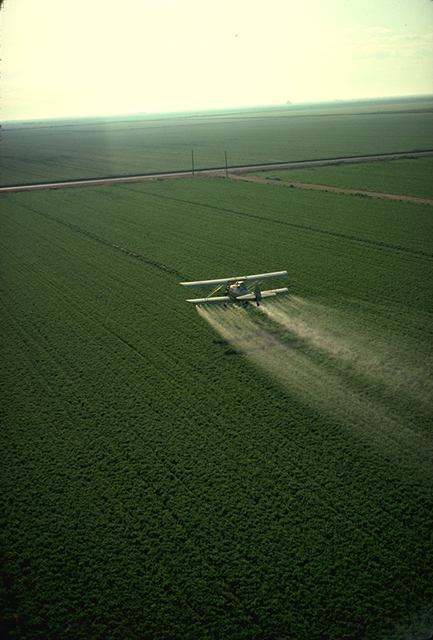
Organophosphate insecticide exposure: the classic source of the wet toxidrome. Tap to enlarge.
Sweating in the cholinergic toxidrome: sweat glands run on muscarinic receptors, so flooding ACh soaks the skin while the rest of the body sweats too.
Bone Wizardry is an independent educational resource for visual learning in the medical sciences. It is not affiliated with, endorsed by, or sponsored by any licensing or examination board, contains no real or recalled examination questions, and does not guarantee any educational or examination outcome. Teaching cases are rewritten for learning; confirm all management against current guidelines at the point of care.
 Bone WizardryMEDICAL EDUCATION