Lung cancers: tissue, physiology, and treatment decisions
Learn how lung-cancer histology, ectopic hormone secretion, and thoracic anatomy create classic board patterns; then stage and profile the tumor to choose treatment.
Central question: What is the tumor doing, what tissue is it, how far has it spread, and which finding actually changes management? A lung mass can obstruct an airway, injure a nearby structure, or produce a distant endocrine or neurological effect. Location and smoking history change probability, but neither replaces tissue confirmation.
Level map: Level 1 builds mechanism and pathology; Level 2 uses presentation, localization, diagnosis, staging, and initial management; Level 3 follows complications, recurrence, surveillance, and treatment toxicity; Beyond applies current labels, exact molecular settings, typical adult doses, and monitoring safeguards.
Does the location tell you the cell type?
Architecture outranks location. A patient who has never smoked has a peripheral nodule. Adenocarcinoma is a reasonable possibility, but the nodule could also be a metastasis, carcinoid, or benign lesion. The useful question is what the cells actually make: glands or mucin, keratin, or a neuroendocrine pattern. Compare the structures in the diagram before reading the names. [1][3]
Read architecture first, then grade. The drawings explain structures; they are not diagnostic micrographs.
Adenocarcinoma is the most common lung cancer overall and the most common type in people who have never smoked. It also occurs in smokers. It is often peripheral and forms glands or produces mucin. TTF-1 and napsin A frequently support pulmonary adenocarcinoma, but neither a negative TTF-1 stain nor a central location excludes it. These are tissue immunostains, not serum confirmation tests. [1][3]
Find the gland-like lumens surrounded by atypical epithelial cells. Acinar architecture supports glandular differentiation; the image does not establish a driver mutation. Chen CL and colleagues, via Wikimedia Commons; CC BY 4.0. Source image and full attribution.
Squamous cell carcinoma often involves a central airway and is strongly associated with smoking. Keratin pearls and intercellular bridges support squamous differentiation. p40 is generally more specific than p63 for this purpose. Necrosis can produce cavitation, but infection and inflammatory disease can also cavitate. Neither a cavity nor a smoking history is a tissue diagnosis. [1][3]
Small cell lung cancer is a high-grade neuroendocrine carcinoma, often central and strongly smoking-associated. Small cells have scant cytoplasm, inconspicuous nucleoli, nuclear molding, frequent mitoses, and often necrosis. Synaptophysin, chromogranin, and CD56 can support neuroendocrine differentiation, but morphology matters and individual stains can be negative. Rapid growth and early spread explain why systemic therapy is usually essential. This does not mean every patient already has distant metastases. [2][3]
Compare the small malignant cells with the larger benign mesothelial cells. Assess cytoplasm relative to nuclei rather than assuming every dark cell is malignant. Ed Uthman, via Wikimedia Commons; CC BY 2.0. Source image and full attribution; downloaded image retained without cropping or overlays.
Bronchial carcinoids are well-differentiated neuroendocrine tumors. Typical carcinoid is low grade; atypical carcinoid is intermediate grade. A vascular endobronchial lesion can cause focal wheezing, hemoptysis, and repeated pneumonia in the same lobe. Uniform cells with finely stippled chromatin and low mitotic activity contrast with high-grade small cell carcinoma. Neuroendocrine stains alone do not distinguish the two. Younger age and absent smoking exposure support, but do not establish, carcinoid. [2][3]
Large cell carcinoma is an exclusion diagnosis requiring adequate sampling of a resection without glandular, squamous, or neuroendocrine differentiation. A small core negative for lineage markers is usually reported as non-small cell carcinoma, not otherwise specified, rather than automatically called large cell. Large-cell neuroendocrine carcinoma is a different high-grade neuroendocrine tumor. A lack of differentiation does not prove a lack of actionable molecular alterations. [3][4]
Transfer question: Two tumors stain for synaptophysin. One has uniform cells and very few mitoses; the other has extensive necrosis and brisk mitotic activity. Which additional observation prevents you from treating them as the same disease?
Explanation: Grade and cell morphology distinguish a well-differentiated carcinoid from a high-grade neuroendocrine carcinoma. A shared marker is not shared behavior.
Try it here · Checkpoint 1 of 3
Make your prediction before reading the choices. A first attempt is just a starting point.
Case 8
Show answer and explanations for case 8
A. Definitive large cell carcinoma (Why this does not fit)
Large cell carcinoma requires adequate assessment to exclude specific differentiation elsewhere in the tumor, generally in a resection. A marker-negative small core cannot establish that whole-tumor exclusion diagnosis.
Reasoning steps for option A
What sampling is needed for a conventional large cell exclusion diagnosis? Apply that prediction to lung-cancers-08, option A: Definitive large cell carcinoma.
Large cell carcinoma requires adequate assessment to exclude specific differentiation elsewhere in the tumor, generally in a resection. For lung-cancers-08 option A, treat this as one mechanistic prediction and test it against the stem's tissue, anatomic, laboratory, and treatment clues.
For lung-cancers-08 option A, which supplied finding most strongly supports or refutes Definitive large cell carcinoma?
A marker-negative small core cannot establish that whole-tumor exclusion diagnosis. Thus, in lung-cancers-08 option A, accept the choice only when its predicted pattern fits the full vignette rather than a single familiar association.
B. Non-small cell carcinoma, not otherwise specified (Best answer)
The specimen establishes carcinoma but lacks sufficient morphology or lineage-marker support for a more specific subtype. Reporting NSCLC not otherwise specified preserves the sampling limitation and does not preclude further molecular testing.
Reasoning steps for option B
What has this small specimen established with reasonable confidence? Apply that prediction to lung-cancers-08, option B: Non-small cell carcinoma, not otherwise specified.
The specimen establishes carcinoma but lacks sufficient morphology or lineage-marker support for a more specific subtype. For lung-cancers-08 option B, treat this as one mechanistic prediction and test it against the stem's tissue, anatomic, laboratory, and treatment clues.
For lung-cancers-08 option B, which supplied finding most strongly supports or refutes Non-small cell carcinoma, not otherwise specified?
Reporting NSCLC not otherwise specified preserves the sampling limitation and does not preclude further molecular testing. Thus, in lung-cancers-08 option B, accept the choice only when its predicted pattern fits the full vignette rather than a single familiar association.
C. Adenocarcinoma established by cytokeratin positivity (Why this does not fit)
Cytokeratin supports epithelial differentiation but is not specific for adenocarcinoma. No glands, mucin, or convincing adenocarcinoma-lineage markers are supplied.
Reasoning steps for option C
What does cytokeratin positivity establish? Apply that prediction to lung-cancers-08, option C: Adenocarcinoma established by cytokeratin positivity.
Cytokeratin supports epithelial differentiation but is not specific for adenocarcinoma. For lung-cancers-08 option C, treat this as one mechanistic prediction and test it against the stem's tissue, anatomic, laboratory, and treatment clues.
For lung-cancers-08 option C, which supplied finding most strongly supports or refutes Adenocarcinoma established by cytokeratin positivity?
No glands, mucin, or convincing adenocarcinoma-lineage markers are supplied. Thus, in lung-cancers-08 option C, accept the choice only when its predicted pattern fits the full vignette rather than a single familiar association.
D. Squamous cell carcinoma established by TTF-1 negativity (Why this does not fit)
A negative TTF-1 stain does not establish squamous differentiation. The biopsy also lacks keratinization, intercellular bridges, and positive p40 support.
Reasoning steps for option D
Does a negative TTF-1 stain establish squamous differentiation? Apply that prediction to lung-cancers-08, option D: Squamous cell carcinoma established by TTF-1 negativity.
A negative TTF-1 stain does not establish squamous differentiation. For lung-cancers-08 option D, treat this as one mechanistic prediction and test it against the stem's tissue, anatomic, laboratory, and treatment clues.
For lung-cancers-08 option D, which supplied finding most strongly supports or refutes Squamous cell carcinoma established by TTF-1 negativity?
The biopsy also lacks keratinization, intercellular bridges, and positive p40 support. Thus, in lung-cancers-08 option D, accept the choice only when its predicted pattern fits the full vignette rather than a single familiar association.
E. Large-cell neuroendocrine carcinoma established by large cell size (Why this does not fit)
Cell size alone does not establish neuroendocrine differentiation. The specimen lacks the neuroendocrine morphology and supporting evidence needed for that specific high-grade category.
Reasoning steps for option E
Is large cell size sufficient to establish neuroendocrine differentiation? Apply that prediction to lung-cancers-08, option E: Large-cell neuroendocrine carcinoma established by large cell size.
Cell size alone does not establish neuroendocrine differentiation. For lung-cancers-08 option E, treat this as one mechanistic prediction and test it against the stem's tissue, anatomic, laboratory, and treatment clues.
For lung-cancers-08 option E, which supplied finding most strongly supports or refutes Large-cell neuroendocrine carcinoma established by large cell size?
The specimen lacks the neuroendocrine morphology and supporting evidence needed for that specific high-grade category. Thus, in lung-cancers-08 option E, accept the choice only when its predicted pattern fits the full vignette rather than a single familiar association.
Takeaway: Do not turn limited sampling and negative stains into a definitive large-cell diagnosis.
Read tonicity before naming the syndrome. Consider sodium 124 mmol/L (135-145), serum osmolality 259 mOsm/kg (275-295), and urine osmolality 510 mOsm/kg. The blood is dilute, but the kidney is not excreting appropriately dilute urine. In a clinically euvolemic patient with urine sodium above 30 mmol/L, normal renal, thyroid, and adrenal function, and no relevant diuretic use, this supports inappropriate antidiuresis. A central neuroendocrine lung tumor makes ectopic ADH an important cause, not the only possible cause. [2][5]
The amount of water changes relative to sodium. The model is qualitative, not a sodium calculator or treatment simulator.
Change the model: Predict what happens when ADH remains active despite dilute plasma. Open the selected condition to inspect the collecting duct and blood compartment. Close it to reset your comparison.
Keep ADH active despite dilute plasma
Persistent V2 signaling increases apical aquaporin-2. More water returns to the circulation; sodium concentration falls relative to retained water.Suppress ADH in response to dilute plasma
Lower collecting-duct water permeability permits water excretion. This is the expected response to hypotonic plasma, not the persistent-antidiuresis pattern.
Water retention is the mechanism. The worked result is water retention with inappropriately concentrated urine. Secondary sodium excretion helps explain why overt edema is usually absent. Severe neurological symptoms from hyponatremia require urgent monitored treatment; identifying a lung tumor does not justify waiting or rapidly normalizing sodium without safeguards. [5]
Now change the laboratory abnormality. High calcium with suppressed intact PTH suggests a PTH-independent process. Squamous carcinoma can secrete PTH-related peptide, which activates PTH receptors, increases calcium availability, and promotes renal phosphate loss. PTHrP is not measured as intact PTH. Bone metastases are not required, and a negative bone scan alone cannot exclude lytic skeletal disease. Calcitriol production and local bone destruction are alternative cancer-related mechanisms. [1][6]
Ectopic ACTH can cause high cortisol, hypertension, hyperglycemia, hypokalemia, and metabolic alkalosis. With severe cortisol excess, renal mineralocorticoid effects become important. A rapidly developing syndrome may lack the familiar facial or skin changes. High ACTH argues against an autonomous adrenal cortisol source, but failure to suppress with high-dose dexamethasone does not, by itself, prove a lung origin. Establish hypercortisolism and localize its source appropriately. [2][7]
Lambert-Eaton syndrome affects presynaptic P/Q-type calcium channels, reducing acetylcholine release. Proximal weakness, dry mouth, and reduced reflexes support it. Brief exercise may improve strength or electrical muscle responses as calcium accumulates in nerve terminals; clinical reflex facilitation is not universal. Myasthenia gravis is usually postsynaptic, with fatigability and generally preserved reflexes. Anti-Hu-associated sensory neuronopathy or encephalomyelitis is a different paraneoplastic neurological pattern, not an explanation for presynaptic facilitation. [22][2][8][9]
Rare pulmonary carcinomas can produce hCG and cause gynecomastia. A reported giant-cell carcinoma showed this effect, but a rare endocrine association must not be used to label every undifferentiated lung tumor as conventional large cell carcinoma. Evaluate the hormonal and pathological differential rather than treating hCG as a histology-specific stain. [24]
Transfer question: Sodium is low, but calcium is normal. Which mechanism directly explains the sodium value: ADH-mediated water retention or PTHrP?
Explanation: ADH changes water handling. PTHrP explains hypercalcemia with suppressed PTH, not this dilute-plasma/concentrated-urine pattern.
Try it here · Checkpoint 2 of 3
Make your prediction before reading the choices. A first attempt is just a starting point.
Case 4
Show answer and explanations for case 4
A. Rapid synthesis of new postsynaptic acetylcholine receptors (Why this does not fit)
Postsynaptic receptor abundance does not increase enough over a few seconds to explain this response. The antibody target and low resting electrical response instead identify impaired presynaptic transmitter release.
Reasoning steps for option A
Can postsynaptic receptor synthesis explain an immediate postexercise response? Apply that prediction to lung-cancers-04, option A: Rapid synthesis of new postsynaptic acetylcholine receptors.
Postsynaptic receptor abundance does not increase enough over a few seconds to explain this response. For lung-cancers-04 option A, treat this as one mechanistic prediction and test it against the stem's tissue, anatomic, laboratory, and treatment clues.
For lung-cancers-04 option A, which supplied finding most strongly supports or refutes Rapid synthesis of new postsynaptic acetylcholine receptors?
The antibody target and low resting electrical response instead identify impaired presynaptic transmitter release. Thus, in lung-cancers-04 option A, accept the choice only when its predicted pattern fits the full vignette rather than a single familiar association.
B. Calcium accumulation in presynaptic terminals increasing acetylcholine release (Best answer)
Repeated activity allows residual calcium to accumulate despite impaired calcium-channel function. This can increase acetylcholine release and temporarily augment the muscle response in Lambert-Eaton syndrome.
Reasoning steps for option B
What can repeated activity do to residual presynaptic calcium? Apply that prediction to lung-cancers-04, option B: Calcium accumulation in presynaptic terminals increasing acetylcholine release.
Repeated activity allows residual calcium to accumulate despite impaired calcium-channel function. For lung-cancers-04 option B, treat this as one mechanistic prediction and test it against the stem's tissue, anatomic, laboratory, and treatment clues.
For lung-cancers-04 option B, which supplied finding most strongly supports or refutes Calcium accumulation in presynaptic terminals increasing acetylcholine release?
This can increase acetylcholine release and temporarily augment the muscle response in Lambert-Eaton syndrome. Thus, in lung-cancers-04 option B, accept the choice only when its predicted pattern fits the full vignette rather than a single familiar association.
C. Immediate disappearance of circulating calcium-channel antibodies (Why this does not fit)
Antibody clearance cannot account for an improvement immediately after a brief contraction. The response reflects altered transmitter release while the underlying autoimmune defect remains.
Reasoning steps for option C
How quickly would antibodies have to disappear to explain this response? Apply that prediction to lung-cancers-04, option C: Immediate disappearance of circulating calcium-channel antibodies.
Antibody clearance cannot account for an improvement immediately after a brief contraction. For lung-cancers-04 option C, treat this as one mechanistic prediction and test it against the stem's tissue, anatomic, laboratory, and treatment clues.
For lung-cancers-04 option C, which supplied finding most strongly supports or refutes Immediate disappearance of circulating calcium-channel antibodies?
The response reflects altered transmitter release while the underlying autoimmune defect remains. Thus, in lung-cancers-04 option C, accept the choice only when its predicted pattern fits the full vignette rather than a single familiar association.
D. Acetylcholinesterase activation prolonging transmitter exposure (Why this does not fit)
Activating acetylcholinesterase would shorten, not prolong, acetylcholine action. It would not explain the observed increase in electrical muscle response after exercise.
Reasoning steps for option D
What does acetylcholinesterase activation do to transmitter exposure? Apply that prediction to lung-cancers-04, option D: Acetylcholinesterase activation prolonging transmitter exposure.
Activating acetylcholinesterase would shorten, not prolong, acetylcholine action. For lung-cancers-04 option D, treat this as one mechanistic prediction and test it against the stem's tissue, anatomic, laboratory, and treatment clues.
For lung-cancers-04 option D, which supplied finding most strongly supports or refutes Acetylcholinesterase activation prolonging transmitter exposure?
It would not explain the observed increase in electrical muscle response after exercise. Thus, in lung-cancers-04 option D, accept the choice only when its predicted pattern fits the full vignette rather than a single familiar association.
E. Restoration of myelin along a damaged peripheral nerve (Why this does not fit)
Remyelination does not occur within seconds. Preserved sensation, autonomic symptoms, P/Q-type antibodies, and postexercise augmentation instead localize the defect to the presynaptic neuromuscular junction.
Reasoning steps for option E
Can remyelination occur over a few seconds of contraction? Apply that prediction to lung-cancers-04, option E: Restoration of myelin along a damaged peripheral nerve.
Remyelination does not occur within seconds. For lung-cancers-04 option E, treat this as one mechanistic prediction and test it against the stem's tissue, anatomic, laboratory, and treatment clues.
For lung-cancers-04 option E, which supplied finding most strongly supports or refutes Restoration of myelin along a damaged peripheral nerve?
Preserved sensation, autonomic symptoms, P/Q-type antibodies, and postexercise augmentation instead localize the defect to the presynaptic neuromuscular junction. Thus, in lung-cancers-04 option E, accept the choice only when its predicted pattern fits the full vignette rather than a single familiar association.
Takeaway: Postexercise augmentation in Lambert-Eaton syndrome reflects improved release from a presynaptic terminal, not rapid repair of muscle or nerve.
Localize before naming a histology. Shoulder pain, weakness of intrinsic hand muscles, and ipsilateral ptosis and miosis should make you localize before naming a cancer. An apical superior sulcus tumor can affect the lower brachial plexus and the preganglionic sympathetic pathway. This is Pancoast syndrome, an anatomical presentation that several histologies can cause. An apical mass does not establish squamous carcinoma. [1]
Different neighboring structures produce different symptom distributions. This schematic is not a surgical map and is not to scale.
The symptom distribution identifies the structures. Lower plexus involvement, especially C8-T1 contributions, explains ulnar-sided arm or hand symptoms and intrinsic hand weakness. Interruption of the sympathetic pathway near the apex or stellate ganglion can produce Horner syndrome: ptosis, miosis, and sometimes prominent ipsilateral facial anhidrosis. The sympathetic route descends from the hypothalamus to the lower cervical/upper thoracic cord, then ascends to the superior cervical ganglion before reaching the eye.
Subclavian venous compression can add unilateral arm swelling. Rib or vertebral destruction reflects local invasion. Resectability requires complete anatomical and nodal staging, not symptoms alone. Selected superior sulcus cancers receive induction chemoradiation followed by surgery. [1]
Superior vena cava obstruction instead impairs drainage from the head, neck, and upper limbs. Facial swelling, distended superficial veins, arm swelling, and headache can worsen when supine or bending forward. A stable patient needs imaging and a tissue diagnosis to guide tumor-specific therapy. Severe airway compromise or neurological deterioration requires urgent stabilization and specialist assessment for rapid decompression, often endovascular stenting, rather than waiting for radiation to shrink a tumor. Stents have procedural risks and are not an automatic treatment for every radiographic narrowing. [1][20]
Left vocal fold paralysis with an aortopulmonary-window lesion suggests the left recurrent laryngeal nerve, which loops under the aortic arch. Phrenic injury instead impairs the diaphragm. The right recurrent laryngeal nerve loops under the right subclavian artery, so the side and level matter; it is not immune to thoracic inlet disease. [1]
Transfer question: An apical mass causes hand weakness and Horner findings, but no facial swelling. Is the best explanation venous obstruction or combined peripheral neural involvement?
Explanation: The lower brachial plexus plus the sympathetic pathway explain this distribution. Head and neck venous congestion would support SVC obstruction instead.
What can a scan or bedside pattern actually establish?
Imaging narrows probability. A peripheral nodule is a location, not a histological name. Fat and characteristic coarse popcorn calcification favor hamartoma; ground-glass attenuation can occur with inflammation or adenocarcinoma-spectrum lesions. A cavity can reflect tumor necrosis, abscess, tuberculosis, or granulomatosis with polyangiitis. Use the pattern to choose the next evaluation, not to skip confirmation. [21][1][4]
Lepidic growth means neoplastic cells lining pre-existing alveolar walls. It does not prove absence of invasion elsewhere. Adenocarcinoma in situ requires an adequately assessed tumor no larger than 3 cm with pure lepidic growth and no invasion. Minimally invasive adenocarcinoma is no larger than 3 cm, is lepidic predominant, and has an invasive component no greater than 5 mm, without exclusion features such as vascular or pleural invasion or tumor necrosis.
The retired term bronchioloalveolar carcinoma is not a synonym for every current in situ lesion. Do not infer an in situ diagnosis from ground-glass CT or a limited biopsy alone. [4]
Carcinoid syndrome causes episodic flushing, secretory diarrhea, and sometimes bronchospasm. Urinary 5-HIAA supports serotonin excess, with attention to collection conditions, diet, and interfering medications. Most patients with carcinoid syndrome have liver metastases, but a functioning bronchial primary can release mediators into systemic drainage without them. Right-sided valve fibrosis is typical overall; a functioning lung tumor can also cause left-sided involvement. Localized bronchial carcinoid is usually treated surgically; somatostatin analogs such as octreotide can help control hormone symptoms. Not every bronchial carcinoid produces the syndrome. [10]
Clubbing with painful periosteal new bone formation suggests hypertrophic osteoarthropathy, associated with lung cancers including adenocarcinoma. It is not proof of bone metastases or of one cell type. [23] Migratory superficial thrombophlebitis is a different malignancy-associated process, reflecting hypercoagulability rather than excess ADH or PTHrP. [1]
Pleural mesothelioma belongs in the differential when a long-latency asbestos exposure accompanies pleural thickening, effusion, or a rind-like pleural process. It arises from mesothelial tissue, not bronchial epithelium. Asbestos also increases lung carcinoma risk. Smoking and asbestos interact strongly for lung carcinoma, whereas smoking does not have the same established interaction for mesothelioma. Iron-coated asbestos fibers can be found in exposed lung tissue; exposure history alone does not diagnose the malignancy. [11]
Transfer question: A functioning bronchial carcinoid causes flushing and diarrhea, but liver imaging is normal. Does that contradict the diagnosis?
Explanation: No. The bronchial primary can release mediators outside portal first-pass clearance. The physiology depends on venous drainage, not a universal requirement for hepatic metastases.
Is the problem local, regional, or metastatic?
Extent is a separate axis. For non-small cell lung cancer, T describes the primary tumor, N regional nodes, and M metastatic spread. Ipsilateral hilar or peribronchial nodes are N1; ipsilateral mediastinal or subcarinal disease is N2; contralateral mediastinal/hilar or scalene/supraclavicular nodal disease is N3. Do not equate one nodal category with one complete stage group. A proven malignant pleural effusion is metastatic disease even when the primary nodule is small. Exact stage grouping requires the applicable current TNM edition and all three categories. [1]
A driver mutation does not erase stage. The map shows treatment categories, not a complete prescribing guideline.
Local disease can support local cure. Operable early-stage NSCLC is commonly approached with resection and nodal assessment. Adjuvant systemic therapy depends on stage, pathological risk, biomarkers, and fitness; it is not identical for every stage I or II tumor. Medically inoperable localized disease may be treated with stereotactic body radiation. Selected regional disease requires multimodality planning rather than an automatic surgery-versus-no-surgery shortcut. [1]
Small cell cancer uses both TNM and limited/extensive terminology. Limited disease can be encompassed within a tolerable thoracic radiation field; nodal geometry matters. Extensive disease includes distant metastases and malignant pleural effusion. Brain, liver, adrenal, and bone assessment can alter treatment scope. A routine chest image alone cannot establish limited stage. [2][12]
Limited-stage SCLC is usually multimodal. Fit patients with typical limited-stage SCLC usually receive concurrent platinum-etoposide and thoracic radiation. Durvalumab is an option after concurrent platinum chemoradiation when disease has not progressed. A narrow exception permits surgery within multimodal care for carefully staged cT1-2N0M0 disease, followed by chemotherapy; pathological mediastinal assessment is essential. Thus, neither surgery alone nor the statement that SCLC can never be operated on is a useful rule. [12][14]
Extensive-stage SCLC requires systemic therapy. Extensive-stage SCLC is usually treated with platinum-etoposide plus atezolizumab or durvalumab when eligible. Radiation can still treat selected thoracic disease or symptoms. Prophylactic cranial irradiation is a separate prevention decision, not treatment of an established brain metastasis. Response, stage, cognition, age, preferences, and the feasibility of scheduled brain MRI surveillance affect the choice. A negative MRI is not, by itself, a universal answer for or against PCI. [2][12][13]
Maintenance and relapse are different settings. As of the cited FDA indications, lurbinectedin plus atezolizumab is a maintenance option after nonprogressing atezolizumab-carboplatin-etoposide induction; tarlatamab is an option after progression on or after platinum therapy. Maintenance and treatment of relapse are different settings. Historical survival medians should not be presented as an individual patient's fixed prognosis. [18][19]
Transfer question: A small primary tumor has malignant cells in pleural fluid. Should its small diameter keep the treatment discussion limited to surgery?
Explanation: No. Proven malignant pleural involvement establishes metastatic extent and changes the treatment category.
Which molecular result changes the treatment category?
Profile before choosing first-line systemic therapy. Before first-line systemic therapy for advanced NSCLC, obtain appropriate molecular profiling and PD-L1 assessment, interpreted with histology and clinical status. Adenocarcinoma frequently makes this relevant, but smoking history is not a substitute for testing. An actionable driver can determine initial therapy even when PD-L1 expression is high. [1]
Common sensitizing EGFR exon 19 deletions or exon 21 L858R can support an osimertinib-based approach in advanced disease. Osimertinib alone is not the only available first-line strategy; combination treatment with platinum-pemetrexed is also an option in an appropriate patient. An exon 20 insertion is not interchangeable with those variants, and T790M is a distinct resistance-associated substitution. Name the exact alteration and treatment setting rather than treating every EGFR result alike. [1][16]
ALK and ROS1 rearrangements require their own matching agents. Crizotinib has activity against ALK and ROS1, but is not a universal preferred first-line choice for every rearranged tumor; newer agents and central nervous system activity matter. KRAS G12C has targeted options such as sotorasib in defined previously treated advanced disease. That does not make every KRAS variant responsive or make a KRAS drug automatically the first treatment. [1][17]
PD-L1 is interpreted after driver testing. Without an actionable first-line driver, PD-L1 and histology help guide immunotherapy-based treatment. Selected patients with high PD-L1 may receive pembrolizumab alone. Lower or absent PD-L1 does not mean immunotherapy cannot help: chemotherapy-immunotherapy combinations are commonly used when appropriate. Pemetrexed-based combinations fit nonsquamous histology; squamous regimens use different chemotherapy partners. [1]
Stage still comes first. An operable localized EGFR-mutant tumor is not automatically treated like metastatic disease. In unresectable stage III NSCLC without progression after platinum chemoradiation, consolidation also depends on biomarkers: durvalumab is an established option in suitable patients, while osimertinib has a specific indication for EGFR exon 19 deletion or exon 21 L858R after concurrent or sequential chemoradiation. Treatment selection remains individualized; this lesson explains categories rather than replacing current oncology prescribing guidance. [1][15]
Transfer question: Two tumors have the same EGFR exon 19 deletion. One is operable and localized; the other has multiple liver metastases. Does the shared mutation make their initial treatment plans identical?
Explanation: No. Stage determines whether local curative treatment is feasible. The driver then informs appropriate systemic components within that setting.
Try it here · Checkpoint 3 of 3
Make your prediction before reading the choices. A first attempt is just a starting point.
Case 27
Show answer and explanations for case 27
A. Pembrolizumab monotherapy (Why this does not fit)
High PD-L1 can support immunotherapy alone in an appropriate driver-negative setting. It does not override a sensitizing EGFR alteration that directs the initial treatment strategy here.
Reasoning steps for option A
In what setting can high PD-L1 support pembrolizumab alone? Apply that prediction to lung-cancers-27, option A: Pembrolizumab monotherapy.
High PD-L1 can support immunotherapy alone in an appropriate driver-negative setting. For lung-cancers-27 option A, treat this as one mechanistic prediction and test it against the stem's tissue, anatomic, laboratory, and treatment clues.
For lung-cancers-27 option A, which supplied finding most strongly supports or refutes Pembrolizumab monotherapy?
It does not override a sensitizing EGFR alteration that directs the initial treatment strategy here. Thus, in lung-cancers-27 option A, accept the choice only when its predicted pattern fits the full vignette rather than a single familiar association.
B. An appropriate osimertinib-based EGFR-directed strategy (Best answer)
A common sensitizing EGFR alteration directs the first-line systemic approach despite high PD-L1. Osimertinib-based options include monotherapy or an appropriate combination; the question does not require treating one regimen as universally best for every patient.
Reasoning steps for option B
Which alteration directs an EGFR-based initial strategy? Apply that prediction to lung-cancers-27, option B: An appropriate osimertinib-based EGFR-directed strategy.
A common sensitizing EGFR alteration directs the first-line systemic approach despite high PD-L1. For lung-cancers-27 option B, treat this as one mechanistic prediction and test it against the stem's tissue, anatomic, laboratory, and treatment clues.
For lung-cancers-27 option B, which supplied finding most strongly supports or refutes An appropriate osimertinib-based EGFR-directed strategy?
Osimertinib-based options include monotherapy or an appropriate combination; the question does not require treating one regimen as universally best for every patient. Thus, in lung-cancers-27 option B, accept the choice only when its predicted pattern fits the full vignette rather than a single familiar association.
C. Crizotinib (Why this does not fit)
Crizotinib has activity against targets such as ALK and ROS1. Kinase inhibitors are not interchangeable, and it does not appropriately match the supplied EGFR exon 19 deletion.
Reasoning steps for option C
Are drugs directed at different kinases interchangeable? Apply that prediction to lung-cancers-27, option C: Crizotinib.
Crizotinib has activity against targets such as ALK and ROS1. For lung-cancers-27 option C, treat this as one mechanistic prediction and test it against the stem's tissue, anatomic, laboratory, and treatment clues.
For lung-cancers-27 option C, which supplied finding most strongly supports or refutes Crizotinib?
Kinase inhibitors are not interchangeable, and it does not appropriately match the supplied EGFR exon 19 deletion. Thus, in lung-cancers-27 option C, accept the choice only when its predicted pattern fits the full vignette rather than a single familiar association.
D. Platinum-pemetrexed alone (Why this does not fit)
Platinum-pemetrexed has a role in nonsquamous NSCLC and can be part of an EGFR-directed combination. Ignoring the actionable EGFR result in favor of chemotherapy alone is not the best initial strategy under these conditions.
Reasoning steps for option D
Can platinum-pemetrexed be part of an EGFR-directed treatment combination? Apply that prediction to lung-cancers-27, option D: Platinum-pemetrexed alone.
Platinum-pemetrexed has a role in nonsquamous NSCLC and can be part of an EGFR-directed combination. For lung-cancers-27 option D, treat this as one mechanistic prediction and test it against the stem's tissue, anatomic, laboratory, and treatment clues.
For lung-cancers-27 option D, which supplied finding most strongly supports or refutes Platinum-pemetrexed alone?
Ignoring the actionable EGFR result in favor of chemotherapy alone is not the best initial strategy under these conditions. Thus, in lung-cancers-27 option D, accept the choice only when its predicted pattern fits the full vignette rather than a single familiar association.
E. Nivolumab-ipilimumab (Why this does not fit)
Dual checkpoint blockade is used in selected advanced NSCLC settings. Metastatic extent alone does not justify bypassing a sensitizing EGFR result that changes first-line therapy.
Reasoning steps for option E
Does metastatic extent alone determine which immunotherapy regimen to use? Apply that prediction to lung-cancers-27, option E: Nivolumab-ipilimumab.
Dual checkpoint blockade is used in selected advanced NSCLC settings. For lung-cancers-27 option E, treat this as one mechanistic prediction and test it against the stem's tissue, anatomic, laboratory, and treatment clues.
For lung-cancers-27 option E, which supplied finding most strongly supports or refutes Nivolumab-ipilimumab?
Metastatic extent alone does not justify bypassing a sensitizing EGFR result that changes first-line therapy. Thus, in lung-cancers-27 option E, accept the choice only when its predicted pattern fits the full vignette rather than a single familiar association.
Takeaway: A high PD-L1 result does not cancel a sensitizing EGFR driver; integrate biomarkers rather than using the highest number in isolation.
Surveillance is a planned diagnostic process. After definitive curative-intent therapy, guideline-based surveillance uses chest CT every 6 months for 2 years and then annually to detect a new primary lung cancer. New focal pain, neurological symptoms, weight loss, hemoptysis, or a changing respiratory pattern should prompt diagnostic evaluation rather than waiting for the next scheduled scan. Routine surveillance is not the same as low-dose CT screening for an asymptomatic person who has never had lung cancer. [25][26]
Monitor by the mechanism of treatment. An EGFR tyrosine kinase inhibitor requires attention to new pulmonary symptoms, gastrointestinal and skin toxicity, drug interactions, and selected cardiac risks. A checkpoint inhibitor requires rapid evaluation of possible immune-mediated pneumonitis, hepatitis, colitis, endocrinopathy, nephritis, myocarditis, myositis, or neurological toxicity. Platinum and other cytotoxic regimens require setting-specific review of blood counts, renal function, hearing, neuropathy, and other expected organ effects. Imaging response never replaces a toxicity history and examination. [32][28]
Recurrence is not one treatment category. First determine whether the change is local, oligoprogressive, or widespread; whether the original target remains present; and whether a new biopsy or plasma assay could reveal a resistance mechanism or a second primary. A single growing site may permit local therapy while an otherwise effective systemic regimen continues, whereas broad progression usually requires a new systemic plan. This is a multidisciplinary decision, not a rule inferred from one scan. [1]
Prevention continues after diagnosis. Tobacco cessation remains relevant at every stage, and occupational or residential carcinogen exposure should still be addressed. Low-dose CT screening reduces lung-cancer mortality in selected high-risk asymptomatic people, but symptoms require diagnostic imaging and a cancer survivor follows a surveillance plan instead of re-entering a generic screening pathway. [26][31]
Transfer question: A patient is 18 months from curative-intent therapy and develops new unilateral bone pain between scheduled visits. Should the next action be routine annual screening or diagnostic evaluation of a possible recurrence?
Explanation: A new focal symptom changes the purpose of imaging. Surveillance timing does not delay a symptom-directed diagnostic workup.
How do current labels change the plan?
Name the alteration, setting, and treatment line. A drug associated with one gene is not interchangeable across every variant or every line of therapy. For example, the 2026 zidesamtinib indication is for locally advanced or metastatic ROS1-positive NSCLC after at least one prior ROS1 tyrosine kinase inhibitor. That setting is different from initial treatment of a newly diagnosed ROS1-positive tumor. [30]
A dose is only one part of a treatment plan. Match indication, schedule, organ monitoring, and early toxicity recognition before treatment continues.
Typical adult doses are setting-specific examples. Osimertinib is commonly 80 mg by mouth once daily for an indicated EGFR-mutant NSCLC setting. For limited-stage SCLC after concurrent chemoradiation, durvalumab is 1,500 mg intravenously every 4 weeks for adults weighing at least 30 kg, until progression, unacceptable toxicity, or a maximum of 24 months. Lurbinectedin is 3.2 mg/m2 intravenously over 60 minutes every 21 days in its labeled single-agent and atezolizumab-maintenance settings. These examples do not replace a current label, pharmacy verification, organ-function review, or dose modification. [32][27][28]
Some schedules are built around toxicity prevention. The September 2026 tarlatamab label uses 1 mg on cycle 1 day 1, then 10 mg on days 8 and 15, followed by 10 mg every 2 weeks. The first two doses require defined observation because cytokine release syndrome and neurological toxicity can be life-threatening. Lurbinectedin requires baseline and serial blood-count and liver monitoring, and combination maintenance includes growth-factor prophylaxis. The schedule and the safeguard belong together. [27][29]
Current evidence must be rechecked at the point of care. Lung-cancer approvals change quickly, and a new approval may apply only after a particular prior therapy, only to one molecular variant, or only to one stage. Use this lesson to organize the decision, then verify the current prescribing information and multidisciplinary plan before treatment. [27][28][29][30]
Transfer question: Two patients have ROS1-positive NSCLC, but one is treatment-naive and the other progressed after a ROS1 inhibitor. Does the shared alteration make every labeled targeted option appropriate for both?
Explanation: No. The exact alteration is necessary but not sufficient. Stage, prior therapy, line of treatment, organ function, and the current label define the usable option.
Apply the lesson
Case 1
Show answer and explanations for case 1
A. Reduced sodium-potassium-chloride transport in the thick ascending limb (Why this does not fit)
Loop transport inhibition weakens the medullary concentrating gradient and promotes salt and water excretion. It does not explain persistent antidiuresis with concentrated urine in this euvolemic patient.
Reasoning steps for option A
What does reduced loop sodium transport do to the concentrating gradient? Apply that prediction to lung-cancers-01, option A: Reduced sodium-potassium-chloride transport in the thick ascending limb.
Loop transport inhibition weakens the medullary concentrating gradient and promotes salt and water excretion. For lung-cancers-01 option A, treat this as one mechanistic prediction and test it against the stem's tissue, anatomic, laboratory, and treatment clues.
For lung-cancers-01 option A, which supplied finding most strongly supports or refutes Reduced sodium-potassium-chloride transport in the thick ascending limb?
It does not explain persistent antidiuresis with concentrated urine in this euvolemic patient. Thus, in lung-cancers-01 option A, accept the choice only when its predicted pattern fits the full vignette rather than a single familiar association.
B. Reduced aquaporin-2 insertion in collecting-duct principal cells (Why this does not fit)
Reducing apical aquaporin-2 permits greater water excretion and more dilute urine. That is the expected response to hypotonic blood, but this patient's urine remains inappropriately concentrated.
Reasoning steps for option B
What happens to water excretion when fewer apical water channels are present? Apply that prediction to lung-cancers-01, option B: Reduced aquaporin-2 insertion in collecting-duct principal cells.
Reducing apical aquaporin-2 permits greater water excretion and more dilute urine. For lung-cancers-01 option B, treat this as one mechanistic prediction and test it against the stem's tissue, anatomic, laboratory, and treatment clues.
For lung-cancers-01 option B, which supplied finding most strongly supports or refutes Reduced aquaporin-2 insertion in collecting-duct principal cells?
That is the expected response to hypotonic blood, but this patient's urine remains inappropriately concentrated. Thus, in lung-cancers-01 option B, accept the choice only when its predicted pattern fits the full vignette rather than a single familiar association.
C. Increased aquaporin-2 insertion in collecting-duct principal cells (Best answer)
Ectopic ADH can maintain V2-receptor signaling despite hypotonic plasma, increasing apical aquaporin-2 and water reabsorption. Retained water dilutes plasma sodium while the urine remains concentrated; the exclusion of renal, thyroid, adrenal, and diuretic causes supports inappropriate antidiuresis.
Reasoning steps for option C
How does persistent V2 signaling affect apical aquaporin-2? Apply that prediction to lung-cancers-01, option C: Increased aquaporin-2 insertion in collecting-duct principal cells.
Ectopic ADH can maintain V2-receptor signaling despite hypotonic plasma, increasing apical aquaporin-2 and water reabsorption. For lung-cancers-01 option C, treat this as one mechanistic prediction and test it against the stem's tissue, anatomic, laboratory, and treatment clues.
For lung-cancers-01 option C, which supplied finding most strongly supports or refutes Increased aquaporin-2 insertion in collecting-duct principal cells?
Retained water dilutes plasma sodium while the urine remains concentrated; the exclusion of renal, thyroid, adrenal, and diuretic causes supports inappropriate antidiuresis. Thus, in lung-cancers-01 option C, accept the choice only when its predicted pattern fits the full vignette rather than a single familiar association.
D. Increased proximal tubular bicarbonate secretion (Why this does not fit)
Loss of bicarbonate primarily causes a normal-anion-gap metabolic acidosis. It does not account for the paired hypotonic plasma and concentrated urine that identify the water-handling problem here.
Reasoning steps for option D
What acid-base effect would proximal bicarbonate loss produce? Apply that prediction to lung-cancers-01, option D: Increased proximal tubular bicarbonate secretion.
Loss of bicarbonate primarily causes a normal-anion-gap metabolic acidosis. For lung-cancers-01 option D, treat this as one mechanistic prediction and test it against the stem's tissue, anatomic, laboratory, and treatment clues.
For lung-cancers-01 option D, which supplied finding most strongly supports or refutes Increased proximal tubular bicarbonate secretion?
It does not account for the paired hypotonic plasma and concentrated urine that identify the water-handling problem here. Thus, in lung-cancers-01 option D, accept the choice only when its predicted pattern fits the full vignette rather than a single familiar association.
E. Reduced aldosterone-dependent distal sodium reabsorption (Why this does not fit)
Mineralocorticoid deficiency can cause sodium loss with hypotension and hyperkalemia. Normal adrenal function, clinical euvolemia, and the supplied urine pattern instead support ADH-mediated water retention.
Reasoning steps for option E
What pattern can mineralocorticoid deficiency produce? Apply that prediction to lung-cancers-01, option E: Reduced aldosterone-dependent distal sodium reabsorption.
Mineralocorticoid deficiency can cause sodium loss with hypotension and hyperkalemia. For lung-cancers-01 option E, treat this as one mechanistic prediction and test it against the stem's tissue, anatomic, laboratory, and treatment clues.
For lung-cancers-01 option E, which supplied finding most strongly supports or refutes Reduced aldosterone-dependent distal sodium reabsorption?
Normal adrenal function, clinical euvolemia, and the supplied urine pattern instead support ADH-mediated water retention. Thus, in lung-cancers-01 option E, accept the choice only when its predicted pattern fits the full vignette rather than a single familiar association.
Takeaway: Interpret plasma and urine together: dilute blood with persistently concentrated urine can reflect inappropriate ADH-mediated water retention.
A. Tumor production of PTH-related peptide (Best answer)
Squamous carcinoma can produce PTHrP, which activates PTH receptors and promotes hypercalcemia with renal phosphate loss. High calcium suppresses endogenous intact PTH, so the low measured PTH does not contradict PTH-like biological effects.
Reasoning steps for option A
How can PTHrP have PTH-like effects when intact PTH is suppressed? Apply that prediction to lung-cancers-02, option A: Tumor production of PTH-related peptide.
Squamous carcinoma can produce PTHrP, which activates PTH receptors and promotes hypercalcemia with renal phosphate loss. For lung-cancers-02 option A, treat this as one mechanistic prediction and test it against the stem's tissue, anatomic, laboratory, and treatment clues.
For lung-cancers-02 option A, which supplied finding most strongly supports or refutes Tumor production of PTH-related peptide?
High calcium suppresses endogenous intact PTH, so the low measured PTH does not contradict PTH-like biological effects. Thus, in lung-cancers-02 option A, accept the choice only when its predicted pattern fits the full vignette rather than a single familiar association.
B. Autonomous secretion of intact PTH from a parathyroid adenoma (Why this does not fit)
Primary hyperparathyroidism can produce high calcium and low phosphate. Its PTH would be high or inappropriately normal rather than suppressed to 5 pg/mL during substantial hypercalcemia.
Reasoning steps for option B
How should intact PTH behave in primary hyperparathyroidism? Apply that prediction to lung-cancers-02, option B: Autonomous secretion of intact PTH from a parathyroid adenoma.
Primary hyperparathyroidism can produce high calcium and low phosphate. For lung-cancers-02 option B, treat this as one mechanistic prediction and test it against the stem's tissue, anatomic, laboratory, and treatment clues.
For lung-cancers-02 option B, which supplied finding most strongly supports or refutes Autonomous secretion of intact PTH from a parathyroid adenoma?
Its PTH would be high or inappropriately normal rather than suppressed to 5 pg/mL during substantial hypercalcemia. Thus, in lung-cancers-02 option B, accept the choice only when its predicted pattern fits the full vignette rather than a single familiar association.
C. Excess renal activation of vitamin D driven by PTH (Why this does not fit)
PTH stimulates renal calcitriol production, but measured PTH is suppressed here. The squamous phenotype and phosphate loss better support humoral PTHrP signaling than a PTH-driven process.
Reasoning steps for option C
What normally stimulates renal calcitriol production? Apply that prediction to lung-cancers-02, option C: Excess renal activation of vitamin D driven by PTH.
PTH stimulates renal calcitriol production, but measured PTH is suppressed here. For lung-cancers-02 option C, treat this as one mechanistic prediction and test it against the stem's tissue, anatomic, laboratory, and treatment clues.
For lung-cancers-02 option C, which supplied finding most strongly supports or refutes Excess renal activation of vitamin D driven by PTH?
The squamous phenotype and phosphate loss better support humoral PTHrP signaling than a PTH-driven process. Thus, in lung-cancers-02 option C, accept the choice only when its predicted pattern fits the full vignette rather than a single familiar association.
D. Ectopic antidiuretic hormone secretion (Why this does not fit)
ADH primarily changes collecting-duct water permeability and can cause hypotonic hyponatremia. It does not explain this hypercalcemia, low phosphate, and suppressed intact PTH.
Reasoning steps for option D
Which variable does excess ADH primarily change? Apply that prediction to lung-cancers-02, option D: Ectopic antidiuretic hormone secretion.
ADH primarily changes collecting-duct water permeability and can cause hypotonic hyponatremia. For lung-cancers-02 option D, treat this as one mechanistic prediction and test it against the stem's tissue, anatomic, laboratory, and treatment clues.
For lung-cancers-02 option D, which supplied finding most strongly supports or refutes Ectopic antidiuretic hormone secretion?
It does not explain this hypercalcemia, low phosphate, and suppressed intact PTH. Thus, in lung-cancers-02 option D, accept the choice only when its predicted pattern fits the full vignette rather than a single familiar association.
E. Reduced calcium excretion caused by advanced renal failure (Why this does not fit)
Advanced renal failure changes mineral handling and often raises phosphate and PTH. Normal renal function with low phosphate and suppressed PTH contradicts that explanation.
Reasoning steps for option E
What mineral pattern often accompanies advanced renal failure? Apply that prediction to lung-cancers-02, option E: Reduced calcium excretion caused by advanced renal failure.
Advanced renal failure changes mineral handling and often raises phosphate and PTH. For lung-cancers-02 option E, treat this as one mechanistic prediction and test it against the stem's tissue, anatomic, laboratory, and treatment clues.
For lung-cancers-02 option E, which supplied finding most strongly supports or refutes Reduced calcium excretion caused by advanced renal failure?
Normal renal function with low phosphate and suppressed PTH contradicts that explanation. Thus, in lung-cancers-02 option E, accept the choice only when its predicted pattern fits the full vignette rather than a single familiar association.
Takeaway: PTHrP can produce PTH-like effects while intact PTH is appropriately suppressed; bone metastases are not required.
A. Loss of adrenal mineralocorticoid synthesis (Why this does not fit)
Mineralocorticoid deficiency usually impairs potassium and acid excretion, causing hyperkalemia and metabolic acidosis. This patient's hypertension, low potassium, and alkalosis point in the opposite direction.
Reasoning steps for option A
How does deficient mineralocorticoid activity affect potassium and acid excretion? Apply that prediction to lung-cancers-03, option A: Loss of adrenal mineralocorticoid synthesis.
Mineralocorticoid deficiency usually impairs potassium and acid excretion, causing hyperkalemia and metabolic acidosis. For lung-cancers-03 option A, treat this as one mechanistic prediction and test it against the stem's tissue, anatomic, laboratory, and treatment clues.
For lung-cancers-03 option A, which supplied finding most strongly supports or refutes Loss of adrenal mineralocorticoid synthesis?
This patient's hypertension, low potassium, and alkalosis point in the opposite direction. Thus, in lung-cancers-03 option A, accept the choice only when its predicted pattern fits the full vignette rather than a single familiar association.
B. Excess insulin shifting potassium into cells as the sole disorder (Why this does not fit)
Insulin can transiently lower serum potassium through cellular uptake. It does not explain the combined severe hypercortisolism, hypertension, and sustained metabolic alkalosis.
Reasoning steps for option B
What can insulin do to the measured potassium concentration? Apply that prediction to lung-cancers-03, option B: Excess insulin shifting potassium into cells as the sole disorder.
Insulin can transiently lower serum potassium through cellular uptake. For lung-cancers-03 option B, treat this as one mechanistic prediction and test it against the stem's tissue, anatomic, laboratory, and treatment clues.
For lung-cancers-03 option B, which supplied finding most strongly supports or refutes Excess insulin shifting potassium into cells as the sole disorder?
It does not explain the combined severe hypercortisolism, hypertension, and sustained metabolic alkalosis. Thus, in lung-cancers-03 option B, accept the choice only when its predicted pattern fits the full vignette rather than a single familiar association.
C. Failure of renal ammonium generation (Why this does not fit)
Impaired ammonium excretion reduces renal acid elimination and tends to cause metabolic acidosis. The bicarbonate is high rather than low, so that mechanism does not fit.
Reasoning steps for option C
How does impaired ammonium excretion affect acid balance? Apply that prediction to lung-cancers-03, option C: Failure of renal ammonium generation.
Impaired ammonium excretion reduces renal acid elimination and tends to cause metabolic acidosis. For lung-cancers-03 option C, treat this as one mechanistic prediction and test it against the stem's tissue, anatomic, laboratory, and treatment clues.
For lung-cancers-03 option C, which supplied finding most strongly supports or refutes Failure of renal ammonium generation?
The bicarbonate is high rather than low, so that mechanism does not fit. Thus, in lung-cancers-03 option C, accept the choice only when its predicted pattern fits the full vignette rather than a single familiar association.
D. Primary adrenal cortisol production suppressing ACTH (Why this does not fit)
An autonomous adrenal cortisol-producing tumor would usually suppress ACTH. The supplied high ACTH establishes an ACTH-dependent pattern, although additional work is needed to prove its source.
Reasoning steps for option D
What happens to ACTH in autonomous adrenal cortisol production? Apply that prediction to lung-cancers-03, option D: Primary adrenal cortisol production suppressing ACTH.
An autonomous adrenal cortisol-producing tumor would usually suppress ACTH. For lung-cancers-03 option D, treat this as one mechanistic prediction and test it against the stem's tissue, anatomic, laboratory, and treatment clues.
For lung-cancers-03 option D, which supplied finding most strongly supports or refutes Primary adrenal cortisol production suppressing ACTH?
The supplied high ACTH establishes an ACTH-dependent pattern, although additional work is needed to prove its source. Thus, in lung-cancers-03 option D, accept the choice only when its predicted pattern fits the full vignette rather than a single familiar association.
E. Severe cortisol excess producing renal mineralocorticoid effects (Best answer)
Marked cortisol excess can overwhelm renal protection of mineralocorticoid receptors, promoting sodium retention and potassium and hydrogen ion loss. Rapid ectopic ACTH syndromes may present with this metabolic pattern before classic changes in body appearance develop.
Reasoning steps for option E
How can severe cortisol excess affect renal mineralocorticoid receptors? Apply that prediction to lung-cancers-03, option E: Severe cortisol excess producing renal mineralocorticoid effects.
Marked cortisol excess can overwhelm renal protection of mineralocorticoid receptors, promoting sodium retention and potassium and hydrogen ion loss. For lung-cancers-03 option E, treat this as one mechanistic prediction and test it against the stem's tissue, anatomic, laboratory, and treatment clues.
For lung-cancers-03 option E, which supplied finding most strongly supports or refutes Severe cortisol excess producing renal mineralocorticoid effects?
Rapid ectopic ACTH syndromes may present with this metabolic pattern before classic changes in body appearance develop. Thus, in lung-cancers-03 option E, accept the choice only when its predicted pattern fits the full vignette rather than a single familiar association.
Takeaway: Rapid ACTH-dependent hypercortisolism can present as hypertension, hypokalemia, and alkalosis without a classic long-standing appearance.
A. Urine sodium of 52 mmol/L with normal dietary salt intake (Why this does not fit)
Urine sodium above 30 mmol/L can accompany inappropriate antidiuresis in a euvolemic patient. This value does not by itself refute the diagnosis, although volume status and other causes still matter.
Reasoning steps for option A
Can elevated urine sodium accompany inappropriate antidiuresis? Apply that prediction to lung-cancers-05, option A: Urine sodium of 52 mmol/L with normal dietary salt intake.
Urine sodium above 30 mmol/L can accompany inappropriate antidiuresis in a euvolemic patient. For lung-cancers-05 option A, treat this as one mechanistic prediction and test it against the stem's tissue, anatomic, laboratory, and treatment clues.
For lung-cancers-05 option A, which supplied finding most strongly supports or refutes Urine sodium of 52 mmol/L with normal dietary salt intake?
This value does not by itself refute the diagnosis, although volume status and other causes still matter. Thus, in lung-cancers-05 option A, accept the choice only when its predicted pattern fits the full vignette rather than a single familiar association.
B. Normal renal function without diuretic exposure (Why this does not fit)
These findings help exclude alternative explanations and make the urine measurements easier to interpret. They support, rather than undermine, the proposed inappropriate-antidiuresis assessment.
Reasoning steps for option B
How do renal function and diuretic exposure affect interpretation? Apply that prediction to lung-cancers-05, option B: Normal renal function without diuretic exposure.
These findings help exclude alternative explanations and make the urine measurements easier to interpret. For lung-cancers-05 option B, treat this as one mechanistic prediction and test it against the stem's tissue, anatomic, laboratory, and treatment clues.
For lung-cancers-05 option B, which supplied finding most strongly supports or refutes Normal renal function without diuretic exposure?
They support, rather than undermine, the proposed inappropriate-antidiuresis assessment. Thus, in lung-cancers-05 option B, accept the choice only when its predicted pattern fits the full vignette rather than a single familiar association.
C. No peripheral edema or ascites (Why this does not fit)
Inappropriate antidiuresis is usually clinically euvolemic without overt peripheral edema. Absence of edema therefore does not require a competing endocrine diagnosis.
Reasoning steps for option C
Does inappropriate antidiuresis usually cause obvious edema? Apply that prediction to lung-cancers-05, option C: No peripheral edema or ascites.
Inappropriate antidiuresis is usually clinically euvolemic without overt peripheral edema. For lung-cancers-05 option C, treat this as one mechanistic prediction and test it against the stem's tissue, anatomic, laboratory, and treatment clues.
For lung-cancers-05 option C, which supplied finding most strongly supports or refutes No peripheral edema or ascites?
Absence of edema therefore does not require a competing endocrine diagnosis. Thus, in lung-cancers-05 option C, accept the choice only when its predicted pattern fits the full vignette rather than a single familiar association.
D. Low morning cortisol with hypotension and hyperkalemia (Best answer)
Adrenal insufficiency can cause hypotonic hyponatremia with persistent antidiuresis, and primary adrenal failure can add hypotension and hyperkalemia. It must be evaluated rather than assuming that the known cancer explains every low sodium value.
Reasoning steps for option D
How can adrenal insufficiency cause hypotonic hyponatremia? Apply that prediction to lung-cancers-05, option D: Low morning cortisol with hypotension and hyperkalemia.
Adrenal insufficiency can cause hypotonic hyponatremia with persistent antidiuresis, and primary adrenal failure can add hypotension and hyperkalemia. For lung-cancers-05 option D, treat this as one mechanistic prediction and test it against the stem's tissue, anatomic, laboratory, and treatment clues.
For lung-cancers-05 option D, which supplied finding most strongly supports or refutes Low morning cortisol with hypotension and hyperkalemia?
It must be evaluated rather than assuming that the known cancer explains every low sodium value. Thus, in lung-cancers-05 option D, accept the choice only when its predicted pattern fits the full vignette rather than a single familiar association.
E. A central tumor with neuroendocrine morphology (Why this does not fit)
Small cell morphology increases the plausibility of ectopic ADH secretion. It is an association, not a replacement for exclusion criteria, but it does not itself point to a different endocrine cause.
Reasoning steps for option E
What does small cell histology contribute to the ADH hypothesis? Apply that prediction to lung-cancers-05, option E: A central tumor with neuroendocrine morphology.
Small cell morphology increases the plausibility of ectopic ADH secretion. For lung-cancers-05 option E, treat this as one mechanistic prediction and test it against the stem's tissue, anatomic, laboratory, and treatment clues.
For lung-cancers-05 option E, which supplied finding most strongly supports or refutes A central tumor with neuroendocrine morphology?
It is an association, not a replacement for exclusion criteria, but it does not itself point to a different endocrine cause. Thus, in lung-cancers-05 option E, accept the choice only when its predicted pattern fits the full vignette rather than a single familiar association.
Takeaway: A familiar cancer association does not eliminate the need to exclude adrenal, thyroid, renal, medication, and volume-related causes of hyponatremia.
A. Squamous cell carcinoma (Why this does not fit)
Smoking increases the risk of squamous carcinoma, but it is not exclusive to that histology. Gland formation, mucin, and the supplied immunophenotype support adenocarcinoma rather than squamous differentiation.
Reasoning steps for option A
Does smoking establish squamous differentiation? Apply that prediction to lung-cancers-06, option A: Squamous cell carcinoma.
Smoking increases the risk of squamous carcinoma, but it is not exclusive to that histology. For lung-cancers-06 option A, treat this as one mechanistic prediction and test it against the stem's tissue, anatomic, laboratory, and treatment clues.
For lung-cancers-06 option A, which supplied finding most strongly supports or refutes Squamous cell carcinoma?
Gland formation, mucin, and the supplied immunophenotype support adenocarcinoma rather than squamous differentiation. Thus, in lung-cancers-06 option A, accept the choice only when its predicted pattern fits the full vignette rather than a single familiar association.
B. Typical bronchial carcinoid (Why this does not fit)
Carcinoid is a well-differentiated neuroendocrine tumor with organoid architecture and neuroendocrine features. The supplied glands, mucin, and adenocarcinoma-associated stains do not establish that phenotype.
Reasoning steps for option B
What differentiation pattern characterizes a carcinoid? Apply that prediction to lung-cancers-06, option B: Typical bronchial carcinoid.
Carcinoid is a well-differentiated neuroendocrine tumor with organoid architecture and neuroendocrine features. For lung-cancers-06 option B, treat this as one mechanistic prediction and test it against the stem's tissue, anatomic, laboratory, and treatment clues.
For lung-cancers-06 option B, which supplied finding most strongly supports or refutes Typical bronchial carcinoid?
The supplied glands, mucin, and adenocarcinoma-associated stains do not establish that phenotype. Thus, in lung-cancers-06 option B, accept the choice only when its predicted pattern fits the full vignette rather than a single familiar association.
C. Pulmonary adenocarcinoma (Best answer)
Gland formation and mucin directly establish glandular differentiation, with TTF-1 and napsin A providing supporting evidence. Adenocarcinoma also occurs in smokers, so smoking does not override the tissue findings.
Reasoning steps for option C
What do glands and intracellular mucin demonstrate? Apply that prediction to lung-cancers-06, option C: Pulmonary adenocarcinoma.
Gland formation and mucin directly establish glandular differentiation, with TTF-1 and napsin A providing supporting evidence. For lung-cancers-06 option C, treat this as one mechanistic prediction and test it against the stem's tissue, anatomic, laboratory, and treatment clues.
For lung-cancers-06 option C, which supplied finding most strongly supports or refutes Pulmonary adenocarcinoma?
Adenocarcinoma also occurs in smokers, so smoking does not override the tissue findings. Thus, in lung-cancers-06 option C, accept the choice only when its predicted pattern fits the full vignette rather than a single familiar association.
D. Small cell carcinoma (Why this does not fit)
Small cell carcinoma typically has scant cytoplasm, nuclear molding, and high-grade neuroendocrine morphology. The described gland-forming mucinous tumor has a different differentiation pattern.
Reasoning steps for option D
What cytology would favor small cell carcinoma? Apply that prediction to lung-cancers-06, option D: Small cell carcinoma.
Small cell carcinoma typically has scant cytoplasm, nuclear molding, and high-grade neuroendocrine morphology. For lung-cancers-06 option D, treat this as one mechanistic prediction and test it against the stem's tissue, anatomic, laboratory, and treatment clues.
For lung-cancers-06 option D, which supplied finding most strongly supports or refutes Small cell carcinoma?
The described gland-forming mucinous tumor has a different differentiation pattern. Thus, in lung-cancers-06 option D, accept the choice only when its predicted pattern fits the full vignette rather than a single familiar association.
E. Large cell carcinoma (Why this does not fit)
Large cell carcinoma requires absence of identifiable glandular, squamous, or neuroendocrine differentiation on adequate assessment. Demonstrated glands and mucin exclude that undifferentiated category here.
Reasoning steps for option E
What must be absent before conventional large cell carcinoma is assigned? Apply that prediction to lung-cancers-06, option E: Large cell carcinoma.
Large cell carcinoma requires absence of identifiable glandular, squamous, or neuroendocrine differentiation on adequate assessment. For lung-cancers-06 option E, treat this as one mechanistic prediction and test it against the stem's tissue, anatomic, laboratory, and treatment clues.
For lung-cancers-06 option E, which supplied finding most strongly supports or refutes Large cell carcinoma?
Demonstrated glands and mucin exclude that undifferentiated category here. Thus, in lung-cancers-06 option E, accept the choice only when its predicted pattern fits the full vignette rather than a single familiar association.
Takeaway: Tissue differentiation outweighs a demographic stereotype: adenocarcinoma occurs in smokers as well as never-smokers.
A. Acinar adenocarcinoma because the lesion is peripheral (Why this does not fit)
Peripheral location increases the probability of adenocarcinoma but is not diagnostic. Keratin pearls and intercellular bridges provide direct evidence of squamous differentiation rather than gland formation.
Reasoning steps for option A
How much diagnostic certainty does peripheral location provide? Apply that prediction to lung-cancers-07, option A: Acinar adenocarcinoma because the lesion is peripheral.
Peripheral location increases the probability of adenocarcinoma but is not diagnostic. For lung-cancers-07 option A, treat this as one mechanistic prediction and test it against the stem's tissue, anatomic, laboratory, and treatment clues.
For lung-cancers-07 option A, which supplied finding most strongly supports or refutes Acinar adenocarcinoma because the lesion is peripheral?
Keratin pearls and intercellular bridges provide direct evidence of squamous differentiation rather than gland formation. Thus, in lung-cancers-07 option A, accept the choice only when its predicted pattern fits the full vignette rather than a single familiar association.
B. Invasive mucinous adenocarcinoma because TTF-1 is negative (Why this does not fit)
Some mucinous adenocarcinomas lack TTF-1, so a negative stain cannot establish squamous carcinoma alone. Here, however, definite keratinization, bridges, and p40 support squamous differentiation without a mucinous pattern.
Reasoning steps for option B
Can a mucinous adenocarcinoma lack TTF-1? Apply that prediction to lung-cancers-07, option B: Invasive mucinous adenocarcinoma because TTF-1 is negative.
Some mucinous adenocarcinomas lack TTF-1, so a negative stain cannot establish squamous carcinoma alone. For lung-cancers-07 option B, treat this as one mechanistic prediction and test it against the stem's tissue, anatomic, laboratory, and treatment clues.
For lung-cancers-07 option B, which supplied finding most strongly supports or refutes Invasive mucinous adenocarcinoma because TTF-1 is negative?
Here, however, definite keratinization, bridges, and p40 support squamous differentiation without a mucinous pattern. Thus, in lung-cancers-07 option B, accept the choice only when its predicted pattern fits the full vignette rather than a single familiar association.
C. Large cell carcinoma because smoking exposure is absent (Why this does not fit)
Large cell carcinoma is defined by lack of specific differentiation, not by smoking status. The supplied keratin pearls and bridges establish a differentiated squamous phenotype.
Reasoning steps for option C
Is large cell carcinoma defined by smoking status? Apply that prediction to lung-cancers-07, option C: Large cell carcinoma because smoking exposure is absent.
Large cell carcinoma is defined by lack of specific differentiation, not by smoking status. For lung-cancers-07 option C, treat this as one mechanistic prediction and test it against the stem's tissue, anatomic, laboratory, and treatment clues.
For lung-cancers-07 option C, which supplied finding most strongly supports or refutes Large cell carcinoma because smoking exposure is absent?
The supplied keratin pearls and bridges establish a differentiated squamous phenotype. Thus, in lung-cancers-07 option C, accept the choice only when its predicted pattern fits the full vignette rather than a single familiar association.
D. Typical carcinoid because the patient has never smoked (Why this does not fit)
Absent smoking exposure can occur with carcinoid, but it is not a neuroendocrine marker. Keratin pearls and intercellular bridges do not match a typical carcinoid's well-differentiated neuroendocrine architecture.
Reasoning steps for option D
Does never-smoking status establish neuroendocrine lineage? Apply that prediction to lung-cancers-07, option D: Typical carcinoid because the patient has never smoked.
Absent smoking exposure can occur with carcinoid, but it is not a neuroendocrine marker. For lung-cancers-07 option D, treat this as one mechanistic prediction and test it against the stem's tissue, anatomic, laboratory, and treatment clues.
For lung-cancers-07 option D, which supplied finding most strongly supports or refutes Typical carcinoid because the patient has never smoked?
Keratin pearls and intercellular bridges do not match a typical carcinoid's well-differentiated neuroendocrine architecture. Thus, in lung-cancers-07 option D, accept the choice only when its predicted pattern fits the full vignette rather than a single familiar association.
E. Squamous cell carcinoma despite the peripheral location (Best answer)
Keratin pearls and intercellular bridges establish squamous differentiation, supported by strong p40. Atypical location or absent tobacco exposure must not overrule definite tissue findings.
Reasoning steps for option E
Which structures directly demonstrate squamous differentiation? Apply that prediction to lung-cancers-07, option E: Squamous cell carcinoma despite the peripheral location.
Keratin pearls and intercellular bridges establish squamous differentiation, supported by strong p40. For lung-cancers-07 option E, treat this as one mechanistic prediction and test it against the stem's tissue, anatomic, laboratory, and treatment clues.
For lung-cancers-07 option E, which supplied finding most strongly supports or refutes Squamous cell carcinoma despite the peripheral location?
Atypical location or absent tobacco exposure must not overrule definite tissue findings. Thus, in lung-cancers-07 option E, accept the choice only when its predicted pattern fits the full vignette rather than a single familiar association.
Takeaway: Location and exposure guide probabilities; definite morphology determines the histological classification.
A. Minimally invasive adenocarcinoma (Best answer)
A small, lepidic-predominant tumor with an invasive component no greater than 5 mm can meet minimally invasive criteria when the relevant exclusion features are absent. The documented 3-mm focus prevents an in situ designation but remains within the minimal-invasion threshold.
Reasoning steps for option A
How do tumor size and measured invasion enter the minimally invasive category? Apply that prediction to lung-cancers-09, option A: Minimally invasive adenocarcinoma.
A small, lepidic-predominant tumor with an invasive component no greater than 5 mm can meet minimally invasive criteria when the relevant exclusion features are absent. For lung-cancers-09 option A, treat this as one mechanistic prediction and test it against the stem's tissue, anatomic, laboratory, and treatment clues.
For lung-cancers-09 option A, which supplied finding most strongly supports or refutes Minimally invasive adenocarcinoma?
The documented 3-mm focus prevents an in situ designation but remains within the minimal-invasion threshold. Thus, in lung-cancers-09 option A, accept the choice only when its predicted pattern fits the full vignette rather than a single familiar association.
B. Adenocarcinoma in situ (Why this does not fit)
An in situ designation requires absence of invasion on adequate examination. The measured stromal invasive focus directly contradicts that requirement, even though most growth is lepidic.
Reasoning steps for option B
What invasion is permitted in adenocarcinoma in situ? Apply that prediction to lung-cancers-09, option B: Adenocarcinoma in situ.
An in situ designation requires absence of invasion on adequate examination. For lung-cancers-09 option B, treat this as one mechanistic prediction and test it against the stem's tissue, anatomic, laboratory, and treatment clues.
For lung-cancers-09 option B, which supplied finding most strongly supports or refutes Adenocarcinoma in situ?
The measured stromal invasive focus directly contradicts that requirement, even though most growth is lepidic. Thus, in lung-cancers-09 option B, accept the choice only when its predicted pattern fits the full vignette rather than a single familiar association.
C. Invasive mucinous adenocarcinoma established by lepidic growth alone (Why this does not fit)
Lepidic describes a growth pattern rather than mucin production. No mucinous cell phenotype is supplied, so that specific subtype cannot be inferred from the architecture alone.
Reasoning steps for option C
Does lepidic architecture establish a mucinous phenotype? Apply that prediction to lung-cancers-09, option C: Invasive mucinous adenocarcinoma established by lepidic growth alone.
Lepidic describes a growth pattern rather than mucin production. For lung-cancers-09 option C, treat this as one mechanistic prediction and test it against the stem's tissue, anatomic, laboratory, and treatment clues.
For lung-cancers-09 option C, which supplied finding most strongly supports or refutes Invasive mucinous adenocarcinoma established by lepidic growth alone?
No mucinous cell phenotype is supplied, so that specific subtype cannot be inferred from the architecture alone. Thus, in lung-cancers-09 option C, accept the choice only when its predicted pattern fits the full vignette rather than a single familiar association.
D. Squamous cell carcinoma in situ (Why this does not fit)
Squamous in situ disease involves a different epithelial differentiation pattern. This tumor is glandular and lepidic, and it also contains a documented stromal invasive focus.
Reasoning steps for option D
What tissue pattern belongs to squamous carcinoma in situ? Apply that prediction to lung-cancers-09, option D: Squamous cell carcinoma in situ.
Squamous in situ disease involves a different epithelial differentiation pattern. For lung-cancers-09 option D, treat this as one mechanistic prediction and test it against the stem's tissue, anatomic, laboratory, and treatment clues.
For lung-cancers-09 option D, which supplied finding most strongly supports or refutes Squamous cell carcinoma in situ?
This tumor is glandular and lepidic, and it also contains a documented stromal invasive focus. Thus, in lung-cancers-09 option D, accept the choice only when its predicted pattern fits the full vignette rather than a single familiar association.
E. Atypical adenomatous hyperplasia (Why this does not fit)
Atypical adenomatous hyperplasia is a small preinvasive lesion, not a 2.4-cm adenocarcinoma with stromal invasion. The size and invasion rule out that precursor designation.
Reasoning steps for option E
What kind of lesion is atypical adenomatous hyperplasia? Apply that prediction to lung-cancers-09, option E: Atypical adenomatous hyperplasia.
Atypical adenomatous hyperplasia is a small preinvasive lesion, not a 2.4-cm adenocarcinoma with stromal invasion. For lung-cancers-09 option E, treat this as one mechanistic prediction and test it against the stem's tissue, anatomic, laboratory, and treatment clues.
For lung-cancers-09 option E, which supplied finding most strongly supports or refutes Atypical adenomatous hyperplasia?
The size and invasion rule out that precursor designation. Thus, in lung-cancers-09 option E, accept the choice only when its predicted pattern fits the full vignette rather than a single familiar association.
Takeaway: Lepidic growth is not synonymous with in situ disease; adequate sampling and measured invasion determine the category.
Small cell carcinoma is a high-grade neuroendocrine carcinoma with brisk mitotic activity and often necrosis. The very low mitotic rate, uniform architecture, and absent necrosis oppose that diagnosis.
Reasoning steps for option A
What grade and mitotic pattern characterize small cell carcinoma? Apply that prediction to lung-cancers-10, option A: Small cell carcinoma.
Small cell carcinoma is a high-grade neuroendocrine carcinoma with brisk mitotic activity and often necrosis. For lung-cancers-10 option A, treat this as one mechanistic prediction and test it against the stem's tissue, anatomic, laboratory, and treatment clues.
For lung-cancers-10 option A, which supplied finding most strongly supports or refutes Small cell carcinoma?
The very low mitotic rate, uniform architecture, and absent necrosis oppose that diagnosis. Thus, in lung-cancers-10 option A, accept the choice only when its predicted pattern fits the full vignette rather than a single familiar association.
B. Large-cell neuroendocrine carcinoma (Why this does not fit)
Large-cell neuroendocrine carcinoma is also high grade, with substantial mitotic activity and necrosis. Synaptophysin positivity does not override the low-grade morphology described here.
Reasoning steps for option B
Can positive synaptophysin alone establish a high-grade large-cell neuroendocrine tumor? Apply that prediction to lung-cancers-10, option B: Large-cell neuroendocrine carcinoma.
Large-cell neuroendocrine carcinoma is also high grade, with substantial mitotic activity and necrosis. For lung-cancers-10 option B, treat this as one mechanistic prediction and test it against the stem's tissue, anatomic, laboratory, and treatment clues.
For lung-cancers-10 option B, which supplied finding most strongly supports or refutes Large-cell neuroendocrine carcinoma?
Synaptophysin positivity does not override the low-grade morphology described here. Thus, in lung-cancers-10 option B, accept the choice only when its predicted pattern fits the full vignette rather than a single familiar association.
C. Atypical carcinoid (Why this does not fit)
Atypical carcinoid has greater mitotic activity or necrosis than a typical carcinoid. The resection explicitly supplies low mitotic activity and no necrosis, supporting the typical category.
Reasoning steps for option C
What separates atypical from typical carcinoid? Apply that prediction to lung-cancers-10, option C: Atypical carcinoid.
Atypical carcinoid has greater mitotic activity or necrosis than a typical carcinoid. For lung-cancers-10 option C, treat this as one mechanistic prediction and test it against the stem's tissue, anatomic, laboratory, and treatment clues.
For lung-cancers-10 option C, which supplied finding most strongly supports or refutes Atypical carcinoid?
The resection explicitly supplies low mitotic activity and no necrosis, supporting the typical category. Thus, in lung-cancers-10 option C, accept the choice only when its predicted pattern fits the full vignette rather than a single familiar association.
D. Typical carcinoid (Best answer)
A vascular obstructing endobronchial lesion with uniform neuroendocrine cells, fewer than 2 mitoses per 2 mm², and no necrosis fits typical carcinoid. Repeated infection in one lobe results from local obstruction rather than diffuse immunodeficiency.
Reasoning steps for option D
Which supplied resection findings fit typical carcinoid? Apply that prediction to lung-cancers-10, option D: Typical carcinoid.
A vascular obstructing endobronchial lesion with uniform neuroendocrine cells, fewer than 2 mitoses per 2 mm², and no necrosis fits typical carcinoid. For lung-cancers-10 option D, treat this as one mechanistic prediction and test it against the stem's tissue, anatomic, laboratory, and treatment clues.
For lung-cancers-10 option D, which supplied finding most strongly supports or refutes Typical carcinoid?
Repeated infection in one lobe results from local obstruction rather than diffuse immunodeficiency. Thus, in lung-cancers-10 option D, accept the choice only when its predicted pattern fits the full vignette rather than a single familiar association.
E. Poorly differentiated squamous cell carcinoma (Why this does not fit)
Squamous carcinoma requires squamous differentiation or appropriate supporting evidence. The organoid neuroendocrine pattern, low mitotic activity, and synaptophysin expression instead support carcinoid.
Reasoning steps for option E
What evidence would be needed for squamous differentiation? Apply that prediction to lung-cancers-10, option E: Poorly differentiated squamous cell carcinoma.
Squamous carcinoma requires squamous differentiation or appropriate supporting evidence. For lung-cancers-10 option E, treat this as one mechanistic prediction and test it against the stem's tissue, anatomic, laboratory, and treatment clues.
For lung-cancers-10 option E, which supplied finding most strongly supports or refutes Poorly differentiated squamous cell carcinoma?
The organoid neuroendocrine pattern, low mitotic activity, and synaptophysin expression instead support carcinoid. Thus, in lung-cancers-10 option E, accept the choice only when its predicted pattern fits the full vignette rather than a single familiar association.
Takeaway: Neuroendocrine lineage and tumor grade are separate decisions; a shared marker does not make carcinoid small cell cancer.
A. Large-cell neuroendocrine carcinoma (Best answer)
Large-cell cytology plus neuroendocrine architecture and supporting stains establishes a neuroendocrine phenotype. Extensive necrosis and brisk mitoses indicate a high-grade carcinoma rather than carcinoid.
Reasoning steps for option A
What establishes both neuroendocrine lineage and high grade here? Apply that prediction to lung-cancers-11, option A: Large-cell neuroendocrine carcinoma.
Large-cell cytology plus neuroendocrine architecture and supporting stains establishes a neuroendocrine phenotype. For lung-cancers-11 option A, treat this as one mechanistic prediction and test it against the stem's tissue, anatomic, laboratory, and treatment clues.
For lung-cancers-11 option A, which supplied finding most strongly supports or refutes Large-cell neuroendocrine carcinoma?
Extensive necrosis and brisk mitoses indicate a high-grade carcinoma rather than carcinoid. Thus, in lung-cancers-11 option A, accept the choice only when its predicted pattern fits the full vignette rather than a single familiar association.
B. Typical carcinoid (Why this does not fit)
Typical carcinoid can express the same neuroendocrine markers. It does not fit the extensive necrosis, prominent nucleoli, and brisk mitotic activity of this high-grade tumor.
Reasoning steps for option B
Can a typical carcinoid share these neuroendocrine markers? Apply that prediction to lung-cancers-11, option B: Typical carcinoid.
Typical carcinoid can express the same neuroendocrine markers. For lung-cancers-11 option B, treat this as one mechanistic prediction and test it against the stem's tissue, anatomic, laboratory, and treatment clues.
For lung-cancers-11 option B, which supplied finding most strongly supports or refutes Typical carcinoid?
It does not fit the extensive necrosis, prominent nucleoli, and brisk mitotic activity of this high-grade tumor. Thus, in lung-cancers-11 option B, accept the choice only when its predicted pattern fits the full vignette rather than a single familiar association.
C. Large cell carcinoma without neuroendocrine differentiation (Why this does not fit)
Conventional large cell carcinoma is an exclusion category without specific glandular, squamous, or neuroendocrine differentiation. Definite neuroendocrine architecture and stains contradict that absence here.
Reasoning steps for option C
What differentiation must conventional large cell carcinoma lack? Apply that prediction to lung-cancers-11, option C: Large cell carcinoma without neuroendocrine differentiation.
Conventional large cell carcinoma is an exclusion category without specific glandular, squamous, or neuroendocrine differentiation. For lung-cancers-11 option C, treat this as one mechanistic prediction and test it against the stem's tissue, anatomic, laboratory, and treatment clues.
For lung-cancers-11 option C, which supplied finding most strongly supports or refutes Large cell carcinoma without neuroendocrine differentiation?
Definite neuroendocrine architecture and stains contradict that absence here. Thus, in lung-cancers-11 option C, accept the choice only when its predicted pattern fits the full vignette rather than a single familiar association.
D. Adenocarcinoma in situ (Why this does not fit)
In situ adenocarcinoma requires an appropriate lepidic glandular tumor without invasion. The large-cell neuroendocrine architecture, high-grade cytology, and extensive necrosis do not fit that category.
Reasoning steps for option D
What architecture and invasion status define in situ adenocarcinoma? Apply that prediction to lung-cancers-11, option D: Adenocarcinoma in situ.
In situ adenocarcinoma requires an appropriate lepidic glandular tumor without invasion. For lung-cancers-11 option D, treat this as one mechanistic prediction and test it against the stem's tissue, anatomic, laboratory, and treatment clues.
For lung-cancers-11 option D, which supplied finding most strongly supports or refutes Adenocarcinoma in situ?
The large-cell neuroendocrine architecture, high-grade cytology, and extensive necrosis do not fit that category. Thus, in lung-cancers-11 option D, accept the choice only when its predicted pattern fits the full vignette rather than a single familiar association.
E. Small cell carcinoma (Why this does not fit)
Small cell carcinoma shares high-grade neuroendocrine behavior but typically has scant cytoplasm and inconspicuous nucleoli. The explicitly large cells, abundant cytoplasm, and prominent nucleoli favor large-cell neuroendocrine carcinoma.
Reasoning steps for option E
What cytology usually distinguishes small cell carcinoma? Apply that prediction to lung-cancers-11, option E: Small cell carcinoma.
Small cell carcinoma shares high-grade neuroendocrine behavior but typically has scant cytoplasm and inconspicuous nucleoli. For lung-cancers-11 option E, treat this as one mechanistic prediction and test it against the stem's tissue, anatomic, laboratory, and treatment clues.
For lung-cancers-11 option E, which supplied finding most strongly supports or refutes Small cell carcinoma?
The explicitly large cells, abundant cytoplasm, and prominent nucleoli favor large-cell neuroendocrine carcinoma. Thus, in lung-cancers-11 option E, accept the choice only when its predicted pattern fits the full vignette rather than a single familiar association.
Takeaway: Large-cell neuroendocrine carcinoma is not the same diagnosis as marker-negative large cell carcinoma.
A. Upper brachial plexus and phrenic nerve (Why this does not fit)
Upper plexus injury mainly affects C5-C6 functions such as shoulder abduction, while phrenic injury affects the diaphragm. Neither explains the supplied lower-plexus hand distribution plus Horner findings.
Reasoning steps for option A
Which functions are associated with the upper plexus and phrenic nerve? Apply that prediction to lung-cancers-12, option A: Upper brachial plexus and phrenic nerve.
Upper plexus injury mainly affects C5-C6 functions such as shoulder abduction, while phrenic injury affects the diaphragm. For lung-cancers-12 option A, treat this as one mechanistic prediction and test it against the stem's tissue, anatomic, laboratory, and treatment clues.
For lung-cancers-12 option A, which supplied finding most strongly supports or refutes Upper brachial plexus and phrenic nerve?
Neither explains the supplied lower-plexus hand distribution plus Horner findings. Thus, in lung-cancers-12 option A, accept the choice only when its predicted pattern fits the full vignette rather than a single familiar association.
B. Left recurrent laryngeal nerve and thoracic duct (Why this does not fit)
Recurrent laryngeal injury produces vocal fold dysfunction, and thoracic duct injury can cause a chylous effusion. Those effects do not account for intrinsic hand weakness and sympathetic ocular findings.
Reasoning steps for option B
What would recurrent laryngeal and thoracic duct injury produce? Apply that prediction to lung-cancers-12, option B: Left recurrent laryngeal nerve and thoracic duct.
Recurrent laryngeal injury produces vocal fold dysfunction, and thoracic duct injury can cause a chylous effusion. For lung-cancers-12 option B, treat this as one mechanistic prediction and test it against the stem's tissue, anatomic, laboratory, and treatment clues.
For lung-cancers-12 option B, which supplied finding most strongly supports or refutes Left recurrent laryngeal nerve and thoracic duct?
Those effects do not account for intrinsic hand weakness and sympathetic ocular findings. Thus, in lung-cancers-12 option B, accept the choice only when its predicted pattern fits the full vignette rather than a single familiar association.
C. Long thoracic nerve and cervical parasympathetic fibers (Why this does not fit)
Long thoracic injury causes serratus anterior weakness and scapular winging. Horner syndrome reflects sympathetic interruption, not loss of parasympathetic input.
Reasoning steps for option C
What deficit follows long thoracic nerve injury? Apply that prediction to lung-cancers-12, option C: Long thoracic nerve and cervical parasympathetic fibers.
Long thoracic injury causes serratus anterior weakness and scapular winging. For lung-cancers-12 option C, treat this as one mechanistic prediction and test it against the stem's tissue, anatomic, laboratory, and treatment clues.
For lung-cancers-12 option C, which supplied finding most strongly supports or refutes Long thoracic nerve and cervical parasympathetic fibers?
Horner syndrome reflects sympathetic interruption, not loss of parasympathetic input. Thus, in lung-cancers-12 option C, accept the choice only when its predicted pattern fits the full vignette rather than a single familiar association.
D. Lower brachial plexus and preganglionic sympathetic pathway (Best answer)
C8-T1 lower-plexus involvement accounts for ulnar-sided symptoms and intrinsic hand weakness. An apical lesion can also interrupt the nearby ascending preganglionic sympathetic pathway, producing ipsilateral Horner syndrome.
Reasoning steps for option D
Which hand functions depend on the lower brachial plexus? Apply that prediction to lung-cancers-12, option D: Lower brachial plexus and preganglionic sympathetic pathway.
C8-T1 lower-plexus involvement accounts for ulnar-sided symptoms and intrinsic hand weakness. For lung-cancers-12 option D, treat this as one mechanistic prediction and test it against the stem's tissue, anatomic, laboratory, and treatment clues.
For lung-cancers-12 option D, which supplied finding most strongly supports or refutes Lower brachial plexus and preganglionic sympathetic pathway?
An apical lesion can also interrupt the nearby ascending preganglionic sympathetic pathway, producing ipsilateral Horner syndrome. Thus, in lung-cancers-12 option D, accept the choice only when its predicted pattern fits the full vignette rather than a single familiar association.
E. Superior vena cava and vagus nerve (Why this does not fit)
SVC obstruction causes upper-body venous congestion, and vagal involvement can affect laryngeal or autonomic function. That pairing does not localize the focal hand deficit and classic sympathetic ocular pattern.
Reasoning steps for option E
What patterns would SVC obstruction and vagal involvement cause? Apply that prediction to lung-cancers-12, option E: Superior vena cava and vagus nerve.
SVC obstruction causes upper-body venous congestion, and vagal involvement can affect laryngeal or autonomic function. For lung-cancers-12 option E, treat this as one mechanistic prediction and test it against the stem's tissue, anatomic, laboratory, and treatment clues.
For lung-cancers-12 option E, which supplied finding most strongly supports or refutes Superior vena cava and vagus nerve?
That pairing does not localize the focal hand deficit and classic sympathetic ocular pattern. Thus, in lung-cancers-12 option E, accept the choice only when its predicted pattern fits the full vignette rather than a single familiar association.
Takeaway: Pancoast syndrome is a thoracic inlet localization, not a histological diagnosis.
A. Left brachiocephalic vein (Why this does not fit)
Left brachiocephalic obstruction primarily impairs drainage from the left upper limb and left side of the head and neck. The isolated right-arm distribution and right apical lesion point elsewhere.
Reasoning steps for option A
Which upper limb drains through the left brachiocephalic vein? Apply that prediction to lung-cancers-13, option A: Left brachiocephalic vein.
Left brachiocephalic obstruction primarily impairs drainage from the left upper limb and left side of the head and neck. For lung-cancers-13 option A, treat this as one mechanistic prediction and test it against the stem's tissue, anatomic, laboratory, and treatment clues.
For lung-cancers-13 option A, which supplied finding most strongly supports or refutes Left brachiocephalic vein?
The isolated right-arm distribution and right apical lesion point elsewhere. Thus, in lung-cancers-13 option A, accept the choice only when its predicted pattern fits the full vignette rather than a single familiar association.
B. Right subclavian vein (Best answer)
The right subclavian vein carries blood from the right upper limb and lies near the lung apex. Its compression can cause ipsilateral arm swelling without the broader facial and bilateral upper-limb congestion of SVC obstruction.
Reasoning steps for option B
What venous territory does the right subclavian vein drain? Apply that prediction to lung-cancers-13, option B: Right subclavian vein.
The right subclavian vein carries blood from the right upper limb and lies near the lung apex. For lung-cancers-13 option B, treat this as one mechanistic prediction and test it against the stem's tissue, anatomic, laboratory, and treatment clues.
For lung-cancers-13 option B, which supplied finding most strongly supports or refutes Right subclavian vein?
Its compression can cause ipsilateral arm swelling without the broader facial and bilateral upper-limb congestion of SVC obstruction. Thus, in lung-cancers-13 option B, accept the choice only when its predicted pattern fits the full vignette rather than a single familiar association.
C. Inferior vena cava (Why this does not fit)
Inferior vena cava obstruction predominantly impairs venous drainage from the lower body. It does not explain isolated right-arm edema at the thoracic inlet.
Reasoning steps for option C
Which body region drains through the inferior vena cava? Apply that prediction to lung-cancers-13, option C: Inferior vena cava.
Inferior vena cava obstruction predominantly impairs venous drainage from the lower body. For lung-cancers-13 option C, treat this as one mechanistic prediction and test it against the stem's tissue, anatomic, laboratory, and treatment clues.
For lung-cancers-13 option C, which supplied finding most strongly supports or refutes Inferior vena cava?
It does not explain isolated right-arm edema at the thoracic inlet. Thus, in lung-cancers-13 option C, accept the choice only when its predicted pattern fits the full vignette rather than a single familiar association.
D. Left pulmonary vein (Why this does not fit)
Pulmonary veins drain the lungs into the left atrium rather than draining the arm. Left pulmonary venous obstruction would not directly produce isolated right upper-limb swelling.
Reasoning steps for option D
What do pulmonary veins drain? Apply that prediction to lung-cancers-13, option D: Left pulmonary vein.
Pulmonary veins drain the lungs into the left atrium rather than draining the arm. For lung-cancers-13 option D, treat this as one mechanistic prediction and test it against the stem's tissue, anatomic, laboratory, and treatment clues.
For lung-cancers-13 option D, which supplied finding most strongly supports or refutes Left pulmonary vein?
Left pulmonary venous obstruction would not directly produce isolated right upper-limb swelling. Thus, in lung-cancers-13 option D, accept the choice only when its predicted pattern fits the full vignette rather than a single familiar association.
E. Azygos vein below its arch (Why this does not fit)
The azygos system provides thoracic venous drainage and collateral pathways. The focal right-arm distribution next to an apical lesion is more directly explained by subclavian obstruction.
Reasoning steps for option E
What is the role of the azygos venous system? Apply that prediction to lung-cancers-13, option E: Azygos vein below its arch.
The azygos system provides thoracic venous drainage and collateral pathways. For lung-cancers-13 option E, treat this as one mechanistic prediction and test it against the stem's tissue, anatomic, laboratory, and treatment clues.
For lung-cancers-13 option E, which supplied finding most strongly supports or refutes Azygos vein below its arch?
The focal right-arm distribution next to an apical lesion is more directly explained by subclavian obstruction. Thus, in lung-cancers-13 option E, accept the choice only when its predicted pattern fits the full vignette rather than a single familiar association.
Takeaway: The distribution of edema identifies the obstructed venous territory; unilateral arm edema is not automatically SVC syndrome.
A. Right recurrent laryngeal nerve at the subclavian artery (Why this does not fit)
The right recurrent laryngeal nerve loops under the right subclavian artery. That location and side do not match left vocal fold paralysis with an aortopulmonary-window lesion.
Reasoning steps for option A
Where does the right recurrent laryngeal nerve loop? Apply that prediction to lung-cancers-14, option A: Right recurrent laryngeal nerve at the subclavian artery.
The right recurrent laryngeal nerve loops under the right subclavian artery. For lung-cancers-14 option A, treat this as one mechanistic prediction and test it against the stem's tissue, anatomic, laboratory, and treatment clues.
For lung-cancers-14 option A, which supplied finding most strongly supports or refutes Right recurrent laryngeal nerve at the subclavian artery?
That location and side do not match left vocal fold paralysis with an aortopulmonary-window lesion. Thus, in lung-cancers-14 option A, accept the choice only when its predicted pattern fits the full vignette rather than a single familiar association.
B. Left phrenic nerve (Why this does not fit)
Phrenic injury impairs the ipsilateral hemidiaphragm. Normal diaphragmatic function and documented vocal fold paralysis instead localize to laryngeal innervation.
Reasoning steps for option B
What muscle does the phrenic nerve supply? Apply that prediction to lung-cancers-14, option B: Left phrenic nerve.
Phrenic injury impairs the ipsilateral hemidiaphragm. For lung-cancers-14 option B, treat this as one mechanistic prediction and test it against the stem's tissue, anatomic, laboratory, and treatment clues.
For lung-cancers-14 option B, which supplied finding most strongly supports or refutes Left phrenic nerve?
Normal diaphragmatic function and documented vocal fold paralysis instead localize to laryngeal innervation. Thus, in lung-cancers-14 option B, accept the choice only when its predicted pattern fits the full vignette rather than a single familiar association.
C. Lower trunk of the left brachial plexus (Why this does not fit)
Lower plexus involvement affects medial arm or hand sensation and intrinsic hand function. It does not directly explain an isolated paralyzed vocal fold.
Reasoning steps for option C
What deficits would lower brachial plexus injury produce? Apply that prediction to lung-cancers-14, option C: Lower trunk of the left brachial plexus.
Lower plexus involvement affects medial arm or hand sensation and intrinsic hand function. For lung-cancers-14 option C, treat this as one mechanistic prediction and test it against the stem's tissue, anatomic, laboratory, and treatment clues.
For lung-cancers-14 option C, which supplied finding most strongly supports or refutes Lower trunk of the left brachial plexus?
It does not directly explain an isolated paralyzed vocal fold. Thus, in lung-cancers-14 option C, accept the choice only when its predicted pattern fits the full vignette rather than a single familiar association.
D. Left cervical sympathetic pathway (Why this does not fit)
Sympathetic interruption causes Horner findings such as miosis and ptosis. It does not provide the motor innervation responsible for the observed vocal fold paralysis.
Reasoning steps for option D
What ocular findings follow sympathetic interruption? Apply that prediction to lung-cancers-14, option D: Left cervical sympathetic pathway.
Sympathetic interruption causes Horner findings such as miosis and ptosis. For lung-cancers-14 option D, treat this as one mechanistic prediction and test it against the stem's tissue, anatomic, laboratory, and treatment clues.
For lung-cancers-14 option D, which supplied finding most strongly supports or refutes Left cervical sympathetic pathway?
It does not provide the motor innervation responsible for the observed vocal fold paralysis. Thus, in lung-cancers-14 option D, accept the choice only when its predicted pattern fits the full vignette rather than a single familiar association.
E. Left recurrent laryngeal nerve beneath the aortic arch (Best answer)
The left recurrent laryngeal nerve passes beneath the aortic arch before ascending toward the larynx. Aortopulmonary-window disease can therefore produce left vocal fold paresis and hoarseness while sparing diaphragmatic function.
Reasoning steps for option E
Where does the left recurrent laryngeal nerve pass in the thorax? Apply that prediction to lung-cancers-14, option E: Left recurrent laryngeal nerve beneath the aortic arch.
The left recurrent laryngeal nerve passes beneath the aortic arch before ascending toward the larynx. For lung-cancers-14 option E, treat this as one mechanistic prediction and test it against the stem's tissue, anatomic, laboratory, and treatment clues.
For lung-cancers-14 option E, which supplied finding most strongly supports or refutes Left recurrent laryngeal nerve beneath the aortic arch?
Aortopulmonary-window disease can therefore produce left vocal fold paresis and hoarseness while sparing diaphragmatic function. Thus, in lung-cancers-14 option E, accept the choice only when its predicted pattern fits the full vignette rather than a single familiar association.
Takeaway: Combine side, nerve function, and anatomical course rather than assigning every thoracic nerve symptom to an apical tumor.
A. Start a squamous-specific chemotherapy regimen based on the swelling pattern (Why this does not fit)
SVC obstruction can be caused by several malignancies, including different lung cancers and lymphoma. The venous pattern does not establish the histology needed to choose a tumor-specific regimen.
Reasoning steps for option A
Does SVC obstruction identify one specific tumor histology? Apply that prediction to lung-cancers-15, option A: Start a squamous-specific chemotherapy regimen based on the swelling pattern.
SVC obstruction can be caused by several malignancies, including different lung cancers and lymphoma. For lung-cancers-15 option A, treat this as one mechanistic prediction and test it against the stem's tissue, anatomic, laboratory, and treatment clues.
For lung-cancers-15 option A, which supplied finding most strongly supports or refutes Start a squamous-specific chemotherapy regimen based on the swelling pattern?
The venous pattern does not establish the histology needed to choose a tumor-specific regimen. Thus, in lung-cancers-15 option A, accept the choice only when its predicted pattern fits the full vignette rather than a single familiar association.
B. Assign small cell histology from the central location alone (Why this does not fit)
Central location and SVC compression can occur with small cell cancer but are not diagnostic. Tissue confirmation is available and materially changes the appropriate therapy.
Reasoning steps for option B
Can central location establish small cell histology without tissue? Apply that prediction to lung-cancers-15, option B: Assign small cell histology from the central location alone.
Central location and SVC compression can occur with small cell cancer but are not diagnostic. For lung-cancers-15 option B, treat this as one mechanistic prediction and test it against the stem's tissue, anatomic, laboratory, and treatment clues.
For lung-cancers-15 option B, which supplied finding most strongly supports or refutes Assign small cell histology from the central location alone?
Tissue confirmation is available and materially changes the appropriate therapy. Thus, in lung-cancers-15 option B, accept the choice only when its predicted pattern fits the full vignette rather than a single familiar association.
C. Obtain tissue diagnosis promptly while monitoring for clinical deterioration (Best answer)
This patient has confirmed obstruction but no supplied airway, cerebral, or circulatory emergency. Prompt tissue diagnosis permits appropriate tumor-directed treatment, while close monitoring and symptom management address the risk of worsening obstruction.
Reasoning steps for option C
Which supplied findings make prompt biopsy a reasonable priority? Apply that prediction to lung-cancers-15, option C: Obtain tissue diagnosis promptly while monitoring for clinical deterioration.
This patient has confirmed obstruction but no supplied airway, cerebral, or circulatory emergency. For lung-cancers-15 option C, treat this as one mechanistic prediction and test it against the stem's tissue, anatomic, laboratory, and treatment clues.
For lung-cancers-15 option C, which supplied finding most strongly supports or refutes Obtain tissue diagnosis promptly while monitoring for clinical deterioration?
Prompt tissue diagnosis permits appropriate tumor-directed treatment, while close monitoring and symptom management address the risk of worsening obstruction. Thus, in lung-cancers-15 option C, accept the choice only when its predicted pattern fits the full vignette rather than a single familiar association.
D. Use a normal oxygen saturation to exclude clinically important venous obstruction (Why this does not fit)
Oxygen saturation measures arterial oxygenation, not central venous drainage. CT and the upper-body congestion establish SVC obstruction despite a normal saturation.
Reasoning steps for option D
What does a normal oxygen saturation actually measure? Apply that prediction to lung-cancers-15, option D: Use a normal oxygen saturation to exclude clinically important venous obstruction.
Oxygen saturation measures arterial oxygenation, not central venous drainage. For lung-cancers-15 option D, treat this as one mechanistic prediction and test it against the stem's tissue, anatomic, laboratory, and treatment clues.
For lung-cancers-15 option D, which supplied finding most strongly supports or refutes Use a normal oxygen saturation to exclude clinically important venous obstruction?
CT and the upper-body congestion establish SVC obstruction despite a normal saturation. Thus, in lung-cancers-15 option D, accept the choice only when its predicted pattern fits the full vignette rather than a single familiar association.
E. Give definitive thoracic radiation before any attempt at diagnosis solely because SVC narrowing is present (Why this does not fit)
Radiation can relieve malignant obstruction, but its appropriateness depends on histology and the clinical situation. In this stable, promptly biopsy-accessible patient, radiographic narrowing alone does not justify bypassing diagnosis.
Reasoning steps for option E
Why can the choice of definitive radiation depend on tissue diagnosis? Apply that prediction to lung-cancers-15, option E: Give definitive thoracic radiation before any attempt at diagnosis solely because SVC narrowing is present.
Radiation can relieve malignant obstruction, but its appropriateness depends on histology and the clinical situation. For lung-cancers-15 option E, treat this as one mechanistic prediction and test it against the stem's tissue, anatomic, laboratory, and treatment clues.
For lung-cancers-15 option E, which supplied finding most strongly supports or refutes Give definitive thoracic radiation before any attempt at diagnosis solely because SVC narrowing is present?
In this stable, promptly biopsy-accessible patient, radiographic narrowing alone does not justify bypassing diagnosis. Thus, in lung-cancers-15 option E, accept the choice only when its predicted pattern fits the full vignette rather than a single familiar association.
Takeaway: Distinguish urgent stabilization from definitive cancer treatment: stable SVC obstruction still requires histological diagnosis.
A. Urgent airway stabilization and specialist assessment for endovascular decompression (Best answer)
Stridor and neurological deterioration indicate a potentially life-threatening obstruction rather than uncomplicated venous congestion. Stabilizing the airway and considering rapid endovascular decompression address the immediate physiology while definitive oncological care is arranged.
Reasoning steps for option A
Which symptoms make this obstruction immediately dangerous? Apply that prediction to lung-cancers-16, option A: Urgent airway stabilization and specialist assessment for endovascular decompression.
Stridor and neurological deterioration indicate a potentially life-threatening obstruction rather than uncomplicated venous congestion. For lung-cancers-16 option A, treat this as one mechanistic prediction and test it against the stem's tissue, anatomic, laboratory, and treatment clues.
For lung-cancers-16 option A, which supplied finding most strongly supports or refutes Urgent airway stabilization and specialist assessment for endovascular decompression?
Stabilizing the airway and considering rapid endovascular decompression address the immediate physiology while definitive oncological care is arranged. Thus, in lung-cancers-16 option A, accept the choice only when its predicted pattern fits the full vignette rather than a single familiar association.
B. Outpatient biopsy followed by observation until histology returns (Why this does not fit)
Obtaining histology is essential for definitive cancer therapy in a stable patient. It cannot replace emergency stabilization when laryngeal edema and neurological deterioration are already present.
Reasoning steps for option B
When is tissue-first sequencing appropriate? Apply that prediction to lung-cancers-16, option B: Outpatient biopsy followed by observation until histology returns.
Obtaining histology is essential for definitive cancer therapy in a stable patient. For lung-cancers-16 option B, treat this as one mechanistic prediction and test it against the stem's tissue, anatomic, laboratory, and treatment clues.
For lung-cancers-16 option B, which supplied finding most strongly supports or refutes Outpatient biopsy followed by observation until histology returns?
It cannot replace emergency stabilization when laryngeal edema and neurological deterioration are already present. Thus, in lung-cancers-16 option B, accept the choice only when its predicted pattern fits the full vignette rather than a single familiar association.
C. Anticoagulation alone as treatment of the external compression (Why this does not fit)
Anticoagulation addresses thrombotic disease but does not directly relieve severe external tumor compression. No intraluminal thrombus is supplied, and the airway and cerebral warning signs require more immediate intervention.
Reasoning steps for option C
What component of venous obstruction does anticoagulation address? Apply that prediction to lung-cancers-16, option C: Anticoagulation alone as treatment of the external compression.
Anticoagulation addresses thrombotic disease but does not directly relieve severe external tumor compression. For lung-cancers-16 option C, treat this as one mechanistic prediction and test it against the stem's tissue, anatomic, laboratory, and treatment clues.
For lung-cancers-16 option C, which supplied finding most strongly supports or refutes Anticoagulation alone as treatment of the external compression?
No intraluminal thrombus is supplied, and the airway and cerebral warning signs require more immediate intervention. Thus, in lung-cancers-16 option C, accept the choice only when its predicted pattern fits the full vignette rather than a single familiar association.
D. Wait for several weeks of systemic therapy before reassessing airway symptoms (Why this does not fit)
Tumor-directed systemic therapy may improve malignant obstruction, depending on histology. Waiting for tumor shrinkage without stabilizing an already threatened airway is not appropriate for the described presentation.
Reasoning steps for option D
How can systemic cancer therapy affect malignant obstruction? Apply that prediction to lung-cancers-16, option D: Wait for several weeks of systemic therapy before reassessing airway symptoms.
Tumor-directed systemic therapy may improve malignant obstruction, depending on histology. For lung-cancers-16 option D, treat this as one mechanistic prediction and test it against the stem's tissue, anatomic, laboratory, and treatment clues.
For lung-cancers-16 option D, which supplied finding most strongly supports or refutes Wait for several weeks of systemic therapy before reassessing airway symptoms?
Waiting for tumor shrinkage without stabilizing an already threatened airway is not appropriate for the described presentation. Thus, in lung-cancers-16 option D, accept the choice only when its predicted pattern fits the full vignette rather than a single familiar association.
E. Use diuresis alone to correct the venous obstruction (Why this does not fit)
Diuresis may alter fluid balance but does not reopen a mechanically obstructed SVC. It is not an adequate sole response to rapidly worsening airway edema and confusion.
Reasoning steps for option E
Does changing total fluid volume reopen a compressed SVC? Apply that prediction to lung-cancers-16, option E: Use diuresis alone to correct the venous obstruction.
Diuresis may alter fluid balance but does not reopen a mechanically obstructed SVC. For lung-cancers-16 option E, treat this as one mechanistic prediction and test it against the stem's tissue, anatomic, laboratory, and treatment clues.
For lung-cancers-16 option E, which supplied finding most strongly supports or refutes Use diuresis alone to correct the venous obstruction?
It is not an adequate sole response to rapidly worsening airway edema and confusion. Thus, in lung-cancers-16 option E, accept the choice only when its predicted pattern fits the full vignette rather than a single familiar association.
Takeaway: Severe SVC-related airway or cerebral compromise changes the priority from diagnostic sequencing to immediate stabilization and rapid decompression assessment.
A. Absence of liver metastases proves the urinary results are false positives (Why this does not fit)
Collection problems can affect 5-HIAA results, but appropriate repeated testing and a compatible syndrome make automatic dismissal unjustified. Bronchial tumors can produce systemic hormone effects without hepatic metastases.
Reasoning steps for option A
Can a functioning bronchial primary cause hormone effects without liver metastases? Apply that prediction to lung-cancers-17, option A: Absence of liver metastases proves the urinary results are false positives.
Collection problems can affect 5-HIAA results, but appropriate repeated testing and a compatible syndrome make automatic dismissal unjustified. For lung-cancers-17 option A, treat this as one mechanistic prediction and test it against the stem's tissue, anatomic, laboratory, and treatment clues.
For lung-cancers-17 option A, which supplied finding most strongly supports or refutes Absence of liver metastases proves the urinary results are false positives?
Bronchial tumors can produce systemic hormone effects without hepatic metastases. Thus, in lung-cancers-17 option A, accept the choice only when its predicted pattern fits the full vignette rather than a single familiar association.
B. Every bronchial carcinoid releases enough serotonin to produce the syndrome (Why this does not fit)
Many bronchial carcinoids do not cause carcinoid syndrome. The relevant explanation is the combination of a functioning tumor and its drainage, not a universal secretory property of all carcinoids.
Reasoning steps for option B
Do all bronchial carcinoids cause the endocrine syndrome? Apply that prediction to lung-cancers-17, option B: Every bronchial carcinoid releases enough serotonin to produce the syndrome.
Many bronchial carcinoids do not cause carcinoid syndrome. For lung-cancers-17 option B, treat this as one mechanistic prediction and test it against the stem's tissue, anatomic, laboratory, and treatment clues.
For lung-cancers-17 option B, which supplied finding most strongly supports or refutes Every bronchial carcinoid releases enough serotonin to produce the syndrome?
The relevant explanation is the combination of a functioning tumor and its drainage, not a universal secretory property of all carcinoids. Thus, in lung-cancers-17 option B, accept the choice only when its predicted pattern fits the full vignette rather than a single familiar association.
C. Serotonin can act only after conversion by metastatic liver tissue (Why this does not fit)
Hepatic metabolism usually inactivates circulating mediators rather than being required to activate their systemic effects. A tumor outside portal drainage can bypass that initial clearance.
Reasoning steps for option C
Does hepatic metabolism activate serotonin or usually clear mediators? Apply that prediction to lung-cancers-17, option C: Serotonin can act only after conversion by metastatic liver tissue.
Hepatic metabolism usually inactivates circulating mediators rather than being required to activate their systemic effects. For lung-cancers-17 option C, treat this as one mechanistic prediction and test it against the stem's tissue, anatomic, laboratory, and treatment clues.
For lung-cancers-17 option C, which supplied finding most strongly supports or refutes Serotonin can act only after conversion by metastatic liver tissue?
A tumor outside portal drainage can bypass that initial clearance. Thus, in lung-cancers-17 option C, accept the choice only when its predicted pattern fits the full vignette rather than a single familiar association.
D. The bronchial primary can release mediators into systemic drainage outside portal first-pass clearance (Best answer)
A functioning bronchial tumor can deliver mediators to the systemic circulation without first passing through portal hepatic clearance. Liver metastases are common in carcinoid syndrome overall, but they are not obligatory for this primary site.
Reasoning steps for option D
How can bronchial tumor drainage bypass portal first-pass clearance? Apply that prediction to lung-cancers-17, option D: The bronchial primary can release mediators into systemic drainage outside portal first-pass clearance.
A functioning bronchial tumor can deliver mediators to the systemic circulation without first passing through portal hepatic clearance. For lung-cancers-17 option D, treat this as one mechanistic prediction and test it against the stem's tissue, anatomic, laboratory, and treatment clues.
For lung-cancers-17 option D, which supplied finding most strongly supports or refutes The bronchial primary can release mediators into systemic drainage outside portal first-pass clearance?
Liver metastases are common in carcinoid syndrome overall, but they are not obligatory for this primary site. Thus, in lung-cancers-17 option D, accept the choice only when its predicted pattern fits the full vignette rather than a single familiar association.
E. Small cell histology is required whenever a pulmonary tumor causes diarrhea (Why this does not fit)
Small cell carcinoma is associated with several endocrine syndromes, but diarrhea does not establish its histology. The identified functioning bronchial neuroendocrine tumor and serotonin metabolite pattern explain this presentation.
Reasoning steps for option E
Does diarrhea determine the histology of a lung tumor? Apply that prediction to lung-cancers-17, option E: Small cell histology is required whenever a pulmonary tumor causes diarrhea.
Small cell carcinoma is associated with several endocrine syndromes, but diarrhea does not establish its histology. For lung-cancers-17 option E, treat this as one mechanistic prediction and test it against the stem's tissue, anatomic, laboratory, and treatment clues.
For lung-cancers-17 option E, which supplied finding most strongly supports or refutes Small cell histology is required whenever a pulmonary tumor causes diarrhea?
The identified functioning bronchial neuroendocrine tumor and serotonin metabolite pattern explain this presentation. Thus, in lung-cancers-17 option E, accept the choice only when its predicted pattern fits the full vignette rather than a single familiar association.
Takeaway: Carcinoid hormone effects depend on tumor function and venous drainage, not a universal requirement for liver metastases.
Mast-cell activation can cause flushing and gastrointestinal symptoms. Tryptase assesses that alternative process rather than providing biochemical evidence of sustained serotonin excess.
Reasoning steps for option A
Which competing process can serum tryptase assess? Apply that prediction to lung-cancers-18, option A: Serum tryptase.
Mast-cell activation can cause flushing and gastrointestinal symptoms. For lung-cancers-18 option A, treat this as one mechanistic prediction and test it against the stem's tissue, anatomic, laboratory, and treatment clues.
For lung-cancers-18 option A, which supplied finding most strongly supports or refutes Serum tryptase?
Tryptase assesses that alternative process rather than providing biochemical evidence of sustained serotonin excess. Thus, in lung-cancers-18 option A, accept the choice only when its predicted pattern fits the full vignette rather than a single familiar association.
B. Urinary 5-hydroxyindoleacetic acid in a properly collected sample (Best answer)
5-HIAA is a major serotonin metabolite and supports the suspected functional syndrome. Collection quality, diet, and interfering medications matter when interpreting the result.
Reasoning steps for option B
What is 5-HIAA a metabolite of? Apply that prediction to lung-cancers-18, option B: Urinary 5-hydroxyindoleacetic acid in a properly collected sample.
5-HIAA is a major serotonin metabolite and supports the suspected functional syndrome. For lung-cancers-18 option B, treat this as one mechanistic prediction and test it against the stem's tissue, anatomic, laboratory, and treatment clues.
For lung-cancers-18 option B, which supplied finding most strongly supports or refutes Urinary 5-hydroxyindoleacetic acid in a properly collected sample?
Collection quality, diet, and interfering medications matter when interpreting the result. Thus, in lung-cancers-18 option B, accept the choice only when its predicted pattern fits the full vignette rather than a single familiar association.
C. Serum chromogranin A (Why this does not fit)
Chromogranin A can be associated with neuroendocrine tumors but is nonspecific and affected by several non-tumor factors. It does not directly assess serotonin metabolism as the requested 5-HIAA measurement does.
Reasoning steps for option C
How specific is chromogranin A for serotonin secretion? Apply that prediction to lung-cancers-18, option C: Serum chromogranin A.
Chromogranin A can be associated with neuroendocrine tumors but is nonspecific and affected by several non-tumor factors. For lung-cancers-18 option C, treat this as one mechanistic prediction and test it against the stem's tissue, anatomic, laboratory, and treatment clues.
For lung-cancers-18 option C, which supplied finding most strongly supports or refutes Serum chromogranin A?
It does not directly assess serotonin metabolism as the requested 5-HIAA measurement does. Thus, in lung-cancers-18 option C, accept the choice only when its predicted pattern fits the full vignette rather than a single familiar association.
D. Fasting serum gastrin (Why this does not fit)
Gastrin evaluates gastrinoma-related acid hypersecretion, which may also cause diarrhea. It does not measure serotonin excess or best explain the recurrent flushing with a functioning bronchial tumor.
Reasoning steps for option D
What secretory disorder is investigated with fasting gastrin? Apply that prediction to lung-cancers-18, option D: Fasting serum gastrin.
Gastrin evaluates gastrinoma-related acid hypersecretion, which may also cause diarrhea. For lung-cancers-18 option D, treat this as one mechanistic prediction and test it against the stem's tissue, anatomic, laboratory, and treatment clues.
For lung-cancers-18 option D, which supplied finding most strongly supports or refutes Fasting serum gastrin?
It does not measure serotonin excess or best explain the recurrent flushing with a functioning bronchial tumor. Thus, in lung-cancers-18 option D, accept the choice only when its predicted pattern fits the full vignette rather than a single familiar association.
E. Plasma free metanephrines (Why this does not fit)
Metanephrines evaluate catecholamine secretion and can help assess an alternative episodic autonomic syndrome. They are not a measurement of serotonin production in this clinical setting.
Reasoning steps for option E
What hormone system is assessed using plasma metanephrines? Apply that prediction to lung-cancers-18, option E: Plasma free metanephrines.
Metanephrines evaluate catecholamine secretion and can help assess an alternative episodic autonomic syndrome. For lung-cancers-18 option E, treat this as one mechanistic prediction and test it against the stem's tissue, anatomic, laboratory, and treatment clues.
For lung-cancers-18 option E, which supplied finding most strongly supports or refutes Plasma free metanephrines?
They are not a measurement of serotonin production in this clinical setting. Thus, in lung-cancers-18 option E, accept the choice only when its predicted pattern fits the full vignette rather than a single familiar association.
Takeaway: Use 5-HIAA to investigate serotonin excess, with proper preparation; tissue markers and unrelated paraneoplastic tests answer different questions.
A. Multiple destructive bone metastases established by any cancer-associated bone pain (Why this does not fit)
Cancer-related bone pain requires evaluation, but pain alone does not establish metastases. The supplied symmetric periosteal reaction and clubbing are a different pattern from focal destructive deposits.
Reasoning steps for option A
Does cancer-associated bone pain alone establish skeletal metastases? Apply that prediction to lung-cancers-19, option A: Multiple destructive bone metastases established by any cancer-associated bone pain.
Cancer-related bone pain requires evaluation, but pain alone does not establish metastases. For lung-cancers-19 option A, treat this as one mechanistic prediction and test it against the stem's tissue, anatomic, laboratory, and treatment clues.
For lung-cancers-19 option A, which supplied finding most strongly supports or refutes Multiple destructive bone metastases established by any cancer-associated bone pain?
The supplied symmetric periosteal reaction and clubbing are a different pattern from focal destructive deposits. Thus, in lung-cancers-19 option A, accept the choice only when its predicted pattern fits the full vignette rather than a single familiar association.
B. Primary hyperparathyroidism established by clubbing (Why this does not fit)
Primary hyperparathyroidism has characteristic biochemical and skeletal manifestations, but clubbing does not establish it. No inappropriate PTH or hypercalcemia is supplied, and the periosteal pattern fits another process.
Reasoning steps for option B
Does clubbing establish a PTH-dependent calcium disorder? Apply that prediction to lung-cancers-19, option B: Primary hyperparathyroidism established by clubbing.
Primary hyperparathyroidism has characteristic biochemical and skeletal manifestations, but clubbing does not establish it. For lung-cancers-19 option B, treat this as one mechanistic prediction and test it against the stem's tissue, anatomic, laboratory, and treatment clues.
For lung-cancers-19 option B, which supplied finding most strongly supports or refutes Primary hyperparathyroidism established by clubbing?
No inappropriate PTH or hypercalcemia is supplied, and the periosteal pattern fits another process. Thus, in lung-cancers-19 option B, accept the choice only when its predicted pattern fits the full vignette rather than a single familiar association.
C. Hypertrophic osteoarthropathy associated with the pulmonary tumor (Best answer)
Clubbing, arthralgia, and symmetric periosteal new bone formation form the hypertrophic osteoarthropathy pattern. This paraneoplastic association can accompany NSCLC and does not itself prove skeletal metastasis or a unique histology.
Reasoning steps for option C
Which findings form the hypertrophic osteoarthropathy pattern? Apply that prediction to lung-cancers-19, option C: Hypertrophic osteoarthropathy associated with the pulmonary tumor.
Clubbing, arthralgia, and symmetric periosteal new bone formation form the hypertrophic osteoarthropathy pattern. For lung-cancers-19 option C, treat this as one mechanistic prediction and test it against the stem's tissue, anatomic, laboratory, and treatment clues.
For lung-cancers-19 option C, which supplied finding most strongly supports or refutes Hypertrophic osteoarthropathy associated with the pulmonary tumor?
This paraneoplastic association can accompany NSCLC and does not itself prove skeletal metastasis or a unique histology. Thus, in lung-cancers-19 option C, accept the choice only when its predicted pattern fits the full vignette rather than a single familiar association.
D. Direct extension of the apical tumor into all four distal limbs (Why this does not fit)
Local extension can affect nearby chest wall or neural structures. It cannot anatomically explain symmetric periosteal changes in distant upper and lower limbs.
Reasoning steps for option D
What anatomical reach can direct extension of an apical tumor have? Apply that prediction to lung-cancers-19, option D: Direct extension of the apical tumor into all four distal limbs.
Local extension can affect nearby chest wall or neural structures. For lung-cancers-19 option D, treat this as one mechanistic prediction and test it against the stem's tissue, anatomic, laboratory, and treatment clues.
For lung-cancers-19 option D, which supplied finding most strongly supports or refutes Direct extension of the apical tumor into all four distal limbs?
It cannot anatomically explain symmetric periosteal changes in distant upper and lower limbs. Thus, in lung-cancers-19 option D, accept the choice only when its predicted pattern fits the full vignette rather than a single familiar association.
E. Lambert-Eaton syndrome producing periosteal new bone (Why this does not fit)
Lambert-Eaton syndrome impairs presynaptic neuromuscular transmission and produces weakness with autonomic features. It does not explain clubbing and radiographic periosteal bone formation.
Reasoning steps for option E
What physiological process is impaired in Lambert-Eaton syndrome? Apply that prediction to lung-cancers-19, option E: Lambert-Eaton syndrome producing periosteal new bone.
Lambert-Eaton syndrome impairs presynaptic neuromuscular transmission and produces weakness with autonomic features. For lung-cancers-19 option E, treat this as one mechanistic prediction and test it against the stem's tissue, anatomic, laboratory, and treatment clues.
For lung-cancers-19 option E, which supplied finding most strongly supports or refutes Lambert-Eaton syndrome producing periosteal new bone?
It does not explain clubbing and radiographic periosteal bone formation. Thus, in lung-cancers-19 option E, accept the choice only when its predicted pattern fits the full vignette rather than a single familiar association.
Takeaway: Hypertrophic osteoarthropathy is a paraneoplastic pattern, not automatic evidence of bone metastases.
A. Small cell lung carcinoma (Why this does not fit)
Small cell carcinoma arises as a pulmonary neuroendocrine carcinoma and often has a central mass. The supplied biopsy establishes malignant mesothelial differentiation in a pleural process instead.
Reasoning steps for option A
What tissue lineage characterizes small cell lung carcinoma? Apply that prediction to lung-cancers-20, option A: Small cell lung carcinoma.
Small cell carcinoma arises as a pulmonary neuroendocrine carcinoma and often has a central mass. For lung-cancers-20 option A, treat this as one mechanistic prediction and test it against the stem's tissue, anatomic, laboratory, and treatment clues.
For lung-cancers-20 option A, which supplied finding most strongly supports or refutes Small cell lung carcinoma?
The supplied biopsy establishes malignant mesothelial differentiation in a pleural process instead. Thus, in lung-cancers-20 option A, accept the choice only when its predicted pattern fits the full vignette rather than a single familiar association.
B. Typical bronchial carcinoid (Why this does not fit)
Typical carcinoid is a well-differentiated neuroendocrine tumor, often presenting with endobronchial obstruction. It does not match a malignant mesothelial biopsy and diffuse pleural encasement.
Reasoning steps for option B
What tissue lineage characterizes typical bronchial carcinoid? Apply that prediction to lung-cancers-20, option B: Typical bronchial carcinoid.
Typical carcinoid is a well-differentiated neuroendocrine tumor, often presenting with endobronchial obstruction. For lung-cancers-20 option B, treat this as one mechanistic prediction and test it against the stem's tissue, anatomic, laboratory, and treatment clues.
For lung-cancers-20 option B, which supplied finding most strongly supports or refutes Typical bronchial carcinoid?
It does not match a malignant mesothelial biopsy and diffuse pleural encasement. Thus, in lung-cancers-20 option B, accept the choice only when its predicted pattern fits the full vignette rather than a single familiar association.
C. Pulmonary adenocarcinoma established solely by asbestos exposure (Why this does not fit)
Asbestos increases lung carcinoma risk, so adenocarcinoma is possible in an exposed person. Exposure alone does not override the specifically mesothelial biopsy and pleural distribution.
Reasoning steps for option C
Can asbestos increase the risk of pulmonary carcinoma as well as mesothelioma? Apply that prediction to lung-cancers-20, option C: Pulmonary adenocarcinoma established solely by asbestos exposure.
Asbestos increases lung carcinoma risk, so adenocarcinoma is possible in an exposed person. For lung-cancers-20 option C, treat this as one mechanistic prediction and test it against the stem's tissue, anatomic, laboratory, and treatment clues.
For lung-cancers-20 option C, which supplied finding most strongly supports or refutes Pulmonary adenocarcinoma established solely by asbestos exposure?
Exposure alone does not override the specifically mesothelial biopsy and pleural distribution. Thus, in lung-cancers-20 option C, accept the choice only when its predicted pattern fits the full vignette rather than a single familiar association.
D. Benign asbestos-related pleural plaque (Why this does not fit)
Asbestos exposure can cause benign pleural plaques. A biopsy-proven malignant mesothelial tumor cannot be reclassified as a benign plaque on the basis of the same exposure history.
Reasoning steps for option D
Can asbestos exposure produce benign pleural changes? Apply that prediction to lung-cancers-20, option D: Benign asbestos-related pleural plaque.
Asbestos exposure can cause benign pleural plaques. For lung-cancers-20 option D, treat this as one mechanistic prediction and test it against the stem's tissue, anatomic, laboratory, and treatment clues.
For lung-cancers-20 option D, which supplied finding most strongly supports or refutes Benign asbestos-related pleural plaque?
A biopsy-proven malignant mesothelial tumor cannot be reclassified as a benign plaque on the basis of the same exposure history. Thus, in lung-cancers-20 option D, accept the choice only when its predicted pattern fits the full vignette rather than a single familiar association.
E. Pleural mesothelioma (Best answer)
A long-latency asbestos exposure with pleural encasement and malignant mesothelial tissue fits pleural mesothelioma. It is a pleural malignancy distinct from bronchial epithelial lung carcinoma.
Reasoning steps for option E
Which tissue of origin fits malignant mesothelioma? Apply that prediction to lung-cancers-20, option E: Pleural mesothelioma.
A long-latency asbestos exposure with pleural encasement and malignant mesothelial tissue fits pleural mesothelioma. For lung-cancers-20 option E, treat this as one mechanistic prediction and test it against the stem's tissue, anatomic, laboratory, and treatment clues.
For lung-cancers-20 option E, which supplied finding most strongly supports or refutes Pleural mesothelioma?
It is a pleural malignancy distinct from bronchial epithelial lung carcinoma. Thus, in lung-cancers-20 option E, accept the choice only when its predicted pattern fits the full vignette rather than a single familiar association.
Takeaway: Asbestos can cause both lung carcinoma and mesothelioma; the tissue of origin distinguishes them.
A. Osimertinib alone as definitive initial treatment (Why this does not fit)
The sensitizing EGFR alteration creates systemic-treatment options in defined settings. It does not replace potentially curative local treatment of an operable node-negative localized tumor.
Reasoning steps for option A
What role can a sensitizing EGFR alteration have in systemic treatment? Apply that prediction to lung-cancers-21, option A: Osimertinib alone as definitive initial treatment.
The sensitizing EGFR alteration creates systemic-treatment options in defined settings. For lung-cancers-21 option A, treat this as one mechanistic prediction and test it against the stem's tissue, anatomic, laboratory, and treatment clues.
For lung-cancers-21 option A, which supplied finding most strongly supports or refutes Osimertinib alone as definitive initial treatment?
It does not replace potentially curative local treatment of an operable node-negative localized tumor. Thus, in lung-cancers-21 option A, accept the choice only when its predicted pattern fits the full vignette rather than a single familiar association.
B. Resection with nodal assessment and stage-appropriate postoperative planning (Best answer)
Operable localized NSCLC is generally evaluated for curative resection with appropriate nodal assessment. The final stage and biomarkers then guide whether additional systemic treatment is indicated.
Reasoning steps for option B
What is the usual curative-intent approach to an operable localized NSCLC? Apply that prediction to lung-cancers-21, option B: Resection with nodal assessment and stage-appropriate postoperative planning.
Operable localized NSCLC is generally evaluated for curative resection with appropriate nodal assessment. For lung-cancers-21 option B, treat this as one mechanistic prediction and test it against the stem's tissue, anatomic, laboratory, and treatment clues.
For lung-cancers-21 option B, which supplied finding most strongly supports or refutes Resection with nodal assessment and stage-appropriate postoperative planning?
The final stage and biomarkers then guide whether additional systemic treatment is indicated. Thus, in lung-cancers-21 option B, accept the choice only when its predicted pattern fits the full vignette rather than a single familiar association.
C. Platinum-pemetrexed-pembrolizumab alone (Why this does not fit)
This is an important systemic approach for appropriately selected advanced nonsquamous disease. The supplied tumor is localized and operable, and its EGFR alteration also changes the systemic-treatment discussion.
Reasoning steps for option C
Which disease category usually receives this systemic-only strategy? Apply that prediction to lung-cancers-21, option C: Platinum-pemetrexed-pembrolizumab alone.
This is an important systemic approach for appropriately selected advanced nonsquamous disease. For lung-cancers-21 option C, treat this as one mechanistic prediction and test it against the stem's tissue, anatomic, laboratory, and treatment clues.
For lung-cancers-21 option C, which supplied finding most strongly supports or refutes Platinum-pemetrexed-pembrolizumab alone?
The supplied tumor is localized and operable, and its EGFR alteration also changes the systemic-treatment discussion. Thus, in lung-cancers-21 option C, accept the choice only when its predicted pattern fits the full vignette rather than a single familiar association.
D. Definitive concurrent platinum chemoradiation (Why this does not fit)
Concurrent chemoradiation is used for suitable unresectable regional disease. The supplied node-negative localized tumor is operable, so that regional-disease strategy is not the best initial choice.
Reasoning steps for option D
Which regional setting commonly uses definitive concurrent chemoradiation? Apply that prediction to lung-cancers-21, option D: Definitive concurrent platinum chemoradiation.
Concurrent chemoradiation is used for suitable unresectable regional disease. For lung-cancers-21 option D, treat this as one mechanistic prediction and test it against the stem's tissue, anatomic, laboratory, and treatment clues.
For lung-cancers-21 option D, which supplied finding most strongly supports or refutes Definitive concurrent platinum chemoradiation?
The supplied node-negative localized tumor is operable, so that regional-disease strategy is not the best initial choice. Thus, in lung-cancers-21 option D, accept the choice only when its predicted pattern fits the full vignette rather than a single familiar association.
E. Serial CT surveillance without cancer-directed treatment (Why this does not fit)
Surveillance can be appropriate for selected indeterminate nodules or patients for whom treatment is not appropriate. Here the lesion is confirmed adenocarcinoma and the patient is eligible for potentially curative treatment.
Reasoning steps for option E
When can surveillance rather than cancer treatment be reasonable? Apply that prediction to lung-cancers-21, option E: Serial CT surveillance without cancer-directed treatment.
Surveillance can be appropriate for selected indeterminate nodules or patients for whom treatment is not appropriate. For lung-cancers-21 option E, treat this as one mechanistic prediction and test it against the stem's tissue, anatomic, laboratory, and treatment clues.
For lung-cancers-21 option E, which supplied finding most strongly supports or refutes Serial CT surveillance without cancer-directed treatment?
Here the lesion is confirmed adenocarcinoma and the patient is eligible for potentially curative treatment. Thus, in lung-cancers-21 option E, accept the choice only when its predicted pattern fits the full vignette rather than a single familiar association.
Takeaway: Molecular results guide treatment within a stage; they do not substitute for staging or erase a curative local option.
A. Serial CT surveillance without local treatment (Why this does not fit)
Surveillance can be appropriate for some indeterminate nodules or when treatment is unsuitable. This patient has confirmed localized cancer, wants active curative treatment, and has a feasible nonsurgical local option.
Reasoning steps for option A
When can surveillance be reasonable for a pulmonary lesion? Apply that prediction to lung-cancers-22, option A: Serial CT surveillance without local treatment.
Surveillance can be appropriate for some indeterminate nodules or when treatment is unsuitable. For lung-cancers-22 option A, treat this as one mechanistic prediction and test it against the stem's tissue, anatomic, laboratory, and treatment clues.
For lung-cancers-22 option A, which supplied finding most strongly supports or refutes Serial CT surveillance without local treatment?
This patient has confirmed localized cancer, wants active curative treatment, and has a feasible nonsurgical local option. Thus, in lung-cancers-22 option A, accept the choice only when its predicted pattern fits the full vignette rather than a single familiar association.
B. Platinum-based systemic chemotherapy alone (Why this does not fit)
Systemic chemotherapy is central to many advanced or multimodal treatment plans. It does not replace an appropriate ablative local treatment for this isolated early-stage tumor.
Reasoning steps for option B
What role can chemotherapy have in advanced or multimodal care? Apply that prediction to lung-cancers-22, option B: Platinum-based systemic chemotherapy alone.
Systemic chemotherapy is central to many advanced or multimodal treatment plans. For lung-cancers-22 option B, treat this as one mechanistic prediction and test it against the stem's tissue, anatomic, laboratory, and treatment clues.
For lung-cancers-22 option B, which supplied finding most strongly supports or refutes Platinum-based systemic chemotherapy alone?
It does not replace an appropriate ablative local treatment for this isolated early-stage tumor. Thus, in lung-cancers-22 option B, accept the choice only when its predicted pattern fits the full vignette rather than a single familiar association.
C. Definitive concurrent chemoradiation (Why this does not fit)
Concurrent treatment is commonly used for suitable unresectable regional NSCLC. This small node-negative localized tumor does not require that regional-disease strategy, and the patient has limited pulmonary reserve.
Reasoning steps for option C
Which extent of NSCLC commonly receives concurrent chemoradiation? Apply that prediction to lung-cancers-22, option C: Definitive concurrent chemoradiation.
Concurrent treatment is commonly used for suitable unresectable regional NSCLC. For lung-cancers-22 option C, treat this as one mechanistic prediction and test it against the stem's tissue, anatomic, laboratory, and treatment clues.
For lung-cancers-22 option C, which supplied finding most strongly supports or refutes Definitive concurrent chemoradiation?
This small node-negative localized tumor does not require that regional-disease strategy, and the patient has limited pulmonary reserve. Thus, in lung-cancers-22 option C, accept the choice only when its predicted pattern fits the full vignette rather than a single familiar association.
D. Stereotactic body radiation to the localized lung tumor (Best answer)
SBRT is a curative-intent option for selected medically inoperable early-stage NSCLC. The combination of localized disease, unsafe surgery, and technical suitability supports it here.
Reasoning steps for option D
What local treatment can be used for medically inoperable early NSCLC? Apply that prediction to lung-cancers-22, option D: Stereotactic body radiation to the localized lung tumor.
SBRT is a curative-intent option for selected medically inoperable early-stage NSCLC. For lung-cancers-22 option D, treat this as one mechanistic prediction and test it against the stem's tissue, anatomic, laboratory, and treatment clues.
For lung-cancers-22 option D, which supplied finding most strongly supports or refutes Stereotactic body radiation to the localized lung tumor?
The combination of localized disease, unsafe surgery, and technical suitability supports it here. Thus, in lung-cancers-22 option D, accept the choice only when its predicted pattern fits the full vignette rather than a single familiar association.
E. Anatomical segmentectomy under general anesthesia (Why this does not fit)
Limited resection may be considered for selected small tumors in an operable patient. The multidisciplinary assessment here states that resection is medically unsafe, so smaller tumor size does not eliminate the operative risk.
Reasoning steps for option E
Which patients may be considered for a limited lung resection? Apply that prediction to lung-cancers-22, option E: Anatomical segmentectomy under general anesthesia.
Limited resection may be considered for selected small tumors in an operable patient. For lung-cancers-22 option E, treat this as one mechanistic prediction and test it against the stem's tissue, anatomic, laboratory, and treatment clues.
For lung-cancers-22 option E, which supplied finding most strongly supports or refutes Anatomical segmentectomy under general anesthesia?
The multidisciplinary assessment here states that resection is medically unsafe, so smaller tumor size does not eliminate the operative risk. Thus, in lung-cancers-22 option E, accept the choice only when its predicted pattern fits the full vignette rather than a single familiar association.
Takeaway: Separate operability from disease extent: medically inoperable localized NSCLC may still have a curative-intent radiation option.
Osimertinib is used in defined EGFR-mutated NSCLC settings, not because a tumor has small cell morphology. No qualifying NSCLC EGFR indication is supplied.
Reasoning steps for option A
Which tumor and biomarker settings are relevant to osimertinib? Apply that prediction to lung-cancers-23, option A: Osimertinib.
Osimertinib is used in defined EGFR-mutated NSCLC settings, not because a tumor has small cell morphology. For lung-cancers-23 option A, treat this as one mechanistic prediction and test it against the stem's tissue, anatomic, laboratory, and treatment clues.
For lung-cancers-23 option A, which supplied finding most strongly supports or refutes Osimertinib?
No qualifying NSCLC EGFR indication is supplied. Thus, in lung-cancers-23 option A, accept the choice only when its predicted pattern fits the full vignette rather than a single familiar association.
B. Sotorasib (Why this does not fit)
Sotorasib targets a specific KRAS variant in defined NSCLC settings. It is not a general consolidation treatment for limited-stage SCLC after chemoradiation.
Reasoning steps for option B
Which exact molecular variant is targeted by sotorasib? Apply that prediction to lung-cancers-23, option B: Sotorasib.
Sotorasib targets a specific KRAS variant in defined NSCLC settings. For lung-cancers-23 option B, treat this as one mechanistic prediction and test it against the stem's tissue, anatomic, laboratory, and treatment clues.
For lung-cancers-23 option B, which supplied finding most strongly supports or refutes Sotorasib?
It is not a general consolidation treatment for limited-stage SCLC after chemoradiation. Thus, in lung-cancers-23 option B, accept the choice only when its predicted pattern fits the full vignette rather than a single familiar association.
C. Durvalumab (Best answer)
Durvalumab has a specific indication for adults with limited-stage SCLC whose disease has not progressed after concurrent platinum-based chemoradiation. The supplied treatment sequence and response satisfy the relevant setting.
Reasoning steps for option C
What preceding treatment and response match the limited-stage durvalumab indication? Apply that prediction to lung-cancers-23, option C: Durvalumab.
Durvalumab has a specific indication for adults with limited-stage SCLC whose disease has not progressed after concurrent platinum-based chemoradiation. For lung-cancers-23 option C, treat this as one mechanistic prediction and test it against the stem's tissue, anatomic, laboratory, and treatment clues.
For lung-cancers-23 option C, which supplied finding most strongly supports or refutes Durvalumab?
The supplied treatment sequence and response satisfy the relevant setting. Thus, in lung-cancers-23 option C, accept the choice only when its predicted pattern fits the full vignette rather than a single familiar association.
D. Lurbinectedin plus atezolizumab (Why this does not fit)
That maintenance indication follows nonprogressing atezolizumab-carboplatin-etoposide induction for extensive-stage SCLC. It is not the same setting as limited-stage concurrent chemoradiation.
Reasoning steps for option D
What induction setting precedes lurbinectedin-atezolizumab maintenance? Apply that prediction to lung-cancers-23, option D: Lurbinectedin plus atezolizumab.
That maintenance indication follows nonprogressing atezolizumab-carboplatin-etoposide induction for extensive-stage SCLC. For lung-cancers-23 option D, treat this as one mechanistic prediction and test it against the stem's tissue, anatomic, laboratory, and treatment clues.
For lung-cancers-23 option D, which supplied finding most strongly supports or refutes Lurbinectedin plus atezolizumab?
It is not the same setting as limited-stage concurrent chemoradiation. Thus, in lung-cancers-23 option D, accept the choice only when its predicted pattern fits the full vignette rather than a single familiar association.
E. Tarlatamab (Why this does not fit)
The cited tarlatamab indication concerns extensive-stage SCLC progressing on or after platinum therapy. This patient has limited-stage disease without progression, so that eligibility condition is absent.
Reasoning steps for option E
What disease course is required by the cited tarlatamab indication? Apply that prediction to lung-cancers-23, option E: Tarlatamab.
The cited tarlatamab indication concerns extensive-stage SCLC progressing on or after platinum therapy. For lung-cancers-23 option E, treat this as one mechanistic prediction and test it against the stem's tissue, anatomic, laboratory, and treatment clues.
For lung-cancers-23 option E, which supplied finding most strongly supports or refutes Tarlatamab?
This patient has limited-stage disease without progression, so that eligibility condition is absent. Thus, in lung-cancers-23 option E, accept the choice only when its predicted pattern fits the full vignette rather than a single familiar association.
Takeaway: Treatment sequence matters: durvalumab after nonprogressing concurrent chemoradiation is a limited-stage SCLC option.
A. Primary resection followed by adjuvant platinum-etoposide (Why this does not fit)
A surgical approach can be appropriate in a narrow carefully staged early node-negative SCLC setting. Documented liver and brain metastases place this patient outside that localized exception.
Reasoning steps for option A
Which SCLC patients can enter the narrow surgical pathway? Apply that prediction to lung-cancers-24, option A: Primary resection followed by adjuvant platinum-etoposide.
A surgical approach can be appropriate in a narrow carefully staged early node-negative SCLC setting. For lung-cancers-24 option A, treat this as one mechanistic prediction and test it against the stem's tissue, anatomic, laboratory, and treatment clues.
For lung-cancers-24 option A, which supplied finding most strongly supports or refutes Primary resection followed by adjuvant platinum-etoposide?
Documented liver and brain metastases place this patient outside that localized exception. Thus, in lung-cancers-24 option A, accept the choice only when its predicted pattern fits the full vignette rather than a single familiar association.
B. Concurrent thoracic radiation and platinum-etoposide as the complete initial strategy (Why this does not fit)
Concurrent thoracic chemoradiation is a standard limited-stage approach. The supplied distant metastases require an extensive-stage systemic strategy, while site-specific radiation is planned separately.
Reasoning steps for option B
Which SCLC category commonly receives concurrent thoracic chemoradiation? Apply that prediction to lung-cancers-24, option B: Concurrent thoracic radiation and platinum-etoposide as the complete initial strategy.
Concurrent thoracic chemoradiation is a standard limited-stage approach. For lung-cancers-24 option B, treat this as one mechanistic prediction and test it against the stem's tissue, anatomic, laboratory, and treatment clues.
For lung-cancers-24 option B, which supplied finding most strongly supports or refutes Concurrent thoracic radiation and platinum-etoposide as the complete initial strategy?
The supplied distant metastases require an extensive-stage systemic strategy, while site-specific radiation is planned separately. Thus, in lung-cancers-24 option B, accept the choice only when its predicted pattern fits the full vignette rather than a single familiar association.
C. Carboplatin-pemetrexed-pembrolizumab (Why this does not fit)
That combination fits selected advanced nonsquamous NSCLC. The tissue here is small cell carcinoma, which uses a different chemotherapy backbone.
Reasoning steps for option C
Which histology commonly uses carboplatin-pemetrexed-pembrolizumab? Apply that prediction to lung-cancers-24, option C: Carboplatin-pemetrexed-pembrolizumab.
That combination fits selected advanced nonsquamous NSCLC. For lung-cancers-24 option C, treat this as one mechanistic prediction and test it against the stem's tissue, anatomic, laboratory, and treatment clues.
For lung-cancers-24 option C, which supplied finding most strongly supports or refutes Carboplatin-pemetrexed-pembrolizumab?
The tissue here is small cell carcinoma, which uses a different chemotherapy backbone. Thus, in lung-cancers-24 option C, accept the choice only when its predicted pattern fits the full vignette rather than a single familiar association.
D. Platinum-etoposide without immunotherapy (Why this does not fit)
Platinum-etoposide alone can be considered when immunotherapy is unsuitable. The patient is eligible for immunotherapy, making addition of a suitable PD-L1 inhibitor the better supplied first-line strategy.
Reasoning steps for option D
When might platinum-etoposide without immunotherapy be considered? Apply that prediction to lung-cancers-24, option D: Platinum-etoposide without immunotherapy.
Platinum-etoposide alone can be considered when immunotherapy is unsuitable. For lung-cancers-24 option D, treat this as one mechanistic prediction and test it against the stem's tissue, anatomic, laboratory, and treatment clues.
For lung-cancers-24 option D, which supplied finding most strongly supports or refutes Platinum-etoposide without immunotherapy?
The patient is eligible for immunotherapy, making addition of a suitable PD-L1 inhibitor the better supplied first-line strategy. Thus, in lung-cancers-24 option D, accept the choice only when its predicted pattern fits the full vignette rather than a single familiar association.
E. Platinum-etoposide with atezolizumab or durvalumab (Best answer)
Liver and brain metastases establish extensive-stage SCLC. Platinum-etoposide plus an appropriate PD-L1 inhibitor addresses systemic disease, with local treatments considered separately for particular sites.
Reasoning steps for option E
Which systemic backbone fits extensive-stage SCLC in an immunotherapy-eligible patient? Apply that prediction to lung-cancers-24, option E: Platinum-etoposide with atezolizumab or durvalumab.
Liver and brain metastases establish extensive-stage SCLC. For lung-cancers-24 option E, treat this as one mechanistic prediction and test it against the stem's tissue, anatomic, laboratory, and treatment clues.
For lung-cancers-24 option E, which supplied finding most strongly supports or refutes Platinum-etoposide with atezolizumab or durvalumab?
Platinum-etoposide plus an appropriate PD-L1 inhibitor addresses systemic disease, with local treatments considered separately for particular sites. Thus, in lung-cancers-24 option E, accept the choice only when its predicted pattern fits the full vignette rather than a single familiar association.
Takeaway: Extensive-stage SCLC requires a systemic strategy; radiation to selected sites does not replace that strategy.
A. Appropriate adjuvant platinum-etoposide chemotherapy (Best answer)
Surgery can be part of multimodal care for carefully staged early node-negative SCLC. Negative margins and nodes do not eliminate the risk of microscopic systemic disease, so adjuvant chemotherapy remains important.
Reasoning steps for option A
Can carefully staged early node-negative SCLC ever receive surgery? Apply that prediction to lung-cancers-25, option A: Appropriate adjuvant platinum-etoposide chemotherapy.
Surgery can be part of multimodal care for carefully staged early node-negative SCLC. For lung-cancers-25 option A, treat this as one mechanistic prediction and test it against the stem's tissue, anatomic, laboratory, and treatment clues.
For lung-cancers-25 option A, which supplied finding most strongly supports or refutes Appropriate adjuvant platinum-etoposide chemotherapy?
Negative margins and nodes do not eliminate the risk of microscopic systemic disease, so adjuvant chemotherapy remains important. Thus, in lung-cancers-25 option A, accept the choice only when its predicted pattern fits the full vignette rather than a single familiar association.
B. Surveillance alone after complete resection (Why this does not fit)
Surveillance is part of follow-up, but an R0 resection describes local completeness rather than proof that systemic microscopic disease is absent. It does not generally replace adjuvant chemotherapy in this SCLC setting.
Reasoning steps for option B
What does an R0 resection prove and what does it not prove? Apply that prediction to lung-cancers-25, option B: Surveillance alone after complete resection.
Surveillance is part of follow-up, but an R0 resection describes local completeness rather than proof that systemic microscopic disease is absent. For lung-cancers-25 option B, treat this as one mechanistic prediction and test it against the stem's tissue, anatomic, laboratory, and treatment clues.
For lung-cancers-25 option B, which supplied finding most strongly supports or refutes Surveillance alone after complete resection?
It does not generally replace adjuvant chemotherapy in this SCLC setting. Thus, in lung-cancers-25 option B, accept the choice only when its predicted pattern fits the full vignette rather than a single familiar association.
C. Adjuvant pemetrexed-based treatment selected as for nonsquamous NSCLC (Why this does not fit)
Pemetrexed is used in nonsquamous NSCLC treatment settings. The established small cell histology instead supports an appropriate SCLC chemotherapy backbone.
Reasoning steps for option C
Which histology uses pemetrexed-containing regimens? Apply that prediction to lung-cancers-25, option C: Adjuvant pemetrexed-based treatment selected as for nonsquamous NSCLC.
Pemetrexed is used in nonsquamous NSCLC treatment settings. For lung-cancers-25 option C, treat this as one mechanistic prediction and test it against the stem's tissue, anatomic, laboratory, and treatment clues.
For lung-cancers-25 option C, which supplied finding most strongly supports or refutes Adjuvant pemetrexed-based treatment selected as for nonsquamous NSCLC?
The established small cell histology instead supports an appropriate SCLC chemotherapy backbone. Thus, in lung-cancers-25 option C, accept the choice only when its predicted pattern fits the full vignette rather than a single familiar association.
D. Postoperative thoracic radiation alone (Why this does not fit)
Postoperative radiation may be considered for particular nodal or margin findings. The supplied nodes and margins are negative, and thoracic radiation alone does not replace the systemic chemotherapy component.
Reasoning steps for option D
What findings may influence a postoperative radiation decision? Apply that prediction to lung-cancers-25, option D: Postoperative thoracic radiation alone.
Postoperative radiation may be considered for particular nodal or margin findings. For lung-cancers-25 option D, treat this as one mechanistic prediction and test it against the stem's tissue, anatomic, laboratory, and treatment clues.
For lung-cancers-25 option D, which supplied finding most strongly supports or refutes Postoperative thoracic radiation alone?
The supplied nodes and margins are negative, and thoracic radiation alone does not replace the systemic chemotherapy component. Thus, in lung-cancers-25 option D, accept the choice only when its predicted pattern fits the full vignette rather than a single familiar association.
E. Durvalumab alone under the post-chemoradiation indication (Why this does not fit)
Durvalumab has a specific limited-stage indication after nonprogressing concurrent platinum chemoradiation. Surgery alone is not that preceding treatment sequence, and durvalumab alone does not replace adjuvant chemotherapy here.
Reasoning steps for option E
Which preceding treatment is required for post-chemoradiation durvalumab? Apply that prediction to lung-cancers-25, option E: Durvalumab alone under the post-chemoradiation indication.
Durvalumab has a specific limited-stage indication after nonprogressing concurrent platinum chemoradiation. For lung-cancers-25 option E, treat this as one mechanistic prediction and test it against the stem's tissue, anatomic, laboratory, and treatment clues.
For lung-cancers-25 option E, which supplied finding most strongly supports or refutes Durvalumab alone under the post-chemoradiation indication?
Surgery alone is not that preceding treatment sequence, and durvalumab alone does not replace adjuvant chemotherapy here. Thus, in lung-cancers-25 option E, accept the choice only when its predicted pattern fits the full vignette rather than a single familiar association.
Takeaway: Early node-negative SCLC has a surgical exception, but surgery is part of multimodal treatment rather than a substitute for chemotherapy.
Alectinib targets ALK-positive NSCLC. The supplied actionable alteration is an EGFR exon 19 deletion, not an ALK rearrangement.
Reasoning steps for option A
What alteration does alectinib target? Apply that prediction to lung-cancers-26, option A: Alectinib.
Alectinib targets ALK-positive NSCLC. For lung-cancers-26 option A, treat this as one mechanistic prediction and test it against the stem's tissue, anatomic, laboratory, and treatment clues.
For lung-cancers-26 option A, which supplied finding most strongly supports or refutes Alectinib?
The supplied actionable alteration is an EGFR exon 19 deletion, not an ALK rearrangement. Thus, in lung-cancers-26 option A, accept the choice only when its predicted pattern fits the full vignette rather than a single familiar association.
B. Sotorasib (Why this does not fit)
Sotorasib targets KRAS G12C in defined advanced NSCLC settings. Neither the required KRAS variant nor its usual previously treated metastatic setting is supplied.
Reasoning steps for option B
What alteration and treatment setting fit sotorasib? Apply that prediction to lung-cancers-26, option B: Sotorasib.
Sotorasib targets KRAS G12C in defined advanced NSCLC settings. For lung-cancers-26 option B, treat this as one mechanistic prediction and test it against the stem's tissue, anatomic, laboratory, and treatment clues.
For lung-cancers-26 option B, which supplied finding most strongly supports or refutes Sotorasib?
Neither the required KRAS variant nor its usual previously treated metastatic setting is supplied. Thus, in lung-cancers-26 option B, accept the choice only when its predicted pattern fits the full vignette rather than a single familiar association.
C. Pembrolizumab monotherapy (Why this does not fit)
Pembrolizumab alone is used in selected PD-L1-positive NSCLC settings without a competing actionable first-line driver. It does not match this specific EGFR-mutated post-chemoradiation indication.
Reasoning steps for option C
Where can pembrolizumab monotherapy fit in NSCLC treatment? Apply that prediction to lung-cancers-26, option C: Pembrolizumab monotherapy.
Pembrolizumab alone is used in selected PD-L1-positive NSCLC settings without a competing actionable first-line driver. For lung-cancers-26 option C, treat this as one mechanistic prediction and test it against the stem's tissue, anatomic, laboratory, and treatment clues.
For lung-cancers-26 option C, which supplied finding most strongly supports or refutes Pembrolizumab monotherapy?
It does not match this specific EGFR-mutated post-chemoradiation indication. Thus, in lung-cancers-26 option C, accept the choice only when its predicted pattern fits the full vignette rather than a single familiar association.
D. Osimertinib (Best answer)
Osimertinib has an indication for unresectable stage III NSCLC with an EGFR exon 19 deletion or exon 21 L858R that has not progressed after concurrent or sequential platinum-based chemoradiation. The sequential schedule therefore does not exclude this biomarker-defined option.
Reasoning steps for option D
Which EGFR variants and chemoradiation sequences match this osimertinib indication? Apply that prediction to lung-cancers-26, option D: Osimertinib.
Osimertinib has an indication for unresectable stage III NSCLC with an EGFR exon 19 deletion or exon 21 L858R that has not progressed after concurrent or sequential platinum-based chemoradiation. For lung-cancers-26 option D, treat this as one mechanistic prediction and test it against the stem's tissue, anatomic, laboratory, and treatment clues.
For lung-cancers-26 option D, which supplied finding most strongly supports or refutes Osimertinib?
The sequential schedule therefore does not exclude this biomarker-defined option. Thus, in lung-cancers-26 option D, accept the choice only when its predicted pattern fits the full vignette rather than a single familiar association.
E. Durvalumab (Why this does not fit)
Durvalumab is an established consolidation option for suitable patients after definitive chemoradiation. That does not make consolidation biomarker-independent; the supplied EGFR alteration and sequence specifically match osimertinib's indication.
Reasoning steps for option E
In what broad NSCLC setting can consolidation durvalumab be used? Apply that prediction to lung-cancers-26, option E: Durvalumab.
Durvalumab is an established consolidation option for suitable patients after definitive chemoradiation. For lung-cancers-26 option E, treat this as one mechanistic prediction and test it against the stem's tissue, anatomic, laboratory, and treatment clues.
For lung-cancers-26 option E, which supplied finding most strongly supports or refutes Durvalumab?
That does not make consolidation biomarker-independent; the supplied EGFR alteration and sequence specifically match osimertinib's indication. Thus, in lung-cancers-26 option E, accept the choice only when its predicted pattern fits the full vignette rather than a single familiar association.
Takeaway: For unresectable stage III NSCLC, match consolidation to the molecular result and the actual preceding treatment sequence.
A. Pembrolizumab monotherapy (Why this does not fit)
Pembrolizumab monotherapy selection depends on the appropriate PD-L1-positive setting and other factors. A value below 1% does not support this monotherapy rationale, although it does not exclude benefit from a combination.
Reasoning steps for option A
Does PD-L1 below 1% support the supplied monotherapy rationale? Apply that prediction to lung-cancers-28, option A: Pembrolizumab monotherapy.
Pembrolizumab monotherapy selection depends on the appropriate PD-L1-positive setting and other factors. For lung-cancers-28 option A, treat this as one mechanistic prediction and test it against the stem's tissue, anatomic, laboratory, and treatment clues.
For lung-cancers-28 option A, which supplied finding most strongly supports or refutes Pembrolizumab monotherapy?
A value below 1% does not support this monotherapy rationale, although it does not exclude benefit from a combination. Thus, in lung-cancers-28 option A, accept the choice only when its predicted pattern fits the full vignette rather than a single familiar association.
B. Osimertinib (Why this does not fit)
Nonsquamous histology prompts molecular evaluation but does not itself establish an EGFR target. The supplied profiling has found no actionable first-line driver.
Reasoning steps for option B
Does nonsquamous morphology itself establish an EGFR target? Apply that prediction to lung-cancers-28, option B: Osimertinib.
Nonsquamous histology prompts molecular evaluation but does not itself establish an EGFR target. For lung-cancers-28 option B, treat this as one mechanistic prediction and test it against the stem's tissue, anatomic, laboratory, and treatment clues.
For lung-cancers-28 option B, which supplied finding most strongly supports or refutes Osimertinib?
The supplied profiling has found no actionable first-line driver. Thus, in lung-cancers-28 option B, accept the choice only when its predicted pattern fits the full vignette rather than a single familiar association.
C. Platinum-etoposide (Why this does not fit)
Platinum-etoposide is commonly used for small cell carcinoma and some other defined settings. It is not the usual nonsquamous metastatic NSCLC chemotherapy backbone described here.
Reasoning steps for option C
Which lung cancer family commonly receives platinum-etoposide? Apply that prediction to lung-cancers-28, option C: Platinum-etoposide.
Platinum-etoposide is commonly used for small cell carcinoma and some other defined settings. For lung-cancers-28 option C, treat this as one mechanistic prediction and test it against the stem's tissue, anatomic, laboratory, and treatment clues.
For lung-cancers-28 option C, which supplied finding most strongly supports or refutes Platinum-etoposide?
It is not the usual nonsquamous metastatic NSCLC chemotherapy backbone described here. Thus, in lung-cancers-28 option C, accept the choice only when its predicted pattern fits the full vignette rather than a single familiar association.
D. Platinum-pemetrexed alone (Why this does not fit)
Platinum-pemetrexed is a plausible chemotherapy component for nonsquamous NSCLC. The mistake is treating low PD-L1 as an absolute exclusion of immunotherapy when a chemotherapy-immunotherapy combination is suitable.
Reasoning steps for option D
Does low PD-L1 categorically exclude combination immunotherapy? Apply that prediction to lung-cancers-28, option D: Platinum-pemetrexed alone.
Platinum-pemetrexed is a plausible chemotherapy component for nonsquamous NSCLC. For lung-cancers-28 option D, treat this as one mechanistic prediction and test it against the stem's tissue, anatomic, laboratory, and treatment clues.
For lung-cancers-28 option D, which supplied finding most strongly supports or refutes Platinum-pemetrexed alone?
The mistake is treating low PD-L1 as an absolute exclusion of immunotherapy when a chemotherapy-immunotherapy combination is suitable. Thus, in lung-cancers-28 option D, accept the choice only when its predicted pattern fits the full vignette rather than a single familiar association.
E. Platinum-pemetrexed plus pembrolizumab (Best answer)
Nonsquamous histology supports a pemetrexed-containing backbone, while the absence of an actionable first-line driver permits an immunotherapy-based approach. Low PD-L1 does not preclude an appropriate chemotherapy-immunotherapy combination.
Reasoning steps for option E
How do nonsquamous histology and absence of a first-line driver affect regimen selection? Apply that prediction to lung-cancers-28, option E: Platinum-pemetrexed plus pembrolizumab.
Nonsquamous histology supports a pemetrexed-containing backbone, while the absence of an actionable first-line driver permits an immunotherapy-based approach. For lung-cancers-28 option E, treat this as one mechanistic prediction and test it against the stem's tissue, anatomic, laboratory, and treatment clues.
For lung-cancers-28 option E, which supplied finding most strongly supports or refutes Platinum-pemetrexed plus pembrolizumab?
Low PD-L1 does not preclude an appropriate chemotherapy-immunotherapy combination. Thus, in lung-cancers-28 option E, accept the choice only when its predicted pattern fits the full vignette rather than a single familiar association.
Takeaway: Low PD-L1 and driver-negative disease are not equivalent to an instruction to omit immunotherapy from every regimen.
Sotorasib targets KRAS G12C and has an indication in previously treated advanced NSCLC. The exact G12C variant and prior systemic treatment are both necessary parts of the match.
Reasoning steps for option A
Which precise KRAS alteration does sotorasib target? Apply that prediction to lung-cancers-29, option A: Sotorasib.
Sotorasib targets KRAS G12C and has an indication in previously treated advanced NSCLC. For lung-cancers-29 option A, treat this as one mechanistic prediction and test it against the stem's tissue, anatomic, laboratory, and treatment clues.
For lung-cancers-29 option A, which supplied finding most strongly supports or refutes Sotorasib?
The exact G12C variant and prior systemic treatment are both necessary parts of the match. Thus, in lung-cancers-29 option A, accept the choice only when its predicted pattern fits the full vignette rather than a single familiar association.
B. Osimertinib (Why this does not fit)
Osimertinib targets defined EGFR-mutated NSCLC settings. No sensitizing EGFR alteration is present, so it does not match the supplied molecular driver.
Reasoning steps for option B
Which molecular family is relevant to osimertinib? Apply that prediction to lung-cancers-29, option B: Osimertinib.
Osimertinib targets defined EGFR-mutated NSCLC settings. For lung-cancers-29 option B, treat this as one mechanistic prediction and test it against the stem's tissue, anatomic, laboratory, and treatment clues.
For lung-cancers-29 option B, which supplied finding most strongly supports or refutes Osimertinib?
No sensitizing EGFR alteration is present, so it does not match the supplied molecular driver. Thus, in lung-cancers-29 option B, accept the choice only when its predicted pattern fits the full vignette rather than a single familiar association.
C. Alectinib (Why this does not fit)
Alectinib targets ALK-positive disease. The tumor lacks an ALK rearrangement and instead carries the specified KRAS G12C alteration.
Reasoning steps for option C
Which rearrangement is relevant to alectinib? Apply that prediction to lung-cancers-29, option C: Alectinib.
Alectinib targets ALK-positive disease. For lung-cancers-29 option C, treat this as one mechanistic prediction and test it against the stem's tissue, anatomic, laboratory, and treatment clues.
For lung-cancers-29 option C, which supplied finding most strongly supports or refutes Alectinib?
The tumor lacks an ALK rearrangement and instead carries the specified KRAS G12C alteration. Thus, in lung-cancers-29 option C, accept the choice only when its predicted pattern fits the full vignette rather than a single familiar association.
D. Capmatinib (Why this does not fit)
Capmatinib is used for NSCLC with an alteration causing MET exon 14 skipping. A KRAS G12C result does not establish that distinct target.
Reasoning steps for option D
Which MET alteration is relevant to capmatinib? Apply that prediction to lung-cancers-29, option D: Capmatinib.
Capmatinib is used for NSCLC with an alteration causing MET exon 14 skipping. For lung-cancers-29 option D, treat this as one mechanistic prediction and test it against the stem's tissue, anatomic, laboratory, and treatment clues.
For lung-cancers-29 option D, which supplied finding most strongly supports or refutes Capmatinib?
A KRAS G12C result does not establish that distinct target. Thus, in lung-cancers-29 option D, accept the choice only when its predicted pattern fits the full vignette rather than a single familiar association.
E. Selpercatinib (Why this does not fit)
Selpercatinib targets RET-altered disease in defined settings. The supplied KRAS variant is not a RET fusion and does not justify substituting one molecularly matched drug for another.
Reasoning steps for option E
Which molecular family is relevant to selpercatinib? Apply that prediction to lung-cancers-29, option E: Selpercatinib.
Selpercatinib targets RET-altered disease in defined settings. For lung-cancers-29 option E, treat this as one mechanistic prediction and test it against the stem's tissue, anatomic, laboratory, and treatment clues.
For lung-cancers-29 option E, which supplied finding most strongly supports or refutes Selpercatinib?
The supplied KRAS variant is not a RET fusion and does not justify substituting one molecularly matched drug for another. Thus, in lung-cancers-29 option E, accept the choice only when its predicted pattern fits the full vignette rather than a single familiar association.
Takeaway: KRAS G12C is actionable in a defined setting; the variant and line of therapy matter, not merely the word KRAS.
A. The effusion changes only the primary tumor's T category (Why this does not fit)
Local primary-tumor features contribute to T classification, but a proven malignant pleural effusion has a metastatic classification. It is not merely a change in primary diameter or local extent.
Reasoning steps for option A
Does malignant pleural fluid belong solely to primary-tumor size assessment? Apply that prediction to lung-cancers-30, option A: The effusion changes only the primary tumor's T category.
Local primary-tumor features contribute to T classification, but a proven malignant pleural effusion has a metastatic classification. For lung-cancers-30 option A, treat this as one mechanistic prediction and test it against the stem's tissue, anatomic, laboratory, and treatment clues.
For lung-cancers-30 option A, which supplied finding most strongly supports or refutes The effusion changes only the primary tumor's T category?
It is not merely a change in primary diameter or local extent. Thus, in lung-cancers-30 option A, accept the choice only when its predicted pattern fits the full vignette rather than a single familiar association.
B. Negative mediastinal nodes keep the disease nonmetastatic despite malignant pleural fluid (Why this does not fit)
Nodal status and metastatic spread are separate components. Negative mediastinal nodes do not negate cytologically established malignant pleural involvement.
Reasoning steps for option B
Are nodal and metastatic categories independent parts of staging? Apply that prediction to lung-cancers-30, option B: Negative mediastinal nodes keep the disease nonmetastatic despite malignant pleural fluid.
Nodal status and metastatic spread are separate components. For lung-cancers-30 option B, treat this as one mechanistic prediction and test it against the stem's tissue, anatomic, laboratory, and treatment clues.
For lung-cancers-30 option B, which supplied finding most strongly supports or refutes Negative mediastinal nodes keep the disease nonmetastatic despite malignant pleural fluid?
Negative mediastinal nodes do not negate cytologically established malignant pleural involvement. Thus, in lung-cancers-30 option B, accept the choice only when its predicted pattern fits the full vignette rather than a single familiar association.
C. The malignant pleural effusion establishes M1a disease despite the small primary (Best answer)
A confirmed malignant pleural effusion is classified as intrathoracic metastatic disease, M1a. Small tumor diameter and negative nodes do not erase that finding or justify a surgery-only plan.
Reasoning steps for option C
What staging category includes a proven malignant pleural effusion? Apply that prediction to lung-cancers-30, option C: The malignant pleural effusion establishes M1a disease despite the small primary.
A confirmed malignant pleural effusion is classified as intrathoracic metastatic disease, M1a. For lung-cancers-30 option C, treat this as one mechanistic prediction and test it against the stem's tissue, anatomic, laboratory, and treatment clues.
For lung-cancers-30 option C, which supplied finding most strongly supports or refutes The malignant pleural effusion establishes M1a disease despite the small primary?
Small tumor diameter and negative nodes do not erase that finding or justify a surgery-only plan. Thus, in lung-cancers-30 option C, accept the choice only when its predicted pattern fits the full vignette rather than a single familiar association.
D. An ipsilateral malignant effusion is classified as N1 nodal disease (Why this does not fit)
N1 describes specified ipsilateral intrapulmonary or hilar regional nodes. Malignant cells in pleural fluid are not a regional nodal category.
Reasoning steps for option D
Which anatomical structures are classified as N1 nodes? Apply that prediction to lung-cancers-30, option D: An ipsilateral malignant effusion is classified as N1 nodal disease.
N1 describes specified ipsilateral intrapulmonary or hilar regional nodes. For lung-cancers-30 option D, treat this as one mechanistic prediction and test it against the stem's tissue, anatomic, laboratory, and treatment clues.
For lung-cancers-30 option D, which supplied finding most strongly supports or refutes An ipsilateral malignant effusion is classified as N1 nodal disease?
Malignant cells in pleural fluid are not a regional nodal category. Thus, in lung-cancers-30 option D, accept the choice only when its predicted pattern fits the full vignette rather than a single familiar association.
E. Metastatic classification requires an extrathoracic deposit (Why this does not fit)
Some metastatic categories are intrathoracic. The malignant pleural effusion is sufficient for M1a even when no extrathoracic lesion is found.
Reasoning steps for option E
Must every metastatic deposit lie outside the thorax? Apply that prediction to lung-cancers-30, option E: Metastatic classification requires an extrathoracic deposit.
Some metastatic categories are intrathoracic. For lung-cancers-30 option E, treat this as one mechanistic prediction and test it against the stem's tissue, anatomic, laboratory, and treatment clues.
For lung-cancers-30 option E, which supplied finding most strongly supports or refutes Metastatic classification requires an extrathoracic deposit?
The malignant pleural effusion is sufficient for M1a even when no extrathoracic lesion is found. Thus, in lung-cancers-30 option E, accept the choice only when its predicted pattern fits the full vignette rather than a single familiar association.
Takeaway: Stage is not determined by the largest-looking lesion: proven malignant pleural fluid establishes metastatic extent.

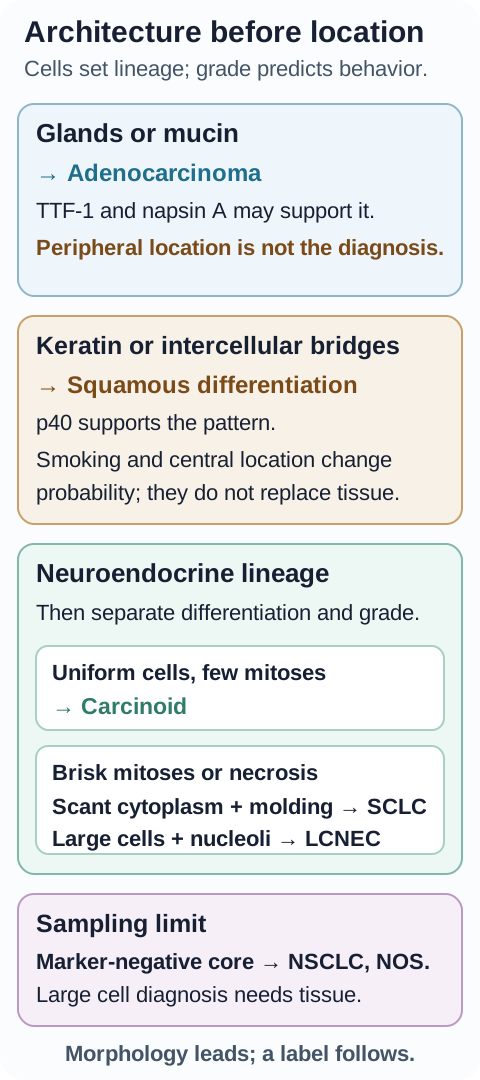
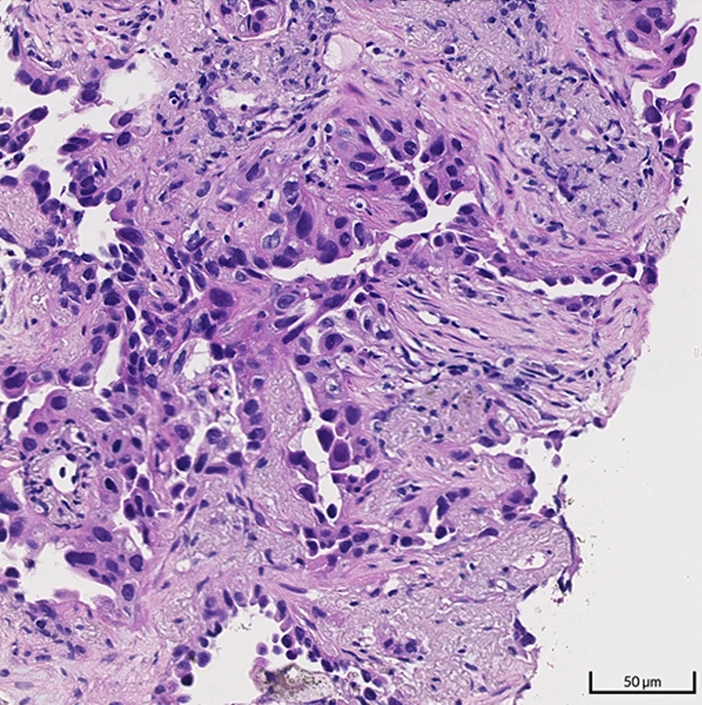
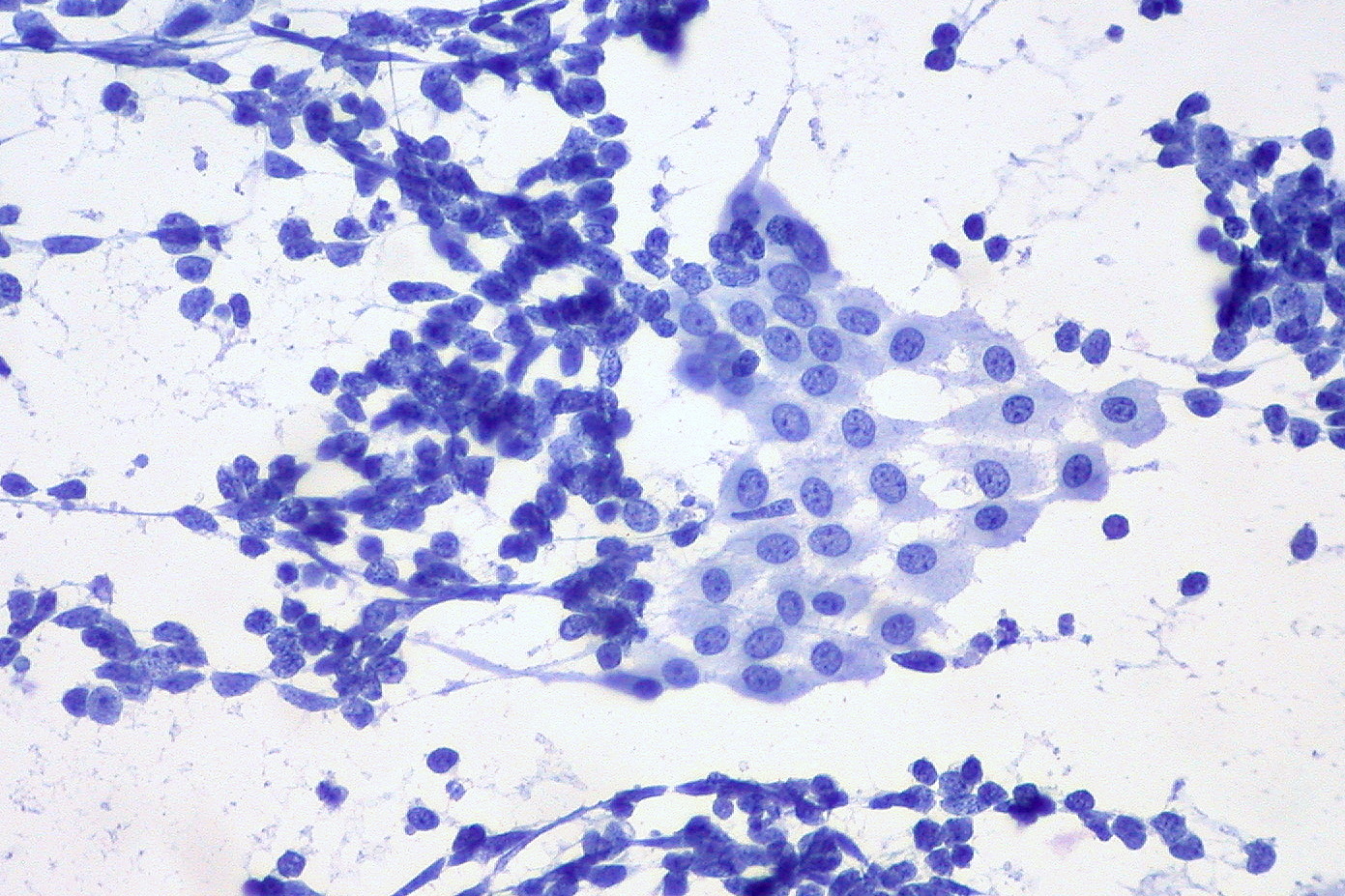
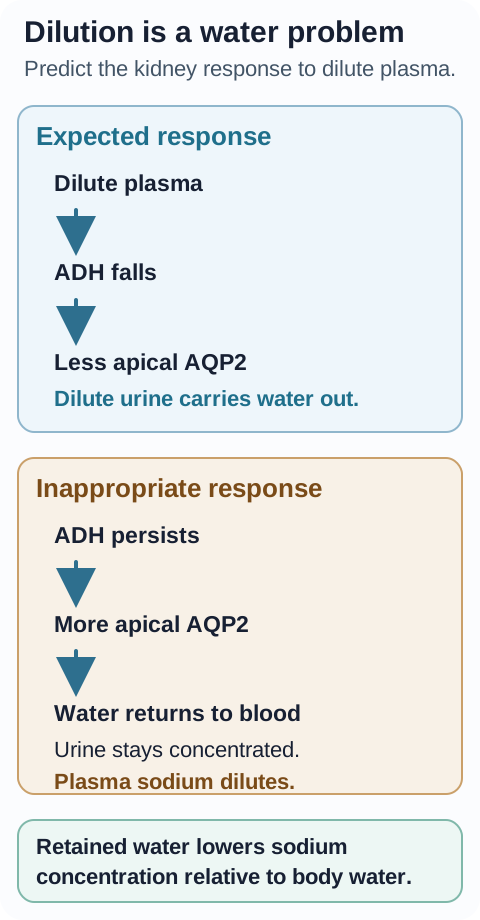
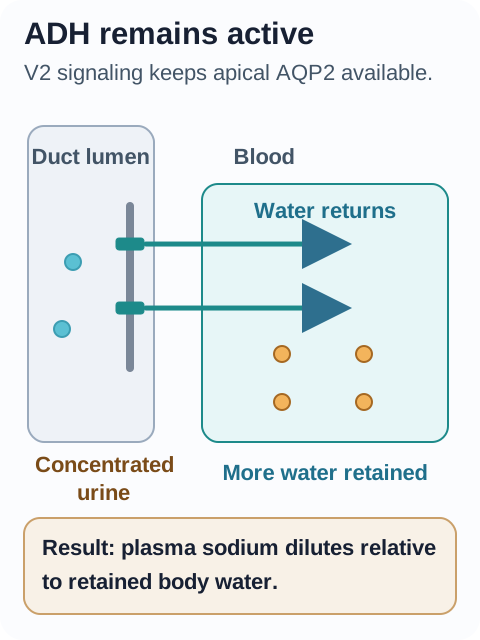
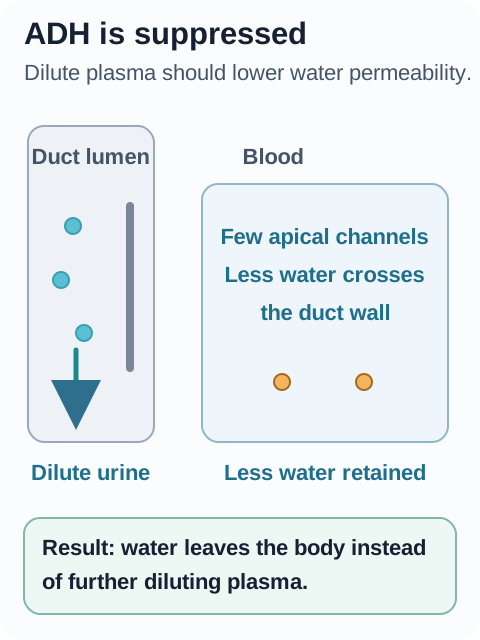
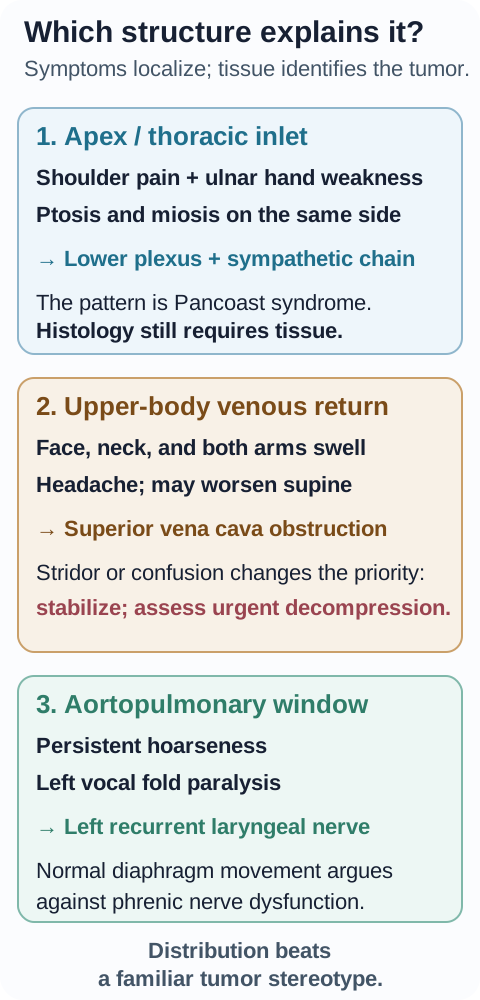
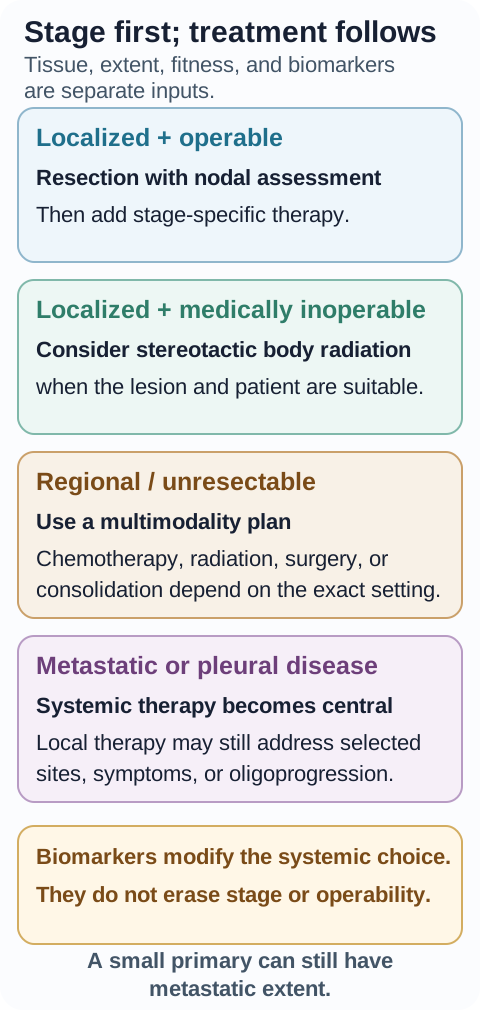
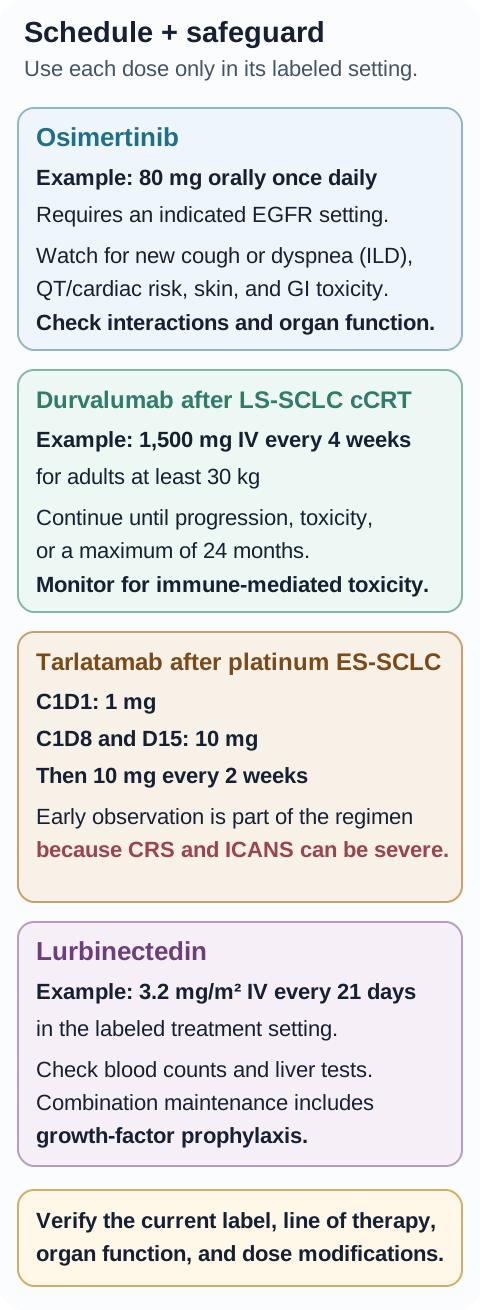

.jpg)