Connect immune protection, routine ages, catch-up intervals and patient-specific risks to a safe, valid childhood and adolescent immunization plan.
A late visit does not erase valid doses. Which protection is due, safe and valid today?
United States pediatric teaching, checked September 27, 2026. Routine ages follow AAP 2026 guidance; the CDC United States 2025 catch-up table supports minimum-age and interval checks. Seasonal recommendations are attributed separately. This is not a complete prescribing schedule.
Why can one exposure require two kinds of protection?
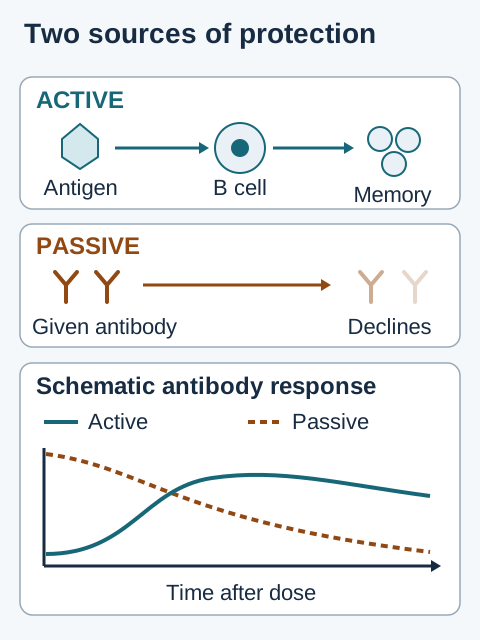
An exposed newborn needs protection before an active response develops. Hepatitis B vaccine supplies antigen to stimulate the infant's response and memory. Hepatitis B immune globulin, or HBIG, supplies ready-made antibody for immediate, temporary protection. The functions complement each other. Neither active immunity nor a live vaccine guarantees lifelong protection. [5][6]
Conceptual timing, not measured antibody concentrations or durations. Identify each antibody source. [5]
Passive products include HBIG, varicella-zoster immune globulin and rabies immune globulin in their specific exposure protocols. They do not create the recipient's own antigen-specific memory by themselves. Maternal antibody crossing the placenta is also passive protection for the infant, even though vaccination generated an active response in the pregnant patient. [5][13]
Classify the product by what it contains
Construction
Examples and consequence
ConstructionLive attenuated
Examples and consequenceMMR, varicella, oral rotavirus, intranasal influenza and yellow fever. Limited replication supports the immune response; recipient eligibility matters.
ConstructionNon-live
Examples and consequenceIPV, hepatitis A and rabies are inactivated vaccines. Hepatitis B and HPV are recombinant subunit vaccines, not killed whole organisms. Injectable inactivated influenza cannot replicate.
ConstructionToxoid
Examples and consequenceTetanus and diphtheria toxoids teach toxin-neutralizing immunity. DTaP and Tdap also contain non-live pertussis antigens; Td does not.
ConstructionConjugate
Examples and consequenceHib, PCV and MenACWY attach capsular polysaccharide to a protein carrier. This improves infant responses by enabling T-cell help and memory. MenB products use recombinant proteins; they are not the same conjugate class.
Conjugation improves the infant response to a capsular target; it does not make the vaccine live.
Try it: For a perinatally exposed newborn, which component supplies antibody now and which teaches a later response?
Compare your reasoning
HBIG supplies antibody immediately. Hepatitis B vaccine provides antigen for the infant's active response. Neither replaces the other when both are indicated.
Apply it elsewhere: An RSV monoclonal antibody is also passive: it does not itself establish active vaccine memory.
Try it here · Checkpoint 1 of 3
Make your prediction before reading the choices. A first attempt is just a starting point.
Case 25
Show answer and explanations for case 25
A. Unconjugated polysaccharide; blocking CD4 help reduces recall. (Why this does not fit)
Its largely T-cell-independent response is weak and does not account well for the brisk recall pattern shown for B. B rises rapidly after the repeat dose despite having returned near baseline beforehand. Protein-linked polysaccharide recruits T-cell help; blocking that help during priming would reduce the later recall advantage.
Reasoning steps for option A
What would unconjugated polysaccharide usually do in infants?
Its largely T-cell-independent response is weak and does not account well for the brisk recall pattern shown for B.
Which observation instead supports a memory advantage?
B rises rapidly after the repeat dose despite having returned near baseline beforehand.
Which structure explains that advantage?
Protein-linked polysaccharide recruits T-cell help; blocking that help during priming would reduce the later recall advantage.
B. Protein-linked polysaccharide; blocking CD4 help reduces recall. (Best answer)
The rapid rise in B after antibody had declined supports immune memory rather than persistence of the original antibody level. Linking polysaccharide to protein recruits T-cell help and improves memory to the capsular target. The later recall advantage should be reduced; this is a mechanistic prediction from the teaching model, not a measured clinical effect size.
Reasoning steps for option B
What does the second exposure reveal?
The rapid rise in B after antibody had declined supports immune memory rather than persistence of the original antibody level.
Which formulation best explains that infant response?
Linking polysaccharide to protein recruits T-cell help and improves memory to the capsular target.
What follows from blocking that help during priming?
The later recall advantage should be reduced; this is a mechanistic prediction from the teaching model, not a measured clinical effect size.
C. Protein-linked polysaccharide; recall persists despite blocked CD4 help. (Why this does not fit)
A protein-linked polysaccharide can produce the infant memory advantage seen with B. That advantage depends on T-cell help during priming, which the proposed intervention blocks. Reduced later recall, not preservation of the same memory response despite loss of its supporting help.
Reasoning steps for option C
Which part explains the observed response?
A protein-linked polysaccharide can produce the infant memory advantage seen with B.
What is wrong with the prediction?
That advantage depends on T-cell help during priming, which the proposed intervention blocks.
What would the model instead predict?
Reduced later recall, not preservation of the same memory response despite loss of its supporting help.
D. Unconjugated polysaccharide; recall persists despite blocked CD4 help. (Why this does not fit)
A plain polysaccharide response is largely T-cell-independent. The observed brisk infant recall is better explained by protein-linked antigen and T-cell-supported memory than by plain polysaccharide. Identify B as the conjugate formulation and predict reduced recall when T-cell help during priming is blocked.
Reasoning steps for option D
Why could this prediction seem plausible for plain polysaccharide?
A plain polysaccharide response is largely T-cell-independent.
Why is it not the best explanation of B?
The observed brisk infant recall is better explained by protein-linked antigen and T-cell-supported memory than by plain polysaccharide.
What conclusion uses both observations and mechanism?
Identify B as the conjugate formulation and predict reduced recall when T-cell help during priming is blocked.
Takeaway: Infer immune memory from the recall pattern, then use its dependence on T-cell help to predict a changed response.
Which protection cannot wait for the next routine visit?
At birth, check maternal hepatitis B surface antigen, or HBsAg, and birth weight. For a medically stable infant weighing at least 2,000 g whose parent is HBsAg negative, the AAP recommends the routine birth dose within 24 hours. If the parent is HBsAg positive, give single-antigen hepatitis B vaccine plus HBIG at separate sites within 12 hours, regardless of birth weight. [1][2][6]
When maternal HBsAg status is unknown, give single-antigen hepatitis B vaccine within 12 hours and obtain maternal testing urgently. Do not delay either while arranging HBIG. For infants below 2,000 g, give HBIG at a separate site within 12 hours unless maternal HBsAg is confirmed negative by then. [2][6]
For an infant weighing at least 2,000 g, a subsequently positive maternal result requires HBIG as soon as possible. If maternal status remains unknown, HBIG is still required: the AAP specifies administration by hospital discharge or age seven days, whichever comes first, when the result is positive or remains unknown. Do not wait until day seven if discharge is earlier. If an exposed infant weighs below 2,000 g, the birth vaccine does not count toward the primary series: give three additional doses beginning at chronological age one month. The low-weight, HBsAg-negative exception is addressed under special populations. [2][6][17]
Routine infant visits are groups of opportunities, not interchangeable deadlines
Age
Common routine doses
Age1 through 2 months
Common routine dosesHepatitis B dose two, with a valid interval from dose one.
Age2 months
Common routine dosesDTaP, IPV, Hib, PCV15 or PCV20, and rotavirus begin.
Age4 months
Common routine dosesSecond DTaP, IPV, Hib, PCV and rotavirus doses.
Age6 months
Common routine dosesDTaP and PCV continue. A third Hib or rotavirus dose depends on the product. Influenza eligibility begins. IPV dose three and the final routine hepatitis B dose have a 6-through-18-month range, with separate minimum-interval rules.
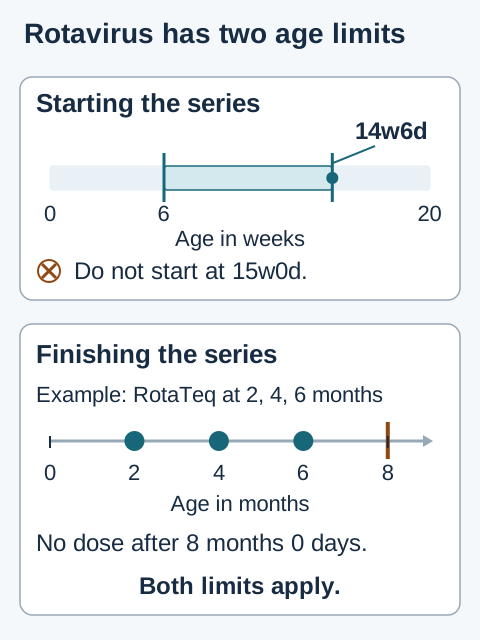
Do not confuse the first-dose deadline with the final-dose deadline. Note the different age units. [1][3][12]
Rotavirus can start at six weeks; the latest planned first dose is 14 weeks 6 days. Do not start at 15 weeks 0 days or later. No dose is given after 8 months 0 days. Rotarix uses two doses and RotaTeq uses three; an unknown product in the series requires a total of three doses. Doses are at least four weeks apart. An inadvertently late first dose has a correction rule: complete remaining doses at valid intervals, without any dose after 8 months 0 days. This is not permission to plan a late start. [1][3][4][12][21]
For an infant exposed to maternal hepatitis B, complete the series and check HBsAg plus anti-HBs at age 9 through 12 months. If completion is delayed, test one through two months after the final dose, but not before nine months. Do not substitute anti-HBc: maternal antibody can persist and mislead interpretation. Negative HBsAg with anti-HBs at least 10 mIU/mL indicates protection after a valid series. [17][19]
Try it: A child is seven months old, has two valid rotavirus doses and an unknown product history. What record detail and deadline determine the plan?
Compare your reasoning
Unknown product requires three total doses. Confirm at least four weeks since the last dose and give the remaining dose while still within the final age limit.
Apply it elsewhere: A child has never started rotavirus at nine months. Extra spacing cannot restore an age window that has already closed.
Why does the same birthday not mean the same dose count?
Match the visit age to the record and product. At 12 through 15 months, routine care includes the first MMR and varicella doses and Hib and PCV boosters. Hepatitis A begins at 12 through 23 months, with two doses at least six months apart. The fourth routine DTaP dose is at 15 through 18 months, not automatically bundled with every 12-month visit. At 4 through 6 years, review DTaP, IPV, MMR and varicella completion. [1][3][4]
MMR at nine months for travel addresses immediate risk but does not satisfy the routine minimum age. Two valid doses are still needed beginning at or after 12 months. MMR catch-up can use two valid doses at least 28 days apart. Routine use of IPV in the United States is distinct from the live oral polio products used in some other settings. [3][4][15]
Give routine Tdap and MenACWY at 11 through 12 years, with MenACWY again at 16. The AAP recommends starting HPV between ages 9 and 12. In an immunocompetent child who starts HPV before the 15th birthday, two doses are usually given 6 through 12 months apart; the minimum interval is five months. Starting at 15 or older, or having an immunocompromising condition including HIV, requires three doses at 0, 1 through 2 and 6 months.
Later birthdays do not change the initiation age. For a three-dose HPV course, the minimum intervals are four weeks from dose one to two, twelve weeks from dose two to three, and five months from dose one to three. Check all intervals before the final dose. [1][4][16]
MenACWY does not cover serogroup B. Healthy people aged 16 through 23 may receive MenB through shared decision-making, preferably at 16 through 18. Elective MenB usually uses two same-product doses six months apart. High risk or a need for rapid protection, such as college entry in less than six months, can require three doses. [16]
CDC interim influenza guidance dated September 1, 2026 retains July 2025 recommendations for the 2026-2027 season. Influenza vaccination is annual from six months of age. For a child aged six months through eight years at the first dose of the current season, count prior valid doses before the immediately preceding July 1. At least two previous doses, separated by at least four weeks, means one dose this season; fewer than two or unknown history means two doses at least four weeks apart this season.
Previous doses may come from different, nonconsecutive seasons. A child who needs two doses at age eight still receives the second after turning nine. [7]
Seasonal products need a fresh reference. The AAP 2026-2027 COVID-19 guidance recommends vaccination for all children aged 6 through 23 months and identifies risk, prior vaccination and family preference pathways for older children. Use the current AAP formulation and prior-dose guide rather than a CDC or older-season dose grid. [2]
RSV prevention is different: nirsevimab and clesrovimab are passive antibodies, not active infant vaccines. Under AAP guidance, first-season eligibility includes infants younger than eight months when the pregnant parent was unvaccinated in that pregnancy, status is unknown, or birth occurred fewer than 14 days after vaccination. Children aged 8 through 19 months entering a second season who meet AAP high-risk criteria receive nirsevimab only.
Try it: A six-year-old has two prior influenza doses at least four weeks apart, one in each of two earlier seasons. How many are needed now?
Compare your reasoning
One current-season dose. The two earlier doses do not have to be in the same season.
Apply it elsewhere: A previous season alone does not establish priming: one previous dose still leaves a child younger than nine needing two current-season doses.
Try it here · Checkpoint 2 of 3
Make your prediction before reading the choices. A first attempt is just a starting point.
Case 5
Show answer and explanations for case 5
A. Give one standard-dose inactivated influenza injection this season. (Why this does not fit)
At least two qualifying previous influenza doses before the seasonal July 1 boundary would permit one current-season dose. Only one earlier dose is documented, so the child still needs two current-season doses. Use an age-appropriate influenza vaccine twice, at least four weeks apart.
Reasoning steps for option A
When would one seasonal dose suffice for a four-year-old?
At least two qualifying previous influenza doses before the seasonal July 1 boundary would permit one current-season dose.
What does this record establish?
Only one earlier dose is documented, so the child still needs two current-season doses.
How should the plan be corrected?
Use an age-appropriate influenza vaccine twice, at least four weeks apart.
B. Give two standard-dose inactivated influenza injections at least four weeks apart. (Best answer)
No. Egg allergy alone does not prohibit an otherwise age- and health-appropriate influenza vaccine. The child is four and had fewer than two qualifying doses before July 1, 2026, so two current-season doses are needed. Separate them by at least four weeks; the proposed four-week interval meets that minimum.
Reasoning steps for option B
Does egg anaphylaxis require withholding an inactivated influenza vaccine?
No. Egg allergy alone does not prohibit an otherwise age- and health-appropriate influenza vaccine.
How many doses are needed this season?
The child is four and had fewer than two qualifying doses before July 1, 2026, so two current-season doses are needed.
What interval makes the plan valid?
Separate them by at least four weeks; the proposed four-week interval meets that minimum.
C. Give two standard-dose inactivated influenza injections two weeks apart. (Why this does not fit)
An inactivated influenza vaccine is suitable, and the previous-dose history requires two current-season doses. Two weeks is shorter than the four-week minimum between the seasonal doses. Give the second dose at least four weeks after the first rather than accelerate it to two weeks.
Reasoning steps for option C
Which part of this plan fits the record?
An inactivated influenza vaccine is suitable, and the previous-dose history requires two current-season doses.
What invalidates the proposed timing?
Two weeks is shorter than the four-week minimum between the seasonal doses.
How should the return date be selected?
Give the second dose at least four weeks after the first rather than accelerate it to two weeks.
D. Give two recombinant influenza injections using Flublok four weeks apart. (Why this does not fit)
Flublok is an egg-free product, which may attract attention after a history of egg allergy. Current licensure begins at age nine, but the child is four; being egg-free does not replace age eligibility. Give an age-appropriate influenza product in two doses at least four weeks apart; egg allergy does not require Flublok.
Reasoning steps for option D
Why might recombinant influenza vaccine be considered?
Flublok is an egg-free product, which may attract attention after a history of egg allergy.
Why is that product unsuitable for this child?
Current licensure begins at age nine, but the child is four; being egg-free does not replace age eligibility.
What should be used instead?
Give an age-appropriate influenza product in two doses at least four weeks apart; egg allergy does not require Flublok.
Takeaway: One influenza dose in a previous season is not enough to qualify this child for a single current-season dose.
Retrieve written records, retain valid doses and continue; do not restart solely for a long gap. Check current age, previous-dose ages and minimum intervals. A final dose must satisfy every requirement. A retrospective four-day grace rule is not a planned schedule and does not extend upper age limits. [3][9]
Rules that frequently change the final dose
Vaccine
What to verify
VaccineHepatitis B
What to verifyDose one to two: at least four weeks. Final dose: at least eight weeks after dose two, at least sixteen weeks after dose one, and age at least twenty-four weeks.
VaccineIPV
What to verifyThe final childhood dose is at age four years or older and at least six months after the previous dose. Four earlier doses do not automatically satisfy the final-age rule.
VaccineDTaP
What to verifyA fifth dose is unnecessary if dose four was at age four years or older and at least six months after dose three.
VaccineHib
What to verifyAge and product determine catch-up. A healthy child's first dose at 15 through 59 months completes routine Hib catch-up; healthy children at least 60 months do not need routine catch-up.
Counting a dose and completing a course are different decisions. An inadvertently early fourth DTaP dose can count retrospectively if it was at age twelve months or older and at least four months after dose three. However, omitting dose five still requires that dose four was at age four years or older and at least six months after dose three. Meeting the birthday requirement alone is insufficient. [4]
For Hib, a PedvaxHIB primary course uses two infant doses, but a final booster at age twelve months or older is still needed. Three doses given before the first birthday do not satisfy that final-age requirement; the final dose also needs an interval of at least eight weeks after the previous dose. The healthy-child rule after age five has risk exceptions: an unvaccinated child aged five or older with functional asplenia needs one Hib dose. [3][4]
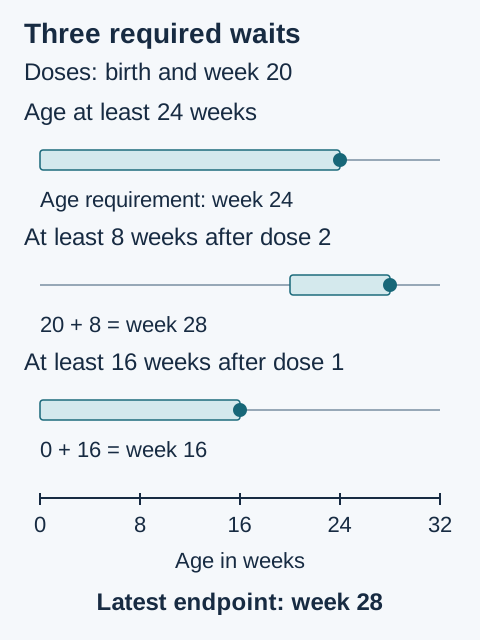
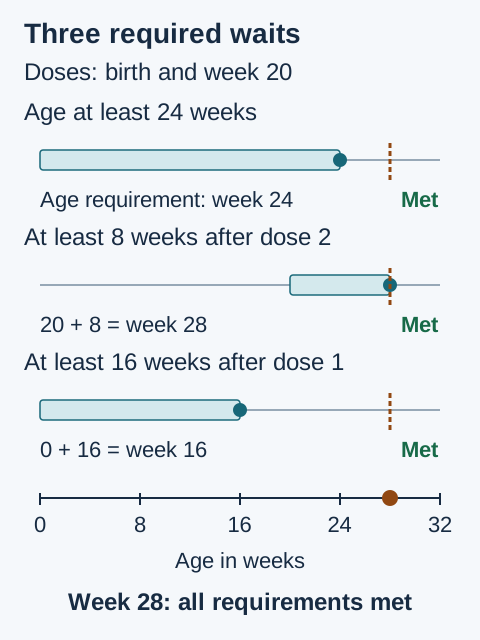
For hepatitis B doses at birth and 20 weeks, identify the latest eligibility date below.
The bars show required waits, not antibody levels. Use the latest endpoint. [3]
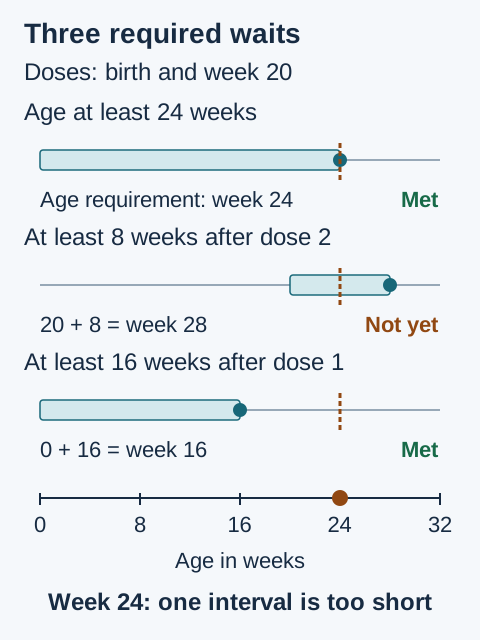
Test a proposed visit: Predict the unmet requirement at 24 weeks, then compare proposals. Close either result to try again.
Test a final dose at age 24 weeks
The proposed visit falls four weeks before the end of the dose-two waiting bar. That one unmet interval makes the proposed final dose too early.Test a final dose at age 28 weeks
The proposed visit reaches the last endpoint. All three requirements are satisfied without restarting any dose.
The final dose is eligible at 28 weeks: use the latest requirement. If dose two were at eight weeks, age 24 weeks would be the limiting requirement. This exercise is not a patient-specific calculator.
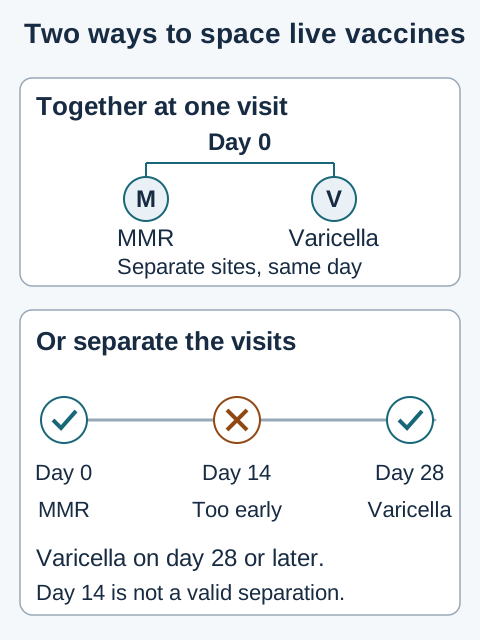
Spacing different live vaccines is a separate problem. Give MMR and varicella on the same day at separate sites, or separate them by at least 28 days. That rule is not the interval between two doses of the same vaccine: MMR doses need at least 28 days; planned varicella doses in children younger than 13 use three months, while age 13 or older uses at least four weeks. In a younger child, an already-administered varicella second dose at least four weeks after the first can be accepted. [3][9]
Different injectable live vaccines can be given together or at least 28 days apart. [9]
Try it: MMR was given fourteen days ago. How much longer should a routine varicella dose wait when it was not given at the same visit?
Compare your reasoning
Wait at least fourteen more days, reaching a 28-day separation between the two live vaccines.
Apply it elsewhere: Hepatitis A is non-live. Do not invent this live-vaccine interval before an otherwise indicated hepatitis A dose.
Try it here · Checkpoint 3 of 3
Make your prediction before reading the choices. A first attempt is just a starting point.
Case 9
Show answer and explanations for case 9
A. Schedule the final hepatitis B dose at age 22 weeks. (Why this does not fit)
It provides 4 weeks after dose 2. The final dose must be at least 8 weeks after dose 2, and age 22 weeks is also below the final-dose minimum age. Check both earlier-dose intervals and the minimum age for the final dose.
Reasoning steps for option A
Which interval does age Schedule the final hepatitis B dose at age 22 weeks. provide?
It provides 4 weeks after dose 2.
Is that the required dose-2-to-final interval?
No. The final dose must be at least 8 weeks after dose 2, and age Schedule the final hepatitis B dose at age 22 weeks. is also below the final-dose minimum age.
Which conditions must be satisfied together?
Check both earlier-dose intervals and the minimum age for the final dose.
B. Schedule the final hepatitis B dose at age 24 weeks. (Why this does not fit)
The minimum age for a final hepatitis B dose is met. Only 6 weeks have elapsed since the dose at age 18 weeks. The minimum 8-week interval after dose 2 has not yet elapsed.
Reasoning steps for option B
Which requirement is met at age Schedule the final hepatitis B dose at age 24 weeks.?
The minimum age for a final hepatitis B dose is met.
How long has it been since dose 2?
Only 6 weeks have elapsed since the dose at age 18 weeks.
What prevents scheduling at Schedule the final hepatitis B dose at age 24 weeks.?
The minimum 8-week interval after dose 2 has not yet elapsed.
C. Schedule the final hepatitis B dose at age 26 weeks or later. (Best answer)
At age 26 weeks: 18 plus 8. The first dose was at birth. All three final-dose conditions are met at 26 weeks. Choose the latest applicable minimum date, not the first one reached.
Reasoning steps for option C
When does the 8-week interval after dose 2 end?
At age Schedule the final hepatitis B dose at age 26 weeks or later.: 18 plus 8.
Is that at least 16 weeks after dose 1?
Yes. The first dose was at birth.
Is the infant at least Schedule the final hepatitis B dose at age 24 weeks. old?
Yes. All three final-dose conditions are met at Schedule the final hepatitis B dose at age 26 weeks or later..
How should competing minimum dates be combined?
Choose the latest applicable minimum date, not the first one reached.
D. Schedule the final hepatitis B dose at age 34 weeks. (Why this does not fit)
It adds 16 weeks to the second dose at age 18 weeks. The first dose, not the second, starts that interval. Use 8 weeks after dose 2 together with 16 weeks after dose 1 and age at least 24 weeks.
Reasoning steps for option D
What calculation produces Schedule the final hepatitis B dose at age 34 weeks.?
It adds 16 weeks to the second dose at age 18 weeks.
Which dose starts the 16-week interval?
The first dose, not the second, starts that interval.
How can unnecessary delay be avoided?
Use 8 weeks after dose 2 together with 16 weeks after dose 1 and age at least Schedule the final hepatitis B dose at age 24 weeks..
Takeaway: For the final hepatitis B dose, the latest of the three minimum dates controls scheduling.
Is this a contraindication, a temporary precaution or neither?
Compare a brief febrile seizure with prompt recovery against prolonged unexplained encephalopathy. Identify the event and affected component before cancelling unrelated protection. [8]
A contraindication means the implicated vaccine should not be given in that circumstance. Examples include anaphylaxis to a previous dose or a relevant component; MMR or varicella during pregnancy or severe immunodeficiency; and rotavirus in a child with SCID or a history of intussusception. Live-vaccine rules are product-specific. Yellow fever is a live travel vaccine requiring its own risk assessment, not a routine childhood substitute. [8][12]
Encephalopathy within seven days after a pertussis-containing vaccine, without another identifiable cause, contraindicates further pertussis-containing doses. Recovery does not make Tdap a pertussis-free alternative: DTaP and Tdap both contain pertussis. Td does not. Tetanus and diphtheria protection should continue when indicated. Current CDC notes permit Td instead of DTaP for a child younger than seven with this contraindication; use the specific substitution guidance rather than improvising a formulation. A brief resolved febrile seizure alone is not this contraindication. [4][8]
A precaution generally prompts deferral or an individualized benefit-risk assessment. Moderate or severe acute illness can justify deferral with or without fever. Progressive or unstable neurologic disease warrants clarification before pertussis vaccination. Mild otitis, a minor respiratory illness, a low fever in an otherwise well child, routine antibacterial treatment and stable neurologic conditions are not automatic reasons to postpone due vaccines. [8]
Egg allergy, even a previous severe reaction to eating egg, does not by itself prohibit an otherwise age- and health-appropriate influenza vaccine or require extra vaccine-specific safety measures. A reaction to the influenza vaccine itself is a different history requiring product-specific assessment. Intranasal live influenza also has separate restrictions: for example, age two through four with asthma or wheezing in the preceding twelve months is not an appropriate setting for LAIV.
Do not choose LAIV on the mistaken assumption that it is egg-free. Recombinant influenza vaccine, Flublok, is licensed from age nine; its egg-free construction does not make it suitable for a four-year-old. [7]
Distinguish reduced response from unsafe replication. Antibody-containing blood products can interfere with MMR and varicella responses; the waiting interval depends on the product and dose. After 2 g/kg IVIG for Kawasaki disease, the usual interval is eleven months. Non-live vaccines do not share that delay. High-dose systemic steroids create a different problem: after at least fourteen days of sufficiently immunosuppressive prednisone-equivalent dosing, live-virus vaccines generally wait at least one month after cessation. Inhaled steroids alone do not impose that same rule. [9][10]
Try it: One child had a short febrile seizure and recovered promptly. Another had unexplained encephalopathy within two days of DTaP. Which history changes future pertussis vaccination?
Compare your reasoning
The encephalopathy history establishes the specific contraindication. The brief resolved seizure alone does not. Tetanus and diphtheria protection remain separate decisions.
Apply it elsewhere: An ill child without fever can still need temporary deferral if the illness is moderate or severe. Fever is not the sole classifier.
What changes when the patient or household changes?
A stable preterm infant follows chronological age using full doses, not corrected age or half-doses. For hepatitis B, however, birth weight below 2,000 g affects the birth-dose plan: if the parent is HBsAg negative, begin at chronological age one month or discharge when clinically stable, whichever comes first. Exposure to a positive parent still requires immediate prophylaxis as described above. This weight exception does not apply to all vaccines. [6][14]
HIV is not a blanket live-vaccine prohibition. A child must first reach the vaccine's eligible age. For MMR in children five years or younger, CD4 percentages at least 15% for at least six months support eligibility in the absence of other contraindications. Older children require age-appropriate assessment including counts when available. Varicella also has immune criteria; eligible children receive single-antigen varicella, not combined MMRV. Use documented immune measurements, not a general impression of treatment success. [8][10]
Asplenia impairs protection against encapsulated bacteria. Sickle cell disease can cause functional asplenia before any surgery. Review pneumococcal, meningococcal and Hib records alongside influenza and other routine vaccines. Age and product history determine the additional doses. [10][11][16]
Two pneumococcal records can lead to different plans in an asplenic child
Documented history
Consequence
Documented historyComplete PCV series including PCV20
ConsequenceCurrent pediatric risk guidance does not automatically add PPSV23; pneumococcal vaccination is complete for this history.
Documented historyAge at least two: PCV13 or PCV15 series completed before six, no PCV20 or PPSV23
ConsequenceAdditional PCV20 or PPSV23 can be indicated under the risk-based schedule. Minimum intervals and later doses depend on the selected product.
PPSV23 is not an infant substitute and is not given before age two. Risk-based MenACWY can begin in infancy with an age-appropriate product; the exact series and boosters depend on age and product. MenB for asplenia begins at age ten, using the high-risk three-dose course and subsequent risk-based boosters, not the healthy-adolescent elective schedule. A delayed record can meet completion criteria with two doses when dose two was at least six months after dose one; this exception does not validate a two-dose course separated by only one month. [4] Vaccination also does not replace penicillin prevention in young children with HbSS.
Prophylaxis is generally continued until age five and reassessed, with longer use in selected children, especially after splenectomy or invasive pneumococcal infection. [11][16][20]
Healthy household contacts of an immunocompromised person should receive indicated MMR, varicella and age-eligible rotavirus vaccines. Wash hands after changing the diaper of a rotavirus-vaccinated infant. If a varicella vaccine recipient develops a rash, avoid direct contact with susceptible immunocompromised people until it resolves. A contact requiring a protective environment changes LAIV eligibility; use an appropriate non-live influenza product. Preschool siblings have aged out of rotavirus. [7][10][12]
Give Tdap each pregnancy, preferably early in weeks 27 through 36, to boost placental antibody transfer. A previous pregnancy's dose does not replace it. A Tdap dose given earlier in the same pregnancy for an indication such as wound care is not repeated in weeks 27 through 36. Vaccinating close contacts helps but does not replace maternal vaccination. [13]
Try it: A four-year-old with HbSS has a complete PCV20 series. Does the diagnosis alone require PPSV23 now?
Compare your reasoning
No. Under current pediatric risk-based guidance, this PCV20-containing series is complete. Continue reviewing the separate meningococcal, Hib and other prevention needs.
Apply it elsewhere: Change the record to PCV15 only. The same risk diagnosis now requires a different pneumococcal assessment; product history changes the plan.
Apply the lesson
Case 1
Show answer and explanations for case 1
A. Give vaccine and HBIG within 12 hours; count this vaccine toward three total doses. (Why this does not fit)
Vaccine and hepatitis B immune globulin provide complementary protection after perinatal exposure. His birth weight is below 2000 g, so this dose does not count toward the three-dose series. Give three additional vaccine doses beginning at chronological age 1 month.
Reasoning steps for option A
Why are two products appropriate now?
Vaccine and hepatitis B immune globulin provide complementary protection after perinatal exposure.
Does this birth dose count toward the primary series?
His birth weight is below 2000 g, so this dose does not count toward the three-dose series.
What must the later plan include?
Give three additional vaccine doses beginning at chronological age 1 month.
B. Give vaccine and HBIG within 12 hours; give three further doses starting at one month. (Best answer)
The infant has perinatal hepatitis B exposure. Give single-antigen hepatitis B vaccine and HBIG within 12 hours of birth at separate sites. The birth dose is needed for exposure protection but is not counted toward series completion below 2000 g. Begin three additional doses at chronological age 1 month, respecting the final-dose age and interval requirements.
Reasoning steps for option B
What does the maternal result establish?
The infant has perinatal hepatitis B exposure.
How urgent is protection?
Give single-antigen hepatitis B vaccine and HBIG within 12 hours of birth at separate sites.
How does 1700 g change dose counting?
The birth dose is needed for exposure protection but is not counted toward series completion below 2000 g.
What follows from the newborn exposure rule?
Begin three additional doses at chronological age 1 month, respecting the final-dose age and interval requirements.
C. Give HBIG within 12 hours; begin three vaccine doses at chronological age one month. (Why this does not fit)
It supplies immediate passive antibody. An exposed newborn also needs vaccine within 12 hours despite the low birth weight. That weight changes later dose counting; it does not justify withholding urgent vaccine.
Reasoning steps for option C
What does HBIG supply?
It supplies immediate passive antibody.
What essential intervention is missing today?
An exposed newborn also needs vaccine within 12 hours, despite low birth weight.
How does low weight affect the plan?
Low birth weight adds later vaccine doses; it does not justify withholding urgent vaccine.
D. Give vaccine within 12 hours; add HBIG only if infant surface antigen testing is positive. (Why this does not fit)
It starts an active immune response rather than providing immediate ready-made antibody. No. The positive maternal result already establishes the indication for HBIG. Treat perinatal exposure promptly with both products rather than wait for infant testing.
Reasoning steps for option D
What protection can the vaccine initiate?
It starts an active immune response rather than providing immediate ready-made antibody.
Does prophylaxis wait for infection to be documented in the infant?
No. The positive maternal result already establishes the indication for HBIG.
What determines the immediate plan?
Treat perinatal exposure promptly with both products rather than wait for infant testing.
Takeaway: In an exposed infant below 2000 g, protect immediately and count the later series separately.
A. Give DTaP, IPV, Hib, PCV and rotavirus now, using the full recommended dose of each. (Best answer)
Chronological age determines vaccination timing for a clinically stable preterm infant. She is discharged and clinically stable at chronological age 8 weeks. No. She is within the first-dose age window and has no stated contraindication. Use the full recommended dose of each indicated vaccine; do not scale these doses to body weight.
Reasoning steps for option A
Which age determines the routine visit?
Chronological age determines vaccination timing for a clinically stable preterm infant.
Is this infant ready for outpatient vaccination?
She is discharged and clinically stable at chronological age 8 weeks.
Does prematurity exclude oral rotavirus here?
No. She is within the first-dose age window and has no stated contraindication.
Should the doses be reduced?
Use the full recommended dose of each indicated vaccine; do not scale these doses to body weight.
B. Give full-dose DTaP, IPV, Hib and PCV now; start rotavirus at corrected age two months. (Why this does not fit)
Rotavirus is a live oral vaccine with a restricted first-dose age window. Waiting for corrected age 2 months in this infant risks exceeding the maximum first-dose age. Use chronological age for an eligible stable preterm infant, including rotavirus.
Reasoning steps for option B
Why might rotavirus seem different?
Rotavirus is a live oral vaccine with a restricted first-dose age window.
What happens if corrected age determines its start?
Waiting for corrected age 2 months in this infant risks exceeding the maximum first-dose age.
Which timing applies after discharge?
Use chronological age for an eligible stable preterm infant, including rotavirus.
C. Give full-dose rotavirus now; start DTaP, IPV, Hib and PCV at corrected age two months. (Why this does not fit)
At eight weeks after birth, this stable discharged infant is eligible to start rotavirus. The same chronological-age approach applies to DTaP, IPV, Hib and PCV; corrected age does not set their routine starting date. Give all indicated vaccines at full recommended doses now rather than delay the injected products.
Reasoning steps for option C
Which part correctly uses chronological age?
At eight weeks after birth, this stable discharged infant is eligible to start rotavirus.
Why should the injected vaccines not wait?
The same chronological-age approach applies to DTaP, IPV, Hib and PCV; corrected age does not set their routine starting date.
What is the appropriate visit plan?
Give all indicated vaccines at full recommended doses now rather than delay the injected products.
D. Start DTaP, IPV, Hib, PCV and rotavirus at corrected age two months, using full doses. (Why this does not fit)
It adjusts developmental age for early birth. No. This medically stable infant is already at the chronological 2-month visit. It prolongs susceptibility and can eliminate the opportunity to start rotavirus.
Reasoning steps for option D
What does corrected age describe?
It adjusts developmental age for early birth.
Does it set the vaccination calendar?
No. This medically stable infant is already at the chronological 2-month visit.
What is the cost of waiting?
It prolongs susceptibility and can eliminate the opportunity to start rotavirus.
Takeaway: Stable preterm infants use chronological age and full doses; birth-dose hepatitis B has a separate weight rule.
A. Give A the second dose today; give B a first dose today. (Why this does not fit)
Four weeks have elapsed, so A can receive the remaining Rotarix dose before the final age limit. B has never started and is already beyond the maximum planned first-dose age of 14 weeks 6 days. Completing a series after an administration error does not authorize a new late start.
Reasoning steps for option A
Which part of this plan fits infant A?
Four weeks have elapsed, so A can receive the remaining Rotarix dose before the final age limit.
Why does the same visit not permit starting B?
B has never started and is already beyond the maximum planned first-dose age of 14 weeks 6 days.
What distinguishes the two records?
Completing a series after an administration error does not authorize a new late start.
B. Give A no further doses; give B no rotavirus doses. (Why this does not fit)
B should not begin rotavirus vaccination at 19 weeks. An inadvertently late first dose is followed by completion at valid intervals, with no dose after 8 months 0 days. Give A the second Rotarix dose now, four weeks after the first, without restarting.
Reasoning steps for option B
Which part of this plan fits infant B?
B should not begin rotavirus vaccination at 19 weeks.
Does the late first dose require stopping A?
An inadvertently late first dose is followed by completion at valid intervals, with no dose after 8 months 0 days.
What should happen for A today?
Give A the second Rotarix dose now, four weeks after the first, without restarting.
C. Give A the second dose today; give B no rotavirus dose today. (Best answer)
Continue the series after the error rather than abandon it; Rotarix requires two total doses. The interval from 15 to 19 weeks is four weeks, and A is younger than 8 months 0 days. B has no previous dose, so the closed first-dose window prohibits starting the series today.
Reasoning steps for option C
How is the late first dose in A handled?
Continue the series after the error rather than abandon it; Rotarix requires two total doses.
Is A eligible for the final dose today?
The interval from 15 to 19 weeks is four weeks, and A is younger than 8 months 0 days.
Why is B managed differently?
B has no previous dose, so the closed first-dose window prohibits starting the series today.
D. Give A no further doses; give B a first dose today. (Why this does not fit)
The first-dose limit and the final-dose limit govern different decisions. A can complete an already-started series after the error, whereas B cannot begin at 19 weeks. Give A the second Rotarix dose today and do not start B.
Reasoning steps for option D
Which limits could be confused here?
The first-dose limit and the final-dose limit govern different decisions.
Why does this plan reverse those decisions?
A can complete an already-started series after the error, whereas B cannot begin at 19 weeks.
How should each infant be managed?
Give A the second Rotarix dose today and do not start B.
Takeaway: Correct an inadvertently late start by completing valid remaining doses; do not use that exception to start another infant late.
A. Consider the series complete because two doses are sufficient for either product (Why this does not fit)
Rotarix uses a two-dose series. The product is unknown, which requires planning a three-dose series. Use three total doses when any prior product is unknown.
Reasoning steps for option A
Which product uses two routine doses?
Rotarix uses a two-dose series.
Can that assumption be applied to this record?
No. The product is unknown, which requires planning a three-dose series.
What information governs the dose count?
Use three total doses when any prior product is unknown.
B. Restart the series today because product identity is missing (Why this does not fit)
Valid documented doses are retained. It changes the target to three total doses rather than resetting the series. Complete the required total without repeating valid prior doses.
Reasoning steps for option B
Does product uncertainty invalidate documented doses?
No. Valid documented doses are retained.
What does the uncertainty change?
It changes the target to three total doses rather than resetting the series.
How should the record be used?
Complete the required total without repeating valid prior doses.
C. Give the third dose at the requested visit at age 8 months 1 day (Why this does not fit)
The minimum interval has already been exceeded. The proposed visit is beyond the maximum age for any rotavirus dose. Give the remaining indicated dose while the infant is age-eligible.
Reasoning steps for option C
Has enough time passed after dose 2?
The minimum interval has already been exceeded.
Is interval sufficiency the only condition?
No. The proposed visit is beyond the maximum age for any rotavirus dose.
What should happen before that deadline?
Give the remaining indicated dose while the infant is age-eligible.
D. Give a third dose today and consider the series complete (Best answer)
Three total doses are required. Far more than 4 weeks have passed since age 12 weeks. Age 7 months is before 8 months 0 days. At 8 months 1 day the age limit would have passed.
Reasoning steps for option D
How many doses are required with an unknown product?
Three total doses are required.
Is today sufficiently separated from dose 2?
Yes. Far more than 4 weeks have passed since age 12 weeks.
Is the infant within the final-dose age window?
Yes. Age 7 months is before 8 months 0 days.
Why not postpone to the proposed visit?
At 8 months 1 day the age limit would have passed.
Takeaway: Unknown rotavirus product means three total doses, but never an extension beyond the final age limit.
A. Omit the second dose because he will then be 9 years old (Why this does not fit)
One seasonal dose is ordinarily sufficient. He was 8 and had no prior influenza doses, so a two-dose series was indicated. Complete the indicated two-dose series even after the ninth birthday.
Reasoning steps for option A
What general rule applies when vaccination begins at age 9 or older?
One seasonal dose is ordinarily sufficient.
What was his age when this seasonal series began?
He was 8 and had no prior influenza doses, so a two-dose series was indicated.
Does the birthday cancel that requirement?
No. Complete the indicated two-dose series even after the ninth birthday.
B. Delay the second dose until the next influenza season (Why this does not fit)
It completes the indicated current-season vaccination course. Delaying leaves the current-season course incomplete. Give the second dose at least 4 weeks after the first, not a year later.
Reasoning steps for option B
Why is a second dose needed in an unprimed younger child?
It completes the indicated current-season vaccination course.
Does next season substitute for the scheduled dose?
No. Delaying leaves the current-season course incomplete.
What interval should guide the return?
Give the second dose at least 4 weeks after the first, not a year later.
C. Give the second influenza dose on October 8 (Best answer)
He was 8 years old and had no previous influenza vaccination. September 10 to October 8 is 28 days. A child who required two doses at the first seasonal visit should receive both. Apply the age rule at initiation of this seasonal course and preserve the required interval.
Reasoning steps for option C
Which facts established the two-dose requirement?
He was 8 years old and had no previous influenza vaccination.
Has the minimum interval elapsed?
Yes. September 10 to October 8 is 28 days.
Does turning 9 change this course?
No. A child who required two doses at the first seasonal visit should receive both.
What is the next-case lesson?
Apply the age rule at initiation of this seasonal course and preserve the required interval.
D. Repeat the first dose on October 8 and schedule another dose 4 weeks later (Why this does not fit)
The earlier dose remains valid. It is the second dose of the indicated course, not a new first dose. Retain them rather than restart a course because the child entered a new age group.
Reasoning steps for option D
Would a properly administered dose become invalid after a birthday?
No. The earlier dose remains valid.
What does the October visit represent?
It is the second dose of the indicated course, not a new first dose.
How should valid doses be treated?
Retain them rather than restart a course because the child entered a new age group.
Takeaway: A ninth birthday between influenza doses does not cancel an already indicated second dose.
A. Give MMR now and a further MMR dose at least 28 days later (Best answer)
It was administered before the first birthday. Two additional age-appropriate doses are required. He is older than 12 months and more than 28 days past the early dose. At least 28 days later when an accelerated two-dose schedule is needed.
Reasoning steps for option A
Did the pretravel dose occur at the routine minimum age?
No. It was administered before the first birthday.
Does that dose count toward the routine two-dose series?
No. Two additional age-appropriate doses are required.
Can the first routine dose be administered now?
Yes. He is older than 12 months and more than 28 days past the early dose.
How soon can the next MMR dose follow?
At least 28 days later when an accelerated two-dose schedule is needed.
B. Give one MMR dose now and consider the routine series complete (Why this does not fit)
It counts the travel dose together with the dose proposed today. The dose at 9 months cannot count as a routine dose. Two doses administered at age 12 months or older, appropriately separated.
Reasoning steps for option B
Why does this resemble a two-dose record?
It counts the travel dose together with the dose proposed today.
Which dose cannot be included in the routine count?
The dose at 9 months cannot count as a routine dose.
How many valid routine doses are needed?
Two doses administered at age 12 months or older, appropriately separated.
C. Defer the next MMR dose until age 4 through 6 years (Why this does not fit)
The usual second MMR dose is at age 4 through 6 years. The only recorded dose was before age 12 months. Begin the routine two-dose count at the current age-eligible visit.
Reasoning steps for option C
When is the usual second routine visit?
The usual second MMR dose is at age 4 through 6 years.
Has this child received a first routine dose?
No. The only recorded dose was before age 12 months.
What should be done now?
Begin the routine two-dose count at the current age-eligible visit.
D. Give MMR now and another dose 14 days later (Why this does not fit)
The two subsequent routine doses still need valid spacing. The minimum interval is 28 days. Use the minimum valid interval rather than shortening it beyond the permitted limit.
Reasoning steps for option D
Does the early travel dose eliminate the spacing requirement?
No. The two subsequent routine doses still need valid spacing.
Is 14 days enough between MMR doses?
No. The minimum interval is 28 days.
How should accelerated protection be planned?
Use the minimum valid interval rather than shortening it beyond the permitted limit.
Takeaway: An early travel MMR dose protects during a high-risk period but does not replace the two routine doses.
A. Give three new doses because the series has been interrupted for several years (Why this does not fit)
It delays completion but does not erase valid earlier doses. Their ages and spacing are valid. Give the missing valid dose without restarting.
Reasoning steps for option A
What does a long interruption do to the record?
It delays completion but does not erase valid earlier doses.
Are the documented first two doses invalid?
No. Their ages and spacing are valid.
How should an interrupted series be completed?
Give the missing valid dose without restarting.
B. Obtain an antibody level and give no further vaccine if any antibody is detectable (Why this does not fit)
A nonspecific detectable result does not establish an adequately completed vaccine course. The routine three-dose series lacks its final dose. Complete the documented series rather than use an unnecessary screening test to omit the missing dose.
Reasoning steps for option B
Is any detectable antibody a substitute for documenting series completion?
No. A nonspecific detectable result does not establish an adequately completed vaccine course.
What is already known from the record?
The routine three-dose series lacks its final dose.
What is the appropriate routine approach?
Complete the documented series rather than use an unnecessary screening test to omit the missing dose.
C. Give two further doses at least 4 weeks apart (Why this does not fit)
Two valid doses are documented. The years-long gap does not invalidate them. One valid final dose, not two.
Reasoning steps for option C
How many valid doses are already recorded?
Two valid doses are documented.
Does the elapsed time require replacing either dose?
No. The years-long gap does not invalidate them.
How many additional doses does this routine series need?
One valid final dose, not two.
D. Give one age-appropriate hepatitis B dose now (Best answer)
Birth to age 2 months exceeds the minimum 4 weeks. More than 8 weeks after dose 2 and 16 weeks after dose 1 have elapsed. He is well beyond age 24 weeks. One final dose now, with no restart.
Reasoning steps for option D
Were the earlier doses sufficiently separated?
Yes. Birth to age 2 months exceeds the minimum 4 weeks.
Have the final-dose intervals been met?
Yes. More than 8 weeks after dose 2 and 16 weeks after dose 1 have elapsed.
Is the final-dose minimum age satisfied?
Yes. He is well beyond age Schedule the final hepatitis B dose at age 24 weeks..
What completes the record?
One final dose now, with no restart.
Takeaway: A long gap delays protection but does not erase valid hepatitis B doses.
A. Give it in 14 more days, at least 28 days after MMR (Best answer)
Simultaneous administration is acceptable. Separate them by at least 28 days to reduce immune interference. Another 14 days are needed after the 14 days already elapsed. The MMR dose remains valid; only the varicella visit needs appropriate timing.
Reasoning steps for option A
Could MMR and varicella have been administered on the same day?
Yes. Simultaneous administration is acceptable.
What applies when different injectable live vaccines are not given together?
Separate them by at least 28 days to reduce immune interference.
How much additional time is needed?
Another 14 days are needed after the 14 days already elapsed.
What stays valid?
The MMR dose remains valid; only the varicella visit needs appropriate timing.
B. Give it today because the two vaccines target different viruses (Why this does not fit)
Interference can occur between different injectable live vaccines. Only 14 days have elapsed, not 28. Give these vaccines together or at least 28 days apart.
Reasoning steps for option B
Does targeting different viruses eliminate live-vaccine spacing?
No. Interference can occur between different injectable live vaccines.
Has the required separation elapsed?
Only 14 days have elapsed, not 28.
What are the usual alternatives?
Give these vaccines together or at least 28 days apart.
C. Give it 3 months after MMR because the child is younger than 13 years (Why this does not fit)
The planned interval between two varicella doses in children younger than 13 years is 3 months. The prior dose was MMR and this will be the first varicella dose. Use the 28-day spacing rule for different nonsimultaneous injectable live vaccines.
Reasoning steps for option C
Which interval commonly uses 3 months in young children?
The planned interval between two varicella doses in children younger than 13 years is 3 months.
Are these two doses both varicella vaccine?
No. The prior dose was MMR and this will be the first varicella dose.
Which rule applies instead?
Use the 28-day spacing rule for different nonsimultaneous injectable live vaccines.
D. Repeat MMR today together with varicella to establish a simultaneous pair (Why this does not fit)
It was appropriately given 14 days ago. The recent live-vaccine administration remains relevant, and another MMR dose would be too early. Retain the valid MMR dose and wait until the proper interval for varicella.
Reasoning steps for option D
Does the valid MMR dose need replacing?
No. It was appropriately given 14 days ago.
Would repeating it today correct the short separation?
No. The recent live-vaccine administration remains relevant, and another MMR dose would be too early.
How should this scheduling error be avoided?
Retain the valid MMR dose and wait until the proper interval for varicella.
Takeaway: Same-day administration and a 28-day separation are alternatives; a 14-day separation is not equivalent.
A. The series is complete because four doses are documented (Why this does not fit)
It establishes the number received, not whether the final-age requirement is met. All four were administered before the fourth birthday. A final IPV dose at age 4 years or older and at least 6 months after the preceding dose.
Reasoning steps for option A
What does counting four doses establish?
It establishes the number received, not whether the final-age requirement is met.
Was any dose given at age 4 years or older?
No. All four were administered before the fourth birthday.
What must a complete series include?
A final IPV dose at age 4 years or older and at least 6 months after the preceding dose.
B. Give one IPV dose now (Best answer)
No dose was administered at age 4 years or older. More than 6 months have passed since age 18 months. It supplies the needed final-age dose with adequate spacing. Earlier valid combination or additional IPV doses do not waive the final-age requirement.
Reasoning steps for option B
Which required final-dose feature is missing?
No dose was administered at age 4 years or older.
Has the interval after the most recent dose elapsed?
Yes. More than 6 months have passed since age 18 months.
What will a dose today accomplish?
It supplies the needed final-age dose with adequate spacing.
Why can the total exceed four?
Earlier valid combination or additional IPV doses do not waive the final-age requirement.
C. Restart a four-dose IPV series now (Why this does not fit)
They are explicitly documented as valid. Only the final-age requirement remains unmet. Add the missing qualifying final dose rather than repeat the entire series.
Reasoning steps for option C
Are the earlier doses invalid?
No. They are explicitly documented as valid.
Does absence of a later-age dose erase them?
No. Only the final-age requirement remains unmet.
What is the appropriate correction?
Add the missing qualifying final dose rather than repeat the entire series.
D. Wait until age 6 years because an extra dose cannot be given earlier (Why this does not fit)
Age 4 years. He is 4 years 2 months and well past 6 months from the prior dose. Give the qualifying final dose now rather than impose an unnecessary delay.
Reasoning steps for option D
What is the minimum age for the final IPV dose?
Age 4 years.
Has this child reached that age with sufficient spacing?
Yes. He is 4 years 2 months and well past 6 months from the prior dose.
How should school-entry protection be completed?
Give the qualifying final dose now rather than impose an unnecessary delay.
Takeaway: An IPV dose count cannot replace the requirement for a final dose at age 4 years or older.
A. Count four valid doses; give no additional childhood DTaP. (Why this does not fit)
Dose four was administered on the fourth birthday. The interval from September 20 to March 15 is five months 23 days, less than the six months needed to omit dose five. Retain dose four, but give the fifth DTaP dose now because more than six months have since elapsed.
Reasoning steps for option A
Which age requirement is satisfied?
Dose four was administered on the fourth birthday.
Why is the series not complete?
The interval from September 20 to March 15 is five months 23 days, less than the six months needed to omit dose five.
What does the record require?
Retain dose four, but give the fifth DTaP dose now because more than six months have since elapsed.
B. Repeat dose four now; give dose five six months later. (Why this does not fit)
Its interval after dose three was shorter than the planned six months. Retrospectively, dose four can count when given at age at least 12 months and at least four months after dose three; both conditions are met. Counting dose four does not waive dose five, so give one fifth dose now rather than repeat dose four.
Reasoning steps for option B
Why might the fourth dose appear invalid?
Its interval after dose three was shorter than the planned six months.
Can this already-administered dose count?
Retrospectively, dose four can count when given at age at least 12 months and at least four months after dose three; both conditions are met.
What must not be confused with that validity rule?
Counting dose four does not waive dose five, so give one fifth dose now rather than repeat dose four.
C. Count four valid doses; replace the next DTaP with Tdap. (Why this does not fit)
The childhood DTaP course still needs a fifth dose because dose four was less than six months after dose three. A five-year-old without a pertussis contraindication should receive the indicated DTaP formulation. Give DTaP now and retain routine adolescent Tdap at age 11 through 12 years.
Reasoning steps for option C
What remains incomplete in this record?
The childhood DTaP course still needs a fifth dose because dose four was less than six months after dose three.
Is Tdap the routine substitute at age five?
A five-year-old without a pertussis contraindication should receive the indicated DTaP formulation.
How is future adolescent vaccination handled?
Give DTaP now and retain routine adolescent Tdap at age 11 through 12 years.
D. Count four valid doses; give one additional DTaP now. (Best answer)
Yes. It was after age 12 months and more than four months after dose three, satisfying retrospective validity. No. It was on the fourth birthday but only five months 23 days after dose three; both age and a six-month interval are required. Yes. The child is five and more than six months beyond dose four, so one DTaP dose completes the childhood course.
Reasoning steps for option D
Does dose four count despite its short interval?
Yes. It was after age 12 months and more than four months after dose three, satisfying retrospective validity.
Does it qualify for omitting dose five?
No. It was on the fourth birthday but only five months 23 days after dose three; both age and a six-month interval are required.
Is a fifth dose eligible now?
Yes. The child is five and more than six months beyond dose four, so one DTaP dose completes the childhood course.
Takeaway: A valid fourth DTaP dose does not waive the fifth unless both the fourth-birthday and six-month-spacing requirements are met.
A. Give a dose now and a third dose at least 12 weeks later because she is now 15 (Why this does not fit)
Age at the first dose determines the series. She was younger than 15 years. A valid two-dose series remains appropriate when begun before age 15.
Reasoning steps for option A
Which age determines whether a healthy recipient starts a two- or three-dose HPV series?
Age at the first dose determines the series.
What was her age at initiation?
She was younger than 15 years.
Does this birthday add a third dose?
No. A valid two-dose series remains appropriate when begun before age 15.
B. Restart a two-dose HPV series because the first dose was more than 6 months ago (Why this does not fit)
The usual second dose is 6 through 12 months after the first. It is within that usual interval and exceeds the minimum 5 months. Retain it and complete the series with the current dose.
Reasoning steps for option B
What is the usual two-dose spacing?
The usual second dose is 6 through 12 months after the first.
Is an 8-month interval a reason to restart?
No. It is within that usual interval and exceeds the minimum 5 months.
What should happen to the first dose?
Retain it and complete the series with the current dose.
C. Give one HPV dose now and consider the series complete (Best answer)
It began at age 14 years 8 months. She is not immunocompromised. Eight months, exceeding the minimum 5 months for a two-dose series. One second dose now completes this healthy adolescent's two-dose series.
Reasoning steps for option C
Was vaccination initiated before age 15?
Yes. It began at age 14 years 8 months.
Is there an immune condition requiring three doses?
No. She is not immunocompromised.
How long has it been since the first dose?
Eight months, exceeding the minimum 5 months for a two-dose series.
What completes the series?
One second dose now completes this healthy adolescent's two-dose series.
D. Defer the second dose for another 4 months to complete a mandatory 12-month interval (Why this does not fit)
The routine interval is 6 through 12 months, with a minimum of 5 months. No additional wait is required. Complete the series at the current visit rather than add an unnecessary delay.
Reasoning steps for option D
Is 12 months the only valid interval?
No. The routine interval is 6 through 12 months, with a minimum of 5 months.
Does the current 8-month interval qualify?
Yes. No additional wait is required.
How should an eligible return visit be used?
Complete the series at the current visit rather than add an unnecessary delay.
Takeaway: For HPV dose count, retain the age at initiation and then check immune status and actual spacing.
A. Give a third HPV dose in eight weeks; retain the first two doses. (Best answer)
No. HIV requires a three-dose HPV course even when the first dose was before the fifteenth birthday. Only four weeks have elapsed after dose two; dose three requires at least twelve weeks after dose two. Eight more weeks complete that interval; at least five months after dose one has already elapsed, so retain both valid doses.
Reasoning steps for option A
Does starting before age fifteen establish a two-dose course here?
No. HIV requires a three-dose HPV course even when the first dose was before the fifteenth birthday.
Which final-dose interval remains unmet?
Only four weeks have elapsed after dose two; dose three requires at least twelve weeks after dose two.
When is the missing dose eligible?
Eight more weeks complete that interval; at least five months after dose one has already elapsed, so retain both valid doses.
B. Give no further HPV doses; the two-dose course is complete. (Why this does not fit)
The first dose was before age fifteen, and the two doses were separated by at least five months. HIV requires three doses despite effective treatment and viral suppression. Schedule the third dose for twelve weeks after dose two, eight weeks from this visit.
Reasoning steps for option B
Which facts support a two-dose course in a different patient?
The first dose was before age fifteen, and the two doses were separated by at least five months.
Which patient-specific finding changes the course?
HIV requires three doses despite effective treatment and viral suppression.
What remains necessary?
Schedule the third dose for twelve weeks after dose two, eight weeks from this visit.
C. Give a third HPV dose today; retain the first two doses. (Why this does not fit)
The child needs a third HPV dose because HIV changes the required dose count. The four-week interval used between doses one and two is not the twelve-week minimum between doses two and three. Wait eight more weeks while retaining the first two valid doses.
Reasoning steps for option C
Which part of this plan is correct?
The child needs a third HPV dose because HIV changes the required dose count.
Why is today too early?
The four-week interval used between doses one and two is not the twelve-week minimum between doses two and three.
How should the date be corrected?
Wait eight more weeks while retaining the first two valid doses.
D. Begin three new HPV doses today; disregard the first two doses. (Why this does not fit)
The child is now fifteen and did not follow the usual three-dose visit schedule. The first two doses are valid; a later birthday or extended interval does not invalidate them. Give only the missing third dose once twelve weeks after dose two have elapsed.
Reasoning steps for option D
Why might the delayed course be misread?
The child is now fifteen and did not follow the usual three-dose visit schedule.
What do the existing dates establish?
The first two doses are valid; a later birthday or extended interval does not invalidate them.
How is catch-up completed?
Give only the missing third dose once twelve weeks after dose two have elapsed.
Takeaway: For HPV catch-up, use initiation age and immune status to select dose count, then check each minimum interval.
A. Give no further MenACWY; give same-brand MenB now and again six months later. (Why this does not fit)
Yes. A two-dose same-brand series 6 months apart fits standard shared decision-making without a need for rapid protection. The age-16 MenACWY booster is missing after the dose at age 12. No. MenB and MenACWY protect against different serogroup targets.
Reasoning steps for option A
Does this MenB schedule fit the stated situation?
Yes. A two-dose same-brand series 6 months apart fits standard shared decision-making without a need for rapid protection.
Which routine protection is still missing?
The age-16 MenACWY booster is missing after the dose at age 12.
Can MenB replace that booster?
No. MenB and MenACWY protect against different serogroup targets.
B. Give MenACWY now; give same-brand MenB now and again six months later. (Best answer)
A routine booster is due at age 16; this adolescent is overdue. MenB vaccination was elected after shared decision-making. Two doses of the same MenB brand at least 6 months apart fit the stated nonurgent plan. MenACWY does not substitute for MenB, and MenB does not replace the overdue MenACWY booster.
Reasoning steps for option B
What follows a MenACWY dose given at age 12?
A routine booster is due at age 16; this adolescent is overdue.
What additional protection was elected?
MenB vaccination was elected after shared decision-making.
Which MenB regimen fits this healthy patient's timing?
Two doses of the same MenB brand at least 6 months apart fit the stated nonurgent plan.
Why address both vaccine categories?
MenACWY does not substitute for MenB, and MenB does not replace the overdue MenACWY booster.
C. Give MenACWY now and again in six months; give no separate MenB doses. (Why this does not fit)
The adolescent is overdue for the booster ordinarily given at age sixteen. No. MenACWY targets A, C, W and Y, not serogroup B, regardless of the number of doses. Give the overdue MenACWY booster and a separate same-brand MenB course at zero and six months.
Reasoning steps for option C
Which missing protection does MenACWY address?
The adolescent is overdue for the booster ordinarily given at age sixteen.
Will a further MenACWY dose supply the elected MenB protection?
No. MenACWY targets A, C, W and Y, not serogroup B, regardless of the number of doses.
What plan addresses both targets?
Give the overdue MenACWY booster and a separate same-brand MenB course at zero and six months.
D. Give MenACWY now; give a single MenB dose with no further MenB doses. (Why this does not fit)
No. Its antigens do not replace a Menthe dose for B. No. The standard same-brand series requires a second dose at least 6 months later. Record the MenB brand and schedule its remaining dose independently of the MenACWY booster.
Reasoning steps for option D
Does MenACWY complete part of a MenB series?
No. Its antigens do not replace a Menthe dose for B.
Does one Menthe dose for B complete the elected routine series?
No. The standard same-brand series requires a second dose at least 6 months later.
What must be documented?
Record the MenB brand and schedule its remaining dose independently of the MenACWY booster.
Takeaway: MenACWY and MenB are separate protections with separate indications, products and completion rules.
A. Give PPSV23 now and repeat it in 5 years (Why this does not fit)
It can be part of a risk-based pathway when a prior complete conjugate series did not include PCV20. His complete series already included PCV20. Apply the current product-specific pathway, not an automatic PPSV23 rule for every asplenic child.
Reasoning steps for option A
When can additional PPSV23 be part of an asplenia plan?
It can be part of a risk-based pathway when a prior complete conjugate series did not include PCV20.
What product history changes this case?
His complete series already included PCV20.
What should determine additional doses?
Apply the current product-specific pathway, not an automatic PPSV23 rule for every asplenic child.
B. Give another PCV20 dose now because asplenia cancels infant protection (Why this does not fit)
It requires careful review of vaccination history. That documented series meets the current pediatric risk-based completion rule. Use the actual product history rather than repeat completed vaccines automatically.
Reasoning steps for option B
Does asplenia increase pneumococcal risk?
Yes. It requires careful review of vaccination history.
Does it erase a completed PCV20 series?
No. That documented series meets the current pediatric risk-based completion rule.
How should added protection be assessed?
Use the actual product history rather than repeat completed vaccines automatically.
C. Give PCV15 now followed by PPSV23 in 8 weeks (Why this does not fit)
It is a pathway used for some patients needing pneumococcal vaccination. There is no missing PCV series; a full PCV20 series is already documented. A lower-valency conjugate dose and subsequent PPSV23 are not required to repeat that completed course.
Reasoning steps for option C
Why might PCV15 followed by PPSV23 appear familiar?
It is a pathway used for some patients needing pneumococcal vaccination.
What is absent here?
There is no missing PCV series; a full PCV20 series is already documented.
What is the relevant consequence?
A lower-valency conjugate dose and subsequent PPSV23 are not required to repeat that completed course.
D. Give no additional pneumococcal vaccine at this visit (Best answer)
Functional asplenia is a risk condition for invasive pneumococcal disease. The complete infant series included PCV20. Pneumococcal vaccination is complete under that pathway. Other indicated vaccines and sickle cell preventive care remain important.
Reasoning steps for option D
Why is the record reviewed despite routine infant vaccination?
Functional asplenia is a risk condition for invasive pneumococcal disease.
Which completed product is decisive?
The complete infant series included PCV20.
Does the current pediatric pathway require PPSV23 after that series?
No. Pneumococcal vaccination is complete under that pathway.
Does this eliminate all infection prevention needs?
No. Other indicated vaccines and sickle cell preventive care remain important.
Takeaway: Asplenia requires product-specific review; a complete PCV20 series does not automatically need PPSV23.
A. Give separate MMR and varicella today, based on the current immune measurements. (Why this does not fit)
The documented CD4 history supports later live-vaccine eligibility. At 10 months, the child has not reached the routine minimum age of 12 months for these doses. Arrange the routine visit at 12 months and reassess immune eligibility then.
Reasoning steps for option A
What does the immune history establish?
The documented CD4 history supports later live-vaccine eligibility.
What requirement is still unmet?
At 10 months, the child has not reached the routine minimum age of 12 months for these doses.
What is the appropriate plan?
Arrange the routine visit at 12 months and reassess immune eligibility then.
B. Plan separate MMR and varicella at twelve months, with repeat immune assessment. (Best answer)
No travel, outbreak or exposure indication is supplied, so routine ages apply. HIV requires immune assessment rather than an automatic prohibition of all live vaccines. Wait until the routine age of 12 months, then use the age-specific immune criteria.
Reasoning steps for option B
Which timing rule applies?
No travel, outbreak or exposure indication is supplied, so routine ages apply.
What does the HIV history change?
HIV requires immune assessment rather than an automatic prohibition of all live vaccines.
What follows from both facts?
Wait until the routine age of 12 months, then use the age-specific immune criteria.
C. Give MMR today; plan varicella at twelve months, with repeat immune assessment. (Why this does not fit)
An infant aged 6 through 11 months may need an early dose for international travel or specified outbreak circumstances. This child has no such indication, and routine MMR starts at 12 months. Plan both routine vaccines at the age-eligible visit rather than advancing MMR for HIV alone.
Reasoning steps for option C
When can an early MMR dose be justified?
An infant aged 6 through 11 months may need an early dose for international travel or specified outbreak circumstances.
Is that indication present?
This child has no such indication, and routine MMR starts at 12 months.
What should change?
Plan both routine vaccines at the age-eligible visit rather than advancing MMR for HIV alone.
D. Plan separate MMR and varicella at sixteen months, after twelve months of adequate CD4 values. (Why this does not fit)
HIV requires assessment of immune eligibility before giving these live vaccines. For a child five years or younger, the MMR criterion uses a CD4 percentage at least 15% for at least six months, not a mandatory twelve-month wait. Reassess age-specific immune eligibility at twelve months and use separate indicated MMR and varicella products then.
Reasoning steps for option D
Why might sustained immune measurements matter?
HIV requires assessment of immune eligibility before giving these live vaccines.
Why does the proposed extra wait lack support?
For a child five years or younger, the MMR criterion uses a CD4 percentage at least 15% for at least six months, not a mandatory twelve-month wait.
What should be planned instead?
Reassess age-specific immune eligibility at twelve months and use separate indicated MMR and varicella products then.
Takeaway: Adequate immune function does not cancel the routine minimum age.
A. Give the combined MMRV product today (Why this does not fit)
Both component vaccine groups are due and the combined product reduces injections. MMRV should not be administered to a person with HIV. Use MMR and separate single-antigen varicella vaccine when eligible.
Reasoning steps for option A
What makes this option appealing?
Both component vaccine groups are due and the combined product reduces injections.
What product restriction matters?
MMRV should not be administered to a person with HIV.
What formulation is appropriate?
Use MMR and separate single-antigen varicella vaccine when eligible.
B. Defer both vaccines until viral suppression has lasted twelve months (Why this does not fit)
Age exceeds 12 months and CD4 percentages have remained above 15% for at least six months. A universal twelve-month viral-suppression wait is not the stated eligibility rule. Give the eligible separate vaccines without adding that delay.
Reasoning steps for option B
What evidence has already been supplied?
Age exceeds 12 months and CD4 percentages have remained above 15% for at least six months.
What additional requirement does this option invent?
A universal twelve-month viral-suppression wait is not the stated eligibility rule.
What follows from the sustained immune criteria?
Give the eligible separate vaccines without adding that delay.
C. Give MMR and single-antigen varicella at separate sites today (Best answer)
Both vaccines have reached their routine minimum age. CD4 percentages above 15% for six months meet the supplied age-specific MMR immune criterion; varicella is also eligible. Use separate MMR and varicella products at the same visit, not MMRV.
Reasoning steps for option C
Is the child old enough?
Both vaccines have reached their routine minimum age.
What do the serial results establish?
CD4 percentages above 15% for six months meet the supplied age-specific MMR immune criterion; varicella is also eligible.
How should the products be administered?
Use separate MMR and varicella products at the same visit, not MMRV.
D. Give MMR today and varicella fourteen days later (Why this does not fit)
MMR is appropriate given age and the sustained immune measurements. Different injectable live vaccines not given on the same day require at least 28 days between them. Give separate MMR and varicella together today, or separate visits by at least 28 days.
Reasoning steps for option D
What is valid about the first part?
MMR is appropriate given age and the sustained immune measurements.
What fails in the proposed spacing?
Different injectable live vaccines not given on the same day require at least 28 days between them.
What is the better plan for these products?
Give separate MMR and varicella together today, or separate visits by at least 28 days.
Takeaway: HIV assessment includes age, sustained immune function and product selection.
Unexplained encephalopathy within seven days of a pertussis-containing dose contraindicates further pertussis-containing vaccines. Tetanus and diphtheria protection can continue, and the long interval does not require restarting the series. Td supplies tetanus and diphtheria without pertussis at this age.
Reasoning steps for option A
Which antigen must be avoided?
Unexplained encephalopathy within seven days of a pertussis-containing dose contraindicates further pertussis-containing vaccines.
What protection is still needed?
Tetanus and diphtheria protection can continue, and the long interval does not require restarting the series.
What fits the age and antigen restriction?
Td supplies tetanus and diphtheria without pertussis at this age.
B. Tdap (Why this does not fit)
Tdap is ordinarily used in catch-up vaccination beginning at age seven. Tdap still contains pertussis antigen despite its lower antigen content. Use Td because the documented encephalopathy contraindication applies to Tdap too.
Reasoning steps for option B
Why might it appear suitable?
Tdap is ordinarily used in catch-up vaccination beginning at age seven.
What component remains present?
Tdap still contains pertussis antigen despite its lower antigen content.
What should replace it here?
Use Td because the documented encephalopathy contraindication applies to Tdap too.
C. DTaP (Why this does not fit)
DTaP continues the pediatric diphtheria, tetanus and pertussis series. The child is now eight and has a specific contraindication to the pertussis component. Td avoids pertussis while maintaining tetanus and diphtheria immunization.
Reasoning steps for option C
What familiar goal does this serve?
DTaP continues the pediatric diphtheria, tetanus and pertussis series.
What conflicts with this patient?
The child is now eight and has a specific contraindication to the pertussis component.
Which alternative preserves needed protection?
Td avoids pertussis while maintaining tetanus and diphtheria immunization.
D. Tetanus immune globulin alone (Why this does not fit)
It supplies temporary passive antitoxin rather than active vaccine memory. There is no wound, and this is a routine catch-up decision. Give active tetanus and diphtheria protection with Td.
Reasoning steps for option D
What does immune globulin provide?
It supplies temporary passive antitoxin rather than active vaccine memory.
Is a passive wound-prophylaxis indication supplied?
There is no wound, and this is a routine catch-up decision.
What is needed instead?
Give active tetanus and diphtheria protection with Td.
Takeaway: A pertussis contraindication does not prohibit tetanus and diphtheria toxoids.
A. Replace DTaP with tetanus immune globulin (Why this does not fit)
A brief fever-associated seizure with prompt recovery differs from encephalopathy. Temporary passive tetanus protection would not complete the active diphtheria, tetanus and pertussis series. Administer the age- and interval-eligible DTaP dose.
Reasoning steps for option A
What does the prior event suggest?
A brief fever-associated seizure with prompt recovery differs from encephalopathy.
What would immune globulin accomplish?
Temporary passive tetanus protection would not complete the active diphtheria, tetanus and pertussis series.
What is appropriate now?
Administer the age- and interval-eligible DTaP dose.
B. Use Td because any seizure after DTaP prohibits pertussis antigen (Why this does not fit)
Unexplained encephalopathy within seven days is the specific contraindication. A brief seizure followed by prompt full recovery does not establish encephalopathy. The child does not require substitution of Td for this reason.
Reasoning steps for option B
What event prohibits further pertussis antigen?
Unexplained encephalopathy within seven days is the specific contraindication.
Does this history describe that event?
A brief seizure followed by prompt full recovery does not establish encephalopathy.
What follows from this documented event?
The child does not require substitution of Td for this reason.
C. Defer DTaP until age four despite stable neurologic status (Why this does not fit)
An unstable or progressive neurologic disorder requires clarification and stabilization. There are no further seizures, developmental concerns or unstable neurologic findings. The fourth routine DTaP dose is due at 15 through 18 months, not first at age four.
Reasoning steps for option C
What might justify neurologic deferral?
An unstable or progressive neurologic disorder requires clarification and stabilization.
Is that condition supplied?
There are no further seizures, developmental concerns or unstable neurologic findings.
When is the dose due?
The fourth routine DTaP dose is due at 15 through 18 months, not first at age four.
D. Administer DTaP today (Best answer)
The brief febrile seizure without prolonged altered consciousness is not the encephalopathy contraindication. At 18 months, more than six months have elapsed since the third dose. Give the indicated fourth DTaP dose after routine screening.
Reasoning steps for option D
How should the earlier event be classified?
The brief febrile seizure without prolonged altered consciousness is not the encephalopathy contraindication.
Are age and interval sufficient?
At 18 months, more than six months have elapsed since the third dose.
What is the resulting plan?
Give the indicated fourth DTaP dose after routine screening.
Takeaway: Describe the neurologic event before declaring a pertussis contraindication.
A. Give the second dose to A; give the second dose to B. (Why this does not fit)
A is a healthy recipient with a valid four-week interval; an immunocompromised household contact does not prohibit vaccination. No. Confirmed severe combined immunodeficiency is a contraindication to further rotavirus vaccine even without a reaction to the first dose. Vaccinate A with diaper handwashing, but withhold rotavirus from B because the recipient is immunodeficient.
Reasoning steps for option A
Which infant can continue vaccination?
A is a healthy recipient with a valid four-week interval; an immunocompromised household contact does not prohibit vaccination.
Does B's previous tolerance establish present eligibility?
No. Confirmed severe combined immunodeficiency is a contraindication to further rotavirus vaccine even without a reaction to the first dose.
What must the plan distinguish?
Vaccinate A with diaper handwashing, but withhold rotavirus from B because the recipient is immunodeficient.
B. Give the second dose to A; withhold the second dose from B. (Best answer)
The healthy infant remains eligible; household contacts should use careful handwashing after diaper changes. Severe combined immunodeficiency in the vaccine recipient contraindicates rotavirus, regardless of an uneventful first dose. Four weeks have elapsed and the infant remains within the age limit, so A can receive the second Rotarix dose today.
Reasoning steps for option B
How does the parent receiving chemotherapy affect A?
The healthy infant remains eligible; household contacts should use careful handwashing after diaper changes.
What changes the decision for B?
Severe combined immunodeficiency in the vaccine recipient contraindicates rotavirus, regardless of an uneventful first dose.
Is the timing valid for A?
Four weeks have elapsed and the infant remains within the age limit, so A can receive the second Rotarix dose today.
C. Withhold the second dose from A; give the second dose to B. (Why this does not fit)
A has an immunocompromised contact, whereas B is personally immunodeficient. B has severe combined immunodeficiency; having tolerated one dose does not make further live rotavirus vaccine safe. Give A the due dose with diaper handwashing and withhold the dose for B.
Reasoning steps for option C
Why could the family situations be confused?
A has an immunocompromised contact, whereas B is personally immunodeficient.
Which recipient has the contraindication?
B has severe combined immunodeficiency; having tolerated one dose does not make further live rotavirus vaccine safe.
How should the reversed plan be corrected?
Give A the due dose with diaper handwashing and withhold the dose for B.
D. Withhold the second dose from A; withhold the second dose from B. (Why this does not fit)
B should not receive further rotavirus vaccine because of severe combined immunodeficiency. A has normal immune function; the parent receiving chemotherapy is a contact, not the vaccine recipient. Complete the age- and interval-eligible Rotarix course and reinforce handwashing rather than withhold vaccination.
Reasoning steps for option D
Which deferral is justified?
B should not receive further rotavirus vaccine because of severe combined immunodeficiency.
Why is the same decision wrong for A?
A has normal immune function; the parent receiving chemotherapy is a contact, not the vaccine recipient.
How should protection for A be preserved?
Complete the age- and interval-eligible Rotarix course and reinforce handwashing rather than withhold vaccination.
Takeaway: Locate the immune problem in the recipient or the contact; prior dose tolerance does not override newly recognized SCID.
A. Give Tdap and varicella vaccine during this visit (Why this does not fit)
Tdap is recommended during each pregnancy, preferably early in weeks 27 through 36. Varicella is a live vaccine contraindicated during pregnancy. Give Tdap now and arrange postpartum varicella vaccination.
Reasoning steps for option A
Which part is appropriate?
Tdap is recommended during each pregnancy, preferably early in weeks 27 through 36.
What prevents the second vaccine today?
Varicella is a live vaccine contraindicated during pregnancy.
What should happen instead?
Give Tdap now and arrange postpartum varicella vaccination.
B. Defer Tdap and varicella vaccination until after delivery (Why this does not fit)
Pregnancy precludes routine live varicella vaccination. Tdap is not live, and administration during pregnancy permits maternal antibody transfer before birth. Give Tdap now rather than postponing both products.
Reasoning steps for option B
Why defer varicella?
Pregnancy precludes routine live varicella vaccination.
Does that reason apply to Tdap?
Tdap is not live, and administration during pregnancy permits maternal antibody transfer before birth.
What timing preserves that benefit?
Give Tdap now rather than postponing both products.
C. Give Tdap now and arrange varicella vaccination after delivery (Best answer)
Each pregnancy requires its own Tdap dose for optimal antibody transfer to that infant. Thirty weeks is within the recommended 27-through-36-week window. Its live vaccine is deferred until postpartum, when the indicated series can be completed.
Reasoning steps for option C
Does the prior pregnancy dose suffice?
Each pregnancy requires its own Tdap dose for optimal antibody transfer to that infant.
Is the current timing suitable?
Thirty weeks is within the recommended 27-through-36-week window.
What is different about varicella?
Its live vaccine is deferred until postpartum, when the indicated series can be completed.
D. Give varicella now and defer Tdap until ten years after the previous dose (Why this does not fit)
The usual adult booster interval does not replace the recommendation for a dose during each pregnancy. Lack of immunity does not negate the pregnancy contraindication to live varicella vaccine. Give Tdap during this pregnancy and varicella postpartum.
Reasoning steps for option D
Which rule is misapplied to Tdap?
The usual adult booster interval does not replace the recommendation for a dose during each pregnancy.
What is wrong with varicella now?
Lack of immunity does not negate the pregnancy contraindication to live varicella vaccine.
What is the appropriate order?
Give Tdap during this pregnancy and varicella postpartum.
Takeaway: Non-live maternal Tdap protects the newborn before birth; live varicella vaccination waits until postpartum.
A. Give DTaP, IPV, MMR and varicella today (Best answer)
Age and prior-dose timing make the school-entry doses due. Mild otitis with a low fever is not a contraindication or a reason for routine postponement. This antibiotic does not require deferring these vaccines, so give the due doses together.
Reasoning steps for option A
What does the record establish?
Age and prior-dose timing make the school-entry doses due.
Does the current illness prohibit them?
Mild otitis with a low fever is not a contraindication or a reason for routine postponement.
Does amoxicillin change that decision?
This antibiotic does not require deferring these vaccines, so give the due doses together.
B. Give DTaP and IPV today but delay MMR and varicella until the antibiotic course ends (Why this does not fit)
MMR and varicella are live, unlike DTaP and IPV. Mild illness and routine antibacterial treatment do not impose a special delay on MMR or varicella. Administer all due vaccines after the usual screening.
Reasoning steps for option B
Why might the split appear cautious?
MMR and varicella are live, unlike DTaP and IPV.
What actually controls this visit?
Mild illness and routine antibacterial treatment do not impose a special delay on MMR or varicella.
What is the better plan after this screening result?
Administer all due vaccines after the usual screening.
C. Delay all four vaccines until two weeks after the last antibiotic dose (Why this does not fit)
Amoxicillin has no required two-week interval before these vaccines. The child is hydrated and comfortable with a mild localized illness. Avoid an unnecessary missed opportunity and give the due vaccines now.
Reasoning steps for option C
What interaction would justify this interval?
Amoxicillin has no required two-week interval before these vaccines.
Is the illness severe enough for deferral?
The child is hydrated and comfortable with a mild localized illness.
What follows from this visit record?
Avoid an unnecessary missed opportunity and give the due vaccines now.
D. Give MMR and varicella today but omit further DTaP and IPV doses (Why this does not fit)
Four DTaP doses and three IPV doses can seem close to completion. The last DTaP was before age four, and all IPV doses were before age four. Both DTaP and IPV school-entry doses remain due along with MMR and varicella.
Reasoning steps for option D
What does counting doses alone suggest?
Four DTaP doses and three IPV doses can seem close to completion.
Which age requirements are still unmet?
The last DTaP was before age four, and all IPV doses were before age four.
What is needed?
Both DTaP and IPV school-entry doses remain due along with MMR and varicella.
Takeaway: Confirm the record, then judge illness severity; mild illness does not cancel valid doses due today.
A. Give hepatitis A, MMR and varicella today (Why this does not fit)
Passively administered antibodies can persist and interfere with responses to measles- and varicella-containing vaccines. The recommended delay after 2 g/kg IVIG is 11 months, not simply until clinical recovery. Give non-live hepatitis A now and plan the live vaccines at age 21 months.
Reasoning steps for option A
What remains in circulation after immune globulin?
Passively administered antibodies can persist and interfere with responses to measles- and varicella-containing vaccines.
What interval applies to this treatment?
The recommended delay after 2 g/kg IVIG is 11 months, not simply until clinical recovery.
What should be separated after this prior treatment?
Give non-live hepatitis A now and plan the live vaccines at age 21 months.
B. Defer hepatitis A, MMR and varicella until age 21 months (Why this does not fit)
Eleven months after IVIG at age 10 months is age 21 months. Antibody-containing products do not require delaying a non-live hepatitis A vaccine. Give hepatitis A now while deferring MMR and varicella.
Reasoning steps for option B
Why does age 21 months appear?
Eleven months after IVIG at age 10 months is age 21 months.
Does that interval apply to hepatitis A?
Antibody-containing products do not require delaying a non-live hepatitis A vaccine.
What is more appropriate?
Give hepatitis A now while deferring MMR and varicella.
C. Give hepatitis A now and plan MMR and varicella at age 21 months (Best answer)
Passive antibody may interfere with the replication needed for an effective MMR or varicella vaccine response. For 2 g/kg IVIG, use 11 months after treatment, reaching age 21 months here. Non-live hepatitis A can be administered without that delay.
Reasoning steps for option C
What is the relevant treatment effect?
Passive antibody may interfere with the replication needed for an effective MMR or varicella vaccine response.
What is the product-specific interval?
For 2 g/kg IVIG, use 11 months after treatment, reaching age 21 months here.
Which vaccine can still be given now?
Non-live hepatitis A can be administered without that delay.
D. Give hepatitis A and MMR now but defer varicella until age 21 months (Why this does not fit)
It is non-live and does not require this waiting interval. Measles-containing vaccine is also affected by the prior antibody-containing product. Both MMR and varicella should wait until the applicable interval has elapsed.
Reasoning steps for option D
What is correct about hepatitis A?
It is non-live and does not require this waiting interval.
Why is MMR different?
Measles-containing vaccine is also affected by the prior antibody-containing product.
What should be deferred?
Both MMR and varicella should wait until the applicable interval has elapsed.
Takeaway: Recent antibody treatment affects vaccine response, not every vaccine in the same way.
A. Interpret as current infection; arrange confirmatory hepatitis B evaluation. (Why this does not fit)
Maternal anti-HBc may persist in the infant and is not part of the recommended infant postvaccination panel. HBsAg is negative and anti-HBs is 18 mIU/mL after a valid complete vaccine series. No. The recommended panel indicates protection; the isolated anti-HBc result should not override it.
Reasoning steps for option A
Why could the positive anti-HBc be misleading?
Maternal anti-HBc may persist in the infant and is not part of the recommended infant postvaccination panel.
Which results should guide interpretation?
HBsAg is negative and anti-HBs is 18 mIU/mL after a valid complete vaccine series.
Do these findings establish current infection?
No. The recommended panel indicates protection; the isolated anti-HBc result should not override it.
B. Interpret as vaccine nonresponse; begin another hepatitis B vaccine series. (Why this does not fit)
An anti-HBs concentration of at least 10 mIU/mL is the protective-response threshold. The concentration is 18 mIU/mL and HBsAg is negative, so this is not vaccine nonresponse. No additional hepatitis B vaccine is indicated by these results.
Reasoning steps for option B
What anti-HBs response indicates protection after a complete series?
An anti-HBs concentration of at least 10 mIU/mL is the protective-response threshold.
What does this infant's result show?
The concentration is 18 mIU/mL and HBsAg is negative, so this is not vaccine nonresponse.
Does the record justify another series?
No additional hepatitis B vaccine is indicated by these results.
C. Defer serologic interpretation; repeat the panel when the child is two years old. (Why this does not fit)
Early anti-HBs testing can reflect passively administered HBIG rather than the infant vaccine response. No. Age nine through twelve months is the recommended testing window after timely completion of the series. Do not use anti-HBc for this assessment; its possible maternal origin does not justify postponing the recommended HBsAg and anti-HBs interpretation.
Reasoning steps for option C
Why is testing immediately after birth avoided?
Early anti-HBs testing can reflect passively administered HBIG rather than the infant vaccine response.
Is the scheduled nine-month assessment too early?
No. Age nine through twelve months is the recommended testing window after timely completion of the series.
How should the anti-HBc result affect the timing?
Do not use anti-HBc for this assessment; its possible maternal origin does not justify postponing the recommended HBsAg and anti-HBs interpretation.
D. Interpret as protected; give no additional hepatitis B vaccine dose. (Best answer)
The infant is nine months old and completed the series at six months, so this is an appropriate postvaccination assessment. Negative HBsAg with anti-HBs 18 mIU/mL, above the 10 mIU/mL threshold, indicates protection. No. Maternal anti-HBc can persist and should not guide this assessment; these results do not call for another vaccine dose.
Reasoning steps for option D
Was the recommended testing window used?
The infant is nine months old and completed the series at six months, so this is an appropriate postvaccination assessment.
What do the recommended tests establish?
Negative HBsAg with anti-HBs 18 mIU/mL, above the 10 mIU/mL threshold, indicates protection.
Does the additional anti-HBc result change the vaccine plan?
No. Maternal anti-HBc can persist and should not guide this assessment; these results do not call for another vaccine dose.
Takeaway: Interpret infant postvaccination testing with HBsAg and anti-HBs, not maternal anti-HBc.
A. Give an age-appropriate infant RSV monoclonal antibody now (Best answer)
Birth occurred fewer than 14 days after maternal RSV vaccination. There may not have been sufficient time for maternal antibody development and placental transfer before birth. An infant RSV monoclonal antibody such as nirsevimab or clesrovimab provides passive protection in this first-season setting.
Reasoning steps for option A
What is the timing concern?
Birth occurred fewer than 14 days after maternal RSV vaccination.
Why does that interval matter?
There may not have been sufficient time for maternal antibody development and placental transfer before birth.
What provides eligible infant protection?
An infant RSV monoclonal antibody such as nirsevimab or clesrovimab provides passive protection in this first-season setting.
B. Omit infant RSV antibody because any maternal dose eliminates the infant indication (Why this does not fit)
Most infants born at least 14 days after appropriate maternal vaccination do not need an infant antibody product. Only ten days elapsed before delivery. The infant remains eligible for first-season antibody protection.
Reasoning steps for option B
When does maternal vaccination usually suffice?
Most infants born at least 14 days after appropriate maternal vaccination do not need an infant antibody product.
Does this infant meet that timing condition?
Only ten days elapsed before delivery.
What follows from this timing record?
The infant remains eligible for first-season antibody protection.
C. Administer the maternal RSVpreF vaccine directly to the infant (Why this does not fit)
RSVpreF is an active vaccine used in the appropriate maternal setting. The infant prevention option here is a monoclonal antibody, not administration of the maternal vaccine. Use the age-appropriate passive product rather than substituting an adult vaccine.
Reasoning steps for option C
What type of product was given to the parent?
RSVpreF is an active vaccine used in the appropriate maternal setting.
What is recommended for this infant?
The infant prevention option here is a monoclonal antibody, not administration of the maternal vaccine.
What distinction matters?
Use the age-appropriate passive product rather than substituting an adult vaccine.
D. Wait until the infant is eight months old to give first-season antibody (Why this does not fit)
The infant is being discharged during the local RSV season. Eligible infants younger than eight months receive protection before or during that season. Waiting until eight months forfeits current early-infancy protection and does not follow first-season eligibility.
Reasoning steps for option D
When is this infant exposed to seasonal risk?
The infant is being discharged during the local RSV season.
What does the first-season age criterion imply?
Eligible infants younger than eight months receive protection before or during that season.
What is wrong with the proposed delay?
Waiting until eight months forfeits current early-infancy protection and does not follow first-season eligibility.
Takeaway: Maternal vaccination and infant antibody are related prevention paths, not interchangeable products.
A. No further Hib for the toddler; give the older sibling one Hib dose today. (Why this does not fit)
Three Hib doses are documented, matching the usual total for a PedvaxHIB course. All three doses were before the first birthday, so the age requirement for the final booster was not met. Give it at least eight weeks after the most recent dose, two weeks from now; the older asplenic child can receive one dose today.
Reasoning steps for option A
Why might the toddler appear complete?
Three Hib doses are documented, matching the usual total for a PedvaxHIB course.
Why does the record still need a final dose?
All three doses were before the first birthday, so the age requirement for the final booster was not met.
How should the remaining dose be scheduled?
Give it at least eight weeks after the most recent dose, two weeks from now; the older asplenic child can receive one dose today.
B. Give the toddler one Hib dose now; give the older sibling one Hib dose today. (Why this does not fit)
The toddler needs a final post-birthday dose, and the unvaccinated older child has an asplenia-related Hib indication. Only six weeks have elapsed since the toddler's last dose, but at least eight weeks are required before the final dose. Wait two more weeks for the toddler while giving the older sibling one Hib dose today.
Reasoning steps for option B
Which indications are recognized correctly?
The toddler needs a final post-birthday dose, and the unvaccinated older child has an asplenia-related Hib indication.
Which timing requirement is missed?
Only six weeks have elapsed since the toddler's last dose, but at least eight weeks are required before the final dose.
How should the plan be adjusted?
Wait two more weeks for the toddler while giving the older sibling one Hib dose today.
C. Give the toddler one Hib dose in two weeks; give the older sibling one Hib dose today. (Best answer)
No. The final Hib booster must be at age 12 months or older; all recorded doses were earlier. Two more weeks will satisfy the eight-week minimum after the most recent dose, and the toddler has already reached age 12 months. Functional asplenia creates a separate indication: an unvaccinated child aged five or older needs one Hib dose, unlike a healthy older child.
Reasoning steps for option C
Does the toddler's dose count establish completion?
No. The final Hib booster must be at age 12 months or older; all recorded doses were earlier.
When is that final dose eligible?
Two more weeks will satisfy the eight-week minimum after the most recent dose, and the toddler has already reached age 12 months.
Why vaccinate a child older than five?
Functional asplenia creates a separate indication: an unvaccinated child aged five or older needs one Hib dose, unlike a healthy older child.
D. Give the toddler one Hib dose in two weeks; give the older sibling no Hib today. (Why this does not fit)
A final post-birthday Hib dose is due once eight weeks have elapsed after the most recent dose. Routine catch-up is not required for a healthy child aged 60 months or older. HbSS with functional asplenia requires a one-dose Hib catch-up plan when no previous doses were received.
Reasoning steps for option D
Which part correctly uses the toddler's record?
A final post-birthday Hib dose is due once eight weeks have elapsed after the most recent dose.
When would omitting Hib after age five be reasonable?
Routine catch-up is not required for a healthy child aged 60 months or older.
Why does that rule not apply to the sibling?
HbSS with functional asplenia requires a one-dose Hib catch-up plan when no previous doses were received.
Takeaway: Hib completion depends on the age and timing of the final dose; an older child with asplenia follows a separate risk-based rule.
A. Give influenza and varicella today, three days after prednisone ended. (Why this does not fit)
Forty mg daily for 21 days exceeds the high-dose and duration thresholds in this child. Live-virus vaccination should wait at least one month after such a course ends. Give the indicated non-live influenza vaccine without applying the same live-vaccine waiting rule.
Reasoning steps for option A
Was the course sufficiently immunosuppressive to affect live-vaccine timing?
Forty mg daily for 21 days exceeds the high-dose and duration thresholds in this child.
Does stopping three days ago end the required interval?
Live-virus vaccination should wait at least one month after such a course ends.
What should be separated after this completed treatment?
Give the indicated non-live influenza vaccine without applying the same live-vaccine waiting rule.
B. At one month, give influenza and varicella together. (Why this does not fit)
Prednisone 40 mg daily for 21 days meets the immunosuppressive-dose and duration thresholds for this 30-kg child. No. Varicella is live, but injectable inactivated influenza vaccine cannot replicate and does not share that waiting interval. Give influenza now; defer varicella until at least one month after the last prednisone dose and reassess eligibility.
Reasoning steps for option B
Why does the steroid course matter?
Prednisone 40 mg daily for 21 days meets the immunosuppressive-dose and duration thresholds for this 30-kg child.
Does the post-treatment live-vaccine wait apply to both products?
No. Varicella is live, but injectable inactivated influenza vaccine cannot replicate and does not share that waiting interval.
Which delay is unnecessary?
Give influenza now; defer varicella until at least one month after the last prednisone dose and reassess eligibility.
C. Give varicella today; give influenza after the one-month live-vaccine wait. (Why this does not fit)
Varicella, not inactivated influenza, contains live attenuated virus. The completed high-dose systemic course requires at least a one-month wait before live-virus vaccination. It reverses the relevant vaccine distinction.
Reasoning steps for option C
Which product presents the live-virus concern?
Varicella, not inactivated influenza, contains live attenuated virus.
How does the steroid history affect it?
The completed high-dose systemic course requires at least a one-month wait before live-virus vaccination.
What is wrong with this plan?
It reverses the relevant vaccine distinction.
D. Give influenza today; give varicella at least one month after prednisone ends. (Best answer)
In this 30-kg child, prednisone 40 mg daily for 21 days exceeds 20 mg daily for at least 14 days. Varicella should wait at least one month after the systemic course ends, with immune status reassessed. Inactivated influenza vaccine does not carry the live-virus replication risk and can be administered when otherwise indicated.
Reasoning steps for option D
Do dose and duration meet the high-dose criterion?
In this 30-kg child, prednisone 40 mg daily for 21 days exceeds 20 mg daily for at least 14 days.
What is the live-vaccine consequence?
Varicella should wait at least one month after the systemic course ends, with immune status reassessed.
What can proceed?
Inactivated influenza vaccine does not carry the live-virus replication risk and can be administered when otherwise indicated.
Takeaway: Evaluate steroid dose, duration and vaccine type rather than treating all steroid use alike.
A. Give PCV20 now; defer the same-product MenB high-risk series until age sixteen. (Why this does not fit)
A PCV20 dose is an indicated option after this PCV13-only history in a child with an immunocompromising risk condition. Functional asplenia creates a risk-based MenB indication beginning at age ten. Start the risk-based MenB series now.
Reasoning steps for option A
What is appropriate about PCV20?
A PCV20 dose is an indicated option after this PCV13-only history in a child with an immunocompromising risk condition.
Why does MenB not wait for the usual healthy-adolescent discussion?
Functional asplenia creates a risk-based MenB indication beginning at age ten.
What should be added?
Start the risk-based MenB series now.
B. Give PCV20 now; start same-product MenB now with doses at months zero, one through two, and six. (Best answer)
Risk-based additional pneumococcal protection is indicated; PCV20 is one accepted option. MenACWY does not cover serogroup B, which requires a MenB-containing product. At age ten with asplenia, use the three-dose high-risk series with the same MenB product and later risk-based boosters.
Reasoning steps for option B
What remains after the PCV13-only series?
Risk-based additional pneumococcal protection is indicated; PCV20 is one accepted option.
Does current MenACWY cover serogroup B?
MenACWY does not cover serogroup B, which requires a MenB-containing product.
Which MenB schedule fits?
At age ten with asplenia, use the three-dose high-risk series with the same MenB product and later risk-based boosters.
C. Give PCV15 now; start same-product MenB now with doses at months zero, one through two, and six. (Why this does not fit)
The three-dose MenB course is appropriate at age ten with asplenia. Current risk-based guidance uses PCV20 or PPSV23 after this history, not another lower-valency conjugate dose. Use an indicated additional pneumococcal product while retaining the appropriate high-risk MenB course.
Reasoning steps for option C
Which part addresses the risk-based meningococcal indication?
The three-dose MenB course is appropriate at age ten with asplenia.
What additional pneumococcal options follow the documented PCV13 childhood series?
Current risk-based guidance uses PCV20 or PPSV23 after this history, not another lower-valency conjugate dose.
How should this option be corrected?
Use an indicated additional pneumococcal product while retaining the appropriate high-risk MenB course.
D. Give PCV20 now; complete MenB using two same-product doses at zero and one month. (Why this does not fit)
Yes. Current notes permit omitting dose three when dose two was given at least six months after dose one. No. One month is not six months, so this two-dose plan would leave the indicated course incomplete. Give PCV20 and use the same-product three-dose MenB schedule at zero, one through two and six months, with later risk-based boosters.
Reasoning steps for option D
Can some delayed high-risk MenB records be complete with two doses?
Yes. Current notes permit omitting dose three when dose two was given at least six months after dose one.
Does the listed zero-and-one-month plan meet that exception?
No. One month is not six months, so this two-dose plan would leave the indicated course incomplete.
What listed plan supplies the recommended early high-risk course?
Give PCV20 and use the same-product three-dose MenB schedule at zero, one through two and six months, with later risk-based boosters.
Takeaway: Risk status changes both additional pneumococcal protection and the age and schedule for MenB.