Trace facial motor pathways, distinguish Bell palsy from important alternatives, protect the cornea, and apply early treatment with a clear follow-up plan.
The forehead helps locate facial weakness, but it cannot name its cause. A pontine stroke can weaken the forehead, eyelid and mouth on one side. First trace the circuit, then use the time course and accompanying findings to decide whether the diagnosis is Bell palsy.
Facial Circuit Localizer: follow the final motor pathway
The facial nerve, cranial nerve VII, drives muscles of facial expression. Its motor neurons lie in the pons. Their axons travel through the brainstem, exit near the cerebellopontine angle, traverse the temporal bone and then distribute to facial muscles. A lower motor neuron pattern is a description of the affected motor pathway, not a synonym for Bell palsy.[1][2]
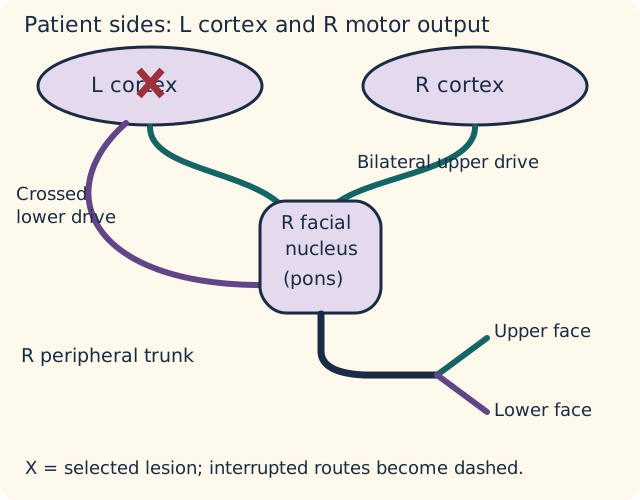
Two cortical inputs support the upper face. A lesion after their convergence can weaken the entire ipsilateral face. Original non-scale schematic. [2][3]Enlarge this diagram
Cortical commands descend to the facial nuclei. Upper facial muscles receive substantial input from both hemispheres; lower facial control is predominantly contralateral. In the classic pattern, a left supranuclear lesion weakens the right lower face more than the forehead. The other hemisphere continues to support upper facial function. Real lesions can produce less tidy patterns, so relative forehead preservation is a localization aid rather than an absolute rule.
Damage to a facial nucleus or its fascicle interrupts the final motor output on that same side. A right pontine lesion can therefore weaken the right forehead, eye closure and mouth. Nearby gaze pathways or long tracts may also be affected, producing diplopia, horizontal gaze limitation, ataxia or opposite-sided limb findings. Forehead involvement does not exclude a central lesion in the brainstem. [2]
A lesion of the peripheral facial trunk also produces ipsilateral upper and lower facial weakness. A distal branch lesion may affect only a subset of muscles. Compare these locations in the connected diagram before looking at the predicted result. The illustrated left cortex connects to the right lower facial pathway; the right nucleus and right peripheral trunk feed the right upper and lower face. Laterality refers to the patient's side, not the viewer's side.
The localizer intentionally separates where from why. Selecting a pontine lesion predicts a motor distribution; it does not diagnose a particular vascular event. Selecting the peripheral trunk predicts a distribution shared by idiopathic palsy, infection, trauma and other disorders. Transfer this principle to an actual examination: a whole-face pattern plus new diplopia requires urgent assessment rather than reassurance based on the eyebrow.
When a patient cannot name an object, check recognition without requiring speech: ask the patient to match its shape or demonstrate its use. Preserved recognition with naming failure through both sight and touch supports a language problem rather than proving loss of tactile recognition. Language findings help distinguish a hemispheric process from isolated facial nerve weakness. [13]
Describe the face before assigning the label
Bell palsy is an acute, usually unilateral peripheral facial paresis or paralysis without an identifiable alternative cause after an appropriate history and examination. Weakness typically evolves over hours and reaches its maximum within about 72 hours. An inflammatory process with swelling in a confined facial canal is a useful model, but the cause is not established in every individual. Herpes simplex reactivation is implicated; it should not be presented as proven in each patient. [1][3]
Examine the face at rest and during brow elevation, gentle and forceful eye closure, smiling and lip pursing. Look for asymmetry of the nasolabial fold and oral excursion. Assess function rather than assuming that a photograph captures the entire examination. The genuine clinical image here illustrates asymmetry; it cannot establish time course, strength, taste or the diagnosis by itself.
Ask about onset, progression, prior episodes, ear symptoms, rash, pain, trauma, surgery, tick exposure and systemic illness. Examine other cranial nerves, ocular alignment, limbs and gait as the presentation requires. An otherwise typical acute isolated peripheral palsy often does not require routine laboratory testing or imaging. This recommendation applies after clinical assessment, not instead of it. [1]
Bell phenomenon is upward, often outward, rotation of the globe on attempted eyelid closure. In facial weakness it may become visible because the lid does not cover the eye. This is a protective response exposed by weak closure, not proof of an idiopathic cause and not a guarantee that the cornea is protected. Corneal sensation enters through the ophthalmic trigeminal pathway, while facial motor output closes the lids. If touching the affected cornea triggers a normal opposite blink but the affected lid barely contracts, the observed failure is motor rather than loss of that sensory input. [11] Persistent exposure still needs care.
Predict what changes if weakness progresses over several weeks rather than stabilizing over the early days. The timing no longer fits a straightforward acute Bell palsy story. The examination may still localize to the facial nerve, but a structural, inflammatory or other cause requires investigation. Localization and diagnosis are related questions with different evidence.
Use branch functions as a map, not a required checklist
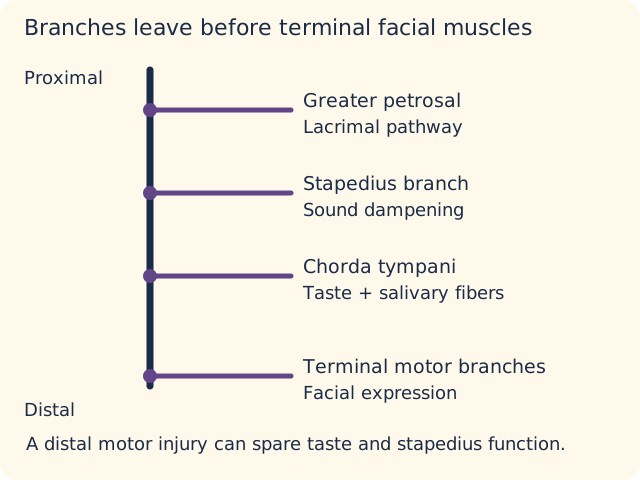
The facial nerve carries more than motor fibers for expression. Parasympathetic fibers destined for the lacrimal gland travel through the greater petrosal pathway. The nerve to stapedius supports dampening of sound; loss can cause hyperacusis, an uncomfortable amplification of ordinary sounds. Chorda tympani carries taste from the anterior two-thirds of the tongue and parasympathetic fibers to submandibular and sublingual glands. [3][5][6]
Use branch order to predict which functions a lesion can reach. Not every proximal lesion abolishes every function. Original non-scale schematic. [3]Enlarge this diagram
In the usual intratemporal sequence, greater petrosal fibers depart near the geniculate region, followed farther along by the stapedius branch and then chorda tympani before the stylomastoid exit. This sequence can bracket an explicitly complete focal injury using preserved and impaired functions. It must not be imposed as a mandatory checklist on diffuse or incomplete inflammatory palsy. [5][7] A lesion proximal to the stapedius and chorda tympani branches can combine facial weakness with hyperacusis and taste change. A lesion after those branches have departed can weaken facial expression while preserving those functions. Greater petrosal fibers leave more proximally, so preserved tearing does not force every lesion outside the temporal bone.
Use a supplied positive finding to narrow the map. If taste is altered and stapedius function is impaired, an isolated terminal motor branch injury is an incomplete explanation. But do not demand every proximal deficit before accepting a proximal lesion: involvement can be incomplete, testing is imperfect, and individual symptoms vary. The absence of a volunteered taste complaint is weaker evidence than an explicitly measured preserved function.
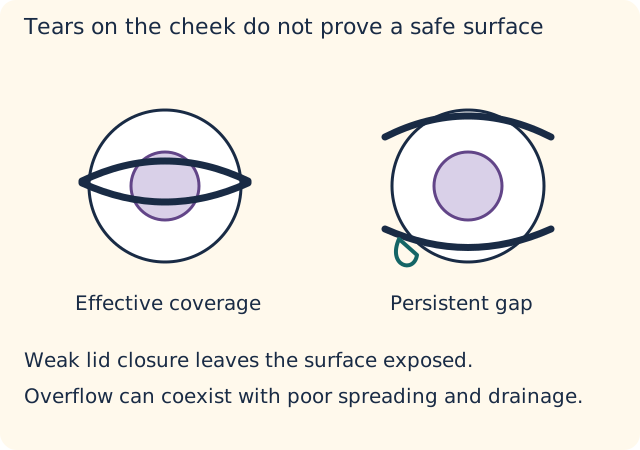
A watery eye may still have an exposed cornea. Weak blinking and eyelid malposition can impair tear spreading and drainage. Tears may spill over the lid even when the surface is inadequately protected. Reduced secretion can contribute at an appropriate branch level, but loss of lacrimation is not mandatory in Bell palsy. Examine actual closure and surface symptoms instead of equating visible tears with safety. [3]
Compare two causal changes in the localizer. Interrupting the intratemporal trunk before the stapedius and chorda branches predicts broader dysfunction than interrupting a distal buccal branch after parotid surgery. Neither exercise should suggest that the parotid gland's secretomotor supply is carried by these facial motor branches: those branches pass through the gland to facial muscles. The facial nerve's salivary parasympathetic contribution is to the submandibular and sublingual glands.
The facial nerve passes through the parotid gland but does not provide its parasympathetic secretion. That secretomotor pathway travels from the glossopharyngeal nerve through the otic ganglion and then the auriculotemporal nerve. An isolated facial motor injury can therefore spare parotid secretion when gland tissue and the other pathways remain intact. [15]
Let the accompanying findings redirect the diagnosis
Acute facial weakness with a new gaze disturbance, diplopia, dysarthria, limb deficit or severe imbalance requires urgent neurologic evaluation. A cortical pattern may preferentially affect the opposite lower face. A pontine nuclear or fascicular lesion may involve the entire ipsilateral face. Both can be strokes. Do not allow a preserved or weak forehead to replace the complete examination. [2]
Ramsay Hunt syndrome involves varicella-zoster reactivation associated with facial palsy, often severe ear pain and vesicles in the ear or nearby oral region. Hearing or vestibular symptoms can accompany it. This is an identifiable cause rather than idiopathic Bell palsy. Prompt clinical assessment and cause-specific treatment, commonly antiviral therapy with corticosteroids when appropriate, are considered alongside eye protection. The rash can appear after the weakness; absence of visible vesicles at one instant is not definitive exclusion. Sensorineural threshold loss indicates involvement beyond facial stapedius weakness, which causes sound intolerance rather than the same audiometric loss. Specialist assessment addresses the combined cranial functions. [3][10]
Lyme disease is especially relevant with compatible geography, exposure, an expanding rash, bilateral facial palsy or other neurologic manifestations. Bilateral weakness broadens the differential, including Guillain-Barre syndrome and sarcoidosis, rather than proving Lyme by itself. Appropriate Lyme evaluation and antibiotic therapy address an infection that prednisone alone cannot treat. Oral doxycycline or selected intravenous agents can be used for Lyme cranial neuropathy depending on the clinical setting; central parenchymal involvement changes the treatment question. [4]
For established Lyme-associated facial palsy, evidence is insufficient to recommend for or against adding corticosteroids to antibiotics. Conversely, in an adult with acute facial palsy and no objective clinical or serologic evidence of Lyme disease, merely awaiting a test should not automatically forfeit the time-sensitive steroid benefit for likely Bell palsy. State what is known and what remains uncertain. [4]
Progressive weakness, recurrence on the same side, a parotid mass, another cranial neuropathy or failure to recover requires reconsideration and appropriate referral or imaging. Otologic infection and trauma have their own histories and examinations. Myasthenia can produce facial weakness with fluctuating ocular or bulbar dysfunction; that pattern differs from a fixed unilateral distribution. A diagnosis of exclusion is an active search for discordant findings, not simply a normal scan.
Bilateral facial weakness with progressive limb weakness and absent reflexes can signal an acute polyradiculoneuropathy. Cerebrospinal-fluid protein can still be normal during its first week, so that early result does not erase the clinical pattern. Weakening cough or a falling vital capacity requires urgent respiratory assessment; values below approximately 15 to 20 mL/kg are concerning even before oxygen saturation falls. Serial measurements assess a different risk from a single normal oxygen reading. [14]
Protect the cornea and use the treatment window correctly
For patients aged 16 years or older with new Bell palsy, oral corticosteroids started within 72 hours improve recovery and are recommended by the AAO-HNS guideline. Assess contraindications and context rather than turning the age threshold into a universal prescription. Diabetes may require glucose monitoring and a tailored plan. Pregnancy requires individual risk-benefit assessment and obstetric coordination. Children are not automatically covered by the adult recommendation. An underpowered pediatric randomized trial did not demonstrate improved complete recovery at one month; it could not exclude important benefit or harm. The guideline includes adolescents aged 16 and older, but evidence for a younger child needs a separate discussion. [8][1][3][6]
Inspect eyelid closure and the ocular surface even when tears overflow. The eye symbols show impaired closure and altered tear drainage. [1][3]Enlarge this diagram
Antivirals alone are not recommended treatment for Bell palsy. An antiviral may be offered in addition to corticosteroids within the early window, with the limited or uncertain additional benefit explained. Severe paralysis may influence that discussion, but an optional adjunct should not be described as mandatory for every case. A zoster diagnosis changes the rationale for antiviral use. [1]
Assess eyelid closure immediately. Impaired blink or closure leaves the cornea exposed, disrupting lubrication and risking epithelial injury. Daytime lubrication and an appropriate nighttime protection strategy are important. A clinician should demonstrate effective closure or protection; simply covering an incompletely closed eye does not guarantee safety. New pain, redness, light sensitivity or reduced vision warrants prompt reassessment and eye care. [1][3]
The mechanism predicts the priority: a motor deficit in orbicularis oculi can threaten the ocular surface even if taste, hearing and tear production are preserved. Eye protection is not conditional on choosing a steroid, an antiviral or a final etiology. Likewise, treatment of a suspected stroke or infection does not eliminate the need to protect an exposed cornea.
Under the AAO-HNS guideline, routine electrodiagnostic testing is not recommended for a typical incomplete palsy. It may be offered in complete paralysis to help selected prognostic decisions. Neither a routine MRI nor an extensive laboratory panel should delay appropriate early care in a clinically typical presentation. An atypical presentation is a different decision and deserves targeted investigation.
Recovery needs a return plan
Many patients improve over weeks to months, but the course varies. Describe the observed deficit and recovery trajectory rather than guaranteeing complete recovery by a particular date. Facial appearance, eating, communication and comfort can all be affected; supportive explanation and follow-up have practical value. [1][3]
Reassess or refer for new or worsening neurologic findings at any time, ocular symptoms at any time, or incomplete facial recovery three months after onset. Earlier reassessment is appropriate when the course is atypical. Progressive weakness or same-sided recurrence deserves renewed investigation even if an earlier episode was called Bell palsy. Do not use the three-month threshold as permission to ignore a new warning today. [1]
Synkinesis is unintended accompanying activity, such as narrowing of the eye during smiling, after aberrant recovery of facial motor control. It is different from a new isolated cortical weakness pattern. Persistent weakness or synkinesis can merit facial nerve specialist assessment. The presence of some recovery does not eliminate the need to address functional complications.
At follow-up, repeat the same three decisions: Does the distribution still fit the proposed location? Does the course still fit the proposed cause? Is the cornea safe? A useful explanation survives a changed finding; a memorized forehead rule does not.
During recovery, compare unwanted activity with the voluntary task that triggers it. Eye narrowing that consistently accompanies a smile differs from a fixed contracture or spontaneous resting contractions. Abnormal motor reinnervation can link facial territories; an improved smile therefore does not guarantee independent eyelid control. [9]
Practice localization and management
These original educational cases require the examination and time course to support the decision. Predict an answer before reading the choices, then compare every explanation.
Case 1
Show answer and explanations for case 1
A. Left supranuclear injury with tactile object-recognition failure rather than a naming disorder (Why this does not fit)
The left supranuclear localization fits the face and hand distribution. Successful nonverbal matching and use show that tactile recognition is functioning, while naming also fails with visual presentation. A failed spoken label alone does not establish cortical sensory loss.
B. Right pontine facial injury with impaired naming rather than demonstrated loss of object recognition (Why this does not fit)
The cross-modal naming interpretation fits the object testing. A right pontine facial final-output lesion would not account for the preserved upper-face strength together with the right hand and language deficits as one lesion. Localize the motor distribution independently of interpreting the cognitive test.
C. Right pontine facial injury with tactile object-recognition failure rather than a naming disorder (Why this does not fit)
A pontine facial lesion can cause unilateral facial weakness but does not explain this relative upper-face preservation and associated hand-language pattern. The proposed tactile recognition failure also conflicts with accurate nonverbal matching and use of the object. Both the facial level and the tested function must fit the observations.
D. Left supranuclear injury with impaired naming rather than demonstrated loss of object recognition (Best answer)
Right lower-face and hand dysfunction with strong upper-face movement favors a left supranuclear process. Correct matching and use through touch, with naming failure through both touch and sight, support a language-retrieval problem rather than loss of tactile recognition. Separate the ability to recognize an object from the ability to produce its name.
Takeaway: A nonverbal recognition check prevents anomia from being mislabeled as a cortical sensory deficit.
A. Right peripheral facial trunk, oculomotor nerve and adjacent trigeminal division (Why this does not fit)
A peripheral facial lesion could produce whole-face weakness and a third-nerve lesion could impair adduction. Preserved vertical movements and loss of conjugate right gaze are not explained by that pair. A single nearby brainstem localization fits the supplied pattern better than these two peripheral lesions.
B. Right facial fascicle, abducens nucleus and medial longitudinal fasciculus (Best answer)
The whole right face localizes to its final motor pathway rather than a purely left cortical input. Loss of right conjugate gaze plus impaired right adduction on left gaze places neighboring gaze and internuclear pathways in the right pons. One pontine region can therefore explain the facial and patterned binocular deficits.
C. Left corticobulbar tract, frontal eye field and adjacent motor cortex (Why this does not fit)
A left hemispheric lesion can affect the right lower face and gaze commands. It does not account for this whole-face final-output pattern with a specific right adduction deficit while the left eye abducts. The dissociated eye movements refine localization to pontine circuitry.
D. Right facial fascicle, abducens fascicle and adjacent corticospinal tract (Why this does not fit)
A right facial and abducens fascicular lesion could weaken the right face and right eye abduction. It would not explain failure of left-eye adduction on right gaze or the right-eye adduction deficit on left gaze. Distinguish a single lateral-rectus output lesion from a conjugate gaze and internuclear lesion.
Takeaway: Whole-face weakness can accompany a precise pontine gaze syndrome; the forehead does not exclude stroke.
A. Oral antiviral monotherapy now with lubrication and nighttime protection (Why this does not fit)
Eye protection addresses the supplied closure deficit. Antiviral monotherapy lacks the recommended role of corticosteroids in early idiopathic palsy, and the examined ear provides no vesicular alternative to change that treatment rationale. A correct eye plan does not make the systemic drug choice equivalent.
B. Oral corticosteroids now with ocular review only if pain develops (Why this does not fit)
Early corticosteroids fit the likely diagnosis and timing. The already visible closure gap requires protection before pain signals injury, so symptom-triggered eye care omits a current risk. Prevent exposure rather than waiting for a complication.
C. Oral corticosteroids now with lubrication and effective nighttime eye protection (Best answer)
The acute isolated whole-face pattern after assessment for identifiable alternatives supports Bell palsy. Presentation within 72 hours and impaired closure independently supply the indications for early corticosteroids and corneal protection. Treatment of recovery and prevention of exposure injury are complementary goals.
D. Lubrication and nighttime protection with delayed drug selection after routine MRI (Why this does not fit)
Protection is appropriate while facial function recovers. The assessed typical pattern does not call for routine MRI before treatment, and delay would consume a meaningful part of the early steroid window. Targeted investigation for atypical findings differs from routine imaging of every isolated palsy.
Takeaway: First establish the likely cause; then address both the treatment window and the measured closure deficit.
A. Increased lacrimal secretion with deficient tear spreading (Why this does not fit)
Poor spreading fits the observed uncovered inferior cornea. Increased production is a weaker explanation for overflow than the measured symmetric production and visibly displaced punctum with retained tear fluid. The two ocular symptoms need not share a secretory cause.
B. Impaired lid-dependent drainage with deficient tear spreading (Best answer)
The patent irrigated pathway and preserved production shift attention to the displaced punctum and ineffective blink rather than a blocked duct or absent secretion. Pooling can therefore coexist with poor tear spreading and exposed inferior cornea instead of showing that the ocular surface is adequately covered. Analyze tear exit and surface coverage separately when watering accompanies facial weakness.
C. Impaired lid-dependent drainage with deficient aqueous production (Why this does not fit)
The punctal position and patent ducts support a lid-dependent drainage problem. Deficient aqueous production conflicts with the measured normal bilateral secretion, whereas incomplete coverage directly accounts for the inferior injury. Determine whether the missing protection is fluid supply or distribution.
D. Obstruction within the drainage duct with deficient tear spreading (Why this does not fit)
Deficient spreading fits the exposed strip and epithelial staining. A fixed obstruction within the duct is weakened by free irrigation, while the visibly displaced punctum supplies a functional entry and pump problem. Distinguish an open conduit from effective drainage during blinking.
Takeaway: Watering does not demonstrate adequate corneal coverage; production, drainage and spreading are distinct functions.
A. Terminal lower-lip motor branch; preserved right submandibular parasympathetic drive (Best answer)
Selective lower-lip weakness with the other facial territories intact favors a terminal motor-branch injury rather than complete interruption of the main trunk. Submandibular parasympathetic fibers leave the facial pathway through chorda tympani before these terminal motor divisions, so that secretomotor drive should remain intact. Bound the motor lesion before predicting whether nonmotor fibers pass through it.
B. Terminal lower-lip motor branch; reduced right submandibular parasympathetic drive (Why this does not fit)
The terminal motor localization fits the selective weak territory. Reduced submandibular drive would require involvement of the more proximal chorda-containing pathway or another lesion, which the stated single terminal injury does not include. A correct motor branch does not carry every facial-associated function.
C. Facial trunk proximal to chorda departure; reduced right submandibular parasympathetic drive (Why this does not fit)
A complete interruption before chorda departure could reduce the predicted secretomotor output. It would also impair the other facial motor territories that are explicitly preserved, so this paired lesion does not fit the examination. A plausible autonomic prediction cannot rescue a contradictory motor distribution.
D. Facial trunk proximal to chorda departure; preserved right submandibular parasympathetic drive (Why this does not fit)
The proposed complete trunk injury would affect more facial motor territories than the isolated lower-lip deficit. Being proximal to chorda departure would additionally interrupt rather than preserve its parasympathetic fibers under the stated assumption. Both the motor extent and the branch order must agree with the proposed pair.
Takeaway: A terminal motor injury can spare secretomotor fibers that already left the facial trunk.
A. Distal to the stapedius branch but proximal to chorda tympani (Why this does not fit)
This interval could combine taste and facial motor deficits while preserving lacrimation. It would spare the already departed stapedius pathway, conflicting with the documented stapedius dysfunction. An extra lost branch pushes the lesion proximal to its departure.
B. Within the intratemporal facial trunk proximal to greater petrosal departure (Why this does not fit)
A lesion this proximal could impair stapedius, taste and facial motor output. Under the stated complete-interruption assumption it would also interrupt lacrimal secretory fibers, conflicting with measured preservation. The assumption makes the spared function useful for bracketing the level.
C. Distal to the greater petrosal branch but proximal to the stapedius branch (Best answer)
Preserved lacrimal secretion places the complete focal interruption after the greater petrosal fibers have departed. Combined stapedius, taste and facial motor dysfunction requires it to remain proximal to the stapedius and chorda branches. Use preserved proximal function and lost downstream functions to bound an interval.
D. Distal to chorda tympani but proximal to the parotid motor division (Why this does not fit)
This interval could produce whole-face motor weakness with preserved secretion. It would preserve taste and stapedius function, both explicitly impaired here. Whole-face weakness alone cannot locate the injury within the temporal course.
Takeaway: Under a complete focal-lesion assumption, preserved and lost branch functions bracket the injury.
A. Parasympathetic drive to the right lacrimal gland (Why this does not fit)
Lacrimal fibers travel through the greater petrosal route. Measured tear secretion is preserved, supporting a lesion after that branch rather than one that interrupts its output. The predicted deficit should follow the implicated branch, not merely another facial-associated function.
B. Parasympathetic drive to the right submandibular and sublingual glands (Best answer)
Taste loss with spared stapedius and lacrimal functions places the focal interruption proximal to chorda departure but distal to the earlier branches. Chorda also carries parasympathetic fibers toward the submandibular and sublingual glands, so those fibers share the affected interval. Do not equate all salivary output with the motor branches traversing the parotid.
C. General touch sensation from the right anterior tongue (Why this does not fit)
Chorda carries taste from this region but general sensation follows the lingual nerve. Preserved tongue touch is explicitly supplied and separates the two modalities. Taste loss does not imply that every sensory fiber from the same surface is injured.
D. Secretomotor drive to the right parotid gland (Why this does not fit)
The facial motor nerve passes through the parotid region, making this a tempting gland association. Parotid secretomotor fibers do not travel in chorda tympani, whereas the lost taste and spared earlier branches implicate that facial pathway. Anatomical proximity to a gland does not establish its autonomic supply.
Takeaway: Chorda-related taste and submandibular/sublingual secretory fibers share a route; tongue touch does not.
A. Zoster-associated disease; inner-ear or eighth-nerve auditory involvement (Best answer)
Severe otalgia followed by canal vesicles supports a zoster-associated rather than an assessed idiopathic or middle-ear bacterial cause. The elevation of both air and bone thresholds without a significant gap shows a sensorineural deficit, which requires auditory involvement beyond an isolated facial stapedius branch. Identify the etiology and then use the measurements to distinguish lost hearing sensitivity from sound intolerance.
B. Zoster-associated disease; isolated facial stapedius motor involvement (Why this does not fit)
The temporal sequence of pain and vesicles fits zoster-associated disease. Stapedius weakness can make sounds seem excessively loud but does not explain the measured elevation of both air and bone thresholds, so this compartment does not account for the new deficit. A supported cause does not identify every involved function.
C. Bacterial middle-ear disease; inner-ear or eighth-nerve auditory involvement (Why this does not fit)
The parallel threshold elevation supports an auditory deficit beyond conductive transmission. The absent middle-ear effusion and bulging membrane, together with fresh vesicles, favor a zoster-associated process over the proposed bacterial middle-ear source in this comparison. Interpret the cause from the associated examination rather than from the audiogram alone.
D. Bacterial middle-ear disease; conductive sound-transmission impairment (Why this does not fit)
Middle-ear infection can sometimes accompany facial weakness and a conductive hearing change. Here there is neither the described middle-ear inflammatory finding nor a significant air-bone gap, while the vesicles and parallel threshold rise support a different cause and auditory compartment. Both the etiologic and functional parts of the proposed explanation must fit.
Takeaway: Hyperacusis from stapedius weakness and sensorineural hearing loss are different findings.
A. Switch to oral doxycycline for 12 additional days (Best answer)
The current cranial and radicular manifestation without parenchymal brain or cord involvement permits doxycycline once oral treatment is feasible. Five intravenous days plus twelve oral days gives seventeen treatment days, within the recommended fourteen-to-twenty-one-day course rather than restarting the clock at a route change. Match the present manifestation and count effective treatment across routes.
B. Switch to oral amoxicillin for 12 additional days (Why this does not fit)
The proposed seventeen-day total correctly counts both routes. Amoxicillin treats selected nonneurologic manifestations but is not one of the recommended oral regimens for the cranial and radicular syndrome described here. A correct duration does not correct a regimen chosen for the earlier rash alone.
C. Switch to oral doxycycline for 5 additional days (Why this does not fit)
Doxycycline is suitable for the described nonparenchymal neurologic manifestation with restored oral tolerance. Five intravenous and five oral days total ten days, below the recommended fourteen-to-twenty-one-day interval for this manifestation. Do not borrow a shorter course from a different Lyme presentation.
D. Switch to oral doxycycline for 21 additional days (Why this does not fit)
The oral agent fits and changing routes is permitted. Adding a fresh twenty-one-day course to five effective intravenous days produces twenty-six days without a supplied indication for extension, because route change does not erase completed therapy. Count the total effective course rather than beginning again at discharge.
Takeaway: A route change can complete the same neurologic Lyme course; it does not reset its duration.
A. Use doxycycline alone as the default treatment for an endemic-area resident (Why this does not fit)
Doxycycline can treat a supported Lyme cranial neuropathy. The patient currently has no objective evidence of Lyme disease, so residence alone does not justify substituting an infection-only plan for indicated early idiopathic care. Use exposure context to guide assessment without treating it as diagnostic proof.
B. Use antiviral monotherapy until either etiology is established (Why this does not fit)
An antiviral may be discussed as an adjunct in selected early idiopathic cases. It is not recommended as steroid-replacing monotherapy and does not treat Lyme infection, so it does not resolve the actual uncertainty. A bridging drug must have evidence for the condition it is intended to cover.
C. Wait for the Lyme result before deciding about corticosteroids (Why this does not fit)
A confirmed infectious cause would change the certainty of the steroid evidence. At present objective evidence is absent, and the stated turnaround would forfeit the early idiopathic-palsy treatment window. A pending test is not equivalent to an established alternative diagnosis.
D. Start early corticosteroid treatment while following the pending Lyme evaluation (Best answer)
The assessed isolated acute pattern remains compatible with idiopathic palsy, while geography alone does not establish Lyme disease. Waiting four days would miss the recommended early steroid interval for a patient aged at least 16 without objective Lyme evidence. Diagnostic uncertainty and a treatment window must be considered together.
Takeaway: A pending Lyme test without objective evidence should not automatically consume the early idiopathic-palsy steroid window.
A. Use an intravenous antibiotic regimen; reconsider facial-recovery prednisone individually (Best answer)
The added long-tract findings and attributed cord lesion place this presentation in the parenchymal central nervous system category, for which the Lyme guideline favors intravenous over oral antibiotics. Confirmed Lyme facial palsy separately has an adjunct-steroid evidence gap, so the existing facial-recovery course needs individualized reconsideration rather than automatic transfer of idiopathic-palsy efficacy. Classify the infected compartment and the treatment evidence question independently.
B. Use an oral doxycycline regimen; reconsider facial-recovery prednisone individually (Why this does not fit)
Oral doxycycline is an accepted option for several neurologic Lyme manifestations without brain or cord parenchymal involvement. The new attributed cord lesion changes that route category even though oral absorption is intact, while the individualized steroid discussion remains appropriate. Practical oral feasibility does not override a different manifestation-specific recommendation.
C. Use an intravenous antibiotic regimen; complete prednisone because its facial benefit is established here (Why this does not fit)
The intravenous route matches the stated parenchymal cord involvement. The evidence for early steroids in idiopathic palsy does not establish an additional facial-recovery benefit once Lyme disease is the identified cause. A correct antimicrobial route does not validate a separate extrapolation of treatment benefit.
D. Use an oral doxycycline regimen; complete prednisone because its facial benefit is established here (Why this does not fit)
This plan treats oral feasibility as sufficient despite the stated parenchymal lesion. It also imports proven idiopathic-palsy steroid benefit into the unresolved Lyme adjunct question, so the two decisions each require revision. Neither the original diagnosis nor the original regimen should replace reassessment of new evidence.
Takeaway: A new involved compartment can change antibiotic route while a changed cause alters the certainty of a separate drug benefit.
A. Extratemporal facial trunk injury; parotid parasympathetic secretion is directly interrupted (Why this does not fit)
The motor distribution and spared proximal functions support the proposed extratemporal facial location. Parotid secretion uses another cranial parasympathetic pathway that the stem preserves, so loss of facial motor output does not directly establish secretomotor denervation of the gland. Anatomical proximity alone does not identify functional innervation.
B. Facial trunk injury proximal to chorda departure; parotid parasympathetic secretion can remain intact (Why this does not fit)
Parotid secretion can remain intact with an isolated facial injury. The proposed complete proximal interruption would additionally affect chorda functions such as anterior tongue taste, which is preserved. A correct gland prediction does not rescue a contradictory facial branch boundary.
C. Extratemporal facial trunk injury; parotid parasympathetic secretion can remain intact (Best answer)
Loss across facial motor territories with preserved proximal branch functions fits a trunk lesion after those branches have departed. Parotid secretomotor fibers arrive through the glossopharyngeal pathway and otic ganglion rather than through the facial trunk traversing the gland, so the stipulated isolated nerve injury need not abolish gland secretion. Distinguish passage through a gland from providing its secretomotor supply.
D. Facial trunk injury proximal to chorda departure; parotid parasympathetic secretion is directly interrupted (Why this does not fit)
A complete injury before chorda departure would not spare the observed taste pathway. Parotid secretomotor supply also does not travel through this facial segment, so direct gland denervation does not follow from the proposed lesion. Check both the facial branch order and the independent gland supply.
Takeaway: The facial nerve traverses the parotid gland but does not provide its parasympathetic secretion.
A. Contrast-enhanced MRI covering the cerebellopontine angle, internal auditory canal and facial nerve course (Best answer)
Recurrent facial dysfunction with sensorineural hearing loss suggests involvement beyond a distal facial motor branch. Reduced corneal sensation adds trigeminal involvement, making a proximal cranial-nerve region important while the entire facial course is assessed. The additional nerves determine why imaging must extend beyond the parotid.
B. Brain MRI with coverage restricted to the contralateral cortical motor region (Why this does not fit)
A cortical lesion can cause contralateral lower-face weakness. Whole-face weakness with ipsilateral sensorineural hearing loss and corneal sensory loss does not fit that restricted cortical target. Multiple neighboring cranial functions can point toward a proximal peripheral or skull-base region.
C. Noncontrast temporal-bone CT with dedicated evaluation of the middle-ear ossicles (Why this does not fit)
Conductive hearing loss or destructive middle-ear disease can make bony imaging useful. The audiogram lacks an air-bone gap and corneal sensation is reduced, so an ossicular study does not address the combined cranial neuropathies. Choose imaging from the type of hearing loss and associated nerve findings.
D. Ultrasound of the parotid gland with imaging limited to its deep lobe (Why this does not fit)
A parotid lesion can cause facial weakness and merits attention when examination suggests it. It would not account for the supplied hearing and corneal sensory abnormalities, and the parotid examination is normal. Imaging limited to a distal facial segment would omit the region implicated by multiple cranial nerves.
Takeaway: Recurrence with other cranial-nerve deficits changes both the reason for imaging and the required coverage.
A. Lacrimal secretory failure from impaired greater petrosal output (Why this does not fit)
A proximal facial-pathway lesion can reduce tear secretion and damage the surface. Here measured production is preserved, whereas the location of staining matches the area the weak eyelid fails to cover. Identify whether the current defect is fluid production or protective distribution.
B. Herpetic epithelial keratitis accompanying renewed facial nerve inflammation (Why this does not fit)
Herpetic disease is a relevant alternative when facial symptoms and an epithelial lesion coexist. This examination instead shows exposure-pattern staining without a dendrite and improving facial strength, so recurrent viral inflammation is less directly supported than the mechanical defect. An etiologic possibility should not displace the process demonstrated by the examination.
C. Anterior uveitis causing reflex tearing and visual disturbance (Why this does not fit)
Anterior uveitis can produce a red eye and impaired vision. The anterior chamber is quiet and the observed abnormality is an exposed epithelial strip, so the supplied examination localizes the problem to the surface rather than intraocular inflammation. Use the anatomic site of injury to select the initial protective target.
D. Exposure injury from impaired lid coverage and tear-film distribution (Best answer)
The closure gap and matching inferior epithelial injury connect the surface problem to incomplete coverage despite preserved tear production. The absence of the specified infectious or inflammatory patterns strengthens that interpretation, while improving facial strength does not itself protect the still-exposed strip. Treat the demonstrated ocular complication on its own timetable.
Takeaway: A surface complication can require prompt care even while the facial motor deficit is improving.
A. Right corneal stimulation: neither lid blinks; left stimulation: left blink only (Why this does not fit)
This pairing would fit removal of right sensory input with preserved left input. The anesthetized surface is the left cornea, so it reverses which stimulus can still reach the blink circuitry. The side being stimulated is not necessarily the side of the responding eyelid.
B. Right corneal stimulation: both lids blink; left stimulation: neither lid blinks (Why this does not fit)
Left sensory blockade correctly predicts loss of a response to left corneal touch. It does not restore the right facial motor output that already failed with either stimulus, so right stimulation still closes only the left lid. Removing an afferent signal cannot repair an independent efferent deficit.
C. Right corneal stimulation: left blink only; left stimulation: left blink only (Why this does not fit)
The first response preserves the correct right-input and left-output pathway. The second disregards the new left corneal sensory blockade, which prevents that stimulus from initiating a blink despite intact left facial power. Preserved motor capacity does not create a reflex when its tested sensory input is absent.
D. Right corneal stimulation: left blink only; left stimulation: neither lid blinks (Best answer)
The original bilateral stimulation results identify preserved sensory input on both sides but failed right facial motor output. Blocking only the left sensory input leaves the right stimulus able to activate the intact left motor pathway, whereas left stimulation can no longer initiate the reflex. Trace the stimulated afferent limb and each available motor limb separately.
Takeaway: Identify the defective reflex limb before predicting the effect of blocking a different input.
A. The older patient fits the strong early steroid recommendation; pediatric benefit requires a separate discussion (Best answer)
The 17-year-old falls within the guideline recommendation for patients at least 16 years old treated within 72 hours. The pediatric trial included children younger than 18, so its population overlaps that recommendation; it did not establish one-month benefit and cannot establish a biological treatment discontinuity at age 16. Apply the stated recommendation while discussing pediatric uncertainty rather than pretending the evidence populations are disjoint.
B. Both patients have the same established steroid benefit because onset is within 72 hours (Why this does not fit)
Early presentation is relevant to the adult recommendation. It does not erase the age difference in the trial populations and pediatric uncertainty, so equal established benefit cannot be inferred. Evidence applicability depends on both timing and population.
C. Neither patient fits the early steroid recommendation until age 18 (Why this does not fit)
A legal adulthood threshold might seem to define an adult treatment recommendation. The relevant guideline includes patients aged 16 and older, so excluding the 17-year-old misapplies its actual population. Read the evidence boundary rather than substituting an assumed one.
D. The younger patient should receive antiviral monotherapy in place of uncertain steroids (Why this does not fit)
Pediatric steroid uncertainty requires an age-appropriate discussion. It does not establish antiviral monotherapy as an effective substitute, while the older adolescent retains an early steroid indication. Uncertainty about one intervention is not evidence for another.
Takeaway: An identical facial pattern does not make adult and pediatric treatment evidence interchangeable.
A. Individualize early corticosteroids with a glucose-management plan; routinely order electrodiagnostics for severe weakness (Why this does not fit)
The systemic treatment plan recognizes both timing and the specific metabolic risk. Marked weakness is not synonymous with complete paralysis when reproducible mouth contraction remains, so severity alone does not support the proposed routine test. Base the testing category on whether motor activity is absent, not merely small.
B. Individualize early corticosteroids with a glucose-management plan; do not routinely order electrodiagnostics (Best answer)
Early corticosteroid benefit is relevant to the assessed acute idiopathic presentation, but the documented glucose vulnerability requires an individualized decision and glucose plan. The retained mouth contraction establishes incomplete rather than complete paralysis, for which routine electrodiagnostic testing is not recommended. Treatment risk and residual motor function answer different parts of the plan.
C. Substitute antiviral monotherapy as an equivalent recovery treatment; do not routinely order electrodiagnostics (Why this does not fit)
Avoiding steroid-related hyperglycemia is a legitimate preference and the testing decision fits incomplete paralysis. Antiviral monotherapy has not demonstrated an equivalent recovery role in idiopathic palsy, so the proposed substitution misstates the tradeoff. A safer drug profile does not establish comparable benefit.
D. Substitute antiviral monotherapy as an equivalent recovery treatment; routinely order electrodiagnostics for severe weakness (Why this does not fit)
The proposed alternative avoids one drug risk but assigns unsupported recovery equivalence to antiviral monotherapy. It also classifies severe weakness as complete despite retained contraction, giving the wrong basis for routine electrodiagnostics. Assess treatment evidence and functional completeness separately.
Takeaway: Retained contraction changes the testing category; a metabolic exception changes the treatment discussion.
A. Individualize the early steroid discussion in pregnancy; routinely order electrodiagnostic testing (Why this does not fit)
The pregnancy-specific steroid discussion appropriately acknowledges evidence limits. Severe upper-face weakness does not make the palsy complete while a mouth contraction remains, so routine electrical testing does not follow the completeness-based recommendation. Classify retained function rather than using eye weakness alone as the severity label.
B. Apply the trial regimen without a pregnancy-specific discussion; do not routinely order electrodiagnostic testing (Why this does not fit)
The testing decision correctly recognizes incomplete paralysis from retained mouth contraction. The steroid choice still needs attention to pregnancy rather than treating early presentation as proof of identical trial applicability. One correctly applied criterion does not resolve an independent population limitation.
C. Apply the trial regimen without a pregnancy-specific discussion; routinely order electrodiagnostic testing (Why this does not fit)
This approach extends the standard trial population to pregnancy without an individualized discussion. It also treats severe facial weakness as complete despite observed contraction, placing the patient in the wrong electrodiagnostic category. Check both the population and the functional definition before applying their recommendations.
D. Individualize the early steroid discussion in pregnancy; do not routinely order electrodiagnostic testing (Best answer)
Pregnancy limits direct application of the principal steroid-trial population and calls for an individualized discussion within the early interval. Any retained mouth contraction makes the palsy incomplete, the group for which routine electrodiagnostic testing is not recommended. Evidence-population applicability and motor completeness answer different questions.
Takeaway: Severe weakness can remain incomplete, and early presentation does not erase a trial-population exception.
A. Offer testing to A but not B because retained motion makes testing useful (Why this does not fit)
Retained motion can seem like a reason to measure residual function. The guideline recommends against routine electrodiagnostic testing in incomplete palsy and allows it in complete paralysis, so this allocation reverses the relevant categories. Apply the recommendation after correctly classifying the observed function.
B. Do not routinely test A; electrodiagnostic testing may be offered to B (Best answer)
Visible mouth contraction makes A incomplete even though eye closure and forehead function are severely impaired. B has complete paralysis, the group in which electrodiagnostic testing may be offered for selected prognostic decisions. Classify completeness from any retained motor function before applying the testing recommendation.
C. Offer testing to both because each has impaired eye closure (Why this does not fit)
Impaired closure requires protection and can occur in severe palsy. It does not establish complete paralysis when mouth contraction remains, so it does not place A in the same testing category as B. Ocular risk and motor completeness answer different questions.
D. Defer testing decisions for both until three-month facial reassessment (Why this does not fit)
The three-month threshold concerns incomplete recovery and referral. It does not replace the distinct early prognostic-testing option for complete paralysis, so it cannot determine both requests solely by waiting. Different clinical questions have different timing rules.
Takeaway: Even faint retained contraction makes paralysis incomplete; severe eye weakness alone does not make it complete.
A. Reinnervation-related synkinesis; continue routine observation until twelve months (Why this does not fit)
The task-linked reciprocal contraction pattern fits reinnervation-related synkinesis. Waiting twelve months overlooks the existing three-month incomplete-recovery criterion and the functional problem already evident, even though later stabilization matters for definitive procedures. The timing of reassessment is not the same as the timing of irreversible intervention.
B. Recurrent acute facial neuropathy; arrange facial specialist reassessment now (Why this does not fit)
Reassessment is appropriate for incomplete recovery at the current interval. A recurrent acute neuropathy would be supported by renewed weakness, whereas the stem instead describes recovery with reproducible cross-activation and no new strength loss. The correct referral timing does not establish the proposed cause.
C. Reinnervation-related synkinesis; arrange facial specialist reassessment now (Best answer)
Reciprocal contractions tied to voluntary tasks during recovery support synkinesis rather than a new episode of denervation. Partial recovery at three months independently meets the reassessment threshold even with a protected cornea and no new limb deficit, and assessment can address the abnormal co-contraction. Recovery-related coupling and incomplete recovery should be evaluated rather than conflated with recurrent acute palsy.
D. Recurrent acute facial neuropathy; continue routine observation until twelve months (Why this does not fit)
The description does not show a fresh loss of facial output but rather involuntary recruitment during recovered voluntary actions. Deferring review also misses the present incomplete-recovery threshold, so neither the explanation nor the follow-up interval fits. Interpret the movement pattern before choosing the phase-appropriate plan.
Takeaway: Task-linked co-contraction is different from renewed weakness, and incomplete recovery at three months warrants reassessment.
A. A new complete facial motor conduction block (Why this does not fit)
Recurrent nerve injury can reduce facial function. This patient instead has improving strength and unwanted contractions during specific efforts, not newly absent output, so a complete block predicts the wrong direction of change. Recovery can be functionally abnormal even when force returns.
B. Aberrant facial motor reinnervation producing task-linked synkinesis (Best answer)
The reciprocal unintended contractions arise during recovery and are consistently linked to voluntary activation of another facial territory. That pattern supports synkinesis from abnormal motor reinnervation rather than a new loss of facial output. The timing and dependence on a voluntary task distinguish linked recovery activity from resting spasm or recurrent paralysis.
C. Persistent facial muscle contracture producing fixed narrowing (Why this does not fit)
Contracture can cause lasting asymmetry after facial palsy. The eye and mouth changes here appear reciprocally with voluntary tasks and are absent between them, which favors linked activation over a fixed resting posture. Observe whether asymmetry is sustained or task-dependent.
D. Spontaneous hemifacial motor spasm unrelated to voluntary tasks (Why this does not fit)
Hemifacial spasm can cause involuntary contractions and is a reasonable competing motor phenomenon. The supplied absence of spontaneous activity and reproducible reciprocal coupling to smile or closure better support postparalytic synkinesis. The trigger pattern helps distinguish two forms of unwanted facial activity.
Takeaway: Unwanted task-linked contractions during recovery differ from renewed weakness or fixed contracture.
A. NNT 8 in the studied population; the same benefit from starting on day eight is not established (Why this does not fit)
A reciprocal near 8 follows from the nine-month difference of 0.944 minus 0.816. The timing limitation is correctly recognized, but the question asks for an additional three-month recovery rather than the later outcome. A valid calculation for a different endpoint does not answer the specified question.
B. NNT 6 in the studied population; the same benefit is established for starting on day eight (Why this does not fit)
The three-month difference correctly gives a rounded-up NNT of 6. Extending that number to initiation on day eight exceeds the trial enrollment window and is not established by these results. An accurate effect estimate still requires an applicability judgment.
C. NNT 6 in the studied population; the same benefit from starting on day eight is not established (Best answer)
At three months the absolute benefit was 0.830 minus 0.636, or 0.194, giving a reciprocal of about 5.15 and a rounded-up NNT of 6. Enrollment within 72 hours does not directly establish the same benefit when treatment first starts eight days after onset. Calculate the requested outcome and then check whether the patient matches the treatment timing.
D. NNT 8 in the studied population; the same benefit is established for starting on day eight (Why this does not fit)
The number 8 uses the later nine-month comparison rather than the requested three-month endpoint. It also transfers an early-start result to an unstudied delayed start, so both the outcome selection and applicability need correction. Match time of outcome and time of treatment separately.
Takeaway: An effect estimate has both an outcome time and a treatment-start population.
A. A: cause-directed treatment for the identified illness; B: optional adjunct to corticosteroids (Why this does not fit)
Severe paralysis alone does not identify a viral cause in A. B has the concrete vesicular audiovestibular findings, so assigning the cause-directed rationale to A and only the idiopathic adjunct rationale to B reverses the evidentiary distinction. The associated findings, not equal motor severity, distinguish these roles.
B. A: optional adjunct to corticosteroids; B: optional adjunct under the same idiopathic evidence (Why this does not fit)
The description of A fits the optional adjunct role. B has a cause-identifying syndrome absent in A, so the same idiopathic evidence category does not account for B even though the motor and eye-care needs overlap. Similar deficits can arise from etiologies with different treatment rationales.
C. A: cause-directed treatment for the identified illness; B: cause-directed treatment for the identified illness (Why this does not fit)
The cause-directed description fits B because the ear lesions and new hearing loss identify a specific alternative. A lacks that evidence after assessment and remains in the idiopathic category, so the claim of an identified illness in A is unsupported. Do not infer a demonstrated pathogen from paralysis severity alone.
D. A: optional adjunct to corticosteroids; B: cause-directed treatment for the identified illness (Best answer)
A has an assessed idiopathic syndrome, for which an antiviral can be discussed as a steroid adjunct rather than an established substitute. B has a vesicular otic illness with new auditory involvement, so antiviral use addresses a specific zoster-associated cause rather than borrowing the idiopathic adjunct rationale. Compare etiologies before transferring treatment evidence.
Takeaway: The same degree of facial weakness does not establish the same antiviral indication.
A. Acute polyradiculoneuropathy remains likely; urgently escalate respiratory and airway assessment (Best answer)
The progressive facial-plus-limb pattern with areflexia favors an acute peripheral polyradiculoneuropathy, and normal protein early in the first week does not remove that possibility. Independently, the declining vital capacity below the reported fifteen-to-twenty-milliliter-per-kilogram danger range and weak cough indicate threatened ventilation or airway clearance despite preserved current oxygen saturation. Do not wait for a delayed diagnostic marker or desaturation before escalating this risk.
B. Acute polyradiculoneuropathy remains likely; prioritize repeat lumbar puncture before respiratory escalation (Why this does not fit)
The neurologic interpretation appropriately accommodates a normal early protein result. Repeating that test does not address the new fall in vital capacity and weakening cough, which create an immediate respiratory priority independent of diagnostic confirmation. The most urgent next step follows deterioration rather than the timing of a confirmatory marker.
C. An acute central cord process is favored; prioritize cord imaging before respiratory escalation (Why this does not fit)
A cord process belongs in the differential of acute weakness. The facial involvement, diffuse areflexia and absent sensory level favor a broader peripheral process, and neither localization makes it appropriate to defer assessment of the rapidly declining respiratory measurements. Integrate distribution and current physiology rather than elevate a normal early protein result above them.
D. An acute central cord process is favored; urgently escalate respiratory and airway assessment (Why this does not fit)
Urgent respiratory assessment correctly responds to the measured deterioration. The proposed localization fits the supplied cranial and limb pattern less well than an acute polyradiculoneuropathy, and the normal first-week protein does not reverse that ranking. A correct safety priority does not independently validate the disease localization.
Takeaway: Normal early fluid protein and normal current oxygen saturation do not erase a progressive peripheral syndrome with threatened respiration.
A. Right ophthalmic trigeminal input failure with preserved facial motor output (Why this does not fit)
Right sensory-input failure explains why right corneal stimulation produces neither blink. It cannot explain the missing right blink when left sensory stimulation successfully reaches the central connections, especially with weak right voluntary closure. An afferent defect changes responses to one stimulus side, not one eyelid under both stimulus sides.
B. Left ophthalmic trigeminal input failure plus right facial motor-output failure (Why this does not fit)
Right facial output failure fits weak right closure and the missing right blink after left stimulation. A failed left input would not produce the brisk left blink observed with that same stimulus, while right stimulation would still drive the intact left eyelid. The stimulated side and the responding side identify different limbs of the reflex.
C. Right ophthalmic trigeminal input failure plus right facial motor-output failure (Best answer)
Failure of both blinks specifically with right corneal stimulation indicates impaired right sensory input when central connections are intact. Persistence of the absent right blink even when intact left input triggers the left blink independently identifies a right facial motor-output problem. Compare both stimulation sides before treating every absent blink as one facial deficit.
D. Preserved ophthalmic trigeminal input with bilateral facial motor-output failure (Why this does not fit)
Bilateral motor-output failure would explain absent blinks without requiring a sensory defect. It contradicts both the brisk left reflex blink and strong left voluntary closure, and preserved right input should have recruited that working left output. Use a demonstrated normal response to test a proposed bilateral lesion.
Takeaway: A blink matrix separates a stimulus-side input defect from an eyelid-side output defect.