/>
Subjects Mnemonics Cluecards QBank Tutoring Physicians Prescryption
Osteopathic Manipulative Medicine

Fibular Head
Somatic Dysfunction

The seesaw that clinical medicine loves to test. Proximal goes one way, distal goes the other.

Opening Challenge
A basketball player inverts their ankle and now has lateral knee pain one week later. Orthopedic knee tests are normal. The fibular head resists anterior glide and sits posterior. Quick: what caused this?
Scroll to learn
The Seesaw Model

This is the one concept that makes everything else click. The fibula is a seesaw · the interosseous membraneA tough fibrous sheet connecting the tibia and fibula along their entire length. It's the fulcrum of the seesaw · when one end of the fibula moves, the membrane forces the other end to move oppositely. is the fulcrum.

When the proximal fibular head goes anterior, the distal end (lateral malleolus) goes posterior. And vice versa. Always. No exceptions. 🔑Seesaw = See the opposite. Top goes left? Bottom goes right. Always.

Interosseous Membrane PROXIMAL ANT DISTAL POST Fibular Head Lateral Malleolus
Anterior fibular head → posterior lateral malleolus. The seesaw always balances.
Anterior vs Posterior · The Two Dysfunctions
Less Common
Anterior Fibular Head
Mechanism: Eversion injury (ankle rolls out)
Proximal: Fibular head anterior + lateral
Distal: Lateral malleolus posterior + medial
Foot posture: Pronation (abd + ev + DF)
Palpation: More prominent anteriorly at knee
Pain with: Lateral knee pain, peroneal nerve stretch
More Common
Posterior Fibular Head
Mechanism: Inversion injury (ankle rolls in)
Proximal: Fibular head posterior + medial
Distal: Lateral malleolus anterior + lateral
Foot posture: Supination (add + inv + PF)
Palpation: More prominent posteriorly at knee
Pain with: Posterolateral knee pain
Key Fact The foot tells you the ankle, and the ankle tells you the knee. Supination (foot turned in) = posterior fibular head. Pronation (foot turned out) = anterior fibular head. Remember PIP & DEA:
PIP = Posterior fibular head = Inversion + Plantarflexion (supination ease)
DEA = (D)orsiflexion + (E)version + (A)bduction = anterior fibular head (pronation ease) 🔑PIP = Posterior = Inversion + Plantarflexion. DEA = Dorsiflexion + Eversion + Abduction = Anterior. The ease tells you the name.
Supination vs Pronation · The Components

clinical medicine loves asking "which motions make up supination?" This is a three-part combo for each. Think of it as a martial arts stance.

Supination = the "inward roll"
Add + Inv + PF
Adduction · foot turns in (toes point medially)
Inversion · sole faces medially (like checking your shoe sole)
Plantarflexion · foot points down (like pressing a gas pedal)
Pronation = the "outward roll"
Abd + Ev + DF
Abduction · foot turns out (toes point laterally)
Eversion · sole faces laterally (showing off your sole)
Dorsiflexion · foot pulls up (like lifting off the gas)
Board Trap clinical medicine gives you the distal findings (lateral malleolus position) and asks about the proximal end. Don't fall for it · seesaw rule. If they say "lateral malleolus is posterior," the fibular head is anterior. Always. They're testing whether you know the seesaw model or just memorized the proximal findings.
How to Diagnose It · Step by Step

The diagnosis is about palpation comparison. You're checking the proximal tibiofibular jointThe joint where the fibular head articulates with the lateral tibial condyle. It's a synovial plane joint with slight gliding motion. Feel it just below and lateral to the tibial plateau. and comparing both sides.

1
Palpate the Fibular Head Bilaterally
Find the fibular head on both sides. It's just below and lateral to the tibial plateau. Compare prominence · anterior vs posterior. The dysfunctional side will have a more prominent fibular head in one direction.
You palpate both fibular heads. The right one is more prominent anteriorly. What does this tell you?
2
Check the Distal End (Confirm with Seesaw)
Palpate the lateral malleolus. If the fibular head is anterior, the malleolus should be posterior compared to the other side. This is your confirmation · if both ends point the same direction, recheck. The seesaw doesn't lie.
3
Check Foot Posture
Posterior fibular head → foot in supination (turned in, inverted, plantarflexed). Anterior → foot in pronation (turned out, everted, dorsiflexed). PIP: Posterior = Inversion + Plantarflexion. DEA: Anterior = Dorsiflexion + Eversion + Abduction. The foot is the third confirmation.
Treatment · Muscle Energy

Both anterior and posterior fibular head dysfunctions use muscle energy techniqueA direct technique where you position the patient at the restrictive barrier, have them push against you (isometric contraction for 3-5 seconds), then take up the new slack. Repeat 3-5 times. The patient does the work · you just hold position and move further into the barrier after each contraction. (MET). It's a direct technique · you push toward the barrier, not away from it.

You're treating an anterior fibular head. Which direction do you push the fibular head for muscle energy?
🧬
Anterior Fibular Head MET
1. Wrap hands around proximal fibula
2. Push fibular head posteriorly
3. Patient dorsiflexes + everts foot against your resistance (activates peroneal muscles which pull fibula posterior)
4. Hold 3-5 sec → relax → take up slack
5. Repeat 3-5 times
🧬
Posterior Fibular Head MET
1. Wrap hands around proximal fibula
2. Push fibular head anteriorly
3. Patient plantarflexes + inverts foot against your resistance (activates muscles that pull fibula anterior)
4. Hold 3-5 sec → relax → take up slack
5. Repeat 3-5 times
Key Fact The patient pushes toward ease during the isometric contraction. Anterior fibular head (pronated foot) → patient pushes into dorsiflexion + eversion. Posterior fibular head (supinated foot) → patient pushes into plantarflexion + inversion. The patient's contraction matches the ease/dysfunction posture.
Board Trap They ask "what is the initial setup for ME?" and give you hand placement + leg rotation combos. The real test: posterior fibular head → contact the posterior fibular head + externally rotate the leg (drives head to anterior barrier). Anterior fibular head → contact the anterior fibular head + internally rotate the leg (drives head to posterior barrier). The physician's MCP joint of the index finger contacts the named aspect of the fibular head.
Walk the ME Setup Chain (tap each to reveal)
What type of technique is ME for fibular head?
For anterior head, which direction do you push?
What does the patient do during ME?
What mechanism lets you gain ground after each contraction?
The Key Concepts · Flip to Learn

Tap each card. Front = the concept. Back = the board-tested detail.

🧭
Anterior Dysfunction
tap to reveal
Anterior Fibular Head
Mechanism: Eversion injury (ankle rolls outward)

Proximal: Fibular head sits anterior + lateral
Distal: Lateral malleolus swings posterior + medial
Foot: Pronation (abd + ev + DF) · DEA

Treat with: Direct MET, push posterior. Patient does dorsiflexion + eversion.
🤵
Posterior Dysfunction
tap to reveal
Posterior Fibular Head
Mechanism: Inversion injury (ankle rolls inward)

Proximal: Fibular head sits posterior + medial
Distal: Lateral malleolus swings anterior + lateral
Foot: Supination (add + inv + PF) · PIP

Treat with: Direct MET, push anterior. Patient does plantarflexion + inversion.
🔍
MOB / TART Exam
tap to reveal
Palpation Findings
MOB: Motion restriction, Orientation of the fibular head, Bony landmark prominence

TART: Tissue texture change, Asymmetry, Restriction of motion, Tenderness

Key palpation: compare fibular heads bilaterally. The dysfunctional side is more prominent in the direction of displacement. Check the lateral malleolus to confirm seesaw.
🥊
HVLA vs MET
tap to reveal
Treatment Choice
MET (Muscle Energy): Direct technique. Patient isometrically resists in the direction of correction. 3-5 sec contractions, repeat 3-5x. Works via post-isometric relaxation.

HVLA: High velocity low amplitude thrust. Direct technique. Fast thrust toward the restrictive barrier. Contraindicated if hypermobility, fracture, or osteoporosis present.

clinical medicine almost always test MET for fibular head.
Diagnosis + Treatment · Decision Tree
Tap each node to reveal the next branch. Follow the algorithm.
🔍 Patient has lateral knee pain after an ankle injury. Step 1: Palpate fibular head bilaterally.
Fibular head more prominent ANTERIORLY
Dx Anterior Fibular Head Somatic Dysfunction
Confirm with Seesaw Palpate lateral malleolus. Expect posterior position relative to the other side.
Check Foot Posture Foot should be in pronation (abducted + everted + dorsiflexed). DEA = anterior.
Treat: MET Contact anterior fibular head with MCP of index finger. Internally rotate leg to posterior barrier. Patient dorsiflexes + everts against resistance. Hold 3-5 sec, repeat 3-5x.
Fibular head more prominent POSTERIORLY
Dx Posterior Fibular Head Somatic Dysfunction
Confirm with Seesaw Palpate lateral malleolus. Expect anterior position relative to the other side.
Check Foot Posture Foot should be in supination (adducted + inverted + plantarflexed). PIP = posterior.
Treat: MET Contact posterior fibular head with MCP of index finger. Externally rotate leg to anterior barrier. Patient plantarflexes + inverts against resistance. Hold 3-5 sec, repeat 3-5x.
Fibular heads appear SYMMETRIC
No fibular head SD Check for other causes: LCL sprain, proximal tibiofibular joint pathology, common peroneal nerve entrapment, proximal tibia fracture.
Clinical Images

Scroll to see anatomy and clinical context. Tap to enlarge.
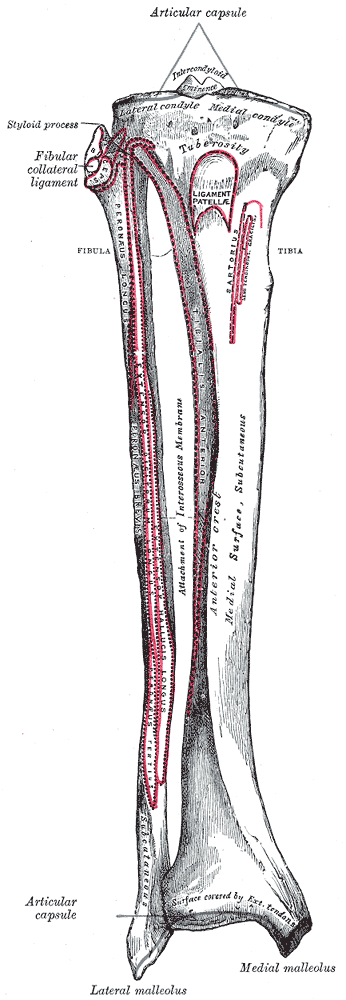
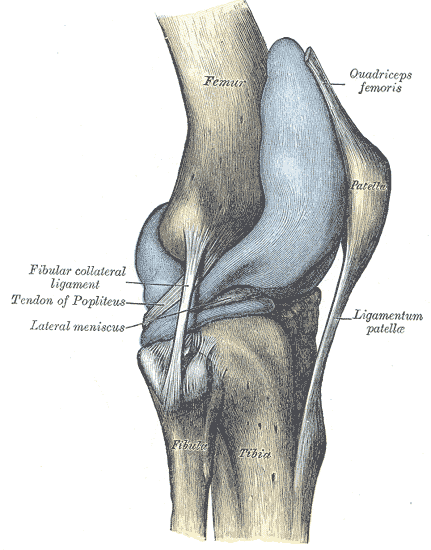
Fibula anatomy anterior view
Fibula · Anterior view. Head articulates at proximal tibiofibular joint.
Proximal tibiofibular joint anatomy
Proximal tibiofibular joint. Palpate just below lateral tibial plateau.
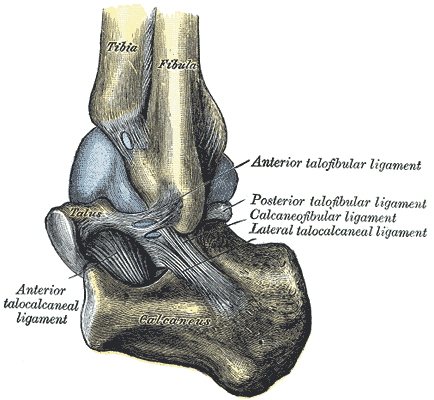
Ankle ligament anatomy
Ankle ligament anatomy. Inversion injury stresses lateral ligaments and pulls fibula.
Common peroneal nerve at fibular head
Common peroneal nerve wraps around fibular head. Anterior SD can stretch it.
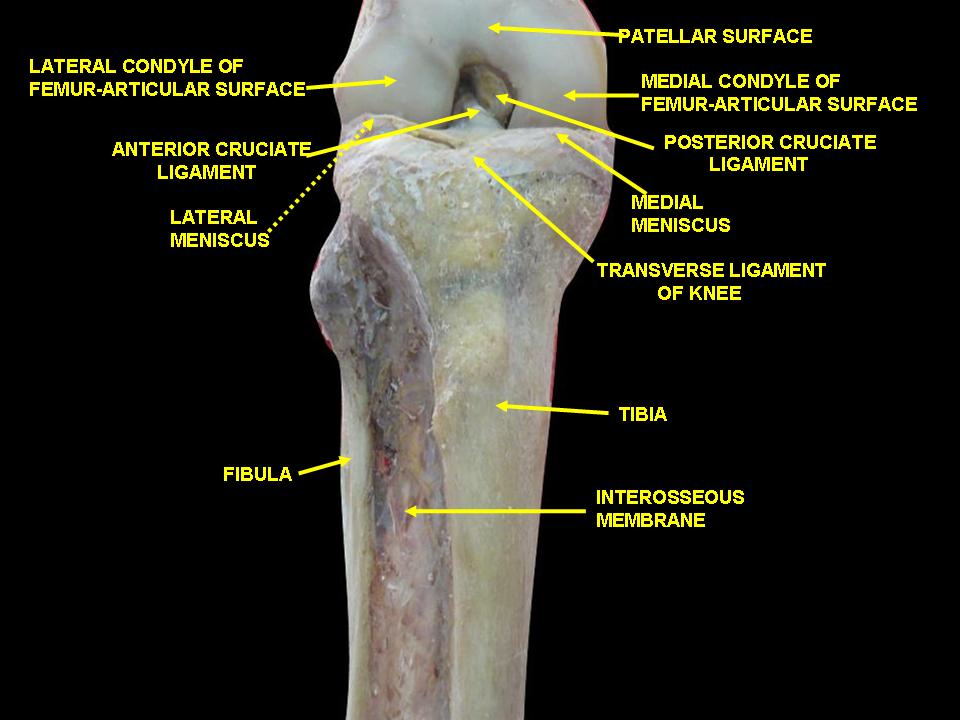
Interosseous membrane tibia fibula
Interosseous membrane = the seesaw fulcrum. Connects tibia and fibula their full length.
Clinical Vignettes
4 patients with knee or ankle complaints. Don't overthink it · the seesaw does the work for you.
0/8
You know your seesaws.
Medically reviewed by Fatima Ali, DO and Kaitlyn Cocuzzo, MD · Last reviewed June 2026
Bone Wizardry is an independent educational resource for visual learning in the medical sciences. It is not affiliated with, endorsed by, or sponsored by any licensing or examination board, contains no real or recalled examination questions, and does not guarantee any educational or examination outcome.