Osteopathic Manipulative Medicine · Direct Techniques
Soft Tissue Techniques Press, Pull, or Let Go
Every soft tissue question is really asking three things: are you pressing or pulling, are you moving along the fiber or across it, and are you heading toward the barrier or away from it. Soft tissue is always direct: it engages the bind. Three small words in the stem (traction, into, perpendicular) decide the whole answer. Start with the case that catches the most students.
Medically reviewed by Fatima Ali, DO & Kaitlyn Cocuzzo, MD✦elite
Before you scroll
A 9-year-old boy is brought to the office after he woke with his head turned hard to one side and held there; he says he "slept wrong." On examination the neck is sidebent and he cannot return it to neutral, and a radiograph rules out fracture. After clearing emergent causes, the physician contacts the involved cervical muscle belly and applies a sustained pull directed straight across the muscle, away from its long axis, until the tissue softens. Which soft tissue technique is this?
What single word decides this?
The word across. A pull directed across the muscle, away from its long axis, contacting the belly midpoint, is perpendicular traction (the kneading style of soft tissue).
Is it pressing or pulling?
A pull, so it is traction, not pressure. That single fact rules out direct inhibitory pressure, which presses INTO the muscle.
Why not the other two?
Soft tissue ENGAGES the barrier, so it is direct, not indirect myofascial release. And the force here runs across the fibers, not along them, so it is not parallel traction. Across the belly equals perpendicular traction.
Scroll ↓ what soft tissue technique actually IS comes next
Section 1 · The Definition Behind Every Case
What Soft Tissue Technique Is
The standard definition, then the one classification that controls half the wrong answers: direct versus indirect.
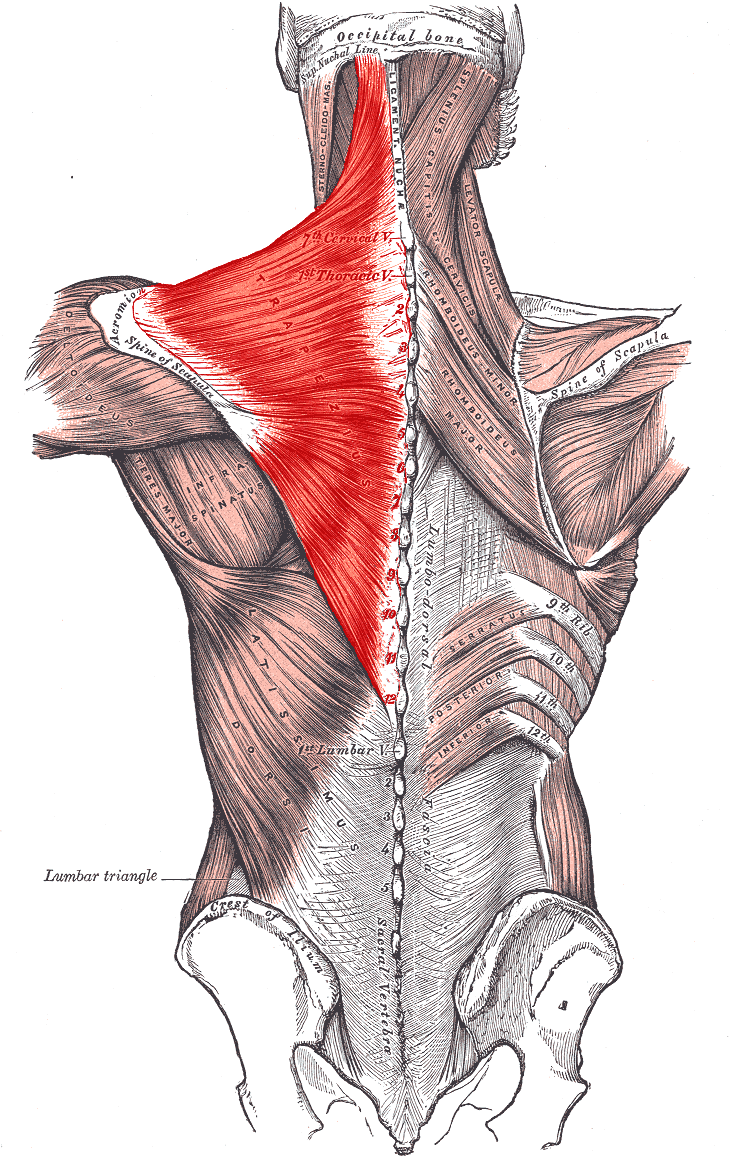
Soft tissue is hands-on direct treatment: the physician monitors tissue response by palpation.Lateral and linear stretch of the cervical and shoulder musculature engages the barrier.Origin and insertion: parallel traction pulls these two ends apart along the long axis.The cervical muscle in the cold-open case: contralateral traction draws the belly across its axis.Piriformis: a classic hypertonic target for inhibition at the tendon, not the belly.
The definition in one breath
Soft tissue technique is a group of direct techniques that usually involve lateral stretching, linear stretching, deep pressure, traction, and separation of muscle origin and insertion, while the physician monitors tissue response and motion changes by palpation.
It is historically a form of myofascial treatment. The lasting change comes from fascial creep: hold a steady load on the tissue and it slowly lengthens, so the muscle relaxes and motion improves.
First the split that decides half the distractors. A direct technique engages the restrictive barrier; an indirect technique backs away from it.
Direct (engages the barrier)
Tissues are moved toward the restrictive barrier, into the bind.
Soft tissue is always direct: you push the tissue to its limit and hold.
Other direct techniques: muscle energy and HVLA.
If the stem says "into the barrier" or "engages the bind," think direct.
Indirect (toward ease)
Tissues are moved away from the barrier, toward the position of ease.
Indirect myofascial release and counterstrain live here.
These are not soft tissue technique.
If the stem says "away from the barrier" or "toward ease," think indirect.
Now place it yourself. A muscle has an ease side and a bind side. Tap the side soft tissue technique works on.
Tap the side of the barrier where soft tissue technique belongs.
Ease side
Bind side (barrier)
Counterstrain: ease sideIndirect myofascial release: ease sideSoft tissue: bind side
🧠One line that travels everywhere: soft tissue is always DIRECT. It engages the barrier. The moment a stem says "moved away from the barrier toward ease," you are looking at counterstrain or indirect release, not soft tissue.
Soft tissue = direct Soft tissue always engages the barrier. Away-from-barrier moves (counterstrain, indirect release) are not soft tissue.Creep A steady held load slowly lengthens fascia (fascial creep); that is why soft tissue holds work.
Section 2 · The Whole Game
The Three Styles, On One Muscle
All three are soft tissue, all three are direct. Tap each style to read it, then watch the force vector happen on the muscle below.
Style 1
Parallel (linear) traction
Contact: the origin and the insertion, the two ends of the muscle.
Force: directed parallel to the long musculotendinous axis, pulling the ends apart to lengthen the muscle end to end. The hands can move opposite each other, or one end can be anchored.
In one line: stretching the fibers in the SAME direction they run.
Style 2
Perpendicular traction (kneading)
Contact: the midpoint of the muscle belly, between origin and insertion.
Force: directed perpendicular, ninety degrees away from the longitudinal axis. This is the contralateral traction pulled across the muscle belly.
In one line: stretching the fibers ACROSS the direction they run.
Style 3
Direct inhibitory pressure
Contact: the musculotendinous portion of a hypertonic muscle.
Force: sustained pressure directed INTO the muscle, held about 30 to 60 seconds until it releases (length increases, tension drops).
In one line: this is the only style that PRESSES rather than pulls. Useful for painful hypertonic states like piriformis or gluteus.
Watch it on the muscle. Tap a style; the arrows show exactly where the hands go and which way the force runs.
MuscleForceReleaseWarning
Ends vs middle Hands at the ends (origin + insertion) means parallel. A hand at the middle (belly midpoint) means perpendicular.Pull vs press Traction = pull. Inhibition = press into. The word "traction" rules inhibition OUT.Along vs across Parallel = along the fibers. Perpendicular = across the fibers (90 degrees).
Section 3 · The Board Skill, Drilled
Name the Technique
A short description appears. Tap the technique it describes. This is the exact discrimination clinical medicine build whole questions on. Cycle through every style plus the indirect traps.
Which technique is this?
The single word that flips the answer
If the stem uses traction or pull, inhibition is out (inhibition presses INTO). If it says across or perpendicular or contacts the midpoint, it is perpendicular traction. If it says origin and insertion or along the axis, it is parallel. If it says away from the barrier or "toward ease," it is not soft tissue at all.
Section 4 · Where the Hands Go, and What This Is Not
Inhibition Done Right
Inhibition works only if it is placed safely. Tap where you would press, then sort soft tissue from its look-alikes.
A hypertonic muscle is in front of you. Tap where you would deliver sustained inhibitory pressure.
Tap the safest contact for direct inhibitory pressure.
👉Deep pressure on the muscle BELLY can cause pain and bruising, so direct inhibitory pressure goes at the tendon or musculotendinous junction. Hold 30 to 60 seconds until the tissue releases.
Now the family. Soft tissue gets confused with four neighbors. Predict each, then reveal.
A patient is asked to actively push his head against the physician's steady resistance, then relax, and the slack is taken up. Is that soft tissue technique?
Not quite. The defining move here is an ACTIVE patient contraction against resistance, which is muscle energy, not soft tissue.
Correct. An active patient contraction against physician resistance is muscle energy. Soft tissue is the physician applying stretch, pressure, or traction while the patient stays passive.
The physician finds a tender point, folds the patient into the position of greatest comfort, and holds it for about 90 seconds. Is that soft tissue technique?
Not quite. A tender point held in the position of EASE for 90 seconds is counterstrain, an indirect technique, the opposite of soft tissue.
Correct. Tender point plus position of ease held about 90 seconds is counterstrain (indirect). Soft tissue engages the barrier; counterstrain backs away from it.
The four neighbors, side by side. Tap a card to open the discriminator.
Soft tissue
Direct, passive patient.
Nonspecific lateral or linear stretch, traction, or deep pressure on muscle, engaging the barrier while the patient stays passive. Three styles: parallel traction, perpendicular kneading, direct inhibitory pressure.
Muscle energy
Direct, but patient ACTIVE.
The patient actively contracts against the physician's counterforce; the slack is then taken up. The active patient contraction is the tell. Direct, like soft tissue, but it needs the patient working.
Counterstrain
Indirect, position of ease.
Find a tender point, fold the patient into the most comfortable position (away from the barrier), hold about 90 seconds, return slowly. Indirect, the opposite of soft tissue.
HVLA
Direct, quick thrust.
High velocity, low amplitude thrust through the restrictive barrier, often after soft tissue is used first to warm the tissue. Direct, but a fast thrust rather than a held stretch.
Drag each described maneuver into the correct family.
Maneuvers
Soft tissue technique
Not soft tissue
Drag (or tap a chip, then a bucket) to sort each maneuver.
Tendon, not belly Inhibit at the musculotendinous junction, not the belly. Belly pressure bruises.Active = muscle energy If the patient contracts against resistance, it is muscle energy, not soft tissue.
Section 5 · Read Like an Examiner
Decode the Stem
Examiners hide the answer in a handful of words. Tap each highlighted word to see exactly what it pins down.
Tap each underlined word. Find all the deciding clues.
When to reach for soft tissue
Soft tissue is the workhorse for a chronically hypertonic paraspinal muscle, for warming and relaxing tissue before HVLA, and for assessing tissue texture before more specific treatment. It is general, low-risk, and a good place to start.
With rhythmic, pumping engagement, soft tissue blends into lymphatic technique; combined with joint motion, it blends into articulatory and combined techniques. Same hands, different rhythm and intent.
Two extensions of rhythmic soft tissue. Tap to read.
Lymphatic technique
Rhythmic soft tissue.
When soft tissue is applied as a rhythmic, pumping engagement, it promotes fluid movement and becomes a lymphatic technique. The intent shifts from lengthening tissue to moving fluid.
Articulatory / combined
Soft tissue plus motion.
When soft tissue stretch is paired with carrying a joint repeatedly through its motion, it becomes an articulatory or combined technique: low-velocity, repetitive, springing the joint to restore range.
Warm before HVLA Soft tissue often precedes HVLA to relax tissue and improve the setup.Rhythm changes the name Add rhythm and soft tissue becomes lymphatic; add joint motion and it becomes articulatory.
Test Yourself
Ten Quick Calls, Five Per Round
Five clinical cases pulled from a bigger pool, reshuffled every visit. Press or pull, along or across, toward the barrier or away. Cross out (right-click / long-press) and highlight (select text) as you read.
Soft tissue is direct, hands-on, and guided by palpation.Lateral and linear stretch engages the barrier in the neck and shoulders.Cervical muscle: contralateral perpendicular traction in acute torticollis.Piriformis: inhibition is directed at the tendon, never the belly.
clinical Practice
Walk the Cases
Ten full vignettes, one at a time, in a shuffled order. Pick your answer, then walk every option one beat at a time. The deciding clues in the stem glow once you commit. Cross out (right-click / long-press) and highlight (select text) as you go.
From the Attending
These ten are written the way the real exam writes them: a maneuver described in plain language, and your job is to name it. Three questions, every time. Are you pressing or pulling. Are you along the fiber or across it. Are you toward the barrier or away. Most misses are one word in the stem you read past. Read every explanation, not just the one you missed.
Tip: kill the wrong choices first, then read the explanation chain for every option.
Nicholas AS, Nicholas EA. Atlas of Osteopathic Techniques. Chapter on soft tissue techniques: parallel and perpendicular traction and direct inhibition.
Educational Council on Osteopathic Principles. Glossary of Osteopathic Terminology. Soft tissue technique and direct versus indirect classification.
Seffinger MA, ed. Foundations of Osteopathic Medicine. Soft tissue and myofascial principles and fascial creep.
Reviewed by Fatima Ali DO and Kaitlyn Cocuzzo MD. Vignettes are original clinical teaching cases; demographics, regions, and answer order are written for practice. Confirm technique selection and contraindications against current osteopathic references at the point of care.
Bone Wizardry is an independent educational resource for visual learning in the medical sciences. It is not affiliated with, endorsed by, or sponsored by any licensing or examination board, contains no real or recalled examination questions, and does not guarantee any educational or examination outcome.
That was the free half
You know the three styles. Now make every classify call automatic.
The definition, the direct-versus-indirect split, and the force-vector visualizer are yours free. Everything that turns "I get it" into a 10-second answer on exam day lives in Elite:
The technique classifier game, every style plus the indirect traps
Inhibition safe-spot: tendon versus belly, with the bruise warning
Soft tissue versus muscle energy, counterstrain, and HVLA
Decode-the-stem: tap the words that pin the answer
The quiz plus ten clinical vignettes with walkthrough chains
 Bone WizardryMEDICAL EDUCATION