Trace placental physiology and antiangiogenic injury, diagnose and stabilize preeclampsia and HELLP, plan delivery, and guide postpartum prevention.
The central decision. Preeclampsia is a placental disease expressed through maternal vascular and organ injury, so a normal urine protein result or a reassuring fetal tracing cannot by itself establish safety. Level 1 work begins with placental exchange, spiral artery remodeling, endothelial signaling, and drug mechanisms. Levels 2 and 3 require classification, urgent stabilization, delivery timing, postpartum surveillance, and prevention. Beyond the usual exam frame, clinicians must also know protocol dosing, the limited role of placental biomarkers, consultation triggers, and counseling boundaries.
How does a temporary exchange organ create a systemic maternal disease?
Begin with normal placental work. The placenta is a temporary fetal organ attached to a maternal uterine bed. Its fetal surface develops from chorion and trophoblast, while the maternal contribution is the decidua basalis. Branching chorionic villi contain fetal capillaries and project into maternal blood in the intervillous space. Gases, nutrients, and waste cross a specialized barrier, but maternal and fetal blood normally remain in separate circulations. The placenta is also an endocrine organ that supports pregnancy through hormone production.
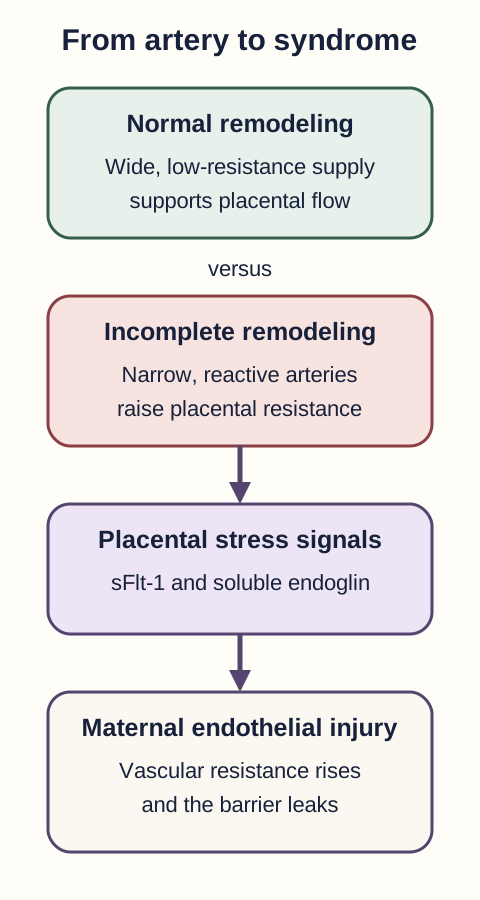
Spiral arteries must change their behavior. Extravillous trophoblast normally enters the decidua and superficial myometrium, replacing part of the muscular and endothelial vessel wall. The remodeled spiral artery becomes wide, low resistance, and less responsive to vasoconstrictors. When remodeling is incomplete, a narrower and more reactive supply makes placental perfusion less reliable. This model is especially useful for early and growth-restricted disease, although preeclampsia is heterogeneous and cannot be reduced to one lesion. [1]
Compare the vessel lumen first, then follow the placental signal into the maternal circulation. This is a qualitative model, not a claim that one pathway explains every presentation. Sources [1], [2], and [3].
The placenta can alter distant endothelium. Soluble fms-like tyrosine kinase 1, abbreviated sFlt-1, binds vascular endothelial growth factor and placental growth factor, lowering the amount available for endothelial receptors. Soluble endoglin interferes with transforming growth factor beta signaling. These related antiangiogenic effects disturb vascular tone and barrier function, but they are not interchangeable ligand-receptor pairs and they do not establish a simple replacement treatment. [2][3]
One vascular disturbance produces several organ patterns. Increased systemic resistance raises blood pressure. Increased permeability shifts fluid into tissue and can contribute to pulmonary edema even when effective circulating volume is limited. Glomerular endothelial swelling, called glomerular endotheliosis, promotes protein leakage and reduced filtration. Cerebral endothelial dysfunction and impaired autoregulation contribute to headache, visual symptoms, posterior reversible encephalopathy, and seizures.
Hepatic sinusoidal and periportal injury can stretch the capsule and cause right upper quadrant or epigastric pain. Platelet activation and microvascular injury contribute to thrombocytopenia and hemolysis. Uteroplacental insufficiency can restrict fetal growth, reduce amniotic fluid through lower fetal urine production, or contribute to abruption. [1]
Predict both sides of the interface. If a spiral artery remains narrow and vasoreactive, maternal vascular resistance tends to rise while placental support for fetal growth becomes less reliable. A reassuring fetal tracing describes the present moment; it does not exclude evolving maternal organ injury.
Why can visible edema coexist with limited effective circulating volume?
Compartments behave differently. Endothelial leak places fluid in interstitial tissue while the circulating compartment may still be vulnerable. Edema therefore does not prove that another crystalloid bolus is safe, particularly when crackles, hypoxemia, oliguria, or renal injury are present.
How is hypertensive disease classified without making proteinuria a gatekeeper?
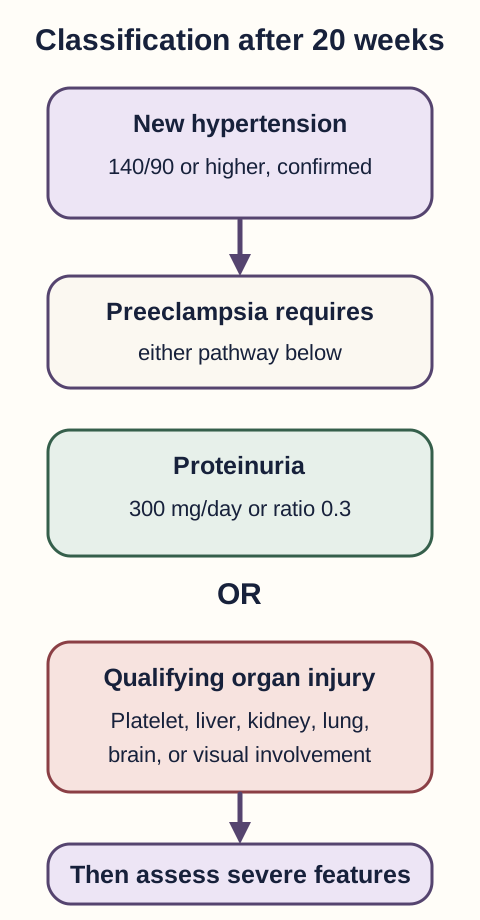
Confirm the pressure pattern correctly. New systolic pressure at least 140 mmHg or diastolic pressure at least 90 mmHg after 20 weeks is confirmed on two measurements at least four hours apart when values are not severe. Systolic pressure at least 160 or diastolic pressure at least 110 is severe; persistent severe values are confirmed over minutes so treatment is not delayed. Either component is sufficient. Use an appropriate cuff and repeat an unexpected value. [1][4]
Proteinuria is one route to preeclampsia, not a required checkpoint when qualifying organ injury is present. Source [1].
Proteinuria confirms disease but does not grade severity. Accepted thresholds are at least 300 mg in a 24-hour collection or a protein-to-creatinine ratio at least 0.3 mg/mg. A dipstick of 2+ is a fallback when quantitative testing is unavailable. The mass of urinary protein is not itself a severe feature, and generalized edema is neither required nor specific. [1]
Organ injury can establish preeclampsia without proteinuria. Severe features include persistent severe-range pressure; platelets below 100,000 per microliter; transaminases more than twice the laboratory upper limit without another explanation; persistent severe right upper quadrant or epigastric pain not explained by another diagnosis; creatinine above 1.1 mg/dL or more than twice baseline without another renal cause; pulmonary edema; a new headache unresponsive to medication and unexplained by another diagnosis; or visual disturbance. A creatinine increase from 0.50 to 1.05 mg/dL is therefore important even though the final value is below 1.1. [1]
Classify the background, then assess severity
Pattern
Interpretation
PatternHypertension before pregnancy or before 20 weeks
InterpretationUsually chronic hypertension.
PatternChronic hypertension plus new proteinuria, worsening organ findings, or severe features
InterpretationConsider superimposed preeclampsia.
PatternNew nonsevere hypertension after 20 weeks without proteinuria or qualifying organ injury
InterpretationGestational hypertension, requiring continued surveillance.
PatternNew hypertension plus proteinuria or qualifying organ injury
InterpretationPreeclampsia; determine whether severe features are present.
PatternNew gestational hypertension that reaches severe range
InterpretationManage under the severe-feature pathway even without proteinuria.
Timing can expose an alternative diagnosis. A preeclampsia-like syndrome before 20 weeks calls for evaluation of chronic or secondary hypertension and unusual settings such as gestational trophoblastic disease. In any gestational-age range, a new neurologic deficit, fever, focal abdominal process, drug exposure, or laboratory pattern that does not fit should expand the differential rather than be forced into a familiar label.
Change one result. At 31 weeks, repeated pressure of 148/94 mmHg with normal platelets, creatinine, transaminases, and urine protein fits gestational hypertension. Replacing only the platelet count with 88,000 per microliter, after excluding another cause, changes the classification to preeclampsia with severe features. Proteinuria is not the missing prerequisite.
Try it here · Checkpoint 1 of 3
Make your prediction before reading the choices. A first attempt is just a starting point.
Case 1
Show answer and explanations for case 1
A. Gestational hypertension suitable for routine outpatient surveillance (Why this does not fit)
Gestational hypertension lacks qualifying organ injury. The creatinine has more than doubled despite being below 1.1 mg/dL. Assess change from baseline as well as absolute thresholds.
Reasoning steps for option A
Which clinical principle bears on “Gestational hypertension suitable for routine outpatient surveillance”?
Gestational hypertension lacks qualifying organ injury.
Which two vignette details most directly weaken "Gestational hypertension suitable for routine outpatient surveillance"?
Creatinine has risen from 0.50 to 1.05 mg/dL without dehydration, urinary obstruction or another renal disorder. Urine protein-to-creatinine ratio is 0.12 mg/mg. Those findings conflict with the assumptions behind "Gestational hypertension suitable for routine outpatient surveillance", so that alternative does not resolve the decision asked in the vignette.
B. Preeclampsia without severe features because pressure is below 160/110 (Why this does not fit)
Nonsevere pressure does not exclude a severe organ feature. The doubling of creatinine supplies that feature here. Severity is not determined by the cuff alone.
Reasoning steps for option B
Which clinical principle bears on “Preeclampsia without severe features because pressure is below 160/110”?
Nonsevere pressure does not exclude a severe organ feature.
Which paired facts move the decision away from "Preeclampsia without severe features because pressure is below 160/110"?
Before accepting "Preeclampsia without severe features because pressure is below 160/110", account for both of these stem details: Creatinine has risen from 0.50 to 1.05 mg/dL without dehydration, urinary obstruction or another renal disorder. Urine protein-to-creatinine ratio is 0.12 mg/mg. Their combination creates a case-specific mismatch that the alternative does not solve.
C. Preeclampsia with severe features requiring hospital assessment (Best answer)
Renal dysfunction can establish preeclampsia without proteinuria. New hypertension and a greater-than-twofold creatinine rise meet the supplied criteria. Use either qualifying renal threshold when other causes are excluded.
Reasoning steps for option C
Which supplied finding makes “Preeclampsia with severe features requiring hospital assessment” the best answer in this case?
New hypertension and a greater-than-twofold creatinine rise meet the supplied criteria.
Which rule or next-step principle completes “Preeclampsia with severe features requiring hospital assessment”?
Renal dysfunction can establish preeclampsia without proteinuria. Use either qualifying renal threshold when other causes are excluded.
D. Chronic kidney disease with incidental pregnancy-related hypertension (Why this does not fit)
Preexisting kidney disease can cause proteinuria and abnormal creatinine. The documented earlier creatinine is normal and the rise is new with hypertension after 20 weeks. Use the clinical trajectory rather than assigning chronic disease from a single value.
Reasoning steps for option D
Which clinical principle bears on “Chronic kidney disease with incidental pregnancy-related hypertension”?
Preexisting kidney disease can cause proteinuria and abnormal creatinine.
What case-specific mismatch rules against "Chronic kidney disease with incidental pregnancy-related hypertension"?
The decisive comparison is between "Chronic kidney disease with incidental pregnancy-related hypertension" and the case data: Creatinine has risen from 0.50 to 1.05 mg/dL without dehydration, urinary obstruction or another renal disorder. The same presentation also includes Urine protein-to-creatinine ratio is 0.12 mg/mg. A choice that leaves either feature unexplained is weaker than one that integrates both.
Takeaway: A doubling of baseline creatinine can be a severe feature even below 1.1 mg/dL.
What does the HELLP pattern require, and what mimics demand another treatment pathway?
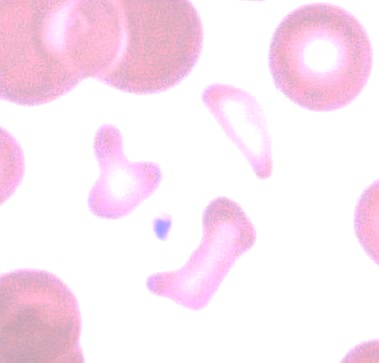
Interpret the full triad. Hemolysis, elevated liver enzymes, and low platelets form the HELLP syndrome. Common criteria include lactate dehydrogenase at least 600 U/L, aspartate or alanine aminotransferase more than twice the laboratory upper limit, and platelets below 100,000 per microliter. Lactate dehydrogenase alone is nonspecific, so schistocytes, low haptoglobin, and increased indirect bilirubin strengthen the evidence for red-cell destruction. HELLP can appear with only modest hypertension, little proteinuria, or after birth. [1]
Identify fragmented red cells, then determine the cause from the clinical and laboratory pattern. This image demonstrates schistocytes but is not documented as a HELLP specimen. Mikael Häggström, CC0 1.0, unmodified.
HELLP is an organ-injury emergency. Epigastric pain with platelets 65,000 per microliter, transaminases several times normal, lactate dehydrogenase 950 U/L, low haptoglobin, and schistocytes supports HELLP even if pressure is 138/88 mmHg. Stabilization and delivery planning must not wait for a severe cuff value. Sudden right upper quadrant or shoulder pain, shock, or a rapid hemoglobin fall raises concern for hepatic hematoma or rupture and requires immediate imaging, transfusion planning, and multidisciplinary care. [1][5]
Pregnancy-associated liver and microangiopathic patterns
Pattern
Findings that redirect the assessment
PatternHELLP
Findings that redirect the assessmentHemolysis, hepatic injury, and platelet consumption in the pregnancy-associated syndrome.
PatternAcute fatty liver of pregnancy
Findings that redirect the assessmentHypoglycemia, prolonged prothrombin time or international normalized ratio, encephalopathy, increased ammonia, or broader liver failure.
PatternThrombotic thrombocytopenic purpura
Findings that redirect the assessmentSevere microangiopathic hemolysis and thrombocytopenia, often neurologic disease; severe ADAMTS13 deficiency supports the diagnosis.
PatternImmune or gestational thrombocytopenia
Findings that redirect the assessmentMore isolated thrombocytopenia without the same hemolytic and hepatic pattern.
Findings that redirect the assessmentProminent renal failure and microangiopathy that persist or worsen after delivery.
Trajectory separates overlapping disorders. Acute fatty liver of pregnancy needs correction of hypoglycemia and coagulopathy while delivery and intensive support are arranged; biopsy is usually unnecessary and may be unsafe. When immune thrombotic thrombocytopenic purpura is strongly suspected, obtain an ADAMTS13 sample before plasma therapy when feasible, then begin plasma exchange and corticosteroid-based treatment without waiting for the assay. Delivery alone does not correct the ADAMTS13 autoantibody. Early postpartum worsening can occur in HELLP, but persistent severe neurologic disease, hemolysis, or thrombocytopenia requires reassessment. [5][8][9]
What changes when glucose is 42 mg/dL and the international normalized ratio is 2.3?
The dominant failure changes. Severe hypoglycemia and impaired hepatic synthetic function make acute fatty liver of pregnancy more likely than an isolated HELLP pattern. Both require urgent obstetric care, but metabolic correction and liver-failure support become immediate priorities.
Try it here · Checkpoint 2 of 3
Make your prediction before reading the choices. A first attempt is just a starting point.
Case 10
Show answer and explanations for case 10
A. High-dose dexamethasone alone to reverse maternal HELLP (Why this does not fit)
Corticosteroids are sometimes considered in complex pregnancy-associated illness. This assay supports immune TTP, for which steroids alone do not replace urgent plasma exchange. Match therapy to the demonstrated microangiopathy.
Reasoning steps for option A
Which clinical principle bears on “High-dose dexamethasone alone to reverse maternal HELLP”?
Corticosteroids are sometimes considered in complex pregnancy-associated illness.
Why does the full case pattern argue against "High-dose dexamethasone alone to reverse maternal HELLP"?
"High-dose dexamethasone alone to reverse maternal HELLP" becomes less persuasive when the full stem is read: Four days after delivery for suspected HELLP, a 35-year-old patient has worsening confusion, hemoglobin 7.8 g/dL, platelets 19,000/microliter and persistent schistocytes. ADAMTS13 activity from a sample obtained before plasma treatment is 3% of normal with an inhibitor detected. The requested diagnosis or action must accommodate both findings at once.
B. Start plasma exchange, corticosteroids, and specialist-directed immune therapy (Best answer)
Severe ADAMTS13 deficiency with an inhibitor supports immune TTP. Persistent hemolysis and thrombocytopenia despite improving liver tests fit this mechanism. Delivery does not treat the underlying ADAMTS13 autoantibody.
Reasoning steps for option B
Which supplied finding makes “Start plasma exchange, corticosteroids, and specialist-directed immune therapy” the best answer in this case?
Persistent hemolysis and thrombocytopenia despite improving liver tests fit this mechanism.
Which rule or next-step principle completes “Start plasma exchange, corticosteroids, and specialist-directed immune therapy”?
Severe ADAMTS13 deficiency with an inhibitor supports immune TTP. Delivery does not treat the underlying ADAMTS13 autoantibody.
C. Expectant observation for another week because all postpartum microangiopathy is HELLP (Why this does not fit)
HELLP may worsen during the first postpartum days. The severe ADAMTS13 deficiency and inhibitor establish a different urgent pathway. New discriminating evidence must change the working diagnosis.
Reasoning steps for option C
Which clinical principle bears on “Expectant observation for another week because all postpartum microangiopathy is HELLP”?
HELLP may worsen during the first postpartum days.
Which paired facts move the decision away from "Expectant observation for another week because all postpartum microangiopathy is HELLP"?
Before accepting "Expectant observation for another week because all postpartum microangiopathy is HELLP", account for both of these stem details: Four days after delivery for suspected HELLP, a 35-year-old patient has worsening confusion, hemoglobin 7.8 g/dL, platelets 19,000/microliter and persistent schistocytes. ADAMTS13 activity from a sample obtained before plasma treatment is 3% of normal with an inhibitor detected. Their combination creates a case-specific mismatch that the alternative does not solve.
D. Platelet transfusion alone as definitive treatment (Why this does not fit)
Platelets can be considered for selected bleeding emergencies. Replacement alone does not treat immune ADAMTS13 inhibition; no active bleeding is supplied. Treat the cause of platelet consumption rather than the count alone.
Reasoning steps for option D
Which clinical principle bears on “Platelet transfusion alone as definitive treatment”?
Platelets can be considered for selected bleeding emergencies.
Which combined findings make "Platelet transfusion alone as definitive treatment" an incomplete response?
Two supplied facts argue against this alternative: ADAMTS13 activity from a sample obtained before plasma treatment is 3% of normal with an inhibitor detected. Separately, Four days after delivery for suspected HELLP, a 35-year-old patient has worsening confusion, hemoglobin 7.8 g/dL, platelets 19,000/microliter and persistent schistocytes. Because "Platelet transfusion alone as definitive treatment" fails to integrate the combined pattern, it is not the best answer.
Takeaway: Severe ADAMTS13 deficiency with an inhibitor redirects care to immune TTP.
Why must pressure control, seizure protection, and delivery be treated as separate targets?
Stabilize mother and fetus in parallel. Begin with airway, breathing, circulation, lateral positioning when appropriate, repeat pressure measurement, intravenous access, oxygenation, urine output, and point-of-care glucose when neurologic symptoms are present. Obtain a complete blood count, platelets, creatinine, transaminases, and urine protein; add hemolysis studies, coagulation testing, and type and screen when the presentation warrants them. Fetal assessment proceeds at the same time, but maternal stabilization comes first. [1]
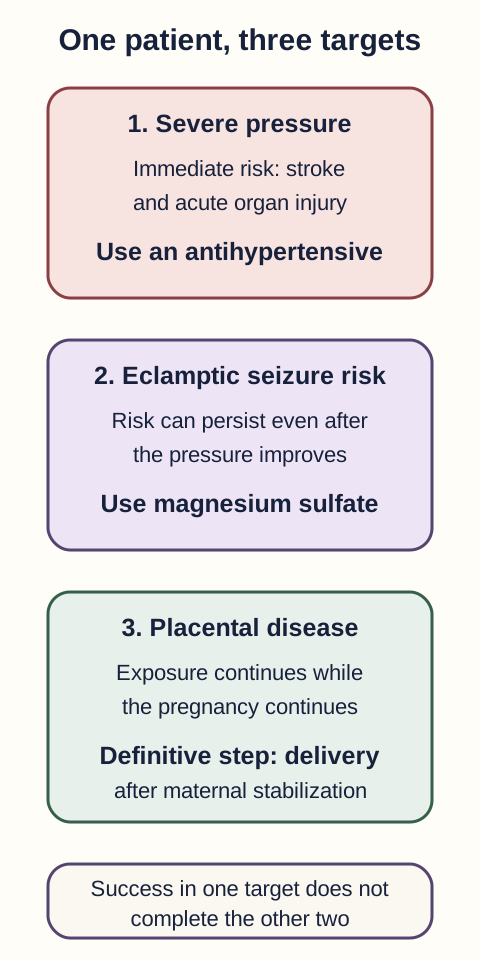
Do not substitute improvement in one target for treatment of the others. Sources [1] and [4].
Severe pressure requires rapid antihypertensive treatment. Persistent systolic pressure at least 160 or diastolic pressure at least 110 warrants treatment as soon as possible, generally within 30 to 60 minutes of confirmation. Intravenous labetalol, intravenous hydralazine, and swallowed immediate-release oral nifedipine are accepted first-line options. Select among them by access, heart rate, conduction disease, bronchospasm, and other contraindications. Magnesium does not replace an antihypertensive. [1][4]
Magnesium addresses eclamptic seizure risk. Magnesium sulfate treats eclampsia and is used for prophylaxis in preeclampsia with severe features. A commonly used regimen is a 4 to 6 g intravenous loading dose over 20 to 30 minutes followed by 1 to 2 g/hour, usually continued through delivery and for 24 hours afterward, with adjustment for renal impairment and the governing protocol. Its benefit reflects effects on neuronal excitability and cerebral vascular function, not correction of a nutritional deficiency. [1][11]
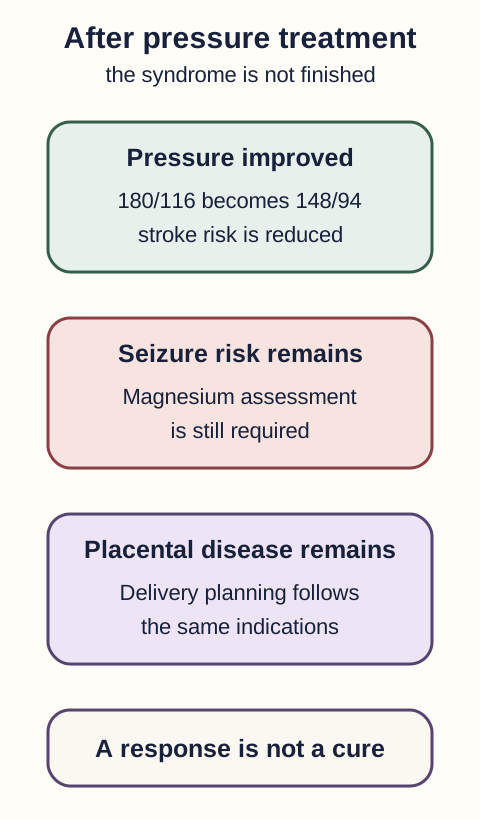
Predict what changes after an antihypertensive alone, then compare
A pressure response lowers immediate pressure-related risk but does not provide seizure prophylaxis or end placental disease.
The diagnosis does not disappear. A fall from 180/116 to 148/94 changes the pressure target only. The severe-feature history still informs magnesium use, surveillance, and delivery planning.
Eclampsia is a clinical emergency, not an automatic cesarean indication. Protect the patient from injury, use lateral positioning, support oxygenation and ventilation, check glucose, give magnesium, and treat persistent severe pressure. A transient fetal deceleration often accompanies a maternal seizure and may recover after stabilization. Delivery is indicated after stabilization, but route depends on presentation, cervical status, fetal condition, and other obstetric circumstances. Persistent seizure activity requires airway expertise, rescue therapy, and evaluation for hemorrhage, cerebral venous thrombosis, infection, epilepsy, or another cause. [1]
Renal function determines magnesium accumulation risk. Monitor respiration, deep tendon reflexes, mental status, and urine output. Oliguria or worsening creatinine may require a lower maintenance exposure and serum levels. Absent reflexes, respiratory depression, or marked somnolence suggests toxicity: stop magnesium, support ventilation, and give intravenous calcium gluconate under the emergency protocol rather than waiting for a confirmatory level. Myasthenia gravis is an important contraindication because magnesium can worsen neuromuscular weakness; obtain specialist guidance for an alternative strategy and respiratory monitoring. [1][11]
Try it here · Checkpoint 3 of 3
Make your prediction before reading the choices. A first attempt is just a starting point.
Case 16
Show answer and explanations for case 16
A. Use a reduced maintenance regimen with serial levels and clinical monitoring (Best answer)
Renal dysfunction requires adjustment of maintenance magnesium and closer monitoring. There is impaired clearance but no current clinical respiratory toxicity. Individualize continued protection instead of ignoring clearance or assuming toxicity.
Reasoning steps for option A
Which supplied finding makes “Use a reduced maintenance regimen with serial levels and clinical monitoring” the best answer in this case?
There is impaired clearance but no current clinical respiratory toxicity.
Which integrated check determines whether "Use a reduced maintenance regimen with serial levels and clinical monitoring" survives comparison with the complete "At 30 weeks, a 28-year-old patient with severe preeclampsia receives a magnesium loading dose." presentation?
A second-pass check uses the chronology in reverse: Over the next four hours creatinine rises from 0.8 to 1.4 mg/dL and urine output remains 22 mL/hour. Earlier in the same presentation, She is alert, respiratory rate is 17/min and patellar reflexes are present. The stem also establishes At 30 weeks, a 28-year-old patient with severe preeclampsia receives a magnesium loading dose. That combined timing and organ pattern supports "Use a reduced maintenance regimen with serial levels and clinical monitoring" rather than a single-threshold interpretation.
B. Give calcium gluconate immediately and permanently stop prophylaxis (Why this does not fit)
Calcium is used for clinically important magnesium toxicity. Reflexes, mental status and respiration are preserved; the supplied problem is risk of accumulation. Distinguish prevention of toxicity from treatment of established toxicity.
Reasoning steps for option B
Which clinical principle bears on “Give calcium gluconate immediately and permanently stop prophylaxis”?
Calcium is used for clinically important magnesium toxicity.
Which combined findings make "Give calcium gluconate immediately and permanently stop prophylaxis" an incomplete response?
Two supplied facts argue against this alternative: At 30 weeks, a 28-year-old patient with severe preeclampsia receives a magnesium loading dose. Separately, She is alert, respiratory rate is 17/min and patellar reflexes are present. Because "Give calcium gluconate immediately and permanently stop prophylaxis" fails to integrate the combined pattern, it is not the best answer.
C. Keep the standard high maintenance rate without checking concentrations (Why this does not fit)
Standard rates may be suitable with normal renal clearance. Creatinine and urine output now show impaired clearance. A previously appropriate dose needs reassessment when physiology changes.
Reasoning steps for option C
Which clinical principle bears on “Keep the standard high maintenance rate without checking concentrations”?
Standard rates may be suitable with normal renal clearance.
What case-specific mismatch rules against "Keep the standard high maintenance rate without checking concentrations"?
The decisive comparison is between "Keep the standard high maintenance rate without checking concentrations" and the case data: Over the next four hours creatinine rises from 0.8 to 1.4 mg/dL and urine output remains 22 mL/hour. The same presentation also includes At 30 weeks, a 28-year-old patient with severe preeclampsia receives a magnesium loading dose. A choice that leaves either feature unexplained is weaker than one that integrates both.
D. Increase maintenance dosing because oliguria indicates reduced drug delivery (Why this does not fit)
Urine output reflects excretion rather than delivery of magnesium to its target. Reduced renal function promotes accumulation. Do not respond to reduced clearance by increasing exposure.
Reasoning steps for option D
Which clinical principle bears on “Increase maintenance dosing because oliguria indicates reduced drug delivery”?
Urine output reflects excretion rather than delivery of magnesium to its target.
What objective evidence is hardest to reconcile with "Increase maintenance dosing because oliguria indicates reduced drug delivery"?
The vignette pairs these findings: Over the next four hours creatinine rises from 0.8 to 1.4 mg/dL and urine output remains 22 mL/hour. It also documents At 30 weeks, a 28-year-old patient with severe preeclampsia receives a magnesium loading dose. That pairing is inconsistent with "Increase maintenance dosing because oliguria indicates reduced drug delivery" as the best response to the lead-in.
Takeaway: Renal dysfunction calls for maintenance-dose adjustment and closer magnesium monitoring.
When does continued pregnancy become more dangerous than prematurity?
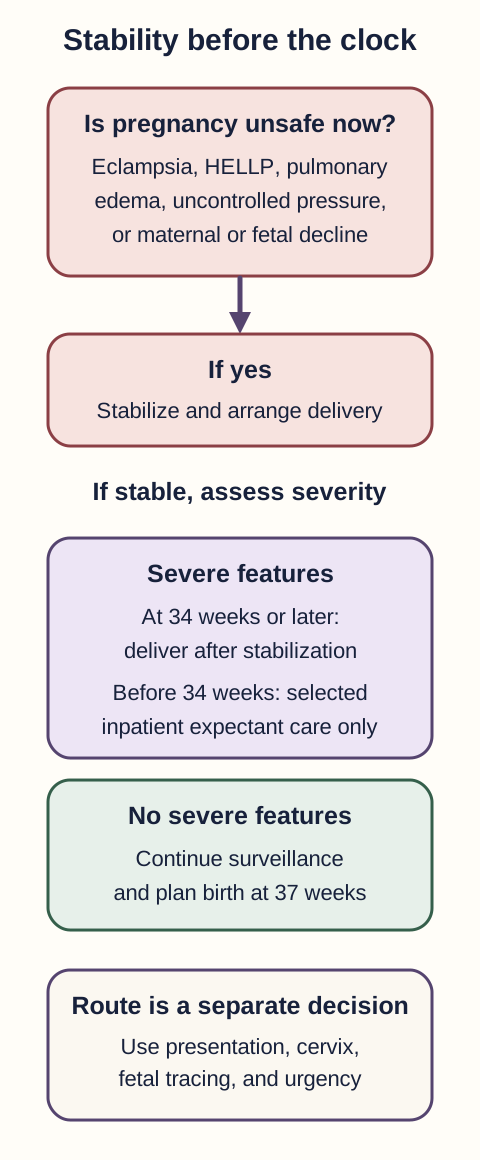
Stability comes before the gestational-age threshold. Eclampsia, HELLP, uncontrolled severe pressure, pulmonary edema, persistent severe neurologic or hepatic symptoms, worsening renal dysfunction, abruption, labor, membrane rupture, or abnormal fetal testing can end expectant management after maternal stabilization regardless of gestational age. A reassuring fetus does not neutralize maternal deterioration. [1]
Only a stable patient enters the gestational-age comparison. Source [1].
Without severe features, 37 weeks is the usual boundary. Gestational hypertension or preeclampsia without severe features is generally monitored with maternal and fetal surveillance until delivery at 37 weeks. Outpatient care is limited to selected patients who can complete frequent assessment and return promptly for symptoms or severe pressure. Surveillance includes symptoms, blood pressure, serial platelet, renal, and liver testing, fetal growth, fluid assessment, and antenatal testing. [1]
With severe features, 34 weeks is the major threshold. At or beyond 34 weeks, delivery is recommended after stabilization, without delaying an indicated birth to complete late-preterm corticosteroids. Before 34 weeks, carefully selected stable patients may receive inpatient expectant management at a center with appropriate maternal and neonatal resources. This is a conditional strategy with predefined stopping criteria, not permission to wait through deterioration. [1]
Antenatal corticosteroids prepare the fetus rather than treat the mother. When preterm birth is anticipated and criteria are met, corticosteroids reduce neonatal respiratory distress syndrome, intraventricular hemorrhage, and necrotizing enterocolitis. They do not reliably reverse HELLP, pulmonary edema, severe pressure, or cerebral symptoms, and maternal or fetal deterioration takes priority over course completion. [1][12]
Delivery timing and delivery route are separate decisions. Preeclampsia, HELLP, or eclampsia establishes a need for birth in the relevant setting, but does not by itself require cesarean delivery. Fetal presentation, cervical status, labor progress, fetal tracing, gestational age, and urgency determine route. Stabilize first whenever the clinical situation permits.
Why does risk continue after the placenta is delivered?
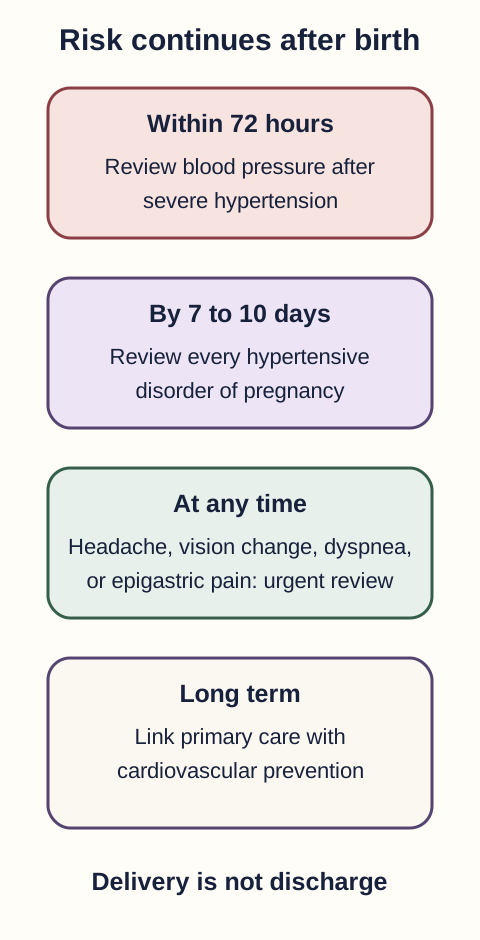
Endothelial and organ injury resolve over time. HELLP laboratory abnormalities can worsen during the first postpartum days, and preeclampsia can first appear after a previously normotensive pregnancy. Severe headache, visual symptoms, dyspnea, severe abdominal pain, seizure, chest pain, or severe pressure requires urgent evaluation rather than waiting for a routine visit. Postpartum neurologic symptoms still require consideration of hemorrhage, cerebral venous thrombosis, stroke, infection, and primary headache disorders. [1][10]
Birth ends placental exposure, not the need for early surveillance or later cardiovascular prevention. Sources [7], [10], and [16].
Early blood pressure assessment is part of discharge planning. Severe hypertension warrants blood pressure evaluation within 72 hours of birth, and hypertensive disorders require assessment no later than 7 to 10 days, with earlier or additional review when clinically indicated. Medication response, access to a validated cuff, clear thresholds for seeking care, and a plan for persistent renal or laboratory abnormalities should be explicit. [7]
Prevention begins before the next disease episode. For a future pregnancy, 81 mg aspirin daily is recommended for qualifying high-risk patients, starting between 12 and 28 weeks, ideally before 16 weeks, and continuing until delivery. High-risk factors include prior preeclampsia, multifetal gestation, chronic hypertension, kidney disease, pregestational diabetes, and autoimmune disease; more than one moderate-risk factor may also support prophylaxis. Aspirin prevention does not treat an established hypertensive emergency. [6]
Long-term care includes cardiovascular risk reduction. A history of preeclampsia identifies increased later risk of chronic hypertension, ischemic heart disease, stroke, and heart failure. Follow-up should address persistent pressure or kidney abnormalities, primary care transition, lipids and glucose when appropriate, smoking, physical activity, weight, sleep, and reproductive planning. Current adult hypertension guidance recognizes pregnancy-associated hypertensive disorders as important risk-enhancing history. [16]
Beyond the usual exam frame
Acute dosing follows a protocol, not memory alone. A commonly used intravenous labetalol sequence is 20 mg, then 40 mg and 80 mg at 10-minute intervals to a cumulative 220 mg if pressure remains severe. A commonly used intravenous hydralazine sequence is 5 to 10 mg, followed by 10 mg after 20 minutes to a cumulative 20 mg.
A commonly used swallowed immediate-release nifedipine sequence is 10 mg, then 20 mg at 20-minute intervals to a cumulative 50 mg in the initial sequence. These are representative bundle regimens rather than universal prescriptions; verify the active institutional protocol, contraindications, and current labeling before use. [4]
Placental biomarkers refine risk in a limited population. An assay based on soluble fms-like tyrosine kinase 1 and placental growth factor has Food and Drug Administration authorization as a prognostic test for development or progression of preeclampsia. Guidance addresses selected pregnant patients already hospitalized for a hypertensive disorder. The result supplements, rather than replaces, pressure measurement, symptoms, laboratory testing, fetal assessment, and clinical judgment. It is not a universal screening test, a standalone diagnosis, or an automatic delivery threshold, and results from one platform cannot be transferred to another without validation. [14][15]
Consult early when the pattern crosses disciplines. Maternal-fetal medicine, anesthesia, critical care, neonatology, hematology, hepatology, nephrology, neurology, transfusion medicine, or surgery may be needed for refractory severe pressure, respiratory failure, persistent seizures, suspected hepatic hemorrhage, severe coagulopathy, thrombotic microangiopathy, major renal failure, or a complex delivery. Consultation supports stabilization but should not postpone time-critical treatment.
Counseling should separate known risk from certainty. Explain that recurrence is possible but not inevitable, that aspirin lowers risk in eligible patients but does not guarantee prevention, and that postpartum warning symptoms remain important even after an uncomplicated discharge. Use shared decisions for future pregnancy timing, medication review, contraception, and specialist follow-up.
Apply the lesson
Case 2
Show answer and explanations for case 2
A. Treat the severe pressure and use the severe-feature pathway (Best answer)
Persistent severe systolic pressure alone warrants urgent treatment. Both readings exceed 160 despite a diastolic pressure below 110 and absent proteinuria. Do not require both pressure components to reach severe range.
Reasoning steps for option A
Which supplied finding makes “Treat the severe pressure and use the severe-feature pathway” the best answer in this case?
Both readings exceed 160 despite a diastolic pressure below 110 and absent proteinuria.
Which rule or next-step principle completes “Treat the severe pressure and use the severe-feature pathway”?
Persistent severe systolic pressure alone warrants urgent treatment. Do not require both pressure components to reach severe range.
B. Repeat pressure in four hours before treating (Why this does not fit)
Four-hour separation is used to establish nonsevere hypertension. Confirmed severe systolic pressure requires a shorter response. The diagnostic interval must not delay emergency therapy.
Reasoning steps for option B
Which clinical principle bears on “Repeat pressure in four hours before treating”?
Four-hour separation is used to establish nonsevere hypertension.
Which two vignette details most directly weaken "Repeat pressure in four hours before treating"?
At 35 weeks, a 34-year-old patient with previously normal prenatal pressures has readings of 164/94 and 166/96 mmHg 18 minutes apart using an appropriate cuff. Platelets, creatinine and AST are normal, and urine protein-to-creatinine ratio is 0.10. Those findings conflict with the assumptions behind "Repeat pressure in four hours before treating", so that alternative does not resolve the decision asked in the vignette.
C. Obtain a 24-hour urine collection before deciding on admission (Why this does not fit)
Quantitative protein testing can clarify nonsevere presentations. Severe gestational hypertension is managed as preeclampsia with severe features regardless of proteinuria. A urine result must not postpone pressure treatment.
Reasoning steps for option C
Which clinical principle bears on “Obtain a 24-hour urine collection before deciding on admission”?
Quantitative protein testing can clarify nonsevere presentations.
Which paired facts move the decision away from "Obtain a 24-hour urine collection before deciding on admission"?
Before accepting "Obtain a 24-hour urine collection before deciding on admission", account for both of these stem details: Platelets, creatinine and AST are normal, and urine protein-to-creatinine ratio is 0.10. At 35 weeks, a 34-year-old patient with previously normal prenatal pressures has readings of 164/94 and 166/96 mmHg 18 minutes apart using an appropriate cuff. Their combination creates a case-specific mismatch that the alternative does not solve.
D. Arrange outpatient pressure monitoring until 37 weeks (Why this does not fit)
Selected patients without severe features can be monitored before term. This patient has persistent severe systolic pressure at 35 weeks. Apply surveillance pathways only after assessing severity.
Reasoning steps for option D
Which clinical principle bears on “Arrange outpatient pressure monitoring until 37 weeks”?
Selected patients without severe features can be monitored before term.
Which combined findings make "Arrange outpatient pressure monitoring until 37 weeks" an incomplete response?
Two supplied facts argue against this alternative: At 35 weeks, a 34-year-old patient with previously normal prenatal pressures has readings of 164/94 and 166/96 mmHg 18 minutes apart using an appropriate cuff. Separately, Platelets, creatinine and AST are normal, and urine protein-to-creatinine ratio is 0.10. Because "Arrange outpatient pressure monitoring until 37 weeks" fails to integrate the combined pattern, it is not the best answer.
Takeaway: Persistent systolic pressure of at least 160 mmHg is sufficient for urgent treatment.
A. Cesarean delivery immediately because urinary protein exceeds 4 g (Why this does not fit)
Substantial proteinuria confirms renal involvement in preeclampsia. Its quantity alone is not a severe feature or an indication for cesarean birth. Separate protein amount from organ-function severity and delivery route.
Reasoning steps for option A
Which clinical principle bears on “Cesarean delivery immediately because urinary protein exceeds 4 g”?
Substantial proteinuria confirms renal involvement in preeclampsia.
How do the supplied findings expose the weakness in "Cesarean delivery immediately because urinary protein exceeds 4 g"?
At 36 weeks and 6 days, a 26-year-old patient has repeated pressures of 146/92 mmHg and 4.8 g protein in a 24-hour urine collection. In addition, Platelets are 180,000/microliter, creatinine 0.7 mg/dL and AST 24 U/L. Taken together, the objective findings point away from "Cesarean delivery immediately because urinary protein exceeds 4 g" because its proposed pathway would address only part of the presentation.
B. Continue pregnancy to 40 weeks if urine protein stops increasing (Why this does not fit)
Stable findings permit limited surveillance before the recommended birth threshold. Preeclampsia is already established and she reaches 37 weeks tomorrow. Stable protein excretion does not justify extending to 40 weeks.
Reasoning steps for option B
Which clinical principle bears on “Continue pregnancy to 40 weeks if urine protein stops increasing”?
Stable findings permit limited surveillance before the recommended birth threshold.
Why does the full case pattern argue against "Continue pregnancy to 40 weeks if urine protein stops increasing"?
"Continue pregnancy to 40 weeks if urine protein stops increasing" becomes less persuasive when the full stem is read: At 36 weeks and 6 days, a 26-year-old patient has repeated pressures of 146/92 mmHg and 4.8 g protein in a 24-hour urine collection. Platelets are 180,000/microliter, creatinine 0.7 mg/dL and AST 24 U/L. The requested diagnosis or action must accommodate both findings at once.
C. Begin magnesium solely because urinary protein exceeds 4 g (Why this does not fit)
Magnesium is indicated for seizure prophylaxis in severe disease. No severe feature is supplied; protein quantity alone does not establish one. Decide prophylaxis using clinical severity rather than protein mass.
Reasoning steps for option C
Which clinical principle bears on “Begin magnesium solely because urinary protein exceeds 4 g”?
Magnesium is indicated for seizure prophylaxis in severe disease.
Which two vignette details most directly weaken "Begin magnesium solely because urinary protein exceeds 4 g"?
At 36 weeks and 6 days, a 26-year-old patient has repeated pressures of 146/92 mmHg and 4.8 g protein in a 24-hour urine collection. Platelets are 180,000/microliter, creatinine 0.7 mg/dL and AST 24 U/L. Those findings conflict with the assumptions behind "Begin magnesium solely because urinary protein exceeds 4 g", so that alternative does not resolve the decision asked in the vignette.
D. Plan delivery at 37 weeks with surveillance until then (Best answer)
Preeclampsia without severe features generally warrants delivery at 37 weeks. The supplied symptoms, organ tests and pressures do not establish severe features. Use gestational age after assessing maternal and fetal stability.
Reasoning steps for option D
Which supplied finding makes “Plan delivery at 37 weeks with surveillance until then” the best answer in this case?
The supplied symptoms, organ tests and pressures do not establish severe features.
Which rule or next-step principle completes “Plan delivery at 37 weeks with surveillance until then”?
Preeclampsia without severe features generally warrants delivery at 37 weeks. Use gestational age after assessing maternal and fetal stability.
Takeaway: Heavy proteinuria does not independently establish severe features.
A. Medication-resistant chronic hypertension without a pregnancy complication (Why this does not fit)
Chronic hypertension can worsen as pregnancy progresses. New proteinuria, thrombocytopenia and visual symptoms demonstrate more than a pressure change. Look for new organ injury in a patient with established hypertension.
Reasoning steps for option A
Which clinical principle bears on “Medication-resistant chronic hypertension without a pregnancy complication”?
Chronic hypertension can worsen as pregnancy progresses.
What conflict between the stem and "Medication-resistant chronic hypertension without a pregnancy complication" becomes decisive?
The mismatch is case-specific rather than theoretical. It is now 0.65, platelets have fallen from 205,000 to 83,000/microliter, and she has new visual scotomata. Blood pressure is 152/96 mmHg on her usual medication. Those details do not fit the pathway proposed by "Medication-resistant chronic hypertension without a pregnancy complication".
B. Superimposed preeclampsia with severe features (Best answer)
Preeclampsia can develop on a background of chronic hypertension. New proteinuria plus platelets below 100,000 and visual symptoms support severe superimposed disease. A nonsevere treated pressure does not exclude a severe complication.
Reasoning steps for option B
Which supplied finding makes “Superimposed preeclampsia with severe features” the best answer in this case?
New proteinuria plus platelets below 100,000 and visual symptoms support severe superimposed disease.
Which rule or next-step principle completes “Superimposed preeclampsia with severe features”?
Preeclampsia can develop on a background of chronic hypertension. A nonsevere treated pressure does not exclude a severe complication.
C. Gestational hypertension with incidental thrombocytopenia (Why this does not fit)
Gestational hypertension begins after 20 weeks without prior hypertension. This patient had hypertension before pregnancy and now has multiple new organ findings. Baseline disease and new complications must both be represented.
Reasoning steps for option C
Which clinical principle bears on “Gestational hypertension with incidental thrombocytopenia”?
Gestational hypertension begins after 20 weeks without prior hypertension.
Why does the full case pattern argue against "Gestational hypertension with incidental thrombocytopenia"?
"Gestational hypertension with incidental thrombocytopenia" becomes less persuasive when the full stem is read: It is now 0.65, platelets have fallen from 205,000 to 83,000/microliter, and she has new visual scotomata. A 37-year-old patient treated for hypertension since two years before pregnancy presents at 32 weeks. The requested diagnosis or action must accommodate both findings at once.
D. Preeclampsia without severe features superimposed on chronic hypertension (Why this does not fit)
New proteinuria can establish superimposed preeclampsia. The platelet count and visual symptoms independently establish severe features. Do not stop classification after confirming proteinuria.
Reasoning steps for option D
Which clinical principle bears on “Preeclampsia without severe features superimposed on chronic hypertension”?
New proteinuria can establish superimposed preeclampsia.
Which two vignette details most directly weaken "Preeclampsia without severe features superimposed on chronic hypertension"?
It is now 0.65, platelets have fallen from 205,000 to 83,000/microliter, and she has new visual scotomata. A 37-year-old patient treated for hypertension since two years before pregnancy presents at 32 weeks. Those findings conflict with the assumptions behind "Preeclampsia without severe features superimposed on chronic hypertension", so that alternative does not resolve the decision asked in the vignette.
Takeaway: New organ injury can establish severe superimposed disease despite a controlled pressure.
A. Return to routine prenatal visits because urine protein is below 300 mg (Why this does not fit)
The protein value does not establish proteinuric preeclampsia. Confirmed gestational hypertension still requires enhanced maternal and fetal surveillance. Absence of proteinuria does not restore baseline risk.
Reasoning steps for option A
Which clinical principle bears on “Return to routine prenatal visits because urine protein is below 300 mg”?
The protein value does not establish proteinuric preeclampsia.
What objective evidence is hardest to reconcile with "Return to routine prenatal visits because urine protein is below 300 mg"?
The vignette pairs these findings: A 24-hour urine collection contains 180 mg protein. It also documents At 29 weeks, blood pressures are 150/92 and 148/94 mmHg four hours apart. That pairing is inconsistent with "Return to routine prenatal visits because urine protein is below 300 mg" as the best response to the lead-in.
B. Use frequent maternal and fetal surveillance with escalation criteria (Best answer)
Stable gestational hypertension can be monitored in selected outpatients. Reliable follow-up and reassuring current organ and fetal findings support this setting. Escalate if pressure, symptoms, laboratory values or fetal assessment deteriorate.
Reasoning steps for option B
Which supplied finding makes “Use frequent maternal and fetal surveillance with escalation criteria” the best answer in this case?
Reliable follow-up and reassuring current organ and fetal findings support this setting.
Which rule or next-step principle completes “Use frequent maternal and fetal surveillance with escalation criteria”?
Stable gestational hypertension can be monitored in selected outpatients. Escalate if pressure, symptoms, laboratory values or fetal assessment deteriorate.
C. Admit for magnesium infusion through 34 weeks (Why this does not fit)
Magnesium prophylaxis is used for severe disease and selected other indications. There are no severe features supporting a prolonged continuous infusion. Avoid converting a surveillance plan into unnecessary anticonvulsant exposure.
Reasoning steps for option C
Which clinical principle bears on “Admit for magnesium infusion through 34 weeks”?
Magnesium prophylaxis is used for severe disease and selected other indications.
How do the supplied findings expose the weakness in "Admit for magnesium infusion through 34 weeks"?
At 29 weeks, blood pressures are 150/92 and 148/94 mmHg four hours apart. In addition, A 24-hour urine collection contains 180 mg protein. Taken together, the objective findings point away from "Admit for magnesium infusion through 34 weeks" because its proposed pathway would address only part of the presentation.
D. Deliver after corticosteroids because hypertension began before 30 weeks (Why this does not fit)
Early onset increases concern for later progression. There is no current severe feature or fetal compromise requiring early birth. Risk of progression calls for surveillance, not automatic preterm delivery.
Reasoning steps for option D
Which clinical principle bears on “Deliver after corticosteroids because hypertension began before 30 weeks”?
Early onset increases concern for later progression.
Why does the full case pattern argue against "Deliver after corticosteroids because hypertension began before 30 weeks"?
"Deliver after corticosteroids because hypertension began before 30 weeks" becomes less persuasive when the full stem is read: At 29 weeks, blood pressures are 150/92 and 148/94 mmHg four hours apart. Growth and antenatal fetal testing are reassuring. The requested diagnosis or action must accommodate both findings at once.
Takeaway: Gestational hypertension requires active surveillance even when protein and organ tests are normal.
A. Increased free vascular endothelial growth factor with immune-complex deposition (Why this does not fit)
An increase in free vascular endothelial growth factor would not follow from excess soluble ligand binding. The biopsy also lacks immune deposits. The molecular direction and the tissue pattern both oppose this option.
Reasoning steps for option A
Which clinical principle bears on “Increased free vascular endothelial growth factor with immune-complex deposition”?
An increase in free vascular endothelial growth factor would not follow from excess soluble ligand binding.
What case-specific mismatch rules against "Increased free vascular endothelial growth factor with immune-complex deposition"?
The decisive comparison is between "Increased free vascular endothelial growth factor with immune-complex deposition" and the case data: Maternal soluble fms-like tyrosine kinase 1 is markedly increased while total vascular endothelial growth factor production is unchanged. The same presentation also includes Kidney biopsy performed for an unusual clinical indication shows swollen glomerular endothelial cells without immune deposits. A choice that leaves either feature unexplained is weaker than one that integrates both.
B. Severe ADAMTS13 deficiency with platelet-rich systemic microthrombi (Why this does not fit)
Severe ADAMTS13 deficiency supports thrombotic thrombocytopenic purpura. The vignette instead supplies an antiangiogenic perturbation and glomerular endotheliosis. Similar vascular injury does not make the mechanisms interchangeable.
Reasoning steps for option B
Which clinical principle bears on “Severe ADAMTS13 deficiency with platelet-rich systemic microthrombi”?
Severe ADAMTS13 deficiency supports thrombotic thrombocytopenic purpura.
What objective evidence is hardest to reconcile with "Severe ADAMTS13 deficiency with platelet-rich systemic microthrombi"?
The vignette pairs these findings: Maternal soluble fms-like tyrosine kinase 1 is markedly increased while total vascular endothelial growth factor production is unchanged. It also documents Kidney biopsy performed for an unusual clinical indication shows swollen glomerular endothelial cells without immune deposits. That pairing is inconsistent with "Severe ADAMTS13 deficiency with platelet-rich systemic microthrombi" as the best response to the lead-in.
C. Primary aldosterone excess with an intact glomerular filtration barrier (Why this does not fit)
Mineralocorticoid excess can raise pressure but does not explain reduced vascular endothelial growth factor availability or endothelial swelling. An intact barrier would also conflict with proteinuria.
Reasoning steps for option C
How does the full presentation weigh the plausibility of "Primary aldosterone excess with an intact glomerular filtration barrier" in the case beginning "A 30-year-old patient at 30 weeks has new hypertension, proteinuria, and fetal growth restric..."?
The objective record is A 30-year-old patient at 30 weeks has new hypertension, proteinuria, and fetal growth restriction. Maternal soluble fms-like tyrosine kinase 1 is markedly increased while total vascular endothelial growth factor production is unchanged. Kidney biopsy performed for an unusual clinical indication shows swollen glomerular endothelial cells without immune deposits. Against that complete record, "Primary aldosterone excess with an intact glomerular filtration barrier" would require setting aside at least one supplied finding, so it does not best answer the lead-in.
What conflict between the stem and "Primary aldosterone excess with an intact glomerular filtration barrier" becomes decisive?
The mismatch is case-specific rather than theoretical. Maternal soluble fms-like tyrosine kinase 1 is markedly increased while total vascular endothelial growth factor production is unchanged. A 30-year-old patient at 30 weeks has new hypertension, proteinuria, and fetal growth restriction. Those details do not fit the pathway proposed by "Primary aldosterone excess with an intact glomerular filtration barrier".
D. Reduced free vascular endothelial growth factor with glomerular endotheliosis (Best answer)
Soluble fms-like tyrosine kinase 1 binds vascular endothelial growth factor and reduces its free, receptor-available fraction even when total production is unchanged. Endothelial signaling loss links the molecular result to glomerular endotheliosis and protein leakage.
Reasoning steps for option D
Which supplied finding makes “Reduced free vascular endothelial growth factor with glomerular endotheliosis” the best answer in this case?
Endothelial signaling loss links the molecular result to glomerular endotheliosis and protein leakage.
Which integrated check determines whether "Reduced free vascular endothelial growth factor with glomerular endotheliosis" survives comparison with the complete "A 30-year-old patient at 30 weeks has new hypertension, proteinuria, and fetal growth restric..." presentation?
A second-pass check uses the chronology in reverse: A 30-year-old patient at 30 weeks has new hypertension, proteinuria, and fetal growth restriction. Earlier in the same presentation, Kidney biopsy performed for an unusual clinical indication shows swollen glomerular endothelial cells without immune deposits. The stem also establishes Maternal soluble fms-like tyrosine kinase 1 is markedly increased while total vascular endothelial growth factor production is unchanged. That combined timing and organ pattern supports "Reduced free vascular endothelial growth factor with glomerular endotheliosis" rather than a single-threshold interpretation.
Takeaway: A soluble receptor can lower free growth-factor signaling without lowering total production.
A. Increased vascular resistance with endothelial leak (Best answer)
Incomplete remodeling supports placental malperfusion and maternal endothelial dysfunction. Increased resistance explains hypertension, while increased permeability explains tissue edema and pulmonary fluid. Oliguria does not prove uncomplicated volume depletion.
Reasoning steps for option A
Which supplied finding makes “Increased vascular resistance with endothelial leak” the best answer in this case?
Increased resistance explains hypertension, while increased permeability explains tissue edema and pulmonary fluid.
Which rule or next-step principle completes “Increased vascular resistance with endothelial leak”?
Incomplete remodeling supports placental malperfusion and maternal endothelial dysfunction. Oliguria does not prove uncomplicated volume depletion.
B. Reduced systemic resistance with reduced capillary permeability (Why this does not fit)
Reduced resistance tends to lower arterial pressure, and reduced permeability opposes edema. Both directions conflict with the supplied maternal phenotype.
Reasoning steps for option B
Which clinical principle bears on “Reduced systemic resistance with reduced capillary permeability”?
Reduced resistance tends to lower arterial pressure, and reduced permeability opposes edema.
What case-specific mismatch rules against "Reduced systemic resistance with reduced capillary permeability"?
The decisive comparison is between "Reduced systemic resistance with reduced capillary permeability" and the case data: A 31-year-old patient at 33 weeks has a growth-restricted fetus, new hypertension, generalized edema, and oliguria. The same presentation also includes Oxygen saturation is 91% on room air with bilateral crackles. A choice that leaves either feature unexplained is weaker than one that integrates both.
C. Increased plasma oncotic pressure with preserved endothelial barrier function (Why this does not fit)
Higher oncotic pressure and an intact barrier favor intravascular fluid retention. They do not account for crackles, edema, or the endothelial syndrome.
Reasoning steps for option C
Which clinical principle bears on “Increased plasma oncotic pressure with preserved endothelial barrier function”?
Higher oncotic pressure and an intact barrier favor intravascular fluid retention.
What objective evidence is hardest to reconcile with "Increased plasma oncotic pressure with preserved endothelial barrier function"?
The vignette pairs these findings: A 31-year-old patient at 33 weeks has a growth-restricted fetus, new hypertension, generalized edema, and oliguria. It also documents Oxygen saturation is 91% on room air with bilateral crackles. That pairing is inconsistent with "Increased plasma oncotic pressure with preserved endothelial barrier function" as the best response to the lead-in.
D. Primary sodium loss with generalized arterial relaxation (Why this does not fit)
Sodium loss can reduce circulating volume but does not explain the hypertensive placental-endothelial pattern. Generalized relaxation also points in the wrong pressure direction.
Reasoning steps for option D
How does the full presentation weigh the plausibility of "Primary sodium loss with generalized arterial relaxation" in the case beginning "A 31-year-old patient at 33 weeks has a growth-restricted fetus, new hypertension, generalize..."?
The objective record is A 31-year-old patient at 33 weeks has a growth-restricted fetus, new hypertension, generalized edema, and oliguria. Oxygen saturation is 91% on room air with bilateral crackles. Placental examination later shows incomplete spiral artery remodeling. Against that complete record, "Primary sodium loss with generalized arterial relaxation" would require setting aside at least one supplied finding, so it does not best answer the lead-in.
What conflict between the stem and "Primary sodium loss with generalized arterial relaxation" becomes decisive?
The mismatch is case-specific rather than theoretical. A 31-year-old patient at 33 weeks has a growth-restricted fetus, new hypertension, generalized edema, and oliguria. Placental examination later shows incomplete spiral artery remodeling. Those details do not fit the pathway proposed by "Primary sodium loss with generalized arterial relaxation".
Takeaway: Endothelial dysfunction can raise resistance and redistribute fluid at the same time.
A. Treat acute fatty liver as the sole diagnosis and await biopsy before delivery (Why this does not fit)
Acute fatty liver can cause late-pregnancy abdominal pain and abnormal liver tests. Normal glucose and INR with prominent microangiopathic hemolysis favors HELLP, and biopsy should not delay care. Use the dominant laboratory pattern without making biopsy a prerequisite.
Reasoning steps for option A
Which clinical principle bears on “Treat acute fatty liver as the sole diagnosis and await biopsy before delivery”?
Acute fatty liver can cause late-pregnancy abdominal pain and abnormal liver tests.
Which paired facts move the decision away from "Treat acute fatty liver as the sole diagnosis and await biopsy before delivery"?
Before accepting "Treat acute fatty liver as the sole diagnosis and await biopsy before delivery", account for both of these stem details: The smear contains schistocytes; glucose and INR are normal. A 28-year-old patient at 31 weeks reports epigastric pain. Their combination creates a case-specific mismatch that the alternative does not solve.
B. Treat isolated immune thrombocytopenia and continue pregnancy (Why this does not fit)
Immune platelet destruction can cause a low count. It does not explain the concurrent fragmentation hemolysis and marked hepatic injury. Interpret platelets with red-cell and liver findings.
Reasoning steps for option B
Which clinical principle bears on “Treat isolated immune thrombocytopenia and continue pregnancy”?
Immune platelet destruction can cause a low count.
Which combined findings make "Treat isolated immune thrombocytopenia and continue pregnancy" an incomplete response?
Two supplied facts argue against this alternative: Platelets are 62,000/microliter, AST 260 U/L (upper limit 40), LDH 980 U/L (reference 120 to 250), indirect bilirubin 2.1 mg/dL (reference 0.2 to 0.8), and haptoglobin is undetectable. Separately, Blood pressure is 138/86 mmHg. Because "Treat isolated immune thrombocytopenia and continue pregnancy" fails to integrate the combined pattern, it is not the best answer.
C. Stabilize for HELLP and arrange expedited delivery (Best answer)
HELLP can occur without severe hypertension. The hemolysis, hepatic injury and thrombocytopenia satisfy the clinical pattern. Do not wait for a high cuff reading when the organ pattern is dangerous.
Reasoning steps for option C
Which supplied finding makes “Stabilize for HELLP and arrange expedited delivery” the best answer in this case?
The hemolysis, hepatic injury and thrombocytopenia satisfy the clinical pattern.
Which rule or next-step principle completes “Stabilize for HELLP and arrange expedited delivery”?
HELLP can occur without severe hypertension. Do not wait for a high cuff reading when the organ pattern is dangerous.
D. Observe until hypertension or proteinuria develops (Why this does not fit)
Typical preeclampsia often includes hypertension and proteinuria. HELLP can present atypically and already causes substantial organ injury here. Absence of the usual pressure pattern must not postpone escalation.
Reasoning steps for option D
Which clinical principle bears on “Observe until hypertension or proteinuria develops”?
Typical preeclampsia often includes hypertension and proteinuria.
What objective evidence is hardest to reconcile with "Observe until hypertension or proteinuria develops"?
The vignette pairs these findings: Blood pressure is 138/86 mmHg. It also documents Platelets are 62,000/microliter, AST 260 U/L (upper limit 40), LDH 980 U/L (reference 120 to 250), indirect bilirubin 2.1 mg/dL (reference 0.2 to 0.8), and haptoglobin is undetectable. That pairing is inconsistent with "Observe until hypertension or proteinuria develops" as the best response to the lead-in.
Takeaway: HELLP is an organ-injury emergency even when pressure is below the hypertension threshold.
A. Delay obstetric intervention until liver biopsy confirms microvesicular fat (Why this does not fit)
Microvesicular fat is the characteristic tissue finding in acute fatty liver. Coagulopathy makes biopsy hazardous and the clinical syndrome already demands urgent treatment. A characteristic histology need not be obtained before treating a time-critical syndrome.
Reasoning steps for option A
Which clinical principle bears on “Delay obstetric intervention until liver biopsy confirms microvesicular fat”?
Microvesicular fat is the characteristic tissue finding in acute fatty liver.
In the hypoglycemic, coagulopathic presentation, what finding makes waiting for biopsy unsafe?
Glucose is 39 mg/dL, INR 2.4 without anticoagulant use, ammonia 92 micromol/L (reference 11 to 35), AST 310 U/L (upper limit 40), and platelets 146,000/microliter. At 35 weeks, a 33-year-old patient has vomiting, jaundice and confusion. Those findings conflict with the assumptions behind "Delay obstetric intervention until liver biopsy confirms microvesicular fat", so that alternative does not resolve the decision asked in the vignette.
B. Magnesium alone followed by observation for proteinuria (Why this does not fit)
Magnesium addresses eclamptic seizure risk. It does not correct the prominent hypoglycemia and hepatic synthetic failure. Treat metabolic threats as well as obstetric risk.
Reasoning steps for option B
Which clinical principle bears on “Magnesium alone followed by observation for proteinuria”?
Magnesium addresses eclamptic seizure risk.
Which paired facts move the decision away from "Magnesium alone followed by observation for proteinuria"?
Before accepting "Magnesium alone followed by observation for proteinuria", account for both of these stem details: Glucose is 39 mg/dL, INR 2.4 without anticoagulant use, ammonia 92 micromol/L (reference 11 to 35), AST 310 U/L (upper limit 40), and platelets 146,000/microliter. At 35 weeks, a 33-year-old patient has vomiting, jaundice and confusion. Their combination creates a case-specific mismatch that the alternative does not solve.
C. Corticosteroids for isolated immune platelet destruction (Why this does not fit)
Immune thrombocytopenia can require treatment when severe. The platelet count does not explain the glucose, coagulation and ammonia abnormalities. Find the organ function that accounts for the major clinical deterioration.
Reasoning steps for option C
Which clinical principle bears on “Corticosteroids for isolated immune platelet destruction”?
Immune thrombocytopenia can require treatment when severe.
Which combined findings make "Corticosteroids for isolated immune platelet destruction" an incomplete response?
Two supplied facts argue against this alternative: Glucose is 39 mg/dL, INR 2.4 without anticoagulant use, ammonia 92 micromol/L (reference 11 to 35), AST 310 U/L (upper limit 40), and platelets 146,000/microliter. Separately, At 35 weeks, a 33-year-old patient has vomiting, jaundice and confusion. Because "Corticosteroids for isolated immune platelet destruction" fails to integrate the combined pattern, it is not the best answer.
D. Correct metabolic failure and expedite delivery for suspected acute fatty liver (Best answer)
Acute fatty liver can cause hepatic metabolic and synthetic failure. Hypoglycemia, coagulopathy and encephalopathy dominate without a hemolytic pattern. Stabilization and delivery planning proceed together.
Reasoning steps for option D
Which supplied finding makes “Correct metabolic failure and expedite delivery for suspected acute fatty liver” the best answer in this case?
Hypoglycemia, coagulopathy and encephalopathy dominate without a hemolytic pattern.
Which rule or next-step principle completes “Correct metabolic failure and expedite delivery for suspected acute fatty liver”?
Acute fatty liver can cause hepatic metabolic and synthetic failure. Stabilization and delivery planning proceed together.
A. Perforated peptic ulcer (Why this does not fit)
Perforation can cause acute upper abdominal pain and circulatory deterioration. An abrupt hemoglobin fall in HELLP more directly supports hepatic hemorrhage. Integrate the blood-loss pattern with the disease context.
Reasoning steps for option A
Which clinical principle bears on “Perforated peptic ulcer”?
Perforation can cause acute upper abdominal pain and circulatory deterioration.
How do the supplied findings expose the weakness in "Perforated peptic ulcer"?
At 34 weeks, a 32-year-old patient being treated for HELLP suddenly develops intense right upper quadrant pain radiating to the shoulder. In addition, Pulse is 124/min, pressure falls from 154/98 to 88/54 mmHg, and hemoglobin falls from 10.2 to 7.4 g/dL. Taken together, the objective findings point away from "Perforated peptic ulcer" because its proposed pathway would address only part of the presentation.
B. Massive pulmonary embolism (Why this does not fit)
Pregnancy-associated embolism can cause sudden shock. Focal abdominal pain and a large acute hemoglobin fall favor hemorrhage over isolated obstructive shock. A circulatory emergency still requires a mechanism-specific assessment.
Reasoning steps for option B
Which clinical principle bears on “Massive pulmonary embolism”?
Pregnancy-associated embolism can cause sudden shock.
Why does the full case pattern argue against "Massive pulmonary embolism"?
"Massive pulmonary embolism" becomes less persuasive when the full stem is read: Pulse is 124/min, pressure falls from 154/98 to 88/54 mmHg, and hemoglobin falls from 10.2 to 7.4 g/dL. At 34 weeks, a 32-year-old patient being treated for HELLP suddenly develops intense right upper quadrant pain radiating to the shoulder. The requested diagnosis or action must accommodate both findings at once.
C. Hepatic hematoma with rupture and intra-abdominal bleeding (Best answer)
HELLP-associated hepatic injury can cause subcapsular hemorrhage and rupture. The abrupt focal pain, shock and falling hemoglobin fit concealed abdominal bleeding. Activate resuscitation and urgent multidisciplinary assessment rather than awaiting external blood loss.
Reasoning steps for option C
Which supplied finding makes “Hepatic hematoma with rupture and intra-abdominal bleeding” the best answer in this case?
The abrupt focal pain, shock and falling hemoglobin fit concealed abdominal bleeding.
Which integrated check determines whether "Hepatic hematoma with rupture and intra-abdominal bleeding" survives comparison with the complete "At 34 weeks, a 32-year-old patient being treated for HELLP suddenly develops intense right up..." presentation?
A second-pass check uses the chronology in reverse: There is no vaginal bleeding, the uterus is soft and fetal monitoring was reassuring at the onset of pain. Earlier in the same presentation, Pulse is 124/min, pressure falls from 154/98 to 88/54 mmHg, and hemoglobin falls from 10.2 to 7.4 g/dL. The stem also establishes At 34 weeks, a 32-year-old patient being treated for HELLP suddenly develops intense right upper quadrant pain radiating to the shoulder. That combined timing and organ pattern supports "Hepatic hematoma with rupture and intra-abdominal bleeding" rather than a single-threshold interpretation.
D. Concealed placental abruption (Why this does not fit)
Abruption can cause pain, concealed hemorrhage and shock in hypertensive pregnancy. The focal right upper quadrant and shoulder pain with a soft uterus directs particular concern toward a hepatic source. Continue assessing obstetric bleeding while prioritizing the organ-specific presentation.
Reasoning steps for option D
Which clinical principle bears on “Concealed placental abruption”?
Abruption can cause pain, concealed hemorrhage and shock in hypertensive pregnancy.
Which paired facts move the decision away from "Concealed placental abruption"?
Before accepting "Concealed placental abruption", account for both of these stem details: At 34 weeks, a 32-year-old patient being treated for HELLP suddenly develops intense right upper quadrant pain radiating to the shoulder. There is no vaginal bleeding, the uterus is soft and fetal monitoring was reassuring at the onset of pain. Their combination creates a case-specific mismatch that the alternative does not solve.
Takeaway: Abrupt pain, shock and anemia in HELLP warrant urgent assessment for hepatic hemorrhage.
Magnesium is preferred for treatment and prevention of recurrent eclamptic seizures. The pregnancy-associated neurologic syndrome persists after pressure reduction. Improved pressure does not eliminate the need for seizure treatment.
Reasoning steps for option A
Which supplied finding makes “IV magnesium sulfate” the best answer in this case?
The pregnancy-associated neurologic syndrome persists after pressure reduction.
Which rule or next-step principle completes “IV magnesium sulfate”?
Magnesium is preferred for treatment and prevention of recurrent eclamptic seizures. Improved pressure does not eliminate the need for seizure treatment.
B. IV phenytoin (Why this does not fit)
Phenytoin is used for some epileptic seizure disorders. With suspected eclampsia and no magnesium contraindication, magnesium is preferred. An anticonvulsant choice depends on the seizure context.
Reasoning steps for option B
Which clinical principle bears on “IV phenytoin”?
Phenytoin is used for some epileptic seizure disorders.
How do the supplied findings expose the weakness in "IV phenytoin"?
She has not received an anticonvulsant and has no magnesium contraindication. In addition, A 27-year-old patient at 36 weeks with new hypertension and visual symptoms has a generalized seizure lasting 70 seconds. Taken together, the objective findings point away from "IV phenytoin" because its proposed pathway would address only part of the presentation.
C. Scheduled IV lorazepam as sole prophylaxis (Why this does not fit)
Benzodiazepines can be needed for persistent seizure activity. This seizure has stopped and the question is preferred eclampsia recurrence prevention. Rescue seizure treatment is distinct from the standard prophylactic regimen.
Reasoning steps for option C
Which clinical principle bears on “Scheduled IV lorazepam as sole prophylaxis”?
Benzodiazepines can be needed for persistent seizure activity.
Why does the full case pattern argue against "Scheduled IV lorazepam as sole prophylaxis"?
"Scheduled IV lorazepam as sole prophylaxis" becomes less persuasive when the full stem is read: A 27-year-old patient at 36 weeks with new hypertension and visual symptoms has a generalized seizure lasting 70 seconds. IV labetalol has reduced pressure from 186/118 to 150/96 mmHg. The requested diagnosis or action must accommodate both findings at once.
D. IV hydralazine (Why this does not fit)
Hydralazine treats severe hypertension. Pressure is now below severe range, but it does not provide the needed anticonvulsant therapy. Treat pressure and seizure risk separately.
Reasoning steps for option D
Which clinical principle bears on “IV hydralazine”?
Hydralazine treats severe hypertension.
Which two vignette details most directly weaken "IV hydralazine"?
A 27-year-old patient at 36 weeks with new hypertension and visual symptoms has a generalized seizure lasting 70 seconds. IV labetalol has reduced pressure from 186/118 to 150/96 mmHg. Those findings conflict with the assumptions behind "IV hydralazine", so that alternative does not resolve the decision asked in the vignette.
Takeaway: Pressure control does not substitute for magnesium in eclampsia.
A. An additional magnesium bolus (Why this does not fit)
Magnesium treats and prevents eclamptic seizures. She is not seizing and still needs a dedicated antihypertensive. Do not increase anticonvulsant exposure to treat pressure.
Reasoning steps for option A
Which clinical principle bears on “An additional magnesium bolus”?
Magnesium treats and prevents eclamptic seizures.
What objective evidence is hardest to reconcile with "An additional magnesium bolus"?
The vignette pairs these findings: At 35 weeks, a 30-year-old patient with severe preeclampsia has persistent pressures of 178/112 mmHg over 20 minutes. It also documents Magnesium is running, respiratory rate is 18/min and reflexes are intact. That pairing is inconsistent with "An additional magnesium bolus" as the best response to the lead-in.
B. IV hydralazine (Best answer)
Hydralazine is a first-line acute antihypertensive in pregnancy. Established IV access and active asthma favor it over labetalol among these options. Treat persistent severe pressure promptly with an appropriate agent.
Reasoning steps for option B
Which supplied finding makes “IV hydralazine” the best answer in this case?
Established IV access and active asthma favor it over labetalol among these options.
Which rule or next-step principle completes “IV hydralazine”?
Hydralazine is a first-line acute antihypertensive in pregnancy. Treat persistent severe pressure promptly with an appropriate agent.
C. Oral extended-release nifedipine as the sole immediate intervention (Why this does not fit)
Extended-release nifedipine is useful for maintenance pressure control. The immediate severe episode calls for an acute regimen rather than reliance on a maintenance formulation. Formulation matters when the therapeutic time scale changes.
Reasoning steps for option C
Which clinical principle bears on “Oral extended-release nifedipine as the sole immediate intervention”?
Extended-release nifedipine is useful for maintenance pressure control.
How do the supplied findings expose the weakness in "Oral extended-release nifedipine as the sole immediate intervention"?
At 35 weeks, a 30-year-old patient with severe preeclampsia has persistent pressures of 178/112 mmHg over 20 minutes. In addition, She has active wheezing requiring albuterol and a pulse of 104/min. Taken together, the objective findings point away from "Oral extended-release nifedipine as the sole immediate intervention" because its proposed pathway would address only part of the presentation.
D. IV labetalol (Why this does not fit)
Labetalol is a first-line option for many patients with severe pregnancy-associated hypertension. Active bronchospasm makes its beta-blocking action undesirable here. Choose among effective drugs using patient-specific contraindications.
Reasoning steps for option D
Which clinical principle bears on “IV labetalol”?
Labetalol is a first-line option for many patients with severe pregnancy-associated hypertension.
Why does the full case pattern argue against "IV labetalol"?
"IV labetalol" becomes less persuasive when the full stem is read: At 35 weeks, a 30-year-old patient with severe preeclampsia has persistent pressures of 178/112 mmHg over 20 minutes. She has active wheezing requiring albuterol and a pulse of 104/min. The requested diagnosis or action must accommodate both findings at once.
Takeaway: A first-line drug may be a poor choice when a relevant contraindication is present.
A. Sublingual nifedipine for more rapid absorption (Why this does not fit)
Nifedipine can lower pressure promptly. The recommended obstetric acute route is swallowed oral dosing, not sublingual administration. Do not substitute an unrecommended route for urgency.
Reasoning steps for option A
Which clinical principle bears on “Sublingual nifedipine for more rapid absorption”?
Nifedipine can lower pressure promptly.
What case-specific mismatch rules against "Sublingual nifedipine for more rapid absorption"?
The decisive comparison is between "Sublingual nifedipine for more rapid absorption" and the case data: At 34 weeks, a 25-year-old patient has pressures of 170/110 and 174/112 mmHg 16 minutes apart. The same presentation also includes Two attempts at IV placement have failed and another clinician is obtaining access. A choice that leaves either feature unexplained is weaker than one that integrates both.
B. Oral methyldopa while waiting for IV access (Why this does not fit)
Methyldopa can be used for longer-term pressure control in pregnancy. Its slower onset is unsuitable as the main response to this severe episode. Match onset of action to clinical urgency.
Reasoning steps for option B
Which clinical principle bears on “Oral methyldopa while waiting for IV access”?
Methyldopa can be used for longer-term pressure control in pregnancy.
What objective evidence is hardest to reconcile with "Oral methyldopa while waiting for IV access"?
The vignette pairs these findings: At 34 weeks, a 25-year-old patient has pressures of 170/110 and 174/112 mmHg 16 minutes apart. It also documents Two attempts at IV placement have failed and another clinician is obtaining access. That pairing is inconsistent with "Oral methyldopa while waiting for IV access" as the best response to the lead-in.
C. Oral lisinopril because IV access is unavailable (Why this does not fit)
ACE inhibition lowers pressure in many nonpregnant adults. Pregnancy adds fetal toxicity concerns and a suitable oral alternative exists. Lack of IV access does not justify a pregnancy-inappropriate drug.
Reasoning steps for option C
Which clinical principle bears on “Oral lisinopril because IV access is unavailable”?
ACE inhibition lowers pressure in many nonpregnant adults.
What conflict between the stem and "Oral lisinopril because IV access is unavailable" becomes decisive?
The mismatch is case-specific rather than theoretical. At 34 weeks, a 25-year-old patient has pressures of 170/110 and 174/112 mmHg 16 minutes apart. Two attempts at IV placement have failed and another clinician is obtaining access. Those details do not fit the pathway proposed by "Oral lisinopril because IV access is unavailable".
D. Use swallowed immediate-release nifedipine under the acute protocol (Best answer)
Immediate-release oral nifedipine is an accepted first-line acute option. The patient can swallow while IV access is delayed. An appropriate oral route can prevent avoidable delay.
Reasoning steps for option D
Which supplied finding makes “Use swallowed immediate-release nifedipine under the acute protocol” the best answer in this case?
The patient can swallow while IV access is delayed.
Which integrated check determines whether "Use swallowed immediate-release nifedipine under the acute protocol" survives comparison with the complete "At 34 weeks, a 25-year-old patient has pressures of 170/110 and 174/112 mmHg 16 minutes apart." presentation?
A second-pass check uses the chronology in reverse: She is alert, can swallow, and is not vomiting. Earlier in the same presentation, Two attempts at IV placement have failed and another clinician is obtaining access. The stem also establishes At 34 weeks, a 25-year-old patient has pressures of 170/110 and 174/112 mmHg 16 minutes apart. That combined timing and organ pattern supports "Use swallowed immediate-release nifedipine under the acute protocol" rather than a single-threshold interpretation.
Takeaway: Immediate-release nifedipine is swallowed, not given sublingually.
A. Continue magnesium while awaiting a confirmatory serum concentration (Why this does not fit)
Serum concentrations help assess magnesium accumulation. Respiratory compromise requires action before laboratory confirmation. A confirmatory test must not delay resuscitation.
Reasoning steps for option A
Which clinical principle bears on “Continue magnesium while awaiting a confirmatory serum concentration”?
Serum concentrations help assess magnesium accumulation.
Which combined findings make "Continue magnesium while awaiting a confirmatory serum concentration" an incomplete response?
Two supplied facts argue against this alternative: A 36-year-old patient receiving magnesium at 2 g/hour for severe preeclampsia develops urine output of 12 mL/hour for five hours. Separately, She becomes somnolent, patellar reflexes are absent, respiratory rate is 7/min and oxygen saturation is falling. Because "Continue magnesium while awaiting a confirmatory serum concentration" fails to integrate the combined pattern, it is not the best answer.
B. Give naloxone and continue the magnesium infusion (Why this does not fit)
Naloxone reverses opioid-induced respiratory depression. No opioid exposure is supplied and the loss of reflexes follows reduced magnesium clearance. Select the antidote for the demonstrated exposure.
Reasoning steps for option B
Which clinical principle bears on “Give naloxone and continue the magnesium infusion”?
What case-specific mismatch rules against "Give naloxone and continue the magnesium infusion"?
The decisive comparison is between "Give naloxone and continue the magnesium infusion" and the case data: She becomes somnolent, patellar reflexes are absent, respiratory rate is 7/min and oxygen saturation is falling. The same presentation also includes A 36-year-old patient receiving magnesium at 2 g/hour for severe preeclampsia develops urine output of 12 mL/hour for five hours. A choice that leaves either feature unexplained is weaker than one that integrates both.
C. Stop magnesium, support ventilation and give IV calcium gluconate (Best answer)
Calcium antagonizes magnesium toxicity while airway support addresses immediate hypoventilation. Oliguria followed by absent reflexes and respiratory depression strongly supports toxicity. Treat the clinical syndrome without waiting for a level.
Reasoning steps for option C
Which supplied finding makes “Stop magnesium, support ventilation and give IV calcium gluconate” the best answer in this case?
Oliguria followed by absent reflexes and respiratory depression strongly supports toxicity.
Which rule or next-step principle completes “Stop magnesium, support ventilation and give IV calcium gluconate”?
Calcium antagonizes magnesium toxicity while airway support addresses immediate hypoventilation. Treat the clinical syndrome without waiting for a level.
D. Give another magnesium bolus for impending eclampsia (Why this does not fit)
Magnesium prevents eclamptic seizures. Absent reflexes and respiratory depression after oliguria suggest accumulation, not underdosing. Use clinical toxicity findings to stop exposure.
Reasoning steps for option D
Which clinical principle bears on “Give another magnesium bolus for impending eclampsia”?
Magnesium prevents eclamptic seizures.
What conflict between the stem and "Give another magnesium bolus for impending eclampsia" becomes decisive?
The mismatch is case-specific rather than theoretical. She becomes somnolent, patellar reflexes are absent, respiratory rate is 7/min and oxygen saturation is falling. A 36-year-old patient receiving magnesium at 2 g/hour for severe preeclampsia develops urine output of 12 mL/hour for five hours. Those details do not fit the pathway proposed by "Give another magnesium bolus for impending eclampsia".
A. Discharge with weekly home urine testing alone (Why this does not fit)
Selected nonsevere disease may be managed outside hospital. This presentation has severe features and requires inpatient assessment if pregnancy continues. Current treatment response does not erase the earlier severe presentation.
Reasoning steps for option A
Which clinical principle bears on “Discharge with weekly home urine testing alone”?
Selected nonsevere disease may be managed outside hospital.
Which two vignette details most directly weaken "Discharge with weekly home urine testing alone"?
Platelets, creatinine and liver tests remain stable, fetal testing is reassuring, and there is no labor, membrane rupture or bleeding. At 30 weeks, a 31-year-old patient is hospitalized for new hypertension of 174/112 mmHg and persistent headache. Those findings conflict with the assumptions behind "Discharge with weekly home urine testing alone", so that alternative does not resolve the decision asked in the vignette.
B. Delay delivery until 39 weeks regardless of later findings (Why this does not fit)
Longer gestation can benefit the fetus. Severe preeclampsia requires strict surveillance and earlier delivery thresholds. Fetal maturation cannot justify a fixed prolonged delay.
Reasoning steps for option B
Which clinical principle bears on “Delay delivery until 39 weeks regardless of later findings”?
Longer gestation can benefit the fetus.
Which paired facts move the decision away from "Delay delivery until 39 weeks regardless of later findings"?
Before accepting "Delay delivery until 39 weeks regardless of later findings", account for both of these stem details: Platelets, creatinine and liver tests remain stable, fetal testing is reassuring, and there is no labor, membrane rupture or bleeding. At 30 weeks, a 31-year-old patient is hospitalized for new hypertension of 174/112 mmHg and persistent headache. Their combination creates a case-specific mismatch that the alternative does not solve.
C. Consider inpatient expectant care with corticosteroids and stopping criteria (Best answer)
Selected stable patients with severe features before 34 weeks may be candidates for expectant care. Symptoms have resolved, tests are stable and appropriate resources are available. Continue only while maternal and fetal conditions remain acceptable.
Reasoning steps for option C
Which supplied finding makes “Consider inpatient expectant care with corticosteroids and stopping criteria” the best answer in this case?
Symptoms have resolved, tests are stable and appropriate resources are available.
Which integrated check determines whether "Consider inpatient expectant care with corticosteroids and stopping criteria" survives comparison with the complete "At 30 weeks, a 31-year-old patient is hospitalized for new hypertension of 174/112 mmHg and p..." presentation?
A second-pass check uses the chronology in reverse: At 30 weeks, a 31-year-old patient is hospitalized for new hypertension of 174/112 mmHg and persistent headache. Earlier in the same presentation, The hospital has maternal intensive care and neonatal resources. The stem also establishes Platelets, creatinine and liver tests remain stable, fetal testing is reassuring, and there is no labor, membrane rupture or bleeding. That combined timing and organ pattern supports "Consider inpatient expectant care with corticosteroids and stopping criteria" rather than a single-threshold interpretation.
D. Perform immediate cesarean solely because a severe pressure occurred (Why this does not fit)
Severe hypertension requires immediate stabilization. Before 34 weeks, selected stable patients may be monitored, and route is not dictated by the diagnosis alone. Separate stabilization, timing and route decisions.
Reasoning steps for option D
Which clinical principle bears on “Perform immediate cesarean solely because a severe pressure occurred”?
Severe hypertension requires immediate stabilization.
What case-specific mismatch rules against "Perform immediate cesarean solely because a severe pressure occurred"?
The decisive comparison is between "Perform immediate cesarean solely because a severe pressure occurred" and the case data: At 30 weeks, a 31-year-old patient is hospitalized for new hypertension of 174/112 mmHg and persistent headache. The same presentation also includes Platelets, creatinine and liver tests remain stable, fetal testing is reassuring, and there is no labor, membrane rupture or bleeding. A choice that leaves either feature unexplained is weaker than one that integrates both.
Takeaway: Expectant management of severe disease before 34 weeks requires strict selection and hospital resources.
A. Continue expectant care because pressure is below 160/110 (Why this does not fit)
A severe pressure threshold is one route to identifying severe disease. Pulmonary edema independently establishes dangerous organ involvement. Treat organ dysfunction even when the cuff improves.
Reasoning steps for option A
Which clinical principle bears on “Continue expectant care because pressure is below 160/110”?
A severe pressure threshold is one route to identifying severe disease.
Why does the full case pattern argue against "Continue expectant care because pressure is below 160/110"?
"Continue expectant care because pressure is below 160/110" becomes less persuasive when the full stem is read: A 23-year-old patient at 29 weeks is undergoing inpatient expectant management for severe preeclampsia. Chest imaging shows pulmonary edema. The requested diagnosis or action must accommodate both findings at once.
B. Stabilize respiratory and maternal status and proceed toward delivery (Best answer)
Pulmonary edema is a severe complication that precludes continued expectant management. The new oxygen requirement changes the plan despite a nonsevere treated pressure and reassuring fetal test. Do not delay indicated birth to finish corticosteroids.
Reasoning steps for option B
Which supplied finding makes “Stabilize respiratory and maternal status and proceed toward delivery” the best answer in this case?
The new oxygen requirement changes the plan despite a nonsevere treated pressure and reassuring fetal test.
Which rule or next-step principle completes “Stabilize respiratory and maternal status and proceed toward delivery”?
Pulmonary edema is a severe complication that precludes continued expectant management. Do not delay indicated birth to finish corticosteroids.
C. Wait for the second steroid dose before changing the delivery plan (Why this does not fit)
A completed steroid course can improve neonatal outcomes when time permits. Maternal respiratory deterioration takes priority over completing that course. The fetal benefit of delay is conditional on maternal safety.
Reasoning steps for option C
Which clinical principle bears on “Wait for the second steroid dose before changing the delivery plan”?
A completed steroid course can improve neonatal outcomes when time permits.
Which paired facts move the decision away from "Wait for the second steroid dose before changing the delivery plan"?
Before accepting "Wait for the second steroid dose before changing the delivery plan", account for both of these stem details: Pressure is 150/96 mmHg and fetal testing remains reassuring. Twelve hours after the first betamethasone dose, she develops dyspnea, diffuse crackles and oxygen saturation of 88% on room air. Their combination creates a case-specific mismatch that the alternative does not solve.
D. Give repeated crystalloid boluses to correct presumed low circulating volume (Why this does not fit)
Low effective circulating volume can coexist with preeclampsia. Established pulmonary edema makes reflex volume loading potentially harmful. Assess perfusion and fluid status instead of treating oliguria or edema by assumption.
Reasoning steps for option D
Which clinical principle bears on “Give repeated crystalloid boluses to correct presumed low circulating volume”?
Low effective circulating volume can coexist with preeclampsia.
Which combined findings make "Give repeated crystalloid boluses to correct presumed low circulating volume" an incomplete response?
Two supplied facts argue against this alternative: Chest imaging shows pulmonary edema. Separately, A 23-year-old patient at 29 weeks is undergoing inpatient expectant management for severe preeclampsia. Because "Give repeated crystalloid boluses to correct presumed low circulating volume" fails to integrate the combined pattern, it is not the best answer.
Takeaway: Pulmonary edema ends eligibility for continued expectant care even with reassuring fetal testing.
A. After maternal stabilization during this admission (Best answer)
ACOG recommends delivery for severe features at or beyond 34 weeks. Both pressure and thrombocytopenia support that pathway despite a subsequent pressure response. Stabilize first and then deliver without a steroid-related delay.
Reasoning steps for option A
Which supplied finding makes “After maternal stabilization during this admission” the best answer in this case?
Both pressure and thrombocytopenia support that pathway despite a subsequent pressure response.
Which rule or next-step principle completes “After maternal stabilization during this admission”?
ACOG recommends delivery for severe features at or beyond 34 weeks. Stabilize first and then deliver without a steroid-related delay.
B. At 37 weeks if pressures remain below severe range (Why this does not fit)
Surveillance to 37 weeks fits many patients without severe features. This patient has severe features at a gestational age beyond 34 weeks. Use the severe-feature delivery threshold.
Reasoning steps for option B
Which clinical principle bears on “At 37 weeks if pressures remain below severe range”?
Surveillance to 37 weeks fits many patients without severe features.
Why does the full case pattern argue against "At 37 weeks if pressures remain below severe range"?
"At 37 weeks if pressures remain below severe range" becomes less persuasive when the full stem is read: At 34 weeks and 2 days, a 38-year-old patient has repeated pressures of 166/112 mmHg and platelets of 91,000/microliter. After IV treatment, pressure is 148/92; she feels well and fetal testing is reassuring. The requested diagnosis or action must accommodate both findings at once.
C. After a mandatory 48-hour corticosteroid delay (Why this does not fit)
Corticosteroids may offer benefit in selected preterm births. At or beyond 34 weeks, indicated delivery for severe disease is not delayed to complete steroids. Treatment of prematurity risk cannot postpone necessary birth.
Reasoning steps for option C
Which clinical principle bears on “After a mandatory 48-hour corticosteroid delay”?
Corticosteroids may offer benefit in selected preterm births.
Which two vignette details most directly weaken "After a mandatory 48-hour corticosteroid delay"?
After IV treatment, pressure is 148/92; she feels well and fetal testing is reassuring. At 34 weeks and 2 days, a 38-year-old patient has repeated pressures of 166/112 mmHg and platelets of 91,000/microliter. Those findings conflict with the assumptions behind "After a mandatory 48-hour corticosteroid delay", so that alternative does not resolve the decision asked in the vignette.
D. At 39 weeks if platelets rise on repeat measurement (Why this does not fit)
Some uncomplicated pregnancies are delivered near 39 weeks. The documented severe preeclampsia does not fit that pathway. Do not use one improving measurement to disregard the syndrome.
Reasoning steps for option D
Which clinical principle bears on “At 39 weeks if platelets rise on repeat measurement”?
Some uncomplicated pregnancies are delivered near 39 weeks.
Which paired facts move the decision away from "At 39 weeks if platelets rise on repeat measurement"?
Before accepting "At 39 weeks if platelets rise on repeat measurement", account for both of these stem details: At 34 weeks and 2 days, a 38-year-old patient has repeated pressures of 166/112 mmHg and platelets of 91,000/microliter. After IV treatment, pressure is 148/92; she feels well and fetal testing is reassuring. Their combination creates a case-specific mismatch that the alternative does not solve.
Takeaway: At or beyond 34 weeks, severe preeclampsia generally warrants delivery after stabilization.
A. Continue until urinary protein reaches 5 g/day (Why this does not fit)
Urine protein supports the diagnosis of preeclampsia. Its quantity neither grades this HELLP pattern nor sets the delivery threshold. Protein mass must not distract from worsening organ injury.
Reasoning steps for option A
Which clinical principle bears on “Continue until urinary protein reaches 5 g/day”?
Urine protein supports the diagnosis of preeclampsia.
What conflict between the stem and "Continue until urinary protein reaches 5 g/day" becomes decisive?
The mismatch is case-specific rather than theoretical. At 32 weeks, a 27-year-old patient with preeclampsia has blood pressure 148/92 mmHg after treatment. Over six hours, platelets fall from 150,000 to 68,000/microliter, AST rises from 35 to 260 U/L (upper limit 40), LDH rises to 920 U/L (reference 120 to 250), and haptoglobin becomes undetectable. Those details do not fit the pathway proposed by "Continue until urinary protein reaches 5 g/day".
B. Continue while giving high-dose steroids as definitive maternal therapy (Why this does not fit)
Antenatal steroids support fetal maturation. They do not reliably reverse maternal HELLP or justify delaying indicated birth. Distinguish fetal preparation from maternal disease treatment.
Reasoning steps for option B
Which clinical principle bears on “Continue while giving high-dose steroids as definitive maternal therapy”?
Antenatal steroids support fetal maturation.
How do the supplied findings expose the weakness in "Continue while giving high-dose steroids as definitive maternal therapy"?
At 32 weeks, a 27-year-old patient with preeclampsia has blood pressure 148/92 mmHg after treatment. In addition, Over six hours, platelets fall from 150,000 to 68,000/microliter, AST rises from 35 to 260 U/L (upper limit 40), LDH rises to 920 U/L (reference 120 to 250), and haptoglobin becomes undetectable. Taken together, the objective findings point away from "Continue while giving high-dose steroids as definitive maternal therapy" because its proposed pathway would address only part of the presentation.
C. Continue until fetal testing becomes abnormal (Why this does not fit)
Fetal testing is one part of surveillance. The evolving maternal HELLP pattern already makes continued expectant care unsafe. Maternal deterioration can determine timing independently of fetal testing.
Reasoning steps for option C
Which clinical principle bears on “Continue until fetal testing becomes abnormal”?
Fetal testing is one part of surveillance.
Why does the full case pattern argue against "Continue until fetal testing becomes abnormal"?
"Continue until fetal testing becomes abnormal" becomes less persuasive when the full stem is read: Over six hours, platelets fall from 150,000 to 68,000/microliter, AST rises from 35 to 260 U/L (upper limit 40), LDH rises to 920 U/L (reference 120 to 250), and haptoglobin becomes undetectable. Fetal testing remains reassuring. The requested diagnosis or action must accommodate both findings at once.
D. End expectant management, stabilize and arrange delivery (Best answer)
Progressive hemolysis, liver injury and thrombocytopenia indicate HELLP. The rapid laboratory trend is dangerous despite controlled pressure. Use organ trajectories rather than a single reassuring pressure.
Reasoning steps for option D
Which supplied finding makes “End expectant management, stabilize and arrange delivery” the best answer in this case?
The rapid laboratory trend is dangerous despite controlled pressure.
Which rule or next-step principle completes “End expectant management, stabilize and arrange delivery”?
Progressive hemolysis, liver injury and thrombocytopenia indicate HELLP. Use organ trajectories rather than a single reassuring pressure.
Takeaway: A rapidly evolving HELLP pattern overrides reassuring pressure and fetal testing.
A. Betamethasone replaces magnesium because both reduce neurologic complications (Why this does not fit)
The drugs can both benefit a pregnancy in distinct circumstances. Betamethasone does not provide the maternal eclampsia prophylaxis supplied by magnesium. Keep maternal and fetal treatment targets distinct.
Reasoning steps for option A
Which clinical principle bears on “Betamethasone replaces magnesium because both reduce neurologic complications”?
The drugs can both benefit a pregnancy in distinct circumstances.
What objective evidence is hardest to reconcile with "Betamethasone replaces magnesium because both reduce neurologic complications"?
The vignette pairs these findings: Betamethasone is administered. It also documents At 28 weeks, a 30-year-old patient with severe preeclampsia is stable in a tertiary unit and delivery within the next several days is considered likely. That pairing is inconsistent with "Betamethasone replaces magnesium because both reduce neurologic complications" as the best response to the lead-in.
B. Fetal benefit does not justify delaying indicated maternal delivery (Best answer)
Antenatal corticosteroids reduce complications of prematurity when given before birth. New maternal deterioration now determines timing. Give fetal preparation when feasible without postponing necessary maternal care.
Reasoning steps for option B
Which supplied finding makes “Fetal benefit does not justify delaying indicated maternal delivery” the best answer in this case?
New maternal deterioration now determines timing.
Which integrated check determines whether "Fetal benefit does not justify delaying indicated maternal delivery" survives comparison with the complete "At 28 weeks, a 30-year-old patient with severe preeclampsia is stable in a tertiary unit and..." presentation?
A second-pass check uses the chronology in reverse: Betamethasone is administered. Earlier in the same presentation, The following day she develops persistent visual symptoms and pulmonary edema. The stem also establishes At 28 weeks, a 30-year-old patient with severe preeclampsia is stable in a tertiary unit and delivery within the next several days is considered likely. That combined timing and organ pattern supports "Fetal benefit does not justify delaying indicated maternal delivery" rather than a single-threshold interpretation.
C. The steroid should reverse pulmonary edema before delivery is considered (Why this does not fit)
Corticosteroids have anti-inflammatory effects in other settings. They are not definitive treatment of preeclampsia-related pulmonary edema. An intervention with fetal benefit must not be assigned an unsupported maternal effect.
Reasoning steps for option C
Which clinical principle bears on “The steroid should reverse pulmonary edema before delivery is considered”?
Corticosteroids have anti-inflammatory effects in other settings.
How do the supplied findings expose the weakness in "The steroid should reverse pulmonary edema before delivery is considered"?
At 28 weeks, a 30-year-old patient with severe preeclampsia is stable in a tertiary unit and delivery within the next several days is considered likely. In addition, The following day she develops persistent visual symptoms and pulmonary edema. Taken together, the objective findings point away from "The steroid should reverse pulmonary edema before delivery is considered" because its proposed pathway would address only part of the presentation.
D. A partial course has no fetal benefit, so delivery must await completion (Why this does not fit)
A full course is desirable when maternal and fetal status allow. New pulmonary edema makes mandatory completion unsafe. Potential benefit from additional exposure does not establish permission to delay.
Reasoning steps for option D
Which clinical principle bears on “A partial course has no fetal benefit, so delivery must await completion”?
A full course is desirable when maternal and fetal status allow.
Why does the full case pattern argue against "A partial course has no fetal benefit, so delivery must await completion"?
"A partial course has no fetal benefit, so delivery must await completion" becomes less persuasive when the full stem is read: The following day she develops persistent visual symptoms and pulmonary edema. At 28 weeks, a 30-year-old patient with severe preeclampsia is stable in a tertiary unit and delivery within the next several days is considered likely. The requested diagnosis or action must accommodate both findings at once.
Takeaway: Antenatal corticosteroids support fetal maturation; maternal deterioration can prevent completing the course.
A. Continue labor with close maternal and fetal monitoring (Best answer)
After stabilization, route depends on obstetric circumstances. Labor is progressing and the fetal tracing has recovered. Eclampsia requires delivery but does not by itself mandate cesarean birth.
Reasoning steps for option A
Which supplied finding makes “Continue labor with close maternal and fetal monitoring” the best answer in this case?
Labor is progressing and the fetal tracing has recovered.
Which integrated check determines whether "Continue labor with close maternal and fetal monitoring" survives comparison with the complete "At 37 weeks, a 29-year-old patient with preeclampsia has an eclamptic seizure." presentation?
A second-pass check uses the chronology in reverse: Following magnesium and maternal stabilization, she is awake, oxygenation is normal and pressure is controlled. Earlier in the same presentation, A transient fetal deceleration resolves and the tracing now has moderate variability without recurrent decelerations. The stem also establishes The fetus is cephalic, the cervix is 5 cm dilated and there is no other indication for cesarean birth. That combined timing and organ pattern supports "Continue labor with close maternal and fetal monitoring" rather than a single-threshold interpretation.
B. Immediate cesarean regardless of the recovered tracing (Why this does not fit)
Persistent fetal compromise may require urgent cesarean delivery. The transient deceleration resolved and no continuing indication is supplied. Reassess the fetus after maternal stabilization before choosing route.
Reasoning steps for option B
Which clinical principle bears on “Immediate cesarean regardless of the recovered tracing”?
Persistent fetal compromise may require urgent cesarean delivery.
What objective evidence is hardest to reconcile with "Immediate cesarean regardless of the recovered tracing"?
The vignette pairs these findings: A transient fetal deceleration resolves and the tracing now has moderate variability without recurrent decelerations. It also documents The fetus is cephalic, the cervix is 5 cm dilated and there is no other indication for cesarean birth. That pairing is inconsistent with "Immediate cesarean regardless of the recovered tracing" as the best response to the lead-in.
C. Stop labor and continue pregnancy until 39 weeks (Why this does not fit)
Time can benefit fetal maturation in selected stable preterm disease. This is term eclampsia and birth is indicated. A recovered tracing changes route assessment, not the need for delivery.
Reasoning steps for option C
Which clinical principle bears on “Stop labor and continue pregnancy until 39 weeks”?
Time can benefit fetal maturation in selected stable preterm disease.
What conflict between the stem and "Stop labor and continue pregnancy until 39 weeks" becomes decisive?
The mismatch is case-specific rather than theoretical. A transient fetal deceleration resolves and the tracing now has moderate variability without recurrent decelerations. The fetus is cephalic, the cervix is 5 cm dilated and there is no other indication for cesarean birth. Those details do not fit the pathway proposed by "Stop labor and continue pregnancy until 39 weeks".
D. Stop magnesium during labor to improve uterine contractions (Why this does not fit)
Magnesium is continued through delivery for indicated seizure prophylaxis. A prior eclamptic seizure leaves substantial recurrence risk. Labor progress does not justify withdrawing needed anticonvulsant treatment.
Reasoning steps for option D
Which clinical principle bears on “Stop magnesium during labor to improve uterine contractions”?
Magnesium is continued through delivery for indicated seizure prophylaxis.
How do the supplied findings expose the weakness in "Stop magnesium during labor to improve uterine contractions"?
At 37 weeks, a 29-year-old patient with preeclampsia has an eclamptic seizure. In addition, Following magnesium and maternal stabilization, she is awake, oxygenation is normal and pressure is controlled. Taken together, the objective findings point away from "Stop magnesium during labor to improve uterine contractions" because its proposed pathway would address only part of the presentation.
Takeaway: A recovered fetal tracing after maternal stabilization permits an obstetrically appropriate delivery route.
A. Treat as migraine at home because prenatal pressures were normal (Why this does not fit)
Migraine can cause visual symptoms and headache. New persistent severe postpartum hypertension requires urgent evaluation and treatment. Normal prenatal pressure does not exclude postpartum preeclampsia.
Reasoning steps for option A
Which clinical principle bears on “Treat as migraine at home because prenatal pressures were normal”?
Migraine can cause visual symptoms and headache.
Which combined findings make "Treat as migraine at home because prenatal pressures were normal" an incomplete response?
Two supplied facts argue against this alternative: Five days after an uncomplicated term birth, a 34-year-old patient who was normotensive during pregnancy reports a new severe headache and flashing lights. Separately, Pressure is 168/112 and remains 170/110 mmHg 15 minutes later. Because "Treat as migraine at home because prenatal pressures were normal" fails to integrate the combined pattern, it is not the best answer.
B. Wait for a 24-hour urine collection before addressing pressure (Why this does not fit)
Urine protein testing may support diagnostic assessment. Persistent severe pressure and neurologic symptoms already require urgent care. Negative dipstick does not delay treatment of a postpartum emergency.
Reasoning steps for option B
Which clinical principle bears on “Wait for a 24-hour urine collection before addressing pressure”?
Urine protein testing may support diagnostic assessment.
What case-specific mismatch rules against "Wait for a 24-hour urine collection before addressing pressure"?
The decisive comparison is between "Wait for a 24-hour urine collection before addressing pressure" and the case data: Urine dipstick is negative. The same presentation also includes Pressure is 168/112 and remains 170/110 mmHg 15 minutes later. A choice that leaves either feature unexplained is weaker than one that integrates both.
C. Arrange routine review at six weeks because the placenta has been delivered (Why this does not fit)
Birth ends ongoing placental exposure. Clinical disease can first appear or persist after delivery. Postpartum symptoms require their own immediate assessment.
Reasoning steps for option C
Which clinical principle bears on “Arrange routine review at six weeks because the placenta has been delivered”?
Birth ends ongoing placental exposure.
What objective evidence is hardest to reconcile with "Arrange routine review at six weeks because the placenta has been delivered"?
The vignette pairs these findings: Five days after an uncomplicated term birth, a 34-year-old patient who was normotensive during pregnancy reports a new severe headache and flashing lights. It also documents Pressure is 168/112 and remains 170/110 mmHg 15 minutes later. That pairing is inconsistent with "Arrange routine review at six weeks because the placenta has been delivered" as the best response to the lead-in.
D. Treat severe postpartum pressure and assess the neurologic syndrome (Best answer)
Postpartum preeclampsia can develop after a normotensive pregnancy. Severe sustained pressure with headache and visual symptoms supports urgent obstetric and neurologic assessment. Treat immediate risks while evaluating alternative neurologic causes.
Reasoning steps for option D
Which supplied finding makes “Treat severe postpartum pressure and assess the neurologic syndrome” the best answer in this case?
Severe sustained pressure with headache and visual symptoms supports urgent obstetric and neurologic assessment.
Which rule or next-step principle completes “Treat severe postpartum pressure and assess the neurologic syndrome”?
Postpartum preeclampsia can develop after a normotensive pregnancy. Treat immediate risks while evaluating alternative neurologic causes.
Takeaway: New postpartum symptoms can signal severe disease without prenatal hypertension or proteinuria.
A. Use daily urine dipsticks as the only follow-up measure (Why this does not fit)
Urine findings may persist during recovery. They do not monitor the immediate pressure-related risk or neurologic symptoms. Choose follow-up measurements for the complication being prevented.
Reasoning steps for option A
Which clinical principle bears on “Use daily urine dipsticks as the only follow-up measure”?
Urine findings may persist during recovery.
Which paired facts move the decision away from "Use daily urine dipsticks as the only follow-up measure"?
Before accepting "Use daily urine dipsticks as the only follow-up measure", account for both of these stem details: Pressure is now 138/88 mmHg on oral medication, symptoms have resolved and laboratory values are improving. A 31-year-old patient is preparing for discharge 36 hours after delivery for preeclampsia with severe hypertension. Their combination creates a case-specific mismatch that the alternative does not solve.
B. A single routine appointment at six weeks if symptoms do not return (Why this does not fit)
Comprehensive postpartum care includes later review. A history of severe hypertension warrants substantially earlier pressure assessment. A normal discharge pressure does not replace early follow-up.
Reasoning steps for option B
Which clinical principle bears on “A single routine appointment at six weeks if symptoms do not return”?
Comprehensive postpartum care includes later review.
Which combined findings make "A single routine appointment at six weeks if symptoms do not return" an incomplete response?
Two supplied facts argue against this alternative: A 31-year-old patient is preparing for discharge 36 hours after delivery for preeclampsia with severe hypertension. Separately, Pressure is now 138/88 mmHg on oral medication, symptoms have resolved and laboratory values are improving. Because "A single routine appointment at six weeks if symptoms do not return" fails to integrate the combined pattern, it is not the best answer.
C. Arrange pressure review within 72 hours, early follow-up, and warning signs (Best answer)
Severe hypertension requires early postpartum pressure evaluation. She remains inside that early interval and may need medication adjustment after discharge. Combine scheduled assessment with symptom-based urgent care.
Reasoning steps for option C
Which supplied finding makes “Arrange pressure review within 72 hours, early follow-up, and warning signs” the best answer in this case?
She remains inside that early interval and may need medication adjustment after discharge.
Which rule or next-step principle completes “Arrange pressure review within 72 hours, early follow-up, and warning signs”?
Severe hypertension requires early postpartum pressure evaluation. Combine scheduled assessment with symptom-based urgent care.
D. Stop pressure medication because delivery has ended the disease (Why this does not fit)
Medication can be reduced when repeated assessments support it. An improved value while taking medication does not prove treatment is no longer needed. Taper according to the clinical course rather than the fact of birth.
Reasoning steps for option D
Which clinical principle bears on “Stop pressure medication because delivery has ended the disease”?
Medication can be reduced when repeated assessments support it.
What objective evidence is hardest to reconcile with "Stop pressure medication because delivery has ended the disease"?
The vignette pairs these findings: Pressure is now 138/88 mmHg on oral medication, symptoms have resolved and laboratory values are improving. It also documents A 31-year-old patient is preparing for discharge 36 hours after delivery for preeclampsia with severe hypertension. That pairing is inconsistent with "Stop pressure medication because delivery has ended the disease" as the best response to the lead-in.
Takeaway: Early postpartum blood pressure assessment remains necessary after a reassuring discharge examination.
A. Begin aspirin 81 mg daily now and continue until delivery (Best answer)
Low-dose aspirin is recommended for qualifying high-risk pregnancies. Prior early preeclampsia with an adverse outcome and current gestation of 13 weeks fit the recommended timing. Normal current pressure does not erase recurrence risk.
Reasoning steps for option A
Which supplied finding makes “Begin aspirin 81 mg daily now and continue until delivery” the best answer in this case?
Prior early preeclampsia with an adverse outcome and current gestation of 13 weeks fit the recommended timing.
Which rule or next-step principle completes “Begin aspirin 81 mg daily now and continue until delivery”?
Low-dose aspirin is recommended for qualifying high-risk pregnancies. Normal current pressure does not erase recurrence risk.
B. Begin full-dose anticoagulation solely for the previous preeclampsia (Why this does not fit)
Anticoagulation is appropriate for specific thrombotic or obstetric indications. No thrombosis or antiphospholipid syndrome is supplied. Do not infer an anticoagulation indication from preeclampsia history alone.
Reasoning steps for option B
Which clinical principle bears on “Begin full-dose anticoagulation solely for the previous preeclampsia”?
Anticoagulation is appropriate for specific thrombotic or obstetric indications.
Which paired facts move the decision away from "Begin full-dose anticoagulation solely for the previous preeclampsia"?
Before accepting "Begin full-dose anticoagulation solely for the previous preeclampsia", account for both of these stem details: Her previous pregnancy ended at 29 weeks because of preeclampsia with fetal growth restriction. At 13 weeks, a 25-year-old patient has normal blood pressure and normal renal function. Their combination creates a case-specific mismatch that the alternative does not solve.
C. Begin daily magnesium until delivery (Why this does not fit)
Magnesium treats or prevents seizures in established high-risk clinical settings. It is not used as months-long primary prevention in an asymptomatic early pregnancy. Prevention of disease and prevention of acute seizures are distinct.
Reasoning steps for option C
Which clinical principle bears on “Begin daily magnesium until delivery”?
Magnesium treats or prevents seizures in established high-risk clinical settings.
Which combined findings make "Begin daily magnesium until delivery" an incomplete response?
Two supplied facts argue against this alternative: Her previous pregnancy ended at 29 weeks because of preeclampsia with fetal growth restriction. Separately, At 13 weeks, a 25-year-old patient has normal blood pressure and normal renal function. Because "Begin daily magnesium until delivery" fails to integrate the combined pattern, it is not the best answer.
D. Wait until proteinuria appears before prescribing aspirin (Why this does not fit)
Aspirin is used to reduce risk before preeclampsia develops. The prior adverse preeclampsia outcome already establishes a high-risk history. Do not postpone preventive treatment until the disease is present.
Reasoning steps for option D
Which clinical principle bears on “Wait until proteinuria appears before prescribing aspirin”?
Aspirin is used to reduce risk before preeclampsia develops.
What case-specific mismatch rules against "Wait until proteinuria appears before prescribing aspirin"?
The decisive comparison is between "Wait until proteinuria appears before prescribing aspirin" and the case data: Her previous pregnancy ended at 29 weeks because of preeclampsia with fetal growth restriction. The same presentation also includes She has no aspirin allergy, active bleeding or other contraindication. A choice that leaves either feature unexplained is weaker than one that integrates both.
Takeaway: High-risk history supports aspirin prophylaxis before hypertension appears.
A. Treat the result as a definitive diagnosis of severe preeclampsia (Why this does not fit)
The assay is prognostic rather than a standalone diagnostic test. Current clinical findings still determine whether severe features are present.
Reasoning steps for option A
Which clinical principle bears on “Treat the result as a definitive diagnosis of severe preeclampsia”?
The assay is prognostic rather than a standalone diagnostic test.
Why does the full case pattern argue against "Treat the result as a definitive diagnosis of severe preeclampsia"?
"Treat the result as a definitive diagnosis of severe preeclampsia" becomes less persuasive when the full stem is read: An authorized assay of soluble fms-like tyrosine kinase 1 and placental growth factor reports increased short-term risk of progression to severe features. A 32-year-old patient at 30 weeks is hospitalized with gestational hypertension. The requested diagnosis or action must accommodate both findings at once.
B. Schedule delivery solely because the biomarker result is positive (Why this does not fit)
A positive risk result does not create an automatic delivery indication. Gestational age, maternal findings, fetal status, and the clinical trajectory remain decisive.
Reasoning steps for option B
Which clinical principle bears on “Schedule delivery solely because the biomarker result is positive”?
A positive risk result does not create an automatic delivery indication.
Which two vignette details most directly weaken "Schedule delivery solely because the biomarker result is positive"?
A 32-year-old patient at 30 weeks is hospitalized with gestational hypertension. An authorized assay of soluble fms-like tyrosine kinase 1 and placental growth factor reports increased short-term risk of progression to severe features. Those findings conflict with the assumptions behind "Schedule delivery solely because the biomarker result is positive", so that alternative does not resolve the decision asked in the vignette.
C. Use the assay to refine short-term risk alongside clinical surveillance (Best answer)
Guidance supports adjunctive risk assessment in selected hospitalized patients with hypertensive disorders. The result should inform the intensity of reassessment while blood pressure, symptoms, laboratory values, and fetal status remain central.
Reasoning steps for option C
Which supplied finding makes “Use the assay to refine short-term risk alongside clinical surveillance” the best answer in this case?
The result should inform the intensity of reassessment while blood pressure, symptoms, laboratory values, and fetal status remain central.
Which rule or next-step principle completes “Use the assay to refine short-term risk alongside clinical surveillance”?
Guidance supports adjunctive risk assessment in selected hospitalized patients with hypertensive disorders.
D. Apply the same cutoff to every placental biomarker platform (Why this does not fit)
Authorization and performance are assay specific. A threshold from one platform cannot be assumed valid for another method or population.
Reasoning steps for option D
Which clinical principle bears on “Apply the same cutoff to every placental biomarker platform”?
Authorization and performance are assay specific.
Which combined findings make "Apply the same cutoff to every placental biomarker platform" an incomplete response?
Two supplied facts argue against this alternative: An authorized assay of soluble fms-like tyrosine kinase 1 and placental growth factor reports increased short-term risk of progression to severe features. Separately, A 32-year-old patient at 30 weeks is hospitalized with gestational hypertension. Because "Apply the same cutoff to every placental biomarker platform" fails to integrate the combined pattern, it is not the best answer.
Takeaway: A placental biomarker result supplements clinical surveillance; it does not replace diagnosis or delivery criteria.
A. A pressure below 160/110 excludes a severe pulmonary complication (Why this does not fit)
Severe pressure is one criterion of severe disease. Hypoxemia and crackles after fluid exposure require evaluation for pulmonary edema independently of pressure. A cuff threshold does not define all organ risk.
Reasoning steps for option A
Which clinical principle bears on “A pressure below 160/110 excludes a severe pulmonary complication”?
Severe pressure is one criterion of severe disease.
How do the supplied findings expose the weakness in "A pressure below 160/110 excludes a severe pulmonary complication"?
After receiving substantial IV fluid at another facility, she develops hypoxemia and bilateral crackles. In addition, A 36-year-old patient at 32 weeks has severe preeclampsia, generalized edema and urine output of 20 mL/hour. Taken together, the objective findings point away from "A pressure below 160/110 excludes a severe pulmonary complication" because its proposed pathway would address only part of the presentation.
B. Reassess fluid status because renal injury and pulmonary edema can coexist (Best answer)
Preeclampsia can redistribute fluid and impair filtration. Oliguria plus new pulmonary findings after fluid exposure argues against automatic further loading. Support oxygenation, assess fluid status and escalate the obstetric plan.
Reasoning steps for option B
Which supplied finding makes “Reassess fluid status because renal injury and pulmonary edema can coexist” the best answer in this case?
Oliguria plus new pulmonary findings after fluid exposure argues against automatic further loading.
Which rule or next-step principle completes “Reassess fluid status because renal injury and pulmonary edema can coexist”?
Preeclampsia can redistribute fluid and impair filtration. Support oxygenation, assess fluid status and escalate the obstetric plan.
C. Interstitial edema proves adequate intravascular volume and excludes reduced renal perfusion (Why this does not fit)
Visible edema establishes excess interstitial fluid. It does not directly measure effective circulating volume or renal perfusion. Assess compartments separately.
Reasoning steps for option C
Which clinical principle bears on “Interstitial edema proves adequate intravascular volume and excludes reduced renal perfusion”?
With oliguria and pulmonary edema occurring together, why is interstitial swelling an unreliable guide to intravascular volume?
A 36-year-old patient at 32 weeks has severe preeclampsia, generalized edema and urine output of 20 mL/hour. After receiving substantial IV fluid at another facility, she develops hypoxemia and bilateral crackles. Those findings conflict with the assumptions behind "Interstitial edema proves adequate intravascular volume and excludes reduced renal perfusion", so that alternative does not resolve the decision asked in the vignette.
D. Oliguria proves fluid depletion and mandates another large crystalloid bolus (Why this does not fit)
Low urine output can occur with reduced perfusion. Renal endothelial injury and pulmonary edema provide competing explanations and make blind volume loading hazardous. Oliguria alone is not a fluid prescription.
Reasoning steps for option D
Which clinical principle bears on “Oliguria proves fluid depletion and mandates another large crystalloid bolus”?
Low urine output can occur with reduced perfusion.
Which paired facts move the decision away from "Oliguria proves fluid depletion and mandates another large crystalloid bolus"?
Before accepting "Oliguria proves fluid depletion and mandates another large crystalloid bolus", account for both of these stem details: A 36-year-old patient at 32 weeks has severe preeclampsia, generalized edema and urine output of 20 mL/hour. After receiving substantial IV fluid at another facility, she develops hypoxemia and bilateral crackles. Their combination creates a case-specific mismatch that the alternative does not solve.
Takeaway: Oliguria in preeclampsia does not automatically mean that a fluid bolus is safe.
A. Avoid all antihypertensive treatment until a seizure occurs (Why this does not fit)
Severe sustained hypertension independently creates maternal risk. Myasthenia changes drug selection and monitoring, not the need to address severe pressure. Separate contraindications for one treatment from indications for the others.
Reasoning steps for option A
Which clinical principle bears on “Avoid all antihypertensive treatment until a seizure occurs”?
Severe sustained hypertension independently creates maternal risk.
What conflict between the stem and "Avoid all antihypertensive treatment until a seizure occurs" becomes decisive?
The mismatch is case-specific rather than theoretical. A 33-year-old patient at 33 weeks is hospitalized with pressure of 172/114 mmHg and persistent visual symptoms. She also has generalized myasthenia gravis treated with pyridostigmine and previously required ventilation during a crisis. Those details do not fit the pathway proposed by "Avoid all antihypertensive treatment until a seizure occurs".
B. Rely on immediate delivery alone without anticonvulsant or respiratory planning (Why this does not fit)
Delivery addresses the placental source. Seizure and respiratory risks persist during stabilization and birth. A delivery decision does not replace peri-delivery protection.
Reasoning steps for option B
Which clinical principle bears on “Rely on immediate delivery alone without anticonvulsant or respiratory planning”?
Delivery addresses the placental source.
How do the supplied findings expose the weakness in "Rely on immediate delivery alone without anticonvulsant or respiratory planning"?
She also has generalized myasthenia gravis treated with pyridostigmine and previously required ventilation during a crisis. In addition, A 33-year-old patient at 33 weeks is hospitalized with pressure of 172/114 mmHg and persistent visual symptoms. Taken together, the objective findings point away from "Rely on immediate delivery alone without anticonvulsant or respiratory planning" because its proposed pathway would address only part of the presentation.
C. Give standard magnesium because seizure prophylaxis has no neuromuscular effects (Why this does not fit)
Magnesium is usually preferred for severe preeclampsia prophylaxis. Myasthenia creates a specific risk of worsening neuromuscular weakness. A standard indication does not erase a relevant contraindication.
Reasoning steps for option C
Which clinical principle bears on “Give standard magnesium because seizure prophylaxis has no neuromuscular effects”?
Magnesium is usually preferred for severe preeclampsia prophylaxis.
Why does the full case pattern argue against "Give standard magnesium because seizure prophylaxis has no neuromuscular effects"?
"Give standard magnesium because seizure prophylaxis has no neuromuscular effects" becomes less persuasive when the full stem is read: She also has generalized myasthenia gravis treated with pyridostigmine and previously required ventilation during a crisis. A 33-year-old patient at 33 weeks is hospitalized with pressure of 172/114 mmHg and persistent visual symptoms. The requested diagnosis or action must accommodate both findings at once.
D. Treat pressure and plan another anticonvulsant with respiratory monitoring (Best answer)
Magnesium is contraindicated in myasthenia gravis because it can worsen neuromuscular transmission. Severe pregnancy-associated disease still requires pressure treatment, seizure-risk planning and delivery assessment. Modify the anticonvulsant component without abandoning stabilization.
Reasoning steps for option D
Which supplied finding makes “Treat pressure and plan another anticonvulsant with respiratory monitoring” the best answer in this case?
Severe pregnancy-associated disease still requires pressure treatment, seizure-risk planning and delivery assessment.
Which rule or next-step principle completes “Treat pressure and plan another anticonvulsant with respiratory monitoring”?
Magnesium is contraindicated in myasthenia gravis because it can worsen neuromuscular transmission. Modify the anticonvulsant component without abandoning stabilization.
Takeaway: Myasthenia gravis requires an alternative to routine magnesium with specialist respiratory planning.